
Last Updated on July 23, 2026 by Daniel Globe
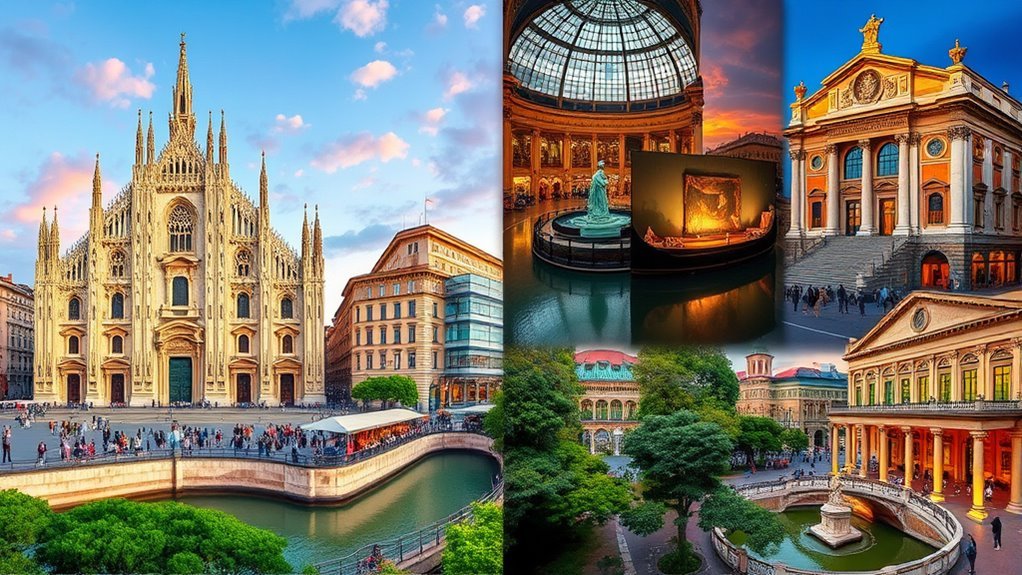
When you visit Milan, you can’t miss the majestic Duomo and the iconic mural of The Last Supper. Stroll through the charming Brera District for art and local shopping, or explore the luxurious Galleria Vittorio Emanuele II. Don’t forget to relax at Sempione Park and indulge in artisanal gelato from top gelaterias. For a unique experience, discover hidden gems on a guided tour or pamper yourself at a luxurious spa. There’s so much more to uncover!
Quick Answer
The ultimate Milan itinerary combines iconic world-class attractions—such as the Duomo di Milano terraces and Leonardo da Vinci’s The Last Supper—with vibrant local culture. Explore the bohemian Brera District, experience canalside aperitivo in Navigli, shop the high-fashion Quadrilatero della Moda, and sample authentic saffron Risotto alla Milanese.
Key Takeaways
- Reserve Early: Tickets for The Last Supper (Cenacolo Vinciano) must be booked 2–3 months in advance due to strict 15-minute viewing limits.
- Duomo Terraces: Ascend by lift or stairs to walk among 135 marble spires with sweeping panoramas of Milan and the distant Alps.
- Cultural Neighborhoods: Visit Brera for Renaissance masterpieces, Navigli for evening nightlife, and Quadrilatero d’Oro for luxury fashion.
- Culinary Delights: Savor traditional Risotto alla Milanese, creamy artisanal gelato, and espresso at historic 19th-century pasticcerias.
At a Glance: Milan Travel Guide
| Recommended Duration | 2 to 4 Days |
| Best Time to Visit | Spring (April–May) & Autumn (September–October) |
| Getting Around | ATM Metro, Historic Trams, & Walking (Contactless Payment Supported) |
| Must-Book Tickets | The Last Supper (Cenacolo Vinciano) & Duomo Terraces Elevator Access |
Disclosure: As an Amazon Associate I earn from qualifying purchases. Some links on this page are affiliate links, at no extra cost to you.
Experience the Majestic Duomo of Milan
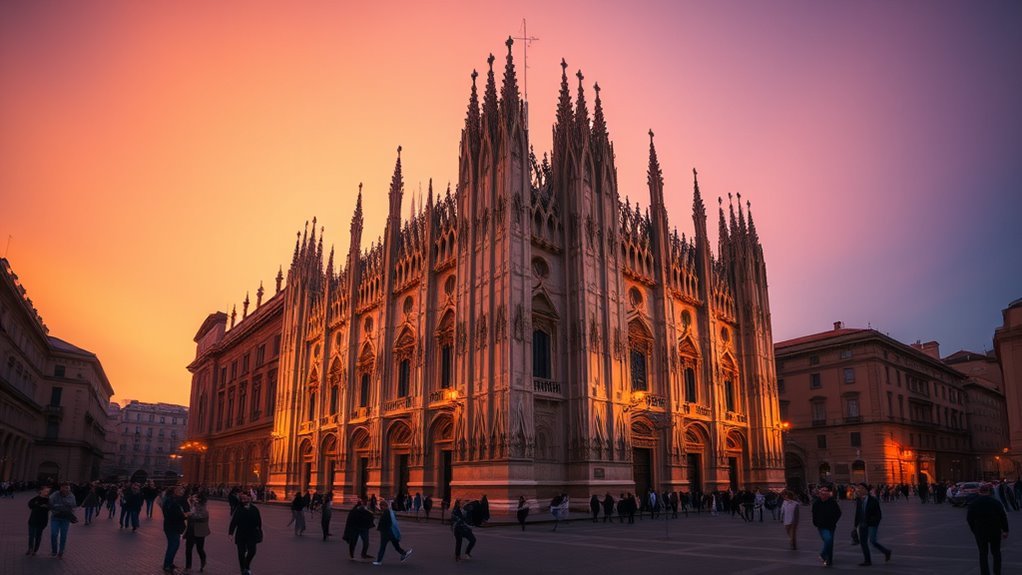
When you step into the Duomo di Milano, it’s hard not to be awestruck by its sheer grandeur. Construction on this majestic cathedral began in 1386 and spanned over six centuries. Today it stands as Italy’s largest church, showcasing breathtaking Rayonnant and Flamboyant Gothic architecture sculpted from pearly pink Candoglia marble.
As you wander through the expansive nave, admire the 52 monumental marble columns—representing the 52 weeks of the year—soaring 24.5 meters (80 feet) high to support the vaulted ceilings. Don’t miss the rooftop views; ascending to the Duomo terraces by elevator or stairs allows you to walk among a forest of 135 spires and over 3,400 intricate statues while taking in panoramas of Milan’s skyline and the distant Alps.
Warning: A modest dress code is strictly enforced inside the Duomo di Milano. Shoulders and knees must be fully covered for entry. Large luggage, glass objects, and selfie sticks are prohibited at security checkpoints.
An augmented reality tour or official audio guide enhances your visit, letting you trace the cathedral’s complex construction history. Be sure to look for the astronomical meridian solar clock from 1786 laid into the marble floor near the entrance, installed by astronomers from the Brera Astronomical Observatory to indicate solar noon across Lombardy.
Stroll Through the Charming Brera District
After exploring the Duomo, take a leisurely stroll north to the artistic Brera District. Widely considered Milan’s most bohemian neighborhood, Brera features cobblestone pedestrian lanes, flower-decked balconies, and an energetic mix of independent boutiques and art studios.
| What to Explore | Why It Matters |
|---|---|
| Pinacoteca di Brera | Houses world-renowned Italian masterpieces by Raphael, Caravaggio, and Mantegna. |
| Local Artisanal Boutiques | Offers niche perfumeries, hand-crafted leather goods, and unique Italian design gifts. |
| Palazzo di Brera | 17th-century palace complex housing the gallery, botanical garden, and astronomical observatory. |
Brera’s vibrant atmosphere shines in the morning when locals gather for espresso on quiet cafe terraces along Via Fiori Chiari. It’s the perfect neighborhood for slow exploration and spontaneous discovery.
Marvel at The Last Supper
Inside the refectory adjoining the Church of Santa Maria delle Grazie, you’ll come face-to-face with The Last Supper (Cenacolo Vinciano), Leonardo da Vinci‘s legendary mural painting. Completed between 1495 and 1498, this masterpiece captures the emotional drama immediately after Jesus announces that one of his disciples will betray him.
Pro Tip: Official tickets on the Cenacolo Vinciano portal are released roughly 2 to 3 months in advance and sell out almost instantly. If tickets are sold out, reserve a certified small-group guided tour to secure guaranteed access.
To preserve the delicate tempera and oil mural against environmental degradation, visitors pass through climate-controlled filtration chambers before entering. Viewing time inside the refectory is strictly capped at 15 minutes per group, creating an intimate, quiet space to admire Leonardo’s revolutionary use of perspective and human expression.
Discover the Galleria Vittorio Emanuele II
Stepping into the Galleria Vittorio Emanuele II feels like entering a grand architectural masterpiece. Built between 1865 and 1877, this glass-domed shopping arcade connects Piazza del Duomo with Piazza della Scala, earning it the nickname Il Salotto di Milano (Milan’s Drawing Room).
Admire the soaring glass-and-iron vault overhead, as well as the exquisite floor mosaics depicting the coats of arms of Italy’s four historic capitals: Turin, Florence, Rome, and Milan. Local legend dictates that spinning on your heel three times over the bull on the Turin coat of arms brings good fortune.
| Feature | Description | Experience |
|---|---|---|
| 19th-Century Architecture | Neo-Renaissance arcades beneath a 47-meter glass central dome | Awe-inspiring architectural photography |
| Luxury Flagships | Historic original boutiques for Prada, Louis Vuitton, and Gucci | High-end luxury fashion shopping |
| Historic Cafés | Historic establishments like Camparino in Galleria (est. 1867) | Classic Milanese Campari cocktails |
Relax at Sempione Park & Sforzesco Castle
Covering nearly 100 acres in central Milan, Sempione Park (Parco Sempione) offers a verdant retreat from urban sightseeing. Established in the late 19th century on former ducal hunting grounds, it features winding paths, landscaped lawns, and quiet lagoons.
At the park’s southeastern entrance stands the imposing Sforzesco Castle (Castello Sforzesco). Built in the 14th century by the Visconti family and later expanded by the Sforza dukes, this massive brick fortress houses several civic museums, including civic collections featuring Michelangelo’s final unfinished masterpiece, the Rondanini Pietà. At the northwestern edge of the park sits the monumental Arco della Pace (Arch of Peace), a triumphal arch offering a picturesque backdrop for late afternoon walks.
Enjoy the Vibrant Atmosphere of Navigli District
For a lively evening outing, head south to the historic Navigli District. Centered around two ancient canals—Naviglio Grande and Naviglio Pavese—this area was historically used for transporting goods and Candoglia marble into central Milan. Today, the canal banks are lined with vibrant bars, art studios, and restaurants.
| Experience | Highlights | Must-Visit Spots |
|---|---|---|
| Canal Cruise | Historic water transport perspectives along Naviglio Grande | Darsena harbor basin piers |
| Classic Aperitivo | Evening drinks paired with generous food buffets or small bites | Canalside lounge bars |
| Artisan Courtyards | Hidden historical alleyways and artist workshops | Vicolo dei Lavandai (Laundry Alley) |
Joining locals for an evening aperitivo between 7:00 PM and 9:00 PM is an essential Milanese ritual. Enjoying a Negroni Sbagliato or Aperol Spritz alongside canalside snacks provides an authentic taste of local nightlife.
Savor Authentic Risotto Milanese in Milan
No trip to Lombardy is complete without tasting authentic Risotto alla Milanese. This golden dish gets its distinctive yellow color and fragrant, earthy aroma from threads of pure saffron. Prepared with short-grain Carnaroli or Arborio rice, dry white wine, rich broth, and finished with butter and Parmigiano-Reggiano, it represents the pinnacle of local culinary tradition.
Best Restaurants for Risotto
Milan offers exceptional traditional trattorias and contemporary restaurants specializing in saffron risotto. Top establishments include:
- Ratanà: Led by Chef Cesare Battisti, this modern restaurant set in a historic railway building serves what many consider Milan’s finest, most refined Risotto alla Milanese with ossobuco.
- Antica Trattoria della Pesa: Operating since 1880, this historic trattoria maintains traditional 19th-century recipes and classic wooden decor for an authentic dining experience.
- Da Giacomo: Known for its elegant atmosphere and seafood, serving an outstanding classic saffron risotto prepared according to Lombard tradition.
- Un Posto a Milano: Located inside a restored 18th-century farmhouse (Cascina Cuccagna), offering farm-to-table Lombard cuisine and seasonal risotto variations.
Traditional Preparation Techniques
Authentic Risotto alla Milanese relies on precise culinary techniques. Chefs use premium Carnaroli rice due to its high starch content and structural integrity. The rice is first toasted dry (tostatura) before being deglazed with white wine. Hot beef or veal broth infused with real saffron threads is added gradually while stirring constantly. The secret to its creamy texture is the final step: mantecatura, where cold butter and freshly grated Parmigiano-Reggiano (and traditionally beef marrow) are vigorously beaten into the rice off the heat.
Explore the Unique Fashion Scene in Quadrilatero d’Oro
Known as one of the fashion capitals of the world, Milan’s shopping centerpiece is the Quadrilatero della Moda (or Quadrilatero d’Oro). This compact high-fashion district is bounded by four famous streets: Via Montenapoleone, Via della Spiga, Via Manzoni, and Corso Venezia.
“Via Montenapoleone remains one of the world’s most prestigious luxury shopping avenues, hosting flagship boutiques that set international design trends.”
Key highlights of the district include:
- Flagship stores for iconic Italian fashion houses such as Prada, Gucci, Armani, and Versace
- Elaborate, seasonally changed window displays designed by top international visual artists
- Charming courtyards housing luxury concept stores and quiet espresso bars
- Official semi-annual sales periods (Saldi) during January–February and July–August offering discounts on designer goods
Visit Historic Santa Maria Delle Grazie Church
While most tourists focus solely on the refectory containing The Last Supper, the UNESCO World Heritage Basilica of Santa Maria delle Grazie itself is an architectural treasure. Built between 1463 and 1497, the church illustrates the transition from Gothic design to Renaissance grandeur.
The original Gothic nave built by Guiniforte Solari was dramatically expanded in the late 15th century by master architect Donato Bramante, who added a monumental hemispherical dome, a bright tribuna, and the serene Chiostro delle Rane (Cloister of Frogs). Exploring the interior frescoes and quiet cloister provides a peaceful contrast to the bustling city center.
| Feature | Description | Significance |
|---|---|---|
| Architectural Blend | Solari’s Lombard Gothic nave combined with Bramante’s Renaissance dome | UNESCO World Heritage cultural site |
| Chiostro delle Rane | Small courtyard cloister featuring bronze frog sculptures and quiet gardens | Serene Renaissance retreat |
| Church Access | Free admission to the main basilica (separate from refectory mural tickets) | Accessible architectural landmark |
Unwind at a Traditional Italian Café
Visiting historic cafes is an integral part of daily life in Milan. Whether standing at the marble counter for a morning espresso or enjoying an afternoon pastry, traditional pasticcerias preserve classic 19th-century elegance.
Cozy Atmosphere and Ambiance
Historic Milanese pasticcerias feature wood-paneled walls, crystal chandeliers, and polished brass counters. Places like Pasticceria Marchesi 1824 and Caffè Cova offer refined settings where guests can experience authentic Italian coffee culture.
- Enjoy a morning espresso at the counter (*al banco*) alongside local professionals
- Savor traditional biscotti and fruit tarts served on vintage porcelain
- Sit at outdoor sidewalk tables for people-watching in central Milan
- Experience the late-afternoon tea or early evening pre-dinner aperitivo
Authentic Italian Pastries
Italian breakfast revolves around sweet pastries paired with fresh coffee. Try a buttery cornetto (Italian-style croissant, often filled with pistachio cream or jam) or a delicate cannoncino (puff pastry horn filled with vanilla pastry cream). During the holiday season, historic shops showcase artisanal Panettone—Milan’s famous tall, dome-shaped sweet bread studded with candied fruit and raisins.
Quality Coffee Selections
Italian coffee ordering follows unwritten local rules. Cappuccino and caffe latte are strictly morning beverages (typically ordered before 11:00 AM), while single or double espresso (caffè normale or doppio) is enjoyed throughout the afternoon. Espresso is traditionally served with a small glass of sparkling water to cleanse your palate beforehand.
Catch an Exciting Football Match
Milan is a major global football hub, home to two historic European powerhouses: AC Milan and Inter Milan. Both clubs share the legendary San Siro Stadium (officially named Stadio Giuseppe Meazza), which boasts a seating capacity of over 75,000 spectators.
Attending a match at San Siro offers an energetic atmosphere, especially during the fierce local rivalry known as the Derby della Madonnina. Tickets for top Serie A or UEFA Champions League matches sell out quickly through official club channels, so advance booking is recommended. On match days, arrive early to join fans for pre-game drinks and street food near the stadium gates.
Explore Hidden Gems of Milan on a Guided Tour
Beyond its headline monuments, Milan harbors fascinating off-the-beaten-path cultural treasures that come alive on a guided walking tour.
- Church of San Maurizio al Monastero Maggiore: Often called the “Sistine Chapel of Milan,” this former Benedictine convent features vibrant 16th-century frescoes by Bernardino Luini and his son Aurelio—including a famous fresco depicting Noah’s Ark with white unicorns.
- Navigli Street Art: Discover colorful contemporary murals and urban street art concealed along the side alleys of the canal district.
- Historical Courtyards: Uncover hidden courtyards such as the 15th-century Cortile delle Armi at Sforzesco Castle or the sculpted facade of Casa degli Omenoni.
Shop for Local Artisans’ Goods at Mercatone dell’Antiquariato
On the last Sunday of every month, the banks of the Naviglio Grande transform into the Mercatone dell’Antiquariato. Stretching over nearly two kilometers along Alzaia Naviglio Grande, this vast open-air market hosts more than 380 specialized antique dealers and local artisans.
Unique Finds Awaiting You
The market is a treasure trove for vintage enthusiasts, collectors, and casual shoppers alike. You’ll find a curated selection of items:
- Mid-century Italian furniture, vintage lamps, and retro home decor
- Authentic vintage designer clothing, leather bags, and antique jewelry
- Rare books, historical maps, prints, and Murano glassware
- Collectible vinyl records, cameras, and handmade crafts
Support Local Artisans
Browsing the stalls allows you to connect directly with local antique restoration experts, artists, and independent vendors. The market operates from 9:00 AM until 6:00 PM, and arriving early in the morning guarantees the best selection of unique vintage pieces.
Pamper Yourself at a Luxurious Spa
When you want to relax after a day of walking, Milan offers exceptional thermal wellness centers and luxury spas. The city’s most famous thermal retreat is QC Termemilano (QC Terme Milano), located in the Porta Romana district.
Note: QC Termemilano is built around historic 16th-century Spanish stone walls. Its unique facilities include outdoor thermal pools, hydro-massage jets, and a bio-sauna built inside a restored historic Milanese tram.
Most luxury spas offer daytime relaxation passes as well as evening packages (such as Aperiterme, which combines thermal pool access with an evening aperitivo). Advance online reservations are strongly recommended, especially on weekends.
Sample Mouthwatering Gelato From Local Gelaterias
Sampling authentic gelato is a daily delight when visiting Milan. Traditional gelaterias emphasize fresh, natural ingredients, avoiding artificial colorings, preservatives, or pre-made mixes.
Best Gelato Flavors
Look for seasonal specialties and regional ingredient sourcing when choosing your flavors:
- Pistachio di Bronte: Authentic pistachio gelato features a subtle greenish-brown hue rather than bright green.
- Stracciatella: Smooth fior di latte cream studded with crunchy shavings of dark chocolate.
- Nocciola: Creamy hazelnut made with IGP hazelnuts from Piedmont.
- Fruit Sorbetti: Dairy-free seasonal options such as fresh fig, lemon, or dark chocolate sorbet.
Top Gelaterias to Visit
Milan boasts several acclaimed gelaterias committed to artisanal methods:
- Gelato Giusto: Led by pastry chef Vittoria Bortolazzo, offering natural, seasonal flavors using pure ingredients.
- Pavé Gelati e Granite: Known for creative flavor profiles and high-quality dairy sourcing.
- Gelateria Della Musica: Unique gelateria where flavors are named after iconic songs and musical artists.
- Cioccolatitaliani: Famous for cocoa-based flavors and liquid chocolate-filled cones.
Gelato Tasting Tips
To identify top-quality artisanal gelaterias, check how the gelato is stored. Premium gelato is kept in flat, covered metal containers (pozzetti) to maintain consistent temperature and freshness. Avoid shops with towering, brightly colored mounds of ice cream on display.
Practical Milan Travel & Transit Tips
Navigating Milan is straightforward thanks to an efficient public transportation network managed by ATM Milano.
- Metro Network: Four main underground lines (M1 Red, M2 Green, M3 Yellow, and M4 Blue) connect major attractions. Touch-in contactless payment with credit or debit cards is accepted at all station turnstiles.
- Historic Trams: Yellow vintage wooden trams (Line 1) offer a charming, scenic way to travel through central Milan.
- Airport Transit: The Malpensa Express train links Malpensa Airport directly to Cadorna and Milano Centrale stations in 40–50 minutes, while Metro Line M4 directly connects Linate Airport to central Milan.
Frequently Asked Questions
What should you not miss in Milan?
You shouldn’t miss the Duomo di Milano rooftop terraces, Leonardo da Vinci’s The Last Supper at Santa Maria delle Grazie, the Galleria Vittorio Emanuele II, an evening canalside aperitivo in Navigli, and a walk through the historic Brera District.
Is 3 days enough for Milan?
Yes, three days is an ideal timeframe to explore Milan’s main attractions. It provides enough time to visit headline monuments like the Duomo and Sforzesco Castle, explore distinct neighborhoods like Brera and Navigli, enjoy museums, and sample authentic Lombard cuisine.
What is Milan best known for?
Milan is internationally famous as a global capital of fashion and industrial design. It is also renowned for Gothic architecture, world-class art collections (including Da Vinci’s The Last Supper), football clubs AC Milan and Inter Milan, and culinary specialties like Risotto alla Milanese.
What is the most popular attraction in Milan?
The Duomo di Milano cathedral is the city’s most visited landmark. Located in central Piazza del Duomo, it draws millions of visitors annually to explore its vast interior and rooftop terrace views.
How far in advance should I book tickets for The Last Supper?
Official tickets for The Last Supper (Cenacolo Vinciano) should be booked 2 to 3 months in advance as soon as quarterly ticket batches are released online. If standard tickets are sold out, guided tours often have reserved ticket allocations available.
Conclusion
From standing beneath the marble spires of the Duomo to discovering hidden Renaissance frescoes and enjoying canalside aperitivo in Navigli, Milan offers a captivating blend of history, fashion, and culinary excellence. By planning your ticket bookings early and exploring diverse neighborhood pockets, you’ll uncover the rich cultural heartbeat that makes Italy’s fashion capital an unforgettable destination.
Sources
- Duomo di Milano Official Site — Official architectural specs, rooftop opening hours, and visitor guidelines.
- Cenacolo Vinciano Official Ticket Portal — Official admission details, ticket release schedules, and conservation guidelines for The Last Supper.
- UNESCO World Heritage Centre — Official history and architectural designation for Santa Maria delle Grazie and Leonardo’s mural.
- YesMilano Official Tourism Board — City tourism guides, neighborhood maps, and cultural event details.
- ATM Milano Official Transport Network — Metro, tram, and public transit maps, schedules, and contactless fare information.
