
Last Updated on November 4, 2026 by Caleb Warren
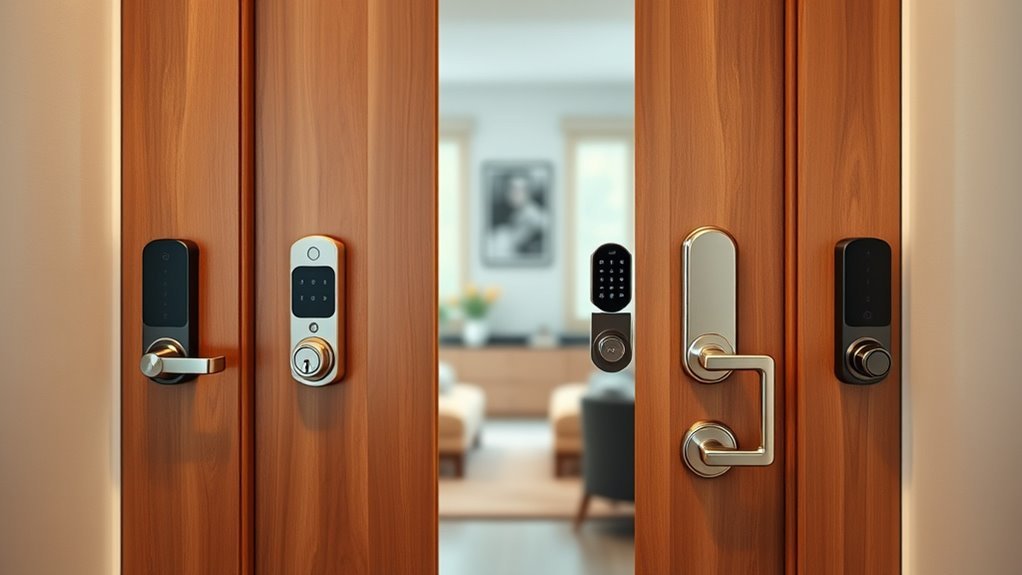
Looking for the best Alexa-enabled smart locks in 2026? The TEEHO TE012W is a strong overall choice if you want fingerprint entry, a keypad, built-in Wi-Fi, and Alexa compatibility. The Anona Holo is worth considering if you want to upgrade a compatible existing deadbolt without replacing the entire lock. The Veise VE012W offers flexible access for families, while the Arpha D180W focuses on keypad entry and remote code management. Below, you can compare four smart locks, understand their limitations, and find the right option for your front door.
Quick Answer: Which Alexa Smart Lock Should You Choose?
Best Overall: TEEHO TE012W WiFi Smart Lock for its combination of fingerprint access, keypad entry, app control, and Alexa integration.
Best Retrofit Option: Anona Holo Wi-Fi Smart Lock with Keypad for upgrading a compatible single-cylinder deadbolt while keeping your existing exterior lock hardware.
Best for Families: Veise VE012W Fingerprint Smart Lock for multiple fingerprints, individual access codes, and remote access management.
Best for Keypad Access: Arpha D180W WiFi Smart Lock for homeowners who prefer PIN codes, temporary guest access, and app-based control.
Important: Check your door measurements, Wi-Fi requirements, and Alexa setup instructions before ordering. Alexa compatibility does not necessarily mean every voice command works without additional configuration.
Key Takeaways
- Choose a lock with built-in Wi-Fi if you want remote app control without buying a separate Wi-Fi gateway.
- Fingerprint locks offer convenient daily entry, while keypads make sharing temporary access codes easier.
- Retrofit locks and replacement deadbolts have different installation requirements.
- Check whether your home network supports the lock’s required 2.4 GHz Wi-Fi connection.
- Look for backup entry methods, low-battery warnings, auto-lock settings, and clear access management.
- Always confirm the exact product package and manufacturer warranty before purchasing.
Disclosure: As an Amazon Associate I earn from qualifying purchases. Some links on this page are affiliate links, at no extra cost to you.
Top Alexa-Enabled Smart Lock Picks for 2026
Compare these four options by their entry methods, Alexa compatibility, installation type, and ideal users. Product features and included accessories can vary by listing or configuration, so review the current product details before buying.
| Smart Lock | Product Image | Best For | Keyless Entry | Voice Control | Installation | Amazon Price | Full Review |
|---|---|---|---|---|---|---|---|
| TEEHO WiFi Smart Lock with Fingerprint and Keypad |

|
Best Overall | Keyless Entry: Fingerprint, keypad, app, and backup key | Voice Control: Alexa and Google Assistant | Installation: Replacement deadbolt for compatible doors | Check Price on Amazon | Read Our Analysis |
| Anona Holo Wi-Fi Smart Lock with Keypad |
|
Best Retrofit Option | Keyless Entry: Keypad, app, and existing physical key | Voice Control: Alexa and Apple Home via Matter | Installation: Retrofit for compatible single-cylinder deadbolts | Check Price on Amazon | Read Our Analysis |
| Veise VE012W Fingerprint Smart Lock with WiFi |
|
Best for Families | Keyless Entry: Fingerprint, PIN code, app, and backup key | Voice Control: Alexa and Google Assistant | Installation: Replacement deadbolt for compatible doors | Check Price on Amazon | Read Our Analysis |
| Arpha WiFi Smart Keyless Entry Door Lock |

|
Best for Keypad Access | Keyless Entry: Keypad, smartphone app, and backup key | Voice Control: Alexa and Google Assistant | Installation: Replacement keypad deadbolt | Check Price on Amazon | Read Our Analysis |
More Details on Our Top Picks
-
TEEHO WiFi Smart Lock with Fingerprint and Keypad
If you want one smart lock that combines convenient daily entry with useful remote features, the TEEHO TE012W WiFi Smart Lock deserves a close look. It combines a fingerprint reader, backlit keypad, smartphone app, and mechanical backup keys in a replacement deadbolt design.
The lock connects to a compatible 2.4 GHz Wi-Fi network without requiring a separate Wi-Fi gateway. Through the KK Home app, you can manage access, review available activity information, and control supported lock functions remotely. You can also link it with Alexa or Google Assistant.
For families, the combination of fingerprint recognition and individual PIN codes is especially useful. You can register multiple users instead of sharing the same code with everyone. Temporary access options can also help when trusted guests need entry.
The TE012W includes security-oriented features such as an anti-peep keypad function, auto-lock settings, and alerts. These features improve access management but do not replace a properly installed deadbolt, secure account settings, or good door hardware.
Why You’ll Like It
- Flexible daily entry: Choose fingerprint, keypad, app, or physical key access.
- No separate Wi-Fi gateway: Built-in Wi-Fi supports remote functions after setup.
- Guest-friendly access: Manage different PIN codes instead of distributing physical keys.
- Useful monitoring: Check supported access records and notifications through the app.
Who Should Buy This?
This is a practical choice for homeowners who want fingerprint entry, Alexa compatibility, and remote access management in one replacement deadbolt.
Who Should Avoid This?
If you want to preserve your existing deadbolt without replacing it, a retrofit model may be a better fit. You should also check your door dimensions and Wi-Fi compatibility before ordering.
Before You Buy: Confirm the TE012W model, compatible door thickness, bore hole dimensions, 2.4 GHz Wi-Fi requirement, and current warranty terms. Weather resistance does not mean the complete lock can be submerged or exposed to water without limits.
- Keyless Entry: Fingerprint, keypad, and app
- Voice Control: Alexa and Google Assistant
- Installation: DIY replacement deadbolt for compatible doors
- Battery Powered: 8 AA batteries
- Security Alerts: Low-battery notifications and supported access alerts
- User Management: Multiple fingerprints and PIN codes
- Additional Feature: Anti-peep PIN entry
- Additional Feature: Customizable auto-lock settings
- Additional Feature: Built-in 2.4 GHz Wi-Fi
-
Anona Holo Wi-Fi Smart Lock with Keypad
The Anona Holo Wi-Fi Smart Lock with Keypad is an attractive option if you want smart features without replacing your compatible existing deadbolt. Unlike a complete replacement lock, the Anona Holo attaches to the interior side of a supported single-cylinder deadbolt.
This design lets you keep your existing exterior hardware and physical key. With the listed keypad bundle, you can also use PIN-based entry. The Anona app supports remote management, while built-in Wi-Fi and Matter compatibility allow integration with supported Alexa and Apple Home systems.
Features such as auto-lock, door status notifications, and temporary access codes can make daily access easier. You can provide a temporary code to a trusted visitor without leaving a physical key outside your home.
Installation is designed to avoid drilling or major door modifications. However, deadbolt compatibility is essential. The Holo is not a universal retrofit device and will not work with every lock mechanism.
Why You’ll Like It
- Keep your existing key: The retrofit design preserves compatible exterior deadbolt hardware.
- Convenient keypad access: The listed keypad bundle supports entry without taking out your phone.
- Smart home flexibility: Matter support provides integration options for compatible Alexa and Apple Home systems.
- Remote management: The app supports access sharing and available lock-status features.
Who Should Buy This?
Choose the Anona Holo if you have a compatible single-cylinder deadbolt and prefer upgrading it rather than installing a completely new deadbolt assembly.
Who Should Avoid This?
Skip this model if your existing lock is incompatible, you need to replace damaged mechanical hardware, or you specifically want a built-in fingerprint reader. The Holo is not a fingerprint smart lock.
Compatibility Note: Check Anona’s deadbolt compatibility guide before purchasing. Also confirm that the Amazon package includes the keypad, since the manufacturer offers different product configurations.
- Keyless Entry: Keypad and app remote control
- Voice Control: Alexa and Apple Home via Matter
- Installation: Retrofit installation for compatible single-cylinder deadbolts
- Battery Powered: 4 AA batteries for the lock
- Security Alerts: Door status and app notifications
- User Management: Share access through the Anona app
- Additional Feature: Auto-lock functionality
- Additional Feature: Built-in 2.4 GHz Wi-Fi
- Additional Feature: Preserves compatible existing exterior lock hardware
-
Veise VE012W Fingerprint Smart Lock with WiFi
If several people use the same entrance, the Veise VE012W Fingerprint Smart Lock offers an appealing combination of convenience and access management. It provides fingerprint entry, a keypad, physical backup keys, app access, and compatible voice-assistant control.
The VE012W has built-in Wi-Fi for remote features without a separate gateway. It works with Alexa and Google Assistant after the required account linking and setup.
For a busy household, its support for multiple registered fingerprints and PIN codes is especially helpful. Product specifications describe support for up to 20 fingerprints and 100 custom PIN codes. This allows you to manage access for different household members and approved visitors.
The lock also offers temporary and scheduled access options, access records, and supported notifications. These features can be useful if family members have different schedules or you occasionally need to let a trusted guest enter.
Remember that fingerprint recognition can be affected by wet, dirty, or injured fingers. Having another entry method available remains important.
Why You’ll Like It
- Family access management: Assign different fingerprints or codes to household members.
- Built-in Wi-Fi: Use compatible remote functions without an additional gateway.
- Multiple entry options: Use a fingerprint, keypad, app, backup key, or supported voice control.
- Guest access: Create temporary or scheduled codes when appropriate.
Who Should Buy This?
The Veise VE012W is a useful choice for families and shared households that want flexible entry methods and centralized access management.
Who Should Avoid This?
If you do not need fingerprint entry or multiple user profiles, a simpler keypad model may be sufficient. It is also unsuitable for doors that do not meet the manufacturer’s installation requirements.
Buying Tip: Confirm the VE012W model, app requirements, door compatibility, and included backup keys. Check current warranty terms rather than assuming every Veise model has identical coverage.
- Keyless Entry: Fingerprint, keypad, and app
- Voice Control: Alexa and Google Assistant
- Installation: Replacement deadbolt for compatible doors
- Battery Powered: 8 AA batteries
- Security Alerts: Access notifications and low-battery warnings
- User Management: Multiple fingerprints and customizable access codes
- Additional Feature: Built-in 2.4 GHz Wi-Fi
- Additional Feature: Satin nickel finish
- Additional Feature: Temporary and scheduled access options
-
Arpha WiFi Smart Keyless Entry Door Lock
The Arpha D180W WiFi Smart Keyless Entry Door Lock is worth considering if you prefer a keypad-based smart deadbolt with remote control and temporary guest access.
Rather than relying on fingerprint entry, this model focuses on PIN codes, smartphone app functions, and compatible Alexa or Google Assistant integration. It can be particularly useful when you want to share an entry code with a trusted person instead of issuing another physical key.
The Arpha includes an anti-peep keypad feature designed to make an entered passcode harder to observe. The product information also describes one-time access codes, auto-lock settings, and activity records.
Its metal construction and stated weather-resistant design are useful considerations for an exterior entrance. However, weather resistance does not guarantee reliable operation in every climate, and installation quality still affects the security of the overall door.
Like other battery-powered smart locks, the Arpha requires ongoing battery checks. Actual battery life can change with usage, Wi-Fi signal quality, and environmental conditions.
Why You’ll Like It
- Convenient code entry: Unlock with a PIN instead of carrying a key.
- Temporary guest access: Use supported one-time codes for approved visitors.
- Remote functions: Manage supported settings through the app.
- Automatic locking: Configure the available auto-lock timer to suit your routine.
Who Should Buy This?
Choose the Arpha D180W if you want an Alexa-compatible keypad deadbolt and prefer PIN-code access over fingerprint recognition.
Who Should Avoid This?
If fingerprint unlocking is important to you, choose a biometric model instead. You should also confirm that the door fits this replacement deadbolt and that your Wi-Fi network meets its requirements.
Before You Buy: Verify the exact D180W listing, battery requirements, weather-resistance information, and current support policy. Treat advertised battery-life estimates as estimates, not guaranteed operating periods.
- Keyless Entry: Smartphone app and keypad
- Voice Control: Alexa and Google Assistant
- Installation: Replacement keypad deadbolt for compatible doors
- Battery Powered: AA batteries; check the listing for the required quantity
- Security Alerts: Low-battery warnings
- User Management: Temporary codes and available access records
- Additional Feature: Metal construction
- Additional Feature: Customizable auto-lock timers
- Additional Feature: Anti-peep PIN entry
How to Choose the Right Alexa Smart Lock
The best Alexa-compatible smart lock depends on your door, daily routine, and preferred way to unlock it. Before comparing extra features, start with the installation type and compatibility requirements. These factors can determine whether a lock will work in your home at all.
At a Glance: Smart Lock Buying Checklist
- Door type: Check whether you need a retrofit lock or a replacement deadbolt.
- Door measurements: Confirm thickness, bore hole, backset, and clearance.
- Entry methods: Decide whether fingerprint, keypad, app, or key access matters most.
- Wi-Fi: Check network frequency, router coverage, and gateway requirements.
- Alexa: Confirm account linking and supported voice commands.
- Security: Review access controls, updates, auto-lock features, and backup entry.
- Power: Check battery requirements and replacement options.
- Ownership costs: Check current product price, accessories, warranty, and any optional services.
Factors to Consider When Choosing an Alexa-Enabled Smart Lock in 2026

When choosing an Alexa-enabled smart lock, consider how you want to enter your home, how the lock connects to your smart home, and how it fits your existing door. Security features, battery maintenance, and ease of installation are just as important as voice control.
Unlocking Methods Variety
Choosing a smart lock with multiple unlocking methods can make daily access easier. Common options include fingerprints, PIN codes, smartphone apps, mechanical keys, and supported voice commands.
A fingerprint reader is convenient when you arrive home carrying groceries. A keypad is useful when trusted visitors need temporary access. App control can help you manage supported lock settings while you are away.
Look for models that let you assign different access credentials to different people. Individual PIN codes can be easier to manage than one shared household password.
For backup access, determine whether the model includes mechanical keys, an emergency power option, or another manufacturer-supported method. Do not assume every keyless lock includes a physical key.
Security Features Importance
Security features should help you control access without creating unnecessary complications.
Useful options include:
- Auto-lock: Allows the lock to engage after a configured delay or supported trigger.
- Anti-peep PIN entry: Helps make a passcode harder for nearby people to observe.
- Access records: Let you review supported locking and unlocking events.
- Temporary codes: Allow controlled access without sharing a permanent household PIN.
- Low-battery alerts: Warn you when the batteries may need replacement.
- Firmware updates: Can address software issues and security vulnerabilities when provided by the manufacturer.
Encryption and security certifications are also worth evaluating. However, a manufacturer’s statement about encryption or durability does not prove that a lock is immune to hacking or forced entry.
For better protection, use a strong app account password, enable available multi-factor authentication, install updates, and remove access permissions that are no longer needed.
Installation Ease
Many smart locks are designed for DIY installation, but compatibility should come before convenience.
Replacement deadbolts generally require you to remove the existing deadbolt assembly and install new hardware. Retrofit locks usually operate an existing compatible deadbolt from the interior side.
Before ordering, measure:
- Your door thickness.
- The diameter of the existing lock bore hole.
- The backset, or distance from the door edge to the center of the bore hole.
- The available clearance around the interior lock hardware.
- The distance between the deadbolt and nearby handles or trim.
Even when the measurements appear correct, follow the manufacturer’s compatibility guide. A poorly aligned latch can make a smart lock struggle to engage properly and may increase battery consumption.
Pro Tip: Before installing a new smart lock, check that your existing door closes easily and the deadbolt moves smoothly. Correct alignment problems before relying on automatic locking.
Battery Life Considerations
Battery life varies by smart lock, usage frequency, wireless connectivity, and environmental conditions. Many battery-powered smart locks use standard AA batteries, but the required quantity differs by model.
Built-in Wi-Fi and frequent remote communication can affect power consumption. A weak Wi-Fi connection may also increase energy use.
Choose a lock that gives you a clear low-battery warning and a practical backup entry method. Review the instructions for emergency power or manual access before installing the lock.
Do not rely on a single advertised battery-life estimate. Replace batteries when the manufacturer recommends doing so, and keep your backup entry method accessible in a secure way.
Compatibility With Alexa and Other Devices
An Alexa-compatible smart lock must support the appropriate integration method. Some models connect through their own app and Alexa skill, while others use Matter or another supported smart-home system.
Check the manufacturer’s instructions for:
- Whether the lock uses built-in Wi-Fi or a separate gateway.
- Whether the model requires a 2.4 GHz wireless network.
- Which Alexa features and voice commands are supported.
- Whether voice unlocking requires additional authorization.
- Which smartphone operating systems and app versions are supported.
- Whether another compatible hub or controller is needed for particular integrations.
Important: Alexa compatibility does not always mean you can unlock a door with a simple voice command. Depending on the model and settings, unlocking may require an additional security code or may be unavailable through certain voice-control configurations.
Built-In Wi-Fi vs. Bluetooth Smart Locks
Connectivity is one of the most important differences between smart locks.
Built-in Wi-Fi smart locks can connect to a compatible wireless network without a separate gateway. After configuration, they may offer remote locking, access management, and notifications through the manufacturer’s app.
Bluetooth smart locks often provide local smartphone control when you are close to the door. Some support remote access and voice assistants only after you purchase and configure an additional gateway.
For buyers who specifically want Alexa integration and remote control without extra hardware, built-in Wi-Fi is often the simpler choice. Still, confirm which functions the specific model supports.
Weather Resistance and Durability
Exterior door locks must handle changing temperatures, moisture, and regular use. Check the manufacturer’s weather-resistance specifications and the recommended installation environment.
A weather-resistance rating may apply to particular components rather than the entire lock assembly. It should not be interpreted as permission to expose the device to unlimited rain, flooding, or water immersion.
Consider the lock’s materials, keypad visibility, button durability, and the availability of replacement parts. Check warranty terms and support options for the exact model you purchase.
Price and Long-Term Value
Rather than focusing only on the initial purchase price, compare the features you will actually use.
A basic keypad lock may be enough if you mainly need convenient entry. A fingerprint model may be worthwhile for a busy household. A retrofit model may provide better value when your existing deadbolt is already compatible and functioning properly.
Also consider replacement batteries, optional accessories, installation costs, and any paid app services. Product pricing and included features can change, so compare the current listings before making a decision.
Which Alexa Smart Lock Is Best for You?
Not every household needs the same features. The easiest way to choose is to match the lock’s main strength to your daily routine.
For Everyday Convenience: TEEHO TE012W
Choose this model if you want fingerprint access, a keypad, built-in Wi-Fi, and Alexa compatibility in a complete replacement deadbolt.
For Keeping Your Existing Deadbolt: Anona Holo
Choose this model if your current single-cylinder deadbolt is compatible and you want to preserve the existing exterior lock hardware.
For Multiple Household Members: Veise VE012W
Choose this model if you want to manage different fingerprints, PIN codes, and guest access from one smart lock.
For Simple PIN-Based Entry: Arpha D180W
Choose this model if keypad entry and temporary guest codes matter more to you than fingerprint recognition.
How to Set Up an Alexa-Enabled Smart Lock
Setup steps vary by brand, but most compatible models follow a similar process.
- Install the lock: Follow the manufacturer’s mounting instructions and confirm that the deadbolt operates smoothly.
- Add the batteries: Use the recommended battery type and complete the initial lock calibration if required.
- Download the official app: Register the lock in the manufacturer’s supported smartphone app.
- Connect to your network: Follow the instructions for the required Wi-Fi band or smart-home connection.
- Open the Alexa app: Add the compatible integration, enable the required skill, or follow the supported Matter pairing process.
- Link your accounts: Complete authentication and device discovery as instructed.
- Configure permissions: Review voice-unlock settings, additional security codes, and available alerts.
- Test the lock: Check keypad, app, backup entry, and supported Alexa commands while the door is open.
Safety Note: Keep the door open during initial testing so you do not accidentally lock yourself out. Confirm that the deadbolt fully engages before relying on an auto-lock feature. Never share voice-unlock security codes or account credentials with untrusted people.
Frequently Asked Questions
How Do I Install a Smart Lock Myself?
Start by checking the manufacturer’s compatibility guide. For a replacement deadbolt, remove the old lock hardware and install the new components according to the instructions. For a retrofit model, follow the steps for attaching the smart mechanism to the compatible existing deadbolt. Add batteries, complete calibration, connect the app, and test the lock while the door is open.
What Happens if the Smart Lock’s Battery Dies?
Electronic unlocking may stop working when the battery is depleted. Some smart locks include mechanical backup keys or emergency power options, but these features are model-specific. Check the backup access method before installation and respond promptly to low-battery warnings.
Can I Use Multiple Smartphones With One Smart Lock?
Many smart locks support multiple authorized app users. The account owner can usually invite additional users or share supported access permissions. The exact process and limits depend on the manufacturer’s app.
Are Smart Locks Compatible With All Door Types?
No. Smart lock compatibility depends on the door’s thickness, bore hole, backset, existing lock type, and available mounting space. Retrofit locks may have additional restrictions. Always check the manufacturer’s specifications before ordering.
How Secure Are Smart Locks Against Hacking?
Smart lock security depends on the hardware, software, account protection, and home network. No connected lock is completely immune to attacks. Use strong passwords, enable available multi-factor authentication, keep firmware updated, and limit access to trusted users.
Do Alexa Smart Locks Need Wi-Fi?
Wi-Fi or another supported smart-home connection is generally needed for remote features and Alexa integration. Some models use built-in Wi-Fi, while others require a compatible hub or gateway. Local keypad, fingerprint, or key access may continue to work without internet service, depending on the model.
Can Alexa Unlock My Front Door?
Some Alexa-compatible smart locks support voice unlocking after you enable the feature and complete additional security configuration. Others may support locking and status checks but restrict unlocking. Review the exact model’s Alexa instructions before purchasing.
Do I Need a Separate Hub for an Alexa Smart Lock?
Not always. Several smart locks have built-in Wi-Fi and can connect directly to a compatible home network. Other models require a Wi-Fi gateway or compatible smart-home controller for remote operation. Some Matter-based features may have their own ecosystem requirements.
Can I Open My Smart Lock Without Internet?
Usually, supported local entry methods such as a keypad, registered fingerprint, or physical key can operate without an internet connection. However, remote app access, cloud-based notifications, and Alexa commands may be unavailable until connectivity returns. Check your model’s offline features.
Are Alexa Smart Locks Good for Families?
They can be convenient for households with multiple users. Individual access codes and fingerprint profiles may reduce the need to share physical keys. For households with children, choose secure access settings, protect administrator accounts, and avoid sharing permanent codes unnecessarily.
Is a Retrofit Smart Lock Better Than a Replacement Deadbolt?
A retrofit smart lock is useful when you have compatible existing hardware and want to keep your current exterior lock and key. A replacement deadbolt may be better when you need new mechanical hardware or want an integrated fingerprint reader or keypad. The better option depends on your door and desired features.
Conclusion
Choosing the right Alexa-enabled smart lock in 2026 comes down to compatibility, convenient entry, and reliable access management.
The TEEHO TE012W is a strong overall choice for buyers who want fingerprint unlocking, keypad access, built-in Wi-Fi, and Alexa integration. The Anona Holo is especially useful for upgrading a compatible existing deadbolt. The Veise VE012W suits households that need multiple user profiles, while the Arpha D180W is worth considering for keypad-based entry and temporary codes.
Before buying, confirm your door measurements, network requirements, backup entry options, and the exact features included with the product. A well-matched smart lock can make everyday access more convenient, but proper installation and secure account management remain essential.
Final Recommendation
For a balanced combination of access methods and Alexa integration, start with the TEEHO TE012W. If you want to keep your compatible existing deadbolt, consider the Anona Holo instead.
Compare current product specifications, included accessories, and Amazon pricing before making your final decision.
Check TEEHO Price on Amazon
