

Last Updated on November 4, 2026 by Mason Reed
Finding the best rooftop tent starts with choosing one that fits your vehicle, roof rack, and camping style. A hard-shell rooftop tent can make setup easier, while an inflatable or soft-shell design may offer more flexibility. In this guide, you can compare nine rooftop tents for couples, small families, overlanding trips, and cold-weather camping. We cover useful features, key limitations, and the safety checks you should make before buying.
Disclosure: As an Amazon Associate I earn from qualifying purchases. Some links on this page are affiliate links, at no extra cost to you.
Quick Answer: The Sanhima Hotham Lite is worth considering if you want a low-profile hard-shell rooftop tent. The YOLENY Inflatable Rooftop Tent offers a different setup style and a thick inflatable mattress. The HEYFUN Adventurer Pro is appealing if you value extra storage and camping accessories. For colder trips, the ARCTWONDER model includes a removable thermal layer. Your final choice should depend on vehicle compatibility, weight, sleeping space, and weather needs.
Key Takeaways
- Best low-profile option: Sanhima Hotham Lite offers a slim hard-shell design for vehicle-based camping.
- Best inflatable design: YOLENY provides an inflatable sleeping platform and flexible camping setup.
- Best for camping accessories: HEYFUN Adventurer Pro includes useful storage and shelter features.
- Best for cold-weather features: ARCTWONDER offers a removable thermal liner and an integrated solar charging feature.
- Most important safety check: Confirm your vehicle’s dynamic roof load limit, approved roof rack, mounting dimensions, and the tent’s occupied static load rating before purchasing.
Important Compatibility Note: A rooftop tent advertised for SUVs, Jeeps, or trucks is not automatically compatible with every vehicle in those categories. Your roof rack must be approved for rooftop tents. The vehicle and rack must safely support the tent while driving, and the complete installed system must support the intended occupants when parked. Always follow the vehicle, rack, and tent manufacturers’ instructions.
Our Top Rooftop Tent Picks
Use this quick comparison to narrow your choices. Capacity, setup times, and features are based on available product information and may vary by model version. Check the exact configuration before ordering.
| Rooftop Tent | Product Image | Best For | Advertised Capacity | Key Feature | Setup | Amazon | Review |
|---|---|---|---|---|---|---|---|
| Jiadrooe Hard Shell Rooftop Tent with Crossbars |  |
Gear Storage | Check exact version and sleeping dimensions | Hard shell, crossbars and optional thermal features | Assisted pop-up design | Check Price on Amazon | Read Our Analysis |
| YOLENY Inflatable Rooftop Tent for Camping |  |
Inflatable Comfort | Up to 3 people, subject to space and load limits | Inflatable mattress and TPU skylights | Inflation and securing required | Check Price on Amazon | Read Our Analysis |
| HEYFUN Adventurer Pro Rooftop Tent |  |
Built-in Accessories | 2–3 people advertised | Hydraulic opening, storage and side awning | Assisted opening after installation | Check Price on Amazon | Read Our Analysis |
| Sanhima Hotham Lite Rooftop Tent |  |
Low-Profile Design | 2–3 advertised; verify model version | Slim hard shell, ventilation and privacy lining | Gas-strut-assisted opening | Check Price on Amazon | Read Our Analysis |
| TopAutoGear Rooftop Tent for SUV & Truck Camping |  |
Soft-Shell Camping | 2 adults and 1 child advertised | Rainfly, ventilation and foam mattress | Manual unfolding and securing | Check Price on Amazon | Read Our Analysis |
| VEVOR Hard Shell Rooftop Tent | Simple Hard-Shell Setup | Up to 3 advertised | Folding shell, mattress and telescopic ladder | Manual deployment with support structure | Check Price on Amazon | Read Our Analysis | |
| HEYFUN Explorer Pro Hard Shell Rooftop Tent |  |
Touring Accessories | 2–3 people advertised | Hydraulic shell, mattress and storage features | Assisted opening after installation | Check Price on Amazon | Read Our Analysis |
| ARCTWONDER Hard Shell Rooftop Tent with Winter Thermal Layer | 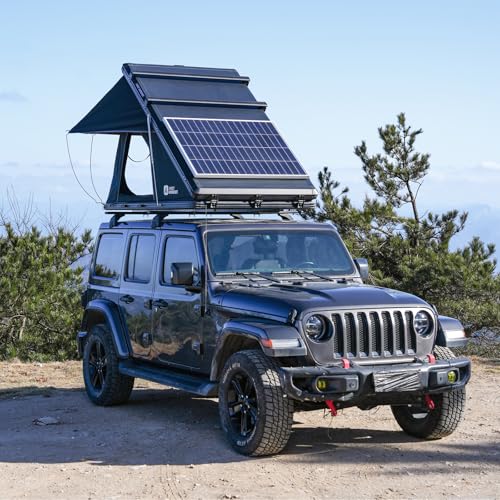 |
Cold-Weather Features | 2 people | Removable thermal liner and solar charging feature | Assisted pop-up design | Check Price on Amazon | Read Our Analysis |
| SAN HIMA Jervis Loft Hard Shell Rooftop Tent |  |
Ventilation and Interior Comfort | Up to 3 advertised | ABS-aluminum shell, windows and foam mattress | Gas-strut-assisted design | Check Price on Amazon | Read Our Analysis |
More Details on Our Top Rooftop Tent Picks
Each rooftop tent below offers a different set of benefits. We focus on its design, useful features, likely buyer fit, and important limitations. These are product comparisons based on available specifications, not claims of hands-on testing.
-
Jiadrooe Hard Shell Rooftop Tent with Crossbars
If you enjoy overlanding and want a hard-shell rooftop tent with practical storage options, the Jiadrooe model deserves a closer look. Its raised hard-shell structure, adjustable crossbars, and available thermal accessories are designed for vehicle-based camping.
The assisted opening system helps reduce the work needed once the tent has been installed. A foam mattress, anti-condensation features, and weather-resistant fabric can also improve comfort during longer trips. Some configurations include lighting and USB connections, but buyers should confirm the exact accessory package.
Why You’ll Like It: The main attraction is the combination of a protective hard shell and rooftop accessory storage features. This can be useful when you regularly carry extra camping equipment.
Who Should Buy This: Campers with a properly rated vehicle and roof rack who need hard-shell convenience and additional gear-carrying features.
Who Should Avoid This: Drivers with low roof load limits or anyone expecting a compact, easily carried tent. Indexed specifications suggest this is a relatively heavy model, and some capacity details differ between listings.
Before You Buy: Verify the exact Jiadrooe model, sleeping dimensions, shell construction, tent weight, included crossbars, and permitted accessory load. Do not assume the crossbar load rating applies while the tent is open or while driving.
- Type: Hard-shell rooftop tent
- Capacity: Confirm the exact version and sleeping dimensions
- Weather Resistance: Coated fabric and available insulation features
- Setup: Assisted opening after mounting
- Mattress: Foam mattress; confirm included thickness
- Ladder: Telescopic ladder listed for this product family
- Warranty: Confirm seller and manufacturer terms
- Additional Feature: Adjustable accessory crossbars
- Additional Feature: Anti-condensation accessories
- Important Limitation: Weight and configuration require careful verification
-
YOLENY Inflatable Rooftop Tent for Camping
The YOLENY Inflatable Rooftop Tent is a useful alternative if you prefer an inflatable camping design instead of a conventional folding hard shell. Its layout includes an inflatable sleeping platform and a thick air mattress intended to make overnight stays more comfortable.
The tent uses PU-coated 300D Oxford fabric and includes TPU skylights for natural light. Its listed design supports rooftop camping, while ground-use flexibility may be possible when used according to the manufacturer’s instructions.
Unlike a gas-strut hard-shell tent, this model requires inflation and careful securing. Setup time depends on the pump, mounting arrangement, and conditions. Check whether the pump, ladder, and all required mounting parts are included in the selected package.
Why You’ll Like It: The thick inflatable sleeping surface and flexible design may appeal to campers who prioritize mattress comfort.
Who Should Buy This: Couples or small groups who prefer an inflatable setup and are comfortable checking air pressure and securing the tent.
Who Should Avoid This: Campers who want an immediate pop-up setup with no inflation, or those who prefer a rigid shell for packed storage.
Before You Buy: Confirm the roof-mounting system, inflated dimensions, packed weight, pump requirements, and repair provisions. Inflatable parts need care against punctures, abrasion, and air loss.
- Type: Inflatable rooftop tent
- Capacity: Up to 3 people advertised, subject to dimensions and load limits
- Weather Resistance: PU-coated Oxford fabric
- Setup: Inflation and securing required
- Mattress: Inflatable mattress, advertised at approximately 6 inches thick
- Ladder: Telescopic ladder listed
- Warranty: Confirm manufacturer or seller coverage
- Additional Feature: TPU skylights
- Additional Feature: Flexible rooftop or ground-use design where permitted
- Important Limitation: Requires inflation, proper support, and regular air-system checks
-
HEYFUN Adventurer Pro Rooftop Tent for 2-3 Persons
The HEYFUN Adventurer Pro is designed for campers who want more than a simple sleeping shelter. This hard-shell rooftop tent combines assisted opening with several convenience features, including storage areas, a mattress system, and an available side awning.
Its aluminum-based structure and weather-resistant fabric make it suitable for considering on camping trips in varying conditions, provided you follow the product’s weather limits. The listed three-layer detachable mattress may also be useful if you prefer removable bedding for cleaning or storage.
A built-in USB connection and lighting features add convenience. However, an outlet does not necessarily include a power supply, so check the wiring and external power requirements.
Why You’ll Like It: Multiple storage and shelter features may reduce the need to purchase separate small camping accessories.
Who Should Buy This: Overlanders, couples, and frequent campers who value an organized sleeping area and extra campsite features.
Who Should Avoid This: Occasional campers who only need a basic tent, or drivers whose rack systems cannot carry a heavy hard-shell model.
Before You Buy: Check the exact weight, mounting hardware, included awning, luggage rack package, electrical connections, and warranty conditions. Rapid opening claims refer to deployment, not the initial installation on a vehicle.
- Type: Aluminum-based hard-shell rooftop tent
- Capacity: 2–3 people advertised
- Weather Resistance: Weather-resistant fabric and sealing
- Setup: Hydraulic-assisted opening after installation
- Mattress: Multi-layer detachable mattress
- Ladder: Aluminum ladder listed
- Warranty: Two-year terms appear in product information; confirm exact coverage
- Additional Feature: Side awning
- Additional Feature: Interior storage pouches
- Additional Feature: USB connection and lighting features
- Important Limitation: Power supply and included accessories must be confirmed
-
Sanhima Hotham Lite Rooftop Tent for Camping
The Sanhima Hotham Lite is a strong option to consider if you want a slim hard-shell rooftop tent for road trips and weekend camping. Its low-profile design reduces the height added above the roof rack compared with many taller closed tent designs.
The Hotham Lite product family uses an aluminum structure, weather-resistant fabric, and an assisted opening mechanism. Ventilation windows help with airflow, while the silver-lined interior offers extra privacy and reduced incoming light.
The model family also includes interior lighting, storage features, and a mattress. However, specifications differ across available versions. Some newer listings mention a self-inflating mattress and a digital control panel, while earlier listings describe a conventional foam mattress.
Why You’ll Like It: Its slim packed shape makes it attractive for campers who regularly drive with a rooftop tent installed.
Who Should Buy This: Couples and road-trip travelers who want a relatively streamlined hard-shell design with practical ventilation and storage.
Who Should Avoid This: Buyers who need a large sleeping floor for three adults or whose vehicles lack the required roof load capacity.
Before You Buy: Check the actual weight and mattress type of the exact version being sold. Published details differ between configurations. Measure your vehicle’s total height with the tent and roof rack installed before entering garages or other low-clearance areas.
- Type: Low-profile hard-shell rooftop tent
- Capacity: 2–3 advertised; check exact model and usable floor area
- Weather Resistance: Coated fabric with published waterproof specifications
- Setup: Gas-strut-assisted opening
- Mattress: Foam or self-inflating configuration depending on version
- Ladder: Telescopic ladder listed
- Warranty: Confirm terms for the selected generation
- Additional Feature: Slim closed profile
- Additional Feature: Silver-lined interior
- Additional Feature: Ventilation windows and lighting features
- Important Limitation: Specifications vary between Hotham Lite versions
-
TopAutoGear Rooftop Tent for SUV & Truck Camping
The TopAutoGear Rooftop Tent is worth considering if you prefer a soft-shell design for SUV or truck camping. Its folding layout offers a sleeping area intended for two adults and one child, although actual comfort depends on the occupants’ sizes and the usable floor dimensions.
The tent uses a fabric body and rainfly to provide weather protection. Mesh windows help promote airflow, while a foam mattress provides a sleeping surface above the ground. The adjustable ladder allows access from the side of a suitably equipped vehicle.
Compared with many assisted hard-shell tents, a soft-shell design can require more time to unfold, secure, and pack away. The rainfly and support components also need proper installation.
Why You’ll Like It: The folding design and family-oriented sleeping layout may suit weekend campers who prioritize usable floor space.
Who Should Buy This: Couples or small families who want a traditional folding rooftop tent and do not mind a more hands-on setup.
Who Should Avoid This: Campers who frequently change locations and want the fastest possible tent opening and packing process.
Before You Buy: Confirm roof rack compatibility, tent weight, unfolded dimensions, mattress size, support hardware, and all mounting requirements. Do not use the tent in weather beyond the manufacturer’s stated limits.
- Type: Folding soft-shell rooftop tent
- Capacity: 2 adults and 1 child advertised
- Weather Resistance: Coated fabric body with rainfly
- Setup: Manual unfolding and securing
- Mattress: Foam mattress; source listing describes a 6 cm thickness
- Ladder: Adjustable aluminum ladder
- Warranty: Confirm with seller
- Additional Feature: Mesh ventilation windows
- Additional Feature: Fabric rain cover
- Additional Feature: Family-oriented folding layout
- Important Limitation: Requires correct rainfly and support setup
-
VEVOR Rooftop Tent for Car SUV Truck Camping
The VEVOR Hard Shell Rooftop Tent provides a folding vehicle-mounted shelter for campers who prefer an elevated sleeping area. Its triangular design includes a mattress, a telescopic ladder, and fabric panels intended to provide ventilation and protection from rain.
This model uses coated fabric with a protective outer structure. The folding design is suitable for considering on SUVs, pickups, and other vehicles with compatible roof rack systems.
One practical advantage is the integrated sleeping setup. Once mounted correctly, you can deploy the shelter at camp without carrying a separate ground tent. However, you still need to secure the tent properly and inspect the mounting points.
Why You’ll Like It: The folding hard-shell layout combines a raised sleeping platform with familiar camping features such as a mattress and ladder.
Who Should Buy This: Campers seeking a relatively straightforward vehicle-mounted tent without making additional accessories the main buying priority.
Who Should Avoid This: Buyers who need a particularly large sleeping area or have not confirmed rack compatibility.
Before You Buy: Verify the exact VEVOR model, roof rack requirements, packed dimensions, waterproof specifications, and usable sleeping floor. Do not assume that a four-season listing guarantees protection in storms, heavy snow, or extreme wind.
- Type: Folding hard-shell rooftop tent
- Capacity: Up to 3 people advertised
- Weather Resistance: Coated fabric and rain protection features
- Setup: Folding deployment with support components
- Mattress: Foam mattress
- Ladder: Telescopic aluminum ladder
- Warranty: Confirm current coverage
- Additional Feature: Triangular folding structure
- Additional Feature: Mesh ventilation openings
- Additional Feature: Compact vehicle-mounted sleeping design
- Important Limitation: Check actual floor space and weather limits
-
HEYFUN Explorer Pro Hard Shell Rooftop Tent for Camping
The HEYFUN Explorer Pro Hard Shell Rooftop Tent is designed for campers who want a rooftop shelter with extra touring features. Its hydraulic-assisted opening system can reduce the effort needed to deploy the tent after it has been securely mounted.
The product family includes a detachable mattress, ventilation features, and storage options. Available descriptions also mention accessory racks, lighting, and a USB connection. These features may be helpful if you use your vehicle for regular camping or overlanding trips.
The Explorer Pro is similar in purpose to the Adventurer Pro, so compare their exact accessory lists rather than assuming one model is automatically stronger, faster, or more comfortable.
Why You’ll Like It: The combination of a rigid shell and integrated accessories can help keep your camping setup organized.
Who Should Buy This: Travelers who camp frequently and value convenience features such as storage, a removable mattress, and assisted deployment.
Who Should Avoid This: Buyers who want a lightweight setup or only need a basic sleeping shelter.
Before You Buy: Confirm the exact accessory package, installed tent weight, rack spacing, and static occupancy rating. Any advertised 660 lb load capacity should be checked against the manufacturer’s documentation and must not be treated as the vehicle’s permitted driving roof load.
- Type: Hard-shell rooftop tent
- Capacity: 2–3 people advertised
- Weather Resistance: Weather-resistant fabric and shell construction
- Setup: Hydraulic-assisted opening after installation
- Mattress: Detachable multi-layer mattress
- Ladder: Aluminum ladder listed
- Warranty: Confirm specific manufacturer terms
- Additional Feature: Available touring racks
- Additional Feature: Storage and lighting features
- Additional Feature: USB connection
- Important Limitation: Similar features to Adventurer Pro; compare exact specifications
-
ARCTWONDER Hard Shell Rooftop Tent with Winter Thermal Layer
If you regularly camp during cooler months, the ARCTWONDER Hard Shell Rooftop Tent is worth a look. Its main attraction is a removable winter thermal layer designed to help reduce heat loss through the tent interior.
The aluminum-based construction provides a rigid outer structure, while the listed mattress and anti-condensation accessories add comfort. Its product description also includes an integrated solar charging feature and electrical outlet.
However, insulation does not make a rooftop tent automatically safe in severe winter weather. You still need suitable sleeping bags, ventilation, moisture management, and safe weather conditions. The thermal liner may improve comfort, but it does not replace an appropriate cold-weather sleep system.
Why You’ll Like It: The removable thermal layer offers flexibility between cooler and milder camping conditions.
Who Should Buy This: Couples who camp in cooler conditions and want a hard-shell tent with built-in insulation features.
Who Should Avoid This: Buyers who need sleeping space for three adults, a lightweight roof setup, or guaranteed performance in extreme winter storms.
Before You Buy: Verify the installed tent weight, solar panel output, electrical connections, battery requirements, and cold-weather limitations. Available specifications identify this model as a two-person tent.
- Type: Insulated hard-shell rooftop tent
- Capacity: 2 people
- Weather Resistance: Coated fabric with removable thermal layer
- Setup: Assisted pop-up system
- Mattress: Layered mattress, approximately 6 cm in listed specifications
- Ladder: Telescopic aluminum ladder
- Warranty: Confirm exact seller and manufacturer terms
- Additional Feature: Removable thermal liner
- Additional Feature: Solar charging feature
- Additional Feature: Anti-condensation accessories
- Important Limitation: Heavier model; insulation does not guarantee extreme-weather safety
-
SAN HIMA Jervis Loft Hard Shell Rooftop Tent for Camping
The SAN HIMA Jervis Loft offers another hard-shell option for vehicle-based camping. Its ABS and aluminum-based construction is designed to provide a rigid protective structure, while the fabric panels and ventilation windows help make the interior more comfortable.
The tent includes a foam mattress and a telescopic ladder. Interior lighting and storage features add convenience when preparing for bed or organizing small items during a trip.
Its ventilation openings are particularly useful when managing interior moisture. However, airflow depends on the weather, open window positions, and rainfly setup. No rooftop tent is completely free from condensation under all conditions.
Why You’ll Like It: The combination of windows, sleeping comfort features, and interior organization suits regular camping trips.
Who Should Buy This: Couples and small groups who want a hard-shell tent with several ventilation and comfort features.
Who Should Avoid This: Buyers who need a very light roof load or require a larger sleeping platform than the manufacturer’s dimensions allow.
Before You Buy: Check that the exact listing is for the Jervis Loft model. Confirm mattress dimensions, total weight, installed height, included accessories, and warranty terms. Do not confuse this model with the Sanhima Hotham Lite.
- Type: ABS-aluminum hard-shell rooftop tent
- Capacity: Up to 3 people advertised
- Weather Resistance: Coated fabric with published waterproof specifications
- Setup: Assisted opening design
- Mattress: Foam mattress, approximately 2 inches in listed specifications
- Ladder: Telescopic ladder
- Warranty: Confirm current terms; indexed product information lists one-year coverage
- Additional Feature: Multiple ventilation windows
- Additional Feature: Interior lighting
- Additional Feature: Storage features
- Important Limitation: Confirm exact model and mounting requirements
Factors to Consider When Choosing Rooftop Tents
The best rooftop tent is not simply the largest, strongest-looking, or fastest-opening model. It should match your vehicle’s limits and provide enough usable sleeping space for your needs. Review these factors before comparing prices.
Weight and Load Capacity
Vehicle and roof rack compatibility should come first. Rooftop tents are supported through approved mounting systems, not by placing a tent directly on an unsupported vehicle roof.
There are two different load ratings you need to understand:
- Dynamic roof load: The maximum permitted weight carried on the roof while driving. This includes the roof rack, tent, and any additional roof-mounted cargo.
- Static load: The permitted load on the installed system while the vehicle is parked and the tent is occupied. This includes occupants and equipment supported by the tent and mounting system.
For driving, the total installed weight must remain within the lowest applicable limit set by the vehicle manufacturer, rack manufacturer, and tent mounting requirements.
For camping, check the tent’s occupied weight rating and the approved static capacity of the complete setup. Do not use a generic multiplier to estimate static capacity without manufacturer approval.
Safety Note: A tent advertised to support 600 lb of occupants does not mean your vehicle can carry a 600 lb tent while driving. Dynamic and static capacities serve different purposes. The vehicle, roof, rack, mounting hardware, and tent must all be suitable for the intended use.
For more details, review Thule’s rooftop tent vehicle compatibility guide.
Vehicle and Roof Rack Compatibility
Not every rooftop tent fits every SUV, truck, sedan, or crossover. The correct rack depends on the vehicle’s roof design, mounting points, and load ratings.
Before buying, confirm the following:
- Your vehicle manufacturer permits rooftop tent use with the intended mounting system.
- Your roof rack is specifically approved for carrying a rooftop tent.
- The rack’s dynamic load rating is sufficient for the installed tent and accessories.
- Crossbar spacing, bar dimensions, and mounting hardware match the tent instructions.
- The tent will not interfere with the tailgate, doors, roof accessories, or other vehicle parts.
- The vehicle’s total height after installation fits your normal parking and garage clearances.
- Glass roofs, unsupported roof rails, or special roof structures have the necessary manufacturer approval.
Do not assume that factory-installed crossbars are automatically suitable. When fitment is uncertain, contact the vehicle and rack manufacturers with the exact model information.
Sleeping Capacity and Interior Space
Advertised person capacity is a starting point, not a comfort guarantee. A rooftop tent described as suitable for three people may be more comfortable for two adults, especially if you need room for bedding or gear.
Compare usable mattress length and width with the number and sizes of people who will sleep inside. Check the occupied weight limit separately from the number of sleeping positions.
If children are joining the trip, plan safe ladder access and sleeping arrangements. Young children should never climb or use an elevated tent without appropriate adult supervision.
Weather Resistance Features
Weather protection matters because rooftop tents are exposed to wind, rain, and changing temperatures. Look for suitable waterproof fabric, sealed seams, secure rainfly attachment, and good ventilation.
Some products advertise hydrostatic head ratings such as 2,000 mm or 5,000 mm. These describe particular fabric water-resistance tests. They do not guarantee that the complete tent will remain leak-free in every storm.
UPF 50+ fabric may help reduce UV exposure through covered sections, but it does not eliminate the need for sun protection around open windows or outdoors.
Wind resistance also depends on setup, orientation, and the vehicle’s position. Do not rely on an unsupported maximum wind-speed claim as a safety guarantee. Follow the manufacturer’s limitations and avoid exposed camping locations during dangerous weather.
Setup Time and Ease
Rooftop tents vary in how they open and close. Some hard-shell models use gas struts or hydraulic assistance. Soft-shell tents generally require more unfolding and fabric management. Inflatable tents need pumping and securing.
Remember that advertised setup times often exclude the initial vehicle installation. They may also exclude ladder placement, rainfly adjustment, bedding preparation, and final safety checks.
If you move campsites frequently, an assisted hard-shell tent may save effort. If you stay in one place for several nights, a slower setup may be less important than interior space or comfort.
Comfort and Insulation
A comfortable mattress is important, but thickness alone does not determine sleep quality. Consider mattress firmness, usable dimensions, ventilation, and moisture protection.
High-density foam mattresses provide a stable sleeping surface, while inflatable mattresses allow some firmness adjustment. Both have advantages and limitations.
Thermal liners can help reduce heat transfer in colder weather. Anti-condensation mats and proper airflow can also reduce moisture buildup beneath the mattress.
For winter trips, choose sleeping bags and insulation suited to the expected temperature. Never use an unapproved fuel-burning heater or cooking stove inside a rooftop tent because of fire and carbon monoxide risks.
Material Durability and Quality
Common rooftop tent materials include aluminum, ABS plastic, Oxford fabric, polyester-cotton blends, and coated textiles.
Aluminum and ABS shells provide different combinations of weight, stiffness, and impact resistance. Canvas-like fabrics may feel substantial but require proper drying and maintenance.
Check the quality of seams, zippers, hinges, ladder fittings, mounting bolts, and weather seals. These components influence long-term reliability as much as the outer shell material.
Also review the availability of replacement parts and the manufacturer’s warranty. A higher advertised waterproof rating alone does not prove that one rooftop tent is more durable than another.
Additional Features and Accessories
Accessories can improve your experience, but only if you actually need them. Look for features that solve common camping problems.
- LED lighting: Makes it easier to find items and move around after dark.
- Storage pockets: Keep phones, keys, and small accessories organized.
- Anti-condensation mats: Help manage moisture beneath the mattress.
- Awning: Provides a sheltered area beside the vehicle, when properly secured.
- USB connections: Add charging convenience when connected to a compatible power supply.
- Removable thermal liner: Offers flexibility for cooler camping conditions.
- Accessory crossbars: May allow additional equipment, subject to specific load ratings and operating restrictions.
A more expensive accessory package is not automatically a better choice. Focus on the features you will use regularly.
Hard Shell vs. Soft Shell vs. Inflatable Rooftop Tents
Each rooftop tent design has strengths and trade-offs. The right choice depends on how often you camp, the vehicle you drive, and the setup process you prefer.
| Tent Type | Main Advantage | Main Trade-Off | Best Use |
|---|---|---|---|
| Hard Shell | Convenient assisted opening and rigid packed structure | May be heavy and bulky for some vehicles | Frequent road trips and overlanding |
| Soft Shell | Folding layouts can provide generous sleeping space | More fabric handling during setup and packing | Longer stays and family camping |
| Inflatable | Adjustable air-based sleeping comfort and flexible design | Needs inflation and care against air leaks | Campers who prefer inflatable comfort features |
Before You Buy a Rooftop Tent: Quick Checklist
- Confirm the exact tent model and current product specifications.
- Check your vehicle’s maximum permitted dynamic roof load.
- Confirm the roof rack is approved for rooftop tent use.
- Compare tent weight, rack weight, and other roof-mounted accessories.
- Verify occupied static load capacity and the permitted number of sleepers.
- Measure the usable sleeping area and closed tent dimensions.
- Check ladder length, crossbar spacing, and mounting hardware.
- Review weather limitations and ventilation requirements.
- Confirm what is included, especially the mattress, ladder, mounting kit, and electrical accessories.
- Review warranty terms, replacement parts, return conditions, and delivery arrangements.
Pro Tip: Check the complete tent weight before placing an order. Some rooftop tents require two or more people or suitable lifting equipment for safe installation and removal. Plan the installation method before the package arrives.
Frequently Asked Questions
How Do I Properly Set Up a Rooftop Tent?
Start by confirming the vehicle and roof rack are suitable. Install the mounting hardware exactly as instructed by the tent manufacturer. Once at camp, park on stable, level ground, deploy the tent, position the ladder correctly, secure the required supports, and inspect all connections before climbing inside. Recheck mounting hardware as required by the manufacturer’s maintenance schedule.
What Vehicles Are Compatible With Rooftop Tents?
Many SUVs, pickup trucks, crossovers, and some cars can support rooftop tents when equipped with approved roof rack systems. Compatibility depends on vehicle design, dynamic load limits, mounting points, and rack specifications. A vehicle category alone does not guarantee suitability.
Can Rooftop Tents Be Used in Winter Conditions?
Some rooftop tents are designed for colder weather and include thermal liners or additional insulation. You still need suitable sleeping equipment, ventilation, and moisture control. Avoid dangerous wind, heavy snow accumulation, or other conditions outside the manufacturer’s limits. A four-season label is not a guarantee of safety in extreme weather.
How Do I Maintain and Clean My Rooftop Tent?
Remove loose dirt with a soft brush and clean approved surfaces using mild soap and water, following the manufacturer’s instructions. Let the tent and mattress dry fully before long-term storage. Inspect zippers, seals, hinges, fabric, ladders, and mounting hardware regularly. Repair damage before your next trip.
Are Rooftop Tents Waterproof and Weather-Resistant?
Many rooftop tents use waterproof or water-resistant fabrics, coated panels, rainflies, and sealed seams. Protection varies by design and condition. Proper setup, maintenance, ventilation, and adherence to the manufacturer’s weather limits are essential. No tent should be treated as completely stormproof.
Can I Put a Rooftop Tent on Factory Roof Bars?
Only if the vehicle manufacturer, roof rack manufacturer, and tent manufacturer approve that exact combination. Some factory crossbars are intended for lightweight cargo and are not suitable for the loads associated with an occupied rooftop tent. Never assume compatibility based only on the bars’ appearance.
How Many People Can Sleep in a Rooftop Tent?
It depends on the usable floor area and the manufacturer’s occupied load rating. Many compact rooftop tents advertise space for two or three people, but two adults may have more practical sleeping room than three. Confirm both space and weight limits before deciding.
Can I Drive With a Rooftop Tent Open?
No. Close and secure a rooftop tent fully before driving. Remove or stow accessories as required, confirm all travel locks and straps are engaged, and follow the manufacturer’s driving and speed restrictions.
Do Rooftop Tents Affect Fuel Economy?
They can. Adding weight and changing the vehicle’s aerodynamic profile may increase fuel consumption, wind noise, and overall vehicle height. The impact depends on the tent design, vehicle, driving speed, and conditions. Remove the tent when practical if you do not need it for an extended period.
Conclusion
The best rooftop tent is one that fits your vehicle safely and supports the way you camp. A hard-shell model can simplify repeated campsite setup, while soft-shell and inflatable designs offer different approaches to space and comfort.
For a streamlined design, consider the Sanhima Hotham Lite. If you prefer an inflatable mattress and flexible layout, the YOLENY Inflatable Rooftop Tent may suit your needs. The HEYFUN Adventurer Pro offers useful camping accessories, while the ARCTWONDER thermal model is worth considering for cooler trips.
Before choosing, compare actual tent weight, usable sleeping dimensions, roof rack compatibility, weather limitations, and included accessories. These checks matter more than promotional setup times or broad claims about universal vehicle fit.
Once you have confirmed compatibility, select the rooftop tent that gives you the right balance of comfort, convenience, and practicality for your adventures.

