
Last Updated on July 24, 2026 by Daniel Globe
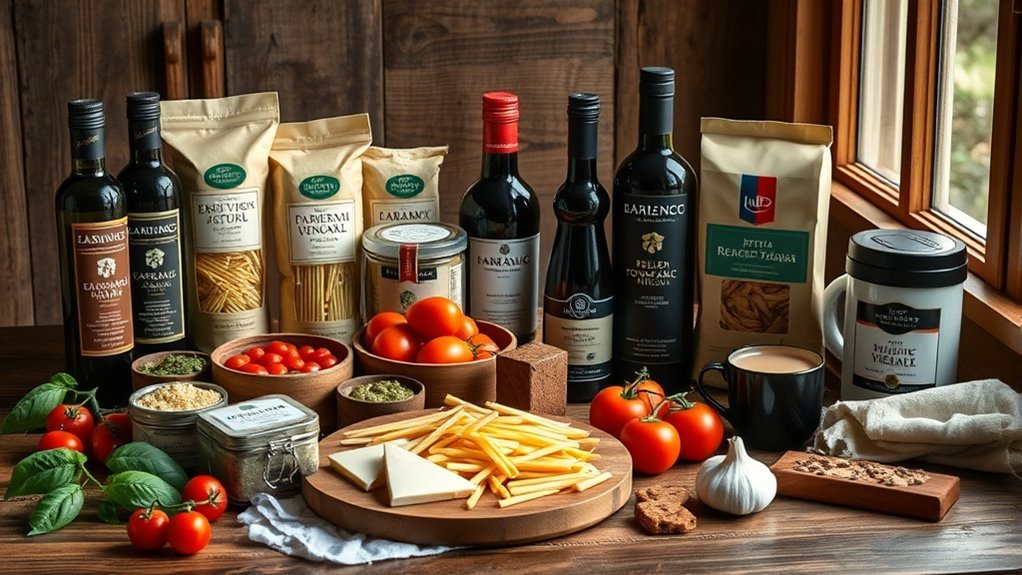
The best Italian food brands are not all best for the same reason. Some offer dependable everyday value, while others stand out for protected origin, traditional production, or a specific specialty. This guide separates true Italian brands from protected food names and Italian-style products, then shows you which pasta, tomatoes, olive oil, cheese, coffee, sauces, and sweets are worth considering.
Quick Answer
Start with De Cecco, Rummo, La Molisana, Pastificio Di Martino, or Pastificio Liguori for dry pasta; Mutti for tomatoes; Lavazza or illy for coffee; and Ferrero or Venchi for sweets. For Parmigiano-Reggiano, Pecorino Romano, Pasta di Gragnano, and San Marzano tomatoes, look for the protected PDO or PGI name rather than treating it as a brand.
Key Takeaways
- Choose by category and use case. The best pasta brand may not make the best tomatoes, coffee, or chocolate.
- PDO and PGI names identify protected products linked to a place and production rules. They are not company brands.
- Bronze-drawn pasta usually has a rougher surface, but protein level, shape, drying method, and cooking technique also affect the final texture.
- For olive oil, judge the individual bottle by category, origin, harvest information, packaging, and freshness, not by brand name alone.
- Rao’s, Prego, and Classico are Italian-American or Italian-style sauce labels, not Italian food companies.
Disclosure: As an Amazon Associate I earn from qualifying purchases. Some links on this page are affiliate links, at no extra cost to you.
What Makes a Good Italian Food Brand?
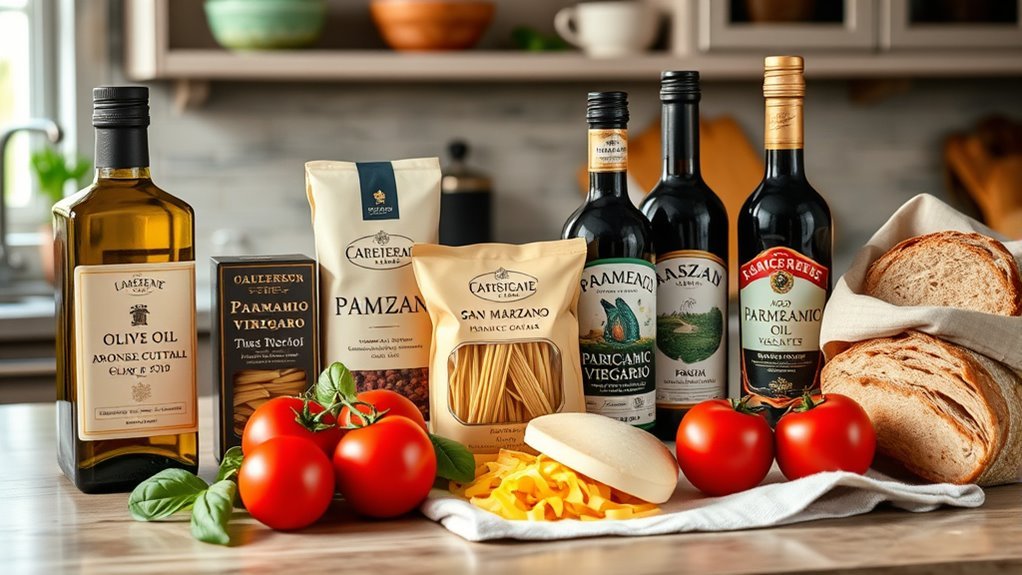
A good Italian food brand gives you clear information about what the product is, where it was made, and why it suits a particular use. For dry pasta, useful signs include durum wheat semolina, a shape that matches your sauce, reliable cooking instructions, and, when stated, bronze-die extrusion or controlled drying. For tomatoes, look at the tomato origin, product type, and ingredient list. For coffee, choose a roast and grind that match your brewing method.
Authenticity does not always mean that every ingredient was grown in Italy. Coffee beans, cacao, and some wheat may come from other countries even when an Italian company roasts, blends, or manufactures the finished product in Italy. A trustworthy label explains origin without using vague language to imply more than it can prove.
Note: Parmigiano-Reggiano, Pecorino Romano, Gorgonzola, Pasta di Gragnano, and Pomodoro San Marzano dell’Agro Sarnese-Nocerino are protected product names, not brands. Different approved producers may sell them under their own company labels.
How We Ranked These Italian Brands
This guide uses verifiable product and company information rather than pretending that one brand wins every category. The main criteria are:
- Italian identity: the company was founded in Italy or has a clear Italian manufacturing tradition.
- Product transparency: the label or official product information explains ingredients, origin, processing, or certification.
- Category strength: the brand is known for the product being recommended, such as pasta, tomatoes, coffee, or chocolate.
- Useful choice: the product has a practical reason to buy it, such as everyday value, protected origin, specialty texture, or broad availability.
- Claim accuracy: protected terms and manufacturing claims are used only where the specific product qualifies.
This is an editorial buying guide, not a blind taste-test ranking. Taste, availability, and price vary by country and retailer, so the best choice for you may differ from the order shown here.
How to Read Italian Food Labels
The front of a package can look Italian without proving that the food was made in Italy. Check the back or side label for the legal product name, manufacturer or food business operator, country-of-origin statement, ingredient list, and any protected-origin logo.
- PDO or DOP: the product has a strong link to a defined place, and all major production stages must occur in that region.
- PGI or IGP: at least one important production, processing, or preparation stage is linked to the named region.
- “Product of Italy” or “Made in Italy”: useful wording, but read the full origin statement because rules differ by product and market.
- Italian-style: describes a style or recipe. It does not prove Italian ownership, production, or ingredient origin.
The European Commission’s geographical-indication guide explains how PDO and PGI protections work.
Best Italian Pasta Brands for Every Day
For a dependable everyday pantry, these brands cover different budgets and textures:
| Brand | Best For | Why Consider It |
|---|---|---|
| Barilla | Availability and variety | An Italian family-owned company with standard, whole-grain, gluten-free, and bronze-cut ranges in many markets. |
| De Cecco | A rougher everyday dry pasta | The company describes rough bronze drawing and low-temperature, slow drying as part of its method. |
| Rummo | Firm texture and cooking tolerance | Its Lenta Lavorazione process emphasizes controlled mixing, extrusion, drying, and cooking-performance checks. |
| La Molisana | High-protein classic pasta | Its Classic line is bronze-drawn and listed by the company at no less than 14% protein. |
| Garofalo | Pasta di Gragnano PGI options | Many products carry the protected Pasta di Gragnano PGI name. Check the individual package for the PGI logo. |
Barilla is usually the easiest starting point when you need broad availability. De Cecco and Rummo are strong upgrades when you prefer a rougher feel or more cooking tolerance. La Molisana suits shoppers who specifically want a higher-protein classic line. Always compare the exact package because one brand may sell several ranges made with different processes.
Bronze-Cut Pasta Brands for Better Sauce Cling
Bronze-die extrusion can leave dry pasta with a rougher surface than a very smooth die finish. That texture can help sauce spread across the pasta, especially when you finish the noodles in the pan with sauce and a little starchy cooking water. It does not automatically make every bronze-cut product better than every smooth product.
Why Bronze-Cut Matters
The roughness created by bronze dies is easy to see and feel on many products. The official specification for Pasta di Gragnano PGI identifies coarseness from bronze draw-plates as a defining physical feature. Sauce cling also depends on the shape, starch released during cooking, and how you combine the pasta and sauce.
Best Brands to Buy
Good bronze-drawn choices include De Cecco, La Molisana Classic, and Pasta di Gragnano PGI producers such as Pastificio Di Martino and Pastificio Liguori. Rummo also describes special dies that create a rough sheet as part of its Lenta Lavorazione process.
Shapes That Hold Sauce
Match the shape to the sauce instead of buying by brand alone:
- Rigatoni, paccheri, and mezze maniche: good for chunky ragù, baked dishes, and thick vegetable sauces.
- Fusilli and casarecce: useful for pesto, ricotta-based sauces, and small chopped ingredients.
- Spaghetti and linguine: suited to smoother tomato sauces, seafood, oil-based sauces, and emulsified cheese sauces.
- Orecchiette and shells: hold small pieces of vegetables, beans, sausage, or cheese in their cups.
Pro Tip: Stop cooking the pasta one or two minutes before it reaches your preferred texture, then finish it in the sauce. Add cooking water a spoonful at a time to help the sauce coat the pasta.
Best Budget Italian Food Brands
Budget depends on your local store, but a few Italian brands are often widely available enough to compete on price. Barilla is a practical everyday pasta choice, while De Cecco can be good value when discounted. Mutti’s basic passata, peeled tomatoes, or finely chopped tomatoes can replace a separate jarred sauce in simple recipes. Cirio is another established Italian tomato name commonly sold in cans, cartons, and jars.
For fresh filled pasta, Giovanni Rana can offer a convenient middle ground between dry pasta and restaurant food. Ferrero products such as Nutella and Ferrero Rocher are mass-market Italian sweets rather than artisan chocolate, but they are accessible options when that familiar style is what you want.
Ronzoni and San Giorgio may be affordable pasta labels in the United States, but they should be described as U.S. pasta brands rather than Italian brands.
Premium Italian Food Brands Worth Splurging On
A premium price makes the most sense when it buys a feature you can verify: protected origin, a specialty ingredient, small-format production, longer maturation, unusual shapes, or a carefully documented method. Packaging alone is not proof of better food.
Artisan Brands and Craft
For dry pasta, Pastificio Di Martino and Pastificio Liguori give you Pasta di Gragnano PGI products with production requirements tied to Gragnano. Felicetti is worth exploring for specialty grain and organic pasta lines, while premium regional producers may offer shapes that are difficult to find from large brands.
For balsamic vinegar, Giuseppe Giusti and Mussini offer aged and specialty products at several price levels. Read the label carefully because “Balsamic Vinegar of Modena PGI,” traditional balsamic vinegar PDO, condiments, and glazes are different products with different rules and flavor profiles.
Worth the Splurge
| Product or Brand | Reason to Spend More |
|---|---|
| Pasta di Gragnano PGI | Protected production area and defined pasta-making requirements. |
| Parmigiano-Reggiano PDO, 24 months or older | More developed aroma and a drier, more crystalline texture than younger cheese. |
| Venchi or Amedei chocolate | Specialty gianduja, pralines, single-origin bars, or gift-quality assortments. |
| A well-documented regional EVOO | Specific harvest, olive variety, place of origin, and protective packaging. |
Best Italian and Italian-Style Sauce Brands
This category needs a clear distinction. Barilla and Giovanni Rana are Italian-origin brands with prepared sauces in some markets. Mutti is an Italian tomato specialist whose passata and canned tomatoes make a fast base for homemade sauce. Rao’s Homemade began from a New York restaurant and is best described as Italian-American, even though it uses an Italian culinary identity and ingredients sourced from Italy for some products.
Classico and Prego are U.S. Italian-style sauce labels. Bertolli has Italian roots, but the brand’s ownership and product manufacturing vary by market and product category. None of these distinctions automatically determines flavor. They simply help you understand what you are buying.
- For a ready-to-heat premium marinara: Rao’s Homemade is a popular Italian-American option with a short ingredient approach on many varieties.
- For broad Italian-brand availability: Barilla sauces are easy to pair with the company’s pasta.
- For refrigerated sauces: Giovanni Rana offers tomato, pesto, and cream-based choices in markets where they are sold.
- For more control: use Mutti passata or peeled tomatoes, olive oil, garlic or onion, salt, and herbs to make a simple sauce.
Best Italian Olive Oil Brands
Choose the bottle before the brand. Extra virgin olive oil is the highest retail category of virgin olive oil, but “low acidity” refers to measured free acidity, not a mild or non-tangy taste. Under international and EU standards, extra virgin olive oil must meet chemical and sensory requirements, including free acidity of no more than 0.8%.
Widely distributed Italian-origin names include Monini, Colavita, Filippo Berio, and Frantoia Barbera. Each sells more than one oil, so a brand recommendation is only a starting point. Compare the individual bottle’s origin statement, harvest or best-before information, olive variety when given, and packaging.
Extra Virgin Quality
Look for “extra virgin olive oil” as the legal category, then check where the olives were grown and where the oil was produced. Dark glass or metal helps protect oil from light. A harvest date is useful when available, but a properly stored bottle without one is not automatically poor quality. Buy a size you can finish while the aroma still tastes fresh.
Regional Olive Varieties
Italian oils can taste different because of olive varieties, ripeness, climate, milling, and storage. Tuscan oils often feature varieties such as Frantoio, Leccino, and Moraiolo. Ligurian oils may use Taggiasca, while Puglian oils often feature Coratina or Ogliarola. These are broad patterns, not guarantees for every bottle.
- Delicate oil: use with fish, pesto, mild vegetables, or fresh cheese.
- Medium fruity oil: use for salads, tomato dishes, soups, and everyday finishing.
- Robust or peppery oil: use with beans, grilled vegetables, steak, bitter greens, or toasted bread.
Pro Tip: Store olive oil tightly closed in a cool, dark cabinet away from the stove. Heat, light, and oxygen speed flavor loss.
Italian Cheese Brands Worth the Price
Protected Italian cheeses are better chosen by designation, producer, age, and intended use than by a single national brand. Parmigiano-Reggiano PDO must mature for at least 12 months, and older wheels develop a drier texture and stronger savory notes. Pecorino Romano PDO is made from sheep’s milk and can be sold after at least five months for table cheese or eight months for grating cheese.
- Parmigiano-Reggiano PDO: grate over pasta, shave onto salads, or serve older pieces as a table cheese.
- Pecorino Romano PDO: use for salty, assertive dishes such as cacio e pepe, carbonara, and amatriciana.
- Mozzarella di Bufala Campana PDO: choose for Caprese, pizza added near the end of baking, or simple salads.
- Gorgonzola PDO: use in risotto, sauces, polenta, or cheese boards.
- Fresh ricotta: compare freshness, milk type, and ingredient list because “ricotta” alone does not identify one protected product or producer.
On prepacked Parmigiano-Reggiano, look for the PDO wording and the stated minimum maturation. For cheese cut at a counter, ask to see the marked rind or original wheel label.
Finest Italian Canned Tomatoes and Pantry Staples
Mutti is one of the clearest starting points for Italian tomatoes because the company states that its core tomato products use 100% Italian tomatoes. Cirio is another long-established Italian name with peeled, chopped, passata, and paste formats. Choose the format based on your recipe rather than assuming whole tomatoes are always best.
Best Canned Tomatoes
- Mutti: useful for passata, finely chopped tomatoes, peeled tomatoes, and concentrated tomato paste.
- Cirio: broad range for everyday sauces, soups, and braises.
- La Valle: an option for Italian peeled tomatoes and regional tomato products where available.
- Cento: a U.S. company known for imported Italian tomato products; check the specific can for origin and certification.
- Pomodoro San Marzano dell’Agro Sarnese-Nocerino PDO: a protected canned tomato designation, not a brand. Look for the full protected name and PDO markings.
The protected San Marzano PDO name applies to tomatoes that meet the production specification and are processed in the defined area. A can that says only “San Marzano style,” “San Marzano type,” or uses San Marzano as a variety name is not the same as the protected PDO product.
Essential Pantry Staples
A useful Italian pantry needs fewer products than most shopping lists suggest. Start with dry pasta, canned tomatoes or passata, extra virgin olive oil, a hard grating cheese, and a vinegar you will actually use. Add capers, olives, anchovies, artichokes, dried porcini, polenta, or legumes according to the dishes you cook.
Giuseppe Giusti and Mussini are established choices for balsamic products, while Ponti offers vinegars and preserved vegetables. Read the legal name because balsamic glaze, Balsamic Vinegar of Modena PGI, and Traditional Balsamic Vinegar PDO are not interchangeable.
Best Italian Condiment Brands
These brands cover useful pantry categories without pretending that one company is best at everything:
- Mutti: tomatoes, passata, and tomato concentrates.
- Colavita: olive oils, vinegars, and pasta for broad pantry coverage.
- Giuseppe Giusti: balsamic vinegars and condiments at several aging and price levels.
- Ponti: wine vinegar, balsamic products, capers, and preserved vegetables.
- Mussini: balsamic vinegar and sweet-tart finishing condiments.
- Giovanni Rana: fresh pasta and refrigerated sauces.
Use manufacturer information to narrow the field, then judge the exact product label. A trusted brand can still sell entry-level and premium lines with very different ingredients and flavor.
Authentic Italian Coffee Brands
Italian coffee brands usually import green coffee beans, then blend, roast, grind, or package them according to an Italian coffee tradition. The coffee does not need to be grown in Italy to be an Italian-roasted product.
| Brand | Good Starting Point |
|---|---|
| Lavazza | A wide range of blends for espresso machines, moka pots, and automatic machines. The company began in Turin in 1895. |
| illy | A consistent 100% Arabica house-blend style sold as beans, ground coffee, and compatible systems. |
| Kimbo | Darker, fuller-bodied Neapolitan-style blends. |
| Segafredo Zanetti | Broad espresso and food-service availability. |
| Caffè Borbone | Pods, capsules, and bold southern Italian-style blends. |
Choose whole beans when you can grind immediately before brewing. For pre-ground coffee, match the grind to your moka pot, espresso machine, filter brewer, or French press. A famous Italian brand cannot compensate for the wrong grind size or stale storage.
Top Italian Chocolate and Sweet Brands
Italy’s sweet brands range from global supermarket products to specialty chocolate:
- Ferrero: founded in Alba, Piedmont, and known for Nutella, Ferrero Rocher, Kinder, and Tic Tac.
- Venchi: a Turin chocolate house dating to 1878, known for gianduja, cremini, pralines, bars, and gelato.
- Perugina: best known internationally for Baci hazelnut chocolates.
- Caffarel: associated with Piedmontese gianduja and hazelnut chocolate.
- Amedei: a premium Tuscan chocolate maker for bars, pralines, and gift boxes.
Ferrero is the practical mass-market choice. Venchi, Caffarel, and Amedei make more sense when you want specialty gianduja, a tasting bar, or a gift. Compare cacao percentage, filling, nut content, and package size instead of assuming the most expensive box will suit your taste.
Why Brand Quality Matters in Italian Pasta
Brand quality matters because dry pasta can differ in wheat selection, protein level, extrusion, shape design, drying, packaging, and quality control. Still, avoid turning one feature into a universal rule.
| Feature | What It May Affect | Important Limit |
|---|---|---|
| Bronze-drawn surface | Roughness and sauce coating | Shape and cooking technique still matter. |
| Higher protein | Firmness and cooking tolerance | The percentage varies by product line and measurement basis. |
| Controlled drying | Texture, aroma, and product consistency | Longer drying is not automatically better in every case. |
| Protected PGI name | Verified link to Gragnano and defined production rules | PGI confirms compliance, not that every shopper will prefer the taste. |
The best test is practical: cook the same shape from two brands in the same pot, salt the water consistently, taste before the package time ends, and finish both with the same sauce. That comparison tells you more about your preference than marketing language alone.
Best Italian Food Brands to Buy First
For a simple first order, choose one useful item from each category:
- Barilla: an accessible first dry pasta when variety and availability matter.
- De Cecco or Rummo: a step up when you want to compare texture and cooking performance.
- Mutti: passata or peeled tomatoes for sauces, soups, and braises.
- Parmigiano-Reggiano PDO: a 24-month wedge for grating and serving at the table.
- Lavazza or illy: coffee in the correct format for your brewing equipment.
- Venchi or Ferrero: a sweet choice depending on whether you want specialty chocolate or a familiar mass-market treat.
- A clearly labeled Italian EVOO: a dark bottle or tin in a size you can use while fresh.
This starter pantry gives you enough range for pasta dinners, tomato sauces, salads, coffee, and dessert without buying several near-duplicate products.
Frequently Asked Questions
What is Italy’s No. 1 pasta brand?
Barilla is the world’s largest pasta manufacturer and one of the most widely distributed Italian pasta brands. That does not make it the automatic taste winner. De Cecco, Rummo, La Molisana, and Pasta di Gragnano PGI producers may suit you better when you prioritize a rougher surface, higher protein, or a specific production method.
Is De Cecco better than Barilla?
De Cecco is often the better fit when you want bronze-drawn pasta and the company’s low-temperature, slow-drying method. Barilla may be better for price, availability, shape selection, whole-grain options, or gluten-free choices. Compare the same shape and product tier rather than judging the companies as a whole.
Is Rao’s an Italian brand?
Rao’s Homemade is an Italian-American food brand whose sauce line grew from Rao’s restaurant in New York City. It is not an Italian company in the same sense as Barilla, Mutti, or Giovanni Rana, although its recipes and brand identity draw heavily from Italian-American cooking.
Is San Marzano a tomato brand?
No. Pomodoro San Marzano dell’Agro Sarnese-Nocerino PDO is a protected product name. Several approved companies can pack certified tomatoes under their own brands. Check for the full PDO name, official markings, and the producer details.
What Italian food can I eat with GERD?
GERD triggers differ by person. Many people do better with smaller portions and simple dishes such as plain pasta with tolerated vegetables, broth-based soups, grilled lean protein, or a light olive-oil dressing. Tomatoes, coffee, chocolate, high-fat foods, mint, alcohol, and spicy foods commonly worsen symptoms for some people. Track your own triggers and ask a doctor or registered dietitian for personal guidance.
Warning: Food changes can reduce symptoms for some people, but persistent reflux, trouble swallowing, vomiting, bleeding, unexplained weight loss, or chest pain needs medical evaluation.
What is a must-buy food from Italy?
A protected regional product is the most meaningful choice. Consider Parmigiano-Reggiano PDO, Pecorino Romano PDO, Pasta di Gragnano PGI, a regional extra virgin olive oil, or Pomodoro San Marzano dell’Agro Sarnese-Nocerino PDO. Choose based on what you can transport, store, and use.
Conclusion
The best Italian food brands earn a place in your pantry by doing a particular job well. Barilla brings reach and variety, De Cecco and Rummo offer distinct pasta-making methods, Mutti specializes in Italian tomatoes, Lavazza and illy represent major Italian coffee traditions, and Ferrero and Venchi cover two different levels of sweets.
Protected names matter just as much as brands. When you buy Parmigiano-Reggiano PDO, Pecorino Romano PDO, Pasta di Gragnano PGI, or certified San Marzano PDO tomatoes, the designation tells you more about origin and production than a decorative Italian-looking package. Read the exact label, choose for the dish you plan to make, and spend more only when the product gives you a feature you value.
Sources
- European Commission: Geographical indications and quality schemes: explains PDO and PGI protections.
- EUR-Lex: Pasta di Gragnano PGI product specification: supports the protected production method, bronze-die characteristic, protein minimum, and drying range.
- International Olive Council: Olive oil categories and definitions: supports the extra virgin olive oil definition and acidity limit.
- Parmigiano Reggiano Consortium: Product guide: supports the minimum 12-month maturation.
- San Marzano PDO Consortium: Product characteristics: supports the protected tomato varieties and PDO requirements.
- NIDDK: Eating, diet, and nutrition for GERD: supports the discussion of common reflux triggers.
