
Last Updated on July 28, 2026 by Daniel Globe
Bologna makes an excellent base for exploring Emilia-Romagna and several nearby Italian cities. You can see Ravenna’s shimmering mosaics, taste traditional balsamic vinegar in Modena, cycle through Renaissance Ferrara, spend an afternoon beside the Adriatic, or slow down in a medieval hill town. The best choice depends on your interests, travel time, and whether you want to use a train or car.
Quick Answer
The best day trip from Bologna depends on your interests: choose Ravenna for UNESCO mosaics, Modena or Parma for food, Ferrara for Renaissance streets, Rimini for beaches and Roman history, and Brisighella for a quiet hill town. Major cities are easy by train, while smaller towns can be simpler by car.
Key Takeaways
- Easiest train trips: Modena, Ferrara, Faenza, Parma, Ravenna, and Rimini all have useful rail connections from Bologna Centrale.
- Best for art and history: Ravenna, Ferrara, Parma, and Florence offer the strongest concentration of major monuments.
- Best for food: Choose Modena for traditional balsamic vinegar or Parma for Parmigiano Reggiano and Prosciutto di Parma.
- Best in warm weather: Rimini and Cesenatico combine historic centers with Adriatic beaches.
- Plan ahead: Check current train schedules, museum hours, timed-entry rules, restaurant reservations, and spa admission before leaving Bologna.
Disclosure: As an Amazon Associate I earn from qualifying purchases. Some links on this page are affiliate links, at no extra cost to you.
Compare the Best Day Trips From Bologna
Travel times vary by service, day, and engineering work, but the estimates below help you narrow the choices. Check your exact date on the official Trenitalia journey planner before booking activities.
| Destination | Best For | Typical One-Way Rail Time | Best Transport | Plan Ahead |
|---|---|---|---|---|
| Modena | Food, cars, UNESCO sights | About 20–35 minutes | Train | Reserve vinegar tours and major restaurants |
| Ferrara | Renaissance architecture, cycling | About 25–35 minutes | Train | Check castle and cathedral access |
| Faenza | Ceramics and museums | About 35–55 minutes | Train | Book artisan workshops separately |
| Parma | Food, cathedral art, opera | About 50–70 minutes | Train for the city; tour or car for producers | Production sites are usually outside the center |
| Ravenna | UNESCO mosaics and late Roman history | About 60–80 minutes | Train | Reserve timed monuments before travel |
| Rimini | Beach, Roman history, nightlife | About 55–90 minutes | Train | Allow time between the center and beach |
| Cesenatico | Canal, maritime history, seafood | About 1 hour 25 minutes–2 hours | Train or car | Some journeys require a change |
| Brisighella | Hill-town scenery and slow travel | About 1 hour 15 minutes–1 hour 45 minutes | Train via Faenza or car | Expect hills and limited return options |
| Santarcangelo | Medieval lanes and underground caves | About 1 hour 10 minutes–1 hour 40 minutes | Train or car | Cave and fortress access may be guided |
| Salsomaggiore Terme | Spa time and Liberty architecture | About 1 hour 30 minutes–2 hours 15 minutes | Train via Fidenza or car | Reserve spa entry in advance |
Note: Rail times are planning estimates, not fixed schedules. Faster trains may cost more or require reservations, while regional services can be affected by strikes, seasonal timetables, and engineering work.
How to Plan a Day Trip From Bologna
Choose the Train for Major Cities
For Modena, Parma, Ferrara, Ravenna, Faenza, and Rimini, the train usually avoids parking and brings you close to a walkable center. Search from Bologna Centrale, compare the arrival time with attraction opening hours, and check the final return options before buying timed museum or restaurant reservations.
Follow the validation or check-in instructions shown on your ticket. Requirements differ between regional, Intercity, and high-speed services, so do not assume every ticket works the same way.
Use a Car for Countryside Stops
A car is more useful when your main goal is a rural acetaia, cheese dairy, ham producer, hill village, or attraction outside a railway center. It can also make Brisighella and Salsomaggiore easier to combine with nearby countryside. Check limited-traffic zones before driving into an Italian historic center, and use designated parking outside restricted streets.
Avoid Overloading the Day
A short train ride does not mean every attraction is beside the station. Allow time to walk, find entrances, eat lunch, and return to the platform. One major city normally fills a day. Combining two places works best only when they are close, compact, and served by a frequent route.
Pro Tip: Book the activity that has the strictest entry time first—such as Ravenna’s timed monuments, a producer tour, or a spa session—then build the train journey and meals around it.
Warning: Do not rely on an old screenshot of a timetable. Check live rail information on the morning of your trip, especially during strikes, severe weather, holidays, or scheduled railway work.
Explore Ravenna’s UNESCO Mosaics and Rich History
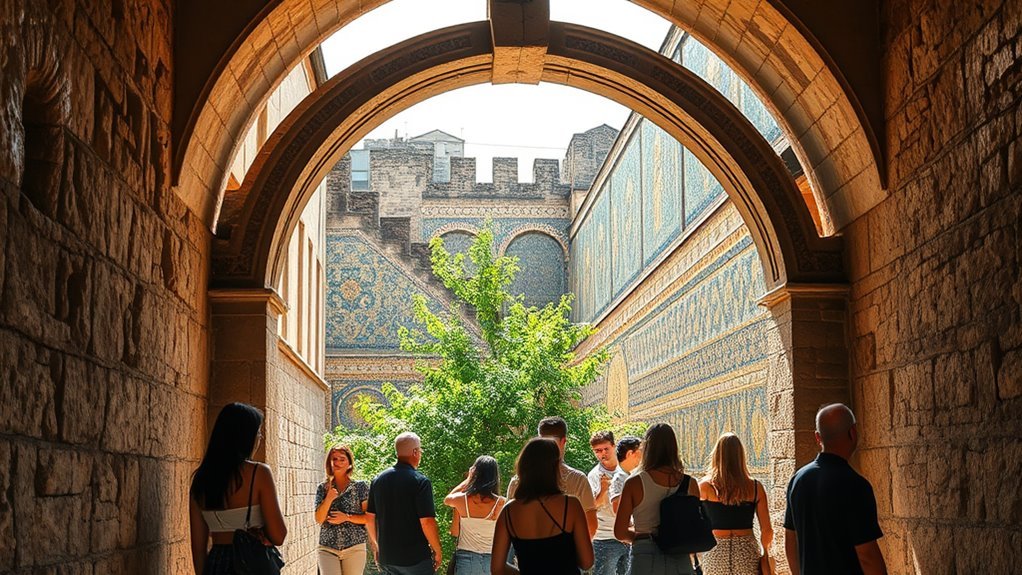
Ravenna is the strongest day-trip choice for travelers who care about late Roman history, Byzantine art, and religious architecture. The city preserves eight UNESCO-listed Early Christian monuments, with mosaics and buildings dating mainly from the fifth and sixth centuries.
Ravenna’s UNESCO designation covers eight separate monuments, so a successful day trip requires priorities rather than an attempt to rush through every site.
Start with the Basilica of San Vitale and the nearby Mausoleum of Galla Placidia. Continue to the Neonian Baptistery and the Basilica of Sant’Apollinare Nuovo. These central monuments create a practical walking route and show different periods and styles within Ravenna’s mosaic heritage.
Timed entry is mandatory for the Mausoleum of Galla Placidia and the Neonian Baptistery. Review the current combinations, prices, and entry rules on the official Ravenna Mosaici website before choosing your train.
A Simple Ravenna Day-Trip Itinerary
- Morning: Walk from the station toward Sant’Apollinare Nuovo, then continue through the center.
- Late morning: Visit San Vitale and Galla Placidia at your reserved time.
- Lunch: Try piadina or another Romagna specialty in the historic center.
- Afternoon: See the Neonian Baptistery, Dante’s Tomb, or the Archiepiscopal Museum according to your interests.
Do not add the Basilica of Sant’Apollinare in Classe unless its location outside the center fits your return schedule. Ravenna rewards slow observation; the details in the mosaics are easy to miss when you race between buildings.
Must-Try Dishes and Culinary Tours in Modena
Modena is one of the easiest and most varied trips from Bologna. It combines a compact UNESCO-listed center, traditional food, and automotive museums within a short rail journey.
Begin around Piazza Grande, the cathedral, and the Ghirlandina Tower. From there, choose between food-focused stops and the Museo Enzo Ferrari, which is within walking distance of the railway station.
Understand Modena’s Balsamic Vinegar
The phrase “balsamic vinegar” covers products with different rules. Traditional Balsamic Vinegar of Modena PDO is made from cooked grape must and aged for at least 12 years; the extravecchio category is aged for at least 25 years. Balsamic Vinegar of Modena PGI follows a different specification and should not be described as the same product.
An acetaia visit is the best way to understand the barrels, transfers, classifications, and tasting method. The official Visit Modena tourism site lists a municipal acetaia experience, while other producers may be outside the center and require a taxi, tour, or car.
Other dishes to look for include tortellini, tortelloni, gnocco fritto, tigelle, Parmigiano Reggiano, and Lambrusco. A food tour or cooking class can be useful, but confirm the meeting point before assuming it is close to the station.
Osteria Francescana holds three Michelin stars in the 2026 Michelin Guide. It is a destination restaurant rather than a spontaneous lunch stop, so advance reservations and a suitable budget are essential.
Pro Tip: For a balanced Modena day, combine the historic center with either one food experience or one automotive museum. Trying to fit the center, a rural acetaia, two car museums, and a long tasting menu into one day is unrealistic.
Historic Streets and Culinary Delights in Parma
Parma blends Romanesque architecture, Renaissance painting, opera culture, and some of Italy’s best-known protected foods. The center is walkable from the railway station, making it a simple independent trip when your priority is art and atmosphere.
- Visit Parma Cathedral: See the Romanesque structure and Correggio’s dramatic dome fresco.
- Explore the Baptistery: This pink-marble landmark contains sculpture associated with Benedetto Antelami.
- Walk to Palazzo della Pilotta: Depending on opening hours, its complex includes the Teatro Farnese and National Gallery.
- Browse the center: Continue through Piazza Garibaldi, Via Cavour, food shops, cafés, and delicatessens.
The official Parma Welcome one-day route provides a useful city itinerary. However, a city walk is not the same as a production tour.
Planning a Parma Food-Production Tour
Parmigiano Reggiano dairies and Prosciutto di Parma producers are generally in the countryside rather than beside Parma’s central attractions. Production also follows a working schedule, with cheese-making commonly observed in the morning. A guided tour, private transfer, or rental car is usually easier than trying to reach several producers independently.
Choose one of two day-trip styles:
- City day: Cathedral, Baptistery, Pilotta complex, lunch, and central food shops.
- Producer day: Prearranged dairy and ham visits, tastings, and limited time in the city center.
Note: Do not promise yourself a factory visit simply because a product carries “Parma” in its name. Confirm the producer’s address, tour language, start time, and transportation before booking your train.
Experience Ferrara’s Renaissance Architecture and Culture
Ferrara is one of the easiest cultural day trips from Bologna. The UNESCO-listed Renaissance city developed into an influential intellectual and artistic center under the House of Este.
Start at the moated Castello Estense, then walk toward the cathedral and Piazza Trento e Trieste. Continue into the medieval center and Via delle Volte, where overhead passages help give the street its distinctive appearance. The official Ferrara medieval-center itinerary links these principal sights.
| Highlight | Why Visit |
|---|---|
| Castello Estense | A four-towered, moated castle that explains the power and private life of the Este court. |
| Ferrara Cathedral | A landmark combining Romanesque solidity with later Gothic details. |
| Via delle Volte | One of the most atmospheric streets in the medieval part of the city. |
| Renaissance Addizione Erculea | A planned extension associated with Ferrara’s influential “ideal city” design. |
| Local Cuisine | Try cappellacci di zucca, often served with butter and sage or ragù. |
Ferrara is famously bicycle-friendly, and renting a bike can help you reach the Renaissance streets and city walls without rushing. If you prefer walking, keep the route centered on the castle, cathedral, medieval quarter, and one museum.
For seasonal culture, check official dates for the Palio of Ferrara, Ferrara Buskers Festival, exhibitions, and concerts. Do not plan around a generic “Estense Festival” without verifying the exact event.
Relax on Rimini’s Beaches and Discover Local History
Rimini is more than a beach resort. Its center preserves Roman monuments, medieval streets, museums, and sites connected with filmmaker Federico Fellini. In summer, you can combine those attractions with the Adriatic waterfront; outside the beach season, the historic center remains the stronger reason to visit.
- See the Arch of Augustus: This Roman gateway is one of Rimini’s defining ancient monuments.
- Visit the Domus del Chirurgo: The archaeological complex preserves mosaics and an exceptional group of ancient medical instruments.
- Walk toward the Tiberius Bridge: Continue through the historic center and the Borgo San Giuliano area.
- Add the beach: In warm weather, continue to the waterfront for a walk, swim, or reserved beach-club session.
The official Rimini tourism guide outlines the city’s archaeological and cultural attractions. Opening days can differ between museums, so check them before choosing your departure time.
The station sits between the historic center and the sea, but the main sights are not all in one cluster. Plan a clear order instead of crossing back and forth repeatedly. Beach clubs, changing facilities, and nightlife are highly seasonal.
Pro Tip: On a summer day, explore the Roman center in the cooler morning hours and move to the beach after lunch. In winter, replace beach time with a museum, the Fellini-related attractions, or a longer walk through Borgo San Giuliano.
Explore Cesenatico’s Canals and Maritime Heritage
Cesenatico offers a quieter coastal experience centered on its canal port, traditional boats, seafood, and maritime history. The canal was built centuries before Leonardo da Vinci’s visit. In 1502, Leonardo surveyed the port and recorded it in two drawings while working for Cesare Borgia.
The connection remains an important part of local identity, but it is more accurate to say Leonardo studied and drew the existing port than to claim he created the entire canal. The official tourism article on Leonardo and Cesenatico explains the surviving drawings.
Walk along the canal to see colorful buildings, fishing vessels, restaurants, and the Maritime Museum. Its floating section displays historic boats, while the land section explores navigation, fishing, and maritime life. Continue to Piazzetta delle Conserve, the fish market, or the Adriatic beach according to the season.
Cesenatico works best as a relaxed full-day trip rather than an attraction checklist. Train journeys may require a change, and schedules can be less convenient than those for Rimini. A car offers more flexibility but introduces parking considerations.
Discover the Quaint Charm of Brisighella
Brisighella is a small medieval town in the hills southwest of Faenza. It is known for its old lanes, surrounding gypsum landscape, regional olive oil, and three prominent hills crowned by the fortress, clock tower, and Monticino Sanctuary.
- Walk Via degli Asini: This elevated covered street is one of Brisighella’s most distinctive historic features.
- Visit the Rocca: The Brisighella fortress occupies one of the gypsum pinnacles above the town.
- Climb toward the Clock Tower: The hill provides broad views over the roofs and countryside.
- Taste local products: Look for Brisighella olive oil and traditional Romagna dishes.
Brisighella is compact, but it is not flat. Wear shoes suited to cobbles, slopes, and steps. The train usually involves traveling through Faenza, and return options may be less frequent than on the main Bologna–Rimini line.
Seasonal festivals and performances can add atmosphere, but dates and venues change. Check the local events calendar rather than expecting live music or access to a particular cave or quarry on every visit.
Note: Brisighella suits travelers who prefer scenery, quiet streets, and a slower pace. It is a weaker choice for anyone who wants a dense list of major indoor attractions.
Uncover Faenza’s Ceramics and Local Cuisine
Faenza is internationally associated with ceramics; the word “faience” reflects the city’s long influence on glazed earthenware. Its main attraction is the International Museum of Ceramics, whose heritage includes more than 60,000 works from different periods and regions.
The museum can fill several hours, especially for visitors interested in design, archaeology, craft, or contemporary art. Its displays extend far beyond local Renaissance pottery, covering ceramic traditions from Italy, Europe, Asia, the Islamic world, and the Americas.
After the museum, walk through Piazza del Popolo and Piazza della Libertà, see the cathedral, and browse local ceramic shops. A workshop can provide a more personal experience, but active studios do not always accept walk-ins. Reserve a class or demonstration directly with the organizer.
For lunch, look for Romagna specialties such as piadina, handmade pasta, local cheeses, and seasonal dishes. Faenza is easy to visit by train and can also be combined with Brisighella when rail times align, although the pair requires a disciplined schedule.
Visit Santarcangelo di Romagna for Medieval Streets and Caves
Santarcangelo di Romagna sits on a hill near Rimini and offers medieval lanes, views across the surrounding landscape, artisan shops, and a large network of underground spaces. The historic center feels more intimate than Rimini and works well for travelers who enjoy slow exploration.
Santarcangelo’s most unusual attraction is below street level: its underground network is generally explored through organized or guided access rather than casual independent entry.
- Rocca Malatestiana: View the fortress associated with the Malatesta family and check current guided-access information.
- Historic churches: Visit verified landmarks such as the Collegiate Church or the ancient Pieve di San Michele Arcangelo according to opening hours.
- Underground caves: Reserve an authorized visit to explore part of the subterranean network.
- Old-town walk: Continue through lanes, viewpoints, artisan businesses, and spaces connected with poet and screenwriter Tonino Guerra.
The official Santarcangelo city guide provides current descriptions of the principal monuments. Do not assume the fortress, caves, or churches will all be open without a reservation.
Santarcangelo can be reached by rail on suitable services, but a car may make the day easier if the timetable is sparse or you want to combine the town with another Valmarecchia destination.
Rejuvenate at Salsomaggiore Terme’s Thermal Baths
Salsomaggiore Terme developed as a spa destination during the nineteenth century and later became known for elaborate Liberty and Art Deco architecture. Its most famous building is Palazzo Berzieri, an ornate landmark decorated with richly colored surfaces, sculptures, and ceramic details.
After a major redevelopment, the building reopened in December 2025 as QC Spa Salsomaggiore. The current experience centers on wellness pools, saunas, steam rooms, relaxation spaces, and themed practices rather than the old assumption that every visitor is booking a medical thermal treatment.
| Experience | What to Expect | Planning Advice |
|---|---|---|
| Wellness Circuit | Pools, heat experiences, steam areas, and relaxation rooms. | Reserve an entry session and read the admission rules. |
| Massage or Treatment | Optional services booked separately from general spa entry. | Check duration, inclusions, and arrival time. |
| Architecture Visit | A chance to experience the restored Palazzo Berzieri interior. | Confirm whether access requires a spa reservation. |
Warning: Spa experiences are not suitable for every medical condition. Travelers who are pregnant or have cardiovascular, respiratory, mobility, or heat-sensitivity concerns should review the facility’s rules and seek appropriate medical advice before using hot pools, saunas, or steam rooms.
The journey commonly requires a connection at Fidenza, so compare the spa session with the available return trains. A reserved visit is safer than arriving without confirmation, especially on weekends and holidays.
Other Popular Day Trips From Bologna
The destinations above focus heavily on Emilia-Romagna, but Bologna’s rail position also makes several famous cities possible in one day.
Florence
High-speed trains can make Florence one of the fastest major-city trips from Bologna. It is best for Renaissance art, the Duomo, major museums, and the Arno. Reserve the Uffizi or Accademia in advance and avoid trying to cover the entire city in a few hours.
Verona
Verona offers the Roman Arena, Piazza delle Erbe, riverside views, churches, and medieval streets. Direct services are available on many dates, but journey times and fares vary by train type.
Mantua
Mantua is a strong choice for Gonzaga history, Palazzo Ducale, Renaissance art, and a calmer atmosphere than Florence or Venice. The rail trip may involve a change, so it requires more timetable planning.
Venice
Venice is possible as a long day trip, especially by direct high-speed train to Venezia Santa Lucia. It works best when you already know which district or major sight you want to prioritize. An overnight stay provides a more relaxed experience.
Maranello
Maranello appeals to Ferrari enthusiasts, but it does not have the same simple central-rail access as Modena. A car, organized transfer, or train to Modena followed by local transport is generally required. Check museum locations carefully because the Museo Enzo Ferrari in Modena and Ferrari Museum in Maranello are separate attractions.
Choose a Day Trip by Interest and Season
- First-time visitor: Ravenna, Modena, or Ferrara
- Art lover: Ravenna, Parma, Florence, or Mantua
- Food-focused traveler: Modena or Parma
- Car enthusiast: Modena and Maranello
- Beach day: Rimini or Cesenatico
- Quiet hill town: Brisighella or Santarcangelo
- Rainy or winter day: Faenza, Parma, Modena, or Ravenna
- Relaxation day: Salsomaggiore Terme
- Easy cycling: Ferrara
Summer brings beach weather but also heat, crowds, and busy trains. Spring and autumn are often better for walking cities and hill towns. Winter can work well for museums, mosaics, food experiences, and spa visits, though daylight hours are shorter and some seasonal businesses close.
Frequently Asked Questions
What is the best day trip from Bologna?
Ravenna is the strongest all-around choice for major art and history, while Modena is the easiest choice for food and automotive attractions. Ferrara is ideal for a short train ride, Renaissance streets, and cycling. The best destination ultimately depends on your interests.
Where can I go from Bologna by train?
Convenient rail destinations include Modena, Ferrara, Parma, Ravenna, Faenza, Rimini, Florence, Verona, and Venice. Cesenatico, Brisighella, Santarcangelo, Mantua, and Salsomaggiore are also possible, but some journeys require a connection or have fewer useful return options.
What are the Three T’s of Bologna?
The informal and cheeky saying is commonly given as torri, tortellini e tette—towers, tortellini, and breasts. It is different from Bologna’s better-known civic nicknames: La Dotta for its university, La Rossa for its red buildings and political history, and La Grassa for its rich cuisine.
How many days in Bologna are enough?
Allow at least two full days for Bologna itself. Four or five nights provide a more comfortable base if you also want one or two day trips. Travelers focused on Emilia-Romagna’s food, art, and smaller cities can use Bologna as a base for a week.
Do I need a car for day trips from Bologna?
No car is needed for the main centers of Modena, Parma, Ferrara, Ravenna, Faenza, Rimini, Florence, Verona, or Venice. A car becomes more useful for rural food producers, Maranello, hill towns, and multi-stop countryside routes.
Can I visit two destinations in one day?
It is possible but often rushed. Faenza and Brisighella can work together when train times align. Modena and Parma share a rail corridor, but combining them leaves little time for museums, producer visits, or a relaxed meal. One destination usually creates a better day.
Which Bologna day trip is best in winter?
Ravenna, Modena, Parma, and Faenza are dependable winter choices because museums, churches, mosaics, food experiences, and indoor attractions form the core of the visit. Salsomaggiore also works well when the spa session and rail timetable are booked in advance.
Conclusion
Bologna gives you access to an unusually wide range of day trips without changing hotels. Ravenna offers the region’s most remarkable mosaics, Modena and Parma reward food lovers, Ferrara makes Renaissance history easy to explore, and Rimini or Cesenatico add the Adriatic coast. Smaller places such as Brisighella, Faenza, and Santarcangelo provide a quieter alternative.
Choose one destination that matches your interests, confirm the live transport schedule, and reserve any timed attraction before departure. A focused plan will leave more room for the details that make Emilia-Romagna memorable: a mosaic viewed slowly, a historic street without a crowd, or a meal built around ingredients produced nearby.
Sources
- Trenitalia — official journey planning, ticketing, train categories, and live rail information.
- UNESCO: Early Christian Monuments of Ravenna — Ravenna’s eight monuments and their fifth- and sixth-century significance.
- UNESCO: Ferrara, City of the Renaissance, and Its Po Delta — Ferrara’s Renaissance planning and cultural importance.
- Visit Modena: Municipal Acetaia Tour — Traditional Balsamic Vinegar of Modena PDO aging categories and visitor experience.
- International Museum of Ceramics in Faenza — official description of the museum’s collection of more than 60,000 works.
- Emilia-Romagna Tourism — official regional destination, cultural, food, transport, and wellness information.
