

Last Updated on November 4, 2026 by Mason Reed
If you need a 2-person 4-season tent for cold-weather camping, focus on snow protection, stable pole design, usable floor space, and ventilation rather than a season label alone. The OneTigris Stella is a compact choice, while the GEERTOP Navigator adds a snow skirt and more substantial waterproof coatings. These six options suit different backpacking and sheltered winter-camping needs, but none should be assumed safe for extreme alpine storms without verified structural performance.
Disclosure: As an Amazon Associate I earn from qualifying purchases. Some links on this page are affiliate links, at no extra cost to you.
Quick Answer: Which Two-Person Four-Season Tent Should You Choose?
Choose the OneTigris Stella if low carried weight is your priority. Choose the GEERTOP Navigator when a snow skirt, sealed seams, and substantial waterproof coatings matter more. For dual vestibules and winter-focused details, compare the Clostnature and GEERTOP Toproad2. The BISINNA offers a wider listed floor. The Underwood Aggregator is another two-person winter-oriented model with a snow skirt and simple pole design.
Important: “4-season” is a product category, not a promise that a tent can tolerate every snowstorm or wind event.
Key Takeaways
- Check storm structure first: Pole layout, guylines, fly coverage, and snow-management features matter more than waterproof numbers alone.
- Two-person capacity can feel tight: Measure both sleeping pads and account for winter sleeping bags.
- Compare the same weight type: Packed weight and minimum trail weight are not interchangeable.
- Ventilation is essential: Condensation can build up even when the rainfly stays waterproof.
- Verify the exact Amazon variant: Weights, colors, included parts, and warranty terms can differ.
Best 2-Person 4-Season Tent Picks: Quick Comparison
These are manufacturers’ or retailers’ stated figures, not measurements from our own testing. A higher hydrostatic-head rating does not, by itself, mean better wind or snow-load performance.
| Model | Product Image | Best For | Listed Weight | Waterproof Rating | Capacity | Price and Details | Analysis |
|---|---|---|---|---|---|---|---|
| OneTigris Stella 4 Season 2-Person Camping Tent |  |
Best Overall for Lightweight Trips | 4.4 lb (listed, black model) | 3,000 mm | 2 people | Check Price on Amazon | Read Analysis |
| Geertop Portable 2 Person Waterproof Backpacking Tent | 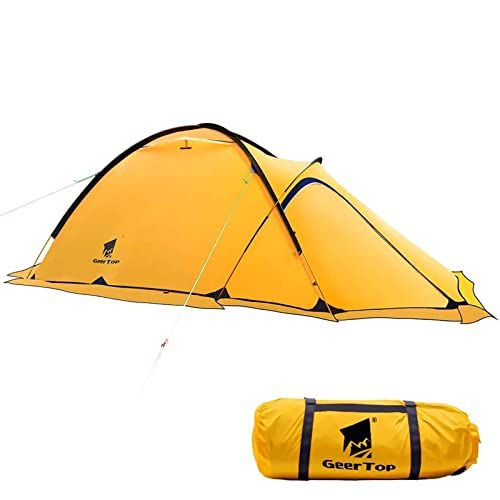 |
Best Snow-Skirt Design | 6.27 lb (listed) | 8,000 mm fly / 5,000 mm floor | 2 people | Check Price on Amazon | Read Analysis |
| Clostnature Lightweight 4 Season Backpacking Tent | 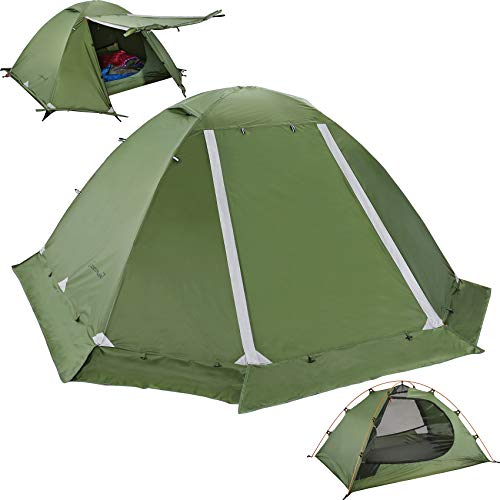 |
Best for Winter-Friendly Features | Approx. 6.3–6.6 lb (listed figures vary) | 5,000 mm coating (listed) | 2 people | Check Price on Amazon | Read Analysis |
| GEERTOP Ultralight 2 Person Backpacking Tent |  |
Best for Two-Door Access | Under 7 lb (brand-listed) | 3,000 mm | 2 people | Check Price on Amazon | Read Analysis |
| BISINNA 4 Season Lightweight Backpacking Tent for 2 |  |
Best for a Roomier Layout | 6.4 lb (listed) | 3,000 mm coating (listed) | 2 people | Check Price on Amazon | Read Analysis |
| Underwood 2-Person 4 Season Backpacking Tent |  |
Best Simple Cold-Weather Layout | 5.73 lb (source-listed) | Not independently verified | 2 people | Check Price on Amazon | Read Analysis |
Safety Note: An advertised four-season rating is not a verified mountaineering certification. For exposed ridges, severe winds, heavy snow loads, or avalanche terrain, consult qualified local guidance and use a shelter with documented performance for those specific conditions.
More Details on Our Top Picks
-
OneTigris Stella 4 Season 2-Person Camping Tent
The OneTigris Stella balances a relatively light stated weight with a double-wall layout and a silicone-coated 20D nylon fly. The 3,000 mm waterproof rating and easy-to-assemble pole system make it a practical option for backpackers who want one compact shelter for variable conditions.
Its two-person floor measures roughly 6.9 x 4.1 feet, so wide sleeping pads or bulky winter sleeping bags could make the interior feel tight. The mesh inner helps with airflow, while the outer fly provides protection against rain and wind when properly pitched.
Why You’ll Like It: You get a reasonably light shelter with simple assembly, a removable outer layer, and a compact footprint.
Best for: Backpackers and solo campers who want to keep their tent load manageable while retaining a four-season marketed design.
Consider before buying: OneTigris advises against using the Stella in extreme weather. Treat it as a versatile camping tent rather than a guaranteed severe-storm shelter. Weight figures vary by listing and variant.
- Weight: 4.4 lb (listed for black variant)
- Waterproof rating: 3,000 mm
- Capacity: 2 people
- Fabric: 20D nylon outer fabric
- Layout: Double-wall construction with mesh inner
- Useful feature: Easy pole setup and ventilation openings
-
Geertop Portable 2 Person Waterproof Backpacking Tent
The GEERTOP portable two-person model, sold as the Navigator, has more winter-focused details than a basic three-season dome. Its snow skirt can reduce blowing spindrift, while the PU-coated fly, coated floor, sealed seams, and aluminum poles target wet and cold camping.
The manufacturer specifies an 8,000 mm waterproof coating on the outer fly and a 5,000 mm coating on the floor. These are useful material specifications, although they do not establish a tested snow-load capacity.
The double-layer design offers separate weather protection and sleeping space. GEERTOP recommends pitching the outer tent first, which can help keep the inner tent protected during setup in poor weather.
Why You’ll Like It: The combination of snow skirt, taped seams, and defined waterproof ratings makes its winter-oriented features easier to evaluate.
Best for: Campers who expect occasional snow, cold winds, and wet ground at sheltered campsites.
Consider before buying: At a listed 6.27 pounds, it is heavier than the Stella. The snow skirt does not prove a specific wind-speed or snow-load rating. Pitch the fly correctly and use all needed anchors.
- Weight: 6.27 lb (listed)
- Waterproof rating: 8,000 mm fly; 5,000 mm floor
- Capacity: 2 people
- Construction: Double-wall; aluminum poles
- Winter feature: Snow skirt; taped seams
- Setup: Outer fly first, per manufacturer
-
Clostnature Lightweight 4 Season Backpacking Tent
The Clostnature four-season tent emphasizes cold-weather versatility with snow flaps, a double-wall design, aluminum poles, and two side vestibules. Its manufacturer-listed interior is about 86.6 x 59 inches, giving two regular-width sleeping pads a more practical fit than some narrow two-person shelters.
The vestibules provide separate storage for boots, backpacks, and other camping equipment. This helps free up sleeping space, especially when you carry bulkier winter gear.
Its polyester rainfly, groundsheet, and bathtub-style floor use a stated PU 5,000 mm coating. Factory-sealed seams provide another layer of protection against moisture.
Why You’ll Like It: You get snow flaps, separate doors, useful gear storage, and a fairly generous two-person interior.
Best for: Two campers who value sheltered gear storage and extra room for winter bedding.
Consider before buying: Sources list weights around 6.3 to 6.6 pounds, so verify the exact packed weight. Despite its product name, this is not ultralight by modern backpacking standards.
- Weight: Approx. 6.3–6.6 lb (listed figures vary)
- Waterproof rating: PU 5,000 mm coating (listed)
- Capacity: 2 people
- Interior: About 86.6 x 59 in (listed)
- Winter features: Snow flaps and double-wall construction
- Storage: Two doors and two vestibules
-
GEERTOP Ultralight 2 Person Backpacking Tent
The GEERTOP Toproad2-style two-person tent is aimed at campers who want separate entrances and a place for packs and wet shoes. The brand describes a four-season build with a PU 3,000 mm waterproof coating, sealed seams, snow skirt, aluminum poles, and an interior around 82.6 x 55 inches.
Two D-shaped doors let camping partners enter or exit without climbing over each other. The dual vestibules also provide space for equipment outside the main sleeping area.
Its freestanding pole structure makes pitching relatively straightforward. Reflective guylines add visibility around camp after dark.
Why You’ll Like It: Two separate entrances and two vestibules make shared camping more convenient, especially with wet or bulky equipment.
Best for: Camping partners who value independent access and gear space.
Consider before buying: Although marketed for four seasons, verify the exact version before relying on winter-specific features. It is also heavier than many lightweight backpacking alternatives.
- Weight: Under 7 lb (brand-listed; variant-dependent)
- Waterproof rating: 3,000 mm (listed)
- Capacity: 2 people
- Interior: About 82.6 x 55 in
- Winter features: Snow skirt and sealed seams
- Storage: Two doors and vestibules
-
BISINNA 4 Season Lightweight Backpacking Tent for 2
The BISINNA two-person four-season model offers a listed floor of approximately 82.7 x 59 inches and a peak height of about 43.3 inches. That gives you more width for two regular sleeping pads, and its freestanding double-wall setup is approachable for newer campers.
Its 210T polyester fabric features a stated 3,000 mm waterproof coating. A rollable snow skirt helps adapt the outer shelter to snowy or milder conditions, while its two doors and ventilation openings provide useful airflow options.
Aluminum poles support the freestanding design, and the included foyer space offers a place to organize outdoor equipment.
Why You’ll Like It: Its listed width, two entrances, and rollable snow skirt create a flexible layout for couples who prefer a little more space.
Best for: Campers who prioritize interior width and straightforward assembly over minimum packed weight.
Consider before buying: The exact winter-storm rating and tested snow-load capacity were not established from the product information checked. Treat it as an all-season listing, not a certified expedition tent.
- Weight: About 6.4 lb (listed)
- Waterproof rating: 3,000 mm (source listing)
- Capacity: 2 people
- Floor size: About 82.7 x 59 in
- Material: 210T polyester
- Setup: Freestanding, double-wall
- Winter feature: Rollable snow skirt
-
Underwood 2-Person 4 Season Backpacking Tent
The Underwood Aggregator offers a straightforward two-person, four-season layout with a full-coverage fly, two aluminum poles, and a snow skirt around the base.
Its listed floor measures roughly 86.6 x 59.1 inches, with a peak height around 45.3 inches. This gives you room to compare winter sleeping pads before packing for a cold-weather trip.
Interior organization includes a light hook and gear pocket. The snow skirt provides an additional barrier against windblown snow, although the complete tent still needs proper anchoring.
Why You’ll Like It: The simple dome structure, snow skirt, and roomy stated floor dimensions make it worth considering for less-exposed cold-weather camping.
Best for: Campers who want an uncomplicated winter-oriented dome with basic interior storage.
Consider before buying: A reliable millimeter waterproof rating and independent snow-load or wind rating could not be confirmed for the exact ASIN. Choose an alternative with more documented protection if you expect severe conditions.
- Weight: 5.73 lb (source-listed; verify variant)
- Waterproof rating: Not independently verified
- Capacity: 2 people
- Floor dimensions: About 86.6 x 59.1 in (listed)
- Structure: Two aluminum poles and full-coverage fly
- Winter feature: Snow skirt
Factors to Consider When Choosing a 2-Person 4-Season Tent
A good winter-camping tent is a balance of structural strength, comfortable dimensions, manageable weight, and moisture control. Compare the features below against the specific location and forecast for your trip.
Weight and Portability
Decide whether you need a lightweight overnight shelter or can carry a heavier tent with extra winter features. Ask if the published number means packed weight, which includes stakes, guylines, and sacks, or minimum trail weight, which usually excludes some accessories.
Compare packed dimensions, too. If you hike as a pair, you can divide tent components between backpacks. However, make sure essential shelter parts remain together when needed.
Weather Resistance and Snow Handling
Waterproof ratings in millimeters describe a fabric’s resistance to water pressure. They do not indicate how much snowfall the poles can hold or what wind speed a tent can withstand.
Check a full-coverage fly, reinforced pole crossings, guyout points, seam sealing, floor construction, and snow flaps. A tent sold as four-season may still be unsuitable for exposed alpine use.
A snow skirt can help reduce drifting snow beneath the fly, but it does not replace strong poles, anchors, or a suitable campsite.
Setup Time and Ease
Practice a full pitch at home before taking the tent into cold weather. Confirm which layer goes up first, how the poles lock in, and where each guyline belongs.
Even freestanding tents must be properly anchored in wind. Snow may require purpose-made snow anchors rather than ordinary ground stakes. Always follow the manufacturer’s setup instructions.
Materials, Poles, and Floor Protection
Ripstop nylon and polyester can both work well when paired with appropriate coatings and construction. Check fabric denier, reinforced attachment points, zippers, and pole material, but do not judge overall strength using denier alone.
A correctly sized footprint can protect a thin floor. Keep its edges tucked under the tent so they do not funnel rain beneath it. Inspect the fabric and seams for wear before each trip.
Interior Space and Comfort
Measure the combined width of your sleeping pads, not only the stated two-person capacity. A tent around 55 to 59 inches wide generally fits two standard pads more easily than a narrow shelter, but tapered walls reduce usable space.
Check floor length for tall sleepers, peak height for changing clothes, and vestibule space for wet boots and packs. Remember that thick sleeping bags can occupy more space than summer bedding.
Pro Tip: Lay your two sleeping pads side by side at home and compare their combined width with the manufacturer’s usable tent-floor measurements.
Ventilation and Condensation
Breathing and damp equipment create moisture overnight. Adjustable vents, a properly tensioned rainfly, and some clearance between the fly and inner tent help manage condensation.
Avoid blocking every opening with snow or gear. A four-season tent is a weather shelter, not an insulated heated room. Keep vents functioning and never use fuel-burning heaters, stoves, or open flames inside the tent.
All-Season Versatility
Cold-weather tents may feel stuffy in summer because they use more fabric and less mesh. For mostly warm-weather backpacking with occasional light snow, a sturdy three-plus-season tent may sometimes be more appropriate than a heavier winter-oriented model.
Match the design to your expected weather, elevation, terrain, and camping experience, not the calendar alone.
Before You Buy: Four-Season Tent Checklist
- Confirm that the exact size and color variant is listed as four-season.
- Compare floor width with both sleeping pads and winter bags.
- Check total packed weight, pole material, and included stakes and guylines.
- Look for snow-management details, guyout points, and effective ventilation.
- Verify warranty, return terms, and current availability on the product page.
- Test the pitch before the trip, then check the local weather and terrain hazards.
For independent background on tent categories, see REI’s backpacking tent buying guide and Cascade Designs’ three-season versus four-season explanation.
Frequently Asked Questions
How Do I Properly Set Up a 4-Season Tent?
Choose a safe site away from avalanche paths, dead branches, and obvious flooding hazards. Follow your model’s pole and fly sequence, anchor all required corners, and tension the guylines. In snowy conditions, use appropriate snow anchors and keep vents clear. Practice at home before relying on the tent overnight.
What Materials Are Best for Four-Season Tent Durability?
Look for strong pole architecture, reliable aluminum poles, reinforced stress points, weatherproof coatings, and sealed seams. Both nylon and polyester can work. The complete shelter design matters more than a single fabric number.
Can I Use a 4-Season Tent in Summer?
Yes, but many four-season tents are heavier and less airy than three-season designs. Open available vents and doors when conditions allow, and choose shaded campsites to reduce heat.
How Do I Maintain My 4-Season Tent?
Brush away dirt, rinse or hand-wash as directed by the manufacturer, and dry the fabric fully before storage. Inspect seams, zippers, poles, and guylines after trips. Store it loosely in a cool, dry place rather than compressed for months.
What Is the Weight Limit for Two-Person 4-Season Tents?
There is no universal occupant weight limit for two-person tents. Tent capacity is normally about usable floor space, not a certified load-bearing rating. Compare floor dimensions, sleeping pad widths, and each manufacturer’s instructions. Do not rely on a generic 400-to-600-pound figure.
Does a 3,000 mm Waterproof Rating Make a Tent Safe in a Snowstorm?
No. A hydrostatic-head rating describes fabric water resistance only. Snow loading, pole strength, pitch quality, guyline support, campsite exposure, and the forecast all matter.
Conclusion: Which Tent Is the Right Fit?
For lighter backpacking, the OneTigris Stella offers a compact four-season layout. For cold and wet conditions at more sheltered sites, the GEERTOP Navigator has a useful snow skirt and well-specified waterproof coatings. The Clostnature and GEERTOP Toproad2 offer convenient dual vestibules, while the BISINNA provides more listed floor width.
The Underwood Aggregator uses a simple snow-skirt layout, but check the exact waterproof specifications. Compare dimensions, packed weight, winter features, and included gear on Amazon before buying. Never treat a tent’s four-season label as a guarantee against severe weather.
