
Last Updated on July 24, 2026 by Ethan Caldwell
Choosing between an Alaska cruise and a Europe cruise depends on what you want to experience each day. Alaska is best known for glaciers, forested coastlines, wildlife viewing, and outdoor excursions. Europe offers historic ports, local food, museums, beaches, and several distinct cruise regions. Your budget, preferred weather, flight time, and activity level should guide the final choice.
Quick Answer
Choose Alaska for glaciers, wildlife, cooler weather, and scenic cruising through places such as the Inside Passage and Glacier Bay. Choose Europe for historic ports, regional food, architecture, beaches, and frequent port days. Neither option is always cheaper, so compare airfare, hotels, excursions, cabin prices, gratuities, and transfers before booking.
Key Takeaways
- Choose Alaska if glaciers, wildlife, forests, mountain scenery, and outdoor excursions are your main priorities.
- Choose Europe if you prefer historic cities, regional food, museums, architecture, beaches, and frequent port visits.
- Alaska’s normal cruise season runs from May through September, while most Mediterranean cruises operate from spring through fall.
- Compare the complete trip cost, not only the advertised cruise fare.
- Check passports, visas, border systems, and cruise-line document rules before paying a nonrefundable deposit.
Disclosure: As an Amazon Associate I earn from qualifying purchases. Some links on this page are affiliate links, at no extra cost to you.
How to Choose Between Alaska and Europe
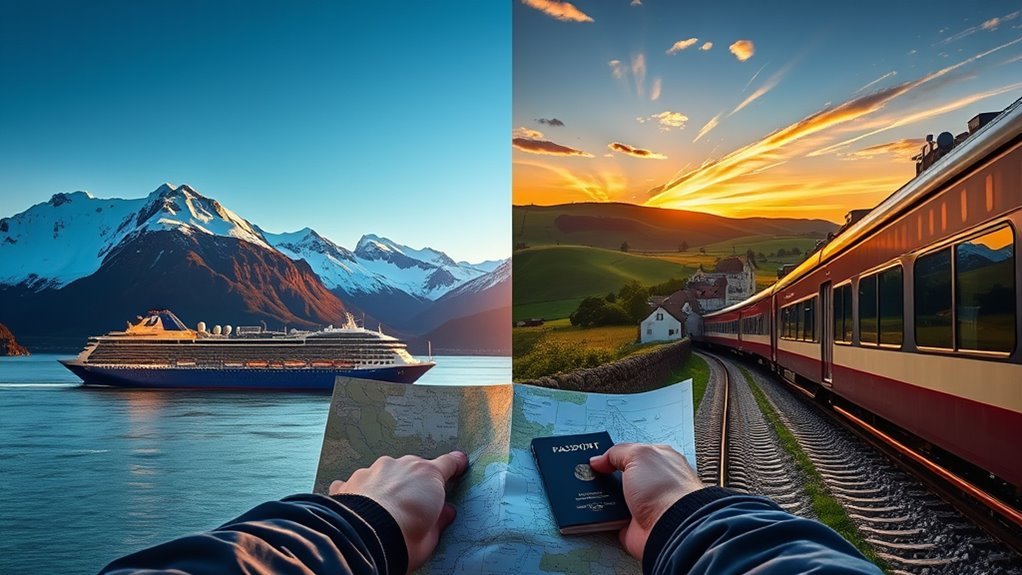
Start by deciding whether you want the destination itself or the ports to dominate your trip. On an Alaska cruise, scenic sailing is a major part of the experience. You may spend hours watching mountains, islands, waterfalls, glaciers, and forested shores from the ship.
A Europe cruise is usually more port-intensive. Many itineraries visit a different city or island almost every day, which can mean early starts, long walking tours, museum visits, beach stops, and meals ashore.
Alaska vs. Europe Cruise at a Glance
| Comparison | Alaska | Europe |
| Best For | Glaciers, wildlife, mountains, forests, photography, and outdoor excursions | History, architecture, food, museums, beaches, and visiting several countries |
| Main Season | May through September | Mediterranean itineraries mainly run from spring through fall; other European regions have different seasons |
| Weather | Cool, changeable, and often wet | Varies by region; Mediterranean summers can be hot, while Northern Europe is cooler |
| Typical Pace | Scenic sea days mixed with small-port visits and outdoor tours | Frequent ports, walking tours, transfers, and full sightseeing days |
| Balcony Value | High for private scenic viewing, although public decks may provide wider views | Useful for sail-ins and relaxing, but you may spend less time aboard on port-heavy routes |
| Main Cost Risk | Premium wildlife, railway, glacier, and flightseeing excursions | International flights, hotels, port transfers, attraction tickets, and private tours |
Alaska is usually the better choice when scenery and outdoor experiences matter more than nightlife or famous cities. Europe is usually the better choice when you want several cultures, cuisines, and historic places in one vacation.
Europe is not limited to warm Mediterranean ports. A Norwegian fjord cruise can provide waterfalls, steep mountains, cool weather, and scenic sailing that may appeal to travelers who are also considering Alaska.
Which Cruise Fits Your Travel Style?
Think about what you want to do after breakfast. On an Alaska cruise, you may watch for whales, take a railway excursion, kayak near a quiet coastline, visit a glacier viewpoint, or explore a small port. On a Europe cruise, you may tour ruins, visit a cathedral, walk through a museum, join a food tour, or travel inland from the port.
Products Worth Considering
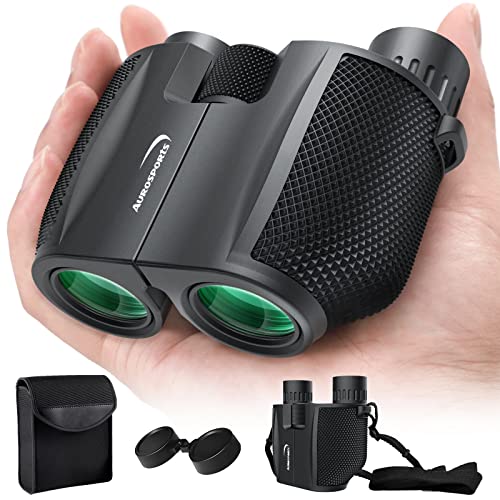
[STABLE 10X MAGNIFICATION] Strike the perfect balance between zooming in and keeping the image steady. These 10x25 binoculars deliver powerful 10-fold magnification while maintaining a blur-free, broad field of view for rapid target acquisition. You can effortlessly track fast-moving birds in your backyard or catch every performer's expression from the back row of a theater.

Keep your backpack light with these compact and lightweight portable binoculars.

💎BRIGHT & WIDE VIEWING: The POXXU compact binocular features 8x magnification with 21mm objective lenses.; The large field of view ( 126m/1000m / 7.2°) combined with BAK4 prism glass delivers bright, clear, and expansive images for a superior viewing experience
Mediterranean or Alaska?
Choose a Mediterranean cruise if you want a mix of historic cities, coastal scenery, beaches, architecture, and regional food. Popular routes may include Italy, Spain, France, Greece, Croatia, Malta, Montenegro, or Turkey.
Choose Alaska if glaciers, marine wildlife, mountain scenery, temperate rainforest, gold-rush history, and outdoor excursions are more important to you.
- Mediterranean: Best for travelers who enjoy busy sightseeing days, warm-weather activities, historic attractions, and meals ashore.
- Alaska: Best for travelers who enjoy nature, cool weather, scenic cruising, wildlife tours, railways, and smaller coastal communities.
- Norwegian fjords: A useful European alternative for travelers who want dramatic scenery but also want to visit Europe.
Travelers who dislike heat may find Alaska or Northern Europe more comfortable than the Mediterranean in July or August. Travelers who dislike rain and cool wind may prefer a Mediterranean sailing in late spring or early fall.
Balcony Views Matter
A balcony can add value on both destinations, but it is not essential for every traveler.
In Alaska, a balcony provides private access to fresh air and scenery without requiring you to dress and walk to an open deck. It can be especially useful during early arrivals, quiet mornings, or long scenic passages.
However, a balcony limits you to one side of the ship. The National Park Service recommends outdoor viewing areas in Glacier Bay, where you can move from side to side and appreciate the scale of the landscape.
On a Europe cruise, a balcony is useful for harbor arrivals, coastal passages, breakfast outdoors, and relaxing after a long excursion. Its value may be lower on an itinerary with long port days and little daylight spent aboard.
Pro Tip: Compare the balcony upgrade with the price of the excursions you care about most. An inside or ocean-view cabin plus a premium glacier, railway, food, or museum tour may create more value than a balcony alone.
Weather and Timing
The normal Alaska cruise season runs from May through September. No month guarantees dry weather or wildlife sightings.
- May: Cooler conditions, long daylight, early-season scenery, and potentially lower fares than peak summer.
- June and July: Very long daylight hours, popular departure dates, and broad excursion availability.
- August: Active cruise schedules and good excursion availability, with an increasing chance of rain in parts of Southeast Alaska.
- September: Cooler weather, shorter days, possible fall color, and some reduced excursion schedules near the end of the season.
The principal Mediterranean cruise season generally runs from spring through fall. Some cruise lines offer selected winter itineraries, but ships, ports, and activities may be more limited.
- Late spring: Mild conditions in many ports and fewer heat-related concerns than midsummer.
- July and August: Hot weather, school-holiday demand, busy attractions, and strong beach conditions.
- September and October: Often more comfortable for walking tours, although rain and shorter daylight can affect plans.
Northern Europe, the Baltic, Iceland, and Norwegian fjord cruises have cooler and shorter operating seasons than the Mediterranean. Always evaluate the specific region rather than treating all of Europe as one climate.
Best Alaska Routes for Scenic Cruising
Alaska itineraries differ by departure port, glacier destination, port combination, and whether the cruise is round trip or one way.
A round-trip Seattle sailing is often convenient for U.S. travelers, while Vancouver departures may spend more time within the protected waterways of the Inside Passage. One-way cruises between Vancouver and Whittier or Seward can be combined with a land trip to Anchorage, Denali, or another inland destination.
Do not assume every Alaska cruise visits Glacier Bay. Glacier access is regulated, and only authorized itineraries enter the national park.
Glacier Bay Highlights
Glacier Bay National Park is one of Alaska’s best-known scenic cruise destinations. Cruise ships normally spend much of the day in the park, and National Park Service rangers may board participating ships to provide interpretation.
Ships do not dock inside Glacier Bay. Instead, passengers view mountains, wildlife habitat, and tidewater glaciers from the vessel. According to the National Park Service, the park contains more than 1,000 glaciers, although most are high in the mountains rather than directly visible from a ship.
- Check the itinerary: Confirm that “Glacier Bay National Park” appears in the detailed schedule, not only in general Alaska marketing.
- Attend ranger programs: Onboard interpretation can help you understand the glaciers, ecology, wildlife, and Indigenous history of the area.
- Use open decks: Move between viewing areas rather than remaining on only one side of the ship.
- Bring binoculars: Wildlife may be distant and is never guaranteed.
Inside Passage Views
The Inside Passage includes sheltered waterways, islands, coastal mountains, forests, and communities in Southeast Alaska and western Canada. Common cruise ports include Juneau, Ketchikan, and Skagway.
Excursion options may include whale watching, kayaking, salmon-related experiences, fishing, rainforest walks, cultural programs, and scenic flights. Availability depends on the port, month, operator, weather, and cruise schedule.
Some itineraries also feature Hubbard Glacier, Tracy Arm, Endicott Arm, or another glacier-viewing area. Compare the detailed route instead of choosing only by cruise line or ship.
Skagway Rail Excursions
The White Pass & Yukon Route is one of Skagway’s best-known shore excursions. The standard White Pass Summit Excursion is a narrated 40-mile round trip lasting approximately 2.5 to 2.75 hours.
The train passes mountains, waterfalls, gorges, trestles, tunnels, and locations connected with Klondike Gold Rush history. Other White Pass products travel farther or use different equipment, so do not assume every railway ticket follows the same route or duration.
- Compare the standard summit trip with longer rail-and-road combinations.
- Check passport requirements because some excursions cross or approach the Canadian border while others remain on a route that does not require a passport.
- Reserve accessible space early if a traveler needs a lift-equipped railcar.
- Confirm whether you are booking through the cruise line or directly with the railway.
Best Europe Routes for Culture
A culture-focused Europe cruise should connect actual ports rather than unrelated inland cities. Rome can be included through the port of Civitavecchia, but Paris and Prague are normally separate pre-cruise or post-cruise land destinations rather than standard Mediterranean cruise ports.
Western Mediterranean
Western Mediterranean cruises commonly connect ports in Italy, France, and Spain. Possible embarkation cities include Barcelona, Rome’s port at Civitavecchia, and Genoa. These itineraries suit travelers who want Roman history, Renaissance art, French coastal towns, Spanish architecture, and regional food.
Remember that several famous cities are a significant transfer from the cruise terminal. Research the distance between the port and the attraction before deciding how much you can see in one day.
Eastern Mediterranean and Greek Isles
Eastern Mediterranean itineraries may include Athens, Santorini, Mykonos, Crete, Rhodes, Cyprus, or Turkish ports. They combine archaeological sites, island scenery, beaches, religious history, and local cuisine.
Summer heat and crowds can make long walking tours difficult. Spring or early fall may be more comfortable for travelers who prioritize ruins, museums, and outdoor sightseeing.
Adriatic and Dalmatian Coast
Adriatic routes may connect Venice or nearby Italian terminals with Croatia, Slovenia, Montenegro, and Greek ports. Dubrovnik, Split, Kotor, and surrounding destinations offer historic centers, fortified walls, coastal scenery, and boat excursions.
Northern Europe and Norwegian Fjords
Northern Europe cruises may include Norway, Iceland, the British Isles, the Baltic region, or combinations of these areas. Norwegian fjord cruises are particularly suitable for travelers comparing Europe with Alaska because they offer waterfalls, mountain scenery, narrow waterways, and cooler weather.
Northern routes provide a different experience from the Mediterranean, so compare daylight, temperature, sea conditions, port accessibility, and excursion style before booking.
When Should You Book Your Cruise?
Booking six to twelve months ahead can be useful when you need a specific ship, itinerary, balcony location, connecting cabin, accessible cabin, or popular summer departure. It does not guarantee the lowest possible fare.
- Book Alaska early when the route matters: Glacier Bay itineraries, one-way sailings, family cabins, and popular excursions can have limited availability.
- Book Europe early when flights matter: International airfare, pre-cruise hotels, and port transfers can become more expensive or less convenient even if the cruise fare later falls.
- Read the deposit rules: A refundable deposit may provide more flexibility if plans or prices change.
- Check repricing policies: Cruise lines and travel agencies have different rules for applying a lower fare after booking.
- Compare promotions carefully: January through March is commonly marketed as wave season, but free extras or reduced deposits do not automatically produce the lowest total price.
Last-minute offers can work for flexible travelers who live near the departure port. They are less useful when you also need expensive flights, visas, a specific cabin, or several hotel nights.
Are Balcony Cabins Worth It?
A balcony cabin is worth considering when private outdoor space is one of your highest priorities and the upgrade does not force you to skip important excursions.
For Alaska, a balcony can be valuable during scenic passages, early mornings, and cool-weather viewing. However, public decks normally provide a broader field of view and make it easier to switch sides when wildlife or glaciers appear.
For Europe, consider how many hours you will actually spend aboard during daylight. On a port-heavy itinerary, you may leave early and return near dinner. A balcony can still improve sail-ins and quiet evenings, but it may receive less use than it would on an itinerary with more sea days.
A balcony may be worth the upgrade when:
- You enjoy private outdoor space and plan to use it daily.
- You have mobility limitations that make repeated trips to open decks difficult.
- Your itinerary includes long scenic passages or several sea days.
- The price difference is small compared with your total budget.
An inside or ocean-view cabin may be better when:
- You plan to spend most of each day ashore.
- You sleep better in a dark room.
- You prefer to spend the savings on excursions, food tours, hotels, or flights.
- You are comfortable using public viewing decks.
Products Worth Considering

What You Will Receive: You will receive 9 pcs Alaska themed cruise door magnets in assorted sizes. Each design measures approximately 3.9 to 7.9 inches. Sufficient quantity and various styles to meet your graduation travel decoration and cruise party needs. Light weight, won’t take much space of your luggage

What You Will Receive: You will receive 1 pc writing board, 7 pcs cruise door magnets with 2 pcs large designs measuring about 7.9 inches and 4 pcs smaller accents measuring about 4.7 inches, and 3 pcs erasable whiteboard markers. Sufficient quantity and various styles to meet your graduation travel decoration and cruise party needs. Light weight, won’t take much space of your luggage
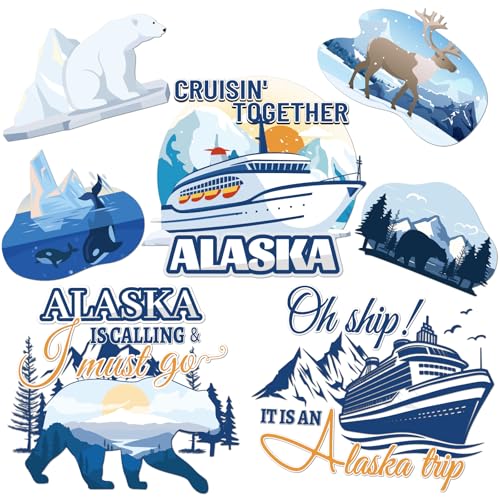
Alaska Cruise Theme: These cruise door magnets are designed to enhance your cruise experience by celebrating sailing trip. Many of the pieces feature a nautical cruise ship theme, such as iceberg, cruise ship, whale, reindeer, bear and slogans such as [Cruise's Together Alaska] and [Oh Ship! It's a Alaska Trip] to add fun to your cabin
What to Pack for an Alaska Cruise
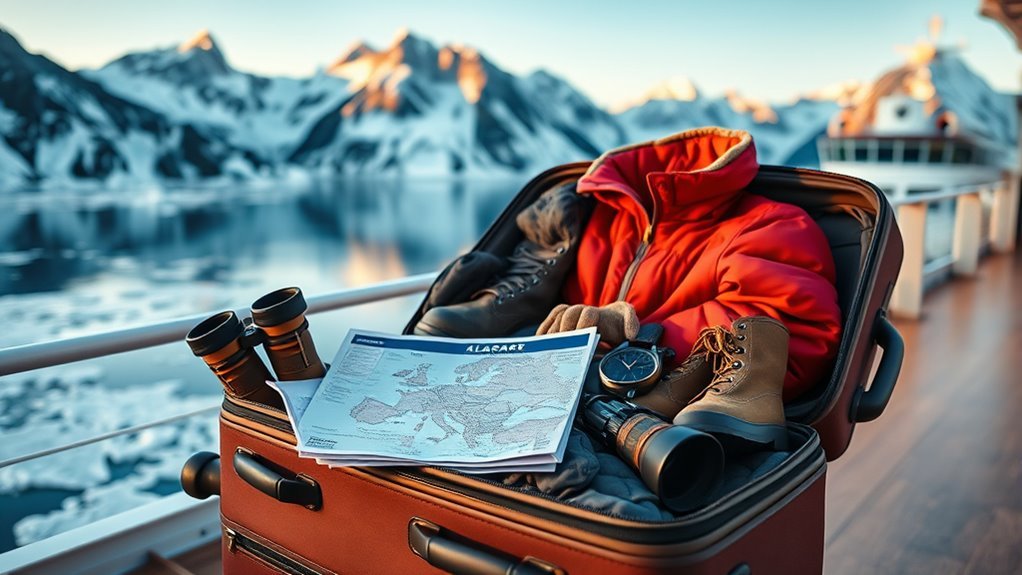
Alaska weather can change quickly, even during summer. Pack clothing that can be added or removed as the temperature, wind, and rain change.
For Glacier Bay, the National Park Service recommends rain gear, warm layers, and binoculars because Southeast Alaska is cool, wet, and visually expansive.
- Waterproof outer layer: Pack a rain jacket with a hood. Waterproof pants can help during exposed or active excursions.
- Base and mid-layers: Bring breathable shirts, a fleece or sweater, and a warmer layer for glacier-viewing periods.
- Water-resistant footwear: Choose comfortable shoes with secure traction for wet decks, paths, and port walks.
- Warm accessories: A light hat, gloves, and neck covering take little space and help in cold wind.
- Binoculars: These are useful for viewing wildlife and distant landscape details.
- Sun protection: Bring sunglasses and sunscreen because reflected light can still be strong in cool weather.
- Small day bag: Use it for layers, water, medication, identification, and excursion documents.
- Camera protection: Carry a rain cover or sealed bag for electronics.
Do not rely on one heavy coat. Several lighter layers provide more flexibility when moving between a heated ship, an open deck, a bus, and an outdoor excursion.
What to Expect on Europe Excursions
Europe excursions can include historic sites, museums, markets, beaches, food tastings, religious buildings, archaeological areas, and scenic drives. Many involve more walking and transportation than their short descriptions suggest.
- Port distance: Confirm whether the ship docks near the attraction or requires a long bus, train, tender, or shuttle ride.
- Timed tickets: Major museums and monuments may require reservations.
- Walking conditions: Old districts may have cobblestones, stairs, steep streets, limited shade, and uneven surfaces.
- Dress requirements: Some churches and religious sites require covered shoulders or knees.
- Heat: Summer tours in Mediterranean ports can involve prolonged sun exposure.
- Accessibility: Historic vehicles, tender ports, narrow streets, and older buildings may not be fully accessible.
Cruise-line excursions usually provide ship-related scheduling protection if an organized tour is delayed. Independent tours may offer smaller groups or lower prices, but you are normally responsible for returning before the ship’s all-aboard time.
Warning: Do not plan an independent excursion that returns at the last possible minute. Traffic, tender delays, rail disruptions, and attraction queues can prevent you from reaching the ship before departure.
Which Cruise Fits Your Budget?
Neither Alaska nor Europe is always cheaper. The lowest advertised cruise fare may not produce the lowest total vacation cost.
Compare these expenses for each itinerary:
- Cruise fare: Include cabin category, taxes, port charges, and any mandatory fees shown during checkout.
- Transportation: Add flights, baggage fees, airport transfers, trains, and transportation to the cruise terminal.
- Hotels: Arriving at least one day early is often sensible, especially when flying internationally or during unreliable weather.
- Excursions: Alaska flightseeing, wildlife tours, and railway trips can be expensive. Europe can add museum tickets, private guides, long transfers, and food tours.
- Onboard spending: Include gratuities, beverages, specialty dining, Wi-Fi, spa services, and optional activities.
- Travel protection: Compare coverage for medical care, delays, cancellation, baggage, and emergency transportation.
- Currency costs: For Europe, check live exchange rates and foreign transaction fees instead of relying on a general claim that the euro is favorable.
Pro Tip: Build two complete trip totals using the same cabin level and excursion allowance. This prevents an inexpensive cruise-only fare from hiding costly flights, hotels, transfers, or port activities.
Travel Documents for Alaska and Europe Cruises
Document rules depend on your citizenship, residence status, itinerary, departure port, and countries visited. Check the cruise line and government requirements before booking and again before departure.
Documents for an Alaska Cruise
Many Alaska cruises visit a Canadian port, even when they begin and end in the United States. U.S. citizens on qualifying closed-loop cruises may be able to use approved proof of citizenship and photo identification instead of a passport, but exceptions and destination rules apply.
U.S. Customs and Border Protection recommends checking the exact itinerary. A passport book is also safer if an emergency requires you to leave the cruise and fly home from Canada.
Warning: Do not assume that an Alaska cruise is entirely domestic. A missing passport, visa, permanent-resident card, or other required document can result in denied boarding.
Documents for a Europe Cruise
Travelers from outside the European Union generally need a valid passport and may also need a visa. Requirements vary by nationality and by the countries included in the itinerary.
Europe’s Entry/Exit System became fully operational at participating external borders on April 10, 2026. Eligible non-EU visitors may have facial images, fingerprints, and travel details recorded when crossing an external border.
Note: As of July 24, 2026, ETIAS is not accepting applications. The European Union expects ETIAS to begin in the final quarter of 2026 but has not announced the exact start date. Check the official EU ETIAS website rather than paying an unofficial application service.
Frequently Asked Questions
What is the 3-1-1 rule when flying on Alaska Airlines?
For departures screened by the U.S. Transportation Security Administration, carry-on liquids, gels, aerosols, creams, and pastes must normally be in containers of 3.4 ounces or 100 milliliters or less. The containers must fit inside one clear, quart-sized resealable bag, with one bag allowed per passenger. This is a TSA security rule, not an Alaska Airlines-specific policy. Exceptions apply to items such as medically necessary liquids and baby formula.
What European country is most like Alaska?
Norway is often the closest comparison because of its fjords, mountains, waterfalls, cooler climate, long summer daylight, and scenic coastal routes. It is not identical to Alaska, but a Norwegian fjord cruise can be a strong alternative for travelers who want dramatic scenery in Europe.
Where in Europe does Alaska Airlines fly nonstop?
As of July 24, 2026, Alaska Airlines operates nonstop flights from Seattle to London Heathrow, Rome, and Reykjavík. London service is year-round, while Rome and Reykjavík are seasonal. Routes and schedules can change, so verify current service directly with Alaska Airlines.
How much are 100,000 Atmos Rewards points worth?
Atmos Rewards points do not have one guaranteed cash value. The value of 100,000 points depends on the route, cabin, partner airline, award availability, taxes, and cash fare you would otherwise pay. Compare the points required with the complete cash price before transferring, purchasing, or redeeming points.
Is an Alaska cruise cheaper than a Europe cruise?
Not always. Alaska may have lower airfare for some North American travelers but expensive wildlife, railway, and flightseeing excursions. Europe may offer competitive cruise fares but require international flights, hotels, long port transfers, attraction tickets, and currency conversion. Compare the complete trip cost for your dates.
Do you need a passport for an Alaska cruise?
It depends on your citizenship and itinerary. Some U.S. citizens on qualifying closed-loop cruises may travel with approved citizenship and identification documents, but many Alaska cruises visit Canada. A passport book is strongly recommended because it simplifies entry and may be required if you must fly home from a foreign port.
Is ETIAS required for a Europe cruise in 2026?
ETIAS is not operating as of July 24, 2026. The European Union expects it to begin in the final quarter of 2026, but the exact date has not been announced. Once active, it will apply to eligible visa-exempt travelers visiting participating European countries. Check the official EU website close to departure.
Is Alaska or Europe better for a first cruise?
Alaska can be easier for North American travelers who want an English-speaking destination, cooler weather, and scenic days aboard. Europe may be better for travelers comfortable with international flights, several currencies or languages, long sightseeing days, and complex port transfers. The best first cruise is the one that matches your pace and planning comfort.
Conclusion
Choose Alaska if your ideal cruise centers on glaciers, wildlife, forests, mountain scenery, and outdoor excursions. Choose Europe if you want historic ports, museums, regional food, architecture, beaches, and the chance to experience several cultures in one trip.
Do not decide from the cruise fare alone. Compare the itinerary, season, cabin, flights, hotels, transfers, excursions, travel documents, and full trip cost. When those details match your interests and comfort level, either destination can provide an exceptional cruise.
Sources
- National Park Service: Cruise Ships in Glacier Bay — Glacier Bay access, ranger programs, viewing, weather, and wildlife guidance.
- White Pass & Yukon Route: Summit Excursion — Current railway distance, duration, accessibility, and operating details.
- Transportation Security Administration Travel Tips — Official 3-1-1 liquids rule.
- U.S. Customs and Border Protection Cruise Documents Guide — Closed-loop cruise and passport information.
- European Union Travel to Europe Portal — Official EES and ETIAS status and requirements.
- Alaska Airlines European Route Update — Current Seattle service to London, Rome, and Reykjavík.
