
Last Updated on September 10, 2026 by Daniel Globe
Some airlines operate without any Boeing aircraft in their main fleets, but that does not necessarily mean they have rejected Boeing for safety reasons. Fleet choices are usually shaped by route needs, aircraft availability, training costs, maintenance systems, financing, and long-term purchasing agreements. Because fleets change, each example below includes a recent verification point.
Quick Answer
Airlines that currently operate no Boeing aircraft include JetBlue, Frontier Airlines, Spirit Airlines, easyJet, Wizz Air, Volaris, and the AirAsia group. Most use Airbus aircraft exclusively. Fleet assignments can change, so check both the aircraft type and the “operated by” notice before booking.
Key Takeaways
- Airbus is an aircraft manufacturer, not an airline.
- JetBlue, Frontier, Spirit, easyJet, Wizz Air, Volaris, and AirAsia are current examples of airlines or airline groups without Boeing aircraft in their published fleets.
- Most single-manufacturer fleets are built around cost control, training, maintenance, and route needs—not a blanket safety judgment.
- An all-Airbus airline is not automatically safer than an airline that operates Boeing aircraft.
- Codeshares, leased aircraft, and last-minute substitutions can change the aircraft or operating airline assigned to a trip.
Disclosure: As an Amazon Associate I earn from qualifying purchases. Some links on this page are affiliate links, at no extra cost to you.
Airlines That Currently Do Not Use Boeing Aircraft
The following are prominent examples verified through airline-published fleet pages, annual reports, or company announcements. This is not an exhaustive worldwide list, and fleet composition can change after new deliveries, retirements, leases, mergers, or corporate restructuring.
| Airline | Region | Published Fleet | Latest Verification Used |
|---|---|---|---|
| JetBlue | United States | Airbus A220, A320, and A321 families | All-Airbus transition completed September 9, 2025 |
| Frontier Airlines | United States | Airbus A320 and A321 families | Fleet page updated February 20, 2026 |
| Spirit Airlines | United States | Airbus A320-family aircraft | Current airline fleet description checked July 2026 |
| easyJet | Europe | 359 Airbus A320-family aircraft | June 10, 2026 |
| Wizz Air | Europe and the Middle East | 262 Airbus A320-family aircraft | 2026 annual report, published June 11, 2026 |
| Volaris | Mexico, the United States, and Latin America | 155 Airbus A320-family aircraft | First quarter of 2026 |
| AirAsia group airlines | Asia-Pacific | Airbus A320, A321, and A330 families, with A220 aircraft planned | AirAsia’s published all-Airbus strategy and current Airbus orders |
Note: These examples describe the airlines’ published main fleets. A codeshare, charter, or leased flight may be operated by a different carrier. Aircraft can also be substituted after booking.
Why Some Airlines Do Not Operate Boeing Aircraft
An airline may use no Boeing aircraft without having formally “banned” Boeing. In many cases, the carrier selected Airbus or another manufacturer years earlier and continued building around the same aircraft family.
Fleet Standardization and Operating Costs
Using one aircraft family can simplify pilot qualifications, cabin-crew training, maintenance procedures, spare-parts inventories, engineering support, simulators, and scheduling. Aircraft within the same family may also share cockpit layouts and operating procedures.
That does not make a single-manufacturer fleet automatically better. It concentrates the airline’s exposure to issues affecting that aircraft family, its engines, its supply chain, or its delivery schedule. A mixed fleet may cost more to support but can give an airline greater flexibility across short, medium, and long routes.
Route, Capacity, and Range Requirements
Airlines choose aircraft that fit their networks. A low-cost carrier operating dense short-haul routes may favor the Airbus A320 or A321. An airline serving thinner regional routes may prefer the Airbus A220, Embraer E-Jets, or ATR turboprops. Long-haul carriers may need larger twin-aisle aircraft.
The manufacturer that offers the right seat count, range, cargo capacity, financing, and delivery timing may win an order even when the airline has no strong preference between Boeing and Airbus.
Purchase Agreements and Delivery Availability
Large aircraft orders can shape a fleet for decades. Airlines often negotiate package pricing, maintenance support, training, spare parts, and future purchase rights. Changing manufacturers later can be expensive because the airline must create or expand training and maintenance systems for another aircraft family.
Safety, Reputation, and Customer Trust
Safety events can affect passenger confidence and airline planning, but it is inaccurate to assume that every all-Airbus airline rejected Boeing because of safety concerns. Some carriers had all-Airbus fleets before the Boeing 737 MAX accidents, while others continued operating Boeing aircraft after regulators approved the MAX’s return to service.
The Boeing 737 MAX Safety Context
Investigations and MCAS
Lion Air Flight 610 crashed on October 29, 2018, and Ethiopian Airlines Flight 302 crashed on March 10, 2019. Both were Boeing 737 MAX 8 aircraft, and all 346 people aboard the two flights died. Investigations examined the Maneuvering Characteristics Augmentation System, angle-of-attack data, certification assumptions, cockpit alerts, pilot response, training, maintenance, and regulatory oversight.
The FAA’s review of the 737 MAX required changes to flight-control software, wiring, operating procedures, maintenance, and pilot training before the U.S. grounding order was lifted. Other national aviation authorities conducted their own reviews and return-to-service processes.
The 2024 Boeing 737-9 Door-Plug Accident
A separate safety event occurred on January 5, 2024, when a door plug separated from an Alaska Airlines 737-9 shortly after takeoff. The National Transportation Safety Board’s final report found that four bolts intended to secure the plug were missing before the newly manufactured aircraft was delivered.
The door-plug accident renewed scrutiny of Boeing’s manufacturing and quality-control systems. However, it was a different problem from the MCAS design involved in the earlier MAX accidents.
Warning: Do not treat aircraft manufacturer alone as a complete safety rating. Safe airline service also depends on regulatory oversight, maintenance, crew training, operating procedures, airport conditions, and compliance with airworthiness directives.
Impact on Airline Operations and Passenger Choice
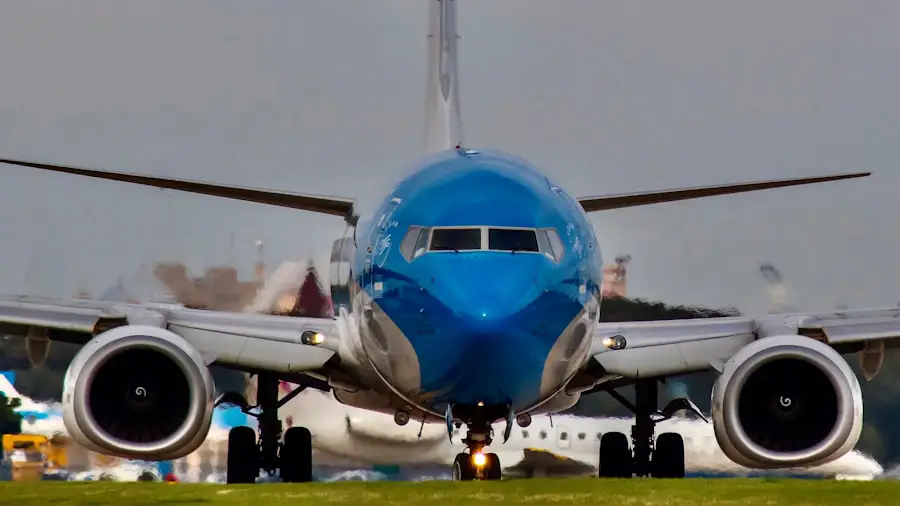
An airline built around one aircraft family can move pilots, cabin crews, spare parts, and maintenance resources between aircraft more easily. That flexibility can help when schedules change or an aircraft needs maintenance.
However, a fleet-wide inspection, engine issue, airworthiness directive, or parts shortage can affect many aircraft at once. Airlines may then reduce flight frequencies, lease replacement aircraft, adjust routes, or cancel flights while inspections or repairs are completed.
Moving from Boeing to Airbus—or from Airbus to Boeing—is not a simple swap. Pilots may need a new type rating, maintenance teams need different technical training and tools, spare-parts inventories must change, and the airline may need new simulator capacity and regulatory approvals.
Potential Financial Implications
There is no reliable universal percentage showing how revenue, costs, or profit will change when an airline avoids Boeing aircraft. The result depends on the airline’s contracts, fleet age, routes, financing, labor agreements, and aircraft availability.
The main financial considerations include:
- Aircraft purchase or lease costs: New aircraft require large long-term commitments, while terminating an existing lease or order can create penalties.
- Training: Pilots, cabin crews, dispatchers, engineers, and maintenance technicians may need aircraft-specific instruction.
- Maintenance infrastructure: The airline may need new tools, manuals, software, spare parts, and vendor support.
- Delivery timing: Waiting years for a new aircraft can limit growth or force an airline to extend older leases.
- Fleet downtime: Inspections, modifications, or engine shortages can reduce the number of aircraft available for scheduled service.
- Residual value: Aircraft resale and lease-return values can change with market demand and regulatory developments.
A standardized fleet can lower complexity, but it can also make the airline more dependent on one manufacturer, engine supplier, and maintenance network.
Alternative Aircraft Choices
Airlines that do not operate Boeing aircraft have several alternatives. The right choice depends on passenger demand, route length, airport limits, cargo needs, and operating cost.
Airbus A320 Family
The A319, A320, and A321 are widely used on short- and medium-haul routes. The newer A320neo-family models use updated engines and aerodynamic improvements. Airlines can select different sizes while retaining substantial cockpit and operational commonality.
Airbus A220
The A220 serves the smaller single-aisle market. It was originally developed by Bombardier as the C Series and became part of the Airbus family in 2018. Bombardier later transferred its remaining interest in the program, which is now managed and supported as an Airbus aircraft.
Embraer E-Jets
Embraer’s regional jets can serve routes that do not need the capacity of an A320 or 737. They are commonly used for shorter routes, smaller cities, and flights where frequency is more valuable than maximum seat count.
ATR Turboprops
ATR aircraft are designed for shorter regional routes and can operate efficiently where jet capacity or range is unnecessary. An airline using Airbus jets and ATR turboprops still qualifies as an airline without Boeing aircraft, even though it is not technically all-Airbus.
Reaction from Industry Experts
Aviation professionals generally evaluate safety by aircraft model, operator, regulator, maintenance program, and specific airworthiness information rather than treating every aircraft from one manufacturer as identical.
Experts also recognize the economic value of fleet commonality. A low-cost airline may gain substantial operational simplicity from using one aircraft family. A network airline with regional, domestic, and intercontinental routes may benefit from operating several aircraft types.
For that reason, an all-Airbus fleet is not proof that an airline believes Boeing aircraft are unsafe. Likewise, an airline’s decision to operate Boeing aircraft does not show that it is ignoring safety concerns. Certificated aircraft remain subject to continuing inspections, maintenance requirements, operating limitations, and airworthiness directives.
Passenger Reactions and How to Check Your Aircraft
Some passengers actively avoid a particular aircraft model or manufacturer. Others base their decision on price, schedule, nonstop service, seat layout, loyalty benefits, or the airline’s service record.
To identify the aircraft planned for a flight:
- Check the flight details during booking. Look for labels such as “Airbus A321,” “A220-300,” “Boeing 737-8,” or “Embraer E195-E2.”
- Read the “operated by” notice. The airline selling the ticket may not be the airline operating the aircraft.
- Compare the seat map. The airline’s official seat-map page can help confirm the aircraft family and cabin configuration.
- Review the trip again before departure. Airlines may substitute another aircraft because of maintenance, weather, scheduling, or operational needs.
- Ask the airline when the aircraft type matters to you. Customer service may confirm the current assignment, but it generally cannot guarantee that it will not change.
Pro Tip: Check the operating carrier first. A ticket carrying your preferred airline’s flight number can still be operated by a partner with a different aircraft fleet.
Future Plans for Airline Fleets
Airlines continue to replace older aircraft with newer models, but the transition can take many years. Existing leases, delivery backlogs, engine availability, financing, airport infrastructure, and pilot staffing can all affect the schedule.
Some all-Airbus airlines are expanding within the Airbus family. easyJet and Wizz Air continue adding newer A320neo-family aircraft, while AirAsia has announced plans involving A321, A330, and A220 aircraft. JetBlue completed the retirement of its Embraer E190 fleet in 2025, leaving it with Airbus A220-, A320-, and A321-family aircraft.
These plans are not permanent guarantees. Airlines can acquire another manufacturer’s aircraft when business conditions, ownership, route strategy, or availability changes.
All-Airbus, All-Boeing, and Mixed Fleets Compared
All-Airbus Fleet
An all-Airbus airline can benefit from common systems, training, and purchasing relationships across related aircraft families. The main trade-off is greater exposure to disruptions affecting Airbus aircraft, selected engine types, or the Airbus supply chain.
All-Boeing Fleet
An all-Boeing fleet can provide similar commonality benefits. The airline remains more exposed to Boeing-specific inspections, delivery constraints, or production issues.
Mixed Fleet
A mixed fleet can match more aircraft sizes and ranges to specific routes. It may also reduce dependence on one manufacturer. The trade-off is added complexity in training, maintenance, scheduling, tooling, and spare parts.
None of the three approaches is automatically safest or most profitable. The outcome depends on how well the airline manages the aircraft and how closely the fleet matches its network.
Environmental Considerations
Airlines often reduce fuel use by replacing older aircraft with newer designs, installing lighter equipment, improving seating density, optimizing routes, and reducing unnecessary onboard weight. Newer aircraft can provide meaningful efficiency improvements over the models they replace, but the exact result depends on seating, engines, route length, payload, and operating conditions.
Manufacturer choice is only one part of an airline’s environmental impact. Fleet age, aircraft size, passenger load, route efficiency, fuel type, ground operations, and the number of flights also matter.
Conclusion and Outlook
Several major airlines currently operate without Boeing aircraft. Verified examples include JetBlue, Frontier, Spirit, easyJet, Wizz Air, Volaris, and the AirAsia group. Most use Airbus aircraft, although an airline can also avoid Boeing while operating regional aircraft from manufacturers such as Embraer or ATR.
The absence of Boeing aircraft usually reflects long-term fleet economics, commonality, route requirements, financing, and delivery decisions rather than a simple manufacturer-wide safety judgment. Travelers who care about aircraft type should check the scheduled aircraft, confirm the operating carrier, and review the booking again near departure because assignments can change.
Frequently Asked Questions
What airlines do not use Boeing aircraft?
Current examples include JetBlue, Frontier Airlines, Spirit Airlines, easyJet, Wizz Air, Volaris, and the AirAsia group. Their published fleets are built around Airbus aircraft. Fleet composition can change, so verify the airline’s current fleet page before relying on any permanent list.
Is Airbus an airline?
No. Airbus is an aircraft manufacturer and a direct competitor to Boeing. Airlines buy or lease Airbus aircraft such as the A220, A320, A330, and A350.
Why do some airlines use only Airbus aircraft?
Common reasons include pilot and maintenance commonality, lower training complexity, shared spare parts, purchasing agreements, aircraft availability, and a good match between Airbus models and the airline’s routes.
Are airlines with no Boeing aircraft safer?
Not automatically. Manufacturer is only one factor. Airline safety also depends on regulatory oversight, maintenance, crew training, operating procedures, safety culture, and compliance with inspections and airworthiness directives.
How can I avoid booking a Boeing aircraft?
Check the aircraft type shown in the flight details, confirm which airline operates the flight, compare the airline’s official seat map, and recheck the itinerary near departure. The airline may still substitute another aircraft for operational reasons.
Does an all-Airbus airline guarantee an Airbus aircraft on every ticket?
No. A codeshare, wet lease, charter arrangement, or last-minute substitution may place passengers on an aircraft operated by another airline. Always read the “operated by” disclosure and check for schedule changes.
Sources
- Federal Aviation Administration — Summary of the FAA’s Review of the Boeing 737 MAX — grounding, design changes, training, maintenance, and return-to-service review.
- National Transportation Safety Board — Lion Air Flight 610 and Ethiopian Airlines Flight 302 — accident dates, aircraft, and fatalities.
- U.S. Department of Transportation — Buying a Ticket — operating-carrier and codeshare disclosure guidance.
- easyJet — 100th NEO Delivery — current all-Airbus fleet information.
- Wizz Air Holdings — 2026 Annual Report — current Airbus fleet information.
- JetBlue — Completion of All-Airbus Fleet Transition — retirement of the Embraer E190 and current fleet strategy.
