

Last Updated on September 10, 2026 by Daniel Globe
Norse Atlantic Airways attracts attention with long-haul fares that can be far below those of larger network airlines. The low price is not based on one trick. It comes from stripped-down fare bundles, paid extras, a uniform Boeing 787-9 fleet, digital self-service, direct routes, and flexible use of aircraft across scheduled flights, charters, and airline leasing contracts.
Quick Answer
Norse Atlantic Airways can advertise low fares because it sells a stripped-down base product, charges separately for many extras, uses a single Boeing 787-9 fleet, sells directly online, and shifts aircraft between scheduled flights, charters, and ACMI contracts. The fare can be a bargain, but only after you add bags, meals, seats, and flexibility.
Key Takeaways
- Norse lowers the displayed price by separating the airfare from services that other tickets may bundle.
- Meals, checked baggage, seat selection, priority services, and ticket flexibility can change the final cost.
- The airline operates a uniform Boeing 787-9 fleet and uses about half of its aircraft for ACMI and charter work under its current business model.
- Norse does not depend only on secondary airports; it also serves major airports such as New York JFK and Los Angeles LAX when those routes are offered.
- The best value usually goes to flexible travelers who pack carefully, compare the complete price, and can use a nonstop Norse route.
Disclosure: As an Amazon Associate I earn from qualifying purchases. Some links on this page are affiliate links, at no extra cost to you.
Why Norse Atlantic Airways Can Sell Cheap Long-Haul Tickets
Norse Atlantic Airways was founded in 2021 and began commercial flying in 2022. It is a Norwegian long-haul airline rather than a short-haul, ultra-low-cost carrier. Its lower fares come from a business model designed to control fixed costs, sell optional services separately, and place aircraft where they can earn the strongest return.
Unbundled Pricing Keeps the First Price Low
The fare shown in a search result is not necessarily the price of a fully bundled trip. Norse divides its product into fare types with different baggage, meal, seat, boarding, and change benefits. Travelers who need fewer extras can pay less, while travelers who want more convenience can buy a higher bundle or add services separately.
This model creates ancillary revenue, which is money earned from services beyond the airfare. Norse reported average ancillary revenue of $65 per passenger in its own scheduled network during the first quarter of 2026.
The low headline fare is supported by paid extras: Norse reported $65 in ancillary revenue per own-network passenger in Q1 2026.
A Uniform Boeing 787-9 Fleet Simplifies Operations
Norse reported a uniform fleet of 12 Boeing 787-9 Dreamliners in 2026. Operating one main aircraft type can simplify crew training, scheduling, spare-parts planning, and maintenance compared with running several unrelated aircraft families.
The company also reports long-term aircraft leases that it considers favorable compared with current market rates. Stable lease terms can give an airline more control over one of its largest fixed expenses. The Boeing 787 is also designed for long-range flying, allowing Norse to operate nonstop routes that might otherwise require a connection.
Direct Routes Avoid the Cost of a Large Hub Network
Norse focuses on point-to-point long-haul service instead of building a large connecting hub with hundreds of daily feeder flights. It can sell nonstop journeys on selected high-demand routes without supporting the same network complexity, airport facilities, lounges, loyalty benefits, and connection infrastructure offered by major global airline groups.
The trade-off is that Norse may fly fewer days per week, operate more seasonal routes, or change capacity more quickly when demand, competition, or fuel costs shift.
Does Norse Atlantic Use Secondary Airports?

Norse does not follow a simple “secondary airports only” strategy. The airline has served major international airports such as New York John F. Kennedy International Airport, Los Angeles International Airport, Paris Charles de Gaulle, and Rome Fiumicino. It also operates from London Gatwick, which is an alternative to Heathrow but remains a large international airport.
Airport costs can still influence route decisions. Landing charges, handling contracts, available departure times, local demand, and competition all affect whether a route can make money. However, it is inaccurate to claim that Norse normally avoids JFK or LAX in favor of Stewart International Airport or Long Beach Airport.
Note: Norse routes and frequencies change by season. An airport or route shown in an older review may not be available for your travel dates, so check the current booking calendar before making hotel or ground-transport plans.
What Is Included and What Costs Extra?
| Cost Area | What May Be Included | What to Check Before Paying |
|---|---|---|
| Baggage | Norse states that every ticket includes one personal item. Other cabin and checked-bag benefits depend on the fare shown at booking. | Size, weight, number of bags, airport purchase fees, and charges for heavy or oversized baggage. |
| Meals and Drinks | Meal service depends on the fare. Economy Light generally excludes a meal, while more inclusive Economy and Premium bundles provide meal benefits. | Whether a meal must be preordered, which drinks are complimentary, and the onboard price of snacks or additional drinks. |
| Seats and Entertainment | Norse Economy offers personal on-demand entertainment. Some fare bundles include advance seat selection. | Standard-seat charges, extra-legroom prices, whether headphones are provided, and whether family members can select seats together. |
| Boarding and Flexibility | Higher bundles may include priority services, seat selection, checked baggage, or more flexible change conditions. | Change fee, fare difference, refund eligibility, no-show rules, and whether paid extras transfer to a new flight. |
Current fare benefits are shown on Norse’s Economy cabin page, while the airline’s baggage rules provide current size and weight limits. These pages should control over an older review because the airline can change bundles, promotions, and fees.
The original claim that Norse has no inflight entertainment is incorrect. Economy passengers can use personal on-demand entertainment. The no-frills part of the product is mainly the separation of services such as meals, baggage, seat selection, priority handling, and flexibility from the cheapest fare.
Warning: Do not compare only the first price shown in a flight search. Add every required bag, meal, seat, change benefit, payment fee, and airport-transfer cost before deciding that Norse is cheaper.
Efficient Aircraft Utilization and the 2026 Business Model
Efficient aircraft use remains important, but Norse’s current strategy is broader than scheduling quick turnarounds. By early 2026, approximately half of its 12-aircraft fleet was assigned to long-term ACMI and charter work, while the other half supported Norse’s own scheduled network.
ACMI stands for aircraft, crew, maintenance, and insurance. Under this type of agreement, Norse provides an aircraft and the resources needed to operate it for another airline. The customer generally controls the commercial route and pays costs such as fuel under the contract terms.
This arrangement can provide steadier year-round revenue and keep aircraft productive when demand for Norse-branded routes is weaker. Norse can also use its remaining aircraft for routes with stronger fares and passenger demand. Its Q1 2026 report describes this combination as a balanced dual ACMI and own-network model.
The strategy can lower business risk, but it does not eliminate it. Aircraft maintenance, fuel prices, seasonal demand, airport disruption, and competition can still affect schedules and costs. A smaller airline also has less spare-aircraft capacity than a large global carrier when an aircraft becomes unavailable.
Direct Booking, the Norse App, and Online Check-In
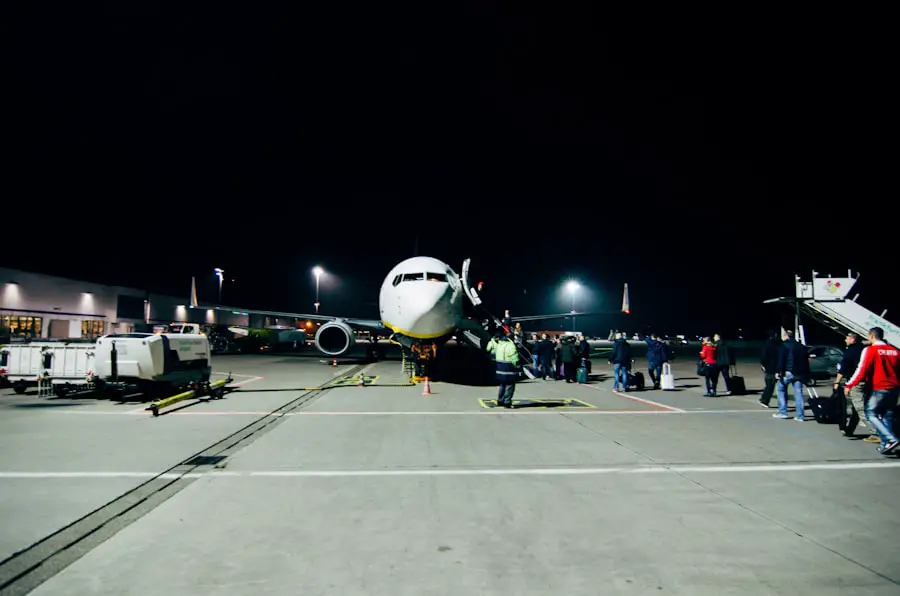
Norse sells flights directly through its website and app and encourages passengers to manage their trips digitally. Direct sales can reduce the commissions and distribution costs associated with some traditional booking channels.
Eligible travelers can use digital check-in and display a mobile boarding pass. However, online check-in is not guaranteed for every passenger or route. Passport, visa, residency, special-assistance, or other document checks may require airport processing.
Booking directly can also simplify access to the airline’s manage-booking tools. When a ticket is purchased from a third-party travel site, that seller may control changes, cancellations, or refunds. Read the merchant name and support terms before paying.
Customer Service Is Lean—and That Is a Trade-Off
Norse relies heavily on self-service tools and its digital assistant, Freya. Its official help center states that the airline does not have a customer-service phone line. Freya can handle common requests and may route a case for further assistance when needed.
This lean support structure can reduce overhead, but it may be frustrating during a cancellation, refund problem, baggage issue, or urgent same-day disruption. Travelers who strongly prefer immediate telephone support should include that limitation when comparing airlines.
Warning: Norse says it has no customer-service phone line. Do not trust a phone number found in a search result or social-media reply. Use the official Norse website or app so you do not give booking or payment details to an impersonator.
Norse Connections Are Not a Traditional Airline Alliance
Norse offers connecting options through Norse Connections, a booking service powered by Dohop. This is not the same as joining a global airline alliance or operating a conventional codeshare network with automatic lounge access and full through-ticket benefits.
The participating airlines and Dohop remain separate from Norse. Travelers may enter separate contracts for each part of the journey. They can also be required to:
- Meet the entry or transit requirements for the connection country
- Pass through immigration when required
- Collect checked baggage after the first flight
- Recheck baggage with the next airline
- Pass through security again
- Allow enough time for a self-transfer
Dohop offers an optional ConnectSure product that may provide rebooking help after a protected disruption. Travelers should read its terms rather than assuming that Norse automatically accepts responsibility for every separate flight.
Note: A self-transfer can still be economical, but it carries more steps and risk than a conventional single-ticket connection. Leave a generous connection window and confirm baggage and visa rules before booking.
Dynamic Pricing Explains the Eye-Catching Sale Fare
Norse adjusts prices as seats sell and travel demand changes. A flight during a quieter period may start with a very low fare to encourage early bookings. Prices can rise as the cabin fills, the departure date approaches, or demand increases around school holidays, festivals, sporting events, and peak vacation periods.
The opposite can happen when a flight has unsold seats. Norse may release lower prices to improve the load factor. This is why one traveler may find a remarkably cheap flight while another sees a much higher fare on the same route a few days later.
Low promotional prices may also apply to a limited number of seats or selected travel dates. They should not be treated as the normal price for every flight.
How to Tell Whether a Norse Fare Is Actually Cheap
Compare the same complete trip on every airline. Use the following calculation:
Base fare + baggage + seats + food + flexibility + booking fees + airport transport + connection costs = true trip price
- Match the dates and airports. Make sure each comparison uses the same travel day and destination airport.
- Add every bag. Include the outbound and return charges for carry-on, checked, heavy, or oversized baggage.
- Add seats. Include the cost of standard, extra-legroom, or adjoining family seats when you need them.
- Add meals and drinks. Long flights may make a meal bundle worthwhile, especially when airport food is expensive.
- Compare change rules. A cheaper restrictive ticket can become costly when plans change.
- Check flight frequency. A carrier with one or two weekly flights may offer fewer same-day recovery choices after a disruption.
- Price the ground journey. Include trains, taxis, parking, hotels, or airport changes.
- Review the operating airline and connection type. Confirm whether every segment is on one protected ticket or involves a self-transfer.
Pro Tip: Pack only after checking the exact personal-item and cabin-bag measurements for your fare. A minimalist backpack can reduce baggage costs only when it fits the airline’s current size and weight limits.
Who Gets the Best Value From Norse?
Norse is often a strong option for travelers who:
- Can travel on flexible dates
- Find a useful nonstop route
- Pack within the included baggage allowance
- Do not need lounge access or a large loyalty network
- Are comfortable managing the trip online
- Can accept a seasonal or lower-frequency schedule
- Compare the complete cost before paying
A full-service or larger network airline may offer better value for travelers who:
- Need several checked bags
- Require easy telephone support
- Have a time-sensitive event they cannot miss
- Need frequent backup flights after a cancellation
- Want automatic through-checking on a complex connection
- Depend on alliance lounges, status benefits, or mileage earning
- Need highly flexible change or refund terms
Does a Cheap Norse Fare Mean the Airline Is Unsafe?
No conclusion about an airline’s safety should be based on ticket price alone. Norse states that its Norwegian and UK operating companies hold Air Operator’s Certificates. Those operating approvals and the rules governing aircraft, crews, maintenance, and flight operations are separate from the way the airline prices baggage, meals, or seats.
A low fare therefore does not show that Norse uses lower safety requirements. It shows that the airline sells a more unbundled product and operates with a leaner commercial model. At the same time, no airline or individual flight can be described as risk-free, and a low price does not prove a superior safety record.
Norse Atlantic’s Commitment to Affordability
Norse Atlantic Airways keeps its advertised fares competitive through a combination of unbundled services, digital sales, a uniform Boeing 787-9 fleet, direct long-haul routes, demand-based pricing, and flexible aircraft allocation between scheduled flights, charters, and ACMI contracts.
The model works best when travelers understand what they are buying. Personal entertainment may be available, but the cheapest fare can exclude services that matter on a long flight. Customer support is primarily digital, connections may involve separate tickets, and routes can be seasonal.
Norse can still provide excellent value when its nonstop schedule fits your trip and the complete price remains lower after all required extras are included. The safest buying decision is to ignore the headline fare until you have compared the final checkout price, baggage allowance, ticket restrictions, airport, and backup options.
Sources
- Norse Atlantic Airways corporate profile — founding, operating companies, certificates, fleet, and company background
- Norse Atlantic ASA Q1 2026 Report — fleet allocation, ACMI strategy, utilization, revenue, ancillary income, and current business risks
- Norse Economy cabin and fare information — fare bundles, baggage benefits, meals, seats, and personal entertainment
- Norse baggage rules — included personal item and current baggage size and weight requirements
- Norse Help Center — digital support, Freya assistance, and the absence of an official customer-service phone line
- Norse Connections — Dohop-powered connections, self-transfer protection, baggage rechecking, and separate legal relationships
Frequently Asked Questions
What is Norse Atlantic Airways?
Norse Atlantic Airways is a Norwegian low-cost, long-haul airline founded in 2021. It operates Boeing 787-9 Dreamliners on selected scheduled routes and also provides aircraft, crews, maintenance, and insurance through ACMI and charter agreements.
Why are Norse Atlantic flights so cheap?
Norse separates the base airfare from many optional services, uses a uniform Boeing 787-9 fleet, relies heavily on direct digital sales, focuses on selected point-to-point routes, and keeps aircraft productive through scheduled, charter, and ACMI operations.
What does a Norse Economy ticket include?
Every ticket includes at least one personal item according to Norse’s baggage page. Carry-on baggage, checked baggage, meals, seat selection, priority services, and flexibility depend on the fare bundle and any promotion shown during booking.
Does Norse Atlantic have inflight entertainment?
Yes. Norse advertises personal on-demand entertainment in Economy. Content and technical availability can vary, so bringing headphones and offline entertainment is still sensible on a long flight.
Is Norse Atlantic safe despite its low fares?
A low fare is not evidence of lower safety requirements. Norse states that its Norwegian and UK operating companies hold Air Operator’s Certificates. Its prices are lower mainly because of fare unbundling, digital service, fleet economics, and its operating model.
Does Norse use only secondary airports?
No. Norse has used major international airports such as New York JFK, Los Angeles LAX, Paris Charles de Gaulle, and Rome Fiumicino. Airport selection varies by route demand, available slots, charges, handling agreements, and competition.
Where does Norse Atlantic fly?
Norse has operated scheduled routes linking cities in Europe, North America, Asia, and Africa. Its route map and frequencies change by season, so the current booking calendar is more reliable than an older destination list.
Does Norse Atlantic have a customer-service phone number?
No. Norse’s official help center says the airline does not operate a customer-service phone line. Travelers should use the official website, app, and Freya digital assistant and should avoid phone numbers found on unofficial websites.
What are the main drawbacks of flying with Norse?
Possible drawbacks include paid extras, strict baggage limits, mostly digital customer support, seasonal or lower-frequency schedules, restrictive fare rules, and self-transfer requirements on some connecting trips. These issues matter less when the flight is nonstop and the complete price remains low.
