
Last Updated on July 26, 2026 by Daniel Globe
Low-cost carriers (LCCs) have transformed the global airline industry by making air travel accessible to millions of budget-conscious travelers. By operating under a relentlessly efficient business model designed to minimize overhead and maximize fleet productivity, these airlines can offer base fares significantly lower than traditional legacy carriers. Understanding how low-cost airlines maintain low operating costs reveals the strategic, operational, and financial mechanisms that make cheap flights possible.
Quick Answer
Low-cost carriers maintain low operating costs through a combination of single-aircraft fleet uniformity, high-density seating, unbundled ancillary fees, point-to-point routing through secondary airports, and lean staffing models. By eliminating non-essential frills and maximizing aircraft flight hours each day, LCCs minimize cost per available seat mile (CASM).
Key Takeaways
- Standardizing on a single aircraft type (e.g., Boeing 737 or Airbus A320) drastically reduces maintenance, crew training, and spare parts inventory costs.
- Secondary airports offer lower landing fees, quicker gate turnarounds, and less runway congestion than major international hubs.
- Unbundled “bare fare” pricing allows airlines to cover baseline operational costs while generating high-margin ancillary revenue from bags, seat selection, and boarding perks.
- High aircraft utilization rates keep planes in the air longer each day, spreading fixed capital costs across more paying passengers.
Disclosure: As an Amazon Associate I earn from qualifying purchases. Some links on this page are affiliate links, at no extra cost to you.
Single-Type Fleet Standardization and Economies of Scale
One of the most significant advantages of low-cost carriers is their ability to maintain low operating costs through fleet uniformity. Instead of managing a complex mix of regional jets, wide-body, and narrow-body aircraft, most LCCs operate fleets composed entirely of a single aircraft family—typically the Boeing 737 or Airbus A320 series.
This uniformity allows for streamlined operations across the entire organization. Pilots, cabin crew, and maintenance engineers only need certification on one system, which dramatically cuts initial and recurrent training expenses. Inventory management is similarly simplified, as airlines only need to stock spare parts for a single type of aircraft. Furthermore, purchasing aircraft in massive bulk orders provides LCCs with substantial bargaining leverage to secure deep discounts from manufacturers like Boeing and Airbus.
Strategic Operations at Secondary Airports
In addition to fleet standardization, low-cost airlines frequently operate out of secondary or regional airports rather than major international hubs. For example, Ryanair heavily utilizes smaller European airports, and Southwest historically targeted secondary facilities to avoid expensive airport fees.
Note: Secondary airports typically charge substantially lower landing, parking, and terminal gate fees compared to primary hubs. They also suffer from less air traffic congestion, resulting in shorter taxi times and lower taxi-way fuel burn.
This strategic choice directly reduces operational expenses and enables airlines to pass these savings on to consumers through lower ticket prices. Shorter ground delays at smaller airports also allow airlines to maintain strict schedule reliability and minimize costly flight delays.
Simplified and Unbundled Fare Structure
The fare structure employed by low-cost carriers is another critical element that contributes to their commercial viability. Unlike traditional network carriers that historically bundled meals, checked bags, and seat selection into a single premium ticket price, LCCs utilize a transparent “unbundled” or “bare fare” model.
Under this approach, the base fare covers only basic transportation from point A to point B along with a small personal item. Passengers who desire additional conveniences—such as checked luggage, overhead bin carry-ons, advance seat assignment, or onboard refreshments—purchase them as optional add-ons. This model empowers budget-conscious travelers to pay only for the services they require while providing the airline with predictable baseline revenue.
Fuel-Efficient Fleets and Next-Generation Tech
Fuel represents one of the largest single operating expenses for any airline, accounting for 25% to 40% of total operating costs depending on global oil prices. To hedge against market volatility, low-cost carriers invest heavily in modernizing their fleets with next-generation, fuel-efficient jetliner technology.
The integration of advanced aircraft like the Boeing 737 MAX and Airbus A320neo family has yielded significant reductions in fuel burn. Modern turbofan engines and aerodynamic winglet designs lower fuel consumption and carbon emissions simultaneously.
According to Boeing commercial design data, the Boeing 737 MAX series delivers up to a 14% to 20% improvement in fuel efficiency compared to previous-generation 737 NG models, translating directly into millions of dollars in annual fleet savings.
High Aircraft Utilization and Rapid Turnaround Times
Capital assets like commercial airliners only generate revenue when they are flying. A core pillar of the low-cost carrier business model is maximizing daily aircraft utilization—often keeping planes airborne for 12 to 14 hours per day compared to the 9 to 11 hours typical of legacy network carriers.
Pro Tip: LCCs achieve high utilization by mastering quick turnaround times at the gate. By turning a plane around in 25 to 35 minutes—versus 60+ minutes for legacy carriers—an LCC can squeeze an extra flight segment into each plane’s daily schedule.
By spreading fixed overhead costs (such as aircraft lease payments and insurance) over more flight hours and passenger seats, LCCs achieve a dramatically lower Cost per Available Seat Mile (CASM).
High-Density Cabin Layouts and Minimal Frills
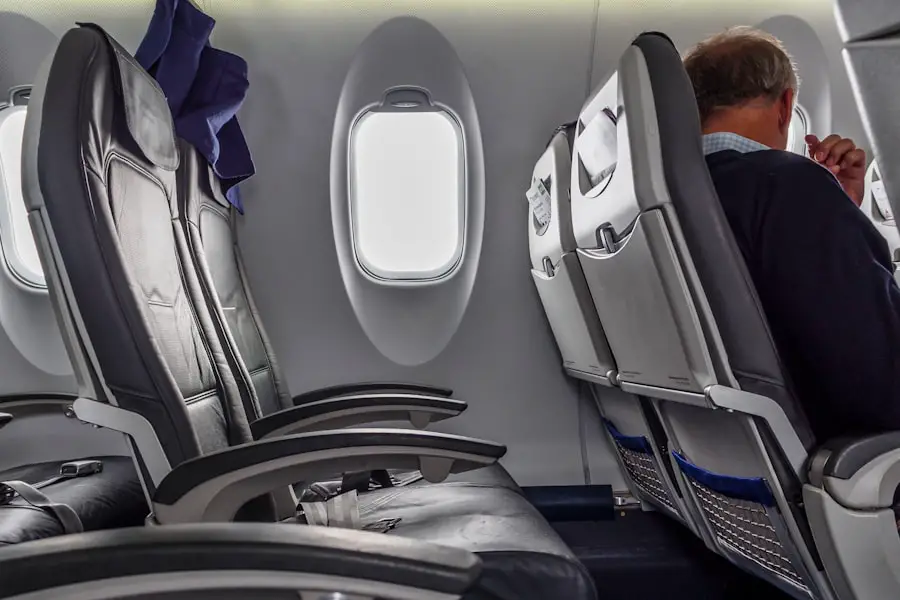
To maximize revenue per flight, low-cost carriers configure their aircraft cabins with single-class, high-density seating arrangements. By removing premium first-class or business-class cabins, galleys, and extra lavatories, LCCs fit significantly more seats onto the exact same airframe.
Features such as non-reclining, lightweight slimline seats reduce the overall weight of the aircraft, saving fuel while minimizing mechanical parts that could break and require maintenance. Combined with a minimal frills policy where free onboard catering is eliminated, these adjustments strip away operational drag and lower cleaning times between flights.
Lean Staffing Model and Flexible Workforce
Airline Labor Efficiency Benchmarks
| Labor Efficiency Metric | LCC Operational Target Benchmark |
| Employee-to-Aircraft Ratio | 30–50 employees per aircraft (vs. 100+ for legacy carriers) |
| Productivity Improvement | 15% higher flight-hour productivity per crew member |
| Overall Labor Cost Savings | 20% lower total labor expense per seat mile |
Labor is typically an airline’s second-largest operating cost after fuel. Low-cost carriers maintain high productivity by utilizing multi-skilled cross-trained staff and flexible scheduling arrangements.
For instance, flight attendants on ultra-low-cost carriers often assist with cabin cleaning and boarding gate procedures during layovers to expedite turns and eliminate the need for dedicated ground cleaning crews. Utilizing part-time or seasonal contracts also allows airlines to match staffing levels directly to peak travel periods without carrying unnecessary permanent overhead during slower months.
Point-to-Point Strategic Route Planning
Unlike traditional airlines that route passengers through crowded hub-and-spoke systems requiring complex baggage transfers and connection handling, LCCs predominantly operate simple point-to-point routes. This approach connects origin cities directly to destination markets.
Point-to-point routing reduces operational complexity. Missed passenger connections, lost baggage handling systems, and cascading network delays are virtually eliminated, keeping administrative overhead low and operational reliability high.
Ancillary Revenue Maximization
Ancillary revenue—income derived from non-ticket sources—has become central to the profitability of modern low-cost airlines. By selling optional add-on services individually, carriers can keep headline ticket prices low while generating high profit margins on supplementary choices.
Key ancillary revenue streams include:
- Baggage Fees: Charges for carry-on overhead space and checked luggage.
- Seat Assignment Fees: Charging extra for premium legroom, front-row, or aisle/window seat assignments.
- Onboard Concessions: Selling drinks, snacks, and duty-free products.
- Travel Bundles & Partnerships: Earning commissions on co-branded credit cards, hotel bookings, car rentals, and travel insurance.
Outsourcing Non-Core Operational Functions
To avoid capital investments in non-core operations, low-cost carriers heavily outsource ground-handling functions to third-party specialist firms. Ground handling, heavy airframe maintenance, engine overhauls, and catering logistics are frequently contracted out to external service providers.
Outsourcing transforms fixed labor overhead into variable costs that scale up or down automatically based on flight frequency. It allows the airline executive team to focus single-mindedly on core flight operations and revenue management.
Direct Digital Distribution and Targeted Marketing
Global Distribution Systems (GDS) like Sabre and Amadeus, along with traditional travel agencies, charge airlines significant booking fees per ticket segment. To bypass these fees, low-cost carriers drive consumers directly to their proprietary websites and mobile apps.
By offering exclusive web-only discounts and loyalty perks for direct bookings, LCCs cut out middleman distribution costs while capturing valuable first-party customer data for targeted marketing campaigns.
Dynamic Competitive Pricing Models
Low-cost airlines rely on sophisticated yield management software to adjust ticket prices dynamically based on real-time demand, booking velocity, and seasonality. Seats booked far in advance are priced lower to establish baseline revenue, while remaining inventory scales upward as the departure date approaches.
Ultratight inventory algorithms ensure planes routinely fly near peak capacity (load factors often exceeding 85% to 90%), maximizing revenue yield across every single flight departure.
Frequently Asked Questions
What makes Frontier Airlines and Spirit Airlines so cheap compared to legacy carriers?
Ultra-low-cost carriers (ULCCs) like Frontier and Spirit use an ultra-unbundled business model. They sell a basic seat at near-cost price (“bare fare”) and charge separately for carry-on bags, seat assignments, drinks, and customer service calls, keeping overall base costs as low as possible.
Does flying on a low-cost airline mean lower safety standards?
No. All commercial airlines operating within major jurisdictions must comply with identical government aviation safety standards enforced by authorities like the FAA (USA) or EASA (Europe). LCCs operate modern fleets that adhere strictly to mandatory maintenance regimes.
Are there hidden fees when booking with low-cost carriers?
While fees are fully disclosed during the booking process, unexpected charges can occur if rules are not followed—such as paying for carry-on bags at the gate rather than online, or failing to check in via the mobile app prior to arriving at the airport.
What are the best strategies to get the absolute lowest fare on an LCC?
To get the best price: book directly on the airline website, travel light with only a personal item that fits under the seat, allow the system to randomly assign your seat, bring your own snacks and water, and book several weeks in advance.
Sources
- Boeing Commercial Aircraft — 737 MAX Efficiency and Design Specifications.
- Bureau of Transportation Statistics (BTS) — US Airline Financial and Operational Data.
- International Air Transport Association (IATA) — Global Airline Industry Economic Performance & Fuel Trends.
