

Last Updated on September 11, 2026 by Daniel Globe
For winter travel, the best bra is one that fits well, matches your activity, and stays comfortable under several layers. A smooth wireless bra works well for many flights and sightseeing days, while a supportive sports bra is better for hiking, skiing, or other active plans. Fabric and fit usually matter more than padding or cup coverage.
Quick Answer
Choose a well-fitted wireless or lightly structured bra made from a quick-drying synthetic, merino blend, or other moisture-managing fabric. Use low or medium support for travel days and stronger support for active winter sports. Your thermal top and insulating layers, rather than the bra itself, should provide most of your warmth.
Key Takeaways
- Fit matters more than whether a bra is wired, wireless, padded, or full coverage.
- Synthetic and merino-blend fabrics are usually better than cotton for active or damp cold-weather travel.
- Your bra should manage sweat and sit smoothly; your base layer, mid-layer, and coat should provide warmth.
- Match the support level to your activity, breast size, and personal comfort.
- For most trips, pack one everyday bra, one active bra, and an optional outfit-specific style.
Disclosure: As an Amazon Associate I earn from qualifying purchases. Some links on this page are affiliate links, at no extra cost to you.
Which Travel Bra Works Best in Winter?
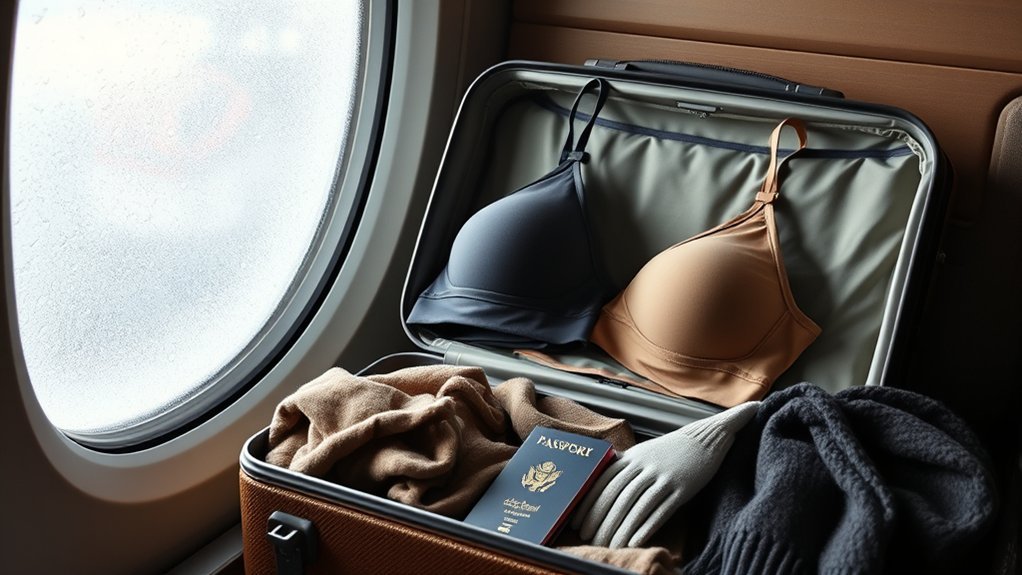
A smooth, well-fitted wireless bra is a practical choice for many winter trips because it can feel comfortable during long periods of sitting and fit neatly under a thermal top. However, wireless construction is not automatically better for everyone. A properly fitted underwire bra may be equally comfortable if the wire follows the breast crease and does not press on breast tissue.
Choose fabric according to your plans. Quick-drying synthetics can work well for busy itineraries and active days. Merino or merino-blend bras offer odor resistance and temperature comfort, although they may dry more slowly than lightweight synthetics. Cotton can feel soft during dry, low-activity travel, but it absorbs moisture and is not the strongest option when you expect to sweat or get wet.
Note: A bra is only one part of your clothing system. The CDC Yellow Book describes a cold-weather system with a moisture-managing base layer, an insulating middle layer, and a weather-resistant outer layer. Those outer layers provide most of your warmth.
Products Worth Considering

100% Merino Wool Fabric :Soft, lightweight and naturally comfortable for everyday wear Breathable & Moisture-Regulating :Helps manage moisture during workouts or outdoor...
How to Check Bra Fit Before You Travel
Try the bra with the thermal top, sweater, backpack, or coat you plan to wear. Sit, raise your arms, twist, and walk for several minutes. A bra that feels fine while standing may rub or shift after hours in a plane seat or beneath backpack straps.
The University of Portsmouth Research Group in Breast Health recommends checking five main fit areas:
- Underband: It should remain level around your body and feel firm without painfully digging in or riding up.
- Cups: Breast tissue should sit inside the cups without bulging, spilling, or large empty gaps.
- Center front: On a structured bra, the center should sit comfortably against the body rather than lifting far away.
- Straps: They should stay in place without carrying all the support or cutting into your shoulders.
- Underwire: If present, it should follow the breast crease and should not rest on breast tissue.
Pro Tip: Wear a new bra for a full day at home before packing it. This gives you time to notice rubbing, slipping straps, cup gaping, or pressure that may become worse during travel.
Best Wireless Bras for Winter Travel
A wireless bra can be a comfortable choice for flights, train rides, driving days, and casual sightseeing. Look for a stable underband, soft edges, smooth seams, adjustable straps, and enough cup depth for your shape. Removable pads are optional; they may provide modesty and shape, but they are not a substitute for proper fit.
| Feature | Why It Matters | Check Before Packing |
|---|---|---|
| Stable underband | Provides most of the bra’s support | Band stays level when you raise your arms |
| Smooth seams | Reduces visible lines and possible rubbing | Edges do not press beneath a backpack or coat |
| Adjustable straps | Lets you balance the fit as layers change | Straps stay up without digging in |
| Quick-drying fabric | Helps after sweating or hand washing | Care label allows easy washing and air drying |
A wireless bra should still provide the support you need. Soft construction does not help if the band rides up, the cups collapse, or the straps must be tightened until they hurt.
Products Worth Considering

Experience ultimate versatility! REMOVABLE & INTERCHANGEABLE straps (Classic U-Back, Sexy Halter Neck, Secure Cross Back), this bra effortlessly adapts to any neckline or outfit. Perfect for tanks, racerbacks, halter tops, and backless styles.

WIRELESS BRAS FOR WOMEN WITH FLEXIBLE SUPPORT - This wireless bra brings comfortable support without underwire. ComfortFlex Fit four-way stretch fabric shapes to your body for a flexible fit that moves with you.

【Elegant V-Neck Mesh Lace Bra】 Featuring stylish V neckline and delicate mesh lace design, it perfectly defines breast curve and creates feminine charming silhouette.This no underwire bra for women adopted semi-fixed breathable pads that will not shift or fall off after washing, bringing stable fit without frequent adjustment.
Why Convertible Bras Help in Winter
A convertible bra can reduce the number of styles you need to pack. Its straps may switch between standard, cross-back, halter, one-shoulder, or strapless positions, depending on the design. This can be useful when your trip includes fitted sweaters, evening clothes, or different necklines.
Test every strap position before traveling. A bra that fits correctly with standard straps may feel tighter or place more pressure on your neck when converted. Strapless use also depends heavily on a secure underband, so it may not be the most comfortable setup for a full day of walking.
A convertible bra is best treated as an outfit-flexibility option. It does not automatically wick moisture, dry quickly, or provide enough support for exercise. Check its fabric and support level separately.
Products Worth Considering

Material: elastic nylon tricot with PLUSH BACK. Comfort to your sensitive skin

Vanity Fair style 72335

【Upgrade Comfortable Bras for Women】our womens bras are made of upgrade materials, more soft and breathable than our primary prettywell bras, light as cloud, feels non restrictive while also with supporting. It’s a real invisible comfort seamless bra, the bras truly disappears under clothes.
Why Bralettes Work for Layering
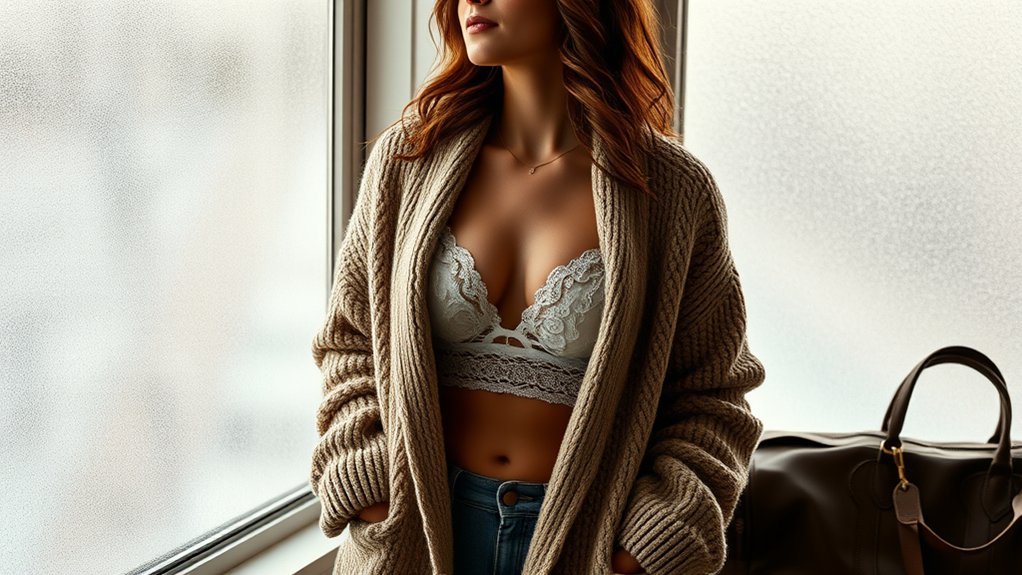
Bralettes can work well for relaxed travel days, hotel time, short journeys, and low-impact activities. Their soft construction often fits smoothly beneath thermals and sweaters, and many styles fold flat in a suitcase.
Support varies widely. A light lace bralette may be comfortable for one traveler but may not provide enough stability for another. For more support, look for a wider underband, separated or shaped cups, adjustable straps, side panels, or a combination of stretch and firm fabric.
Decorative lace and raised seams can rub beneath a fitted thermal top or backpack. For long travel days, a simple bralette with flat seams and soft edges is usually easier to layer.
Best T-Shirt Bras for Winter Outfits
A T-shirt bra provides a smooth shape beneath fitted knits, thin thermals, and dressier winter clothing. Molded or lightly lined cups can reduce visible seams, but heavy foam may hold more sweat and take longer to dry after washing.
Choose a style with enough cup depth, a stable band, and edges that do not curl. If your itinerary includes both transit and dinner plans, a comfortable T-shirt bra may cover both needs without requiring a separate dressy bra.
| Feature | Best For | Possible Tradeoff |
|---|---|---|
| Smooth molded cups | Fitted sweaters and fine knits | May take more suitcase space |
| Light lining | Modesty without thick padding | Can dry more slowly than an unlined cup |
| Adjustable straps | Changing necklines and layers | Hardware may press under backpack straps |
| Quick-drying blend | Multi-day trips and hand washing | Some synthetics retain odor more than wool |
Pack molded bras with the cups nested together instead of turning one cup inside out. This helps preserve their shape.
Best Winter Bra Fabrics
The best fabric depends on how much you will move, how often you can wash clothing, and whether the conditions will be dry or damp. No fiber is perfect for every trip. Fabric blends often provide a useful balance of stretch, drying speed, odor control, and durability.
Cotton for Dry, Low-Activity Travel
Cotton is soft, familiar, and comfortable for many people. It can work for hotel time, short indoor journeys, or dry sightseeing when you do not expect to sweat heavily.
Its weakness is moisture management. Cotton absorbs water and dries slowly, so a damp cotton bra can feel cold when you move outdoors. The CDC recommends wool, silk, or polypropylene over cotton for cold-weather inner layers because staying dry is important.
- Choose cotton for comfort during dry, gentle use.
- Avoid relying on it for skiing, winter running, or strenuous hiking.
- Pack a spare if the bra may become damp.
- Use a faster-drying fabric when laundry must dry overnight.
Merino Wool and Merino Blends
Merino wool can manage moisture, resist odor, and feel comfortable across changing temperatures. These qualities make it useful for multi-day trips and outdoor activities. Fine merino fibers are usually softer than traditional coarse wool, although people with sensitive skin should still test the fabric before travel.
Merino generally dries more slowly than lightweight polyester or nylon. A merino-synthetic blend may provide better durability and faster drying while keeping some of wool’s odor-control and temperature-regulating qualities.
Synthetic Fabrics for Quick Drying
Polyester, nylon, polypropylene, and blended performance fabrics are common in travel and sports bras. They can move moisture away from the skin and dry quickly, which is useful when you alternate between heated buildings and cold outdoor conditions.
Synthetics are often durable and easy to wash. However, some fabrics hold odor after repeated wear. Look for a breathable construction and follow the care label rather than assuming every synthetic bra performs the same way.
What “Thermal” Fabric Really Means
“Thermal” is a broad marketing term. The actual performance depends on fiber type, fabric thickness, knit structure, moisture management, and fit. A thick bra may feel warmer indoors but can also trap sweat during activity.
For most travelers, it is more effective to wear a comfortable, moisture-managing bra beneath a proper thermal base-layer top. The base layer covers more skin and works as part of the full cold-weather clothing system.
Choose Support by Winter Activity
Research shows that bra performance changes with movement, design, breast size, and individual fit. There is no single support level that is best for every winter activity. A study indexed by the National Library of Medicine found that different bras performed differently across running speeds and movements.
| Activity | Typical Starting Point | What to Check |
|---|---|---|
| Flying, driving, or train travel | Low to medium support | No painful pressure while sitting; smooth edges |
| City walking and sightseeing | Low to medium support | Stable band and moisture-managing fabric |
| Snowshoeing or moderate hiking | Medium support | Minimal bounce, no rubbing beneath pack straps |
| Downhill skiing | Medium to high support as needed | Secure fit without restricting breathing or movement |
| Running or high-impact training | High support for many wearers | Tested during the same movement before travel |
These are starting points, not fixed rules. Someone with a larger breast volume may prefer more support during walking, while another traveler may find medium support sufficient for skiing. Fit and comfort should guide the final choice.
Best Bras for Long Flights and Road Trips

For a long flight or road trip, choose a bra you have already worn comfortably for several hours. Soft edges, a stable band, breathable fabric, and straps that do not press beneath a coat or bag are more important than a specific style name.
Wire-Free Comfort
A wire-free bra can reduce rigid pressure points for travelers who dislike underwire while sitting. Look for shaped cups, side panels, or a firm underband if you need more support than a light lounge bra provides.
Wireless does not guarantee comfort. A tight elastic band, rough seam, or narrow strap can still rub or dig in. Test the bra while seated and while wearing your travel layers.
All-Day Support
Choose enough support to limit uncomfortable movement without making the bra feel restrictive. Adjustable straps can help, but the underband should provide most of the support. A band that rides up is usually too loose, while painful pressure or difficulty taking a full breath indicates that the bra is too tight or unsuitable.
A well-fitted underwire bra is also a valid travel choice. The wire should sit around the breast rather than on it, and it should remain comfortable when you lean forward or sit for a long period.
What Bras Should You Pack for Winter Travel?
Your packing list should reflect the trip length, activities, laundry access, and outfits. Three bras are enough for many short or medium trips, but three is not a medical or travel requirement.
- One everyday travel bra: A comfortable wireless, T-shirt, or properly fitted underwire style for transit and sightseeing.
- One active bra: Choose the support level needed for hiking, skiing, gym sessions, or other planned movement.
- One spare or outfit-specific bra: This may be a second everyday bra, a convertible style, or a bralette for hotel use.
For a short trip with no exercise, two comfortable bras may be enough. For a longer active trip, extra sports bras can be more useful than a dressy style. Pack at least one dry spare when you expect heavy sweating, snow, or limited drying time.
Washing and Drying Bras While Traveling
- Follow the care label, especially for wool blends, molded cups, and bonded seams.
- Use cool or lukewarm water and a small amount of mild detergent when hand washing.
- Press out water gently instead of twisting the cups or stretching the band.
- Roll the bra in a clean towel to remove extra water.
- Air dry it completely before wearing or packing it.
- Do not place a damp bra directly against your skin before going into cold weather.
How to Prevent Chafing and Overheating
Winter clothing can create friction where bra bands, seams, backpack straps, and multiple layers meet. Heated trains, cafés, airports, and vehicles can also make you sweat even when the outdoor temperature is low.
- Choose flat seams and soft edges for long travel days.
- Check whether backpack straps press directly over bra adjusters or thick seams.
- Change out of a damp bra as soon as practical.
- Remove or open an outer layer before heavy sweating begins.
- Avoid heavy padding during strenuous activity if it makes you overheat.
- Use a clean, dry bra to reduce irritation during multi-day travel.
Warning: Sharp pain, numbness, broken skin, persistent rashes, or difficulty breathing are not normal signs of support. Change the garment and seek medical advice if symptoms are severe, continue after removing the bra, or keep returning.
Best Bras for Winter Activities
For skiing, snowshoeing, winter hiking, or running, choose a sports bra designed for the level and direction of movement involved. Compression bras press breast tissue toward the chest, encapsulation bras support each breast separately, and combination styles use both methods.
Higher support is useful when movement causes discomfort, but the tightest bra is not automatically the best. The band should remain level, the cups should contain the breast tissue, and the bra should allow a full breath. Wide or carefully positioned straps may help when carrying a pack, but strap comfort depends on your body and the pack’s harness position.
Moisture management is especially important during outdoor exercise. The CDC advises travelers to use layers that move moisture away from the skin and to adjust clothing before excess sweating leaves garments wet. Your sports bra should support that system rather than trapping a large amount of moisture beneath your base layer.
Frequently Asked Questions
What is the 3 bra rule?
The “3 bra rule” is an informal wardrobe guideline, not a fixed health or travel standard. One common version means one bra to wear, one to wash, and one spare. For winter travel, a more useful version is one everyday bra, one active bra, and one spare or outfit-specific style.
What bra should you wear in winter?
Wear a bra that fits correctly, sits smoothly beneath your layers, and matches your activity. A quick-drying wireless bra suits many travel days, while a supportive sports bra is better for active plans. Use your thermal top and insulating layers for warmth.
What winter clothing is best for travel?
Use a moisture-managing inner layer, an insulating middle layer, and a wind- or water-resistant outer layer suited to the conditions. Add warm socks, suitable footwear, gloves, and head protection. Adjust layers as your activity and temperature change.
What is the best bra for a long flight?
The best flight bra is one you can wear comfortably while sitting for several hours. Look for a stable but non-painful band, smooth seams, comfortable straps, and breathable fabric. Either a wireless or underwire bra can work when it fits correctly.
Is an underwire bra safe for air travel?
A properly fitted underwire bra is generally a normal clothing choice for air travel. Choose another style if the wire presses on breast tissue, becomes painful while sitting, or feels uncomfortable beneath your travel layers.
Is cotton or merino better for a winter travel bra?
Merino or a merino-synthetic blend is usually better for active, damp, or multi-day winter travel because it manages moisture and odor better than cotton. Cotton can still feel comfortable for dry, low-activity use, but it absorbs moisture and dries slowly.
Conclusion
The best bra for winter travel is not simply the warmest, softest, or most supportive style on the label. It is the one that fits your body, matches your activity, manages moisture, and remains comfortable beneath your clothing. Start with a reliable everyday bra, add activity-specific support when needed, and let your thermal, insulating, and outer layers handle the cold.
Sources
- CDC Yellow Book: Heat and Cold Illness in Travelers — cold-weather layering and moisture-management guidance.
- CDC Winter Weather Safety — fabric, layering, dryness, and overheating guidance.
- U.S. National Park Service: Be Winter Ready — choosing wool or synthetic clothing over cotton in wet winter conditions.
- University of Portsmouth: How to Find a Well-Fitting Sports Bra — underband, cup, strap, center-front, and underwire fit criteria.
- PubMed: Effectiveness of Sports Bras in Reducing Breast Displacement — activity, fit, comfort, and bra-design differences.
- PubMed: Breast Temperature and Thermal Comfort Following Exercise — how sports-bra material can affect thermal comfort.
