
Last Updated on September 11, 2026 by Daniel Globe
A good emergency go-bag should help you evacuate quickly while keeping critical supplies organized, protected, and light enough to carry. The products in this guide cover useful supporting roles—waterproof storage, sleep, insulation, rain protection, lighting, backup power, and repairs—but they do not replace basics such as water, food, first aid, medications, documents, sanitation supplies, and emergency communication gear.
Each pick is evaluated for emergency usefulness, packability, durability, ease of use, and current product information so you can build a practical kit around your own climate, household, transportation plan, and likely hazards.
Quick Answer
The best go-bag gear is compact, dependable, and matched to a specific emergency need. Start with an easy-to-carry bag and core supplies such as water, food, first aid, medication, light, radio, documents, and sanitation items. Then add weather protection, insulation, sleep gear, backup power, and a multitool as space and weight allow.
Key Takeaways
- A go-bag should support evacuation for roughly three days, but the exact load depends on your household, local hazards, climate, and transportation plan.
- Water, food, first aid, medications, communications, documents, hygiene supplies, cash, and local maps come before comfort-oriented accessories.
- The Sea to Summit pack offers strong wet-weather protection, while the Exped pad, Big Agnes Luna Jacket, and Frogg Toggs suit cover sleep, warmth, and rain protection.
- A flashlight and charged power bank should be primary electrical backups; a small solar panel works best as supplemental charging.
- The Leatherman P4, Surge, and Wave+ contain knife blades and should not be packed in U.S. airline carry-on baggage.
Affiliate disclosure: This roundup contains Amazon affiliate links. If you buy through them, we may earn a referral commission on qualifying purchases at no extra cost to you.
Top Picks
|
Category |
Product |
Editorial Fit Score* |
|---|---|---|
|
🎒 Best Waterproof Pack |
88/100 |
|
|
🛏️ Best Sleeping Pad |
84/100 |
|
|
🧥 Best Packable Insulation |
86/100 |
|
|
🌧️ Best Packable Rainwear |
87/100 |
|
|
🔦 Best Compact Flashlight |
90/100 |
|
|
🔋 Best Compact Solar Charger |
78/100 |
|
|
🛠️ Best One-Hand Multitool |
82/100 |
|
|
💪 Best Heavy-Duty Multitool |
84/100 |
|
|
🔁 Best Everyday Multitool |
92/100 |
*Editorial fit scores compare published specifications and suitability for a portable emergency kit. They are not laboratory test scores. The weighting used here is emergency usefulness 30%, portability 25%, durability/weather suitability 20%, ease of use and maintenance 15%, and current availability/value 10%.
What a Complete Go-Bag Still Needs
The products below are useful additions, but start with the core emergency supplies recommended by Ready.gov and the American Red Cross. A portable evacuation kit should be easy enough to move and should be customized for the people who will actually use it.
- Water: Stored drinking water plus containers and, where appropriate, a backup treatment method.
- Food: Nonperishable, easy-to-eat food that fits dietary and allergy needs.
- Communication: Battery-powered or hand-crank radio, phone, charging cable, power bank, and emergency contacts.
- First aid and medication: First-aid supplies, prescription medication, medical information, glasses, and required medical-device accessories.
- Light and signaling: Flashlight, spare batteries, whistle, and reflective or high-visibility items.
- Documents and money: Copies of identification, insurance information, important contacts, local maps, and emergency cash stored securely.
- Sanitation: Hygiene items, wipes, garbage bags, toilet supplies, masks, and hand-cleaning supplies.
- Clothing and shelter: Season-appropriate clothing, sturdy footwear, rain protection, blanket or sleeping system, and appropriate shelter.
- Household-specific items: Baby supplies, pet supplies, disability-related equipment, chargers, comfort items for children, and anything required for special diets or care needs.
The Red Cross recommends planning for a three-day portable evacuation supply, but a usable go-bag must remain light enough for the person carrying it.
Pro Tip: Do a real carry test after packing. Walk with the loaded bag for 20–30 minutes, use stairs if appropriate, and remove nonessential duplication if the weight prevents safe movement.
Selection Criteria
You should expect gear in a go-bag to perform under stress, so durability, weather resistance, straightforward operation, and emergency usefulness received the most weight. Pack weight and compressed volume matter because mobility can be more valuable than carrying every possible convenience.
Multi-function gear receives extra credit when it genuinely replaces several useful items without adding unnecessary weight. We also consider warmth and insulation, independent power options, ease of maintenance, current manufacturer support, and whether a product has important limitations a buyer should know before relying on it.
Customer ratings can help reveal recurring complaints, but they are not treated as controlled testing. Rating numbers below are identified as snapshots from the source listings because marketplace scores and review totals change over time.
Warning: A go-bag does not guarantee safety in a disaster. Follow evacuation orders and local emergency instructions. Never delay evacuation to collect equipment, and do not carry more weight than you can safely move with.
Sea to Summit Big River Dry Backpack

The Sea to Summit Big River Dry Backpack is a useful foundation when your emergency plan includes heavy rain, flooding risk, boat travel, or other wet conditions. The 50 L version uses a roll-top dry-bag design, an adjustable harness, sternum strap, and hip belt, giving you a simpler weather-resistant load carrier than a traditional multi-pocket backpack.
Sea to Summit describes the Big River construction as waterproof with taped seams and a roll-top closure, but a dry backpack should not be treated as a diving container. Current product information for Big River models specifically distinguishes normal wet-weather use from prolonged submersion. Published weights also vary between model generations and markets, so the exact SKU matters more than a single universal weight figure.
For a go-bag, the biggest strength is straightforward protection: documents, spare clothes, electronics, and other moisture-sensitive supplies can ride inside the main dry compartment, while smaller pouches or dry sacks can provide organization.
What People Say
Buyers commonly praise the bag’s wet-weather protection, simple construction, and roomy interior. The lack of built-in compartments is a benefit for some users and a drawback for others, so internal pouches are helpful if you need quick access to first aid, light, medications, or documents.
Overall Sentiment: Positive

The chart above is retained from the original roundup and should be treated as a historical review-sentiment snapshot rather than a live marketplace metric.
Versatility
It works as the main shell of a wet-weather evacuation kit, a paddling dry pack, or rugged storage for vehicle and storm preparedness. A 50 L bag has enough volume for clothing, shelter components, food, first aid, and other essentials, but capacity should not become an excuse to overload it.
Travel Friendliness
The adjustable harness and relatively simple exterior are useful in vehicles, boats, crowded shelters, and outdoor evacuation routes. Because dry-pack versions differ in exact dimensions and weight, check the linked SKU against your transportation and carry requirements before assuming it will work as airline cabin baggage.
Key Benefits
- Waterproof dry-bag construction for rain, spray, and wet environments when properly closed
- Adjustable harness, sternum strap, and hip belt
- Simple interior that works well with labeled emergency pouches
Source-listing rating snapshot: 4.4/5 (38+ ratings at the time of the original data collection; current totals may differ).
Exped Dura 3R

The Exped Dura 3R is a durable three-season sleeping mat that can make emergency rest much more realistic than trying to sleep directly on a cold floor or ground. According to EXPED’s published Dura 3R specifications, it has an ASTM R-value of 2.9 and uses microfiber insulation.
The original article listed the pad at 1.15 kg, but weight depends on size. EXPED lists approximately 705 g for Medium, 820 g for Medium Wide, and 875 g for Long Wide. That makes it substantially lighter than the original 1.15 kg claim while still heavier than minimalist ultralight mats.
Its R-value makes it a practical three-season option rather than a dedicated severe-winter pad. Cold-climate evacuation plans may require more ground insulation, a warmer sleeping bag, or both.
What People Say
Users commonly highlight comfort, supportive longitudinal chambers, durable fabric, and the convenience of the included Schnozzel Pumpbag. The main trade-off is that the Dura line favors durability over minimum possible backpacking weight.
Overall Sentiment: Positive

This chart is a historical sentiment snapshot from the original roundup, not a live rating feed.
Versatility
The pad works for evacuation shelters, vehicle kits, camping, and emergency overnight use. Its 7 cm thickness gives more cushioning than a basic foam mat, while its packed size remains manageable in a larger go-bag.
Travel Friendliness
Depending on size, the mat weighs roughly 705–875 g and packs into an included storage system. It is more appropriate when sleep quality and durability matter than when the absolute lightest evacuation load is the priority.
Key Benefits
- ASTM R-value 2.9 for three-season ground insulation
- Weights from roughly 705 to 875 g depending on size
- Durable construction and included Schnozzel Pumpbag
Source-listing rating snapshot: 4.5/5 (6+ ratings in the original data; current totals may differ).
Big Agnes Luna Jacket
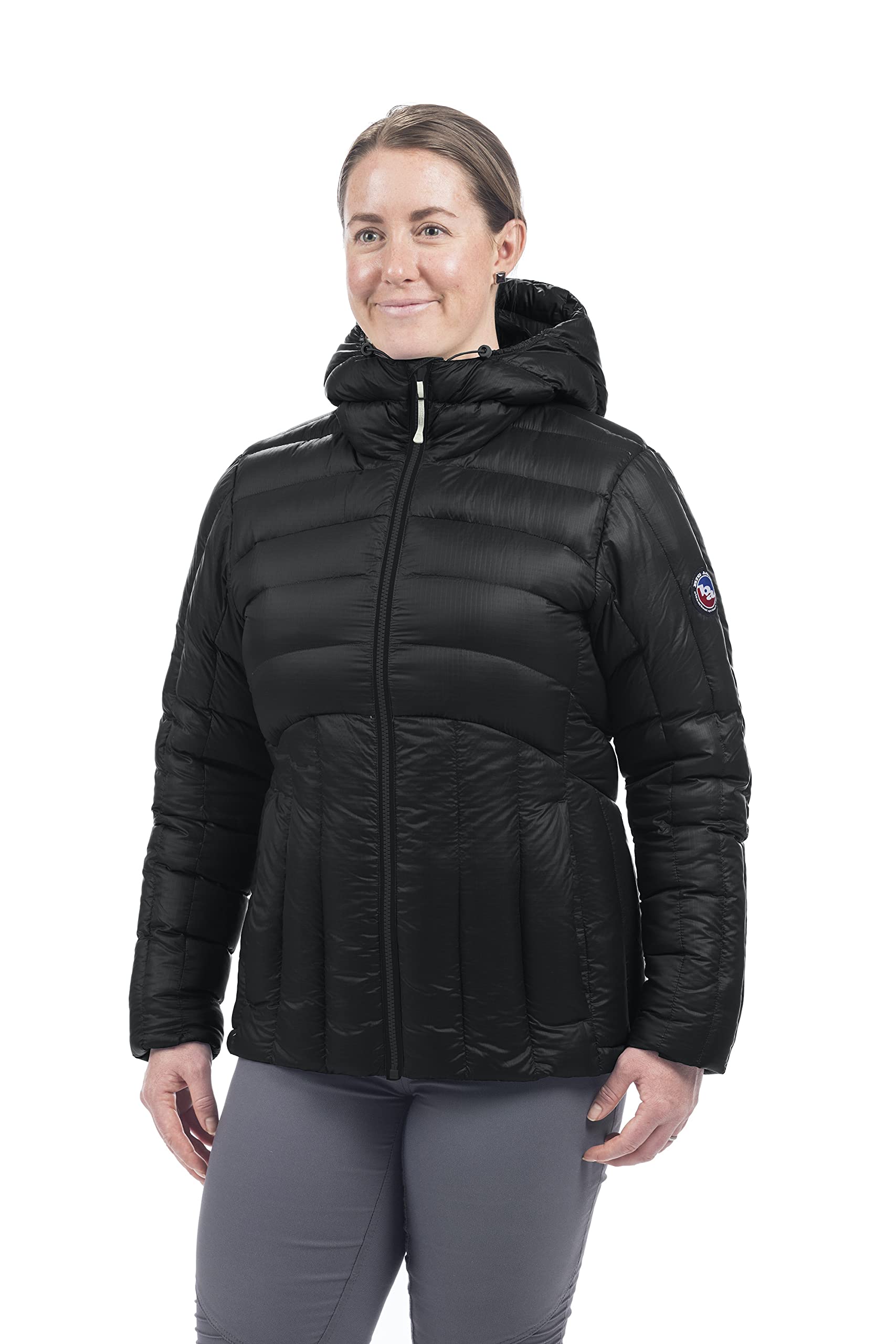
The Big Agnes Luna is better described as a packable women’s insulated jacket than a general-purpose “coat.” Big Agnes currently describes the Luna with 650-fill-power DownTek water-repellent down, a recycled nylon ripstop shell, recycled polyester lining, a hood, zippered hand pockets, interior storage, and a chest pocket that doubles as a stuff sack.
That makes it useful as a compact warmth layer in a cold-weather go-bag. The shell has water-repellent treatment, but this is not a waterproof rain jacket. In sustained rain, protect the down insulation with a waterproof shell such as dedicated rainwear.
What People Say
Customers tend to value its warmth-to-weight balance, fit, hood, and useful pocket layout. The packable construction is particularly relevant to emergency kits because an insulating layer can stay compressed until temperatures drop.
Overall Sentiment: Positive

This chart reflects the original roundup’s review snapshot and is not a statistically representative consumer survey.
Versatility
Use it as a cold-weather commuting layer, camping jacket, travel layer, or emergency insulation. Because the Luna is a women’s-specific apparel product, sizing and fit should be confirmed before placing it permanently in a shared household bag.
Travel Friendliness
The jacket packs into its own chest pocket, making it easier to reserve space for water, food, first aid, and other higher-priority supplies.
Key Benefits
- 650-fill-power DownTek insulation
- Packable design with integrated stuff pocket
- Hood and multiple pockets for cold-weather utility
Note: An insulated down jacket and a waterproof rain shell solve different problems. In cold, wet conditions, carrying both layers is much safer than expecting one garment to do everything.
Source-listing rating snapshot: 5/5 (1+ rating in the original data; too small a sample to treat as strong evidence of overall satisfaction).
Frogg Toggs Ultra-Lite2 Rain Suit

The Frogg Toggs Ultra-Lite2 is designed around lightweight emergency rain protection rather than abrasion-heavy backcountry use. Frogg Toggs describes the current men’s Ultra-Lite2 as waterproof, wind-resistant, breathable, extremely packable, and approximately 12.8 oz net weight.
The jacket has an adjustable hood, front zipper with storm flap, and elastic cuffs, while the pants use an elastic waist and straight-leg design. A stuff sack is included.
For a go-bag, the appeal is simple: you can carry full upper- and lower-body rain protection without surrendering much space. The trade-off is that very lightweight nonwoven rainwear should not be treated like a heavy-duty work shell around sharp brush, rough surfaces, or repeated abrasion.
What People Say
Buyers commonly value the low weight, compact storage, price, and ability to cover both torso and legs. Long-term durability and generous sizing are more common trade-offs than outright weather-protection complaints.
Overall Sentiment: Positive
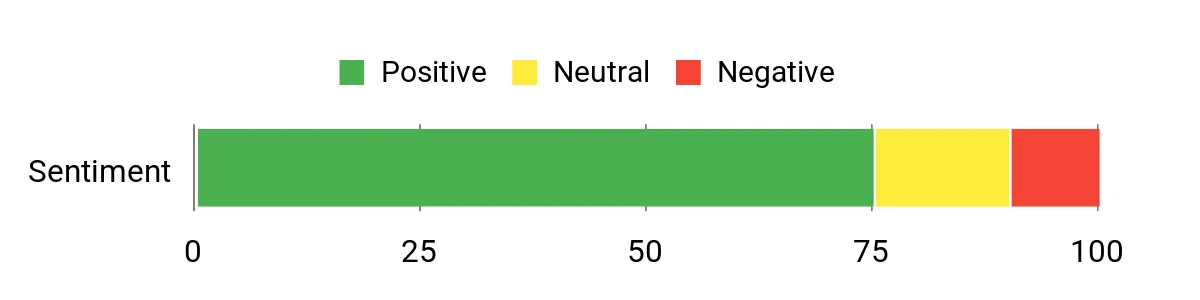
This is a historical sentiment image retained from the original roundup; current review totals can differ.
Versatility
It works as emergency rainwear in a go-bag, vehicle kit, hiking pack, camping setup, or storm-preparedness bin. It is especially useful when compact backup coverage matters more than premium fabric feel.
Travel Friendliness
At about 12.8 oz for the current men’s suit, it is one of the easier full rain systems to dedicate to an emergency bag. Keep it accessible rather than buried beneath the sleeping system so you can put it on before the rest of the kit becomes wet.
Key Benefits
- Waterproof, wind-resistant, packable construction
- Jacket and pants provide fuller coverage than a jacket alone
- Approximately 12.8 oz net weight on the current men’s version
Source-listing rating snapshot: 4/5 (22,677+ ratings in the original data; live marketplace totals may change).
GearLight S1000 Flashlight

The Amazon-linked GearLight S1000 two-pack is a practical emergency-light option because the flashlights are compact, zoomable, and use common replaceable batteries. Documentation for this S1000 generation describes five lighting modes and operation from three AAA batteries; some versions can also accept a compatible 18650 rechargeable cell.
For long-term emergency storage, removable batteries are useful because you can rotate them during scheduled kit checks. Store spare cells in their original packaging or a battery case and inspect the flashlight contacts periodically for corrosion.
What People Say
Reviewers often highlight the strong perceived brightness for the size, zoomable beam, sturdy aluminum body, and convenience of receiving two lights. Water resistance is useful for rain and emergency conditions, but the S1000 should not be treated as a submersible dive light.
Overall Sentiment: Positive

The chart is a retained historical review snapshot rather than a current verified rating distribution.
Versatility
Keep one flashlight in the go-bag and the second in a vehicle or home emergency kit. Multiple beam modes give you options for close work, walking, signaling, and wider-area illumination.
Travel Friendliness
The compact body fits easily in a side pocket or emergency pouch. If your version uses removable batteries, pack fresh spares separately and check them during your six-month kit review.
Key Benefits
- Compact LED light with zoomable beam and multiple modes
- Common AAA power on the Amazon-linked generation
- Two-pack makes it easy to split lighting between kits
Source-listing rating snapshot: 4.6/5 (82,625+ ratings in the original data; current marketplace counts may differ).
BioLite SolarPanel 5+

The BioLite SolarPanel 5+ combines a 5-watt solar panel with an integrated 3,200 mAh / 8 Wh lithium-ion battery. BioLite lists a weight of 13.76 oz (390 g), USB output, Micro-USB input, monocrystalline cells, and IPX4 weather resistance.
That makes it a useful supplemental power source, but not an ideal sole charging plan. A 5-watt panel depends on strong sun, panel angle, temperature, device demand, and charging losses. For emergency communication, start with a fully charged conventional power bank and treat solar generation as a way to extend available power when conditions cooperate.
What People Say
Users generally like the slim construction, integrated battery, sundial alignment system, and ability to store solar energy for later use. Slow charging in weak or intermittent sunlight is the main recurring limitation.
Overall Sentiment: Neutral
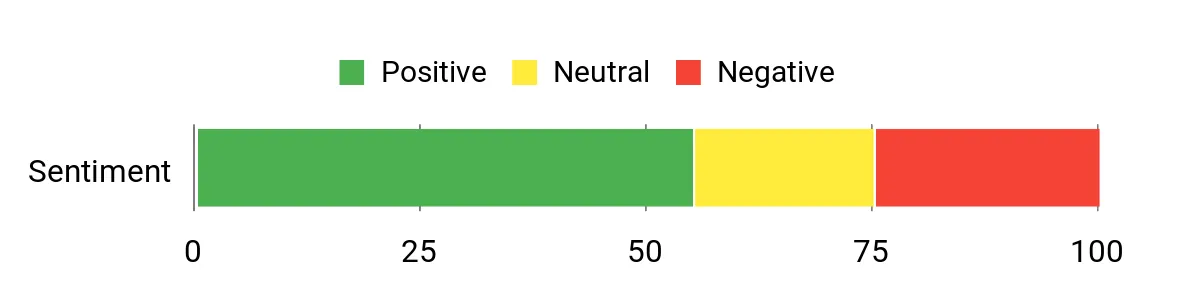
The chart is retained from the source roundup and does not represent live BioLite or Amazon review data.
Versatility
Use it to extend phone, GPS, light, or other small USB-device runtime during longer outages or outdoor evacuations. Its integrated battery is particularly useful because you can collect energy when the sun is available and use it later.
Travel Friendliness
At 13.76 oz with a flat profile, it can slide against the back panel of a larger go-bag. Keep charging cables with it and protect the ports from debris and prolonged exposure to water.
Key Benefits
- Integrated 3,200 mAh / 8 Wh lithium-ion battery
- 5-watt monocrystalline panel with USB output
- 13.76 oz weight and IPX4 weather resistance
Note: Charge phones, power banks, radios, and medical-device batteries before an emergency. Small solar panels are useful for extending power, but cloud cover, shade, season, and limited daylight can sharply reduce output.
Source-listing rating snapshot: 3.8/5 (16+ ratings in the original data; current totals may differ).
Leatherman FREE P4

The Leatherman FREE P4 packs 21 functions into a 4.25-inch, 8.6 oz stainless-steel multitool. Its magnetic architecture and outside-accessible implements make it especially easy to operate when you need a knife, pliers, scissors, saw, drivers, file, awl, can opener, or other repair functions quickly.
It remains a capable emergency multitool, but availability deserves attention. The FREE P4 has become difficult to find through normal U.S. retail channels, with some retailers listing it as discontinued. That makes the currently supported Wave+ a stronger default recommendation for buyers who do not specifically want the FREE magnetic design.
What People Say
Users commonly praise the smooth one-handed architecture, tool accessibility, solid construction, and broad toolset. The P4’s biggest current drawback is no longer capability—it is availability and replacement choice compared with actively promoted Leatherman models.
Overall Sentiment: Positive

The chart represents the original roundup’s review snapshot rather than current marketplace availability or ratings.
Versatility
The P4 can cover pliers work, cutting, sawing, small repairs, opening packages and cans, and other field adjustments. That makes it useful where one well-built tool can replace several smaller hand tools.
Travel Friendliness
At 4.25 inches closed and 8.6 oz, it is compact enough for a belt sheath or emergency pouch. However, its knife blades make it unsuitable for U.S. airline carry-on baggage.
Key Benefits
- 21 tools with magnetic opening and one-hand-access features
- 4.25-inch closed length and 8.6 oz weight
- Broad repair capability in one compact tool
Source-listing rating snapshot: 4.8/5 (3,455+ ratings in the original data; marketplace totals may change).
Leatherman Surge
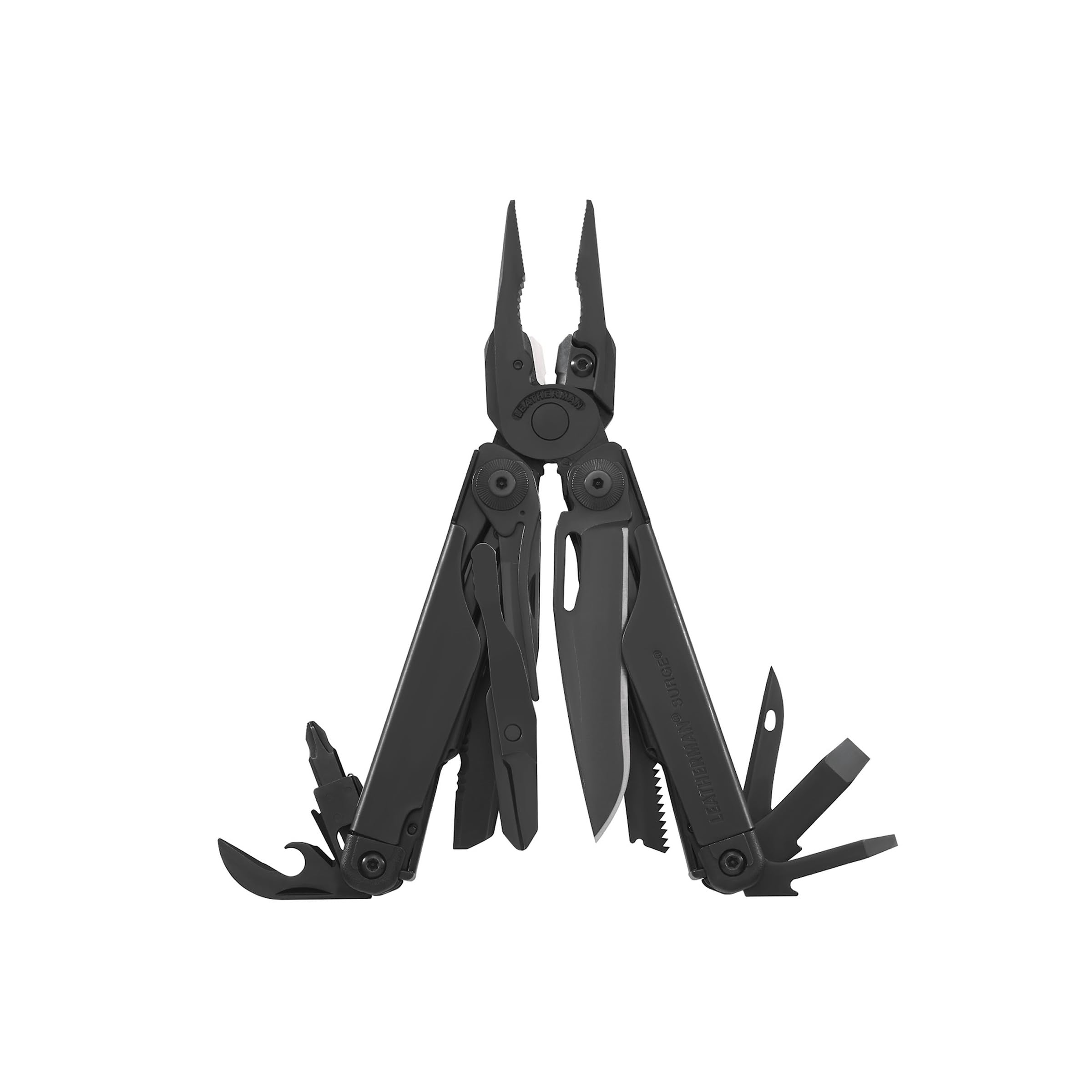
The Leatherman Surge is the heavy-duty choice in this group. It provides 21 tools, including large pliers, replaceable wire cutters, two knife blades, saw, scissors, awl, drivers, files, and Leatherman’s Blade Exchanger.
Current Leatherman specifications list a 4.5-inch closed length and 12.5 oz weight. That is noticeably heavier than the P4 or Wave+, but the extra mass buys larger implements and stronger leverage for demanding repairs.
What People Say
Customers consistently praise the Surge for durability, substantial pliers, cutters, large scissors, and its ability to handle jobs that feel excessive for lighter multitools. Weight is the main trade-off.
Overall Sentiment: Positive

The chart is a historical sentiment snapshot retained from the original article.
Versatility
The Surge suits vehicle repairs, property emergencies, campsite work, and evacuation situations where mechanical capability matters more than ultralight carry.
Travel Friendliness
It is packable, but 12.5 oz is significant in a bag where every ounce competes with water, first aid, clothing, and food. It also contains knife blades and therefore belongs in checked baggage rather than a U.S. airline carry-on.
Key Benefits
- 21-tool heavy-duty platform
- Large pliers, replaceable wire cutters, scissors, saw, files, and Blade Exchanger
- Strong option for vehicle and mechanical emergency kits
Source-listing rating snapshot: 4.7/5 (3,463+ ratings in the original data; current marketplace totals may differ).
Leatherman Wave+
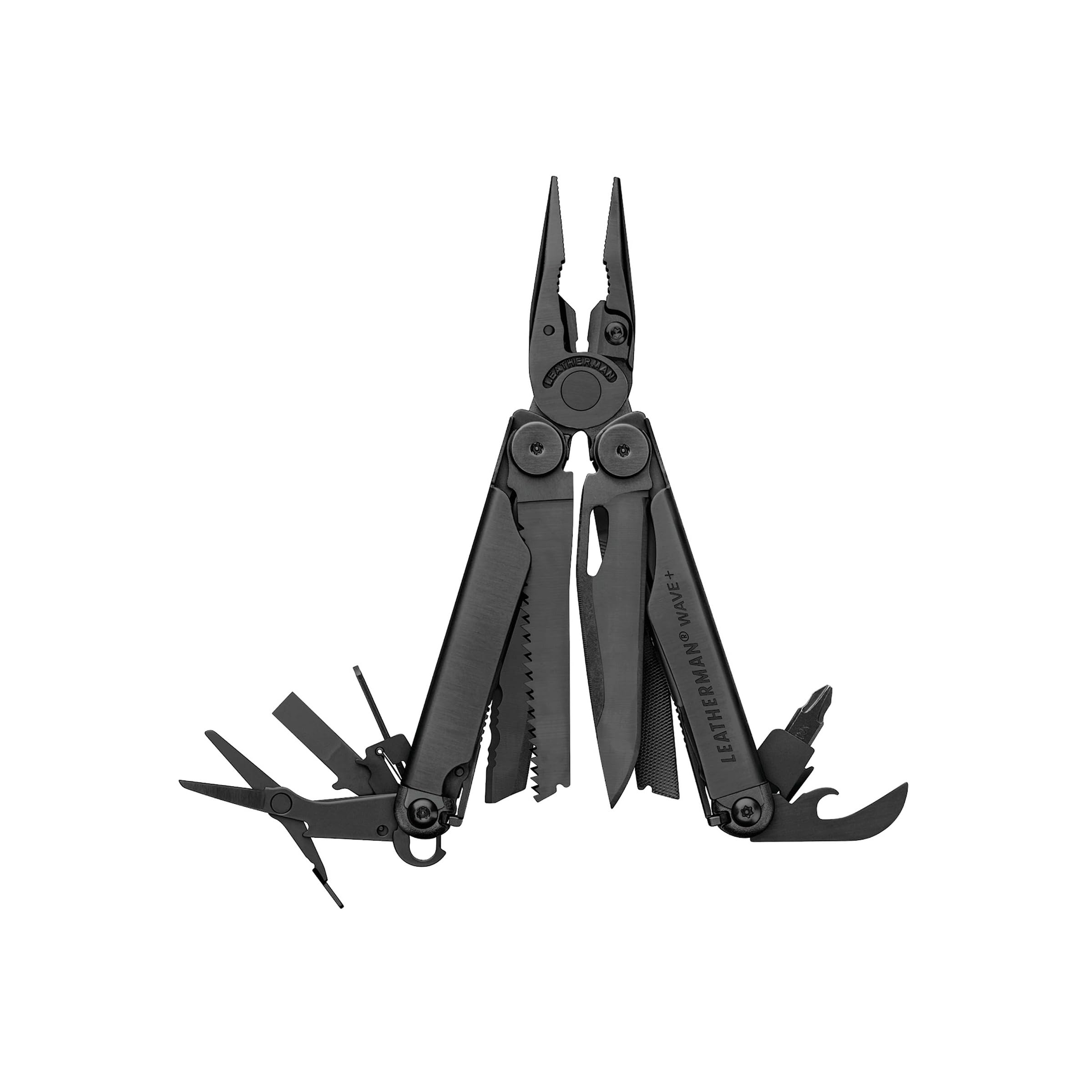
The Leatherman Wave+ is the strongest all-around multitool choice here because it balances availability, capability, size, and weight. It includes 18 tools, replaceable wire cutters, two knife blades, a saw, spring-action scissors, two files, bit drivers, pliers, and common opening and repair tools.
Current Leatherman specifications list it at 8.5 oz and 4 inches closed. That makes it roughly four ounces lighter than the Surge while retaining the functions most people are likely to use in household, vehicle, camping, and evacuation situations.
What People Say
People consistently praise the Wave+ for its balance of durability and portability. The outside-accessible blades, pliers, replaceable cutters, bit drivers, and files make it capable enough for serious fixes without the Surge’s extra bulk.
Overall Sentiment: Positive

This is a historical sentiment image from the original roundup, not a live Leatherman or Amazon rating feed.
Versatility
The Wave+ works well in a go-bag, home kit, vehicle kit, campsite, or everyday repair setup. Eighteen tools cover most routine cutting, gripping, filing, opening, and fastening tasks without carrying a full tool roll.
Travel Friendliness
The 4-inch closed size and 8.5 oz weight are relatively easy to accommodate in an evacuation bag. Like the P4 and Surge, however, it contains knife blades and should not be placed in U.S. airline carry-on baggage.
Key Benefits
- 18-tool platform balancing utility and portability
- 8.5 oz weight and 4-inch closed length
- Replaceable wire cutters, bit drivers, scissors, files, saw, and two blades
Source-listing rating snapshot: 4.7/5 (4,500+ ratings in the original data; current counts may differ).
Warning: The FREE P4, Surge, and Wave+ contain knife blades. According to TSA’s What Can I Bring guidance, multi-tools with knives are prohibited from U.S. airline carry-on baggage. Pack them securely in checked baggage when flying and check local laws at your destination.
Choosing the Right Multitool
|
Model |
Tool Count |
Weight |
Best Use |
Main Trade-Off |
|---|---|---|---|---|
|
Leatherman FREE P4 |
21 |
8.6 oz |
Fast one-hand access |
Limited current availability |
|
Leatherman Surge |
21 |
12.5 oz |
Heavy-duty repairs |
Heaviest option |
|
Leatherman Wave+ |
18 |
8.5 oz |
Best all-around balance |
Less heavy-duty leverage than Surge |
How to Balance Weight, Water, and Capacity
A 30–50 L backpack is a useful range for many portable evacuation kits, but there is no universal ideal size. Body size, walking ability, weather, household responsibilities, and whether you are evacuating by foot or vehicle matter more than hitting a specific liter number.
Water is the biggest weight challenge. Emergency guidance commonly uses one gallon per person per day as a planning benchmark, and a gallon of water weighs more than eight pounds before the container. Carrying a full three-day water allocation on foot may therefore be unrealistic for many people.
Use your emergency plan to divide supplies intelligently. You may carry immediately accessible drinking water while storing additional water in a vehicle or home kit, depending on your hazards and evacuation plan. A water-treatment method can be a useful backup, but it cannot make contaminated chemical or salt water safe and should not be treated as a substitute for all stored drinking water.
How to Pack the Bag for Fast Access
- Fastest-access pocket or pouch: flashlight, whistle, mask, gloves, phone cable, small first-aid items, and emergency contacts.
- Protected waterproof pouch: identification copies, medical information, insurance documents, cash, and backup electronic storage.
- Center of the load: dense items such as food, power bank, and tools close to your back where possible.
- Bottom: sleeping gear and items unlikely to be needed during the first minutes of evacuation.
- Weather layer: rainwear near the top so you can put it on before opening the bag repeatedly in bad weather.
- Separate medication pouch: clearly labeled and easy to remove when supplies are rotated.
Pro Tip: Build your bag in modules—first aid, documents, food, power, hygiene, clothing, and tools. If plans change, you can remove or redistribute one labeled module without unpacking everything.
Frequently Asked Questions
What should I pack in a go-bag?
Start with water, nonperishable food, first aid, medications, light, an emergency radio, phone charging, documents, emergency contacts, cash, sanitation supplies, local maps, weather-appropriate clothing, sturdy footwear, and basic shelter or warmth. Then add useful multiuse items such as a multitool, rainwear, sleeping pad, and backup charging gear if weight and space allow.
How do I choose the right backpack for a go-bag?
Choose a pack that you can comfortably carry when fully loaded. A 30–50 L range works for many people, but fit and total weight are more important than capacity alone. Look for supportive shoulder straps, a stable harness, weather protection, and simple organization. Test the loaded bag before relying on it.
How often should I check and update my go-bag?
Review it about every six months and after any emergency, trip, or training exercise where supplies were used. Replace expired food and medication, inspect first-aid products, rotate batteries, recharge power banks, confirm clothing still fits, update documents and contacts, and test lights, chargers, zippers, buckles, and sleeping equipment.
Can I take a Leatherman multitool in my carry-on bag?
Not the P4, Surge, or Wave+ reviewed here. They contain knife blades. TSA guidance prohibits multi-tools with knives in U.S. airline carry-on baggage. Pack them securely in checked baggage and check airline, destination, and local-law requirements before traveling.
Is a small solar panel enough for emergency phone charging?
It is better as supplemental power than your only plan. A small 5-watt panel needs useful sunlight and time, and real output varies with shade, clouds, angle, temperature, and charging losses. Begin an emergency with your phone and power bank charged, then use solar to extend available energy when conditions allow.
Should I carry three full days of water in my backpack?
Emergency planning commonly uses one gallon per person per day, but carrying three gallons on foot adds roughly 25 pounds before the containers. Your plan may need to divide water between carried supplies, vehicle storage, and home reserves. Carrying capacity, climate, evacuation distance, and access to safe water should determine the practical setup.
How These Picks Fit Different Priorities
If waterproof storage is your first concern, the Sea to Summit dry backpack is the most directly useful product in the group. The Exped Dura 3R becomes more valuable if you may sleep in a shelter, vehicle, or outdoors, while the Big Agnes Luna provides compact insulation for colder climates. The Frogg Toggs suit earns space where heavy rain is a realistic hazard.
For basic utility, the GearLight flashlight is easier to justify than a solar panel because immediate light is a core emergency need. The BioLite becomes more useful during extended outages or outdoor evacuations, especially when paired with a fully charged conventional power bank. Among the multitools, the Wave+ offers the best balance of capability and weight, the Surge favors heavy-duty work, and the FREE P4 favors one-hand operation but is now harder to source.
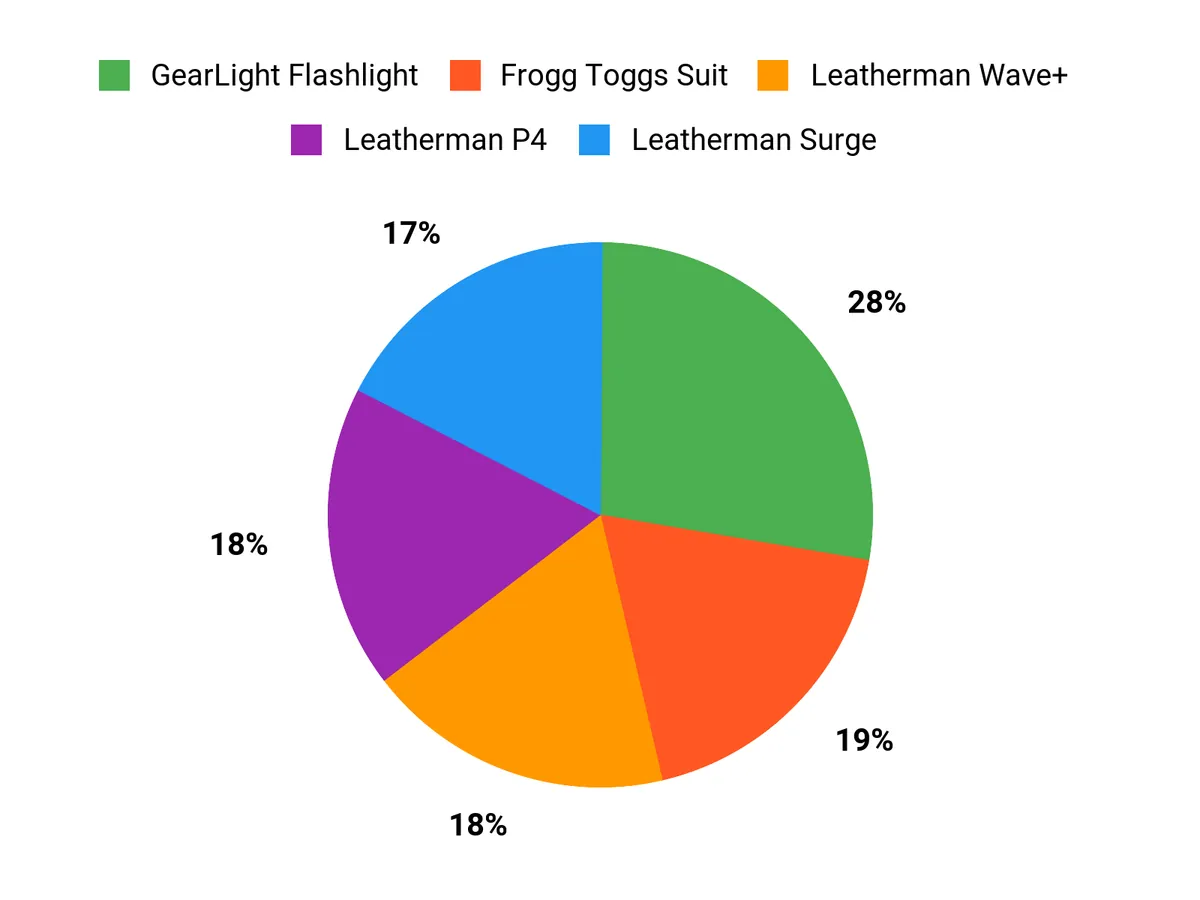
This chart is retained from the original roundup as an illustrative comparison. It should not be interpreted as a scientifically sampled customer-preference survey.
Wrapping Up
Build your go-bag around essentials first: safe water, food, medications, first aid, communication, light, documents, sanitation, clothing, and your household’s specific needs. After those basics are covered, a waterproof pack, compact sleeping system, insulation, rainwear, backup power, and a well-chosen multitool can make the kit substantially more capable.
Do not judge the bag only by how much fits inside. Test the loaded weight, practice finding critical items in the dark, make sure every household member knows where the kit is stored, and review the contents about every six months. A smaller bag you can actually carry and maintain is more useful than an overloaded bag that looks comprehensive on paper.
| Product Name | Image | Rating Snapshot | Weight | Material / Construction |
|---|---|---|---|---|
| Sea to Summit Big River Dry Backpack |
|
4.4/5 (38+ in original source snapshot) | Varies by model generation; roughly 1.7–1.8 lb for comparable 50 L versions | 420D nylon dry-pack construction |
| Exped Dura 3R Sleeping Pad |
|
4.5/5 (6+ in original source snapshot) | 705 g M / 820 g MW / 875 g LW | Recycled polyester fabric with microfiber insulation |
| Luna Women’s Jacket by Big Agnes |
|
5.0/5 (1+ in original source snapshot) | Varies by size | Recycled nylon shell with 650 FP DownTek insulation |
| FROGG TOGGS Men’s Ultra-Lite2 Rain Suit |
|
4.0/5 (22,677+ in original source snapshot) | Approx. 12.8 oz | Waterproof breathable nonwoven fabric |
| GearLight S1000 LED Flashlight |
|
4.6/5 (82,625+ in original source snapshot) | Approx. 5–6 oz per light depending on battery configuration | Aluminum body |
| BioLite SolarPanel 5+ |
|
3.8/5 (16+ in original source snapshot) | 13.76 oz / 390 g | 5 W monocrystalline panel with 3,200 mAh battery |
Sources
- Ready.gov — Build a Kit — federal guidance on basic emergency supplies and preparedness.
- American Red Cross — Survival Kit Supplies — evacuation-kit essentials, water, food, first aid, medication, documents, and household-specific supplies.
- Transportation Security Administration — What Can I Bring? — airline-security rules for knives, multitools, batteries, and other equipment.
- EXPED — Dura 3R Specifications — R-value, size-specific weights, packed dimensions, materials, and insulation.
- BioLite — SolarPanel 5+ — battery capacity, solar output, weight, ports, and weather-resistance specifications.
- Leatherman — Wave+ — official tool count, dimensions, weight, and included functions.
This Roundup is reader-supported. When you click through links we may earn a referral commission on qualifying purchases.
