
Last Updated on September 11, 2026 by Daniel Globe
Ubistro couples aromatherapy can be treated as a simple scent-based ritual that you and your partner create together. It may help you build a calm atmosphere, but it is not a standardized medical treatment and no essential oil can guarantee relaxation, romance, or a stronger relationship. Safe use depends on mutual comfort, careful dilution, ventilation, and the directions on each product.
Quick Answer
Ubistro couples aromatherapy is best treated as a shared scent ritual, not a recognized medical therapy. Choose a scent both partners enjoy, follow the diffuser label, ventilate the room, and use only properly diluted skin products. Never swallow essential oils or add undiluted drops directly to bathwater.
Key Takeaways
- “Ubistro couples aromatherapy” is not a standardized clinical method. In this guide, it means a private scent and relaxation routine for two people.
- Choose scents together. Either partner should be able to reject a scent, method, or massage without pressure.
- Follow the diffuser or product label instead of relying on a universal number of drops.
- For skin use, dilute essential oils carefully and keep them away from eyes, damaged skin, mucous membranes, and intimate areas.
- Never add undiluted essential oil directly to bathwater, swallow it, or leave an oil burner or candle unattended.
What Is Ubistro Couples Aromatherapy?
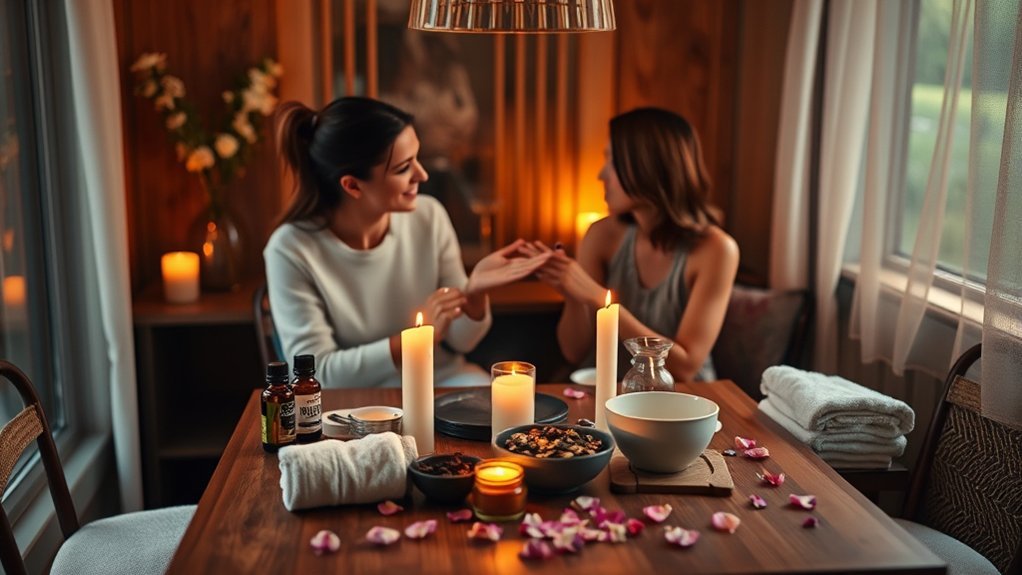
The term Ubistro couples aromatherapy does not have a widely recognized clinical or industry definition. In this guide, it refers to an at-home or spa-based ritual in which two partners use a pleasant scent, quiet surroundings, conversation, or gentle massage to spend intentional time together.
Note: Aromatherapy is a complementary wellness practice. It should not replace treatment for anxiety, sleep problems, relationship difficulties, pain, or another health condition.
Aromatherapy usually involves inhaling the aroma of an essential oil or applying a properly diluted product to the skin. The National Center for Complementary and Integrative Health notes that rigorous evidence for many uses remains limited. Some studies suggest that lavender inhalation may reduce short-term anxiety in certain settings, but study methods, dosages, and results vary.
A shared ritual may still feel meaningful. The useful elements can include setting aside uninterrupted time, choosing something together, reducing distractions, and checking in with each other. Those actions support connection without requiring you to believe that a specific oil has a guaranteed emotional or romantic effect.
How a Shared Aromatherapy Ritual May Support Connection
Odors are closely connected with brain networks involved in memory, emotion, and learned associations. A familiar scent may remind you of a place, person, or experience, while an unfamiliar or disliked scent may have the opposite effect. This is why personal preference matters more than labels such as “romantic,” “sensual,” or “calming.”
Aromatherapy may help create a pleasant setting, but connection comes from shared attention, consent, comfort, and communication rather than a guaranteed effect of an oil.
You can make the ritual more supportive by agreeing on its purpose before you begin. You might want quiet time, a gentle hand massage, a relaxed conversation, or simply a room that smells pleasant. Ask what each person wants and what they do not want.
- Choose together: Both partners should approve the scent and method.
- Keep touch optional: Aromatherapy does not imply consent to massage or other physical contact.
- Use a stop signal: Either person can pause the session if the scent feels strong, unpleasant, or physically irritating.
- Avoid performance pressure: The session does not need to produce romance, sleep, emotional disclosure, or a specific result.
Best Essential Oils for a Calm, Romantic Atmosphere
No essential oil is proven to strengthen affection or act as a reliable aphrodisiac. Choose an oil because both partners enjoy its aroma and can use it safely. The descriptions below refer to scent character, not guaranteed medical, emotional, or sexual effects.
| Oil | Scent Character | Practical Caution |
|---|---|---|
| Lavender | Soft, herbal, and floral | It is one of the better-studied aromatherapy oils, but it may still cause headache, coughing, or a skin reaction in some people. |
| Rose | Rich, sweet, and floral | The concentrated aroma may feel overpowering. Check the botanical name and topical limit before skin use. |
| Ylang ylang | Strong, sweet, and tropical | Use a very light aroma. A strong concentration may cause headache, dizziness, or nausea in sensitive users. |
| Sandalwood | Smooth, woody, and warm | Buy from a reputable supplier that identifies the species and sourcing. Do not assume every sandalwood product has the same composition. |
| Jasmine | Full, warm, and intensely floral | Many products are absolutes or fragrance blends rather than steam-distilled essential oils. Follow the product’s intended-use directions. |
| Bergamot | Fresh, citrusy, and lightly floral | Some bergamot oils can increase sun sensitivity when applied to skin. Use it in a diffuser or select a properly labeled bergapten-free product for topical use. |
The U.S. Food and Drug Administration warns that a plant-derived or “natural” fragrance ingredient is not automatically safe. Check the label for the botanical name, intended use, safety warnings, batch information, and dilution directions.
Set Up Your Couples Aromatherapy Space
At a Glance
| Time Required | About 20 to 45 minutes for a simple home ritual |
| Difficulty | Easy, provided you follow product-specific safety directions |
| Tools Needed | A labeled diffuser or ready-to-use aromatherapy product, timer, towels, and good ventilation |
| Cost | No extra cost if you already own the supplies; otherwise, the total varies by the diffuser, oils, or spa service selected |
Create a Cozy Atmosphere
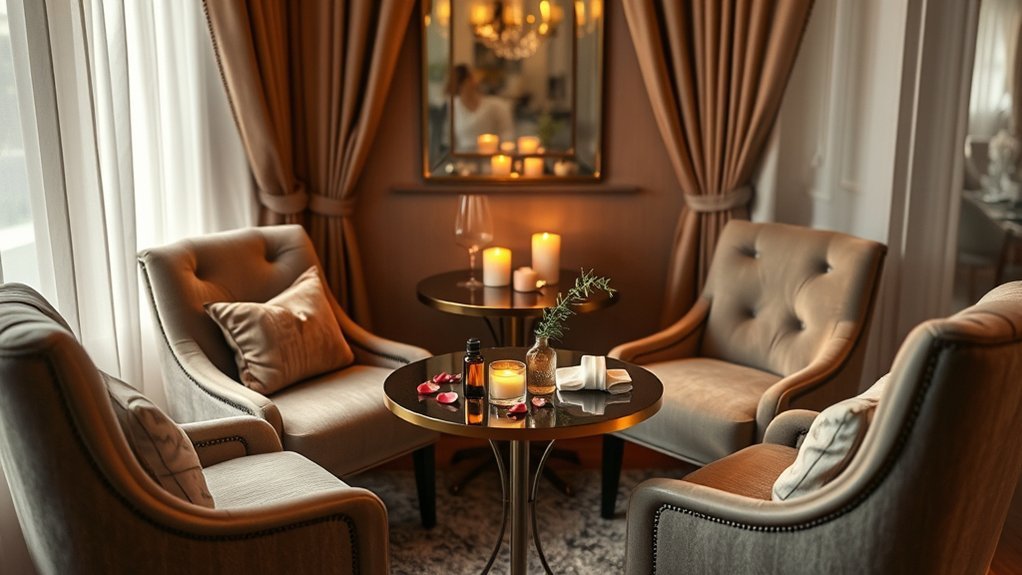
Clear enough space to move safely and reduce distractions. You can dim the lights, use battery-powered candles, add clean towels, and play quiet music that both partners enjoy. Keep the room comfortable rather than hot, and leave a door or window available for ventilation.
- Put phones and other interruptions aside.
- Remove clutter, drinks, cords, and objects that could be knocked over.
- Place the diffuser on a stable, water-resistant surface where it cannot spray directly onto either person.
- Keep oils away from food, flames, children, and pets.
- Agree on how long you want the session to last.
Gather Aromatherapy Essentials
You do not need a large collection of oils. One scent that both partners like is enough. Gather only the items needed for your selected method:
- A clean diffuser with its manual, if you plan to diffuse
- One or two labeled aromatic oils intended for diffuser use
- A premixed massage product or carrier oil for properly diluted topical use
- Clean towels and a washable surface cover
- A timer
- Unscented soap and running water in case skin irritation occurs
Store essential-oil bottles upright in a cool, dark place with their original labels and caps. Do not leave them beside the bed, bath, food, or drinking water.
Pick the Right Blend for Both Partners
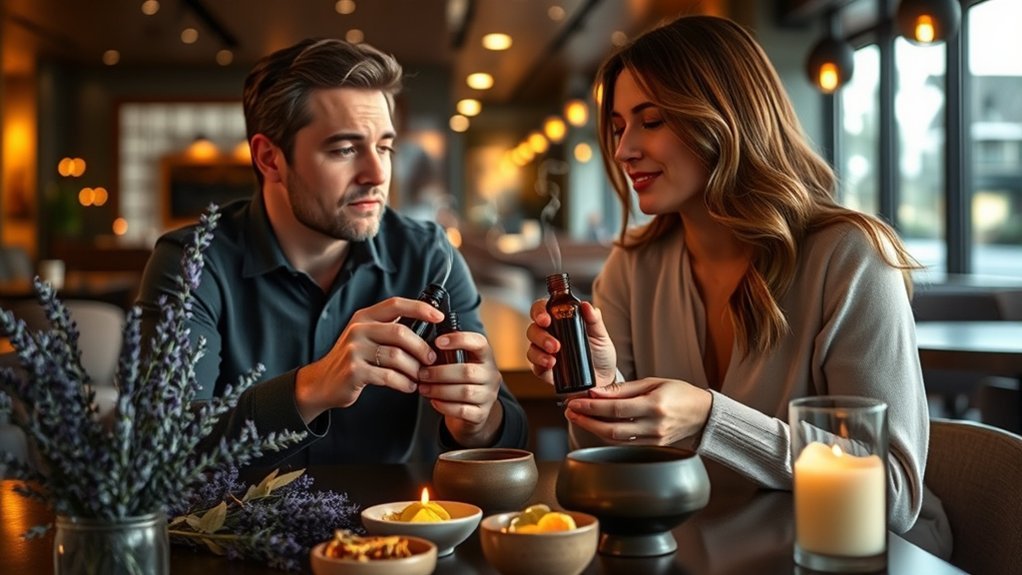
Begin with scent preference and safety, not a promised effect. Ask each partner which aromas they enjoy, dislike, or associate with an unpleasant memory. Also discuss allergies, asthma, migraine, pregnancy, medication use, skin conditions, and pets in the home.
Blend with care by respecting each partner’s preferences, sensitivities, and right to stop the session.
- Start with one scent: A single oil is easier to evaluate than a complex mixture.
- Smell from a distance: Open the bottle briefly and waft the aroma toward you instead of inhaling deeply from the opening.
- Choose the method: Confirm that the product is labeled for diffusion, topical use, or another intended application.
- Use the lowest practical amount: Follow the product and device instructions.
- Check in after a few minutes: Ask whether the scent remains comfortable for both partners.
Pro Tip: Test a new scent during the daytime before using it for a special evening. This gives you time to notice headache, coughing, nausea, skin irritation, or an unexpected negative association.
Simple Scent Pairing Ideas
These are aroma suggestions rather than treatment formulas. Keep the total amount within the diffuser manufacturer’s directions.
- Soft floral and woody: Lavender with sandalwood
- Rich floral: Rose with a very small proportion of ylang ylang
- Fresh floral: Lavender with bergamot for diffuser use
- Single-scent option: Lavender, rose, sandalwood, or another oil you both already know and tolerate
Use fewer oils when you are new to blending. Combining several products increases the chance that one partner will dislike the result and makes it harder to identify the cause of a reaction.
How to Use Couples Aromatherapy Together
Choose one primary method for the session. Using a diffuser, full-body massage blend, bath product, and oil burner at the same time can make the scent overwhelming and increase exposure.
| Method | Safer Approach | Main Caution |
|---|---|---|
| Diffuser | Fill and operate it exactly as the device manual directs. Begin at the lowest labeled amount and use it in a ventilated room. | Stop for coughing, wheezing, headache, dizziness, nausea, or eye irritation. |
| Massage | Use a ready-to-use massage product or a carefully measured low dilution in carrier oil. | Avoid eyes, face, broken skin, mucous membranes, and intimate areas. |
| Bath | Use a commercially formulated bath product that disperses the oil according to its label. | Never drip neat essential oil into the water. Oily products can also make the tub slippery. |
| Oil burner | Use a purpose-made burner on a stable, heat-resistant surface and follow its instructions. | Never leave the flame unattended, move the hot burner, or let the bowl boil dry. |
Using a Diffuser
- Read the diffuser manual and the oil label.
- Fill the tank only to its marked level.
- Add no more than the manufacturer recommends and begin at the lowest suggested amount.
- Position the diffuser away from faces, bedding, electrical equipment, and room corners with poor airflow.
- Run it for a short session rather than continuously.
- Turn it off and ventilate the room if the aroma becomes uncomfortable.
- Empty and clean it according to the manufacturer’s directions after use.
Preparing a Low-Dilution Massage Oil
The easiest option is a ready-to-use aromatherapy massage oil with complete directions. For healthy adults who have no relevant contraindications, a conservative whole-body blend is approximately 0.5% to 1% essential oil. That is about 3 to 6 total drops in 30 mL or 1 fluid ounce of carrier oil, although drop sizes vary and some oils have lower skin limits.
Use a clean bottle, label the ingredients and date, and prepare only a small amount. Test the finished diluted mixture on a small area of intact skin before wider use. A successful small-area test does not guarantee that an allergic reaction cannot occur later.
- Do not massage broken, inflamed, sunburned, recently shaved, or infected skin.
- Do not apply essential oils near the eyes, nose, mouth, genitals, or other mucous membranes.
- Do not use a nut-derived carrier oil when either partner has a relevant allergy.
- Wash your hands after mixing and applying the product.
- Stop immediately if burning, itching, swelling, or a rash develops.
Using Aromatherapy in a Bath
Do not place undiluted drops directly into a bath. Essential oil does not dissolve in plain water, so concentrated droplets may remain on the surface and contact the skin.
Use a bath oil, gel, or other product specifically formulated to disperse essential oils in water, and follow its label. A carrier oil by itself may not distribute the essential oil evenly and can make the bath dangerously slippery. Keep the water comfortably warm rather than very hot, and get out if either person feels dizzy, overheated, irritated, or unwell.
Safety Tips for Couples Aromatherapy
Warning: Do not swallow essential oils. Keep them out of the eyes and away from children and pets. Stop using the product and leave the scented area if either partner develops trouble breathing, severe dizziness, facial swelling, or another serious reaction. Seek emergency help for breathing difficulty or signs of anaphylaxis.
Essential oils are highly concentrated. According to Poison Control, misuse can cause skin reactions, poisoning after swallowing, and respiratory complications. Use every product only for its labeled purpose.
Check Before You Begin
Speak with an appropriate healthcare professional before using essential oils if either partner:
- Is pregnant, breastfeeding, trying to become pregnant, or recently gave birth
- Has asthma, chronic lung disease, fragrance-triggered migraine, or severe allergies
- Has epilepsy, liver disease, kidney disease, heart disease, or another significant condition
- Takes prescription medication or is preparing for surgery
- Has eczema, dermatitis, open wounds, or highly sensitive skin
- Previously reacted to a fragrance, cosmetic, massage oil, or essential oil
Safety information differs between oils, species, concentrations, and routes of use. Advice that is appropriate for diffusion may not be appropriate for skin application.
Protect Children and Pets
Lock bottles away from children and pets. Never apply an essential oil to an animal unless a veterinarian has specifically directed you to use that product. The ASPCA Animal Poison Control Center advises keeping diffusers secure, limiting pet exposure, and avoiding diffusion around birds because their respiratory systems are especially sensitive.
Do not run a diffuser in a closed room where an animal cannot leave. Avoid diffusion when a dog or cat has a breathing condition, and contact a veterinarian promptly if a pet develops vomiting, weakness, unsteadiness, breathing changes, or unusual behavior.
Know What to Do if a Reaction Occurs
- Skin irritation: Stop using the product and wash the area gently with unscented soap and water.
- Eye exposure: Rinse the eye with clean running water and contact a poison center or medical professional.
- Breathing symptoms: Turn off the diffuser, move to fresh air, and seek urgent help for wheezing, swelling, or difficulty breathing.
- Swallowing: Do not induce vomiting. Contact your local poison center or emergency service immediately. In the United States, call Poison Control at 1-800-222-1222.
- Persistent rash or discomfort: Stop the product and obtain medical advice.
Make Couples Aromatherapy a Regular Ritual
You can repeat the ritual weekly, every other week, or whenever it fits naturally into your routine. Consistency can make it easier to protect time together, but frequent essential-oil exposure is not necessary.
Keep the session simple:
- Agree on a time and purpose.
- Choose one familiar scent or an unscented massage option.
- Select one main method.
- Set a reasonable end time.
- Check how each person feels during and after the session.
Rotate between scented and unscented sessions. You can create the same quiet atmosphere with music, soft lighting, conversation, stretching, or a plain carrier-oil hand massage. This prevents the ritual from becoming dependent on a fragrance and gives sensitive partners an equal way to participate.
Afterward, ask simple questions such as “Was the scent comfortable?” and “Would you change anything next time?” Do not interpret a partner’s reaction as a test of affection. Scent preference is personal and may change from one day to another.
What to Expect in a Spa Aromatherapy Session
A spa aromatherapy session usually combines a scented environment with massage or another relaxation service, but the details vary by provider. Confirm the treatment length, products, qualifications, cost, and cancellation terms before booking.
Spa Atmosphere
The room may include soft lighting, quiet music, warm linens, and a mild fragrance. You should still be able to ask for brighter lighting, lower music, more ventilation, a weaker scent, or a fragrance-free treatment.
A professional setting should not pressure you to tolerate an unpleasant aroma. Both partners should be able to select different products or choose unscented carrier oil.
Session Steps
- Intake: The therapist asks about allergies, pregnancy, medications, health conditions, skin problems, injuries, scent preferences, and massage pressure.
- Product review: You discuss which oils or premixed products may be used and how they will be applied.
- Consent: Each person confirms the treatment areas, pressure, scent, and boundaries.
- Treatment: The therapist performs the booked service and checks your comfort.
- Aftercare: You receive practical instructions about washing, sun exposure, skin reactions, and when to seek help.
The session may last less than an hour or longer, depending on the service purchased. Drinking water afterward is optional for ordinary comfort. Aromatherapy does not “detox” the body.
Scent Safety
Ask the spa to identify the products it plans to use. A reputable provider should be able to explain the botanical name, concentration, carrier ingredients, intended application, and major precautions.
- Disclose allergies and medical conditions honestly.
- Ask whether the practitioner is licensed or otherwise qualified for the massage service offered.
- Request an unscented product when you are uncertain about a blend.
- Do not apply a new oil immediately after shaving or on irritated skin.
- Tell the therapist immediately about burning, itching, nausea, headache, dizziness, coughing, or breathing difficulty.
A small-area test may help reveal immediate irritation, but it cannot guarantee that an allergic reaction will never occur. Clear communication during the treatment remains essential.
Frequently Asked Questions
What is the 30-50-20 rule for aromatherapy?
The 30-50-20 rule is an optional fragrance-blending convention that uses about 30% top notes, 50% middle notes, and 20% base notes within the aromatic blend. It is not a skin-safety formula and does not mean that a finished massage product should contain 20% essential oil. You must still apply an appropriate dilution for the selected oils and method.
How do you use an oil burner set safely?
Use a purpose-made burner on a stable, heat-resistant surface away from curtains, paper, bedding, children, and pets. Follow its water and oil directions, never let the bowl boil dry, and never leave the flame unattended. Extinguish it before leaving the room or sleeping, then allow it to cool fully before moving, cleaning, or refilling it.
How do you set up an aromatherapy diffuser?
Place the diffuser on a stable, water-resistant surface in a ventilated area. Fill it to the marked level, add only the amount permitted by the device and oil labels, and begin with the lowest suggested setting. Keep the mist away from faces and electronics, use it for a limited session, and clean the unit as the manufacturer directs.
What essential oils pair well together?
Common scent pairings include lavender with sandalwood, lavender with bergamot for diffusion, and rose with a small proportion of ylang ylang. Treat these as aroma ideas rather than therapeutic formulas. Both partners should approve the scent, and the total amount must remain within the product or diffuser instructions.
Can you put essential oils directly in bathwater?
No. Essential oil does not dissolve evenly in plain water, and concentrated droplets may contact sensitive skin. Use a commercially formulated bath product that includes a suitable dispersing system and follow its label. Remember that oily bath products can make the tub slippery.
How much essential oil should you use for massage?
A ready-to-use massage product is the simplest option. For healthy adults without relevant contraindications, a conservative whole-body mixture is about 0.5% to 1%, or approximately 3 to 6 total drops per 30 mL of carrier oil. Drop sizes and oil-specific limits vary, so follow the product’s maximum and seek professional guidance for pregnancy, health conditions, medication use, or sensitive skin.
Is couples aromatherapy safe during pregnancy?
Safety depends on the stage of pregnancy, oil, concentration, method, and individual health history. Some oils and applications may not be appropriate. Ask a doctor, midwife, pharmacist, or qualified prenatal aromatherapy professional before using essential oils during pregnancy or breastfeeding.
Can you use an essential-oil diffuser around pets?
Use caution. Keep the diffuser secure, provide ventilation, and allow the pet to leave the room. Avoid diffusion around birds and pets with breathing problems. Never apply essential oil directly to a pet unless a veterinarian specifically recommends the product and method.
Conclusion
Ubistro couples aromatherapy can be a pleasant way to slow down and spend intentional time together when both partners enjoy the scent and feel comfortable with the method. Keep expectations realistic. An oil may contribute to the atmosphere, but it cannot guarantee relaxation, desire, emotional openness, or a stronger bond.
Choose one simple method, follow every label, ventilate the room, dilute topical products carefully, and never add neat essential oil to bathwater. Respect allergies, health conditions, pets, personal boundaries, and each partner’s right to stop. The safest and most meaningful ritual is one built around mutual care rather than strong fragrance or unsupported promises.
Sources
- National Center for Complementary and Integrative Health: Aromatherapy – definition, research limits, and complementary-health context
- U.S. Food and Drug Administration: Aromatherapy – product claims, regulation, and the limits of “natural” safety claims
- Poison Control: Essential Oils – skin, inhalation, ingestion, storage, and poisoning precautions
- National Association for Holistic Aromatherapy: Methods of Application – topical dilution and bath-dispersion guidance
- ASPCA Animal Poison Control Center: Essential Oils Around Pets – diffuser, direct-contact, storage, and bird precautions
- U.S. Consumer Product Safety Commission: Candle Safety – supervision, placement, flammable-material, and extinguishing guidance
