
Last Updated on July 31, 2026 by Logan Reeves
Disclosure: As an Amazon Associate, we earn from qualifying purchases. If you click a link on this page and make a purchase, we may receive a small commission at no extra cost to you.
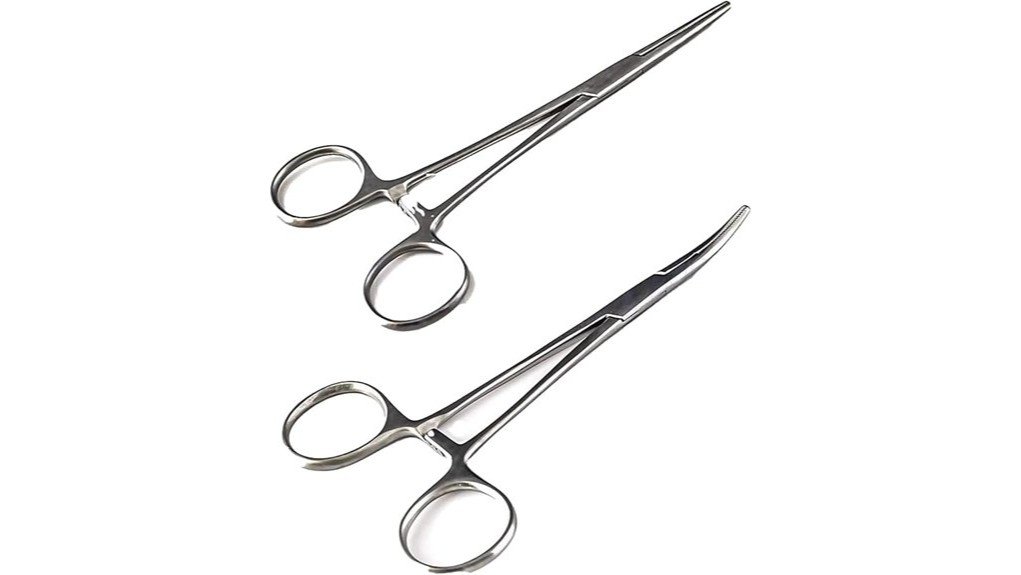
Removing a small hook can be difficult when your fingers cannot reach the shank or maintain a secure grip. The SURGICAL ONLINE Fishing Forceps Set gives you two compact 5-inch tools, one straight and one curved, for gripping hooks, pinching barbs, managing knots, and handling small tackle. Its stainless steel construction and locking serrated jaws make it useful for common fishing tasks, but the short reach and lack of a cutting function limit its usefulness with large or deeply hooked fish. This review explains what comes in the set, how each forceps performs, and who will get the most value from it.
Quick Verdict
Editorial Rating: 8/10, recommended with caveats
Best For: Anglers who need compact locking forceps for accessible hooks, barbs, knots, and small tackle.
Bottom Line: This two-piece set offers useful straight and curved jaw options in a tackle-box-friendly size. It is less suitable when you need long reach, line cutting, split-ring control, or heavy-duty leverage.
| Specification | Detail |
|---|---|
| Brand | SURGICAL ONLINE |
| Product type | Locking fishing forceps and hemostat set |
| Product identifier | ASIN B088PBNSWR |
| Manufacturer part number | 4365876959 |
| Number of pieces | 2 |
| Included tools | One straight forceps and one curved forceps |
| Tool length | 5 inches each |
| Listing dimensions | 5 x 3 x 1 inches |
| Material | Stainless steel |
| Color | Silver |
| Jaw design | Serrated gripping surfaces |
| Locking system | Three adjustable ratchet positions |
| Handle design | Large finger loops |
| Suitable environments | Freshwater and saltwater fishing with proper cleaning |
| Typical uses | Hook removal, barb pinching, knot work, hook straightening, and fly organization |
| Package note | No sheath, lanyard, or line cutter is listed as included |
What Is the SURGICAL ONLINE Fishing Forceps Set?
The SURGICAL ONLINE set contains two locking hemostat-style fishing tools. Both measure 5 inches long, but one has straight jaws and the other has curved jaws. This gives you a choice between direct access and an angled approach when working around a hook, lure, fly, or knot.
Each tool uses stainless steel construction, serrated jaws, finger loops, and a three-position ratchet lock. Closing the handles engages the lock so the jaws can hold an object without constant hand pressure. You release the lock by shifting the handles slightly sideways and separating the ratchet teeth.
This is a compact accessory set rather than a full fishing plier system. It can grip and clamp small objects, but it does not replace a line cutter, split-ring plier, fish gripper, or long hook-removal tool.
Who Should Buy It?
Best For
- Freshwater and saltwater anglers who need compact hook-gripping tools.
- Fly fishers who pinch barbs, organize flies, or work with small hooks.
- Buyers who want both straight and curved forceps in one simple set.
Skip If
- You frequently remove deeply swallowed hooks or work around large fish with teeth.
- You need built-in line cutters, split-ring jaws, or heavy-duty leverage.
- You prefer a non-locking, spring-loaded tool for rapid one-handed use.
Before You Buy: Both forceps are only 5 inches long. That compact size is convenient in a tackle box, but it does not provide the reach of a long dehooking tool for deep hooks, large mouths, or toothy fish.
Design and Build Quality
Two Jaw Shapes for Different Tasks
The straight forceps gives you a direct line from the finger loops to the jaws. It works well when a hook shank, barb, knot, or small tackle component is clearly visible and easy to approach.
The curved forceps lets you approach from an angle. That shape can be useful when the hook is beside a lure body, close to the corner of a fish’s mouth, or partly blocked by another piece of tackle. The curve does not add length, but it can improve your working angle in tight spaces.
Stainless Steel Construction
Stainless steel gives the tools a rigid gripping surface and helps resist corrosion during normal fishing use. The listing describes the set as suitable for freshwater and saltwater fishing. Saltwater residue can still collect around the hinge and ratchet, so rinsing and drying the forceps after each coastal trip remains necessary.
The product’s exact weight is not stated. The compact 5-inch design should take little tackle-box space, but buyers who need a confirmed ultralight pack weight will not find that measurement in the listing.
Finger Loops and Portability
Large finger loops provide a familiar scissor-style grip. You place your thumb and finger through the loops, guide the jaws with your index finger near the hinge, and close the handles until the desired lock position engages.
The short body is easy to store in a small tackle tray, fishing vest, fly box pocket, or backpack. No sheath or lanyard is listed, so you may want a separate tool holder if you fish from a kayak, wade in moving water, or often work over the side of a boat.
Performance and Functionality
Serrated Jaws
The jaws have serrations that create multiple contact points around a hook or small object. This gives you more control than smooth jaws when a wet hook is difficult to hold with your fingers.
Serrations can also mark soft wire or delicate finishes when excessive pressure is used. Start with the lightest grip that holds the object securely, especially when handling thin hooks or small flies.
Three-Position Lock
The ratchet mechanism provides three locking positions. The first position applies the least clamping force, while the higher positions close the handles more tightly. This lets you maintain a grip without continuously squeezing the handles.
The lock is useful when you need both hands for another part of a task, such as controlling a lure or adjusting line. It can feel stiff until you become familiar with the sideways motion needed to release the ratchet.
What the Set Can and Cannot Do
You can use the forceps to grip an accessible hook shank, pinch a barb, hold a fly, straighten a lightly bent hook, or assist with knot work. The two jaw shapes make the set more flexible than buying one straight forceps alone.
These tools do not have cutting blades, split-ring tips, crimping slots, or the broad gripping surfaces found on full-size fishing pliers. They also lack the reach of a dedicated long-handled hook remover. Matching the tool to the task will help prevent damaged tackle and unsafe fish handling.
How It Performs in Real Use
Removing Accessible Hooks
For a hook near the lip or front of the mouth, the serrated jaws can hold the hook shank while you rotate it back along the entry path. The lock helps maintain contact, but you should avoid crushing the hook or pulling against the fish’s tissue.
Pinching Barbs and Working With Flies
The narrow jaws are well suited to small hooks and fly-fishing tasks. You can use the straight tool to pinch a barb or hold a fly while tying. The curved tool provides a different viewing and gripping angle when materials block a direct approach.
Freshwater and Saltwater Trips
The stainless steel set can be used around ponds, rivers, lakes, bays, and coastal water. Saltwater use requires more care because dried salt can collect at the hinge and locking teeth. A freshwater rinse and complete drying after each trip will help keep the mechanism moving freely.
Tackle-Box and Travel Use
At 5 inches, both tools fit into compact storage more easily than long dehookers or large fishing pliers. The set is practical as a backup in a vehicle kit, travel tackle box, or second fishing bag. Secure the forceps before transport so the jaws do not catch line, soft plastics, clothing, or fingers.
How to Use the Forceps Correctly
- Select the jaw shape. Use the straight forceps for direct access and the curved forceps when an angled approach gives you better visibility.
- Grip the hook shank. Clamp the metal hook rather than pulling on the line, knot, or lure body.
- Use the lowest effective lock. Start with the first ratchet position and increase pressure only when the hook slips.
- Follow the hook’s curve. Rotate the hook back through the path it entered instead of pulling it straight outward.
- Release the ratchet carefully. Shift the handles sideways to disengage the locking teeth, then open the jaws.
- Clean and dry the tool. Remove water, dirt, plant material, and salt before storage.
Pro Tip: Test the locking and release motion before your first fishing trip. Knowing how the ratchet disengages will make the tool easier to control when you are holding a moving fish or a lure with multiple hooks.
Cleaning, Maintenance, and Storage
Rinse the forceps with clean water after use, paying attention to the jaws, hinge, and ratchet teeth. For dirt or dried residue, use warm soapy water and a soft brush. Rinse away the soap and dry each tool completely before returning it to your tackle box.
After saltwater use, clean the tools as soon as practical instead of allowing salt to dry on the metal. Store them in a dry compartment and avoid leaving them inside a wet sheath, closed tackle bag, or damp boat locker.
Check the hinge and locking teeth from time to time. Stop using a forceps if the jaws no longer align, the ratchet releases unexpectedly, or corrosion affects the gripping surface.
Safety and Materials
The tools are made from stainless steel and have narrow clamping jaws. They should be treated as sharp fishing tools because they are commonly used around hooks, barbs, and lures. Keep your free hand outside the path of the hook and wear eye protection when working on a hook under tension.
Children should use the forceps only with close adult supervision. The locking jaws can pinch skin, and an attached hook can cause injury if the fish, line, or lure moves suddenly.
The product is sold as a fishing forceps set. The listing does not state that the tools arrive sterile, so they should not be assumed suitable for medical, dental, veterinary, or wound-care procedures.
Pros and Cons
Pros
- Includes both straight and curved 5-inch forceps.
- Three-position lock maintains grip without constant hand pressure.
- Serrated jaws provide control over hooks and small tackle.
- Stainless steel construction suits freshwater and saltwater use with proper care.
- Compact size fits easily into a tackle box, vest, or travel kit.
Cons
- The 5-inch length is too short for some deep-hooked or toothy fish.
- No line cutter, split-ring tip, sheath, or lanyard is listed.
- The listing does not provide an exact tool weight or warranty term.
Is It Worth the Price?
The SURGICAL ONLINE set belongs to the basic fishing-accessory category rather than the premium multifunction-plier category. Its value comes from receiving two jaw shapes, a straight forceps and a curved forceps, instead of buying a single locking tool.
It offers strong value when its current price is close to other simple two-piece hemostat sets. You get the most benefit if you regularly handle small hooks, pinch barbs, tie flies, or want an inexpensive backup set for another tackle bag.
It is not the best fit when you would need to buy a separate cutter, long hook remover, and heavy fishing pliers immediately afterward. In that situation, a more complete fishing tool kit may provide better overall value.
How It Compares to Alternatives
A 5.5-inch Apical forceps set provides a little more reach while keeping the same straight-and-curved concept. A 5.5-inch MABIS Kelly forceps may suit buyers who want a single medical-style locking clamp rather than a fishing-focused two-piece package.
For deeply embedded hooks, a long-handled hook remover keeps your hands farther from the fish’s mouth. Full fishing pliers are better when you need line cutting, split-ring control, crimping, or stronger leverage. The SURGICAL ONLINE set makes the most sense when compact size and two narrow gripping angles matter more than extra functions.
Frequently Asked Questions
What comes with the SURGICAL ONLINE Fishing Forceps Set?
The package includes two stainless steel forceps. You receive one straight 5-inch forceps and one curved 5-inch forceps, each with serrated jaws and a locking handle.
When should you use the straight or curved forceps?
Use the straight tool when you have a clear, direct path to the hook or tackle. Choose the curved forceps when an angled jaw gives you better access around a lure, fly, or corner of a fish’s mouth.
Can you use these forceps for saltwater fishing?
Yes, the product listing identifies them as suitable for freshwater and saltwater use. Rinse them with fresh water and dry them thoroughly after saltwater exposure to prevent residue from collecting around the hinge and lock.
Do the forceps cut fishing line?
No cutting blades are listed or visible as part of the set’s design. Carry separate line scissors or fishing pliers when you need to cut monofilament, fluorocarbon, or braided line.
How do you release the locking mechanism?
Move the handles slightly sideways so the opposing ratchet teeth disengage, then separate the finger loops. Practice this motion before fishing because pulling the handles straight apart will keep the lock engaged.
Are the forceps safe for children?
Children should use them only under close adult supervision. The jaws can pinch, and the forceps are commonly handled near sharp hooks and moving fish.
What should you use for a deeply hooked fish?
A longer dehooking tool may provide safer reach and better control. Do not force a short tool deep into a fish’s mouth, especially around teeth or treble hooks, and follow responsible fish-handling practices.
Are these forceps sterile or intended for medical use?
The product is marketed as a fishing forceps set, and the listing does not state that it arrives sterile. Do not assume it is suitable for medical, dental, veterinary, or wound-care procedures.
The Bottom Line
The SURGICAL ONLINE Fishing Forceps Set is a practical choice when you want two compact locking tools for accessible hooks, barbs, knots, and small tackle. Its main strengths are the straight-and-curved combination, serrated jaws, and three-position lock, while its main limitation is the short reach and lack of cutting or heavy-duty plier functions.
Buy it for light, precise fishing tasks and tackle-box portability. Skip it in favor of a long dehooker or multifunction fishing pliers when you regularly handle deep hooks, large fish, heavy tackle, or cut-resistant line.
