

Last Updated on September 10, 2026 by Daniel Globe
Allegiant Air is a low-cost U.S. airline that specializes in nonstop leisure routes, often connecting smaller regional airports with destinations such as Las Vegas, Orlando, Phoenix, and Florida beach markets. Its low fares and direct flights can be appealing, but travelers also need to consider safety history, punctuality, cancellation recovery, added fees, and how often the route operates.
Quick Answer
Allegiant Air is generally safe to fly and remains a U.S. carrier regulated by the FAA. Its reliability is more mixed: federal data for May 2026 showed a low 0.2% cancellation rate but a 72.7% on-time arrival rate. The biggest practical concern is recovery when a limited-frequency flight is disrupted.
Key Takeaways
- No fatal crash involving an Allegiant-operated scheduled passenger flight appeared in the public NTSB records reviewed for this article through July 31, 2026.
- Allegiant faced serious historical maintenance scrutiny, much of it involving its former MD-80 fleet, which was retired in 2018.
- In May 2026, Allegiant cancelled only 0.2% of scheduled operations, but its 72.7% on-time arrival rate was below the 77.8% total for reporting carriers.
- The fleet combines older Airbus A319 and A320 aircraft with newer Boeing 737-8200 aircraft.
- Because many Allegiant routes operate only a few times per week, one cancellation can be more disruptive than the percentage alone suggests.
Disclosure: As an Amazon Associate I earn from qualifying purchases. Some links on this page are affiliate links, at no extra cost to you.
Is Allegiant Air Safe and Reliable?
Allegiant Air should not be judged using one statistic. Safety and reliability cover several different questions:
- Operational safety: Does the airline meet FAA requirements, and what does its accident and incident history show?
- Punctuality: How often do flights arrive on time?
- Completion: How often are scheduled flights operated instead of cancelled?
- Recovery: How quickly can the airline accommodate passengers after a disruption?
Current evidence does not show that Allegiant is an inherently unsafe airline. It operates under the same core federal Part 121 safety framework as other large U.S. passenger carriers. Its reliability picture is less simple: recent cancellations have been low, but punctuality has lagged the reporting-carrier average, and limited route frequency can make recovery difficult.
Latest federal data tell a mixed story: Allegiant cancelled just 0.2% of scheduled operations in May 2026, but only 72.7% of its flights arrived on time.
Allegiant Air Safety Record
The National Transportation Safety Board aviation database contains a number of Allegiant incidents, including mechanical events, emergency returns, turbulence injuries, and operational encounters. A review of the public records did not identify a fatal crash involving an Allegiant-operated scheduled passenger flight through July 31, 2026.
That finding is reassuring, but it is not a guarantee or a complete airline safety rating. The absence of a fatal crash does not mean an airline has never had a serious incident, and raw incident counts cannot be compared fairly without considering the number of flights, aircraft types, reporting period, and severity of each event.
Historical Maintenance Scrutiny
Allegiant received extensive media and regulatory attention during the 2010s. A major Tampa Bay Times investigation published in 2016 examined mechanical failures and emergency events concentrated in 2015. Many of the most prominent concerns involved Allegiant’s aging MD-80 aircraft.
In 2019, the FAA also proposed a $715,438 civil penalty over alleged maintenance-related violations involving an engine that experienced an uncommanded shutdown. Because this was a proposed penalty, it should not be described as a final adjudicated finding without additional documentation.
Why Old Allegiant Headlines Need Context
Historical scrutiny remains relevant, but Allegiant’s fleet has changed. The airline retired its final MD-80 aircraft in 2018 and shifted to Airbus A320-family aircraft. It has since begun adding new Boeing 737-8200 aircraft.
Note: An emergency landing or mechanical return is not the same as a crash. Such events should be investigated, but their severity and cause matter more than the label alone.
Maintenance Procedures and Standards
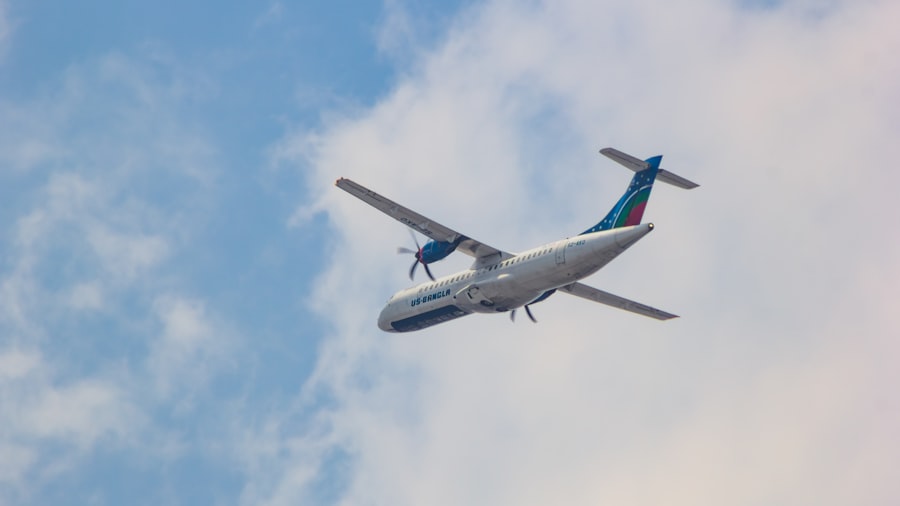
Allegiant operates as a U.S. scheduled passenger carrier under FAA Part 121 requirements. Its maintenance program must keep aircraft airworthy, document required work, provide qualified personnel and suitable equipment, and follow an FAA-accepted maintenance manual.
The airline uses third-party providers for some maintenance and other operational services. That practice is common in commercial aviation, but outsourcing work does not transfer regulatory responsibility away from the airline. Allegiant remains responsible for ensuring that contracted work meets its approved program and applicable federal requirements.
The FAA’s continuous airworthiness maintenance guidance explains the training and program standards that apply to Part 121 maintenance organizations. Public filings provide broad information about Allegiant’s contractors and fleet, but they do not disclose every inspection result, internal audit, component change, or mechanic-training record.
Pilot Training and Experience
Allegiant pilots must satisfy the federal licensing, qualification, training, and checking standards that apply to Part 121 airline operations. Most airline captains and first officers must hold an Airline Transport Pilot certificate or a qualifying restricted ATP, along with the ratings and aircraft qualifications required for their position.
| Training area | What it generally requires |
| Pilot certificate | An ATP or qualifying restricted ATP and the required medical certification |
| Aircraft qualification | Approved aircraft-specific ground, simulator, and flight training, including any required type rating |
| Operational training | Company procedures, aircraft systems, crew resource management, abnormal events, and emergency procedures |
| Recurrent qualification | Periodic recurrent training, proficiency checks, and continuing qualification |
The FAA’s current Airline Transport Pilot guidance explains the main licensing pathways. Allegiant’s exact course hours, individual pilot experience levels, simulator scenarios, and internal performance records are not fully disclosed to the public, so precise company-specific figures should not be invented.
Fleet Age and Reliability
Allegiant does not have a uniformly young fleet. Its 2024 Form 10-K reported that the Airbus fleet averaged 16.0 years of age as of February 1, 2025 and was older than the fleets of many other carriers. The A319 subgroup averaged 19.4 years, while the A320 subgroup averaged 14.7 years.
At March 31, 2026, Allegiant reported the following mainline fleet:
| Aircraft type | Aircraft |
| Airbus A319 | 28 |
| Airbus A320 with 177 seats | 7 |
| Airbus A320 with 180 seats | 71 |
| Boeing 737-8200 | 17 |
| Total | 123 |
An older aircraft is not automatically unsafe. Commercial aircraft can remain in service for decades when maintained under an approved program. Aircraft condition, inspection history, component life limits, maintenance quality, operating environment, and regulatory compliance matter more than the calendar age alone.
Note: Allegiant completed its acquisition of Sun Country Airlines on May 13, 2026. The companies said both airlines would continue operating separately in the near term, so current Allegiant performance figures should not be blended with Sun Country’s results until operations are integrated.
On-Time Performance and Flight Cancellations
The latest available U.S. Department of Transportation Air Travel Consumer Report was issued on July 13, 2026 and covers May 2026 operations. It shows that Allegiant performed better on cancellations than it did on punctuality.
| Metric | Allegiant | Reporting-carrier total |
| May 2026 on-time arrivals | 72.7% | 77.8% |
| May 2026 on-time rank | 7th of 9 marketing carriers | Not applicable |
| January-May 2026 on-time arrivals | 73.8% | Higher than Allegiant |
| May 2026 cancellations | 16 of 10,570 operations, or 0.2% | 0.9% |
Allegiant also reported a 99.9% controllable completion factor for full-year 2025. This is a useful company performance measure, but it excludes causes that the airline classifies as outside its control. It should not be treated as identical to the DOT’s total cancellation percentage.
One month of data does not establish a permanent trend. Weather, airport congestion, air traffic control restrictions, staffing, maintenance events, and seasonal schedules can cause results to change substantially from one period to another.
Why an Allegiant Cancellation Can Be Especially Disruptive
Allegiant’s business model relies heavily on limited-frequency nonstop routes. Some city pairs may operate only a few times per week rather than several times per day. Therefore, even a statistically low cancellation rate can create a difficult situation if the next Allegiant flight is not available until another day.
The airline may offer rebooking on its next available service or another option covered by its customer service plan. However, immediate replacement capacity may be limited at a small airport where Allegiant is the only carrier offering that nonstop route.
Pro Tip: Before booking, check how often the route operates and when the next Allegiant flight departs. A fare may be an excellent value when plans are flexible but risky when there is no suitable backup flight.
Customer Satisfaction and Reviews
Customer reviews are useful for identifying service patterns, but they are not a substitute for official safety or performance data. Travelers commonly judge Allegiant on five practical factors:
- Total price: The base fare may be low, but bags, seat selection, priority boarding, food, and other optional services can increase the final cost.
- Nonstop convenience: Direct service from a nearby regional airport may save hours compared with driving to a major hub or making a connection.
- Schedule flexibility: Limited weekly frequency can be inconvenient when plans change.
- Cabin expectations: Allegiant follows a no-frills model, so passengers should not expect the same included amenities offered by some full-service airlines.
- Disruption support: Satisfaction often depends on how quickly the traveler receives information, rebooking, refunds, or qualifying assistance after a delay or cancellation.
The best comparison is the all-in fare rather than the advertised base price. Add every needed bag, seat, boarding option, payment-related charge, ground-transport cost, and schedule risk before deciding which airline offers better value.
Allegiant Air’s Response to Safety Concerns
The most visible change since Allegiant’s period of intense maintenance scrutiny has been fleet replacement. The airline removed its MD-80 aircraft, standardized much of its operation around Airbus A320-family aircraft, and began introducing newly manufactured Boeing 737-8200s.
Allegiant has also described investments in maintenance systems, facilities, technology, training, and operational reliability in its corporate filings. These actions are relevant, but company statements should be evaluated alongside FAA records, NTSB investigations, DOT performance data, and independently verifiable fleet information.
No airline’s modernization program eliminates all risk. New aircraft can experience technical problems, while older aircraft can operate safely when properly inspected and maintained. The stronger evidence is whether the carrier follows its approved program, responds appropriately to defects, and corrects problems identified by regulators or investigators.
Comparison With Other Budget Airlines
The following May 2026 DOT figures offer a current operational comparison. They measure punctuality and cancellations, not accident risk or overall safety.
| Carrier | On-time arrivals | Cancelled operations |
| Allegiant | 72.7% | 0.2% |
| Frontier | 76.1% | 0.5% |
| Southwest | 71.9% | 0.4% |
| All reporting carriers | 77.8% | 0.9% |
For this single month, Allegiant had a lower cancellation rate than Frontier, Southwest, and the reporting-carrier total. Its on-time arrival percentage was lower than Frontier and the industry total but slightly higher than Southwest. Results can change by month, route, airport, weather pattern, and season.
Allegiant, Frontier, and other low-cost airlines also differ in route frequency, airport choice, seat configurations, fee structures, and recovery networks. A carrier with several daily flights may offer more rebooking opportunities than one operating only two or three weekly flights, even when both post similar cancellation percentages.
Regulatory Oversight and Compliance
The Federal Aviation Administration oversees Allegiant’s operating authority, aircraft maintenance program, pilot qualifications, training systems, manuals, and compliance with federal aviation regulations. The NTSB investigates qualifying accidents and incidents and can issue safety recommendations, while the DOT publishes consumer and operational performance information.
FAA oversight does not mean that every airline has identical operational performance, and an operating certificate should not be presented as a government endorsement of comfort or punctuality. It means the carrier must continue meeting the applicable regulatory requirements to operate.
Travelers can search individual events through the NTSB aviation investigation database and review monthly performance through the DOT’s Air Travel Consumer Report.
How to Decide Whether Allegiant Is Right for Your Trip
Allegiant can be a strong choice when its schedule, airport, and total price fit the trip. It is especially attractive when the airline offers the only convenient nonstop route from a nearby regional airport.
Allegiant May Be a Good Fit When:
- Your plans can absorb a delay or an extra overnight stay.
- The nonstop flight saves substantial driving or connection time.
- The total fare remains competitive after adding bags and seats.
- The route operates often enough to provide a reasonable backup.
- You are comfortable with a no-frills cabin and optional-service fees.
Consider Another Schedule When:
- You must reach a cruise, wedding, funeral, surgery, international flight, or ticketed event on the same day.
- The route operates only once or twice per week.
- No other airline serves the airport or destination at a practical time.
- A missed arrival would create costs that greatly exceed the fare savings.
- You need flexible changes, extensive connecting options, or frequent daily departures.
Warning: Do not schedule an Allegiant arrival only a few hours before a cruise departure, international connection, wedding, or other event you cannot miss. Arrive at least one day early when the consequences of a disruption would be severe.
Before Booking
- Calculate the final price with bags, seats, boarding options, and airport transportation.
- Check the route’s weekly frequency and the next available Allegiant departure.
- Review the airline’s current change, cancellation, and customer-service rules.
- Consider travel insurance only after reading its covered-reason exclusions and benefit limits.
- Avoid constructing a tight self-connection between Allegiant and another airline on separate tickets.
- Keep essential medication, documents, valuables, chargers, and one change of clothing in your personal item or carry-on.
Under DOT refund rules, passengers are generally entitled to an automatic refund when an airline cancels or significantly changes a flight and the passenger declines the alternative transportation, travel credit, or other compensation offered. Hotel and meal assistance is more limited and often depends on whether the disruption was within the airline’s control.
Is Allegiant Airlines Reliable?
Allegiant Air is reliable enough for many price-conscious leisure travelers, but it is not equally suitable for every itinerary. Its latest federal cancellation percentage was low, and its current public record does not support calling the airline uniquely unsafe. However, its May 2026 punctuality was below the reporting-carrier total, and its limited-frequency network can make a cancelled flight harder to replace.
The most balanced verdict is that Allegiant is generally safe to fly, while its practical reliability depends heavily on the route and the traveler’s flexibility. It is best suited to passengers who value a low all-in price and convenient nonstop service and who have enough schedule margin to handle a disruption.
For trips involving long airport days, rain, or extensive walking, this guide to the best waterproof sneakers for travel can also help with practical packing.
Frequently Asked Questions
What is Allegiant Air’s safety record?
Allegiant has experienced mechanical incidents and significant historical maintenance scrutiny, particularly during the period when it operated MD-80 aircraft. No fatal crash involving an Allegiant-operated scheduled passenger flight appeared in the public NTSB records reviewed through July 31, 2026. The airline remains subject to FAA Part 121 safety requirements.
Has Allegiant Air ever had a fatal passenger crash?
No fatal crash involving an Allegiant-operated scheduled passenger flight was identified in the public records reviewed for this article. That history is reassuring, but it does not guarantee that a future flight will be free from risk or operational problems.
Is Allegiant reliable for on-time arrivals?
Its punctuality was below the reporting-carrier total in the latest available month. Allegiant recorded a 72.7% on-time arrival rate in May 2026, compared with 77.8% across reporting carriers. Its January-May 2026 rate was 73.8%.
Does Allegiant cancel many flights?
Not in the latest reported month. Allegiant cancelled 16 of 10,570 scheduled operations in May 2026, equal to 0.2%. The total for reporting carriers was 0.9%. Monthly performance can change, so travelers should check newer DOT reports when available.
Why can an Allegiant cancellation be difficult?
Many Allegiant routes operate only a few times per week. If a flight is cancelled, the next nonstop Allegiant departure may not be available until another day, and small regional airports may offer few practical alternatives.
Are Allegiant’s planes old?
Some are older. Allegiant reported that its Airbus fleet averaged 16.0 years as of February 1, 2025. It is also adding newly manufactured Boeing 737-8200 aircraft. Aircraft age alone does not determine safety; maintenance condition and regulatory compliance are more important.
What happens if Allegiant cancels my flight?
Allegiant may offer rebooking under its customer service plan. When the airline cancels or significantly changes a flight and the passenger declines the offered alternative, federal rules generally require an automatic refund to the original form of payment. Meals and hotel accommodations depend on the cause and the airline’s applicable commitments.
Is Allegiant as safe as Frontier or Southwest?
All three operate under the federal safety framework applicable to their U.S. airline operations. Current on-time and cancellation figures can be compared through DOT reports, but those consumer-performance statistics do not establish that one airline is safer in an accident-risk sense.
Sources
- U.S. Department of Transportation, July 2026 Air Travel Consumer Report — May 2026 on-time and cancellation figures
- Allegiant Travel Company 2024 Form 10-K — business model, fleet age, routes, maintenance contractors, and operating risks
- Allegiant Travel Company First-Quarter 2026 Results — fleet composition at March 31, 2026
- National Transportation Safety Board Aviation Investigation Search — public accident and incident records
- Federal Aviation Administration Airline Transport Pilot Guidance — airline pilot certification and qualification pathways
- FAA Continuous Airworthiness Maintenance Program Guidance — Part 121 maintenance-training and program standards
