
Last Updated on August 26, 2026 by Daniel Globe
Italy’s 20 regions make it easier to understand just how varied the country is, from the Alps and northern lakes to Renaissance cities, Mediterranean beaches, archaeological sites, and large islands. You can taste Barolo in Piedmont, ski in Aosta Valley, explore Venice in Veneto, visit Rome in Lazio, and combine Naples, Pompeii, and the Amalfi Coast in Campania. Farther south, Puglia, Basilicata, Calabria, Sicily, and Sardinia add distinctive food, landscapes, history, and traditions of their own.
Quick Answer
Italy has 20 regions, each with its own regional capital and government. They range from tiny Aosta Valley in the Alps to Sicily, the country’s largest region by area. Five regions—Aosta Valley, Friuli-Venezia Giulia, Sardinia, Sicily, and Trentino-Alto Adige/Südtirol—have special forms of autonomy under Italy’s Constitution.
Key Takeaways
- Italy has 20 regions, from Aosta Valley in the northwest to Sicily and Sardinia in the Mediterranean.
- Sicily is the largest region by area, while Aosta Valley is the smallest.
- Five regions have special-statute autonomy: Aosta Valley, Friuli-Venezia Giulia, Sardinia, Sicily, and Trentino-Alto Adige/Südtirol.
- For a first trip, Tuscany, Lazio, Veneto, Lombardy, and Campania combine major sights with good transport connections.
- High-speed trains work well between major cities, while a car is more useful for rural Tuscany, mountain valleys, smaller villages, and less-connected coastal areas.
Disclosure: As an Amazon Associate I earn from qualifying purchases. Some links on this page are affiliate links, at no extra cost to you.
What Are the 20 Regions of Italy?
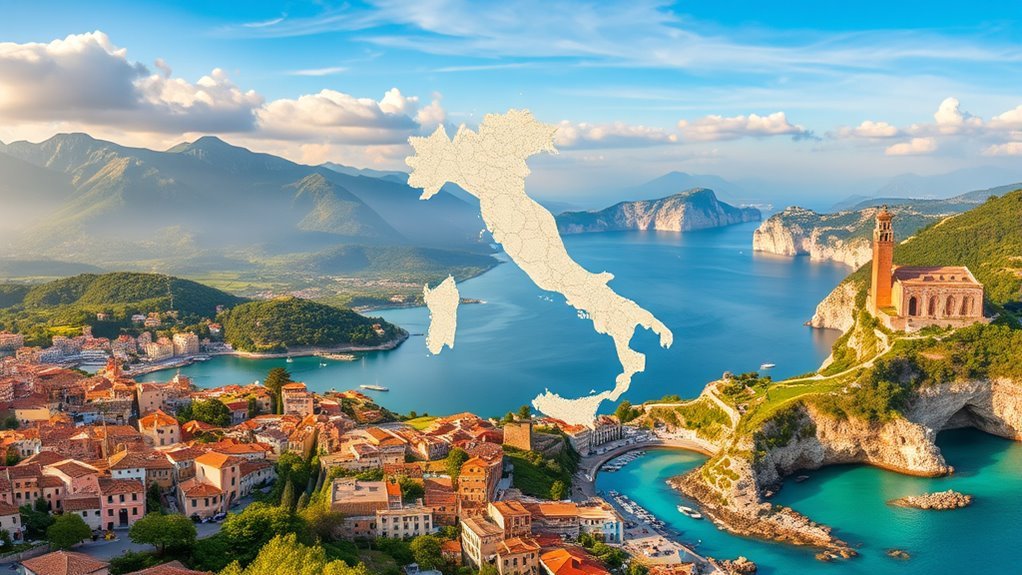
Italy is divided into 20 regions, each with a regional capital and its own local character. Landscapes, dialects and languages, food, architecture, and traditions can change noticeably after only a few hours of travel. The country’s official tourism portal provides an overview of all the Italian regions.
Five of the 20 have special forms of autonomy under Article 116 of the Italian Constitution: Friuli-Venezia Giulia, Sardinia, Sicily, Trentino-Alto Adige/Südtirol, and Valle d’Aosta/Vallée d’Aoste. Trentino-Alto Adige/Südtirol is composed of the autonomous provinces of Trento and Bolzano.
By area, Sicily is Italy’s largest region. Aosta Valley is the smallest, followed by Molise. These figures are confirmed by ISTAT’s geographic statistics.
| Region | Capital | Broad Travel Area | Known For |
|---|---|---|---|
| Aosta Valley | Aosta | North | Alps, castles, skiing |
| Piedmont | Turin | North | Barolo, Turin, Langhe |
| Liguria | Genoa | North | Cinque Terre, Riviera, pesto |
| Lombardy | Milan | North | Milan, Lake Como, art |
| Trentino-Alto Adige/Südtirol | Trento | North | Dolomites, skiing, bilingual culture |
| Veneto | Venice | North | Venice, Verona, Prosecco |
| Friuli-Venezia Giulia | Trieste | North | Trieste, Alps, Collio wine |
| Emilia-Romagna | Bologna | North | Bologna, Parma, Ravenna, food |
| Tuscany | Florence | Central | Florence, Siena, wine, hill towns |
| Umbria | Perugia | Central | Assisi, hill towns, truffles |
| Marche | Ancona | Central | Adriatic beaches, Urbino, hills |
| Lazio | Rome | Central | Rome, Tivoli, Roman sites |
| Abruzzo | L’Aquila | Central/South | Apennines, national parks, Adriatic |
| Molise | Campobasso | South | Villages, countryside, quiet coast |
| Campania | Naples | South | Naples, Pompeii, Amalfi Coast |
| Puglia | Bari | South | Trulli, beaches, olive groves |
| Basilicata | Potenza | South | Matera, mountains, small towns |
| Calabria | Catanzaro | South | Coasts, mountains, ’nduja |
| Sicily | Palermo | Islands | Etna, ancient sites, Palermo |
| Sardinia | Cagliari | Islands | Beaches, nuraghi, rugged interior |
Italy’s Regions on the Map
Italy stretches from the Alps into the central Mediterranean, so its regions change dramatically from north to south. Travelers often use the simple labels Northern, Central, Southern Italy, and the islands, while official statistical systems use more specific groupings such as Northwest, Northeast, Center, South, and Islands. This explains why a region such as Abruzzo may be described as central in geographic or tourism contexts but grouped with southern Italy in some statistical classifications.
For trip planning, think of the country this way: the north is strongest for Alpine scenery, lakes, major business cities, and fast rail connections; central Italy is rich in Renaissance art, medieval towns, and countryside; the south combines archaeology, dramatic coastlines, and distinctive food traditions; Sicily and Sardinia work particularly well as longer standalone trips.
Note: Regional boundaries are fixed, but labels such as “Central Italy” or “Southern Italy” can vary by travel guide or statistical system. Use the region name itself when planning tickets, transport, or accommodations.
Best Italian Regions by Travel Style
| Travel Style | Good Regions to Start With | Why |
|---|---|---|
| First Italy trip | Lazio, Tuscany, Veneto | Rome, Florence, and Venice cover many of Italy’s best-known cultural sights. |
| Food | Emilia-Romagna, Piedmont, Campania, Sicily | Distinctive pasta, cheese, wine, pizza, street food, and regional specialties. |
| Beaches | Sardinia, Puglia, Sicily, Calabria, Liguria | Long coastlines ranging from sandy bays to rocky coves. |
| Mountains | Aosta Valley, Trentino-Alto Adige/Südtirol, Abruzzo | Alpine skiing and hiking in the north; Apennine parks farther south. |
| Wine | Piedmont, Tuscany, Veneto, Friuli-Venezia Giulia | Barolo, Chianti, Prosecco, Collio, and many smaller wine areas. |
| Road trip | Tuscany, Puglia, Sicily, Sardinia | Scattered towns, countryside, beaches, and rural sights reward having a car. |
Northern Italy Regions to Know First
Northern Italy includes some of the country’s strongest rail links, Alpine scenery, major lakes, industrial cities, wine regions, and Adriatic and Ligurian coastlines. Piedmont is known for Turin, Barolo, and the Langhe hills; Lombardy combines Milan with Lake Como and other lake districts; Liguria hugs the Mediterranean around Genoa and Cinque Terre; and Aosta Valley is dominated by high Alpine peaks.
| Region | Best For | Major Base |
|---|---|---|
| Aosta Valley | Skiing, hiking, castles | Aosta |
| Piedmont | Wine, food, Turin | Turin |
| Lombardy | Milan, lakes, art | Milan |
| Liguria | Coast, hiking, seafood | Genoa |
| Trentino-Alto Adige/Südtirol | Dolomites, skiing, hiking | Trento / Bolzano |
| Veneto | Venice, Verona, wine | Venice |
| Friuli-Venezia Giulia | Trieste, wine, border cultures | Trieste |
| Emilia-Romagna | Food, Bologna, Ravenna | Bologna |
Aosta Valley: Alps, Castles, and Skiing
Aosta Valley is Italy’s smallest region by area, but it contains some of the country’s biggest mountain scenery. The region sits against France and Switzerland beneath Alpine giants including Mont Blanc and the Matterhorn area.
In Aosta, Roman remains such as the Roman Theatre and Arch of Augustus add history to a mountain-focused trip. Outside the city, castles including Fénis Castle and Fort Bard are worthwhile stops. Courmayeur and La Thuile are major bases for skiing and mountain activities.
The region is officially bilingual in Italian and French, reflecting its cross-border history. Local food leans toward hearty Alpine dishes and cheeses, making Aosta Valley especially appealing for travelers who want skiing, hiking, castles, and small mountain towns in a compact area.
Piedmont: Wine, Turin, and Slow Food
Piedmont stretches from Alpine valleys to the vineyard-covered Langhe and Monferrato hills. Turin provides museums, royal architecture, historic cafés, and a strong food culture, while the countryside is known internationally for wines such as Barolo and Barbaresco.
| Experience | Where | Why Go |
|---|---|---|
| Wine tasting | Langhe | Barolo and Barbaresco country |
| Museums and cafés | Turin | Royal history, culture, chocolate |
| Food markets | Turin and smaller towns | Regional cheeses, hazelnuts, seasonal produce |
| Hiking or skiing | Western Alps | Mountain scenery and winter sports |
The Slow Food movement was founded in Piedmont, adding to the region’s reputation for protecting local ingredients and culinary traditions. A car is useful for vineyard villages, although Turin itself is easy to visit without one.
Lombardy: Milan, Lakes, and City Life
Lombardy combines one of Italy’s busiest cities with lake resorts, mountain valleys, art cities, and prosperous countryside. Milan sets the pace with fashion, design, museums, and major landmarks, while Lake Como provides an easy contrast of villas, waterfront towns, ferries, and mountain views.
Lake Garda also touches Lombardy, although the lake is shared with Veneto and Trentino. Regional foods include risotto alla Milanese, polenta, cheeses, and panettone.
Milan’s Fashion and Culture
Milan is internationally associated with fashion and design, but its historic sights are just as important. The Duomo dominates the center, the Galleria Vittorio Emanuele II connects major squares, and Santa Maria delle Grazie houses Leonardo da Vinci’s The Last Supper.
Castello Sforzesco, Brera, and Milan’s museums can fill several days. Porta Nuova and newer architecture show a more modern side of the city, while the Navigli district is popular for evening restaurants and bars.
Lakes, Art, and Escapes
Outside Milan, Lombardy’s lakes make natural side trips. Lake Como is the best-known internationally, but Lake Maggiore, Lake Iseo, and the Lombardy shore of Lake Garda also offer waterfront towns and outdoor activities.
- Use ferries to connect towns around Lake Como.
- Combine lakeside walks with historic villas and gardens.
- Try risotto alla Milanese and regional cheeses.
- Consider Bergamo or Mantua if you want an art-focused city beyond Milan.
For travelers combining cities and scenery, Lombardy is one of Italy’s easiest regions to build into a rail-based itinerary.
Liguria: Cinque Terre and the Riviera
Liguria is a narrow coastal region stretching along the Mediterranean around Genoa. Its best-known sights include Cinque Terre, Portofino, Santa Margherita Ligure, Genoa, and numerous smaller Riviera towns. Pesto alla genovese, focaccia, seafood, and olive oil are central to the local food culture.
Cinque Terre Villages
Cinque Terre consists of five famous villages—Monterosso al Mare, Vernazza, Corniglia, Manarola, and Riomaggiore—set among terraced hills on the Ligurian coast. The wider UNESCO property includes Cinque Terre together with Portovenere and nearby islands.
- Travel between the villages by regional train for the simplest day-to-day transport.
- Walk marked trails only when the relevant section is officially open.
- Allow time for the villages rather than trying to hike every available path in one day.
- Try local pesto, anchovies, focaccia, and Sciacchetrà wine.
Warning: Cinque Terre trail conditions can change after storms, landslides, or maintenance. Check the Cinque Terre National Park live trail network before setting out. Do not rely on an old blog post or map for current closures.
Genoa and Pesto
Genoa is Liguria’s capital and one of Italy’s great historic port cities. Its old center is filled with narrow lanes, churches, palaces, and traces of centuries of maritime trade.
The city is also closely associated with pesto alla genovese, traditionally made from basil, garlic, pine nuts, hard cheese, olive oil, and salt. It is commonly served with local pasta shapes such as trofie or trenette.
Riviera Beaches and Trails
Liguria works well for travelers who want to combine walking with time by the sea. Monterosso has one of Cinque Terre’s most accessible beaches, while towns such as Portofino, Camogli, and Santa Margherita Ligure offer harbors, coastal scenery, and short excursions.
- Swim or relax along the Riviera when sea conditions are suitable.
- Walk official coastal and hillside trails.
- Use trains and boats to reduce driving and parking problems.
- Check whether reservation or ticket rules apply before visiting popular paths.
Via dell’Amore between Riomaggiore and Manarola currently operates with regulated access for ordinary tourist visits. The National Park’s official Via dell’Amore page provides current reservation and access details.
Trentino-Alto Adige: Mountains and Two Cultures
Trentino-Alto Adige/Südtirol is a special-statute Alpine region made up of the autonomous provinces of Trento and Bolzano. Italian is dominant in much of Trentino, while German is widely spoken in South Tyrol; Ladin is also protected in several valleys.
The Dolomites are the region’s great natural draw. The Dolomites UNESCO World Heritage property covers nine component areas across northern Italy and was inscribed in 2009 for its exceptional scenery and geology.
Winter brings skiing and other snow sports, while summer is ideal for hiking, mountain biking, and cable-car-accessible viewpoints. Trento, Bolzano, Merano, and smaller Alpine towns add castles, museums, Christmas markets, and a food culture influenced by both Mediterranean and Central European traditions. Typical dishes include canederli, speck, strudel, and polenta.
Veneto: Venice, Verona, and Beyond
Veneto combines Venice’s lagoon, Verona’s Roman and medieval center, portions of Lake Garda, the Dolomites, Palladian architecture, and major wine districts. It is one of Italy’s easiest regions to combine with neighboring Lombardy, Trentino-Alto Adige/Südtirol, Friuli-Venezia Giulia, and Emilia-Romagna.
Venice’s Timeless Canals
Venice spreads across more than 100 islands in its lagoon, with canals and pedestrian lanes replacing ordinary road traffic in the historic center.
- Travel along the Grand Canal by vaporetto for an affordable overview of the city.
- Book a gondola when the experience itself matters more than transportation.
- Visit Piazza San Marco, St. Mark’s Basilica, and the surrounding historic core.
- Explore quieter neighborhoods such as Cannaregio, Dorsoduro, or Castello away from the busiest routes.
Carnival remains one of Venice’s best-known annual traditions, but the city is rewarding outside festival periods as well. Staying overnight rather than visiting only as a day trip gives you more time in the early morning and evening.
Verona’s Roman Heritage
Verona’s UNESCO-listed historic center contains genuine Roman remains alongside medieval and later architecture. The Arena di Verona, a Roman amphitheater dating from the 1st century AD, is still used for major performances. Other Roman-era sites include the Roman Theatre and Porta Borsari.
Casa di Giulietta is a different type of attraction. Its association with Juliet is literary rather than proof that Shakespeare’s character lived there. According to the official Juliet’s House museum, the famous courtyard balcony was added during a neo-medieval restoration carried out in 1939–1940. It should not be described as a surviving Roman-era balcony.
Veneto’s Lakes and Prosecco
Western Veneto reaches Lake Garda, where towns such as Peschiera del Garda and Malcesine provide access to waterfront scenery and outdoor activities. Farther east, the hills around Conegliano and Valdobbiadene are closely associated with Prosecco Superiore DOCG.
- Explore Veneto’s shore of Lake Garda.
- Visit Verona as a city-and-lake base.
- Tour wine villages in the Prosecco hills.
- Combine Venice with Padua, Vicenza, or Treviso for a broader view of the region.
The result is a region that can support anything from a two-city rail trip to a longer itinerary mixing mountains, wine country, historic towns, and the lagoon.
Friuli-Venezia Giulia: Italy’s Northeastern Edge
Friuli-Venezia Giulia sits between Austria, Slovenia, the Alps, and the Adriatic. Its border position explains the blend of Italian, Slavic, Germanic, and Central European influences visible in local architecture, languages, and food.
Trieste is the regional capital and offers grand Habsburg-era buildings, a strong café tradition, and Piazza Unità d’Italia facing the sea. Inland, Udine and smaller Friulian towns provide a different atmosphere, while the Julian Alps attract hikers and winter-sports visitors.
Food and wine are major reasons to travel here. Frico, jota, prosciutto, and wines from areas such as Collio reflect the region’s cultural crossroads. It is an especially good choice for travelers continuing between Italy, Slovenia, and Austria.
Emilia-Romagna: Bologna, Food, and Ravenna
Emilia-Romagna deserves a full place in any guide to Italy’s 20 regions. Its capital, Bologna, is known for miles of porticoes, a lively historic center, and the University of Bologna, which the university itself considers the oldest university in the Western world, with 1088 used as its conventional foundation date.
Ravenna is famous for extraordinary late-antique and Byzantine mosaics, while Parma and Modena are closely linked with globally recognized food traditions. The region is associated with Parmigiano Reggiano, Prosciutto di Parma, traditional balsamic vinegar from the Modena area, filled pastas, ragù, and many other specialties.
To the east, the Romagna coast around Rimini and neighboring resort towns adds a completely different beach-oriented side to the region. Ferrara, Modena, Parma, Ravenna, and Bologna also work well by train, making Emilia-Romagna one of the easiest regions for a multi-city food-and-culture trip.
Pro Tip: If food is a major reason for your Italy trip, give Emilia-Romagna at least two or three nights rather than treating Bologna as a short stop between Florence and Venice.
Central Italy Regions for Art and History
Central Italy is dominated by Tuscany, Umbria, Marche, and Lazio. This area contains Florence, Siena, Assisi, Urbino, Rome, and scores of smaller medieval towns. It is particularly strong for Renaissance art, Etruscan and Roman history, religious heritage, wine, and countryside stays.
Renaissance Cities
Florence is central to the story of Renaissance art and architecture. The Duomo complex, Uffizi Gallery, Palazzo Vecchio, and many churches preserve works tied to the Medici era and some of Europe’s most influential artists.
- Walk Siena’s Piazza del Campo and explore its medieval streets.
- Visit Pisa for Piazza dei Miracoli and the Leaning Tower.
- Explore Urbino in Marche for one of Italy’s great Renaissance hill cities.
- Visit Assisi for sacred art and the Basilica of Saint Francis.
- If your route continues north, add Bologna in Emilia-Romagna for its porticoes, food, and historic university.
These cities are popular for good reason, so timed museum reservations and early starts can make a major difference during busy travel periods.
Medieval Hill Towns
Central Italy’s hill towns are ideal for slower trips. San Gimignano is known for its surviving medieval towers, Volterra combines Etruscan and later history, and Montepulciano adds wine and Renaissance architecture to a dramatic hilltop setting.
In Umbria, towns such as Assisi, Gubbio, Spello, and Orvieto provide another layer of medieval streets, churches, and countryside views. Urbino in Marche brings Renaissance art and architecture to a compact walled city.
A rental car becomes especially useful when you want to link small hill towns, wineries, rural accommodations, and countryside trails that do not sit directly on major railway lines.
Sacred Pilgrimage Sites
Central Italy contains several of the country’s most important Christian destinations as well as major works of religious art.
- Assisi’s Basilica of Saint Francis is a major pilgrimage destination.
- Rome provides access to Vatican City, an independent city-state containing St. Peter’s Basilica and the Vatican Museums.
- Siena Cathedral is one of Tuscany’s major Gothic landmarks.
- Loreto in Marche is an important pilgrimage center.
- Orvieto Cathedral combines religious significance with exceptional medieval art and architecture.
You do not need to be traveling for religious reasons to appreciate these sites; many are also among the most important artistic and architectural landmarks in their regions.
Tuscany: Hill Towns, Wine, and Renaissance Cities
Tuscany combines globally famous art cities with vineyards, farms, walled towns, and coastal landscapes. Florence is the obvious cultural anchor, but Siena, Lucca, Pisa, Arezzo, San Gimignano, and smaller towns make the region worth much more than a short stop.
Wine travelers can explore Chianti, Montalcino, Montepulciano, and other vineyard districts. Local food tends to emphasize straightforward ingredients such as bread, beans, olive oil, grilled meats, pecorino, and seasonal vegetables.
Train travel works well for Florence, Pisa, Lucca, and several larger towns. A car gives you more flexibility in rural areas, particularly for wineries, farmhouse stays, and routes through the Val d’Orcia.
Siena’s Palio is one of Tuscany’s best-known traditional events, while walking and cycling routes give travelers a quieter way to experience the countryside outside major cities.
Umbria: Italy’s Quiet Green Heart
Umbria is Italy’s only region entirely surrounded by other Italian regions, with no international border or coastline. Its green hills, olive groves, lakes, and medieval towns make it a good alternative for travelers who enjoy central Italy but want fewer headline attractions than Tuscany or Lazio.
Green Hills and Towns
Perugia, Assisi, Orvieto, Gubbio, and Spoleto are among Umbria’s strongest bases. The region is compact enough for several towns to be combined in one trip, especially with a car.
- Taste olive oil, lentils, cured meats, and local pasta dishes.
- Explore Assisi and the Basilica of Saint Francis.
- Visit Lake Trasimeno for a break from hill towns.
- Walk countryside and Apennine trails where conditions permit.
Perugia also brings museums, university life, and cultural events to a region otherwise defined largely by smaller historic centers and countryside.
Truffles, Saints, and Wines
Black truffles are an important part of Umbrian cuisine, particularly in parts of the region around Norcia, Spoleto, and other inland areas. Truffle hunting and seasonal truffle events are separate from Perugia’s well-known Eurochocolate festival, which celebrates chocolate rather than the truffle harvest.
Wine areas include Montefalco, known for Sagrantino, as well as vineyards producing Grechetto and other local wines. Typical dishes include strangozzi, porchetta, lentils from Castelluccio, and preparations featuring truffles or mushrooms.
Marche: Beaches, Hills, and Hidden Towns
Marche stretches from the Adriatic coast into rolling hills and the Apennines. This gives travelers an unusual chance to combine beaches, Renaissance art, countryside, and mountain scenery without crossing a regional border.
- Swim or relax around coastal areas such as Senigallia and the Conero Riviera.
- Explore the Renaissance city of Urbino.
- Drive through vineyards, farms, and hill towns inland.
- Try regional dishes such as vincisgrassi and different versions of brodetto.
The region remains less internationally famous than Tuscany or Veneto, which can make it attractive to repeat visitors looking for smaller cities and a more locally focused trip.
Lazio: Rome and the Countryside
Lazio is dominated by Rome, but the region extends well beyond the capital. Rome alone can occupy several days with the Colosseum, Roman Forum, Pantheon, museums, churches, neighborhoods, and archaeological sites.
Vatican City sits within Rome geographically but is an independent sovereign state rather than part of Lazio. It is nevertheless one of the most common additions to a Rome itinerary.
| Experience | Why Go |
|---|---|
| Rome | Ancient sites, museums, neighborhoods, food |
| Tivoli | Villa d’Este and Hadrian’s Villa |
| Castelli Romani | Hill towns, lakes, food, short escapes from Rome |
| Ostia Antica | Large archaeological site near Rome |
Lazio’s best-known dishes include carbonara, cacio e pepe, amatriciana, and Roman-style artichokes. Travelers with extra time can explore the Castelli Romani, Lake Bracciano, Tivoli, and archaeological sites outside the capital.
Southern Italy Regions to Explore
Southern Italy changes quickly from the mountains and national parks of Abruzzo to Campania’s densely layered cities and archaeological sites, Puglia’s long coastline, Basilicata’s rocky interior, and Calabria’s mountainous peninsula. Sicily and Sardinia add two large island regions with enough sights for dedicated trips.
Southern Italy is not one uniform destination: Campania, Puglia, Basilicata, Calabria, Abruzzo, Molise, Sicily, and Sardinia each have distinct landscapes, transport patterns, cuisines, and histories.
- Abruzzo: Apennine mountains, national parks, villages, and Adriatic beaches.
- Molise: small towns, rural landscapes, archaeological sites, and a short Adriatic coast.
- Campania: Naples, Pompeii, Herculaneum, islands, and the Amalfi Coast.
- Puglia: trulli, Adriatic and Ionian beaches, olive groves, and whitewashed towns.
- Basilicata: Matera, rugged landscapes, and mountain villages.
- Calabria: dramatic coastlines, mountains, and strongly flavored regional food.
- Sicily: ancient Greek sites, Norman and Arab influences, Mount Etna, and major cities.
- Sardinia: beaches, nuraghi, mountain landscapes, and distinctive island traditions.
Campania: Naples, Amalfi, and Pompeii
Campania contains several of southern Italy’s most famous destinations. Naples is a dense, energetic city with major museums, churches, markets, and a food culture closely associated with pizza napoletana.
Nearby Pompeii and Herculaneum preserve extraordinary evidence of Roman life after the eruption of Vesuvius in AD 79. The Amalfi Coast adds steep coastal roads, towns such as Amalfi, Positano, and Ravello, and walking routes including the Path of the Gods.
Campania also includes islands such as Capri, Ischia, and Procida. Regional wines include varieties and styles based on grapes such as Aglianico, Fiano, and Greco.
Public transport can cover Naples, Pompeii, Herculaneum, and many coastal destinations, but peak-season crowds and traffic mean it pays to plan transfers carefully rather than assuming a rental car will always be easiest.
Abruzzo: Mountains, Beaches, and Outdoor Travel
Abruzzo combines the Apennines with an Adriatic coastline, producing one of mainland Italy’s strongest mixes of mountains and sea. Depending on the classification being used, you may see Abruzzo described as central Italy geographically or grouped with the South statistically.
Abruzzo’s appeal comes from contrast: high Apennine landscapes, protected parks, historic villages, and the Adriatic coast all fit inside one region.
- Hike in the Gran Sasso and Maiella areas.
- Explore Abruzzo, Lazio and Molise National Park.
- Visit mountain and hill towns between outdoor days.
- Try arrosticini, saffron, cheeses, and regional wines.
L’Aquila, the regional capital, suffered severe damage in the 2009 earthquake and has undergone years of restoration and reconstruction. Travelers interested in outdoor activities should check local park conditions, seasonal access, and weather before heading onto mountain trails.
Molise: One of Italy’s Smallest Hidden Gems
Molise is Italy’s second-smallest region by area, after Aosta Valley. Its small scale and relatively low international profile make it appealing to travelers interested in villages, countryside, archaeological sites, and regional food rather than famous checklist attractions.
Campobasso is the capital, while other places of interest include Isernia, hill towns, rural areas, and the Adriatic coast around Termoli. Inland landscapes reach into the Apennines.
Local food includes cavatelli, cheeses, cured meats, olive oil, and regional wines. A car is generally more useful here than in Italy’s major city regions because many smaller destinations are spread across rural areas.
Puglia, Basilicata, Calabria, Sicily, and Sardinia at a Glance
These five regions cover a large portion of Italy’s south and islands, but they are too different to treat as one destination. Puglia is long and coastal, Basilicata is comparatively small and mountainous, Calabria occupies the toe of the peninsula, and Sicily and Sardinia are substantial islands with distinct histories and travel patterns.
Puglia: Trulli, Beaches, and White Towns
Puglia stretches along the heel of Italy between the Adriatic and Ionian seas. Bari is the capital and a major transport hub, while Lecce is known for elaborate Baroque architecture. Alberobello is famous for its trulli, and the Valle d’Itria includes towns such as Locorotondo, Martina Franca, and Cisternino.
The Salento peninsula offers long stretches of coastline, while Gargano in northern Puglia adds cliffs, beaches, and forested landscapes. Orecchiette, burrata, focaccia barese, olive oil, and seafood are among the region’s best-known foods.
Basilicata: Matera and Mountain Landscapes
Basilicata sits between Campania, Puglia, and Calabria and reaches both the Ionian and Tyrrhenian seas. Matera is its international headline attraction, particularly the ancient cave-dwelling districts known as the Sassi.
The regional capital is Potenza. Beyond Matera, travelers can explore the Dolomiti Lucane, Pollino area, small mountain towns, and short sections of coastline. Basilicata suits travelers who are comfortable with slower transport and want fewer heavily visited destinations.
Calabria: Coasts, Mountains, and Bold Food
Calabria forms the toe of the Italian peninsula and is surrounded by long stretches of Tyrrhenian and Ionian coastline. Tropea and Capo Vaticano are among its best-known coastal destinations, while inland areas include the Sila, Aspromonte, and Pollino mountain landscapes.
Regional flavors can be spicy, with ’nduja among Calabria’s most famous foods. Red onions from Tropea, cheeses, preserved vegetables, seafood, and local pasta dishes are also common.
Sicily: Ancient Sites, Etna, and Cities
Sicily is Italy’s largest region by area and can easily fill a week or more. Palermo, the capital, combines markets, churches, palaces, and layers of Arab-Norman and later history. Catania sits near Mount Etna, while Syracuse, Agrigento, Segesta, and other sites preserve major evidence of the island’s ancient Greek and Roman past.
The island’s food is equally varied: arancini, cannoli, pasta alla Norma, caponata, granita, seafood, pistachios, citrus, and regional wines are only a starting point.
Trains and buses connect many larger cities, but a car can be valuable for rural southeastern towns, beaches, wineries, and inland destinations. Because distances are larger than they first appear, Sicily is usually better as a dedicated trip than as a rushed two-day extension from mainland Italy.
Sardinia: Beaches, Nuraghi, and Island Culture
Sardinia is Italy’s second-largest island and a region with a particularly strong identity. Cagliari is the capital, while other useful bases include Alghero and Olbia.
The island is famous for clear-water beaches, but its interior is just as important. Thousands of prehistoric stone structures known as nuraghi survive across Sardinia, creating an archaeological landscape unlike anywhere else in Italy.
Regional foods include pecorino cheeses, pane carasau, seafood, malloreddus, and roasted meats. A rental car is often the easiest way to reach remote beaches, archaeological sites, and inland villages.
Frequently Asked Questions
When Is the Best Time to Visit Italy’s Regions?
For many regions, April through June and September through October offer a good balance of moderate temperatures and sightseeing conditions. July and August are popular for beaches but can be hot and crowded in major cities. Winter is best for Alpine skiing and can also mean lower crowds in many art cities. Always match the season to the specific region.
How Do I Travel Between Regions by Train or Car?
Use trains for major cities such as Turin, Milan, Bologna, Florence, Rome, Naples, Venice, and Verona. High-speed services connect many of these centers efficiently. Rent a car when your itinerary focuses on rural Tuscany, vineyard areas, mountain valleys, smaller villages, or remote beaches. Check current schedules directly with rail operators before traveling.
Which Regions Are Best for Families With Children?
Tuscany, Trentino-Alto Adige/Südtirol, Emilia-Romagna, Veneto, and parts of Lombardy work particularly well for families. Depending on your children’s ages, you can combine pedestrian-friendly historic centers, beaches, lakes, castles, cable cars, farms, and easy outdoor activities.
What Regional Foods Should I Try Beyond Pasta and Pizza?
Try pesto and focaccia in Liguria, risotto and polenta in Lombardy, truffles in Piedmont and Umbria, Parmigiano Reggiano and cured meats in Emilia-Romagna, arrosticini in Abruzzo, burrata and orecchiette in Puglia, ’nduja in Calabria, and arancini, caponata, granita, and cannoli in Sicily.
How Many Days Should I Spend in Each Region?
There is no single ideal number. Two or three nights can work for a focused city trip, while four to seven days is more realistic for regions such as Tuscany, Puglia, Campania, or Sardinia. Sicily can easily justify a week or longer. Base the trip length on the number of overnight stops rather than trying to cover an entire region simply because it appears close on a map.
Which Five Italian Regions Have Special Autonomy?
The five special-statute regions are Friuli-Venezia Giulia, Sardinia, Sicily, Trentino-Alto Adige/Südtirol, and Valle d’Aosta/Vallée d’Aoste. Their particular forms of autonomy are recognized by Article 116 of the Italian Constitution.
What Is the Largest and Smallest Region of Italy?
Sicily is the largest Italian region by area. Aosta Valley is the smallest, with Molise the second-smallest. ISTAT’s official geographic statistics provide the current area figures.
Conclusion
Italy’s 20 regions are more useful than a simple administrative list: they help explain why traveling a relatively short distance can bring major changes in landscape, food, architecture, language, and local traditions. Aosta Valley offers high Alpine scenery, Piedmont and Tuscany lead into famous wine country, Lazio contains Rome, Campania combines Naples with Pompeii and the Amalfi Coast, and Sicily and Sardinia are substantial destinations in their own right.
For a first trip, choose two or three neighboring regions rather than trying to cross all 20. That gives you enough time to notice the regional differences that make Italy especially rewarding to explore.
Sources
- Italian Senate — Constitution, Article 116 — confirms Italy’s five special-statute regions and the autonomous provinces of Trento and Bolzano.
- ISTAT — Geographic statistics — supports regional area comparisons, including Sicily as the largest and Aosta Valley as the smallest.
- Italia.it — Italian Regions — official national tourism overview of Italy’s regions and major travel characteristics.
- UNESCO World Heritage Centre — The Dolomites — supports the Dolomites’ World Heritage status and geographic significance.
- Cinque Terre National Park — Trail Network — official source for current hiking-trail status and closures.
- Verona Civic Museums — Juliet’s House — documents the 1939–1940 restoration and installation of the famous balcony.
