
Last Updated on August 28, 2026 by Logan Reeves
Disclosure: As an Amazon Associate, we earn from qualifying purchases. If you click a link on this page and make a purchase, we may receive a small commission at no extra cost to you.
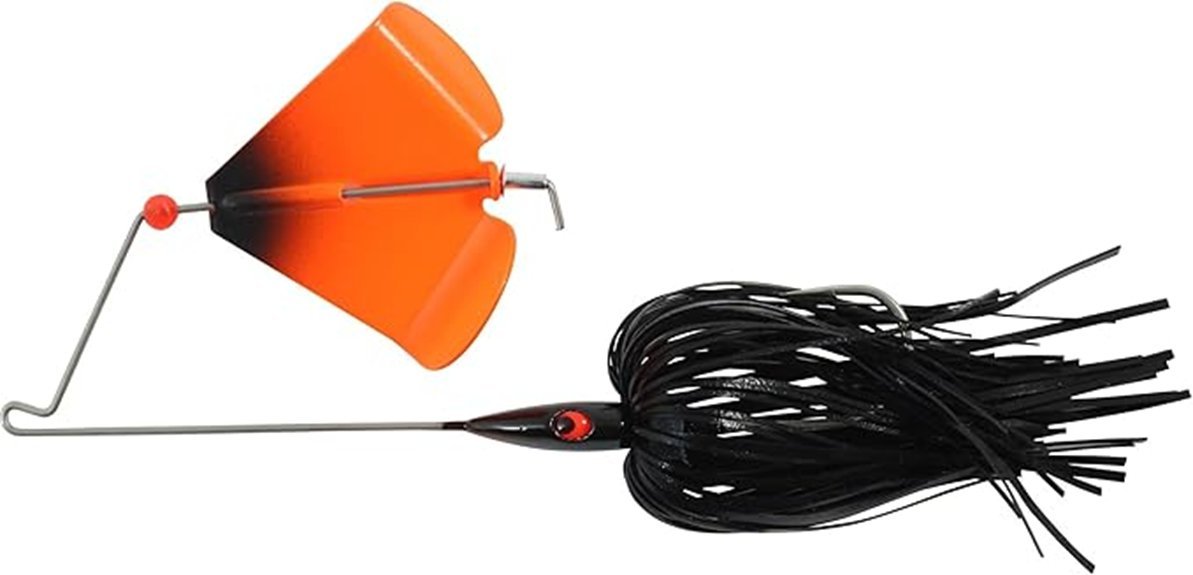
A buzzbait needs to get on the surface quickly, stay there during the retrieve, and create enough disturbance to make a fish investigate. The Northland Fishing Tackle Buzzard Buzzer combines an aluminum blade, an R-bend wire frame, a silicone skirt, and a premium hook in a straightforward topwater design. Its strongest use is around shallow cover for bass, pike, and muskie, although it is less useful when fish are holding deep or you need a slower subsurface presentation. This review explains the verified specifications, where the lure works best, how to retrieve it, and the limitations you should know before adding it to your tackle box.
Quick Verdict
Rating: 8/10
Best For: Anglers targeting bass, pike, or muskie with a noisy topwater presentation around weeds, reeds, rocks, stumps, and other shallow cover.
Bottom Line: The Buzzard Buzzer gives you a simple surface-running buzzbait with a noisy aluminum blade and skirt movement that can cover water efficiently. Its main tradeoff is that it depends on a steady surface retrieve, so it is not the right tool for deep fish or slower subsurface presentations.
| Specification | Detail |
|---|---|
| Brand | Northland Fishing Tackle |
| Model | Buzzard Buzzer |
| Product Type | Topwater buzzbait |
| Weight Options | 1/4 oz and 3/8 oz |
| Hook Size | #3/0 on the 1/4 oz version; #4/0 on the 3/8 oz version |
| Wire Design | R-bend wire frame designed to reduce tangling |
| Blade | Aluminum blade that produces surface sound and vibration |
| Skirt | Crazy-Legs Super Silicone skirt |
| Package | One lure per package |
| Primary Species | Bass, pike, and muskie |
| Best Cover | Weeds, reeds, rocks, stumps, and stickups |
| Suggested Season | Late spring through early fall |
| Trailer Option | Can be fished plain or tipped with a compatible soft-plastic trailer such as Northland’s IMPULSE Swim’n Grub |
What Is the Northland Buzzard Buzzer?
The Northland Buzzard Buzzer is a wire-frame buzzbait built to run across the surface while its aluminum blade turns and disturbs the water. Instead of relying mainly on visual flash, it combines surface commotion, vibration, skirt movement, and a single hook to provoke reaction strikes.
Northland offers the lure in at least two verified weights. The 1/4 oz model uses a #3/0 hook, while the 3/8 oz model uses a #4/0 hook. That gives you a lighter and a heavier option without changing the basic fishing style.
The manufacturer recommends it for pike, bass, and muskie and specifically calls out shallow cover such as weeds, reeds, rocks, stumps, and stickups. It can be fished by itself or paired with a suitable soft-plastic trailer when you want extra profile or movement.
Who Should Buy It?
Best For
- You regularly fish shallow cover for bass, pike, or muskie.
- You want a moving topwater lure that can cover a wide area quickly.
- You prefer a straightforward buzzbait that can be fished plain or with a trailer.
Skip If
- You mainly need a deep-running or bottom-contact lure.
- You want a slow presentation that can pause below the surface.
- You primarily target species for which this lure is not specifically promoted, such as trout or walleye.
Before You Buy: The Buzzard Buzzer is designed around an active surface retrieve. Its R-bend frame can help reduce tangling, but the exposed hook and wire construction do not make it snag-proof. Consider the cover you fish and select the weight and color variant that best fits your water.
Unique Features of the Buzzard Buzzer
R-Bend Wire Design
The lure uses an R-bend wire frame, which Northland describes as tangle-proof. In practical terms, the shape keeps the line attachment simple and supports the blade-and-hook layout used by this style of buzzbait.
You should still expect an exposed-hook lure to catch weeds or wood if you bury it directly into heavy cover. The design is better viewed as a way to reduce line and component tangling rather than a promise that the lure cannot snag.
Aluminum Blade and Surface Sound
The aluminum blade is the main action component. As you retrieve the lure fast enough to keep it on top, the blade turns and creates vibration, splashing, and mechanical sound. Northland describes the blade as producing a combination of clanging, chattering, sputtering, and squealing sounds.
This makes the Buzzard Buzzer useful when you want fish to notice a moving bait from beyond the lure’s immediate visual profile, particularly around shallow vegetation or structural targets.
Crazy-Legs Silicone Skirt
The Crazy-Legs Super Silicone skirt adds movement behind the wire frame as the lure travels across the surface. The skirt gives the bait more visual presence and continues moving while the blade provides most of the sound and vibration.
You can fish the lure with the skirt alone or add a compatible soft-plastic trailer when you want additional bulk. Avoid adding so much trailer weight or drag that the lure becomes difficult to keep on the surface.
Hook and Weight Choices
The verified 1/4 oz version comes with a #3/0 hook, while the 3/8 oz version uses a larger #4/0 hook. The lighter option can make sense when you want a smaller presentation, while the heavier version gives you more lure mass for casting and a larger hook.
Retailer listings for some variants also identify a blood-red Lip-Stick hook. Because exact colors and component appearance can vary by selected version, check the Amazon listing carefully before choosing your variant.
Fishing Techniques for Optimal Results
A buzzbait works best when the blade is turning and the lure remains at or very near the surface. Northland specifically recommends a steady retrieve that keeps the blade rotating and the bait on top.
- Start the retrieve promptly: Begin reeling as the lure lands so the blade starts working before the bait sinks far below the surface.
- Keep the blade turning: Use enough speed to maintain surface action rather than letting the lure repeatedly sink and restart.
- Cast past the target: When possible, land beyond a weed edge, stump, rock, or reed line so the lure is already working as it reaches the high-percentage area.
- Change retrieve speed gradually: Try slightly faster or slower steady retrieves while keeping the bait on top.
- Use the cover: Work parallel to weed lines and reeds or guide the lure near rocks, stumps, and stickups instead of making every cast into open water.
- Try a trailer selectively: A soft-plastic trailer can increase the lure’s profile, but make sure the added drag does not stop the buzzbait from planing properly.
Pro Tip: After each cast, watch the blade rather than relying only on retrieve speed. If the blade stops turning or the bait falls below the surface, increase your reel speed slightly until the lure tracks consistently on top.
How It Performs in Real Use
Along Weed and Reed Edges
This is one of the most natural situations for the Buzzard Buzzer. A surface-running lure lets you work above or beside shallow vegetation while the blade continues making noise. Cast parallel to an outside weed edge when possible so the lure stays in the strike zone for more of the retrieve.
Around Stumps and Stickups
Wood targets give you a clear place to direct each cast. Run the bait close to the cover rather than directly through every branch. The R-bend design helps keep the lure’s components organized, but the exposed hook can still catch wood if the bait hits it at the wrong angle.
Over Rocks and Shallow Structure
A topwater buzzbait can cross shallow rocky areas without dragging along the bottom. The Buzzard Buzzer’s moving blade lets you cover these zones quickly, making it useful when you want to search for active fish rather than hold one lure in a small spot.
From Late Spring Through Early Fall
Northland specifically recommends the lure from late spring through early fall. That does not mean it will produce fish on every outing, but it gives you a sensible seasonal window for testing a noisy surface presentation when bass, pike, or muskie are willing to feed shallow.
Hook Handling and Lure Safety
The Buzzard Buzzer has an exposed fishing hook, so handle it carefully when tying knots, adding a trailer, removing weeds, or unhooking a fish. Keep the lure stored where the hook cannot catch clothing, bags, hands, or other tackle.
Check the wire, hook, skirt, and blade after hard strikes or contact with rocks and wood. If any component is badly bent or damaged, stop using the lure until you can determine that it will run and hook fish safely.
Pros and Cons
Pros
- Aluminum blade produces noticeable surface vibration and sound.
- R-bend wire design helps keep the lure’s components organized during use.
- Crazy-Legs silicone skirt adds movement behind the blade.
- Available in verified 1/4 oz and 3/8 oz sizes with different hook sizes.
- Designed specifically for fishing around weeds, reeds, rocks, stumps, and stickups.
Cons
- Needs a steady retrieve to keep the blade turning and the lure on the surface.
- The exposed hook can still catch vegetation or wood despite the R-bend design.
- Not designed for anglers who primarily need a deep or slow subsurface presentation.
Is It Worth the Price?
The Buzzard Buzzer sits in the budget-friendly end of single-lure purchases rather than the premium specialty-bait category. Its value comes from a focused design: you get two verified weight choices, an aluminum buzz blade, a silicone skirt, an R-bend frame, and a hook matched to the lure size.
It is worth considering if topwater buzzbait fishing already fits the water and species you target. You get less value from it if most of your fishing requires a lure that dives, suspends, sinks slowly, or works close to the bottom.
Because retailer pricing and available color patterns can change, compare the selected weight and variant before ordering rather than choosing only by the displayed product image.
How It Compares to Alternatives
The BOOYAH Buzz is another conventional buzzbait available in multiple weights and uses a clacker-style design to add noise. It may appeal to you if you specifically want that extra mechanical clacking effect. The Strike King Premier Plus Buzzbait takes a different approach with twin counter-rotating blades and a pre-rigged trailer hook on certain versions, making it a more feature-heavy alternative.
The Northland Buzzard Buzzer makes the most sense if you prefer a simpler single-blade layout, an R-bend frame, two verified weight options, and a lure designed specifically around covering shallow weeds, reeds, rocks, stumps, and stickups.
Frequently Asked Questions
What fish is the Northland Buzzard Buzzer designed to catch?
Northland specifically promotes the Buzzard Buzzer for bass, pike, and muskie. Earlier claims that it was primarily intended for trout or walleye are not supported by the manufacturer’s current product information.
What sizes does the Buzzard Buzzer come in?
Northland lists a 1/4 oz version with a #3/0 hook and a 3/8 oz version with a #4/0 hook. Check the selected Amazon variant before ordering because the displayed image may not represent every weight or color choice.
How should you retrieve the Buzzard Buzzer?
Use a steady retrieve that turns the aluminum blade and keeps the bait running at the surface. If the lure repeatedly sinks or the blade stops working, increase the retrieve speed slightly until it tracks consistently.
Where does this buzzbait work best?
Northland recommends fishing it over and around weeds, reeds, rocks, stumps, and stickups. These are shallow-cover situations where a surface lure can move across productive water without needing to dive to the bottom.
Can you add a soft-plastic trailer?
Yes. Northland states that the Buzzard Buzzer can be fished plain or tipped with an IMPULSE Swim’n Grub. Other compatible trailers may also work, but avoid adding enough bulk or drag to prevent the lure from staying on the surface.
Is the R-bend design completely snag-proof?
No. Northland describes the R-bend design as tangle-proof, but the lure still has an exposed hook. You can still snag vegetation, branches, or other structure if you run the hook directly into heavy cover.
Is the Buzzard Buzzer suitable for beginners?
It can be a manageable buzzbait for a beginner because the main technique is a steady surface retrieve. You still need to practice casting around cover, keeping the blade turning, and handling the exposed hook safely.
The Bottom Line
The Northland Fishing Tackle Buzzard Buzzer is a good fit when you want a straightforward, noisy topwater lure for bass, pike, or muskie around shallow cover. Its aluminum blade, R-bend frame, silicone skirt, and verified 1/4 oz and 3/8 oz options give you a practical buzzbait setup, but it is less useful when your fishing calls for a deep, slow, or subsurface presentation.
If those surface-fishing conditions match your water, the Buzzard Buzzer earns its 8/10 editorial rating. If you primarily fish deep water or want a lure that can pause below the surface, choose a different lure style.
Ready to Buy?
Check the latest price, selected weight, color, and product details before you decide.
