

Last Updated on July 28, 2026 by Daniel Globe
If you’re exploring Lazio, Italy, don’t miss its stunning array of historic fortresses and noble estates. Castel Sant’Angelo boasts rich Roman history and panoramic views, while Orsini-Odescalchi Castle by Lake Bracciano offers enchanting scenery and Renaissance grandeur. Rocca Monaldeschi della Cervara invites you into its fortified medieval walls, Santa Severa Castle enchants with its seaside silhouette, and Baglioni Castle Santacroce offers a fairytale escape near Graffignano. Each site tells a unique story across centuries of Italian heritage — here’s everything you need to know before you go.
Quick Answer
Lazio’s best castles include Castel Sant’Angelo in Rome, Orsini-Odescalchi Castle at Lake Bracciano, Rocca Monaldeschi della Cervara at Lake Bolsena, Santa Severa Castle on the coast, Castello Ruspoli in Vignanello, and Palazzo dei Papi in Viterbo. Most are open daily with paid entry, though smaller sites like Baglioni Castle Santacroce require advance reservations.
Key Takeaways
- Castel Sant’Angelo began as Emperor Hadrian’s mausoleum in 135 AD and later became a papal fortress with a secret escape corridor.
- Orsini-Odescalchi Castle, built between 1470 and 1485, overlooks Lake Bracciano and remains one of Italy’s best-preserved Renaissance fortresses.
- Palazzo dei Papi in Viterbo hosted the longest papal conclave in history, lasting nearly three years from 1268 to 1271.
- Fort Michelangelo was commissioned by Pope Julius II in 1508 and completed under Pope Paul III in 1535 to guard Civitavecchia’s port.
- Smaller sites like Baglioni Castle Santacroce and Castello Ruspoli require advance planning or tour bookings, so check schedules early.
Disclosure: As an Amazon Associate I earn from qualifying purchases. Some links on this page are affiliate links, at no extra cost to you.
An Introduction to Lazio’s Most Enchanting Castles
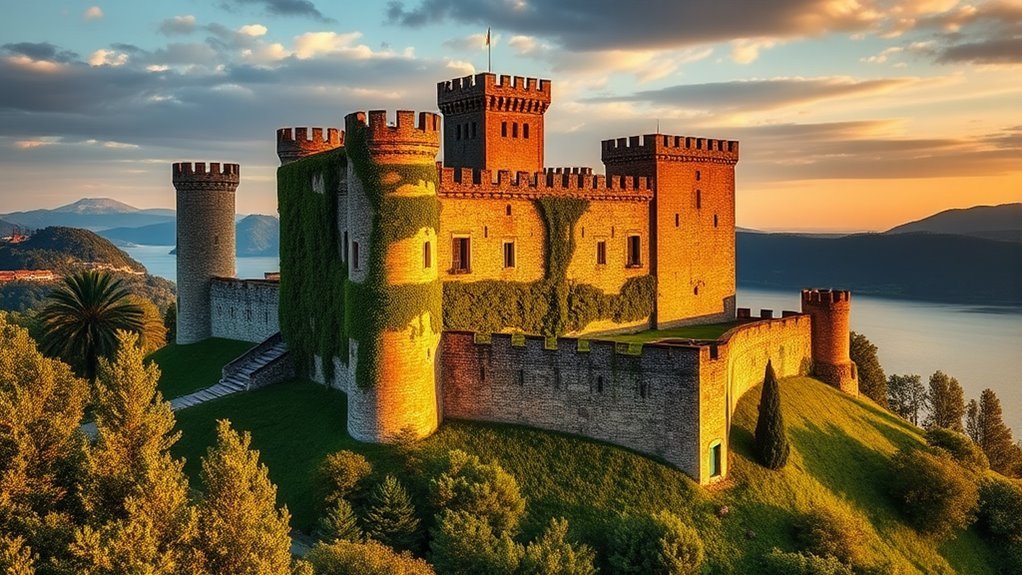
Lazio holds a remarkable collection of castles that span nearly two millennia of Italian history. From the Monaldeschi della Cervara Fortress in Bolsena to the Orsini-Odescalchi Castle in Bracciano, these structures offer sweeping views alongside genuine historical depth. Wander their halls and you’ll encounter local legends and regional folklore, along with architectural styles ranging from ancient Roman foundations to Gothic and Renaissance additions.
Some sites sit amid pristine countryside and manicured gardens that make for quiet, reflective stops. Advance reservations are required at several smaller castles, so plan ahead. Local festivals, such as Viterbo’s Macchina di Santa Rosa procession, add another layer to a visit and connect you to living regional traditions alongside timeless stone architecture.
Castel Sant’Angelo: A Fortress of History and Beauty
Perched along the Tiber River in Rome, Castel Sant’Angelo traces a long arc of Roman and papal history. Originally built as Emperor Hadrian’s mausoleum in 135 AD, the structure was later converted into a papal fortress, blending ancient Roman masonry with medieval fortifications. Inside, you can trace the path popes once used to flee danger through the secret Passetto di Borgo corridor connecting the castle directly to the Vatican.
At a Glance: Castel Sant’Angelo
| Year Built | 135 AD |
| Original Purpose | Emperor Hadrian’s mausoleum |
| Papal Residence | Yes |
| Secret Corridor | Passetto di Borgo |
| Current Use | National Museum showcasing art, weapons, and historic apartments |
From the rooftop terrace, you get a panoramic view over Rome and St. Peter’s Basilica that few other vantage points in the city can match. Castel Sant’Angelo draws visitors from around the globe, and its layered history makes it one of the most complete single-site history lessons in central Italy.
Products Worth Considering
Style:Italy, Vatican City, Rome, Decorative Magnetic Refrigerator Stickers

The perfect gift – with every look at the card, holiday memories come alive. This makes you want more. Where is the next adventure going?

Theme: St. Peter's Basilica, Vatican, Rome, Italy
Orsini-Odescalchi Castle by Lake Bracciano
Set on the southern shores of Lake Bracciano, Orsini-Odescalchi Castle offers an exceptionally well-preserved look at 15th-century Renaissance fortress-building. Its grand residential halls, lush grounds, and elevated waterfront position make it both an important historical museum and a popular day-trip destination.
Rich Historical Background
The castle was built between 1470 and 1485 by Napoleone Orsini and his son Gentil Virginio, expanding an earlier medieval fortification on the site. In 1481, Pope Sixtus IV took refuge here while fleeing a plague outbreak in Rome. The castle later passed by marriage to Paolo Giordano Orsini and Isabella de’ Medici, and by the end of the 17th century it came under the ownership of the Odescalchi family, who still hold it today. That long chain of noble ownership is part of what makes the site’s interior art and armor collection so extensive.
Stunning Architectural Features
The castle blends heavy medieval defensive architecture with refined Renaissance living spaces. Fortified walls and five corner towers dominate the exterior, while the internal courtyard and grand halls reveal delicate fresco work and period furnishings. Inside, rooms reflect the noble households that once ruled the territory, and a high perimeter walkway provides sweeping views over the volcanic crater lake below.
Scenic Lake Views
Because the castle sits on a high volcanic ridge above Lake Bracciano, its upper ramparts double as premier vantage points for viewing the lake and surrounding countryside.
At a Glance: Orsini-Odescalchi Castle
| Lake Activities | Sailing, kayaking, swimming, and dining along Lake Bracciano |
| Photography Spots | High castle towers, inner courtyard, and lakeside gardens |
| Visiting Hours | Typically 10:00 AM–6:00 PM daily (check official schedules prior to travel as hours vary seasonally) |
Note: Opening hours and ticket availability at Italian castles vary by season — always verify schedules on official portals prior to your trip.
Castello Ruspoli in Vignanello: Renaissance Garden Splendor
Located in the town of Vignanello in northern Lazio, Castello Ruspoli is celebrated for housing one of the finest 17th-century Renaissance parterre gardens in Europe. Originally constructed as a medieval fortress in 847 AD, the castle was transformed into an elegant aristocratic estate by Ottavia Orsini in 1611.
The highlights of Castello Ruspoli include its pristine boxwood hedge gardens, sculpted geometric designs, and deeply historical interior rooms decorated with family portraits and period decor. Guided tours allow visitors to explore both the noble living quarters and the historic grounds, making it an essential destination for landscape architecture enthusiasts and history buffs alike.
Rocca Monaldeschi Della Cervara: A Historic Fortress by the Lake
On the shores of Lake Bolsena, Rocca Monaldeschi della Cervara dates to the 13th century. This medieval fortress retains its imposing stone walls and fortified corner towers largely intact, while its roof terrace offers wide panoramic views across Europe’s largest volcanic lake.
The fortress sits directly along the historic Via Francigena pilgrimage route, making it a meaningful stopping point for modern travelers tracing that medieval path. Today, the fortress houses the Territorial Museum of Lake Bolsena, featuring cultural and archaeological exhibitions that connect the region’s Etruscan and medieval history to the present day.
The Architectural Splendor of Santa Severa Castle
Santa Severa Castle rises directly where the beach meets the Tyrrhenian Sea, with a romantic silhouette that traces back to the 14th century. Its sprawling courtyard, circular towers, and narrow stone passages reflect a classic medieval layout built upon ancient foundations.
The site includes an early Christian church dedicated to Saint Severa, and its human history extends back even further — the location originally served as Pyrgi, the ancient maritime port for the Etruscan city of Cerveteri. Inside, late 15th-century frescoes in the Baptistery and votive graffiti left by passing sailors offer tangible glimpses into the lives of travelers who rested here over centuries past.
Viterbo’s Palazzo dei Papi: A Historic Castle in Lazio
In Viterbo’s historic center, Palazzo dei Papi stands as a monumental reflection of medieval papal power. The palace served as a primary papal residence for 24 years during the 13th century, a turbulent era when political conflict kept popes away from Rome.
Its grand hall and loggia feature intricate Gothic arches and frescoed rooms reflecting medieval ecclesiastical politics. The palace is most famous as the site of the longest papal election in history, lasting from December 1268 to September 1271 — nearly three full years. Frustrated local residents famously removed the palace roof to force the deliberating cardinals to elect Pope Gregory X.
Baglioni Castle Santacroce: A Fairytale Experience
Baglioni Castle Santacroce, situated near Graffignano, offers a peaceful, smaller-scale counterpoint to Lazio’s massive lakeside fortresses. Its stone towers and ancient perimeter walls nestle into rolling countryside, where guided tours reveal the noble history of the Baglioni family.
Enchanting Architectural Features
The structure blends rustic medieval walls with Renaissance interior styling, featuring stone fireplaces and intricate decorative work. Because public access is carefully managed by reservation, visits remain quiet and uncrowded.
Scenic Surrounding Landscapes
The surrounding hills near Graffignano feature vineyards, olive groves, and wooded trails. Pairing a castle tour with local vineyard visits provides a relaxed way to enjoy Lazio’s rural beauty and winemaking tradition.
Unique Visitor Experiences
Entry to Baglioni Castle Santacroce is arranged by advance booking, ensuring small-group, personalized tours rather than large crowd excursions — ideal for travelers seeking off-the-beaten-path destinations.
Pro Tip: Book reservation-only sites like Baglioni Castle Santacroce and Castello Ruspoli several days in advance, especially during spring and peak summer travel seasons.
Discover the Secrets of Fort Michelangelo
Fort Michelangelo stands in the port of Civitavecchia as a monumental Renaissance military fortress. It was commissioned by Pope Julius II in 1508, with initial design work led by master architect Donato Bramante. Following Bramante’s death in 1514, Giuliano Leno and Antonio da Sangallo the Younger directed construction, leading to completion in 1535 under Pope Paul III. Michelangelo Buonarroti contributed to the design of the main upper keep, giving the fort its modern name.
The fort’s massive rectangular layout and four sturdy corner bastions exemplify 16th-century coastal defense built to protect Rome’s principal port from naval attack. Because parts of the facility are used by maritime port authorities, public access is restricted to designated areas and special tours.
Warning: Fort Michelangelo is an active port facility. Public interior access is limited compared to general museums, so confirm tour availability with Civitavecchia’s tourist office before visiting.
The Unique Features of Vulci Castle: Nature Meets History
Located near Canino, Vulci Castle — also known as Castello dell’Abbadia — combines medieval defensive stonework with a dramatic natural river landscape. Constructed alongside the ancient Roman arch bridge *Ponte del Diavolo*, the fortress was built in the Middle Ages to guard the territory of the former Etruscan city of Vulci.
The castle now houses the National Archaeological Museum of Vulci, exhibiting Etruscan pottery, bronzes, and artifacts excavated from nearby tombs. It remains one of the few places in Lazio where ancient archaeology, medieval architecture, and natural river gorges meet in one place.
Essential Tips for Visiting Lazio’s Castles
Each castle across Lazio operates under its own seasonal schedules, access rules, and ticketing methods. A little advance preparation ensures a seamless journey.
“Exploring Lazio’s historic castles reveals layers of Roman, papal, and noble heritage far beyond the city limits of Rome.”
- Check opening hours directly: Seasonal schedules vary widely across sites — confirm opening times on official venue websites before traveling.
- Reserve small sites early: Limited-capacity castles such as Baglioni Castle Santacroce and Castello Ruspoli require advance tour bookings.
- Group visits by region: Pair castles surrounding Lake Bracciano or Lake Bolsena into single-day countryside road trips.
- Plan transportation carefully: While Castel Sant’Angelo and Palazzo dei Papi are accessible by train, rural castles are easiest to reach by rental car.
- Purchase tickets officially: Secure entry passes through primary venue websites or official visitor centers to avoid unauthorized markups.
Frequently Asked Questions
What are some hidden gem castles in Lazio?
Lesser-visited destinations like Baglioni Castle Santacroce near Graffignano, Castello Ruspoli in Vignanello, and Vulci Castle near Canino offer rich history and beautiful scenery without large tourist crowds.
What is considered the most famous castle near Lake Bracciano?
Castello Orsini-Odescalchi is the most famous fortress on Lake Bracciano, renowned for its 15th-century Renaissance architecture, papal history, and panoramic waterfront views.
Is Lazio, Italy worth visiting for historical travel?
Yes. Beyond Rome’s urban monuments, Lazio offers medieval hill towns, volcanic lakes, ancient Etruscan ruins, and pristine castles that provide a richer, less crowded Italian travel experience.
What is the region of Lazio famous for?
Lazio is famous as the historical heart of the Roman Empire and the Papacy, renowned for iconic landmarks, medieval fortresses, scenic volcanic crater lakes, and authentic regional Italian cuisine.
Conclusion
Lazio’s castles represent nearly two thousand years of living history, ranging from ancient Roman mausoleums to Renaissance lakeside fortresses and private countryside estates. Whether you’re taking in the rooftop view from Castel Sant’Angelo or admiring the formal gardens of Castello Ruspoli, careful planning regarding schedules and reservations ensures an unforgettable journey through central Italy.
Sources
- Wikipedia — Castel Sant’Angelo — Construction history as Hadrian’s mausoleum and papal fortress.
- Wikipedia — Castello Orsini-Odescalchi — Construction dates, Orsini family heritage, and Odescalchi ownership.
- VisitLazio — Orsini Odescalchi Castle — Regional tourism insights and visiting guidelines.
- Wikipedia — 1268–1271 Papal Election — Historical record of the longest papal election in Viterbo.
- Port Mobility Civitavecchia — Fort Michelangelo — Architectural commissioning and historical completion details.
