Last Updated on September 11, 2026 by Logan Reeves
You want to spend more time fishing and less time fixing avoidable gear problems. The best fishing gear hacks are simple: protect reels from salt, catch worn line before it breaks, keep hooks and tackle organized, reduce preventable snags, and make small gear adjustments without damaging the equipment you rely on.
Quick Answer
Easy fishing gear hacks should protect tackle, cut wasted time, and reduce preventable snags. Start by rinsing saltwater gear with fresh water, inspecting line and hardware before each trip, organizing tackle with durable labels, and choosing hook setups that match the cover. Cosmetic lure touch-ups can help with visibility, but use them cautiously.
Key Takeaways
- Rinse saltwater-exposed reels with cool fresh water, wipe them clean, and never soak the reel.
- Check the last few feet of line, leaders, hooks, split rings, and rod guides before they cause a lost lure or fish.
- A single-hook lure can have fewer exposed hook points than a treble-hook lure, but no hook setup is snag-proof.
- Use permanent markers on tackle boxes, tags, leader wallets, and spool labels rather than assuming the ink is safe for load-bearing fishing line.
- Treat nail polish as a small cosmetic hard-lure touch-up, not as a structural repair or guaranteed marine coating.
At a Glance
| Time Required | About 5–15 minutes for routine inspection and cleanup |
| Difficulty | Easy |
| Tools Needed | Soft cloth, pliers, line cutter, spare leader, spare hooks or split rings, labels or marker |
| Cost | Often $0 if you already own basic tackle tools; optional products vary in price |
Disclosure: As an Amazon Associate I earn from qualifying purchases. Some links on this page are affiliate links, at no extra cost to you.
Top Picks
|
Category |
Product |
Editorial Score |
|---|---|---|
|
🏆 Best Casting Lure |
94/100 |
|
|
🎨 Best For Lure Touch-Ups |
82/100 |
|
|
🎯 Best For Gear Marking |
88/100 |
Note: These are editorial fit-to-purpose scores for the hacks discussed here, not laboratory test results. Marketplace ratings and review totals shown later are snapshots from the original source article and can change over time.
How We Chose These Hacks
You need hacks that are simple to do on the water, require minimal tools, and actually improve organization, maintenance, or tackle usability. We prioritized techniques that are inexpensive, easy to reverse, and practical across common fishing situations from freshwater banks to surf and rocky jetties.
We also checked whether the underlying product features are supported by current manufacturer information. The Hopkins NO=EQL line remains current on the Hopkins Lures website. Color Club currently describes Beyond as a holographic Holo Black lacquer with full coverage in two coats or less, and Sharpie describes its chisel-tip permanent markers as quick-drying and water- and fade-resistant.
Practicality, safety, durability, honest limitations, and usefulness to everyday anglers were the main factors. The products are optional; several of the most valuable hacks below cost nothing.
7 Easy Fishing Gear Hacks That Actually Help
1. Inspect Line and Leader Before It Breaks
Before your first cast, check the last few feet of your main line and leader. Look and feel for nicks, rough spots, flattening, excessive fuzzing, or abrasion. Damage is especially common after fishing around rocks, docks, shell, timber, bridge pilings, or sharp structure.
If you find obvious damage, cut back to clean line and retie instead of hoping it holds through one more fish. Also inspect the knot itself. A knot that looks crushed, burned, loose, or badly seated is worth retying.
2. Rinse Saltwater Gear With Fresh Water
Salt left on reels and metal hardware can promote corrosion. Shimano’s official reel-maintenance guidance recommends basic cleaning after fishing and specifically advises rinsing saltwater-used reels with cold fresh water rather than submerging them.
Use gentle water pressure, wipe away dirt and salt with a soft cloth, let the equipment dry, and follow your reel manufacturer’s lubrication instructions. Avoid blasting water into reel openings or soaking a reel in a bucket.
3. Check Hooks, Split Rings, Rod Guides, and Connections
A lure can look perfect while a small hardware problem is waiting to fail. Check hooks for bending, corrosion, damaged points, or looseness. Inspect split rings and snaps for gaps or distortion. Run a close visual check over rod-guide inserts for chips or cracks that could contact the line.
Also confirm that the reel seat, handle, drag, and moving parts feel normal before you leave home. Small fixes are much easier at the workbench than during a short feeding window.
4. Reduce Snags by Matching the Hook Setup to the Cover
A lure with one exposed hook point can sometimes be easier to work around rocks or structure than the same lure with a three-point treble, but that does not make it snag-proof. Hook size, lure balance, retrieve angle, current, bottom type, and cover all matter.
When snagging is a problem, keep the lure higher in the water column, retrieve before it settles deeply into rocks, and use weedless or single-hook options when they suit the lure and local rules. If you replace a treble with a single hook, choose a size and weight that do not badly upset the lure’s balance or action.
For catch-and-release fishing, NOAA Fisheries also recommends choosing gear that reduces fish stress and notes that circle hooks, barbless hooks, or hooks with crimped barbs can make hook removal easier in appropriate fisheries. Always check local regulations because some hook styles are required or restricted for specific species or waters. See NOAA’s catch-and-release best practices.
Warning: Never pull a badly snagged lure straight toward your face or body. A freed hook or sinker can spring back at high speed. Point the rod and line away from people, protect your eyes, use a lure retriever when practical, and cut the line if freeing the tackle becomes unsafe.
5. Label Tackle Instead of Guessing
Use a permanent marker to label tackle boxes, leader wallets, lure trays, plastic tags, spare-spool containers, and other noncritical surfaces. Useful labels include line type, pound test, leader diameter, hook size, lure weight, and the date you spooled or tied a batch of leaders.
Do not assume permanent-marker ink is harmless to every fishing line material. Sharpie validates its marker for many common surfaces, but not for preserving the tensile strength of nylon, fluorocarbon, or braided fishing line. When line strength matters, mark the storage label or tag rather than the load-bearing line itself.
6. Use Nail Polish Only for Small Cosmetic Hard-Lure Touch-Ups
Nail lacquer can be useful for tiny color marks or cosmetic touch-ups on some hard lure bodies, especially if you want a bright or reflective accent. Color Club’s Beyond shade has a strong holographic finish, so a small fully cured spot can be visually distinctive.
However, nail polish is not a structural lure repair, line coating, hook coating, or guaranteed waterproof marine finish. Test a hidden area first. Keep it off monofilament, fluorocarbon, braid, knots, soft plastics, hook points, split rings, and moving joints. Let the lacquer dry completely before the lure goes back into a tackle box or the water.
7. Dry, Organize, and Dispose of Damaged Line Responsibly
Do not seal wet hooks and lures into a closed box if you can avoid it. Let gear dry, remove obvious salt and debris, and separate badly corroded hardware from usable tackle. A few minutes of organization after a trip saves time before the next one.
Do not leave cut fishing line on the bank, beach, dock, or water. Fishing line and other lost gear can entangle wildlife. NOAA describes fishing gear and line as a significant marine-entanglement hazard, so collect waste line and use an appropriate disposal or monofilament-recycling point when one is available.
Pro Tip: Keep a small “trip reset” pouch with pliers, a line cutter, spare leader, common split rings, a few replacement hooks, a marker, and a soft cloth. Restock it after every outing so you are not hunting for repair items when the bite starts.
Hopkins Spoon
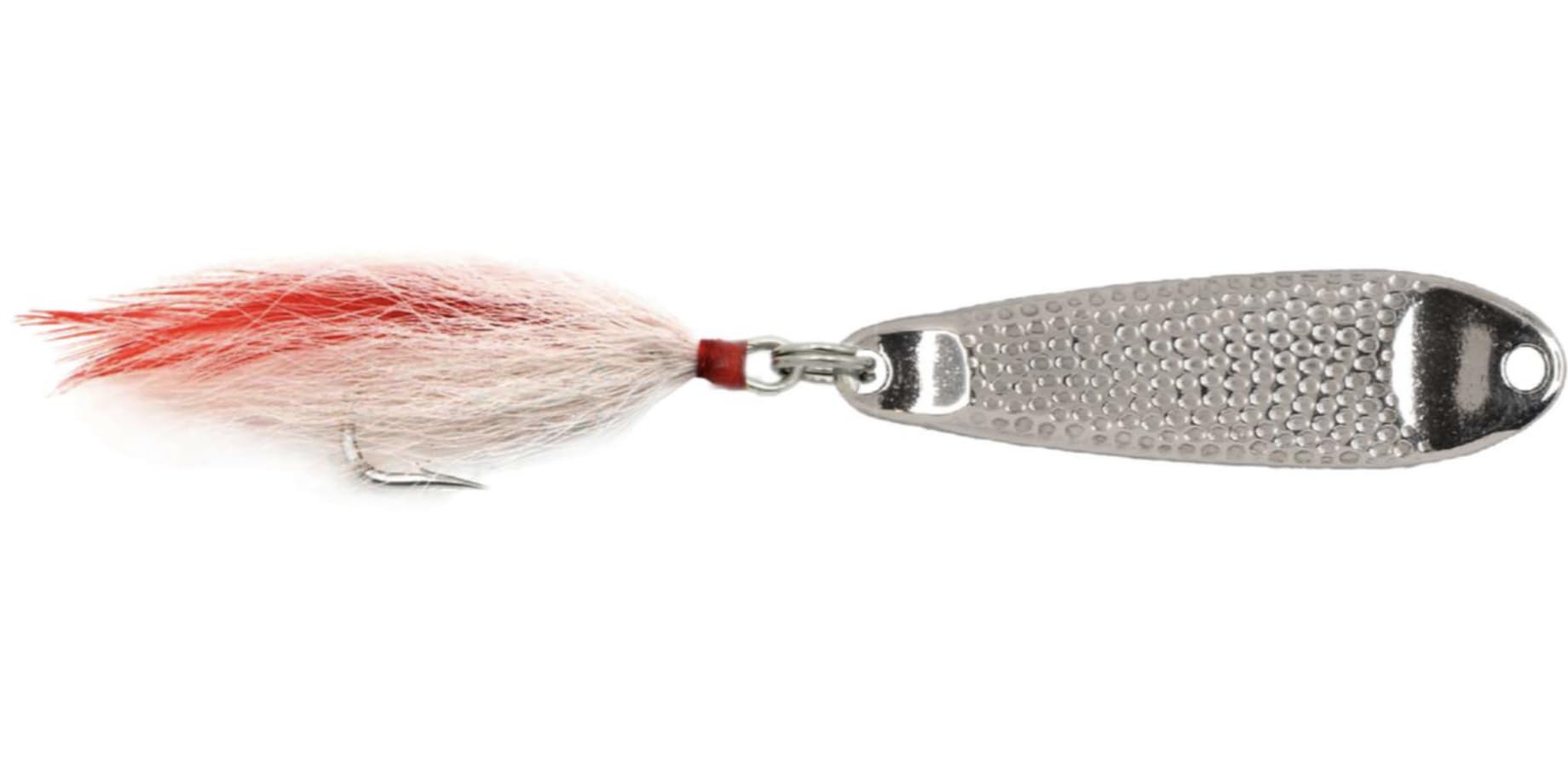
The Hopkins 3.5SBW NO=EQL is a dense stainless-steel spoon sold in the 2 oz, roughly 4-1/4-inch size with a single bucktail J-hook. Its compact metal body makes it a logical choice when you want a lure that carries well on a cast and can be worked from beaches, jetties, banks, or boats.
The single-hook setup gives you fewer exposed hook points than a comparable treble-hook arrangement. That can make the lure easier to manage in some rocky situations, although it can still snag and the best hook setup depends on the structure, retrieve, fish species, and local regulations.
For everyday outings, it is a straightforward cast-and-retrieve option. If distance, durability, and a simple metal profile matter more than intricate lure action, it is a practical piece of tackle to keep available.
What People Say
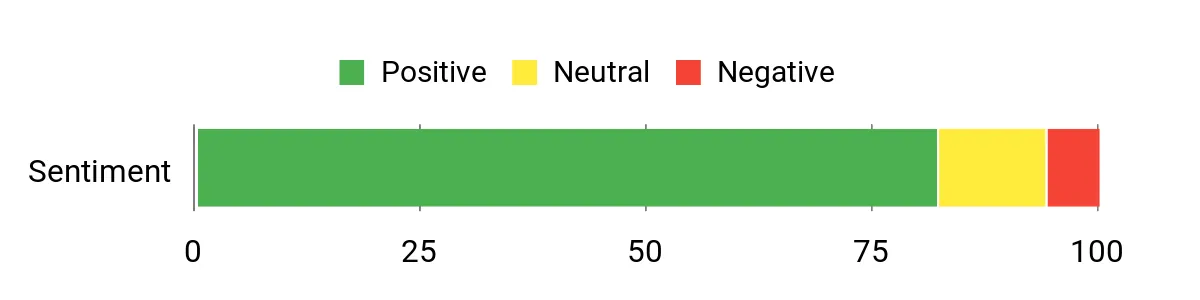
The original article’s marketplace-review snapshot was broadly positive and emphasized build quality, casting, and versatility for surf, jetty, and boat use. Treat this as historical marketplace sentiment rather than controlled performance testing because review totals and rankings can change.
The strongest theme is straightforward utility: a heavy metal spoon with a simple single-hook configuration rather than a complicated lure with many moving parts.
Overall Sentiment: Positive in the source-article review snapshot
|
Pros |
Cons |
|---|---|
|
✅ Dense 2 oz body is well suited to distance-oriented casting |
❌ The 2 oz size may be too heavy for light tackle |
|
✅ Stainless-steel construction suits saltwater tackle use |
❌ A single hook can change hookup and landing behavior compared with a treble |
|
✅ Fewer exposed hook points than a treble-hook setup |
❌ Still capable of snagging around rocks and bottom structure |
Situational Benefits
|
Situation |
How It Helps |
|---|---|
|
Surf Casting |
The dense spoon profile is suitable when you need a lure that carries well and can cover water from shore. |
|
Jetty and Rock Edges |
The single-hook setup has fewer exposed points than a treble, which may make it easier to manage near structure when retrieved carefully. |
|
Boat Casting at Distance |
The 2 oz weight can help when you need a compact lure with enough mass for longer casts, assuming your rod and line are rated appropriately. |
Versatility
This spoon can be used from shore or boat and retrieved at different speeds. Its usefulness comes from the simple metal profile, casting weight, and single-hook configuration rather than from specialized electronics, rattles, or complex joints.
Key Benefits
- 2 oz, approximately 4-1/4-inch 3.5SBW configuration
- Dense stainless-steel spoon body suited to distance-oriented casting
- Single bucktail hook with fewer exposed points than a treble-hook arrangement
Marketplace rating snapshot in the original source article: 4.6/5 (16+ ratings at that snapshot). Live ratings and totals can change.
Color Club

Color Club Beyond is first and foremost nail lacquer, not purpose-built fishing equipment. The manufacturer describes Beyond as a Holo Black shade with a strong holographic finish and full coverage in two coats or less. That reflective finish is what makes it potentially useful for a very small cosmetic accent on a compatible hard lure.
For fishing use, keep the job small. A dot, stripe, or tiny touch-up on a hard lure body is more defensible than coating a large surface. Test the finish on a hidden area, let it cure completely, and stop if the lure material softens, discolors, or reacts.
Color Club currently states that its products are cruelty-free and vegan friendly. Those brand attributes are supported by the manufacturer’s current FAQ, but the product should still be treated as nail lacquer rather than as a marine-grade protective coating.
What People Say
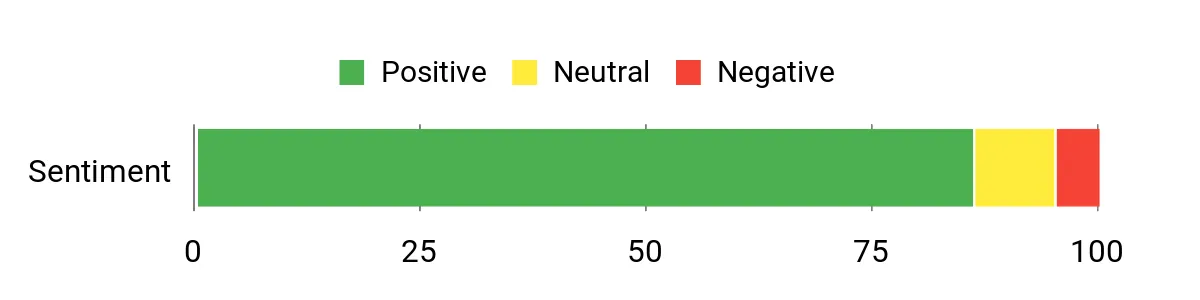
The source article’s marketplace-review snapshot was positive about the holographic appearance, application, and coverage. Those comments primarily relate to its intended cosmetic nail use, so they should not be treated as proof of durability on fishing lures.
Color can also look different under various lighting conditions, which matters both for nails and for small lure accents.
Overall Sentiment: Positive in the source-article review snapshot
|
Pros |
Cons |
|---|---|
|
✅ Strong holographic effect for visible cosmetic accents |
❌ Not designed or guaranteed as a fishing-lure coating |
|
✅ Manufacturer says full coverage is possible in two coats or less |
❌ Compatibility with lure plastics, coatings, and finishes can vary |
|
✅ Color Club states its products are cruelty-free and vegan friendly |
❌ Should not be put on line, knots, hook points, soft plastics, or moving joints |
Situational Benefits
|
Situation |
How It Helps |
|---|---|
|
Small Hard-Lure Touch-Ups |
A tiny fully cured patch can cover a cosmetic chip or add a visible holographic accent after you confirm compatibility. |
|
Color Coding |
Small dots on compatible hard gear can help distinguish similar items without changing the entire finish. |
|
Intended Nail Use |
The product’s verified purpose remains nail lacquer, where the holographic finish and coverage are manufacturer-supported. |
Versatility
Beyond works as a holographic nail lacquer and may also serve as a small cosmetic marking material on compatible hard surfaces. Fishing use should remain limited, tested, and fully cured because it was not designed as structural tackle repair.
Key Benefits
- Strong holographic, rainbow-like visual effect
- Full coverage in two coats or less according to Color Club
- Color Club states all of its products are cruelty-free and vegan friendly
Marketplace rating snapshot in the original source article: 4.6/5 (307+ ratings at that snapshot). Live ratings and totals can change.
Sharpie Chisel
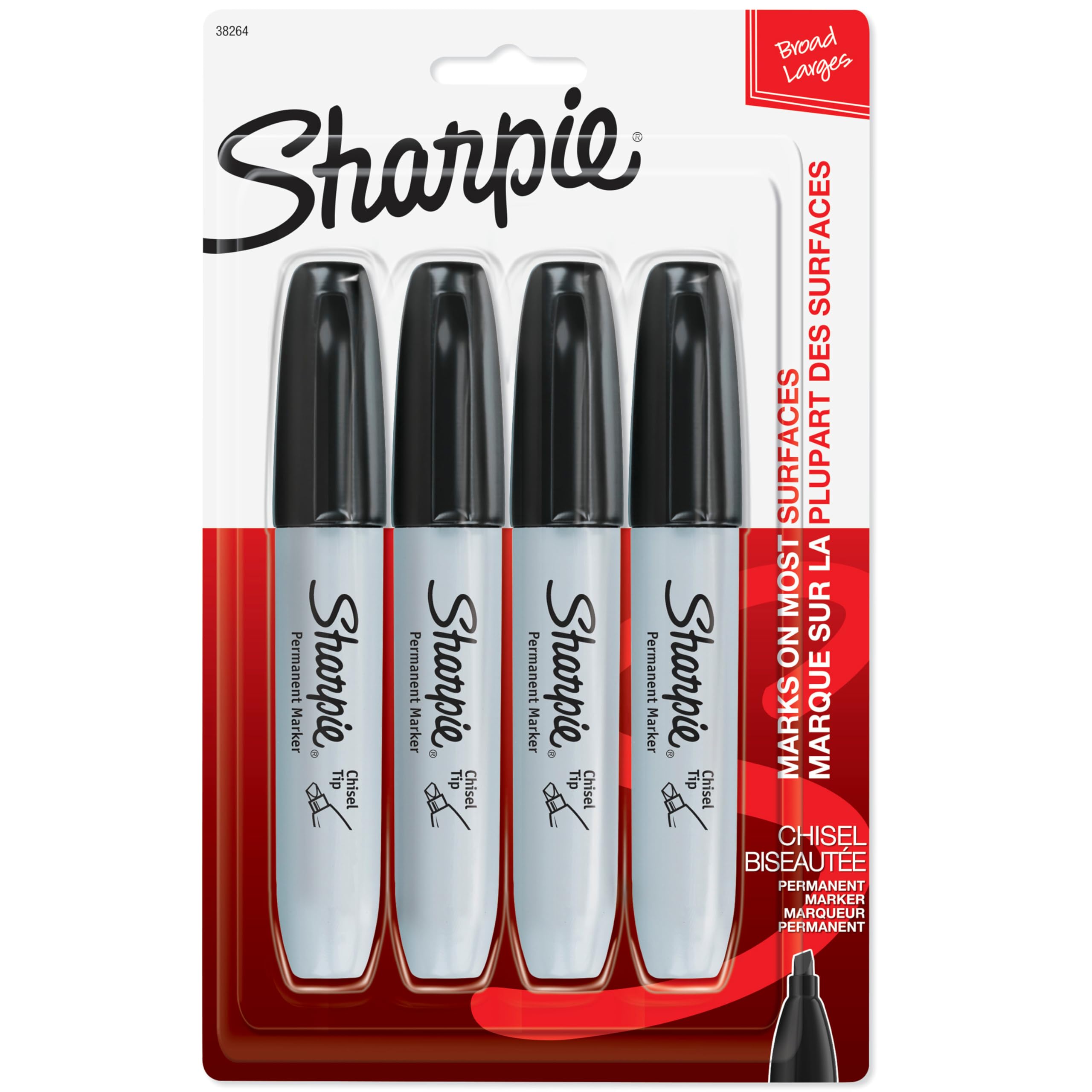
A chisel-tip Sharpie is a simple tool for gear organization. The manufacturer says the chisel tip can make broad, medium, and fine strokes, while the permanent ink dries quickly and resists fading and water. Sharpie also lists paper, plastic, metal, and many other common surfaces among its intended uses.
That makes the marker useful for tackle-box labels, leader wallets, lure trays, plastic tags, spare-spool containers, storage bins, and identification marks on compatible noncritical gear surfaces.
For fishing line itself, use more caution. The manufacturer does not state that the ink has been tested for maintaining the breaking strength of nylon, fluorocarbon, or braid, so label the holder, tag, or spool instead of applying solvent-based ink directly to a load-bearing section of line.
What People Say
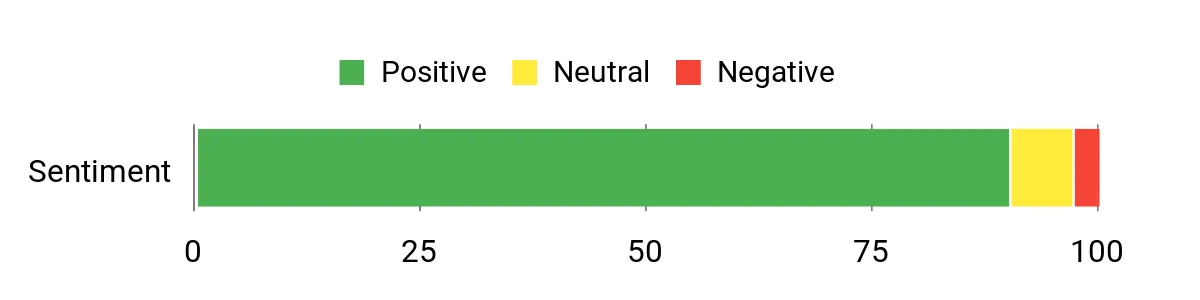
The original review snapshot emphasized reliability, strong marks, and the usefulness of the chisel tip. Those themes match Sharpie’s current manufacturer description of a versatile chisel point and quick-drying, water- and fade-resistant ink.
The strongest fishing-specific benefit is organization rather than lure performance: clear labels can reduce the time spent guessing which leader, spool, hook size, or tackle tray you are reaching for.
Overall Sentiment: Positive in the source-article review snapshot
|
Pros |
Cons |
|---|---|
|
✅ Quick-drying ink that resists fading and water |
❌ Can bleed through thin or porous labels |
|
✅ Chisel tip handles broad, medium, and fine marks |
❌ Solvent odor may bother some users |
|
✅ Useful on tackle labels, plastic, metal, and storage surfaces |
❌ Compatibility with load-bearing fishing line is not established |
Situational Benefits
|
Situation |
How It Helps |
|---|---|
|
Tackle Organization |
Label boxes, bags, lure trays, and leader wallets so you can identify sizes and setups quickly. |
|
On-the-Water Notes |
Write depth notes, lure weights, rig details, or temporary instructions on compatible plastic cards, tags, or waterproof notebooks. |
|
Gear Identification |
Add identifying marks to compatible tackle containers and noncritical hard surfaces so similar gear is easier to distinguish. |
Versatility
This marker works for labeling, organization, workshop notes, and light gear identification. Its biggest fishing benefit is helping you find the correct tackle faster rather than modifying how a lure or fishing line performs.
Key Benefits
- Writes on paper, plastic, metal, and many other surfaces
- Chisel tip produces broad, medium, and fine strokes
- Quick-drying permanent ink resists fading and water
Marketplace rating snapshot in the original source article: 4.8/5 (16,013+ ratings at that snapshot). Live ratings and totals can change.
5-Minute After-Trip Fishing Gear Maintenance
A short reset after every trip prevents many of the problems anglers later mistake for bad luck or worn-out equipment.
- Remove obvious debris: Wipe sand, dirt, vegetation, and grime from rods, reels, and hard tackle with a soft cloth.
- Rinse saltwater-exposed gear: Use cool fresh water at gentle pressure. Do not submerge the reel.
- Dry before storage: Let reels, lures, hooks, and tackle trays dry rather than sealing moisture inside a closed box.
- Inspect the working end: Check the last few feet of line, the leader, knot, hook, split ring, snap, and lure attachment point.
- Reset the kit: Replace used leader, hooks, split rings, labels, or other small supplies so the tackle bag is ready for the next trip.
Five minutes of inspection and cleanup after a trip can prevent much longer delays caused by corroded hardware, damaged line, missing tackle, or avoidable equipment failures on the next outing.
Frequently Asked Questions
Which fishing gear hacks are worth trying first?
Start with the no-cost fixes: inspect damaged line, retie questionable knots, check hooks and split rings, rinse saltwater gear, dry tackle before storage, and label your boxes or leader wallets. After that, consider equipment-specific changes such as a single-hook lure or tiny cosmetic hard-lure touch-ups.
Will these tricks damage my fishing gear?
Routine inspection, gentle freshwater cleaning, and labeling tackle containers are low-risk when done correctly. Modifications deserve more caution. Test coatings on hidden areas, do not put nail polish on fishing line or hook points, and make sure replacement hooks and split rings are appropriate for the lure.
How do I reduce snags and lost lures?
Avoid letting the lure settle deeply into rocks when the area is snag-prone, keep a controlled retrieve, and use weedless or single-hook options when they suit the lure and local rules. Inspect damaged line frequently because abrasion can also cause lost lures even when the lure never becomes fully snagged.
Can I use nail polish on fishing lures?
You can cautiously test a tiny cosmetic touch-up on some hard lure bodies, but nail polish is not designed as a marine repair coating. Test a hidden spot first, let it cure completely, and keep it off soft plastics, fishing line, knots, hook points, split rings, and moving joints.
Is Sharpie safe to use directly on fishing line?
Do not assume it is. Sharpie confirms its permanent marker works on many common hard surfaces, but it does not state that its ink preserves the breaking strength of nylon, fluorocarbon, or braided fishing line. Mark leader wallets, tags, tackle boxes, and spool labels instead.
Should I replace treble hooks with single hooks?
Sometimes, but not automatically. A single hook reduces the number of exposed hook points, yet changing hook size or weight can affect lure balance, action, hookup behavior, and landing performance. Match the replacement carefully and check local fishing regulations before changing a lure’s hook configuration.
What should I do with fishing gear after a saltwater trip?
Remove dirt and sand, gently rinse saltwater-exposed equipment with cool fresh water, do not submerge the reel, let everything dry, and inspect the line and terminal tackle before storage. Follow the reel manufacturer’s lubrication and service instructions for your specific model.
Customer Preferences
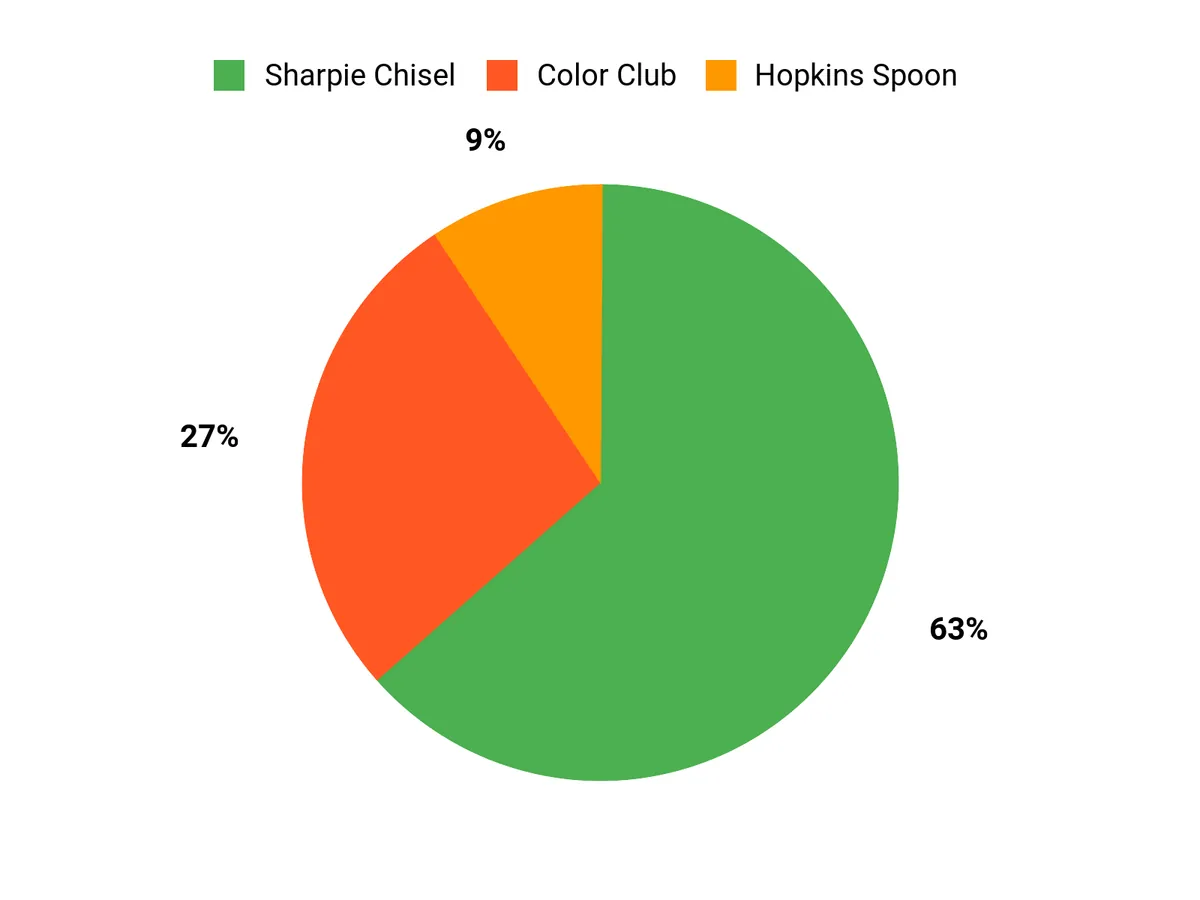
The original roundup’s preference chart suggests three different priorities: anglers looking for a heavy casting spoon are most likely to value the Hopkins for its simple metal construction and single-hook configuration; the Color Club polish fits a much narrower cosmetic-touch-up use; and the Sharpie is the most broadly useful organization tool for labels, tackle boxes, tags, and storage.
This chart should be read as an interpretation of the original review and product dataset, not as a representative survey of all anglers.
Wrapping Up
The most useful fishing gear hacks are usually preventative rather than flashy. Inspect line before it fails, keep hardware in good condition, rinse saltwater gear correctly, dry tackle before storage, and label your equipment so you can find the right setup quickly. A Hopkins spoon can add a simple distance-oriented single-hook lure to your box, Color Club Beyond can provide a carefully tested cosmetic accent on some hard lures, and a chisel Sharpie can simplify tackle organization. Small habits like these save time, reduce avoidable gear loss, and make each trip easier to manage.
| Hopkins Towing Solutions 3.5SBW No Equal Single Buck | Color Club Halographic Hues Nail Polish, Beyond | Sharpie Permanent Markers, Large, Chisel Tip, Black, 4 Count | |
|---|---|---|---|
|
|
|
|
|
| Rating | Original source snapshot: 4.6/5 (16+ ratings) | Original source snapshot: 4.6/5 (307+ ratings) | Original source snapshot: 4.8/5 (16,013+ ratings) |
| Material | Stainless steel lure body | Liquid holographic nail lacquer; Color Club states its products are vegan friendly and cruelty-free | Plastic marker barrel with permanent solvent-based ink |
| Size/Volume | Approximately 4-1/4 in; 2 oz for 3.5SBW | 0.5 fl oz | 4 Count |
| Best Uses |
|
|
|
| Shop Now | Shop Now | Shop Now |
This Roundup is reader-supported. When you click through links we may earn a referral commission on qualifying purchases.
Sources
- Hopkins Lures — NO=EQL — confirms the current NO=EQL lure family.
- Color Club — Beyond — confirms Beyond’s holographic Holo Black finish and coverage information.
- Color Club FAQ — confirms Color Club’s current cruelty-free and vegan-friendly statement.
- Sharpie — Permanent Markers, Chisel Tip — supports chisel-tip versatility, surface use, quick drying, and water/fade resistance.
- Shimano — Reel Maintenance — supports freshwater cleaning after fishing, especially after saltwater exposure, and warns against submerging reels.
- NOAA Fisheries — Catch and Release Fishing Best Practices — supports appropriate hook selection, dehooking tools, and safer fish-handling practices.