
Last Updated on September 11, 2026 by Daniel Globe
When Charles of Bourbon—known in Italy as Carlo di Borbone—entered Naples on May 10, 1734, he ended more than two centuries of viceregal subordination and established the Kingdom of Naples as an independent sovereign state. Ruling as Charles VII of Naples and Charles V of Sicily before ascending the Spanish throne as Charles III in 1759, his twenty-five-year reign sparked a political, urban, and cultural renaissance. By commissioning monumental palaces, initiating the groundbreaking excavations of Pompeii and Herculaneum, and executing sweeping administrative reforms, Carlo transformed Naples into one of the preeminent capitals of the European Enlightenment.
Quick Answer
Carlo di Borbone (Charles III of Bourbon) was King of Naples and Sicily from 1734 to 1759. He restored Neapolitan independence, launched the world-famous excavations of Herculaneum (1738) and Pompeii (1748), built the Royal Palace of Caserta and Teatro di San Carlo, and transferred the legendary Farnese Art Collection to Naples, driving the city’s 18th-century golden age.
Key Takeaways
- Restoration of Sovereignty: Ended 230 years of foreign viceregal rule (Spanish and Austrian Habsburgs), establishing an autonomous Bourbon kingdom.
- Birth of Modern Archaeology: Pioneered state-sponsored excavations at Herculaneum (1738) and Pompeii (1748), establishing the Accademia Ercolanese.
- Monumental Building Program: Commissioned the Royal Palace of Caserta, Teatro di San Carlo, Capodimonte Palace, and the Real Albergo dei Poveri.
- Cultural Wealth: Inherited and brought the vast Farnese Collection from Parma and Rome to Naples.
- Dynastic Legacy: Abdicated in 1759 to become King of Spain, leaving the independent Neapolitan crown to his son Ferdinand.
Who Was Carlo di Borbone?
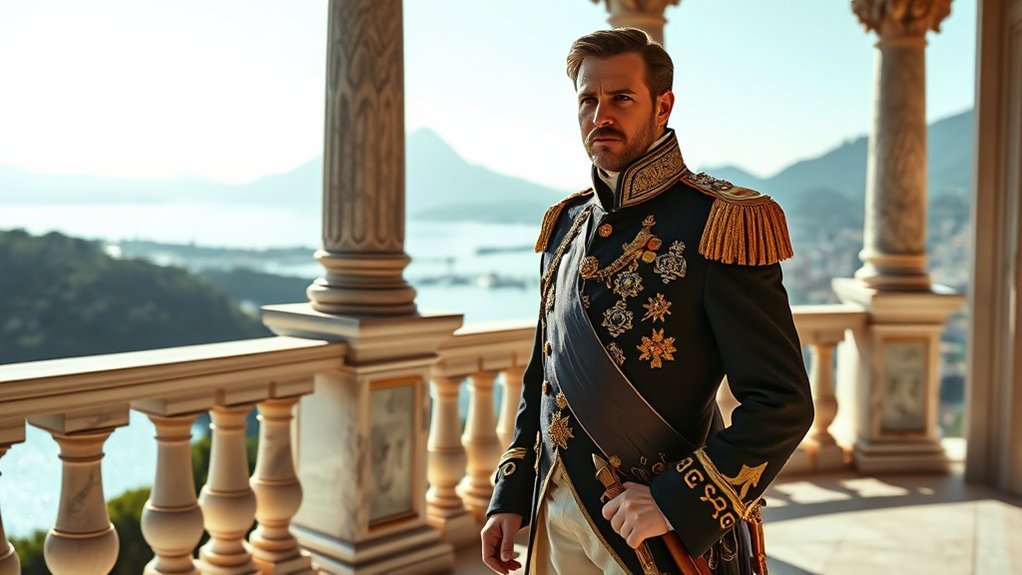
Born in Madrid on January 20, 1716, Carlo di Borbone was the eldest son of King Philip V of Spain and his second wife, the ambitious Italian princess Elisabetta Farnese. Through his mother’s lineage, Carlo held hereditary claims to the grand ducal thrones of Tuscany and the duchies of Parma and Piacenza. However, international diplomacy during the War of the Polish Succession opened an even greater prize: the kingdoms of Naples and Sicily, which had been under Austrian Habsburg control since 1707.
In 1734, at just eighteen years of age, Carlo led Spanish forces into southern Italy, defeating imperial Austrian armies at the Battle of Bitonto. Rather than absorbing the territory back into the Spanish Empire as a province, his father granted Carlo full sovereign independence. Crowned in Palermo in 1735, Carlo became the first resident monarch to rule Naples from within its borders since the fall of the Aragonese dynasty in 1501.
Note: In dynastic chronicles, Carlo is cataloged under several regal titles: Charles I as Duke of Parma (1731–1735), Charles VII of Naples, Charles V of Sicily (1734–1759), and ultimately Charles III of Spain (1759–1788).
Early Life, Rise, and State Reforms
Carlo’s education combined the courtly arts and languages with deep piety and a passion for architecture and hunting. Guided by his mother, Elisabetta Farnese, and aided by gifted statesmen—most notably the Tuscan legal scholar Bernardo Tanucci—Carlo initiated structural reforms designed to modernize a kingdom entrenched in feudal and ecclesiastical privilege.
| Key Influence | Impact on Neapolitan Rule |
|---|---|
| Farnese Lineage | Legitimized dynastic rights in Italy and brought world-renowned Renaissance art to Naples. |
| Bernardo Tanucci | Drafted anti-feudal legislation, limited clerical taxation immunity, and expanded royal courts. |
| Commercial Treaties | Signed trade accords with the Ottoman Empire, Sweden, and Denmark to stimulate maritime commerce. |
| Concordat of 1741 | Regulated church property rights, subjected ecclesiastical lands to taxation, and curtailed right of asylum. |
Under Tanucci’s direction, the crown established the Supremo Magistrato di Commercio to streamline mercantile disputes and diminish the arbitrary power of local barons (*baroni*). Carlo also commissioned the compilation of a new legal code, the Codice Carolino, demonstrating an early commitment to centralized Enlightenment statecraft.
Architectural Renaissance and Urban Masterpieces

To project sovereign prestige and modernize the capital, Carlo embarked on one of the most ambitious public building campaigns in 18th-century Europe. Architecture served as a visual instrument of state power, designed to demonstrate that Naples was no longer a provincial viceroyalty but a great European metropolis.
Teatro di San Carlo (1737)
Commissioned to replace the outdated Teatro San Bartolomeo, the Teatro di San Carlo was designed by military architect Giovanni Antonio Medrano and Angelo Carasale. Erected in just 270 days and inaugurated on November 4, 1737 (the King’s name day), it stands as the oldest continuously active opera venue in Europe, predating Milan’s La Scala by more than four decades.
The Royal Palace of Naples and Capodimonte
While expanding the historic Royal Palace in the heart of Naples with grand ceremonial staircases and lush hanging gardens, Carlo commissioned the Reggia di Capodimonte in 1738 on the hills overlooking the city. Initially planned as a royal hunting lodge, it soon evolved into a sprawling palace complex built specifically to house the massive Farnese art collection and provide space for royal porcelain production.
The Royal Palace of Caserta (1752)
On January 20, 1752, his thirty-sixth birthday, Carlo laid the cornerstone of the Palace of Caserta (Reggia di Caserta). Designed by the master architect Luigi Vanvitelli, Caserta was conceived to rival Versailles in splendor and size while serving a strategic defensive function inland, shielded from naval bombardment.
- Scale and Layout: Featuring 1,200 rooms, 24 state apartments, and four monumental courtyards covering over 47,000 square meters.
- Aqueduct of Vanvitelli: A 38-kilometer hydraulic engineering feat carrying water through the Carolino Aqueduct to supply Caserta’s cascading fountains, palace gardens, and the city of Naples.
- Royal Silk Mills of San Leucio: An integrated industrial utopia nearby, where workers received healthcare, housing, and technical training in advanced silk weaving.
Pro Tip: When visiting the Royal Palace of Caserta, take the shuttle or rent a bicycle to reach the English Garden at the top of the 3-kilometer grand water cascade, which features some of the earliest botanical imports in continental Europe.
Civic Infrastructure: Real Albergo dei Poveri
Carlo’s vision extended beyond royal luxury to broad civic welfare. In 1751, he engaged architect Ferdinando Fuga to construct the Real Albergo dei Poveri (also called the Palazzo Fuga). Spanning a monumental 354-meter façade, this institution was designed to shelter, feed, and teach artisanal trades to thousands of impoverished citizens, providing vocational education in tailoring, printing, music, and textile manufacturing.
Art, Archaeology, and Enlightenment Patronage
Carlo di Borbone’s cultural patronage reshaped Western aesthetics, directly fueling the rise of international Neoclassicism across Europe and the Americas.
The Discovery of Herculaneum and Pompeii
In 1738, Carlo authorized Spanish military engineer Roque Joaquín de Alcubierre to begin systematic tunneling at Resina, unearthing the ancient Roman city of Herculaneum. A decade later, in 1748, excavations began at Pompeii. These discoveries transfixed European intellectuals, revealing preserved frescoes, mosaics, carbonized papyri, and domestic artifacts that redefined the understanding of classical antiquity.
- Accademia Ercolanese (1755): Founded to decipher, catalog, and publish official archaeological treatises detailing the excavations.
- Le Antichità di Ercolano Esposte: An eight-volume royal publication distributed as diplomatic gifts to European courts, sparking widespread fascination with Pompeian motifs.
- Museo Ercolanese at Portici: Established within the Royal Palace of Portici to safeguard antiquities from looters and ensure scientific study under royal supervision.
The Farnese Collection and Royal Manufactories
Upon inheriting the extraordinary treasures of the House of Farnese from his mother, Carlo oversaw the transfer of classic sculptures—including the Farnese Hercules and the Farnese Bull—along with masterpieces by Titian, Raphael, and Parmigianino from Parma and Rome to Naples. Today, these works form the core of the Museo Nazionale di Capodimonte and the National Archaeological Museum of Naples (MANN).
“Carlo di Borbone transformed Naples from a provincial viceroyalty into an epicenter of classical discovery, giving birth to modern scientific archaeology.”
To foster economic independence and challenge French and Saxon luxury imports, Carlo established specialized state workshops:
- Real Fabbrica di Porcellana di Capodimonte (1743): Celebrated for delicate soft-paste porcelain and intricate decorative snuffboxes.
- Real Laboratorio delle Pietre Dure (1737): Dedicated to high-precision hardstone and semi-precious gem inlay craftsmanship.
- Real Fabbrica degli Arazzi (1737): Produced masterwork tapestries for royal salons and administrative palaces.
The 1759 Abdication and Lasting Legacy
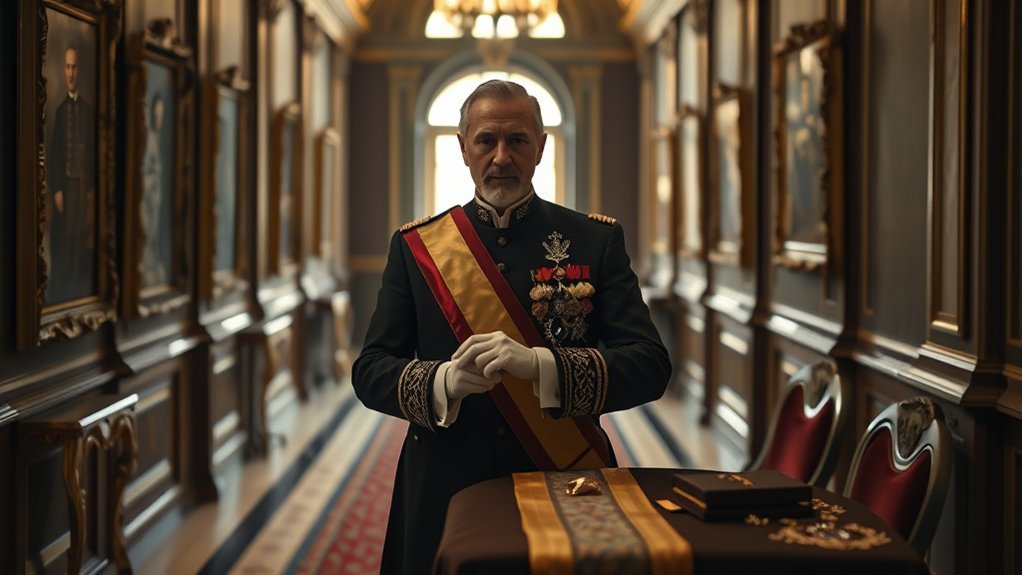
In 1759, upon the death of his half-brother King Ferdinand VI of Spain without an heir, Carlo was called to Madrid to assume the Spanish throne as Charles III. Bound by international treaties forbidding the union of the Spanish and Italian crowns, he enacted the Pragmatic Sanction of October 6, 1759.
Carlo abdicated the thrones of Naples and Sicily in favor of his third son, eight-year-old Ferdinand (who became Ferdinand IV of Naples and III of Sicily), establishing a regency council headed by Bernardo Tanucci. Demonstrating remarkable personal integrity, Carlo renounced all personal claim to Neapolitan crown jewels and state assets, leaving behind a flourishing, modernized kingdom.
Carlo died in Madrid on December 14, 1788, at the age of 72, remembered in Spain as “el Rey Ilustrado” (The Enlightened King) and in Naples as the father of its modern cultural identity. His urban developments, archaeological enterprises, and artistic institutions remain the bedrock of southern Italy’s cultural heritage.
Frequently Asked Questions
What happened to the Sicilian Royal Family?
The Bourbon-Two Sicilies dynasty continued to rule southern Italy until 1861, when the kingdom was annexed during Italian unification (the Risorgimento). The last reigning monarch, Francis II, went into exile after the Siege of Gaeta. Today, the family’s dynastic legacy survives through international noble lines and extensive cultural foundations throughout Italy.
Who lived in the Royal Palace of Naples?
Originally built in 1600 for the Spanish viceroys by Domenico Fontana, the Royal Palace of Naples was later inhabited by Austrian viceroys, King Carlo di Borbone, Ferdinand IV, and subsequent Bourbon monarchs. During the Napoleonic era, Joachim Murat and Joseph Bonaparte resided there, before it returned to Bourbon hands and eventually passed to the House of Savoy upon Italian unification.
Who was the last king of Southern Italy?
The last king of southern Italy (the Kingdom of the Two Sicilies) was Francis II (Francesco II), whose brief reign from May 1859 to February 1861 ended when Giuseppe Garibaldi’s Expedition of the Thousand and the Piedmontese army annexed southern Italy to establish the unified Kingdom of Italy.
Who was Charles of Bourbon, King of Naples?
Carlo di Borbone (1716–1788) was a Spanish Bourbon prince who ruled the Kingdom of Naples from 1734 to 1759. He restored southern Italy’s political independence, inaugurated European archaeological excavations at Pompeii and Herculaneum, commissioned Caserta and the San Carlo theater, and later reigned as King Charles III of Spain.
Conclusion
The reign of Carlo di Borbone stands as a defining turning point in the history of southern Italy. By transforming Naples from a neglected viceregal outpost into an enlightened royal capital, he built enduring civic foundations that outlasted his dynasty. Through the unearthing of Pompeii, the creation of masterworks like the Royal Palace of Caserta, and the establishment of institutions that nurtured scholarship and craft, Carlo proved that royal power could leave a legacy of lasting beauty, intellectual discovery, and cultural elevation.
Sources
- UNESCO World Heritage Centre — 18th-Century Royal Palace at Caserta with the Park, the Aqueduct of Vanvitelli, and the San Leucio Complex.
- Parco Archeologico di Pompei — Official historical records and timeline of Bourbon archaeological excavations at Pompeii and Herculaneum.
- Museo e Real Bosco di Capodimonte — History of the Royal Palace of Capodimonte and the Farnese Collection.
- Encyclopaedia Britannica — Biography and political history of Charles III (Carlo di Borbone), King of Spain and Naples.