


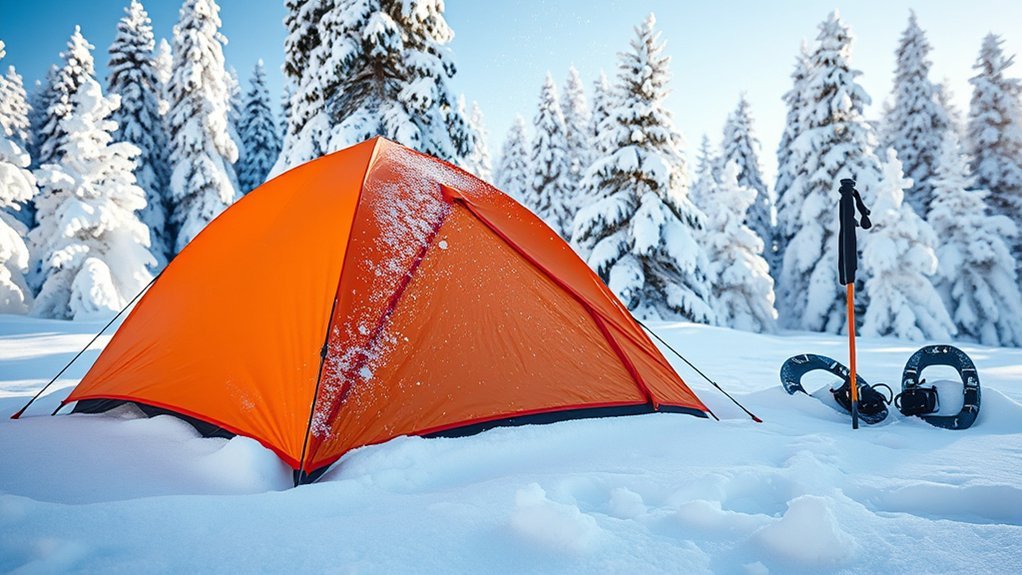
Yes, you can use a 3-season tent in snow, but be cautious of its limitations. They’re designed for moderate weather, so expect heat loss and stability issues in heavy snowfall. To improve performance, reduce mesh exposure, use a tent fly close to the ground, and add insulation inside. Consider specialized anchoring techniques to secure your tent in snowy conditions. If you’re curious about optimizing your setup or learn more about effective strategies, keep going for the details.
Understanding 3-Season Tents

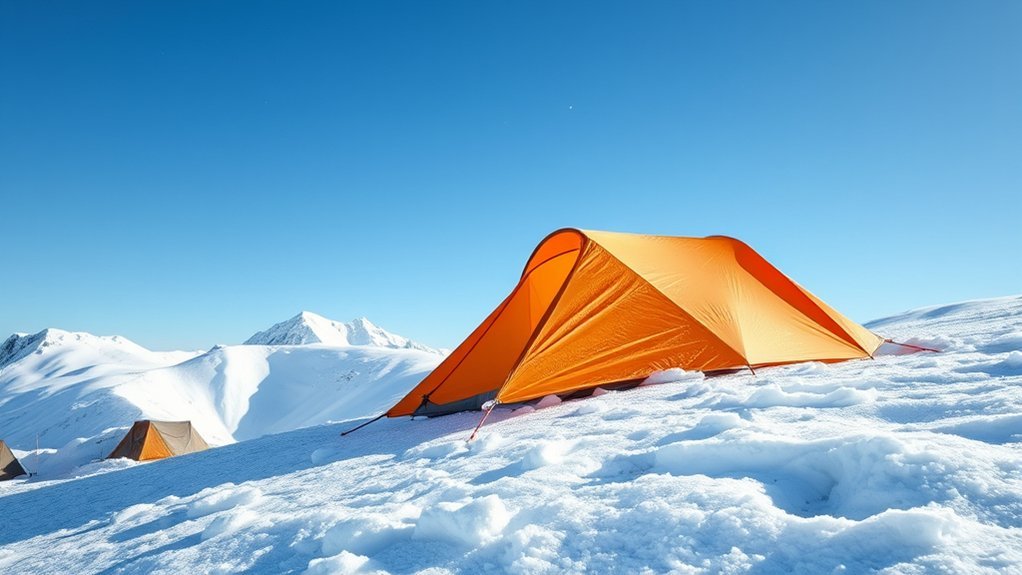
When you consider camping in milder conditions, understanding three-season tents is vital for your outdoor adventures. These tents are designed for spring, summer, and fall, emphasizing tent ventilation through increased mesh areas. This feature helps with airflow but can let in cold air, making them less suited for winter. Weighing between 2–4 pounds, they’re perfect for backpacking, yet they lack the weather resistance needed for heavy snowfall. While some can handle light snow, their less durable pole structures and limited stability against high winds pose challenges. To improve performance in mild winter conditions, you can stake the fly close to the ground and minimize mesh exposure. However, continuous snow removal is imperative to prevent collapse from accumulated snow. Understanding these limitations guarantees you make informed choices, allowing you to enjoy your camping experience while remaining safe and comfortable.
Key Features for Winter Use
To effectively use a three-season tent in winter conditions, you need to focus on key features that enhance its performance. Prioritize reduced mesh areas and a fly that can be positioned close to the ground to block wind and aid in temperature retention. Stronger pole structures with additional guyline points are essential, as they improve stability and enable the tent to withstand heavy snow loads. Implement effective ventilation strategies to manage condensation without sacrificing warmth; this is vital in preventing cold air from entering the tent. Additionally, a robust floor or footprint will provide moisture coverage and resist abrasion when camping on snow. Finally, consider snow management techniques, like building up snow around the tent’s perimeter, to insulate the structure and prevent wind penetration, ensuring a more comfortable winter camping experience.
Tent Poles and Structure
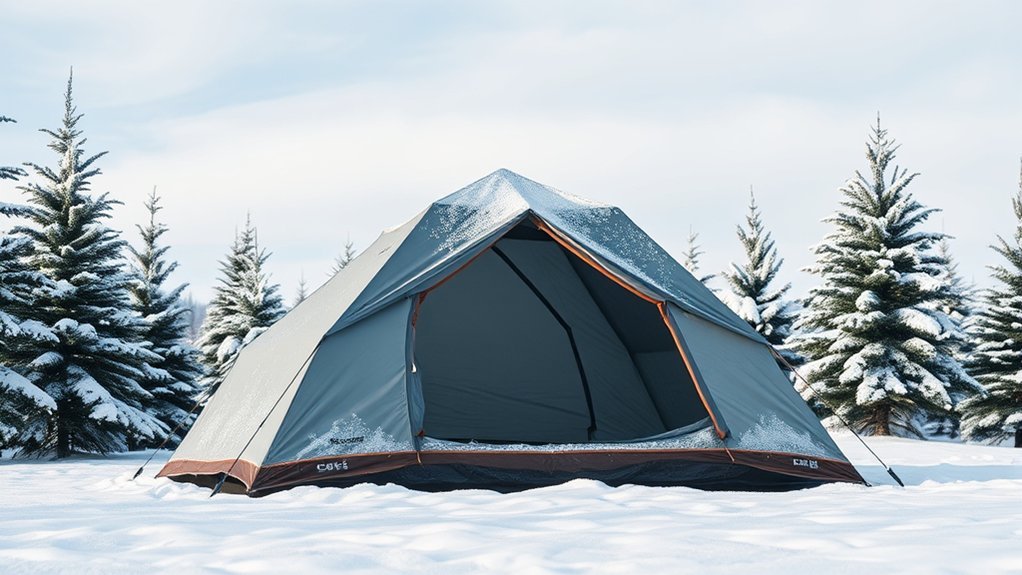
The structure and poles of a tent play an essential role in its performance during winter camping. When considering a 3-season tent for snow, focus on these key aspects:
- Pole Materials: Opt for aluminum or carbon fiber poles, as they withstand cold temperatures better than fiberglass, which can shatter.
- Structure Design: Look for steeply pitched designs that shed snow effectively, reducing the risk of collapse.
- Support Features: Criss-crossed pole configurations offer enhanced support under snow loads, maintaining tent integrity.
- Stability Enhancements: Additional guyline points and stake loops provide superior stability, essential for withstanding harsh winter conditions.
Insulation Considerations
When camping in snowy conditions, you’ll notice that a three-season tent‘s thin walls offer limited insulation, which can lead to significant heat loss. To combat this, you need a sleeping bag with effective insulation, ideally rated for zero degrees, to keep warm throughout the night. Additionally, understanding how the tent’s structure impacts heat retention will help you make informed choices about your sleeping system and overall layering strategy.
Sleeping Bag Insulation
Selecting the right sleeping bag insulation is essential for winter camping, especially in a 3-season tent. You need to take into account various factors to guarantee warmth and safety:
- R-value: Aim for a sleeping bag with an R-value of 5 or more for adequate cold protection.
- Insulation materials: Choose between down and synthetic options based on weight, compressibility, and moisture resistance.
- Sleeping pads: Stack pads to enhance insulation, as R-values are additive, boosting thermal protection.
- Heat retention: Wear proper clothing and think about using space blankets inside your bag to reflect body heat, though they might create some noise.
Tent Wall Thickness
Three-season tents typically feature thinner walls constructed from lightweight materials, which greatly impacts their insulation capabilities. This tent material offers less warmth compared to winter-specific tents designed for cold conditions. You’ll find that the insulation of a 3-season tent heavily relies on your clothing and sleeping system, as its walls provide minimal heat retention. Additionally, thin walls can lead to increased heat loss, especially in windy weather where cold air easily penetrates. For winter camping, consider a sleeping pad with an R-value of 5 or more to insulate against the cold ground. Using a footprint underneath your tent can also enhance warmth by preventing moisture, improving overall thermal performance during your snowy adventures.
Tent Anchoring Techniques
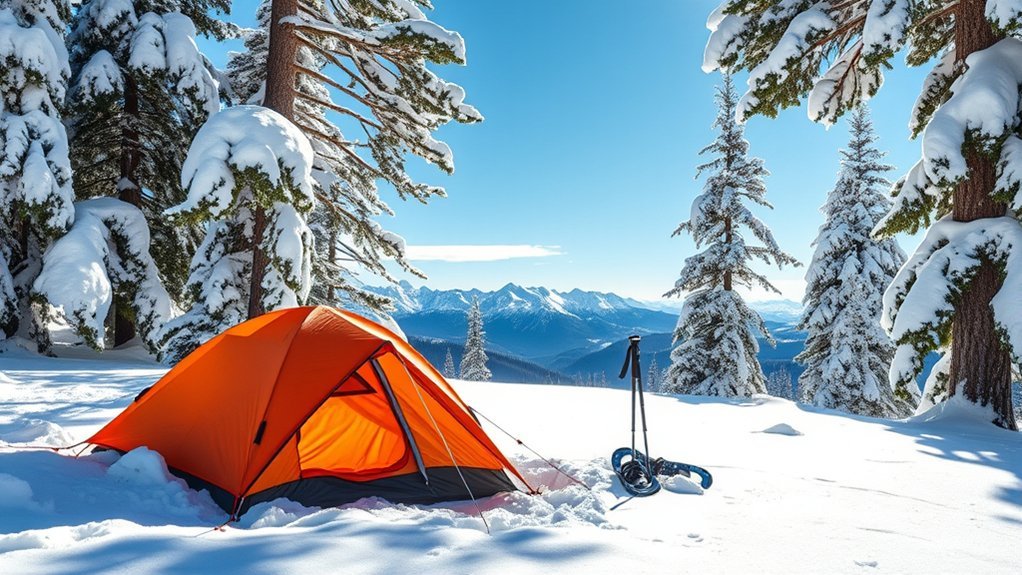
While standard tent stakes might work well on soft ground, they often fall short in snow or frozen conditions, necessitating effective anchoring techniques. To guarantee your tent stability in challenging snow conditions, consider these methods:
- Deadman Anchors: Bury an 8-inch stick in the snow, creating a reliable anchor point.
- Snow Stakes: Use stakes specifically designed for winter; practice with them beforehand to maximize their effectiveness.
- Ski or Snowshoe Anchors: Utilize skis, ice axes, or snowshoes as anchors, which can provide solid support in deep snow.
- Improvised Anchors: Fill plastic shopping bags with snow and bury them to create makeshift deadman anchors.
Managing Snow Accumulation
Managing snow accumulation is essential for maintaining your 3-season tent’s stability and integrity. Implementing effective snow shedding techniques, like using tents with steep walls, can prevent excessive weight from building up. Additionally, ensuring proper anchoring in snow with dead man’s stakes will help keep your tent secure against the elements.
Snow Shedding Techniques
To effectively manage snow accumulation on your tent, prioritizing a steep pitch in its design can greatly enhance snow shedding. A well-designed roof allows snow to slide off rather than pile up, reducing the risk of collapse. Here are some essential snow shedding techniques:
- Regularly clear snow from the tent’s roof after heavy snowfall to prevent excess weight.
- Construct snow walls around your tent for added insulation and wind protection.
- Utilize guyline points to enhance stability and tension, vital during windy conditions.
- Employ deadman anchors or snow stakes for securing your tent effectively in deep snow.
Anchoring in Snow
Effective snow shedding techniques lay the groundwork for understanding the importance of proper anchoring in snowy conditions. Standard tent stakes often fail on frozen ground or deep snow, so you’ll need alternative methods like deadman anchors or snow stakes for stability. Bury items such as skis or snowshoes to enhance your tent’s security against strong winds and accumulating snow. When using deadman anchors, pack the snow tightly around the buried object; this helps prevent shifting under snow load or wind pressure. Regularly check and adjust your guy lines as snow builds up to maintain tension, ensuring your tent doesn’t collapse. For a makeshift solution, consider using plastic bags filled with snow as deadman anchors, but practice this method beforehand for reliability.
Additional Gear for Winter Camping
While winter camping can be exhilarating, having the right gear is essential for your safety and comfort. Here are some key winter gear and camping essentials to take into account:
- Zero-degree sleeping bag or quilt: This is imperative for keeping warm during frigid nights.
- Sleeping pad with an R-value of 5 or more: It provides insulation from the cold ground, helping you maintain body heat.
- Avalanche shovel: This tool is critical for managing snow around your tent, constructing wind barriers, and facilitating snow melting for easier boot management.
- Hot water bottles: Placing these in your sleeping bag can greatly enhance your warmth and comfort.
Adding space blankets can reduce heat loss, while proper food storage prevents attracting wildlife. Equip yourself with these essentials, and you’ll elevate your winter camping experience.
Comparing 3-Season and 4-Season Tents
When choosing between a 3-season and a 4-season tent, understanding their fundamental differences is essential for your winter camping success. The main distinction lies in their design and intended use. Three-season tents are lighter, typically weighing between 2–4 pounds, and focus on ventilation, making them suitable for moderate weather. However, they struggle in heavy snowfall and strong winds. In contrast, four-season tents are built for extreme conditions with robust pole structures and additional guyline points, ensuring they can shed snow and resist wind effectively. While you can adapt a 3-season tent for light winter use, modifications are necessary to enhance wind resistance. Alternatively, 4-season tents offer superior insulation and warmth retention, ideal for longer trips. By understanding these tent types and their seasonal differences, you can make an informed choice that aligns with your winter camping needs.
Tips for Successful Winter Camping
To guarantee a successful winter camping experience, you’ll need to adopt specific strategies tailored for snowy conditions. Here are some essential tips:
- Choose the Right Tent: Select a 3-season tent with minimal mesh and a fly that can be positioned close to the ground for effective wind blocking.
- Manage Snow: Pile snow around the tent perimeter to reduce airflow and improve insulation, helping maintain warmth.
- Monitor Snow Load: Regularly remove snow from your tent’s roof to prevent structural failure due to accumulation.
- Check Weather Forecasting: Stay informed about conditions, as accurate weather forecasting can help you prepare and avoid dangerous situations.
Additionally, make sure adequate tent ventilation to prevent condensation, and equip yourself with a high R-value sleeping pad and appropriate insulation gear. By following these tips, you’ll enhance your winter camping experience considerably.
Frequently Asked Questions
Can I Use a 3-Season Tent for Winter Backpacking Trips?
You can use a 3-season tent for winter camping, but its insulation might not be sufficient against harsh cold. Consider factors like snow accumulation and temperature to guarantee your comfort and safety during your trip.
What Temperature Range Is Safe for a 3-Season Tent?
A 3-season tent typically handles temperatures between 20°F and 50°F. Season differences affect insulation and ventilation, so be mindful of these limits during colder conditions to guarantee comfort and safety on your adventures.
How Much Snow Can a 3-Season Tent Handle?
A 3-season tent’s like a sturdy ship; it can handle light snow loads but struggles with heavier accumulations. To guarantee tent stability, regularly brush off snow and avoid excessive weight to prevent collapse.
Are There Specific Brands Recommended for Winter Use?
For winter use, consider tent brands like MSR, Big Agnes, and Nemo. These brands offer high-quality winter tents designed to withstand snowy conditions, ensuring you stay warm and protected during your outdoor adventures.
How Do I Improve Ventilation in a 3-Season Tent During Winter?
To breathe life into your tent, use ventilation techniques like opening vents partially and using a vented tarp. These strategies enhance airflow and frost prevention, ensuring you stay comfortable and avoid the chill of winter.
Conclusion
While a 3-season tent can brave light snow, it’s not your fortress against winter’s frosty wrath. Picture yourself nestled in a flurry of swirling snowflakes, praying your tent holds against the relentless chill. Without adequate insulation and sturdy poles, you might find yourself in a damp, frigid cave instead of a cozy retreat. For serious winter camping, consider the robust 4-season tent, your ultimate shield against nature’s icy onslaught. Choose wisely; comfort and safety hang in the balance.