


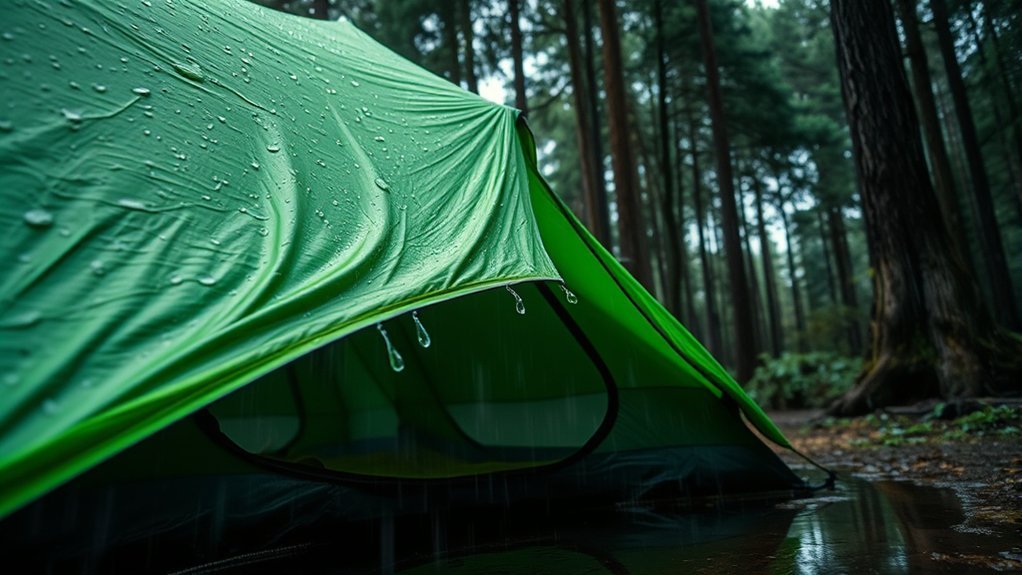
Yes, you should open tent vents in the rain. Keeping vents open helps manage humidity and reduces condensation inside your tent, making your camping experience more comfortable. When vents are closed, moisture from breathing and sweat can build up, leading to discomfort and damp gear. Positioning the vents to face the wind maximizes airflow while preventing rain from entering. Want to learn more about effective ventilation strategies and tent selection? You’ll find some great tips ahead!
Understanding Tent Condensation Dynamics

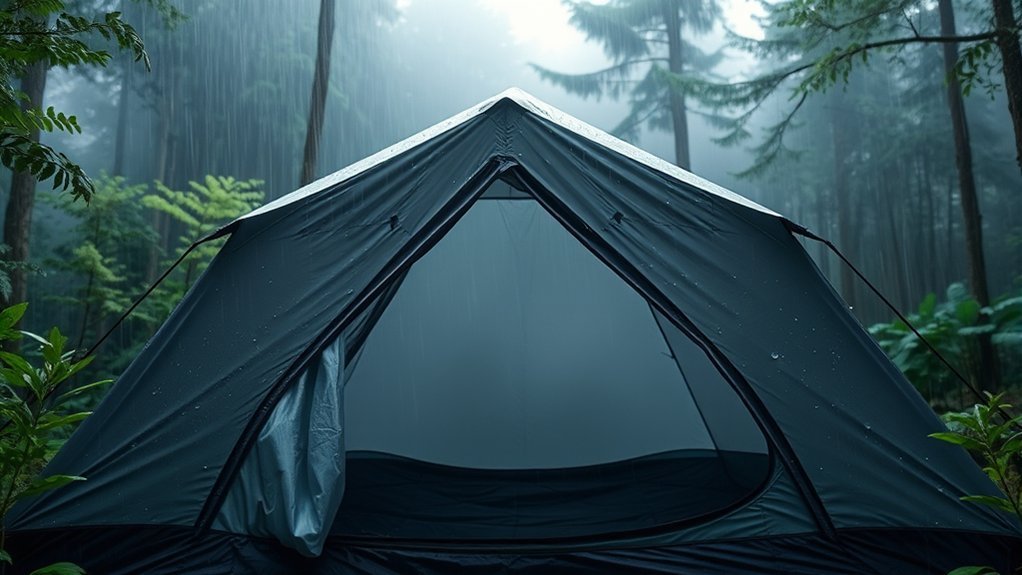
Understanding tent condensation dynamics is vital for a comfortable camping experience. The materials your tent is made from play a notable role in how moisture behaves inside. If you’ve sealed your tent completely, air can quickly become saturated, leading to excessive condensation when temperatures drop below the dew point. High humidity levels are key condensation factors, especially when you’re breathing and sweating inside.
To combat this, keeping vents open—even in the rain—can help moisture escape, preventing it from accumulating on your tent walls. Positioning vents to face into the wind enhances airflow while minimizing water entry. Balancing ventilation with rain protection is essential. By adopting proper ventilation strategies, you can appreciably lower moisture levels, ensuring your camping experience remains comfortable and liberating. Embrace the dynamics of condensation, and you’ll enjoy dry nights under the stars!
The Importance of Proper Ventilation
Effective ventilation is essential for enhancing your camping experience, especially when rain is in the forecast. By opening tent vents, you allow moist air generated from breathing and perspiration to escape. This simple action greatly reduces the likelihood of condensation inside your tent. Proper ventilation not only helps manage moisture but also prevents the internal temperature from dropping too low, keeping your space warmer and drier. Even in wet conditions, maintaining airflow through vents is vital for comfort. Sealing your tent completely can lead to a buildup of humidity, increasing the risk of dampness and mold. By embracing ventilation benefits, you can effectively manage moisture levels, ensuring a more enjoyable camping adventure. Remember, balanced ventilation is key to a pleasant atmosphere, even when the weather isn’t cooperating. So, don’t hesitate to keep those vents open for a rejuvenating camping experience!
How Rain Affects Tent Environment
Rain can greatly impact the humidity levels inside your tent, leading to uncomfortable conditions. If you keep the vents closed, moisture from your breath and perspiration can accumulate, increasing the risk of condensation. To maintain a comfortable environment and prevent water buildup, consider opening the vents for better airflow, even during rain.
Humidity Levels Inside Tent
While you might instinctively want to keep your tent sealed during a downpour, opening the vents can actually be beneficial for managing humidity levels inside. High humidity can lead to condensation, especially when it reaches 100% during rain. By allowing moist air to escape, you enhance moisture control and improve overall comfort.
| Condition | Humidity Measurement | Action |
|---|---|---|
| Rainy Weather | High | Open vents for airflow |
| Cooler External Temp | High | Facilitate air circulation |
| Warm Internal Temp | Moderate | Balance temperature |
Keeping vents open facilitates airflow, lowers the dew point, and helps prevent damp sleeping gear, ensuring a more enjoyable camping experience.
Condensation Prevention Strategies
When it rains, managing condensation inside your tent becomes essential for a comfortable camping experience. Opening tent vents, even in wet conditions, allows moist air from your breath and perspiration to escape, reducing internal humidity. Remember, if the tent’s internal temperature exceeds the outside temperature, condensation is likely to form, especially with high humidity levels. Utilize your tent’s materials and built-in moisture barriers effectively to create a temperature gradient that keeps walls drier. Proper ventilation is key; it prevents moisture buildup, ensuring a more pleasant sleeping environment and protecting your gear. Embrace the freedom of a well-ventilated tent, and enjoy your camping experience without the discomfort of excessive condensation.
Best Practices for Venting During Rain
When it rains, proper ventilation is key to keeping your tent comfortable and dry. By managing humidity levels and strategically setting up your tent, you can balance airflow and protection from the rain. Let’s explore the best practices for venting your tent during wet weather.
Benefits of Ventilation
Opening tent vents during rain is essential for maintaining a comfortable environment inside your shelter. Utilizing effective ventilation techniques allows moist air from your breath and perspiration to escape, reducing the risk of condensation. This not only enhances moisture control but also helps keep the internal temperature warmer by preventing the buildup of cold, humid air. By keeping vents open, you guarantee airflow that mitigates high humidity, making your tent more pleasant. Additionally, proper vent positioning—like facing the wind—can maximize airflow, further reducing condensation risk. A well-ventilated tent minimizes water pooling on surfaces, ensuring you stay dry and comfortable, even in wet conditions. Embrace these practices for a liberating camping experience!
Managing Humidity Levels
Three key practices can help you manage humidity levels inside your tent during rain. First, keep your vents open to promote airflow, allowing warm, moist air to escape and enhancing humidity control. Second, position your tent facing the wind; this boosts ventilation and helps disperse humid air. Finally, monitor the interior temperature; a well-vented tent should remain slightly warmer than outside, aiding in moisture management.
| Practice | Benefits | Tips |
|---|---|---|
| Open Vents | Reduces condensation | Keep vents unobstructed |
| Face Wind Direction | Enhances airflow | Check wind patterns |
| Maintain Warmth | Minimizes moisture accumulation | Layer bedding appropriately |
Tent Setup Considerations
Although rain can create challenges for tent campers, effective setup considerations can enhance your comfort and keep the interior dry. Here are some best practices for venting during rain:
- Use tent stakes to secure the tent firmly, preventing it from shifting with wind and rain.
- Position the tent to face the wind, allowing humid air to escape through the vents while shielding against rain.
- Open vents while using the rainfly to balance airflow and protection from direct moisture.
- Verify vents are unobstructed and functional to maximize airflow, reducing condensation caused by ground moisture.
Positioning Vents for Optimal Airflow
To guarantee peak airflow in your tent during rain, position the vents to face the wind direction. This vent placement encourages humid air to escape, notably reducing condensation buildup inside. When you align your vents with the airflow direction, you promote ideal ventilation, keeping the internal atmosphere comfortable and stable.
Ensure the rainfly is correctly positioned to prevent rain from entering through the vents while still allowing for effective airflow. A well-ventilated tent is essential, especially in wet conditions, as it helps maintain a pleasant environment and prevents humidity from becoming overwhelming. By focusing on the vent placement and airflow direction, you can enjoy your camping experience without the discomfort of condensation.
Managing Warm Air and Humidity
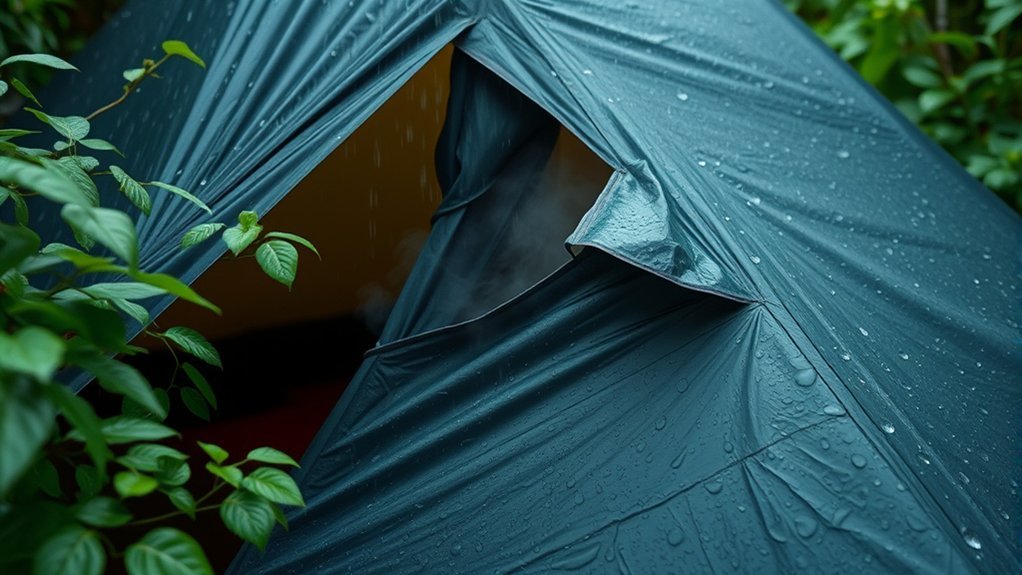
When you’re camping in the rain, managing warm air and humidity is key to a comfortable experience. Warm air rises, so you need to create escape routes for that moisture-laden air to exit your tent. By keeping your vents open, you can help reduce humidity and minimize condensation inside.
Warm Air Rise
Since warm air naturally rises inside your tent, managing that heat and humidity is essential for a comfortable camping experience. Understanding thermal dynamics and ensuring good air circulation can help you prevent condensation and maintain a pleasant environment. Here are some tips to manage warm air:
- Keep vents open to allow humid air to escape.
- Balance temperature by preventing cold air from pooling at the bottom.
- Monitor humidity levels to avoid damp sleeping gear.
- In rainy conditions, maintain ventilation to keep the interior drier.
Humidity Escape Routes
Opening the vents in your tent, even during rain, is essential for managing humidity and preventing condensation. When you breathe and sweat, warm, humid air accumulates inside, leading to a damp environment. Proper ventilation allows this moisture to escape, reducing the risk of reaching 100% relative humidity, where condensation starts forming. Position your vents to face the wind; this airflow technique enhances the exchange of moist air for fresh air. Even in rainy conditions, maintaining some ventilation is vital to prevent moisture build-up. A well-vented tent will keep the interior drier, making your camping experience more comfortable. Embrace these humidity escape routes to enjoy the freedom of staying dry and cozy, regardless of the weather.
Additional Tips for Reducing Moisture
To effectively reduce moisture inside your tent, consider using a combination of ventilation strategies and careful monitoring of external conditions. Proper ventilation is essential, especially during rainy weather. Here are some additional tips to help you manage moisture absorption:
Effective moisture control in your tent requires proper ventilation and monitoring of weather conditions.
- Keep vents open: Allow humid air to escape while preventing condensation on insulation materials.
- Use moisture-wicking gear: Choose sleeping bags and clothing that absorb less moisture to minimize dampness.
- Dry items outside: Whenever possible, let wet gear air out before bringing it into your tent.
- Monitor humidity levels: Adjust vent openings according to the external conditions to maintain airflow and reduce moisture buildup.
Choosing the Right Tent for Wet Conditions
When you’re camping in wet conditions, choosing the right tent can make all the difference in keeping you dry and comfortable. Look for tents made from high-quality tent materials with waterproof coatings and high hydrostatic head ratings. This guarantees they can handle heavy rain without leaking. Double-walled tents are ideal, as they offer better insulation and ventilation, minimizing moisture buildup inside.
Pay attention to the ventilation systems, too; tents with mesh panels and adjustable vents help reduce condensation. A rainfly that extends well over the entrance is vital for preventing rain from dripping inside when you open the door. Additionally, a vestibule area is a smart choice, allowing you to store wet gear outside while keeping your living space dry and organized. By considering these factors, you can confidently embrace the elements while enjoying your outdoor adventure.
Exploring Alternative Shelter Options
While traditional tents are popular, you might find greater comfort and protection from the rain with alternative shelter options. Consider the benefits of these alternatives:
- Yurt camping: Experience cozy living with a sturdy structure that keeps you dry.
- Heated cabins: Parks like Grayland Beach and Ike-Kinswa offer welcoming retreats, perfect for rainy days.
- RVs: Enjoy RV advantages like insulation and amenities, ensuring a comfortable stay regardless of the weather.
- Tarps and canopies: Set up between trees to create additional dry cooking or relaxation spaces.
Exploring year-round parks can also lead you to unique camping experiences while ensuring access to adequate shelter options. Embracing these alternatives not only enhances your outdoor adventure but also liberates you from the constraints of traditional tent camping. Choose wisely, and stay dry!
Enhancing Your Camping Experience in Rainy Weather
Exploring alternative shelter options can set the stage for a more enjoyable camping experience, especially in rainy weather. Proper ventilation is key to keeping your tent dry and comfortable. Open those vents to let out humid air from your breath and perspiration, reducing condensation. This simple step helps maintain a cozy environment, ensuring your sleeping bags and gear stay dry.
When setting up your tent, face it into the wind for ideal airflow. Adjust the vents as weather changes to manage humidity levels effectively.
To enhance your rainy camping experience, consider these tips:
| Activity | Gear Needed | Benefits |
|---|---|---|
| Campfire Activities | Waterproof gear | Keeps you dry and warm |
| Hiking | Waterproof boots | Prevents soggy feet |
| Cooking | Portable stove | Stay dry while preparing meals |
| Games | Waterproof cards | Fun in the rain |
| Stargazing | Waterproof blanket | Enjoy the night sky |
With the right approach, you can thrive in wet conditions!
Frequently Asked Questions
Can Opening Vents Prevent Mold Growth Inside the Tent?
Opening vents helps with humidity control methods, reducing condensation and creating airflow, which can aid in mold prevention strategies. You’ll keep your tent drier and more comfortable, even in damp conditions.
What if My Tent Doesn’t Have Adjustable Vents?
If your tent doesn’t have adjustable vents, focus on its design for moisture control. Use a rainfly, keep doors slightly open, and guarantee good airflow to minimize condensation and maintain a comfortable camping experience.
How Often Should I Check Vent Positions in the Rain?
You should check your vent positions every few hours during rain conditions to guarantee proper airflow. Maintaining ventilation frequency helps prevent condensation, keeping your tent dry and comfortable, allowing you to enjoy your outdoor experience fully.
Will Opening Vents Affect My Tent’s Waterproofing?
Opening vents can affect your tent’s waterproofing, especially if the materials aren’t designed for moisture management. It’s essential to understand waterproofing techniques and guarantee proper ventilation without compromising your shelter’s integrity during rain.
Can I Use a Tarp for Extra Ventilation?
Yes, you can use a tarp for extra ventilation. Tarp benefits include increased airflow and protection from rain. For best results, position the tarp to create a gap, allowing fresh air to circulate freely.
Conclusion
To summarize, opening your tent vents during rain can be beneficial in managing condensation and maintaining a comfortable environment. Notably, studies show that proper ventilation can reduce moisture buildup by up to 70%, greatly enhancing your camping experience. By strategically positioning vents and following best practices, you can enjoy the beauty of nature while minimizing discomfort. Remember, staying dry and cozy is key to a successful outdoor adventure, even when the weather isn’t ideal.