


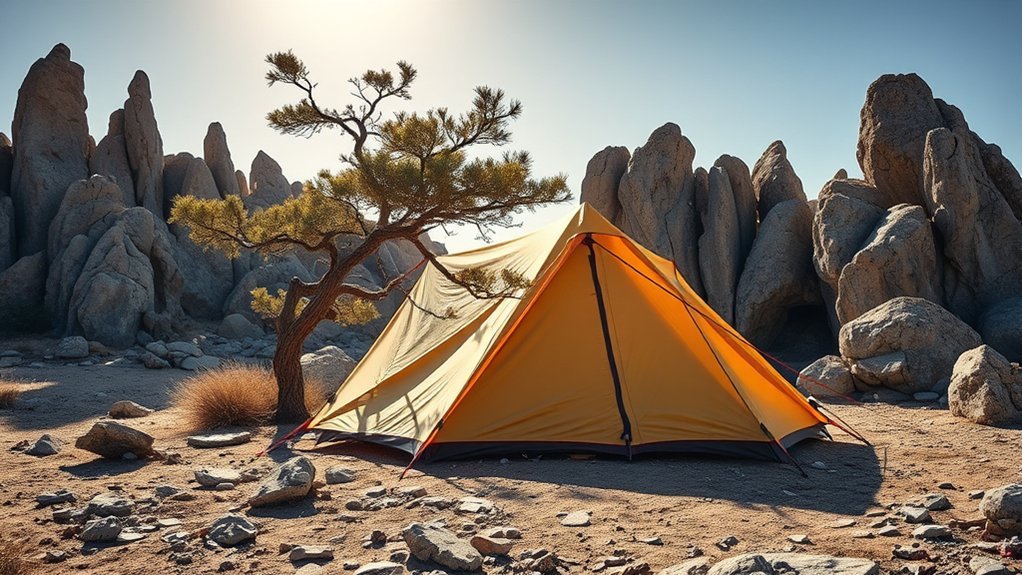
To camp safely in high winds, choose a site with natural windbreaks and flat ground, avoiding low spots. Select a durable tent rated for 25-35 mph winds. When anchoring, use non-stretch guylines at a 45-degree angle, heavy-duty stakes, and weight down corners with rocks or sandbags. Secure the windward side first while pitching. Regularly check your setup as weather conditions can change quickly, and there’s plenty more to take into account for your adventure ahead.
Choosing the Right Campsite

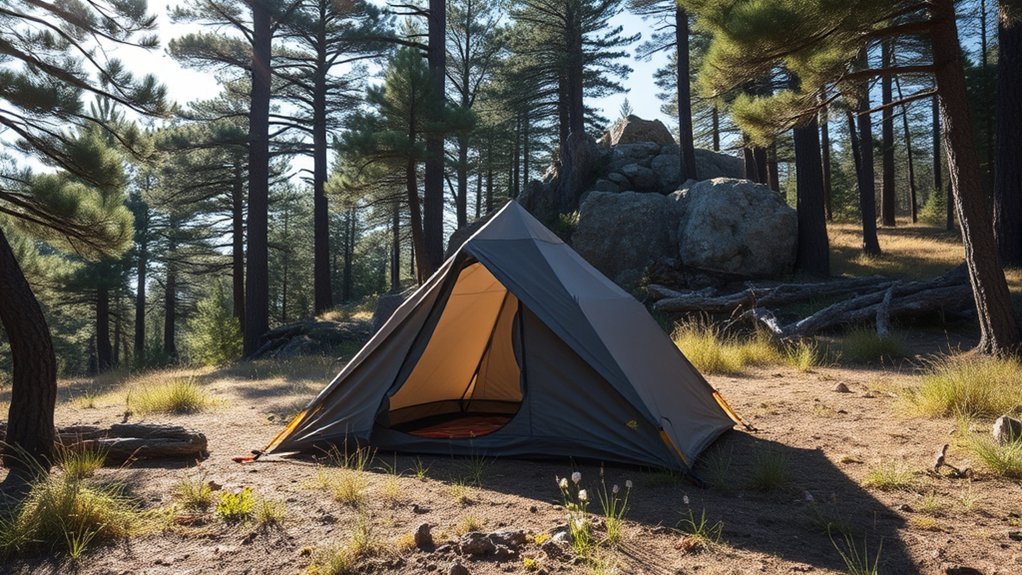
When you’re choosing a campsite, it’s essential to look for natural windbreaks like dense shrubs, large boulders, or sturdy trees to shield yourself from strong gusts. Conduct a thorough terrain assessment; higher campsite elevation can often provide better protection from winds while avoiding areas that trap cold air or lead to flooding. Steer clear of low spots where water can accumulate, especially during heavy rains. Prioritize campsites that drain well and maintain stability. Additionally, keep your distance from dead trees or branches, known as “widowmakers,” which can become dangerous during storms. Position your tent downwind from any natural wind blockers to further reduce wind force. By taking these precautions, you create a safer, more enjoyable camping experience while embracing the freedom of the great outdoors.
Tent Selection for High Winds
When selecting a tent for high winds, you need to balance weight with durability to guarantee your shelter can withstand harsh conditions. Consider whether a freestanding or non-freestanding design suits your needs, as each has its advantages in stability. Look for essential features like multiple guyline points and a low profile to enhance your tent’s performance against the wind.
Weight vs. Durability
Choosing the right tent for high winds involves balancing weight and durability. While ultralight tents are easy to carry, they often lack the necessary stormproof features for stability in strong gusts. Heavier tents may seem like a burden, but their robust materials and structural reinforcements offer the durability you need. Consider your weight limitations, but don’t sacrifice safety; lighter models typically come with fewer features that enhance comfort and security in adverse weather. It’s essential to assess the lowest acceptable strength level for your tent. Look for tents rated for 25-35 mph winds, as those designed for high winds provide markedly better performance and safety than standard lightweight options. Invest wisely, and your camping experience will remain liberating, even in storms.
Freestanding vs. Non-Freestanding
While both freestanding and non-freestanding tents have their advantages, selecting the right type for high winds can greatly impact your safety and comfort. Consider these factors when choosing:
- Freestanding Advantages: They’re easier to pitch and can be moved around, but remember to anchor them properly with guylines to prevent structural failure.
- Non-Freestanding Benefits: Designs like pyramids allow for staking before pole insertion, enhancing stability. Their lower profile reduces wind resistance, making them ideal for gusty conditions.
- Weight and Durability: Heavier tents often provide better wind resistance, so opt for a model designed for high winds, regardless of type, to guarantee safety and comfort in challenging weather.
Essential Features for Stability
Selecting the right tent for high winds involves focusing on essential features that enhance stability. Prioritize heavier models with stormproof features; ultralight options often lack the structural integrity needed to withstand harsh conditions. Look for tents with lower profiles and aerodynamic shapes, as these reduce wind resistance considerably. Multiple guyline attachment points are vital; they distribute stress evenly, boosting stability during gusty weather. Choose strong, tear-resistant materials that can endure the forces of high winds without compromising safety. Additionally, select designs that facilitate easy and secure anchoring, allowing you to stake the tent body before inserting poles or setting up the rainfly. These stability features will empower you to confidently face the elements on your next adventure.
Anchoring Techniques for Stability
To guarantee your tent stays secure in high winds, it’s important to use the right anchoring techniques. Start with solid anchoring materials to guarantee stability and protect your tent footprint. Here are three effective techniques:
- Use firm, non-stretch guylines anchored at a 45-degree angle. This helps distribute wind stress evenly and maximizes stability.
- Employ heavy-duty stakes or longer tent pegs suited for the substrate. Inadequate stakes can lead to catastrophic failures, so choose wisely.
- Double peg your guy lines by using two stakes at each end. This greatly improves stability and offers extra support where needed.
Don’t forget to regularly check and tighten your guy lines to keep them taut. Slack can compromise your tent’s integrity, especially during gusty conditions. With these techniques, you’ll enjoy a liberating camping experience, even in high winds.
Pitching Strategies in Windy Conditions
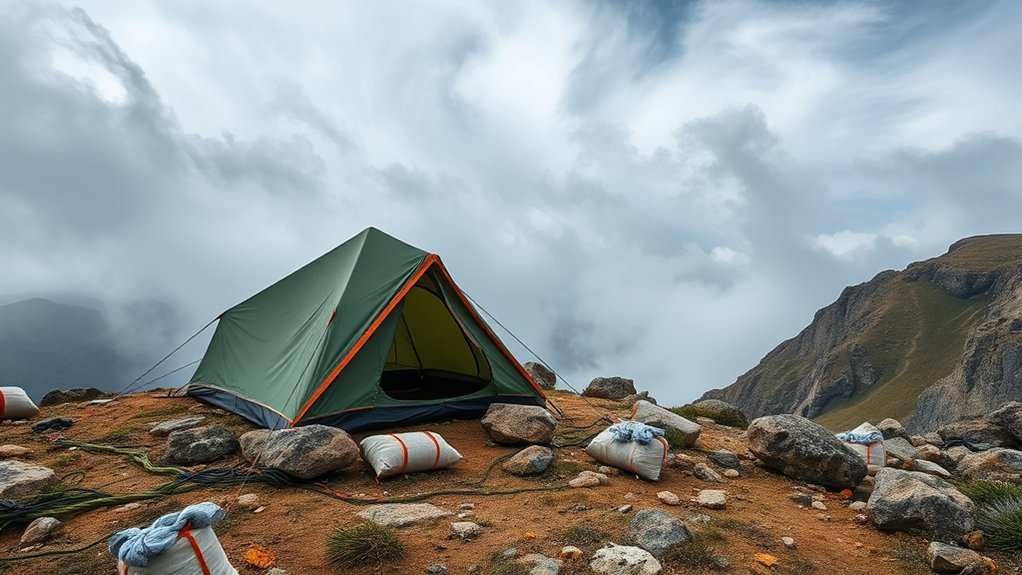
When pitching your tent in high winds, positioning it correctly can make all the difference. Always orient the narrowest side into the wind direction to minimize the tent’s profile and reduce sail-like effects. Start by securely staking down the windward side first; this keeps the tent anchored while you set up the rest, even when strong gusts hit.
Use non-stretch guylines and anchor them at a 45-degree angle to help distribute wind stress effectively across the tent structure. Reinforce these guylines and stakes with heavy rocks or additional stakes, particularly at high-stress points.
If possible, seek out natural windbreaks like large boulders or dense vegetation. These features can greatly shield your tent from relentless gusts, ensuring a more stable and comfortable camping experience. Remember, the right tent orientation and site choice are key to staying safe in windy conditions.
Reinforcing Your Shelter
To keep your shelter secure in high winds, start by utilizing natural windbreaks like trees or hills to shield your tent. Make certain to secure your guy lines tightly and weigh down the corners of your tent with heavy objects like rocks or sandbags. These steps will help guarantee your tent remains stable and protected against strong gusts.
Utilize Natural Windbreaks
Finding a camping site near natural windbreaks, like large boulders or dense bushes, can greatly enhance your shelter’s stability in high winds. These natural barriers offer significant windbreak advantages, allowing you to enjoy a more comfortable experience. Here’s how to effectively utilize them:
- Positioning: Set your tent downwind from these features to maximize protection against strong gusts.
- Assess Hazards: Check nearby trees for height and stability to avoid falling branches, known as “widowmakers.”
- Topography: Use the land’s natural slopes or ridges to shield your tent from direct wind exposure.
Regularly reassess your tent’s placement as wind directions shift, ensuring ideal shelter protection. Embrace nature’s elements for a safer camping experience.
Secure Tent Guy Lines
While strong winds can threaten your camping experience, securing your tent with effective guy lines is essential for maintaining stability. Use firm, non-stretch guylines to distribute stress and prevent failures. Attach them at a 45-degree angle to maximize guyline tension and anchoring strength. Employ clam cleats or tensioners for easy adjustments in windy conditions.
Here’s a quick reference table for securing your tent guy lines:
| Guyline Materials | Tension Techniques | Additional Tips |
|---|---|---|
| Nylon | 45-degree angle | Use two stakes per guyline |
| Dyneema | Regularly check tension | Add stakes at windward points |
| Paracord | Clam cleats or tensioners | Maintain tautness consistently |
Stay vigilant, and your shelter will remain secure!
Weight Down Tent Corners
After securing your tent with effective guy lines, it’s time to reinforce your shelter further by weighing down the corners. Proper tent weight distribution is essential for stability in high winds. Here are three practical ways to do that:
- Use Sandbags: Fill sandbags with approximately 35 lbs. of sand each. This weight enhances your tent’s anchoring effectiveness.
- Heavy Objects: If sandbags aren’t available, consider using heavy rocks or other substantial items to weigh down each corner.
- Trenches: Dig shallow trenches around the perimeter to help keep the weighted corners secured in place.
Regularly check that these weights remain intact, especially after gusty winds, to maintain your tent’s integrity and guarantee a liberating camping experience.
Preparing for Changing Weather
To camp successfully in high winds, it’s crucial to prepare for changing weather conditions by staying informed and equipped. Always check forecasts for wind speeds before your trip; winds of 25-35 mph can challenge even seasoned campers. Verify your gear is accessible, including stakes, guylines, and anchors to secure your tent.
Keep an eye on the sky for sudden changes, and use natural features like rocks or trees to shield your campsite. Regularly inspect your tent and anchoring setup, as conditions can shift rapidly.
| Weather Preparedness | Gear Accessibility |
|---|---|
| Check forecasts daily | Organize gear at camp |
| Monitor wind direction | Keep tools within reach |
| Use natural windbreaks | Secure stakes and guylines |
| Adjust setup as needed | Perform regular checks |
Frequently Asked Questions
What Types of Tents Are Best for High Wind Conditions?
For high winds, choose a low-profile tent with a sturdy frame and excellent wind resistance. Look for durable materials in your hiking gear, ensuring it’s designed to withstand harsh conditions and keep you safe and comfortable.
How Can I Protect My Gear From Wind and Rain?
Shield your sturdy gear from gusty gales and relentless rain. Use a rain cover to protect against moisture, and secure your belongings in waterproof bags. Keep everything anchored and organized for peak outdoor enjoyment.
Should I Avoid Camping Near Water in High Winds?
Yes, you should avoid camping near water in high winds. Water hazards can increase risks, and wind direction may shift unexpectedly. Choose elevated, sheltered spots to guarantee safety and comfort during your camping experience.
What Additional Safety Precautions Should I Take During Storms?
During storms, prioritize storm preparedness tips like securing your tent, monitoring weather updates, and identifying emergency shelter options. Always have a backup plan and keep emergency supplies handy for quick access when needed.
How Can I Tell if My Tent Is Securely Anchored?
Over 30% of campers face tent stability issues in high winds. To guarantee your tent’s securely anchored, check that stakes are driven deep, guylines are taut, and your setup has maximum wind resistance for the conditions.
Conclusion
By choosing the right campsite and reinforcing your shelter, you’re not just weathering the storm; you’re standing firm like a sturdy tree in the wind. With the right tent and anchoring techniques, you transform your campsite into a safe haven, a beacon of resilience amidst chaos. As the winds howl, remember you’ve prepared well, turning potential turmoil into a demonstration of your strength. Embrace the challenge, for even the fiercest winds can’t shake a well-rooted spirit.