


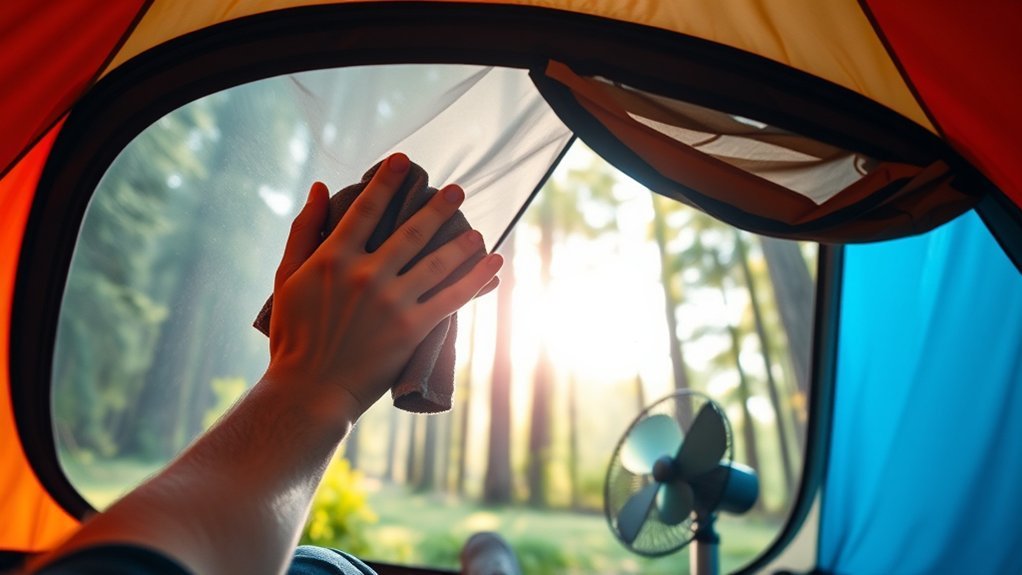
To quickly dry condensation inside your tent, open both vestibules to create airflow and enhance ventilation. Use microfiber towels to absorb excess moisture from surfaces. Make sure to isolate any wet items in waterproof trash bags to prevent spreading dampness. Before setting up for the evening, wipe down the interior and utilize sunny breaks for drying. Keeping your tent well-ventilated throughout your trip can further improve comfort, and there’s more you can do for a drier experience.
Open Both Vestibules for Airflow

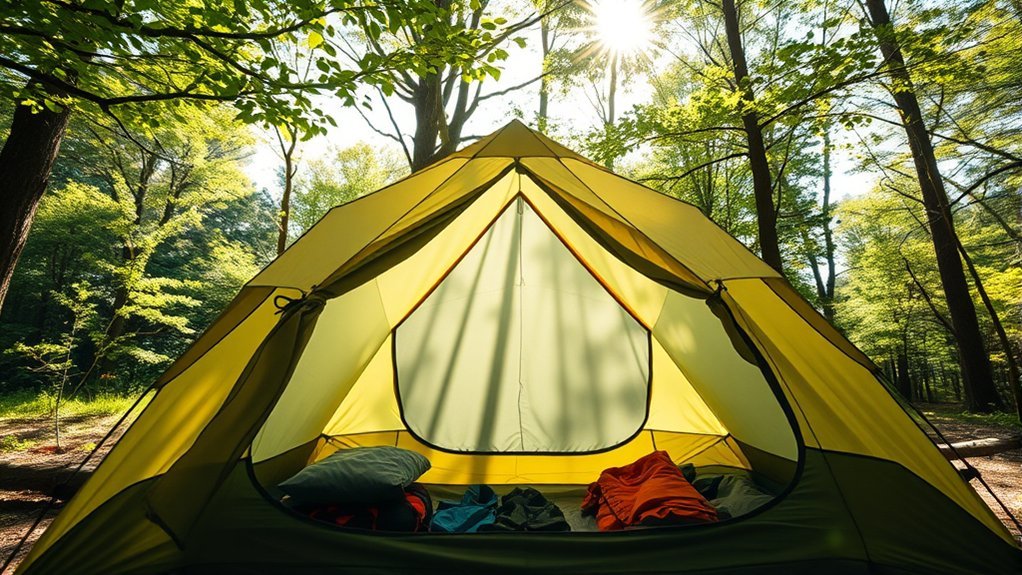
Opening both vestibules of your tent is one of the simplest and most effective ways to enhance airflow and reduce condensation. By doing this, you create a natural draft that circulates fresh air, carrying away the humid air trapped inside. This ventilation technique is especially beneficial in the morning when outdoor temperatures drop, promoting a drying effect that combats moisture buildup.
Position your tent to face the wind; this will amplify the airflow through the opened vestibules. Regularly employing this strategy considerably decreases condensation, leading to a drier and more comfortable camping experience.
Not only does it improve ventilation, but it also creates a more liberating atmosphere where you can breathe easier. Embrace these airflow techniques to make the most of your outdoor adventures, ensuring that every night spent in your tent feels rejuvenating rather than damp.
Use Microfiber Towels to Absorb Moisture
Microfiber towels are a game changer when it comes to managing condensation in your tent. Thanks to their dense, fine fibers, these towels can absorb several times their weight in water, making them incredibly effective at reducing moisture. Simply wipe down the tent walls and surfaces to greatly improve dryness inside.
One of the key microfiber benefits is their lightweight, compact design, allowing you to carry them without added bulk. They dry quickly, so you can use them repeatedly throughout your trip without the hassle of extensive drying time. After each use, wring out the towel to maximize its efficiency—this enables you to tackle condensation swiftly and effectively.
For the best towel maintenance, rinse and hang your microfiber towels when you’re done. This simple care routine guarantees they remain in great shape for your next adventure, keeping your camping experience comfortable and dry.
Isolate Wet Items in Trash Bags
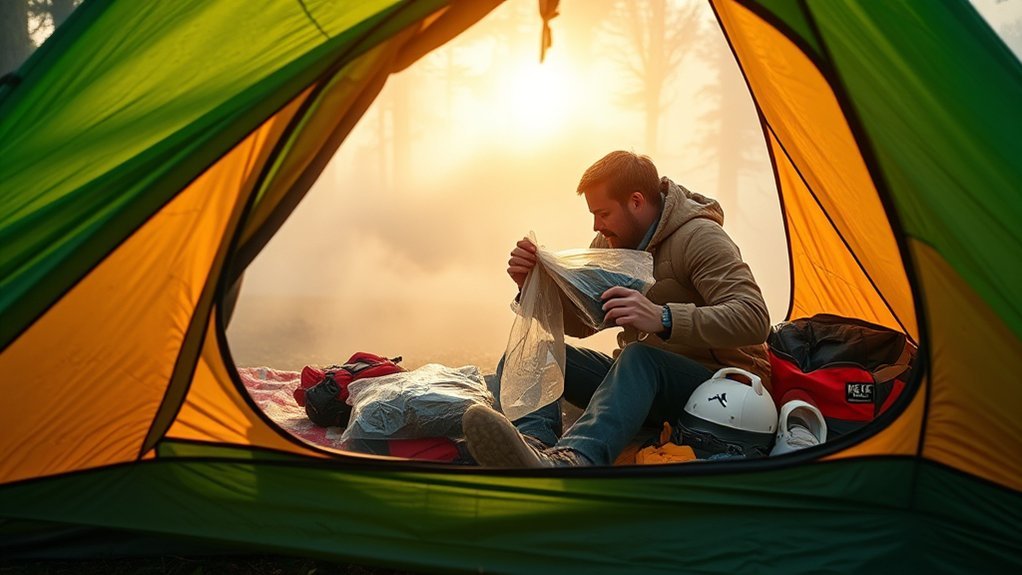
To keep moisture at bay, it’s crucial to isolate wet items in trash bags. Using waterproof trash bags effectively seals damp clothing and gear, preventing moisture from spreading to the rest of your gear inside the tent. Make sure to keep these wet items outside your sleeping area to avoid creating a damp environment that could disrupt your rest.
For better moisture management, consider using multiple trash bags to separate different types of wet gear. This way, you can easily identify and address each item as needed. Regularly check your bags, and replace them if they become saturated; this practice helps maintain ideal dryness and comfort in your tent. By isolating wet items in trash bags, you’re taking proactive steps to guarantee a more enjoyable camping experience, free from the hassle of excess moisture.
Dry Your Tent Before Evening Setup
After isolating wet items in trash bags, it’s time to focus on drying your tent before setting it up for the night. Effective tent maintenance and moisture control are essential for a comfortable camping experience. Follow these steps to dry your tent efficiently:
- Wipe Down the Interior: Use a towel to remove any moisture accumulated during the day.
- Utilize Sunlight: If your tent’s wet, take advantage of sunny breaks to dry it out before reassembling for the evening.
- Store Components Separately: Keep the rainfly and inner tent apart to facilitate quicker drying.
- Expose Gear to Sunlight: Open both vestibules each morning, allowing at least 20 minutes of sun exposure to effectively eliminate moisture.
Regular Ventilation to Maintain Airflow
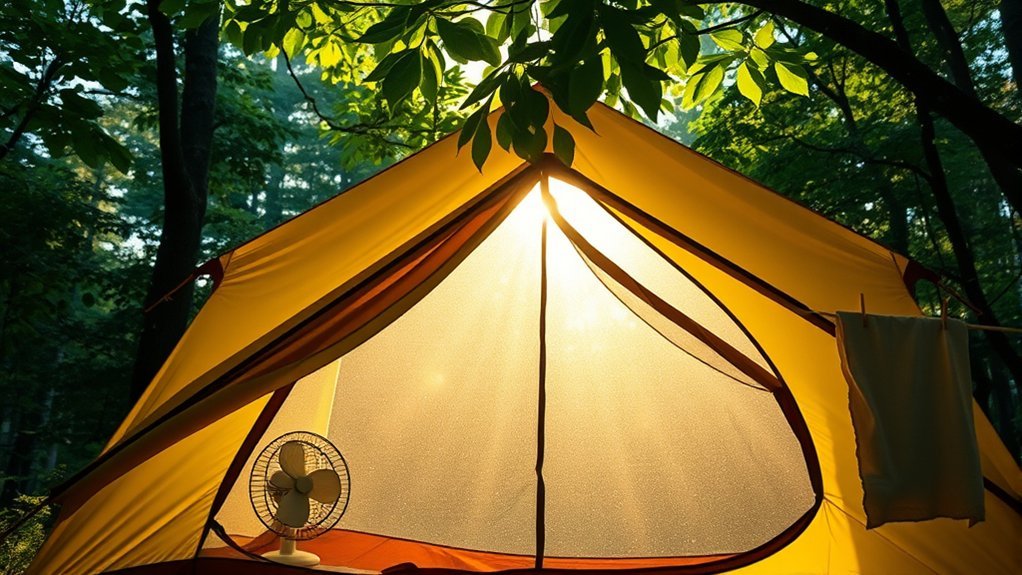
To keep your tent dry, make sure to open vents and windows regularly. This simple action allows moist air to escape and promotes better airflow. Positioning your tent to face the wind can also enhance circulation, further reducing condensation buildup.
Open Vents and Windows
While camping, keeping your tent dry can be a challenge, but opening vents and windows is a simple yet effective solution. This ventilation technique allows moist air to escape, promoting airflow and moisture control. Here’s how to maximize ventilation:
- Open all vents and windows to facilitate air exchange.
- Roll back the rainfly and vestibule door for additional airflow.
- Position the tent facing the prevailing wind to encourage natural ventilation.
- Regularly check and adjust openings based on weather changes to maintain ideal airflow.
Position for Optimal Airflow
Maximizing airflow inside your tent is essential for preventing condensation buildup, and proper positioning plays a key role. Here are some effective airflow techniques to evaluate:
| Tent Orientation | Action | Benefit |
|---|---|---|
| Face the wind | Position your tent accordingly | Enhances ventilation |
| Open all vents | Allow natural airflow | Reduces humidity |
| Roll back rainfly | Maximize air circulation | Prevents moisture buildup |
Ensure your tent is pitched correctly to allow air to circulate freely between the rainfly and inner walls. Regularly check your setup, adjusting the pitch if necessary, to keep ventilation panels clear. By implementing these strategies, you can maintain a drier, more comfortable environment inside your tent.
Sunlight Exposure for Quick Drying
Exposing your tent to direct sunlight for just 20 minutes can drastically reduce moisture levels and speed up the drying process. To maximize this solar exposure, follow these drying techniques:
- Choose the Right Spot: Position your tent where it receives maximum sunlight, ideally facing the sun to optimize the solar angle.
- Open Both Vestibules: Allow sunlight and airflow to penetrate by opening both vestibules, enhancing moisture evaporation.
- Wipe Down Surfaces: Use a microfiber towel to regularly wipe wet surfaces before placing items in the sun; this can expedite drying.
- Separate Layers: Confirm your rainfly and inner tent are separated during drying to improve air circulation and cut down drying time.
Frequently Asked Questions
What Causes Condensation to Build up Inside My Tent?
Condensation builds up in your tent due to temperature differences and moisture sources like breath, sweat, or wet gear. Tent materials can trap this moisture, leading to dampness and discomfort during your outdoor adventures.
How Can I Prevent Condensation in the First Place?
To prevent pesky precipitation, prioritize proper tent insulation and humidity control. Use breathable materials, ventilate your space, and avoid cooking inside. Embrace these strategies to enjoy a drier, more delightful outdoor experience.
Is It Safe to Leave My Gear Outside While Drying?
It’s generally safe to leave your gear outside while drying, but make sure it’s protected from wind or rain. Always check for tent safety and avoid leaving valuable items unattended to prevent theft or damage.
Can I Use Regular Towels Instead of Microfiber Ones?
You can certainly use regular towels instead of microfiber ones, but their thicker towel materials might slow your drying techniques. Embrace the freedom of choice, but remember microfiber’s efficiency for quicker absorption and drying.
How Often Should I Ventilate My Tent While Camping?
You should ventilate your tent regularly while camping, ideally every few hours. Good tent ventilation prevents moisture buildup and promotes fresh air circulation, enhancing your comfort and overall experience. Follow these camping tips for a better trip!
Conclusion
In the battle against condensation, quick action makes all the difference. While you might feel trapped in a damp tent, opening vestibules and using towels can transform your space into a dry haven. Isolating wet items and ensuring regular ventilation not only preserves your gear but also enhances your camping experience. Embrace sunlight for a swift drying solution; it’s the contrast between moisture and warmth that reveals the beauty of nature, reminding you that comfort and adventure can coexist.