


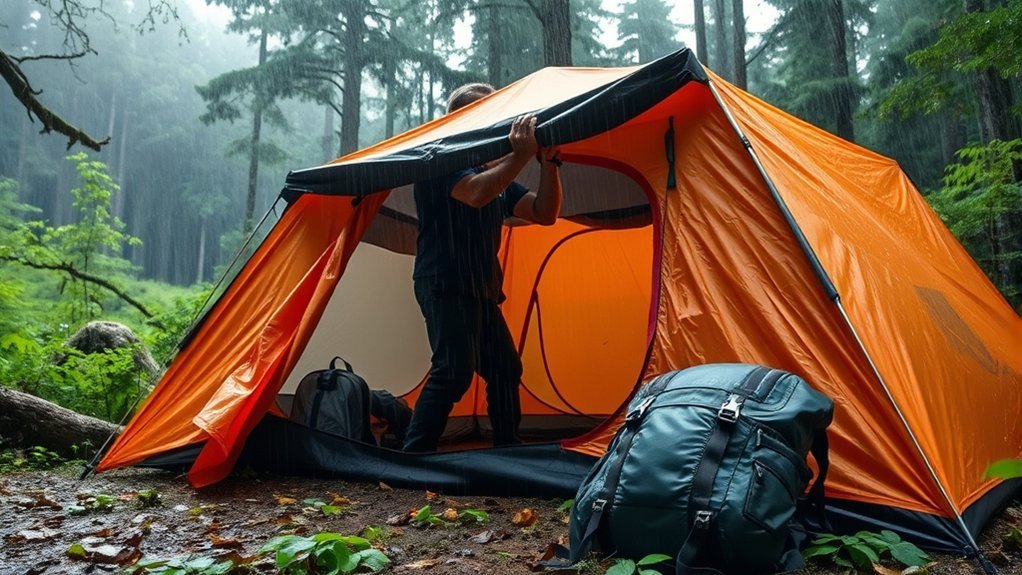
To set up your tent in the rain without soaking the inside, start by choosing a level spot away from water flow and puddles. Lay a tarp under your tent to combat ground moisture, and secure an overhead tarp to block rain splatter. Dig trenches around the tent to divert water flow, and make sure everything’s tight to prevent leaks. With these tips, you’ll be well on your way to a dry camping experience, and there’s even more to explore.
Importance of Preparation for Rainy Conditions

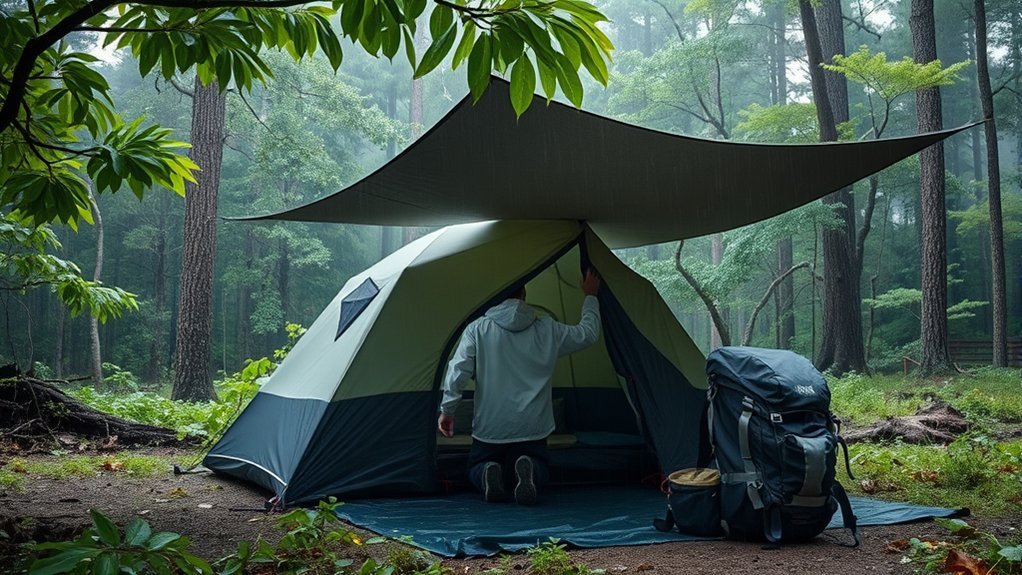
When you’re heading out into the wild, preparing for rainy conditions can mean the difference between a soggy ordeal and a cozy adventure. Rainy camping requires thoughtful gear preparation to tackle the challenges that heavy rain and thunderstorms can bring. A well-placed tarp setup over your tent can act as a shield, preventing water from splashing in and keeping your shelter dry.
Don’t forget to dig a trench around the tent; this simple moat can divert water flow, ensuring it doesn’t accumulate underneath. Securing your tarps is essential—flapping in the wind can lead to leaks, letting moisture seep in when you least expect it. By practicing these skills beforehand, you’ll feel empowered and ready for whatever Mother Nature throws your way. Embrace the wild with confidence, knowing you’ve got the right preparations in place for a memorable adventure, rain or shine.
Choosing the Right Location for Your Tent
Choosing the right location for your tent can make all the difference during a rainy camping trip. Start by evaluating the terrain—look for a level area free from downhill slopes where water could accumulate.
| Considerations | Tips |
|---|---|
| Tent Orientation | Position your tent away from large tree branches to avoid splashes. |
| Windbreaks | Utilize natural windbreaks like trees or bushes for protection. |
| Ground Drainage | Avoid puddles and low-lying areas to guarantee a dry interior. |
| Water Flow Signs | Observe the landscape for signs of water flow during rain. |
Tarp Placement: Ground and Overhead
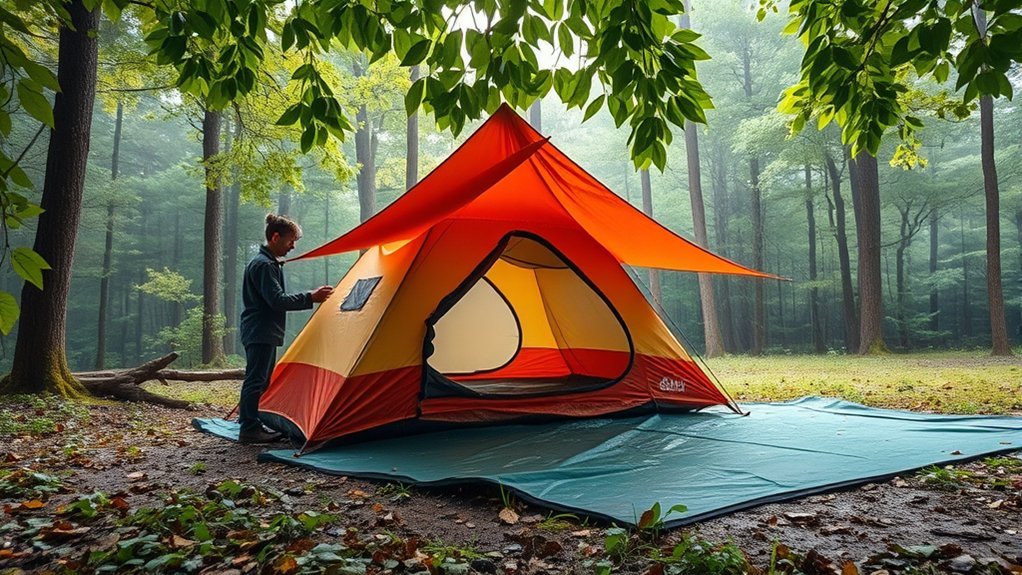
After finding the perfect spot for your tent, the next step is to focus on tarp placement—both underneath and overhead. Start by laying a tarp made of durable, waterproof materials beneath your tent. This barrier will stop ground moisture from creeping in, ensuring a dry interior. Choose a tarp size that matches your tent’s footprint; it shouldn’t extend too far beyond the edges, as this can create a catchment effect, leading to water pooling underneath.
Next, position another tarp overhead, ideally paired with a rain fly for extra protection. Make sure it doesn’t hang excessively, as that can direct rainwater toward your tent. Secure the corners of both tarps with poles and stakes to keep them stable against wind gusts. Regularly check their placement during heavy rain to avoid leaks. With the right tarp setup, you can stay dry and enjoy your outdoor adventure, rain or shine!
Securing Your Tarp Against Wind and Water
To keep your tarp secure in gusty winds and heavy rain, start by anchoring it tightly at all corners with stakes and guylines. Make certain it’s taut and positioned just right, so water runs off instead of pooling underneath. Regularly check its tension during storms to verify it stays in place and protects your tent effectively.
Tarp Installation Techniques
When setting up a tarp over your tent, securing it against wind and water is essential for staying dry and comfortable. Use durable tarp materials like nylon or polyester and choose tarp shapes that suit your camping environment, such as rectangular or diamond.
To guarantee stability, stake down all corners of the tarp and use poles to elevate the center. This allows rainwater to run off, preventing leaks. Regularly check your tarp for wear and tear, and consider tying off to nearby trees for extra security.
| Tarp Materials | Tarp Shapes |
|---|---|
| Nylon | Rectangular |
| Polyester | Diamond |
| Canvas | Square |
With these techniques, you’ll stay dry and enjoy your adventure!
Wind Resistance Strategies
Strong winds and heavy rain can turn a camping trip into a soggy ordeal if you’re not prepared. To secure your tarp against these elements, use sturdy stakes and guy lines to anchor it tightly at multiple points. This prevents flapping that could lead to leaks. Position the tarp low to the ground, avoiding excessive overhang to minimize wind resistance and avoid water pooling underneath. Incorporate diagonal tie-outs for added tension and stability, making your setup more resilient. For extra stability, place weights like rocks or sandbags on the corners of your tarp. Don’t forget to regularly check and adjust the tension during the storm; adapting with these tarp anchoring techniques will keep you dry and liberated from the elements.
Trenching Techniques to Divert Water Flow
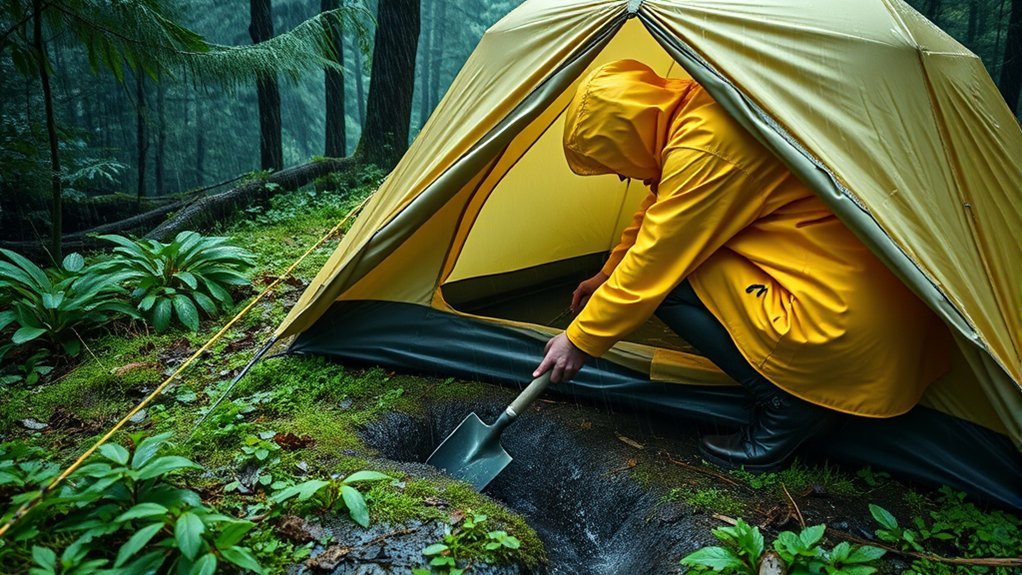
While many campers underestimate the importance of trenching, creating a proper diversion can be the key to keeping your tent dry during a downpour. Start by digging a channel around your tent, aiming for a trenching depth of at least six inches. This will effectively redirect water flow away from your living space, acting like a moat during heavy rain. Make sure the trench is wide enough to prevent pooling near the edges of your tent. If you’re camping on a slope, it’s even more essential—water naturally flows downhill, and a well-placed trench can save you from a soggy night. Use the dirt you excavate to build a dike, reinforcing your barrier against incoming water. Don’t overlook this critical step; proper water diversion can make all the difference between a comfortable night and waking up in a puddle.
Tools Needed for Effective Camping
When you’re camping in the rain, having the right tools can make all the difference. A sturdy, compact shovel is essential for creating trenches that keep water away from your tent, ensuring you stay dry. Investing in quality gear not only streamlines your setup but also boosts your confidence in tackling any weather conditions.
Essential Camping Tools
As you prepare for a camping trip, having the right tools can make all the difference, especially when tackling the challenges of wet weather. A solid shovel is essential for trenching around your tent, diverting water flow, and preventing flooding inside during heavy rain. Opt for a compact, rugged shovel over bulky multi-tool versions; it’s more durable and easier to transport. Regular tool maintenance and testing will guarantee your equipment is reliable when you need it most. Observing fellow campers can also reveal common pitfalls, like poor trenching or tarp placement. By focusing on proper shovel selection and honing your techniques, you’ll enhance your camping experience and embrace nature with confidence, rain or shine.
Tool Durability Considerations
Choosing durable tools is essential for effective camping, especially in unpredictable weather. You’ll want a solid shovel for trenching around your tent, diverting water flow, and keeping the inside dry. Look for a compact, rugged design that promises tool longevity—many tactical multi-tool shovels fall short on material quality and reliability over time. When selecting your tools, prioritize versatility; those that can be used in various orientations enhance efficiency during setup, particularly in adverse conditions. Remember, real-world testing is key—rely on long-term usage instead of initial reviews. Investing in a quality trenching tool can greatly speed up creating barriers against water accumulation, making it a must-have for rainy camping trips. Your comfort in the wild depends on it!
Common Mistakes to Avoid When Camping in the Rain
Even the most seasoned campers can make vital mistakes when setting up a tent in the rain, which can turn an outdoor adventure into a soggy nightmare. One common mistake is failing to secure a tarp over the tent; without it, water splashes can wet the edges. Be careful not to overextend the tarp, as that can create a catchment effect, directing water beneath your tent.
Neglecting to trench around your tent is another pitfall that leads to water accumulation during heavy rains. Trenches act as moats, diverting water flow away. If you use a low-quality multi-tool shovel for trenching, you’ll struggle to create effective barriers. Finally, don’t overlook the importance of practicing tarp and trenching techniques before your trip; it’s essential for avoiding those wet surprises. By steering clear of these common mistakes, you’ll be well on your way to a drier camping experience.
Maintaining a Dry Interior: Tips and Tricks
After sidestepping common pitfalls while setting up your tent in the rain, it’s time to focus on keeping the interior dry. First, use a tarp over your tent to block water splatter and guarantee it’s secured to prevent flapping, which can create leaks. Don’t forget to place another tarp underneath to act as a barrier against ground moisture—just make sure it doesn’t extend too far beyond the edges. Implement trenching techniques around your tent to create a moat, diverting water away and keeping the interior cozy. Regularly check your rain fly; if it’s worn, consider adding a tarp for extra protection. Finally, prioritize tent ventilation to manage moisture control effectively. Proper airflow reduces dampness and keeps your space feeling fresh, allowing you to enjoy your adventure, rain or shine. With these tips, you can embrace the elements while staying comfortably dry.
Practicing Your Camping Skills for Future Trips
While the excitement of a camping trip can overshadow preparation, honing your camping skills in advance is crucial for tackling unexpected challenges. Engage in camping drills that simulate rainy conditions, practicing tent setup to guarantee you’re ready when the skies open up. Familiarize yourself with tarp placement and trenching techniques to effectively divert water away from your tent, keeping your space dry.
Regularly assess your skills by using your gear in different weather, identifying any weaknesses that might disrupt your adventure. Observe fellow campers, soaking in their experiences and tips for effective tent setup during rain. Don’t forget to practice with essential tools like a durable shovel, which can greatly enhance your efficiency when creating trenches or managing water flow. By investing time in skill assessment now, you’ll not only boost your confidence but also liberate yourself from the fear of the unknown during your future camping trips.
Frequently Asked Questions
What Gear Should I Bring for Camping in the Rain?
You’ll need waterproof gear like a reliable rain jacket, durable boots, and a waterproof tarp for your campsite. Don’t forget rain protection for your gear; it’ll keep you dry and comfortable while enjoying the outdoors.
How Do I Dry My Tent After Use?
To dry your tent, shake off excess water, then set it up in a well-ventilated area. Use drying techniques like towels for stubborn spots. Remember these tent maintenance tips for a longer-lasting adventure companion!
Can I Set up My Tent in a Heavy Downpour?
Yes, you can set up your tent in a heavy downpour. Use tent setup techniques that prioritize rainproof materials, ensuring water runs off and doesn’t seep inside, keeping your space dry and comfortable amidst the storm.
Are There Specific Tent Designs Better for Rain?
Just like a duck gliding effortlessly on water, tents made of rain-resistant materials with waterproof designs keep you dry. Look for features like sealed seams and rainflies to enhance your shelter against the storm.
How Can I Keep My Gear Dry Inside the Tent?
To keep your gear dry inside the tent, prioritize gear organization and moisture control. Use waterproof bags, hang items up, and create a barrier between wet gear and your sleeping area to maintain a cozy, dry environment.
Conclusion
As you nestle into your dry haven, the rain taps gently on the tent like a soothing heartbeat, reminding you of nature’s embrace. With your careful preparations, you’ve transformed a stormy night into a cozy retreat. The world outside may be drenched, but inside, you’ve created a sanctuary, safe and warm. Remember, each drop that falls is a song of adventure, echoing the joy of camping, even in the rain. Embrace it, and let the journey unfold.