


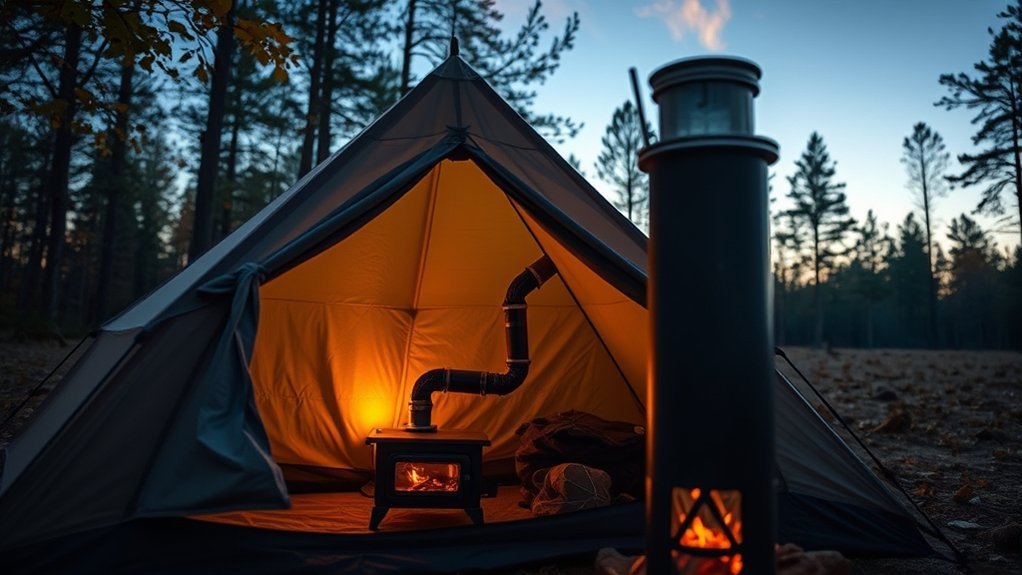
To guarantee tent stove safety, focus on proper installation, venting, and spark control. Maintain a minimum 6-inch clearance from canvas walls and keep combustible materials at least 3 feet away. Use a spark arrestor to prevent sparks from escaping and clean it frequently for effectiveness. Always secure flue pipe connections and monitor for damage. With the right precautions in place, you can enjoy a safe and cozy camping experience. Discover more tips to enhance your setup effectively.
Importance of Proper Stove Installation and Pre-Installation Planning

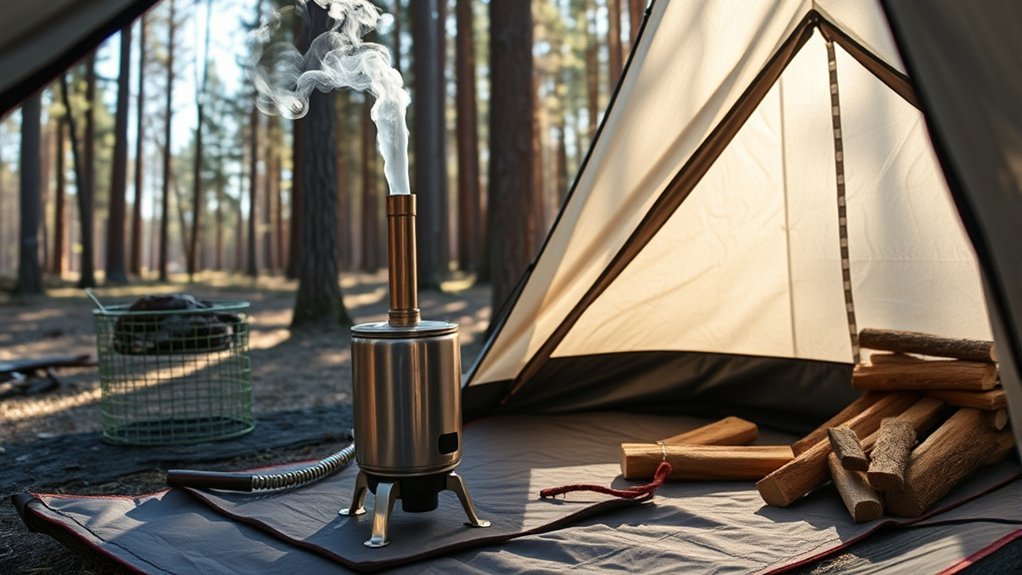
When you’re setting up a tent stove, proper installation and pre-installation planning are fundamental to guarantee your safety and comfort. Adhering to installation guidelines is essential for maximizing stove efficiency while minimizing risks. Inadequate installation can lead to dangerous situations, like carbon monoxide poisoning or tent fires.
Take time to plan your setup, as this meticulous process can take 1-2 hours even for experienced installers. Confirm you maintain at least a 6-inch clearance from canvas walls and use fire-resistant materials to protect your investment. Understanding combustible clearances and proper ventilation is crucial; improper setup can cause smoke buildup that jeopardizes your safety.
Before installation, consult manufacturer specifications to confirm that the stove jack is correctly positioned and all components are compatible. Prioritize thoroughness over speed to avoid overlooking critical safety measures and enjoy a warm, safe tent experience.
Essential Tools, Supplies, and Understanding Clearances
To set up your tent stove safely, you’ll need essential tools like work gloves, safety glasses, and a wrench set. Understanding clearance specifications is vital to prevent overheating and fires; maintain at least 6 inches from canvas walls and provide ample headroom above the stove. Always refer to manufacturer guidelines for accurate clearance requirements to guarantee safe operation.
Required Tools Overview
Setting up a tent stove requires careful preparation and the right tools to guarantee safety and efficiency. You’ll need essential tent stove tools like work gloves to protect your hands and safety glasses to shield your eyes during assembly. A wrench set is vital for securing flue pipe connections, ensuring everything stays intact. Don’t forget a carbon monoxide detector; it’s mandatory for a safe environment while the stove is in use. Also, invest in a fire-resistant hearth mat that extends at least 12 inches beyond the stove’s footprint. Always refer to the manufacturer’s specifications for precise clearance requirements, as maintaining safety gear and adhering to these guidelines will help you enjoy a liberating experience without worry.
Clearance Specifications Explained
Understanding clearance specifications is vital for safely operating a tent stove. To minimize fire risk, maintain a minimum 6-inch clearance from all canvas walls. Confirm you have ample headroom above the stove for proper draft and efficient smoke venting. Utilize a fire-resistant hearth mat that extends at least 12 inches beyond the stove’s footprint to safeguard your tent floor from heat. It’s important to consult manufacturer specifications, as clearance guidelines may vary based on stove design and model. Additionally, allow at least 3 feet of distance between the stove and any furniture or combustible materials. Adhering to these safety measures will help create a secure and enjoyable camping experience without compromising your safety or that of others.
Step-by-Step Installation Process and Flue Pipe Assembly
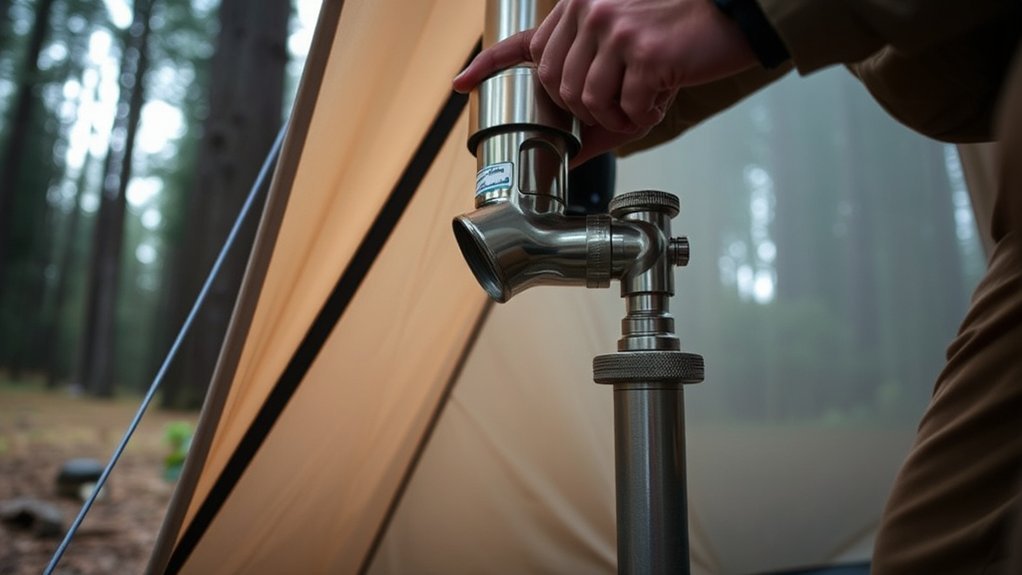
Installing your tent stove requires careful preparation and attention to detail. Start by positioning a fire-resistant hearth mat beneath the stove and assembling the stove legs as per the manufacturer’s instructions for stability. Place the stove directly under the stove jack opening, using a level to confirm it’s stable and maintains the necessary clearances from the canvas walls.
Next, begin the flue pipe assembly by connecting sections at the stove’s exhaust collar, making sure the male ends face downward to prevent smoke leaks. Secure the joints with screws. Feed the assembled flue pipe through the stove jack, avoiding contact with the tent fabric. Finally, attach a spark arrestor and rain cap at the top to block embers and moisture.
Before lighting the stove, conduct a final check to verify the stove is stable, the flue pipe fits securely in the stove jack, and all safety measures, like proper ventilation, are in place.
Final Checks, Curing the Stove, and Fire Safety
Before lighting your tent stove, make sure it’s stable and securely positioned on a fire-resistant surface. Next, perform the curing process by gradually increasing the fire size while ensuring proper ventilation to manage smoke and odors. Regular checks on the stove and safety features will enhance your overall safety while enjoying your tent stove.
Verify Stove Stability
Making sure your tent stove is stable is crucial for safe operation. Start with stability checks by placing the stove securely on a fire-resistant hearth mat. Confirm there’s no stove wobble during operation; a stable setup prevents accidents. Next, inspect the fit of the flue pipe in the stove jack. Any gaps can lead to smoke leaking into the tent, compromising air quality. Keep your carbon monoxide detector installed and operational to monitor safety. It’s important to maintain proper ventilation, so open all air vents. During your initial burns, conduct small controlled test fires, gradually increasing the size. This process not only helps cure the stove but also guarantees a safer and more enjoyable experience in your tent.
Perform Curing Process
After confirming your stove’s stability, it’s time to perform the curing process. Start with small, controlled test fires, gradually increasing the size over multiple burns. This technique helps set the paint and reduces off-gassing inside your tent. Always guarantee proper smoke management by keeping a door or window slightly open for ventilation, allowing odors to escape and preventing carbon monoxide buildup. As you cure your stove, regularly check the spark arrestor to verify it’s clear of blockages and functioning correctly. Remember, never leave a lit stove unattended, and prioritize fire safety throughout the process. By following these steps, you’ll enjoy a safer and more effective heating experience in your tent.
Ensure Proper Ventilation
While you’re preparing to use your tent stove, proper ventilation is vital for safety and effectiveness. Employ effective ventilation techniques by keeping windows or doors slightly open during the curing process. This helps manage smoke and odors while you gradually increase the fire size. Always make sure the flue pipe fits snugly in the stove jack to prevent smoke leaks inside your tent. A battery-operated carbon monoxide detector is essential for detecting any dangerous buildup during use. Regularly inspect the spark arrestor and flue for creosote and blockages to maintain safe venting. Finally, never leave a lit stove unattended in your tent; it’s key to preventing accidental fires and protecting your well-being.
Routine Maintenance and Precautions
To keep your tent stove operating safely and efficiently, regular maintenance and precautions are essential. Start by cleaning the spark arrestor after every few uses to prevent soot buildup, ensuring it functions effectively. After about 10-15 hours of burning, inspect the flue pipe for creosote and damages to maintain safe operation. Before each camping trip, check all connections and seals for wear and corrosion; this step is vital to prevent leaks that could lead to carbon monoxide exposure. After your camping season, store the stove in a dry area following a thorough cleaning to avoid rust and prolong its lifespan. Finally, adhere to chimney safety standards through routine inspections and cleaning, ensuring peak performance and safety of your tent stove system. By following these maintenance tips, you’ll enjoy a safe and liberating camping experience.
Understanding the Importance of a Spark Arrestor
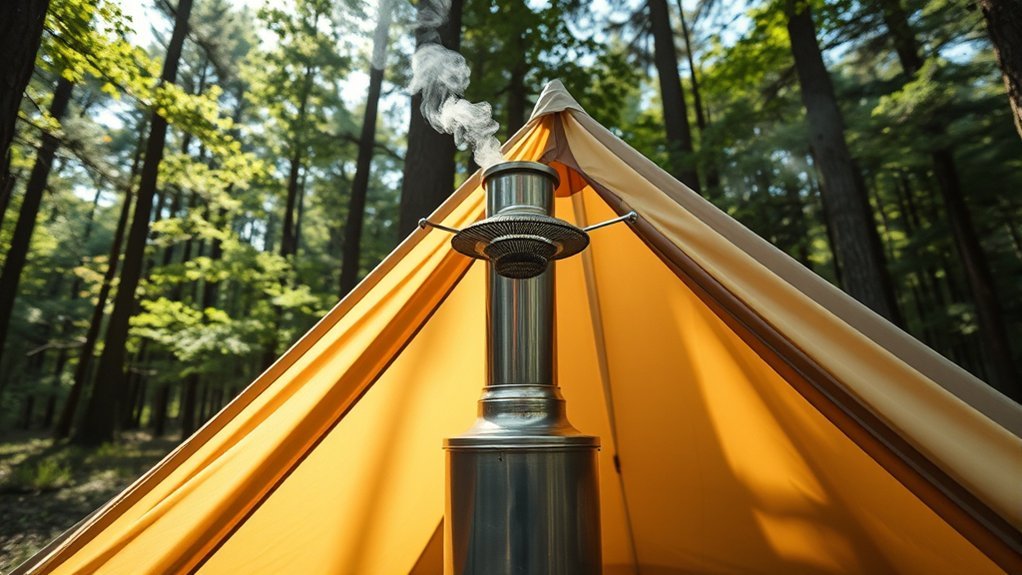
Maintaining your tent stove is important, but understanding the role of a spark arrestor can greatly enhance your safety while camping. A spark arrestor is vital for preventing sparks and embers from escaping the stovepipe, which greatly reduces the risk of accidental fires. By protecting flammable materials, like your tent fabric, it enhances overall safety during operation.
There are various spark arrestor types made from durable, heat-resistant materials like stainless steel or aluminum, guaranteeing they withstand high temperatures. When installing a spark arrestor, make sure it’s securely fitted to the stovepipe to maximize effectiveness. Regular maintenance is important—cleaning it to remove soot and debris will keep it functioning effectively. Additionally, using a spark arrestor helps you comply with camping area regulations designed to minimize wildfire risks. Prioritizing this simple component can safeguard your camping experience and those around you.
The Benefits of Using a Spark Arrestor
Using a spark arrestor offers significant benefits for campers, primarily by preventing sparks and embers from escaping the stovepipe. This essential tool enhances fire safety by protecting surrounding flammable materials, such as tent fabric, and helps minimize the risk of wildfires. By incorporating a spark arrestor into your setup, you demonstrate responsible camping practices and contribute to the preservation of the natural environment.
Moreover, many camping areas require compliance with fire safety regulations, and using a spark arrestor guarantees you adhere to these important rules. The installation of this device not only provides peace of mind but also acts as a safety barrier, enhancing overall safety for you and your fellow campers. Remember to perform regular maintenance by cleaning the spark arrestor to remove soot and debris, guaranteeing peak performance throughout your camping trips. Embrace these spark arrestor benefits for a safer, more enjoyable outdoor experience.
Choosing the Right Spark Arrestor
When selecting the right spark arrestor for your tent stove, it’s vital to take into account compatibility with your specific model and the stovepipe diameter. Start by choosing spark arrestor materials that are both durable and heat-resistant, like stainless steel or aluminum, to withstand high temperatures and prevent damage.
Look for models with easy installation features that guarantee a secure fit on the stovepipe. A reliable locking mechanism is fundamental; it keeps the spark arrestor in place during use, reducing fire risks in your tent.
Don’t forget to review installation tips that make the setup process a breeze. Regularly inspect and clean your spark arrestor to maintain its effectiveness in preventing sparks and embers from escaping. This will greatly enhance your fire safety, allowing you to enjoy your tent stove with confidence.
Maintenance and Precautions for Spark Arrestors
A spark arrestor plays an essential role in guaranteeing your tent stove operates safely, but it requires regular upkeep to function effectively. Begin with spark arrestor cleaning to remove soot and debris, which helps prevent sparks from escaping the stovepipe. Before each camping trip, conduct a thorough spark arrestor inspection for any damage or wear.
| Action | Frequency | Purpose |
|---|---|---|
| Clean the spark arrestor | After every use | Remove soot and debris |
| Inspect for damage | Before each trip | Guarantee reliability |
| Check connections | Weekly during use | Prevent fire hazards |
Be on the lookout for loose connections, corrosion, or missing components, and replace any damaged parts promptly. Following these maintenance practices not only enhances your safety but also liberates you from potential fire risks while enjoying the great outdoors.
Frequently Asked Questions
How Do I Know if My Tent Is Breathable Enough?
To determine if your tent’s breathable enough, assess its materials and check for adequate airflow. Look for mesh panels and ventilation features that promote air circulation, ensuring comfort during your outdoor adventures.
Can I Use a Tent Stove Indoors?
You can’t use a tent stove indoors safely; it poses serious risks. Over 400 deaths occur annually from carbon monoxide poisoning. Opt for proper tent stove types designed for safe outdoor use to guarantee your safety.
What Should I Do if I Smell Smoke?
If you smell smoke, immediately activate your smoke detection system. Follow established emergency procedures: evacuate the area, call for help, and don’t attempt to investigate further until professionals arrive to guarantee your safety.
How Often Should I Check for Carbon Monoxide?
You should check carbon monoxide detectors daily; they’re your best friends in safety! Make sure safety alarms are functioning properly, especially in enclosed spaces. Regular checks can prevent dangerous situations and keep you breathing easy.
What Are Signs of a Malfunctioning Stove?
You’ll notice signs like unusual smells, flickering flames, excessive soot buildup, or poor heating. Regular stove maintenance and safety inspections help prevent these issues, ensuring your stove operates safely and efficiently. Stay vigilant for these warning signs.
Conclusion
To conclude, prioritizing safety with your tent stove is like having a trusty compass on an adventure—it guides you through potential hazards. By following proper installation steps, using the right tools, and maintaining your equipment, you can enjoy a warm, worry-free experience. Don’t forget the spark arrestor; it’s your first line of defense against unwanted sparks. With these precautions in place, you can focus on what truly matters: making memories under the stars.