


If you’re new to BLM dispersed camping, it’s important to know some key rules. You can camp for a maximum of 14 days in one spot, after which you must move at least 25 miles. Always choose campsites with signs of prior use and stay at least 200 feet away from water sources. Follow Leave No Trace principles to protect the environment and guarantee your safety. Discover more tips and detailed guidelines for a successful trip ahead!
Understanding BLM Dispersed Camping


If you’re looking to escape the hustle and bustle of everyday life, BLM dispersed camping offers a fantastic way to connect with nature. You can set up camp outside designated campgrounds on millions of acres of public land, immersing yourself in the wilderness without the distractions of modern amenities. However, it’s important to understand BLM regulations to guarantee a responsible experience. Bring essential camping gear, and remember to choose sites that show signs of prior use to minimize your impact on the environment. Stay at least 200 feet away from water sources to protect delicate ecosystems. Adhering to Leave No Trace principles is vital—pack out all trash and waste, and only use existing fire rings for campfires where permitted. This way, you not only enjoy your adventure but also preserve the beauty of these wild spaces for future generations.
The 14-Day Rule and Its Importance
Understanding the 14-Day Rule is essential for anyone planning to camp on Bureau of Land Management (BLM) lands. This rule allows you to stay in one spot for a maximum of 14 days within any 28-day period. After that, you must move at least 25 miles away to continue your camping adventure. Here’s why this rule matters:
Understanding the 14-Day Rule is crucial for camping on BLM lands, ensuring fair access and environmental protection.
- 14 Day Compliance: Staying within the limit guarantees fair access for all campers.
- Ecological Recovery: Frequent relocation helps the environment heal and thrive.
- Monitoring: BLM rangers actively check for compliance to protect public lands.
- Avoid Fines: Violating the rule can result in significant fines and penalties.
Selecting the Right Campsite
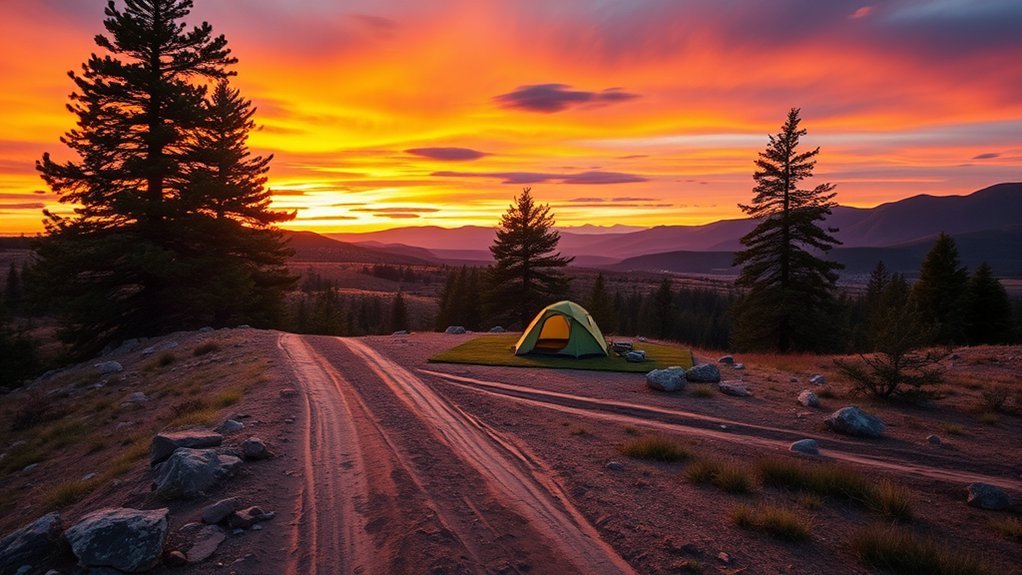
Choosing the right campsite is essential to guaranteeing a safe and enjoyable outdoor experience. Start with a thorough campsite assessment. Look for areas at least 200 feet away from water sources to protect the ecosystem and maintain water quality. Opt for spots that show signs of previous use, like existing fire rings or cleared spaces, to minimize your impact on the land.
Stay within 150 feet of established roads to comply with regulations and prevent cross-country driving, which can harm the environment. Avoid dry washes or riverbeds, as these areas pose a risk of flash flooding during storms. Finally, check for hazards like dead trees or unstable ground to guarantee your safety. With mindful site selection, you’re not just camping; you’re embracing a responsible and liberating outdoor lifestyle.
Environmental Stewardship Principles
When you head out for BLM camping, it’s essential to embrace Environmental Stewardship Principles. By following Leave No Trace guidelines and practicing smart waste management, you’ll help keep the natural beauty intact for future visitors. Remember, every small action counts in preserving our delicate ecosystems.
Leave No Trace
To fully enjoy your camping experience while protecting the environment, it is essential to embrace Leave No Trace principles. By adopting sustainable practices and using eco-friendly gear, you can minimize your impact on nature. Here are four key principles to follow:
- Pack out all waste: Take all trash, food scraps, and toilet paper with you.
- Choose campsites wisely: Camp at least 200 feet from water sources and use previously disturbed areas.
- Dispose of waste properly: Use portable toilets or dig catholes 6-8 inches deep, 200 feet away from water.
- Wash responsibly: Use biodegradable soap and stay away from water sources to protect aquatic life.
Waste Management Practices
Maintaining a clean and safe camping environment goes hand in hand with practicing Leave No Trace principles. Always pack out all trash, including food scraps and toilet paper, to prevent pollution and protect wildlife habitats. When it comes to waste disposal, using portable toilet systems or digging catholes at least 6-8 inches deep and 200 feet away from water sources is essential. For effective trash management, store food securely in animal-proof containers to avoid attracting wildlife. Additionally, educate yourself on local waste management regulations and follow them to promote responsible camping. By minimizing your impact and respecting the environment, you contribute to preserving these beautiful public lands for all to enjoy. Let’s keep nature thriving!
Navigating California Fire Regulations
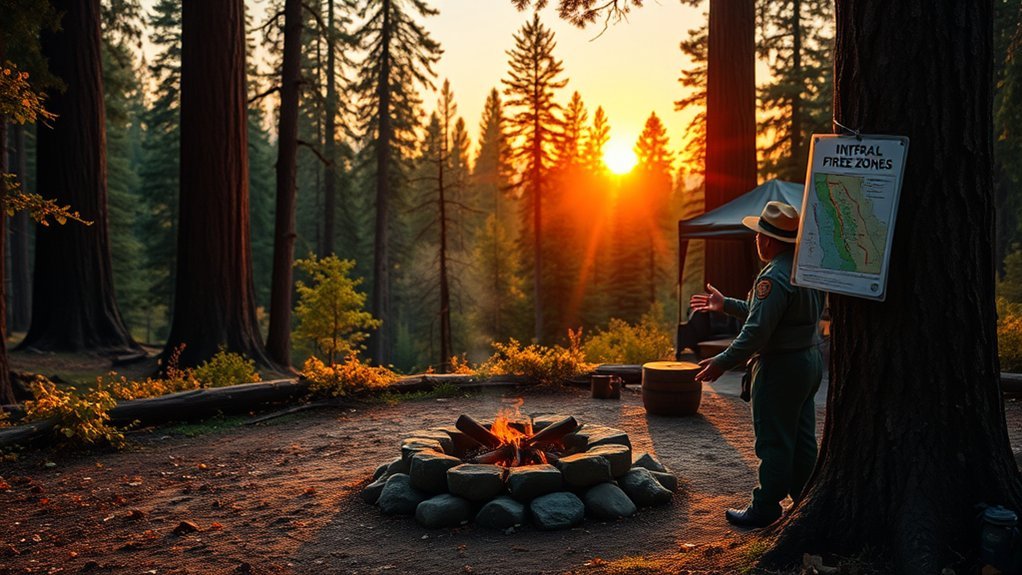
Maneuvering California’s fire regulations is essential for a safe and enjoyable camping experience on BLM lands. To guarantee fire safety and compliance with permit requirements, follow these guidelines:
- Check Current Restrictions: Always verify current fire restrictions before your trip, especially from May to November.
- Obtain a Campfire Permit: A valid California campfire permit is mandatory for any open flame, including campfires and stoves.
- Keep Fires Small: Make certain your fire is manageable, and have water available to fully extinguish it before leaving.
- Use Existing Fire Rings: If allowed, use established fire rings to minimize your environmental impact and avoid creating new fire sites.
Seasonal Considerations for Dispersed Camping
When planning your trip to BLM lands, understanding seasonal considerations can greatly enhance your camping experience. Different regions present unique challenges and rewards throughout the year, so it’s key to adapt your plans accordingly.
| Season | Ideal Locations | Considerations |
|---|---|---|
| Spring | Mid-elevation deserts | Seasonal wildflower blooms |
| Summer | Eastern Sierra | Warm days, mild nights |
| Fall | Various locations | Comfortable temperatures |
| Winter | Desert regions (Oct-Apr) | Chilly nights, check road access |
Pay attention to seasonal weather and temperature fluctuations that can affect your comfort and safety. For instance, winter may bring heavy rain, impacting unpaved roads. By being mindful of these factors, you can choose the best times and places for your dispersed camping adventures. Happy camping!
Long-Term Visitor Areas: An Overview
If you’re looking for an extended camping experience, Long-Term Visitor Areas (LTVAs) offer a perfect solution for outdoor enthusiasts. These designated spots by the BLM in California and Arizona allow you to stay up to seven consecutive months with a permit. Here are some LTVA benefits you can enjoy:
- Affordable Permits: Permits cost around $180 for the entire season or $40 for two weeks.
- Basic Amenities: Enjoy features like dump stations, trash collection, and non-potable water.
- Community Vibe: Connect with fellow campers at informal gatherings and skill-sharing activities.
- Ideal Winter Retreat: Experience warmer climates while promoting responsible use of public lands.
Wildlife Awareness and Safety Tips
While camping in BLM areas can be an exhilarating adventure, being aware of the wildlife around you is essential for a safe experience. To prevent wildlife encounters, store food properly—this keeps raccoons and coyotes at bay, reducing the risk of dangerous situations. Rattlesnakes are common, so watch where you step and sit. Scorpions and spiders might inhabit your campsite, so always check your shoes and gear before use.
Maintain a respectful distance from all wildlife and avoid feeding them. This helps prevent dangerous dependencies on human food. Familiarizing yourself with the local wildlife and their behaviors can enhance your safety and minimize conflicts. By implementing these safety measures, you can enjoy the beauty of nature while ensuring a secure camping experience. Remember, respect for wildlife is key to a harmonious adventure in BLM areas!
Frequently Asked Questions
What Permits Are Required for BLM Dispersed Camping?
For dispersed camping, you typically don’t need a permit. However, some areas may require specific permit types for longer stays or special activities. Always check local regulations to verify you’re following the rules.
Can I Have a Campfire While Dispersed Camping?
You can have a campfire while dispersed camping, but always check local fire restrictions first. Prioritize campfire safety by keeping it small, using designated fire rings, and fully extinguishing it before leaving. Stay responsible!
Are Pets Allowed in Dispersed Camping Areas?
Yes, pets are allowed in dispersed camping areas! For pet safety, keep them leashed and supervised. Remember to practice pet etiquette by cleaning up after them to guarantee a clean, enjoyable experience for everyone.
How Do I Find BLM Dispersed Camping Locations?
You can find BLM dispersed camping locations using online maps resources and engaging in outdoor forums. These platforms provide valuable insights, tips, and even personal experiences from fellow adventurers seeking freedom in nature.
What Should I Pack for a BLM Dispersed Camping Trip?
You should pack essential camping gear like a tent, sleeping bag, cooking supplies, food, water, and first aid kit. Don’t forget to bring a map, flashlight, and insect repellent for a successful adventure!
Conclusion
To summarize, understanding BLM dispersed camping rules can enhance your outdoor experience while protecting our natural landscapes. Did you know that about 80% of the public land in the U.S. is managed by the BLM, offering countless opportunities for adventure? By following the guidelines we’ve discussed, you can camp responsibly and enjoy the great outdoors. So grab your gear, respect the environment, and make the most of your next camping trip! Happy camping!