


To stay warm while sleeping in a tent on cold nights, start with a moisture-wicking base layer, like merino wool or synthetic materials. Layer on an insulating mid-layer, such as fleece or down, for added warmth. Finally, choose a windproof and waterproof outer layer to protect against the elements. Don’t forget thermal socks and a beanie to trap heat. For more tips on staying warm and comfortable, keep exploring the essentials for a cozy night outdoors.
Understanding the Importance of Layering

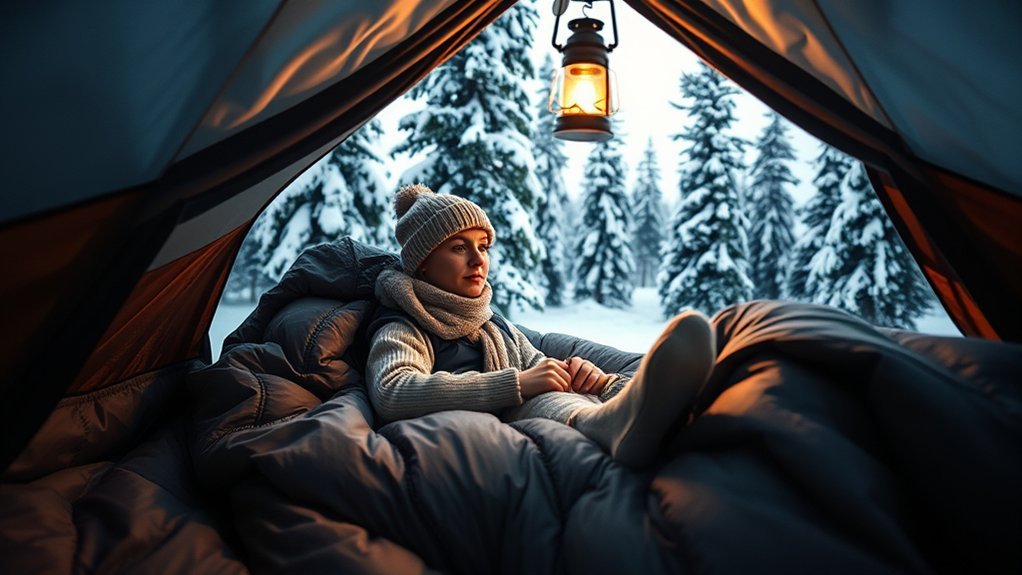
When you’re camping in cold weather, understanding the importance of layering can make all the difference in your comfort while sleeping. Effective layering techniques involve creating a sleep system that traps heat and manages moisture. Start with a moisture-wicking base layer to keep sweat away from your skin. Next, add an insulating mid layer, like fleece or merino wool, which provides warmth without bulk. Finally, consider a windproof outer layer to block cold air from penetrating your setup.
Avoid cotton fabrics, as they retain moisture and can lead to heat loss. For particularly frigid nights, wearing additional light fleece or thermal underwear inside your sleeping bag can enhance warmth. Remember, proper layering not only guarantees you stay warm but also allows you to adjust based on your comfort levels and temperature changes throughout the night. Embrace these strategies for an enjoyable and liberating camping experience.
Choosing the Right Base Layer Materials
When choosing base layer materials for a cold night in a tent, focus on moisture-wicking fabrics to keep sweat away from your skin. Merino wool and synthetic options each offer unique benefits, from natural breathability to affordability. Remember, snug-fitting designs are essential for trapping warmth and enhancing insulation, so steer clear of cotton to avoid unwanted chill.
Moisture-Wicking Fabrics Importance
Choosing the right base layer materials is essential for staying warm and comfortable during cold nights in a tent, especially when you consider how moisture can impact your body temperature. Moisture-wicking fabrics, whether synthetic or merino wool, help draw sweat away from your skin, reducing moisture retention that can lead to chilling. These materials offer superior fabric breathability, ensuring you stay dry and warm throughout the night. Synthetic options dry quickly, making them ideal for active campers, while merino wool provides insulation even when damp. For maximum effectiveness, choose base layers with a snug fit to limit air circulation and heat loss. Prioritizing moisture-wicking properties will enhance your comfort and keep you cozy on those chilly adventures.
Natural vs. Synthetic Options
Finding the right balance between natural and synthetic materials is key to staying warm and comfortable during cold nights in a tent. Natural fibers like merino wool and alpaca wool excel in moisture-wicking and breathability, keeping you dry. On the other hand, synthetic blends like polyester and nylon are often more affordable and retain warmth even when damp.
| Feature | Natural Fibers | Synthetic Blends |
|---|---|---|
| Moisture Management | Excellent | Good |
| Warmth When Wet | Poor | Excellent |
| Breathability | High | Moderate |
| Cost | Higher | Lower |
| Durability | Moderate | High |
Combining options lets you enjoy the best of both worlds, ensuring comfort and performance in chilly conditions.
Selecting the Ideal Insulating Mid-Layer
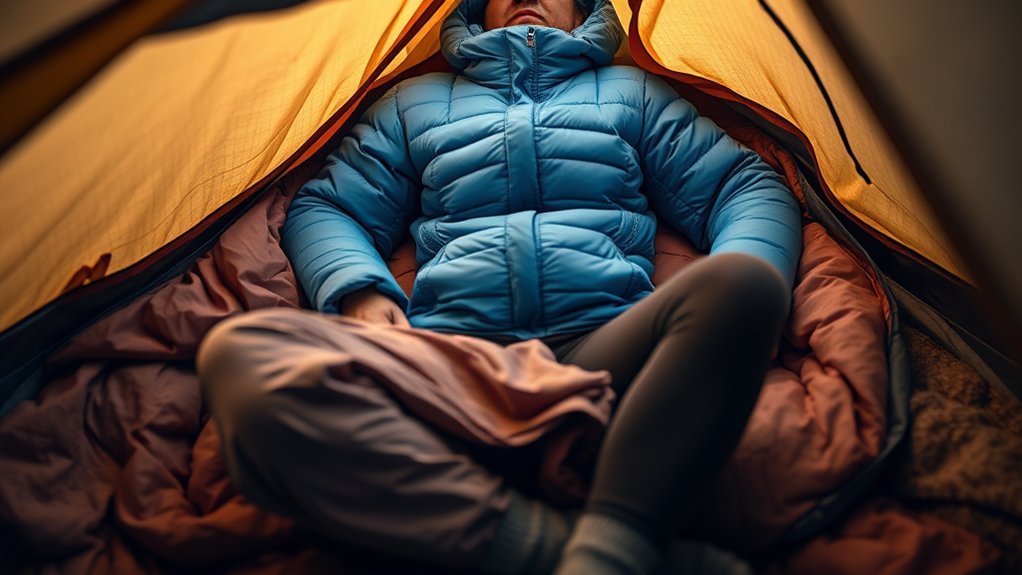
As temperatures drop during your camping trip, selecting the ideal insulating mid-layer becomes crucial for staying warm and comfortable inside your tent. Fleece mid-layers offer significant benefits, including being lightweight and breathable, which helps trap heat while allowing moisture to escape—perfect for those active nights. Conversely, down jackets provide an excellent warmth-to-weight ratio and compress easily for packing. However, be cautious with down in damp conditions, as it loses insulation when wet. Look for mid-layers that feature zippered options for easy adjustment, allowing you to regulate your body temperature based on your activity level or the chill outside. Investing in quality mid-layers from reputable brands like Eddie Bauer or Mammoth guarantees durability and effectiveness, enhancing your overall camping experience. Remember, the right insulating layer can make all the difference in keeping you cozy as you drift off to sleep under the stars.
Picking the Best Outer Layer for Cold Weather
When choosing an outer layer for cold weather, prioritize options that are both waterproof and windproof to shield yourself from the elements. Insulated outerwear, like puffy jackets or down coats, keeps you warm without adding too much bulk, making them perfect for sleeping in a tent. Look for features such as adjustable cuffs and hoods to help trap warmth and enhance your comfort during those chilly nights.
Insulated Outerwear Options
Choosing the right insulated outerwear is essential for staying warm and comfortable during cold nights in a tent. You want to guarantee you’re equipped with layers that trap heat while being lightweight and packable. Consider these insulated outerwear styles:
- Down Jackets: Offer excellent warmth-to-weight ratios but lose effectiveness when wet.
- Synthetic Puffy Coats: Retain warmth even when damp, making them a reliable option in unpredictable weather.
- Hybrid Models: Combine down and synthetic insulation for balanced performance.
When selecting your outer layer, pay attention to insulation material types and features like adjustable cuffs and ventilation zippers to enhance comfort and regulate temperature. Layering with a breathable base layer underneath can help manage sweat and keep you warm throughout the night.
Waterproof and Windproof Features
To stay warm during cold nights in a tent, it’s essential to select an outer layer that boasts both waterproof and windproof features. Look for waterproof materials like Gore-Tex, which not only shield you from snow and moisture but also allow breathability, preventing condensation buildup inside your tent. Prioritize windproof designs with adjustable cuffs and hems to effectively seal out cold air while giving you ventilation options. Make sure your outer layer fits well, allowing enough room for insulating layers beneath without limiting your movement. Additional features like reinforced seams and a hood can offer extra protection against harsh weather, making certain you enjoy your camping experience without compromising warmth or comfort. Choose wisely, and embrace the freedom of the outdoors!
Essential Accessories for Staying Warm
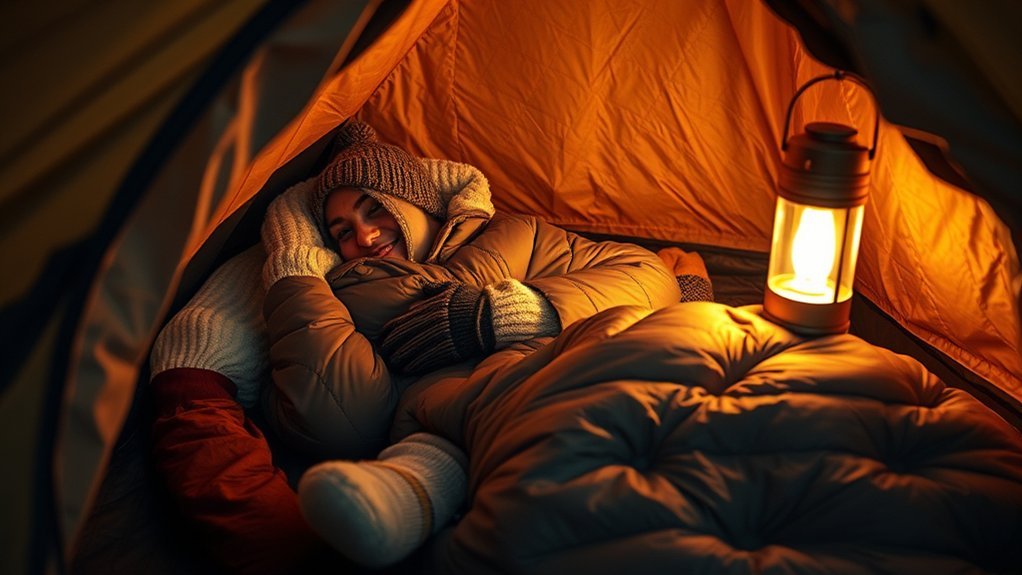
Staying warm during cold nights in a tent hinges on a few essential accessories that can make all the difference in your comfort. Prioritizing heat retention is vital, and the right sleeping accessories will help you achieve that cozy warmth you seek. Here are three must-have items:
Staying warm in a tent during cold nights is essential for comfort; the right accessories can make all the difference.
- Balaclava or Beanie: These headwear options trap heat effectively, preventing loss from your head, a significant source of warmth.
- Thermal Socks: Choose wool or synthetic materials to keep your feet warm and dry, essential for avoiding frostbite and heat loss.
- Sleeping Bag Liner: This adds an extra layer of insulation and cleanliness to your sleeping bag, enhancing overall warmth during frigid nights.
Tips for Staying Comfortable While Sleeping
When camping in cold conditions, comfort while sleeping is just as important as staying warm. Start with moisture-wicking base layers made of merino wool or synthetic fabric to keep sweat away from your skin. Layer extra clothing like fleece or down mid-layers inside your sleeping bag for added insulation—this is a key aspect of your sleeping bag considerations. For improved thermal efficiency, consider using a sleeping bag liner, which not only enhances warmth but also keeps your bag clean. Don’t neglect your feet; insulated wool socks will keep them warm, preventing cold extremities from disrupting your slumber. Finally, for that extra cozy touch, place a hot water bottle or heating pad inside your sleeping bag before bed. This simple trick guarantees a warm start to the night, making your camping experience much more enjoyable.
Managing Moisture Inside Your Tent
As you settle into your tent for a cold night of camping, managing moisture becomes essential for a comfortable sleep. Proper ventilation strategies can prevent condensation from your breath, which can chill your sleeping bag. Here are three practical tips for effective moisture management:
- Avoid Zipping Too Tightly: Keep your tent partially unzipped to allow humidity to escape without letting in too much cold air.
- Opt for a Double-Wall Tent: This design offers a breathable inner layer, enabling water vapor to escape while keeping rain and snow out.
- Use a Moisture-Wicking Sleeping Bag Liner: This enhances comfort and reduces dampness inside your sleeping bag, essential for chilly nights.
Regularly adjust your tent’s ventilation based on temperature changes and your activity level. With these strategies, you can create a dry and inviting sleeping environment, ensuring a restful night under the stars.
Preparing for a Cozy Night in the Great Outdoors
To guarantee a cozy night in the great outdoors, it’s crucial to layer your clothing effectively for cold temperatures. Start with moisture-wicking base layers made from merino wool or synthetic fabrics to keep sweat away and maintain warmth. Next, add insulating mid layers like fleece or a down jacket to trap heat. Don’t forget a puffy outer layer to shield against wind and moisture.
For your feet, thick, insulated wool socks are a must, and pack an extra pair to change into before bed to enhance your sleep hygiene. A balaclava or beanie can help retain heat, as a lot of warmth escapes from your head. When you crawl into your sleeping bag, layer extra clothing for added warmth, and confirm your sleep system includes a high R-value insulated sleeping pad to prevent heat loss to the ground. A proper tent setup will complete your cozy night under the stars.
Frequently Asked Questions
How Many Layers Do I Really Need for Cold Nights?
You’ll need at least three layers for cold nights: a thermal base layer, insulation from your sleeping bag, and a fleece or down layer for added warmth. This combination keeps you cozy and comfortable throughout the night.
Can I Wear Cotton Layers in Cold Weather?
Sure, you can wear cotton layers in cold weather—if you enjoy the sensation of being a walking ice cube! Cotton absorbs moisture, leaving you chilly. Opt for wool or synthetic for warmth and comfort instead.
What Should I Do if I Get Too Warm at Night?
If you get too warm at night, start by removing layers to cool down. You can also adjust ventilation by opening your tent flap or using a breathable sleeping bag to enhance airflow.
Are There Specific Brands Known for Cold-Weather Sleepwear?
Brands like Patagonia and Columbia offer excellent thermal sleepwear and insulated pajamas. You’ll find their products designed for warmth and comfort, letting you embrace the chill without sacrificing your freedom to enjoy outdoor adventures.
How Can I Keep My Sleeping Bag Dry in the Tent?
To keep your sleeping bag dry, focus on tent moisture management. Use a footprint or tarp beneath your tent, maintain ventilation, and store your sleeping bag in a waterproof stuff sack for ideal protection.
Conclusion
As you settle into your cozy sleeping bag, remember the layers you chose weren’t just about warmth; they were your shield against the chill of the night. Coincidentally, those small adjustments—like tucking in your socks or adjusting your hat—can make all the difference. With the right gear and a little preparation, you’ll wake up refreshed, ready to embrace the beauty of the great outdoors. So, gear up, and let the adventure unfold!