


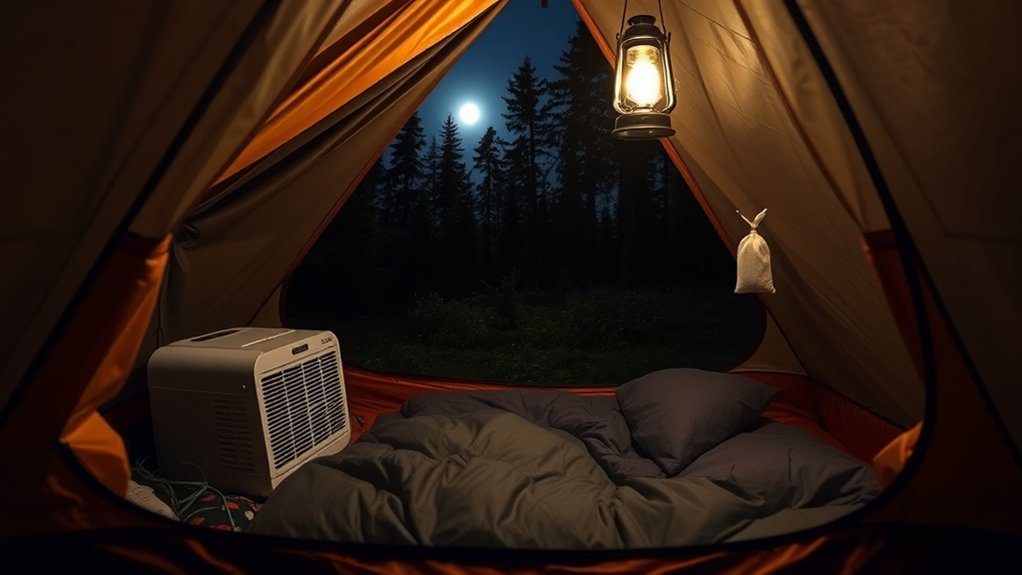
To stop condensation in your tent at night, manage humidity and choose a double wall tent for better moisture resistance. Set up your tent tautly in a spot with tree cover for insulation and airflow. Guarantee effective ventilation by positioning vestibules to promote airflow and opening them each morning. Keep wet gear outside and store it in dry sacks. Elevate your sleeping gear for a drier experience. There’s more to learn about effective condensation management techniques.
Understanding Condensation Causes

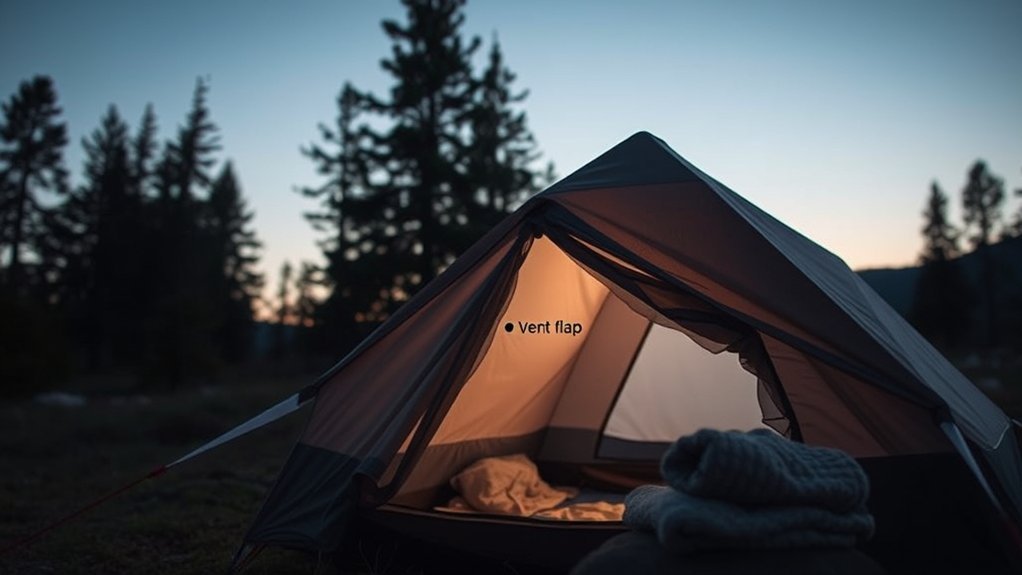
When you’re camping, understanding the causes of condensation is essential for a comfortable experience. Condensation forms when cold tent fabric encounters warm, humid air inside your tent, resulting in moisture buildup that can dampen your gear and affect your sleep. The primary factors here are humidity levels and temperature differences. High humidity levels mean more moisture in the air, which increases the risk of condensation. To minimize this, aim for drier conditions; less humidity means less water vapor to condense. Similarly, a smaller temperature disparity between the inside and outside of your tent can greatly reduce condensation formation. By managing these conditions effectively—like using moisture-wicking materials and ventilating your tent—you can considerably decrease the likelihood of condensation. This knowledge empowers you to create a more comfortable and liberating camping experience, free from the discomfort of excess moisture.
Choosing the Right Tent Type
Choosing the right tent type is essential for minimizing condensation during your camping trips. When it comes to tent materials, double wall tents are your best bet. They consist of a breathable inner layer and a waterproof rainfly, effectively managing moisture. In contrast, single wall tents often trap condensation due to their design, leading to damp gear and uncomfortable nights.
Here’s a quick comparison:
| Tent Type | Condensation Resistance |
|---|---|
| Double Wall | High |
| Single Wall | Low |
| Weight | Heavier |
| Best for | Humid environments |
| User Comfort | Enhanced |
While double wall tents may be heavier, their superior performance in humid conditions makes them worth the extra weight. Prioritizing the right tent type can greatly enhance your camping experience and keep you dry.
Optimal Tent Setup Techniques
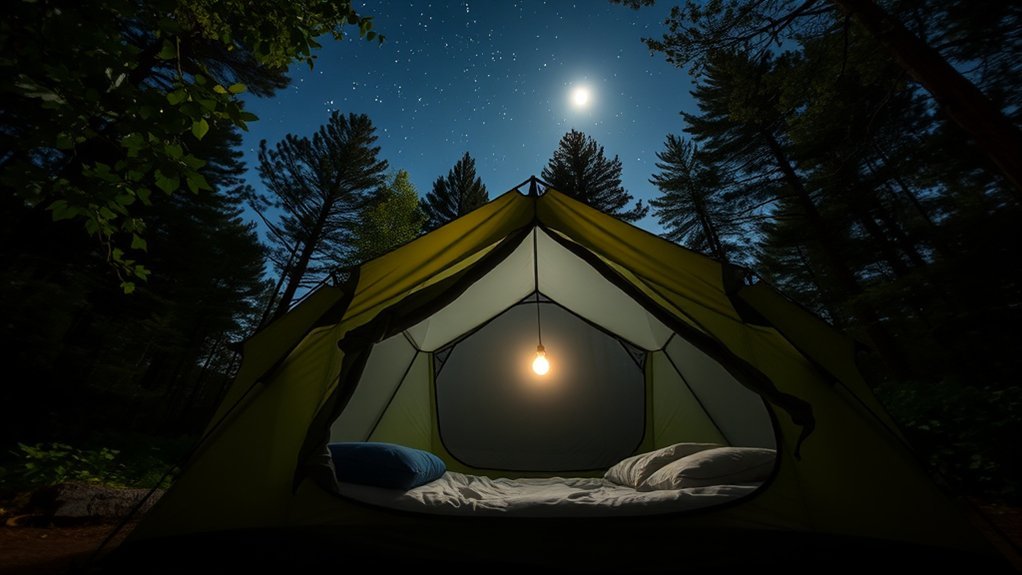
Setting up your tent correctly is essential to minimizing condensation, especially if you’ve opted for a double wall design. Start by selecting a suitable tent orientation that maximizes airflow, ideally positioning it with at least two vestibules and unobstructed ventilation panels. These features allow fresh air to circulate, which is vital for reducing moisture buildup under various weather conditions.
Pitch your tent tautly using all four guidelines, ensuring minimal slack. This helps keep the walls away from your gear, reducing contact and limiting moisture transfer during the night. Consider using sticks under the guidelines to enhance the wall angle, further preventing condensation. Additionally, choose a campsite with tree cover; this creates a warmer microclimate that lowers humidity levels, greatly decreasing the likelihood of condensation at night. By implementing these techniques, you’ll create a more comfortable camping experience free from excess moisture.
Effective Ventilation Strategies
Effective ventilation is essential for preventing condensation in your tent, as it helps maintain a comfortable environment by allowing moisture-laden air to escape. To enhance your ventilation systems, consider these effective strategies:
Ensure effective ventilation in your tent to prevent condensation and maintain a comfortable atmosphere while enjoying the great outdoors.
- Verify your tent has at least two vestibules and multiple ventilation panels for maximum airflow direction.
- Pitch your tent with a steep wall angle to minimize contact with walls and boost ventilation effectiveness.
- Position the tent to maximize airflow from the vestibule, keeping gear clear of ventilation gaps.
- Open both vestibules each morning to exchange stale air for fresh and reduce humidity before nightfall.
- Avoid cooking or storing wet items inside the tent to prevent unnecessary moisture accumulation.
Implementing these strategies will help you control humidity, contributing to a more enjoyable camping experience free from condensation issues. Remember, good airflow is key to a comfortable night under the stars!
Smart Campsite Selection
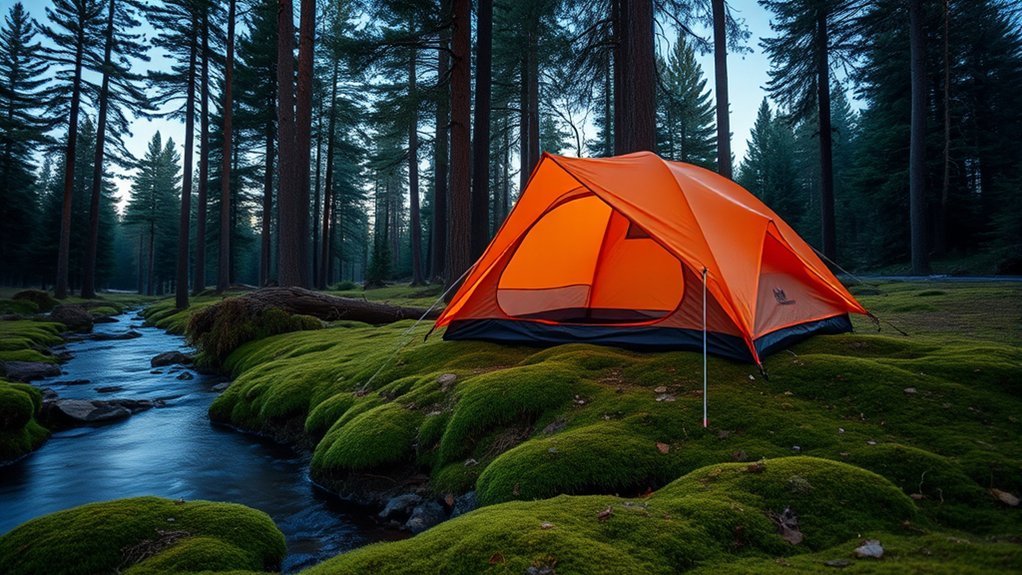
When selecting a campsite, prioritize locations with tree cover to create a warmer microclimate that reduces humidity. Aim for mid-elevation areas or small valleys, as they provide protection from cold air and excess moisture. Also, keep your distance from lakes and rivers to avoid the colder, humid air that can lead to increased condensation inside your tent.
Tree Cover Benefits
Choosing a campsite shaded by trees not only enhances your outdoor experience but also plays an essential role in minimizing condensation inside your tent. The tree canopy provides natural insulation, creating a warmer microclimate that reduces humidity levels and morning dew. Here are some benefits of tree cover:
- Offers natural windbreaks, preventing cold air from seeping in
- Keeps your tent cooler during the day, minimizing temperature fluctuations
- Provides better overall shelter from the elements
- Enhances airflow around the tent for improved ventilation
- Stabilizes temperature and humidity balance within your tent
Elevation Preferences
How can you guarantee a comfortable camping experience while minimizing condensation in your tent? Elevation preferences play an essential role in your campsite selection. Aim for mid-elevation areas, as they strike a balance between protection from cold air and reduced humidity. Smaller valleys can be ideal since they trap warmer air, lowering humidity levels, which helps keep condensation at bay. Avoid camping at the bottom of elevations, where cooler, humid air settles, or on ridges, which expose you to wind and temperature fluctuations. Instead, seek spots with tree cover to create a warmer microclimate that reduces humidity and morning dew. By understanding elevation impact and choosing the right camping altitude, you can enhance your overall camping experience.
Water Proximity Awareness
While selecting a campsite, being mindful of your proximity to water sources is essential for minimizing condensation inside your tent. Camping too close to lakes, rivers, or streams can elevate humidity levels, leading to moisture issues. Here are some tips for smart campsite selection:
- Choose sites at least 200 feet away from water bodies.
- Opt for mid-elevation areas where humidity is naturally lower.
- Look for campsites with tree coverage to create a warmer microclimate.
- Avoid open fields or ridges to prevent exposure to cold, humid air.
- Consider the time of day; temperatures drop at night, increasing condensation risk.
Proper Gear Management
To effectively manage condensation in your tent, focus on proper gear storage and drying techniques. Store wet items outside in a trash bag or dry sack to keep humidity levels down, and always elevate gear off the ground. Each morning, remove gear and open vestibules to let sunlight aid in drying, while using microfiber towels to wipe away any condensation inside.
Gear Storage Solutions
Proper gear management is essential for minimizing condensation in your tent, as moisture from stored items can greatly contribute to the problem. Effective gear organization and smart storage solutions can make a significant difference. Here are some practical tips:
- Store gear in dry areas away from tent walls to limit moisture transfer.
- Keep sleeping gear elevated off the ground to avoid absorbing moisture.
- Isolate wet items in a trash bag or dry sack outside the tent.
- Open both vestibules each morning and expose gear to sunlight for drying.
- Use microfiber towels to wipe down any condensation that accumulates inside.
Drying Techniques
Effectively drying your gear is essential for maintaining a dry and comfortable tent environment. Each morning, open both vestibules and expose your gear to sunlight for about 20 minutes to eliminate moisture. Use microfiber towels to wipe down any condensation inside; they’re lightweight and absorbent, tackling what air drying can’t. Store wet gear in a trash bag or dry sack outside to keep the tent’s humidity low. Regularly check ventilation panels to guarantee they’re clear and functional, promoting airflow. Elevate sleeping gear off the ground to prevent contact with condensation on the tent walls.
| Technique | Benefits |
|---|---|
| Sunlight Exposure | Removes moisture quickly |
| Microfiber Towels | Efficient at absorbing moisture |
| Elevate Sleeping Gear | Keeps sleeping area dry |
Daily Maintenance Practices
While enjoying your camping experience, daily maintenance practices play an essential role in minimizing condensation within your tent. Effective ventilation management and moisture control can make a significant difference. Here are some practical steps you can take:
- Open both vestibules each morning to boost airflow and let sunlight dry your gear for at least 20 minutes.
- Wipe down the tent interior with a microfiber towel daily to eliminate any lingering condensation.
- Ensure your tent is dry before setting it up each evening to reduce moisture buildup overnight.
- Store gear away from tent walls and keep sleeping gear elevated to avoid contact with damp surfaces.
- Isolate wet items in dry sacks or trash bags to prevent them from increasing humidity levels inside the tent.
Frequently Asked Questions
Does the Type of Sleeping Bag Affect Condensation Levels?
Yes, your sleeping bag insulation type matters. A bag with moisture-wicking properties helps manage humidity, reducing condensation. Opt for synthetic materials over down if you’re prone to moisture, ensuring a more comfortable night’s sleep.
Can Using a Tarp Reduce Condensation in My Tent?
Using a tarp can be a game-changer for moisture control, creating a barrier that reduces condensation in your tent. It allows airflow and shields you from elements, enhancing your camping experience and keeping you drier.
Is It Better to Sleep With the Tent Fly on or Off?
It’s better to sleep with the tent fly on for moisture management, but guarantee adequate tent ventilation. This balance reduces condensation while protecting you from the elements, creating a more comfortable sleeping environment.
What Time of Year Is Condensation Most Problematic in Tents?
Condensation’s most problematic in spring camping, with 70% of campers reporting issues. During winter camping, lower temperatures can help, but humidity levels still pose challenges. Be prepared for both seasons to minimize condensation effectively.
Are There Specific Tent Materials That Resist Condensation Better?
Yes, tents made with breathable fabrics and waterproof coatings resist condensation better. These materials allow moisture to escape while preventing water from entering, creating a more comfortable environment for you during your camping trips.
Conclusion
By grasping the causes of condensation and implementing smart strategies, you can transform your camping experience from a damp nightmare into a cozy retreat. Choosing the right tent, setting it up with care, and prioritizing ventilation are your best allies in this battle against moisture. With thoughtful campsite selection and gear management, you’ll create a dry haven under the stars. Embrace these practices, and you’ll wake up refreshed, ready to conquer the great outdoors without the chill of condensation clinging to your gear.