


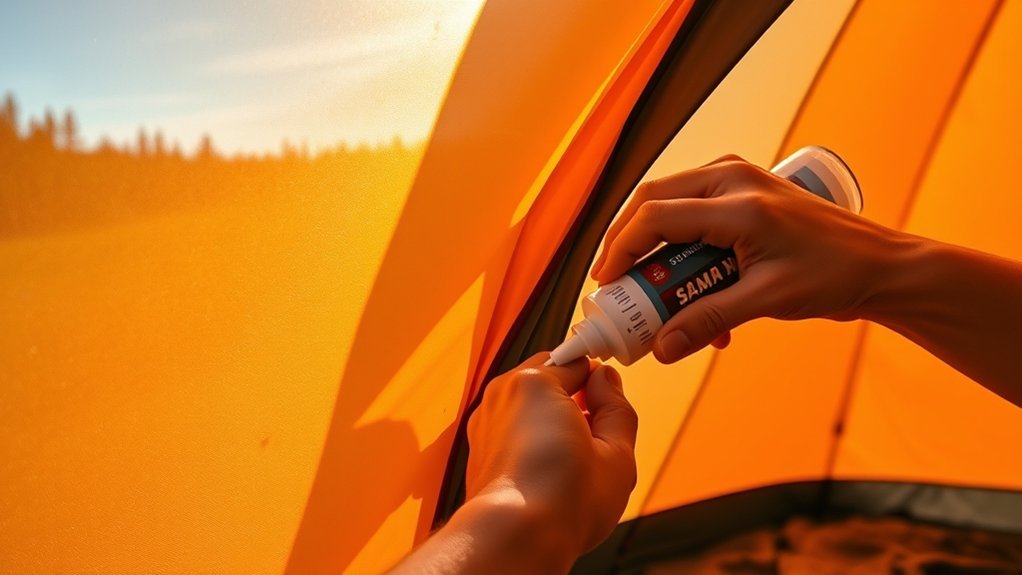
To seam seal your tent, gather a syringe with a curved tip, silicone tent sealer, and an acid brush. First, set up the tent in a dry spot, making sure the temperature’s above 60°F, then clean the seams. Apply the sealer directly onto seams using the syringe, spreading it evenly with the brush. Allow it to cure for at least six hours. Regular inspections and maintenance will guarantee lasting protection for your tent, and there’s more to discover on effective techniques.
Materials Needed for Seam Sealing

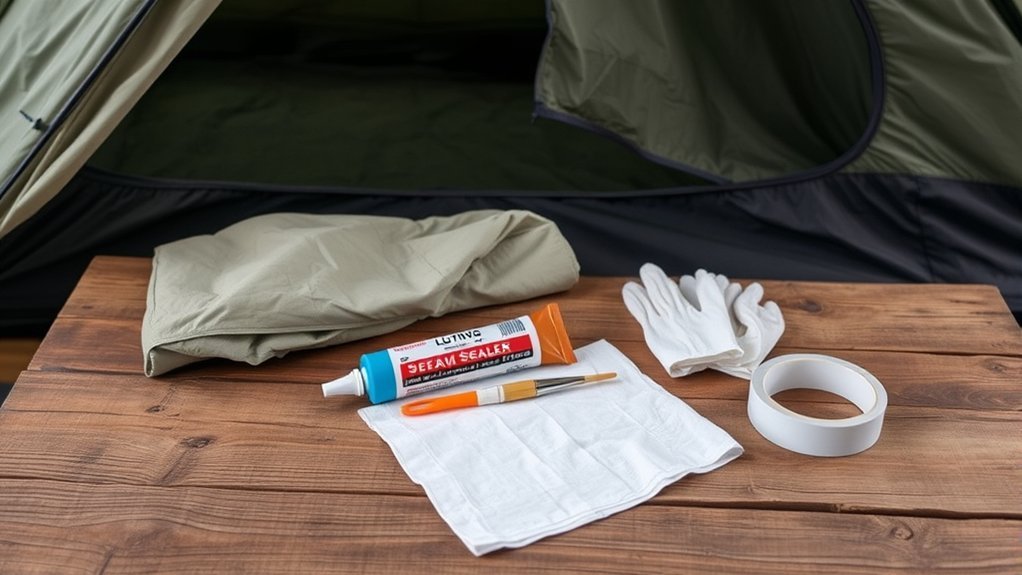
To successfully seam seal your tent, you’ll need a few essential materials. First, focus on syringe selection; choose one with a curved tip for easier application. Make certain it’s needle-free to avoid unwanted punctures. Next, pick a silicone tent sealer that’s compatible with sil nylon, as using the wrong type can lead to ineffective sealing and potential damage to your tent.
An acid brush is vital for applying the sealer evenly along the seams. For an efficient process, consider optional materials like latex gloves for protection, an old rag for cleanup, and paper towels for any spills. Acetone can be useful for finishing touches or mess management. Remember to avoid complicated seam sealing kits, as they can hinder your progress. By gathering these materials and maintaining a clean workspace, you’ll streamline the seam sealing process and guarantee your tent’s longevity in the wild.
Importance of Seam Sealing
Seam sealing is essential for preventing water intrusion in your tent, as seams are often the weakest links where moisture can enter. By properly sealing these areas, you not only protect against leaks but also enhance your tent’s longevity, reducing the risk of mold and damage. Taking the time to guarantee thorough coverage will pay off in performance and durability during your outdoor adventures.
Prevents Water Intrusion
Water intrusion is one of the biggest threats to your camping experience, and proper seam sealing plays a critical role in preventing it. Many tents, like those from Three Ful, lack factory seam sealing, making it essential for you to take action. Unsealed seams can absorb water, leading to leaks that compromise your camping gear and comfort.
| Issue | Impact | Solution |
|---|---|---|
| Unsealed seams | Water leaks | Apply seam sealer |
| Absorbed water | Interior damage | Use waterproofing techniques |
| Poor performance | Disrupted trips | Seal seams correctly |
| Improper curing | Increased intrusion | Allow proper curing |
Enhances Tent Longevity
While you might think of your tent as a temporary shelter, enhancing its longevity is vital for guaranteeing many successful camping trips. Seam sealing is an important aspect of tent maintenance, as it prevents water intrusion at the seams, the most vulnerable points of your tent. Many manufacturers, like Three Ful, don’t pre-seal seams, making it your responsibility to perform this task. Properly sealed seams not only keep moisture out but also maintain the structural integrity of your camping gear. To maximize effectiveness, use the right materials and allow the sealant to cure overnight. Regular seam sealing guarantees peak performance, protecting against water damage and greatly extending your tent’s lifespan for countless adventures ahead.
Preparation Before Sealing

Before you start sealing your tent, it’s important to create an ideal environment for the job. First, set up your tent in a sheltered location that’s dry, keeping it protected from rain and wind during the sealing process. The temperature should be above 60 degrees Fahrenheit for the best curing of the seam sealer, so check your local weather conditions.
Next, perform seam cleaning to guarantee the best adhesion. Use water and a rag to wipe down the seams, removing any dirt or debris that might hinder the sealing. Gather all necessary materials, including a syringe with a curved tip, silicone tent sealer suitable for sil nylon, and an acid brush for application. Finally, allow at least six hours for the tent to dry completely before you begin sealing. This preparation is vital for effective coverage and making sure your tent remains waterproof for your adventures ahead.
Application Process
Now that your tent is prepped, it’s time to start the application process for seam sealing. You’ll apply the sealer with a syringe and an acid brush to make certain every seam is covered thoroughly. After application, allow the sealer to cure properly to assure maximum protection against water infiltration.
Tent Preparation Steps
To guarantee peak results when seam sealing your tent, start by setting it up in a dry, sheltered area for at least six hours. This tent location guarantees it’s completely dry, which is essential for effective sealing. Next, conduct a thorough seam inspection; clean the seams using water and a rag to eliminate dirt or debris that could hinder adhesion. Confirm the temperature is above 60 degrees Fahrenheit for ideal curing conditions. Once prepared, you’re ready to apply the seam sealer. This meticulous preparation step is significant for achieving a reliable, waterproof seal that enhances your tent’s longevity and performance on your outdoor adventures. Proper preparation liberates you from leaks and discomfort while camping.
Sealer Application Techniques
With your tent prepped and ready, you can move on to applying the seam sealer effectively. Start by using a syringe with a curved tip to apply the seam sealer directly onto the seams, ensuring you cover all stitching where panels connect. Utilize an acid brush to spread the sealer evenly, checking visually to confirm complete coverage and avoid missing any areas. Work methodically from one point and move outward for consistent application across all seams. For best results, seal both sides of the seams where applicable, providing extra protection against water ingress. Remember to allow the seam sealer to cure for a minimum of six hours, ideally overnight, for maximum effectiveness before using your tent.
Curing and Cleanup Tips
How long should you wait before using your tent after applying seam sealer? You should allow the seam sealer to cure for at least six hours, ideally overnight. This curing duration guarantees proper adhesion and effectiveness. Avoid breaking down the tent during this time to protect the seal. Before the curing period ends, do a thorough walk-around to check for missed seams.
Here are some cleanup methods to take into account:
- Use acetone to clean up excess seam sealer.
- Verify the temperature is above 60°F for best curing.
- Keep the tent in a well-ventilated area during curing.
- Store the tent properly to maintain its functionality.
- Inspect the seams periodically to ensure lasting protection.
Post-Sealing Care
Once you’ve finished seam sealing your tent, it’s important to take proper care to guarantee the sealer performs effectively. Start by allowing the sealer to cure for at least six hours, ideally overnight, in temperatures above 60 degrees Fahrenheit. This guarantees ideal adhesion. After curing, conduct a thorough seam inspection to identify any missed areas; complete coverage is essential for waterproofing.
If you find excess seam sealer, clean it up with acetone to maintain your tent’s appearance and functionality. Once everything checks out, store your tent in a cool, dry place. Proper moisture storage is critical to prevent any buildup that could compromise the sealed seams over time. By following these steps, you’ll make sure your tent remains reliable and ready for your next adventure, providing you with the freedom to explore without worrying about leaks.
Efficiency of the Seam Sealing Process
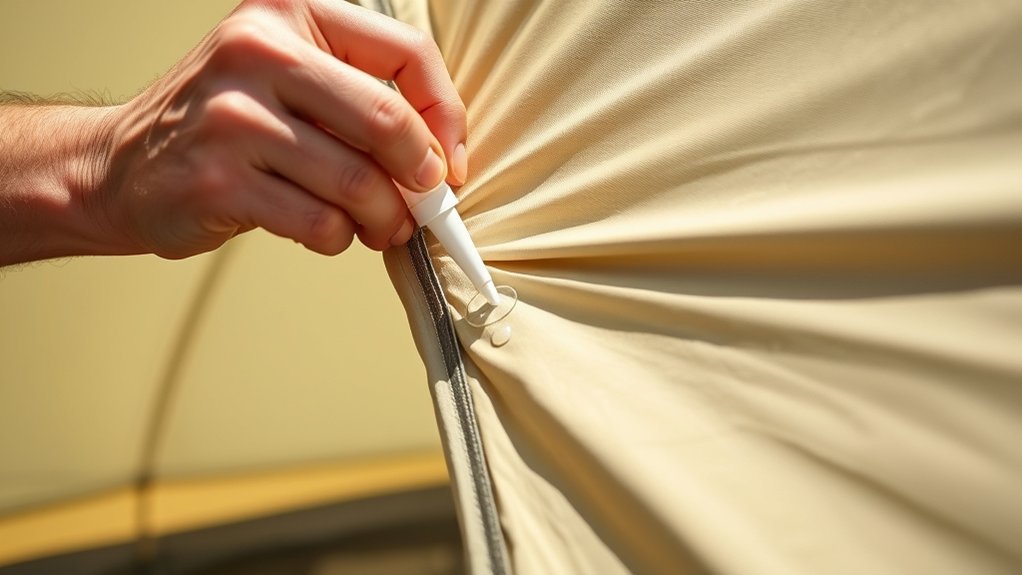
Although seam sealing a tent might seem intimidating, it’s a straightforward process that typically takes about 45 minutes for an entire tent. To maximize the efficiency of your seam sealing techniques, consider the following tips:
- Use a syringe and acid brush for precise application.
- Clean and dry the tent before starting.
- Maintain temperatures above 60°F during application.
- Allow the seam sealer to cure for at least six hours, ideally overnight.
- Focus on even coverage to minimize waste.
Community Engagement and Future Content
What if sharing your seam sealing experiences could elevate the entire camping community? By exchanging community tips, you can enhance everyone’s knowledge and improve techniques for maintaining tents. Your insights on the seam sealing process not only help others but also encourage viewer feedback, which is essential for gauging interest and effectiveness. This interaction fosters a supportive environment among outdoor enthusiasts.
As we look to the future, our content will expand beyond seam sealing to include waterproof testing, ensuring your tent performs well in various weather conditions. Engaging with fellow campers allows for valuable discussions and shared insights, ultimately benefiting all members. By promoting comments and thumbs up on tutorial videos, you’re actively participating in a community that values collaboration. Together, we can transform the way we care for our tents, leading to better camping experiences for everyone involved.
Frequently Asked Questions
How Often Should I Seam Seal My Tent?
You should seam seal your tent every season or after significant use to guarantee proper tent maintenance. This practice enhances waterproof longevity, keeping you dry during trips and prolonging your tent’s overall lifespan.
Can I Use Any Type of Adhesive for Seam Sealing?
You can’t just grab any adhesive for seam sealing your tent. Instead, use silicone sealants or polyurethane adhesives for durability. Research sealant recommendations specific to your tent material to guarantee effective, long-lasting protection from the elements.
Is Seam Sealing Necessary for Waterproof Tents?
Yes, seam sealing’s vital for maximizing tent waterproofing benefits. It prevents leaks and extends your tent’s lifespan. Regular maintenance, including seam sealing, guarantees you stay dry and comfortable during your adventures. Don’t overlook this important step!
What Should I Do if the Sealer Dries Unevenly?
If your sealer dries unevenly, reapply a thin layer over the affected areas. Surprisingly, 30% of campers face this issue; proper sealer application can guarantee your tent remains waterproof and ready for adventure.
Can I Seam Seal a Tent in Humid Weather?
Yes, you can seam seal a tent in humid weather, but humidity affects curing times. Make certain the tent’s surface is clean and dry, and consider longer drying periods to achieve ideal results despite weather considerations.
Conclusion
Seam sealing your tent is like putting on a raincoat before stepping into a storm; it’s essential for keeping you dry and comfortable during your adventures. By following the steps outlined, you’ll not only enhance your tent’s durability but also guarantee a more enjoyable camping experience. Remember, a little effort in seam sealing now can save you from a soggy night later. So, gear up, seal those seams, and get ready to explore the great outdoors with confidence!