


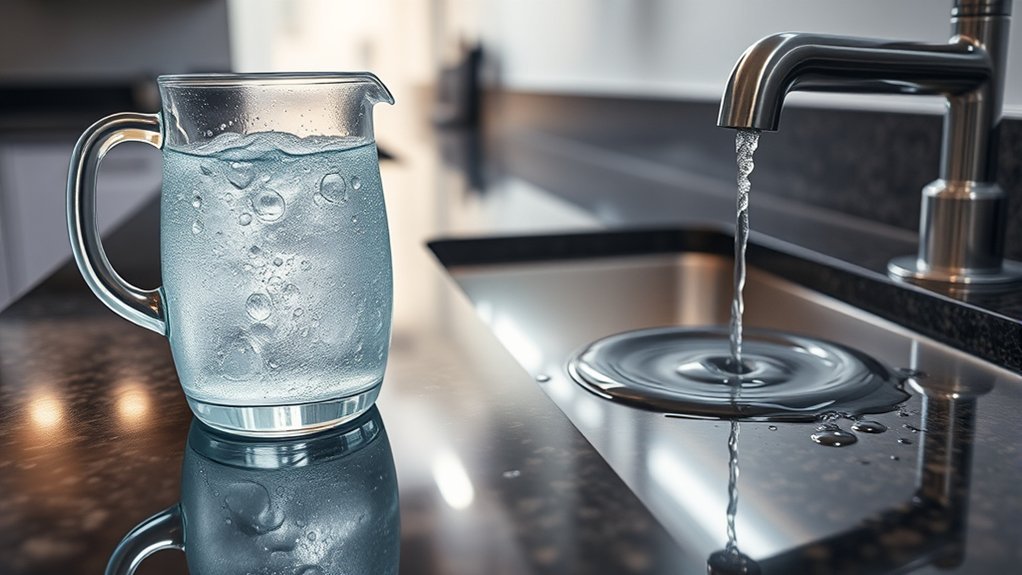
To tell whether you’re dealing with condensation or a leak, observe the moisture patterns. Leaks usually show distinct damp spots, peeling paint, or water pooling near foundations. In contrast, condensation appears as uniform moisture on surfaces, fogged windows, or high humidity in confined spaces. Use diagnostic methods to confirm leaks, while reducing indoor humidity can mitigate condensation. Understanding these signs is key to addressing the source effectively, and there’s more to explore on prevention and solutions.
Understanding Condensation and Leaks

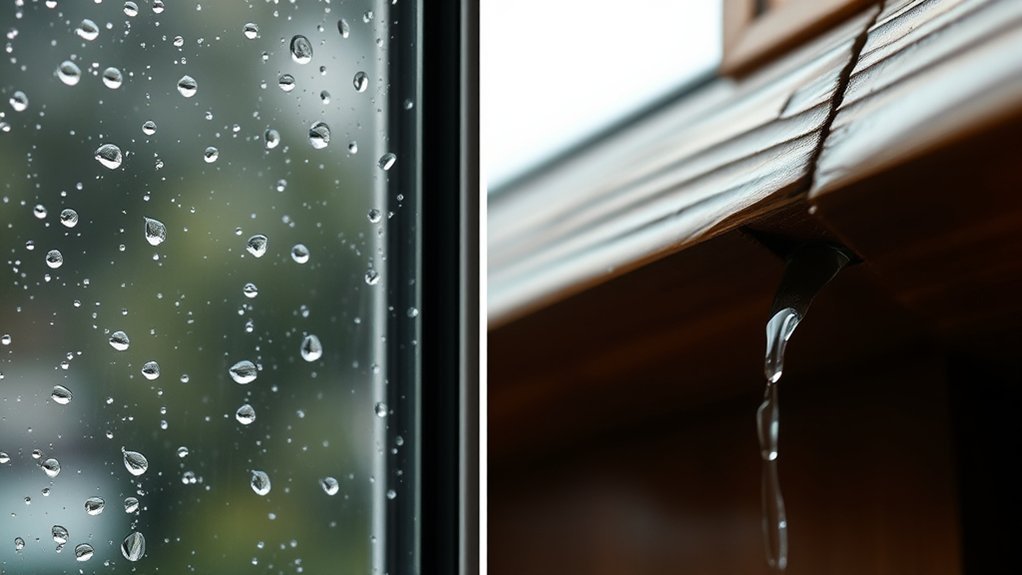
When you notice moisture in your home, it’s crucial to distinguish between condensation and leaks, as each requires a different approach. Condensation typically arises when warm, moist air meets cold surfaces, leading to droplets. In contrast, leaks are caused by water intrusion through cracks or compromised materials. To identify the source, observe the moisture patterns: circular stains with rings suggest leaks, while uniform dampness indicates condensation.
Damp insulation types can signal condensation issues, whereas wet insulation often points to a leak. Factors like poor attic ventilation can worsen condensation, creating frost on roof decking. Conversely, leaks may originate from damaged shingles or flashing. Regular inspections and maintenance are imperative to catch early signs of both issues. By understanding these moisture sources, you can take proactive steps to protect your home and guarantee a healthier living environment.
Key Indicators of a Leak
Identifying key indicators of a leak is essential for maintaining your home’s integrity and preventing further damage. Several signs can help you detect water intrusion early, allowing for timely intervention.
| Indicator | Description | Action Required |
|---|---|---|
| Water after Rainfall | Water pooling near foundation cracks or window wells | Inspect and repair drainage issues |
| Consistent Damp Spots | Puddles forming repeatedly in the same area | Investigate and seal leaks |
| Peeling Paint & Mold | Visible damage on walls and musty odors | Conduct moisture detection tests |
| Visible Water Streams | Streams during storms indicate leaks | Address roof or plumbing issues |
Signs That Point to Condensation

Several signs can indicate condensation in your home, often manifesting as uniform moisture across surfaces. Unlike leaks, condensation typically appears evenly on materials like metal pipes or concrete walls, rather than in distinct patches. You may notice damp air, fogged windows, or water beads forming on non-porous materials, especially in humid environments. High humidity levels, particularly in confined spaces such as basements or bathrooms, greatly increase the likelihood of these issues.
To further differentiate condensation from leaks, consider performing the aluminum foil test. Place a piece of foil on the suspected area; if condensation forms on the foil, it’s likely condensation, while a leak would produce water beneath it. By monitoring surface temperature and maintaining effective humidity control, you can better understand the condensation dynamics in your space, enabling you to take informed steps toward a drier, healthier home.
Solutions Based on Diagnosis
Understanding whether you’re dealing with condensation or a leak is essential, as the solutions vary greatly based on your diagnosis. For leaks, employ diagnostic methods that identify water sources. Solution strategies include implementing exterior measures such as waterproofing and regrading to direct water away from your foundation. Maintain gutters and downspouts to prevent overflow and effectively manage water flow.
In contrast, if condensation is your concern, focus on minimizing moisture accumulation. Utilize dehumidifiers and insulate cold surfaces to combat humidity. Enhance airflow through vents or fans, which greatly reduces indoor humidity levels and prevents condensation buildup. While temporary relief can be achieved through interior sealants for leaks, prioritize identifying and addressing the root cause with professional assistance. By understanding your specific issue and applying the appropriate solution strategies, you can liberate your home from unwanted moisture.
Preventive Measures for Long-Term Protection
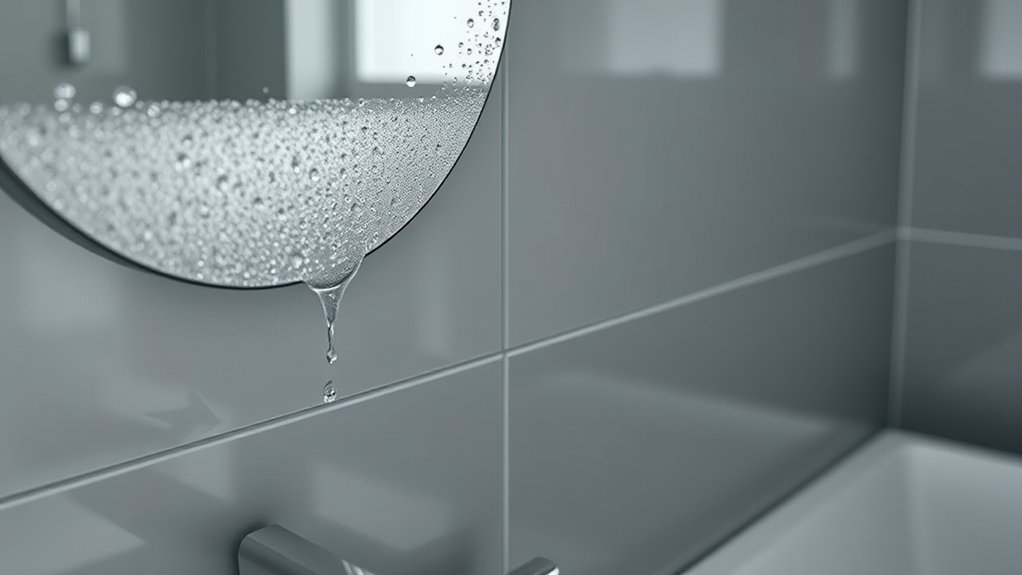
Taking proactive steps can considerably reduce the likelihood of experiencing moisture issues in your home. Regular gutter maintenance is vital; guarantee that your gutters and downspouts effectively direct water away from your foundation. This will prevent potential leaks that could compromise your living space. Additionally, inspect the slope of your yard. If you notice water pooling near your home, consider regrading to establish proper drainage.
Monitoring indoor humidity levels using a hygrometer can also be beneficial. Address high humidity early to minimize the risk of condensation. On humid days, close your windows to keep moist outdoor air from entering. Finally, conduct regular inspections for early signs of moisture, such as damp spots or peeling paint. By implementing these preventive measures, you empower yourself to safeguard your home from long-term moisture problems, enhancing your living environment and financial freedom.
Frequently Asked Questions
Can I Prevent Condensation Without Improving Ventilation?
You can prevent condensation without improving ventilation by using dehumidifier options to reduce moisture levels and applying insulation techniques to maintain temperature balance. These methods effectively minimize condensation, promoting a drier, more comfortable environment.
How Can I Identify the Source of a Leak?
To identify a leak, start with strategic spot searches. Inspect moisture sources like plumbing, foundations, and roofs. Employ leak detection tools for precise pinpointing, ensuring you tackle troublesome torrents efficiently and effectively.
Are Certain Materials More Prone to Condensation?
Yes, certain material types, like metal and glass, are more prone to condensation due to their thermal conductivity. Condensation causes are often exacerbated in colder environments, where humidity levels are higher, leading to moisture accumulation.
What Tools Can Help Detect Hidden Leaks?
To detect hidden leaks, you can use a thermal imaging camera to visualize temperature variations and a moisture meter to measure moisture levels in materials. These tools help you identify issues efficiently and accurately, ensuring informed repairs.
How Does Humidity Affect Condensation Levels in My Bathroom?
Humidity directly influences condensation levels in your bathroom. By improving humidity control and enhancing bathroom ventilation, you can reduce moisture buildup, preventing condensation and creating a more comfortable, healthier space for you and your family.
Conclusion
In the battle between condensation and leaks, knowing the enemy is essential. By understanding the signs each presents, you can arm yourself with the right solutions. Like a detective solving a mystery, you’ll piece together clues to protect your space from unwanted moisture. Whether it’s sealing leaks or improving ventilation, taking proactive steps guarantees a dry, comfortable environment. Stay vigilant, and you can outsmart the dampness before it becomes a pervasive problem.