


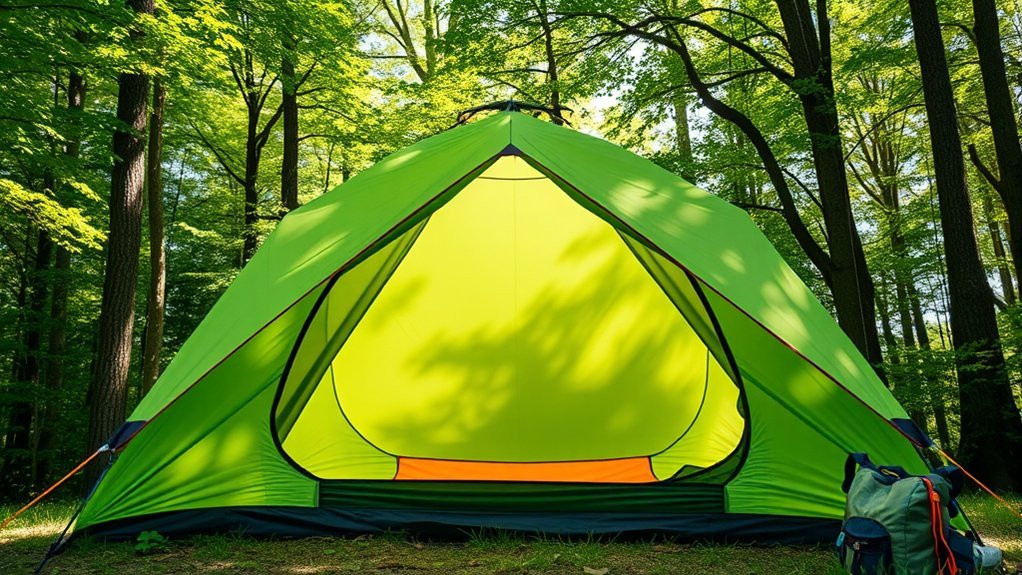
A double-wall tent has two layers: an inner breathable tent and a waterproof rainfly. This design offers superior insulation and moisture management, keeping you dry and comfortable in various conditions. Campers prefer them because they effectively reduce condensation, provide extra living space, and allow better ventilation. While they can be heavier and bulkier than single-wall options, the benefits in protection and comfort make them a top choice. You’ll discover more advantages and tips as you explore further.
What Is a Double-Wall Tent?

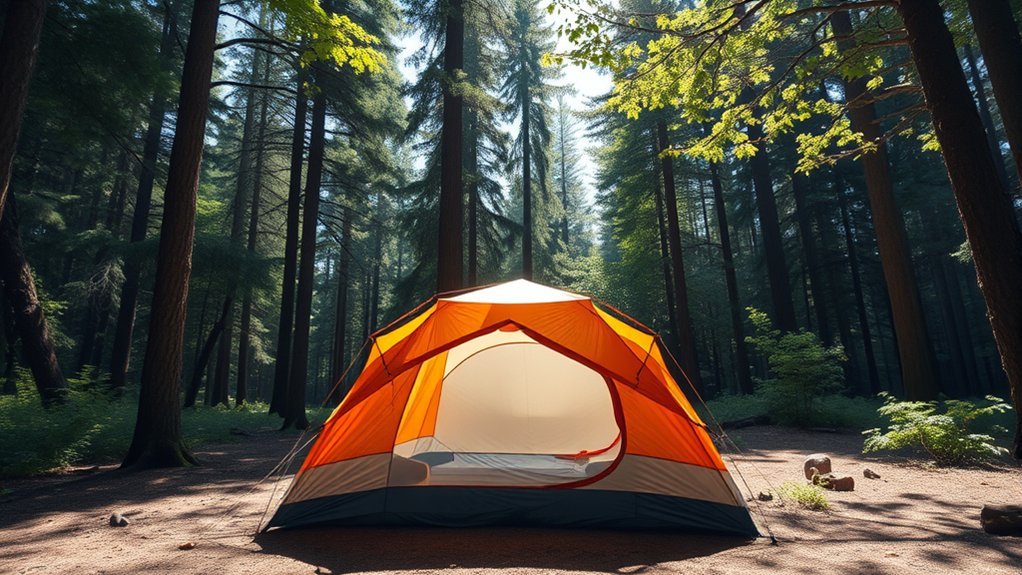
A double-wall tent is your go-to shelter for tackling diverse camping conditions. It features an inner breathable tent body and a waterproof outer rainfly, ensuring robust protection against the elements. The breathable layer effectively manages condensation, allowing moisture to escape while the rainfly keeps your gear dry. This combination of tent materials enhances your camping experience, especially in humid or cold environments.
Typically freestanding, double-wall tents allow for easy setup without needing to stake them down, making them ideal for varied terrains. Plus, they often come with multiple doors and vestibules, providing increased accessibility and extra space for your camping gear. While they may be heavier than single-wall options, the superior insulation and moisture management they offer make them a reliable choice for serious campers. Embrace the freedom of the outdoors with a double-wall tent that meets your adventure needs.
Advantages of Double-Wall Tents
When it comes to camping, the advantages of double-wall tents can greatly enhance your outdoor experience. These tents combine a breathable inner layer with a waterproof outer rainfly, markedly boosting waterproofness and breathability. You’ll appreciate the superior moisture management, which minimizes condensation and keeps the interior drier during your adventures.
Here’s a quick visual breakdown of the benefits:
| Feature | Advantage |
|---|---|
| Insulation Benefits | Warmer and less drafty for comfort |
| Moisture Management | Reduces condensation on inner walls |
| Freestanding Design | Easy setup without staking |
| Additional Access | Multiple doors and vestibules for gear |
With these features, you’re set for a comfortable and convenient camping experience, no matter the weather. Double-wall tents truly offer a blend of functionality and comfort, making them a preferred choice for modern campers.
Disadvantages of Double-Wall Tents
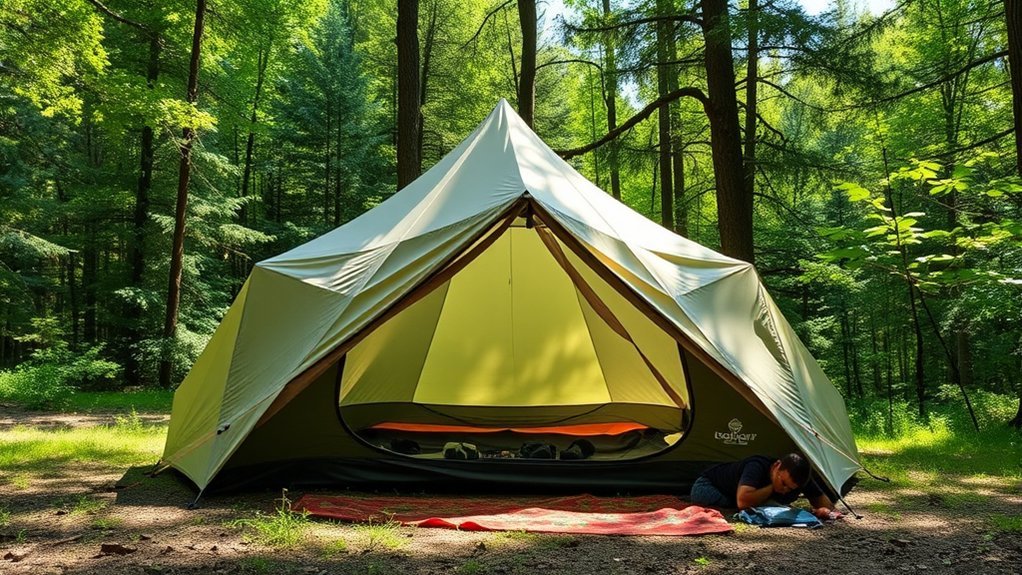
While double-wall tents offer numerous benefits, they also come with several disadvantages that campers should consider. One of the primary concerns is weight; these tents are generally heavier than single-wall options, adding an extra 0.51 to 1 pound to your pack. If you’re an ultralight backpacker, this could markedly impact your journey. Additionally, the cost implications can’t be ignored—double-wall tents usually run about $100 more than comparable single-wall models, making them less appealing for budget-conscious adventurers.
Moreover, their bulkiness results in longer packed dimensions, taking up valuable space in your backpack. Setting up a double-wall tent can be more time-consuming, often requiring 1-3 minutes longer due to the additional components involved. Finally, if you set up the inner tent first in rainy conditions, you risk getting the interior wet, complicating your camping experience. We’ve got to weigh these factors carefully before making a choice.
Best Environments for Double-Wall Tents
Considering the drawbacks of double-wall tents, it’s important to recognize the environments where they truly excel. These tents shine in humid and rainy settings, effectively managing condensation and moisture control. If you’re camping in cold weather, their superior insulation helps maintain warmth while keeping drafts at bay.
In milder conditions, you can pitch the tent without the rainfly, enhancing ventilation and comfort. This modular design is especially useful for diverse camping conditions, allowing you to adapt to changing weather.
Double-wall tents are also ideal for remote trips, where reliable shelter is essential during long stretches away from resupplies. For newcomers to camping, their balanced functionality offers an accessible way to experience the great outdoors. Whether you’re facing rain, humidity, or chill, double-wall tents cater to the most challenging climates, ensuring you enjoy your adventure without compromise.
Tips for Using a Double-Wall Tent
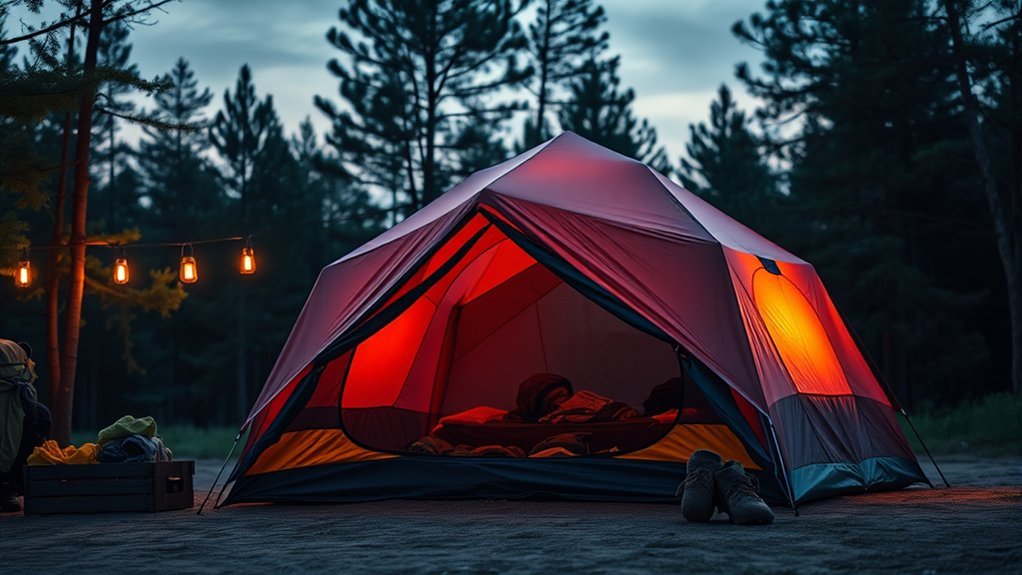
When using a double-wall tent, proper ventilation is key to preventing condensation and ensuring a comfortable experience. To set up efficiently, consider pitching the rainfly first in wet conditions, keeping the inner tent dry while you work. By following these tips, you’ll maximize your tent’s performance and enhance your camping experience.
Proper Ventilation Techniques
How can you guarantee proper ventilation in your double-wall tent to prevent condensation? Effective moisture management is key, especially when warm air meets cooler surfaces. Here are some ventilation techniques to enhance airflow:
- Open Vents: Verify all vents are open and positioned for cross ventilation, particularly in humid conditions.
- Pitch Rainfly First: Set up the rainfly first in adverse weather to keep the inner tent dry while still allowing airflow.
- Adjust Rainfly Tension: After setup, tweak the rainfly tension to maintain ideal airflow and reduce flapping, which helps prevent condensation.
Utilizing multiple doors and vestibules can further improve ventilation, making your camping experience more comfortable and liberating.
Efficient Setup Tips
Setting up a double-wall tent efficiently can make all the difference in your camping experience, especially in challenging weather conditions. Follow this setup checklist for peak performance:
| Step | Action | Purpose |
|---|---|---|
| Clear the ground | Remove debris and stake tight | Prevent water pooling |
| Pitch rainfly first | Keep inner tent dry | Guarantee comfort in storms |
| Use guy cords | Enhance stability | Prevent collapse in wind |
Also, after setup, adjust the rainfly tension for a taut fit to improve water runoff. For tent maintenance, make sure you open vents and doors for airflow, balancing warmth with ventilation to reduce condensation. Happy camping!
Comparing Single-Wall and Double-Wall Tents
While evaluating your options for camping shelters, understanding the differences between single-wall and double-wall tents is essential. Here’s a breakdown to help you decide:
- Condensation Management: Double-wall tents excel at moisture control, keeping the interior drier as condensation forms on the outer rainfly instead of the inner layer.
- Weight Considerations: Single-wall tents often win on tent weight, being lighter and more compact, making them ideal for minimalist backpackers. However, double-wall tents weigh only 0.51 lb to 1 lb more, offering added stability.
- Versatility and Setup: Double-wall tents are typically freestanding, making setup easier without staking, which is useful in diverse environments. They also provide increased gear storage and multiple doors for convenience.
Ultimately, if you prioritize moisture management and versatility over a slight increase in tent weight, a double-wall tent could be your best bet.
Who Should Choose a Double-Wall Tent?
Are you planning a camping trip in unpredictable weather or high humidity? A double-wall tent might just be your perfect companion. These tents are ideal for backpacking beginners and seasoned campers alike, especially if you prefer diverse environments.
| Feature | Benefits | Ideal For |
|---|---|---|
| Superior Condensation | Keeps the interior dry | Humid conditions |
| Insulation | Better warmth during cold trips | Colder climates |
| Versatile Pitching | Set up rainfly first in storms | All-weather campers |
| Increased Comfort | More gear storage and living space | Campers who relax at site |
If you enjoy spending time at your campsite, the comfort and functionality of a double-wall tent can really enhance your experience. Whether you’re a beginner or have specific camping preferences, this tent style offers the best of both worlds.
Frequently Asked Questions
How Much Do Double-Wall Tents Typically Weigh?
Double-wall tents typically weigh between 3 to 7 pounds, depending on the materials and design. When selecting camping gear, consider the balance between weight and durability to guarantee a comfortable, liberating outdoor experience.
Can Double-Wall Tents Be Used in Winter Camping?
Yes, double-wall tents can be used for winter camping. They provide excellent winter insulation but may present condensation issues. Proper ventilation helps mitigate moisture, ensuring a comfortable and dry camping experience in chilly conditions.
Are Double-Wall Tents Difficult to Pack?
Double-wall tents aren’t particularly difficult to pack if you use proper packing techniques and maintain tent organization. With practice, you’ll streamline the process, ensuring everything fits neatly, allowing for a more liberating camping experience.
What Materials Are Commonly Used in Double-Wall Tents?
Double-wall tents often use durable nylon fabrics combined with waterproof coatings, ensuring you stay dry and comfortable. This combination enhances the tent’s performance, providing a reliable shelter for your adventurous spirit in the great outdoors.
How Long Do Double-Wall Tents Usually Last?
Double-wall tents typically last between five to ten years, depending on durability factors like materials and usage. Proper care can enhance their lifetime expectancy, ensuring you enjoy many adventures without worries.
Conclusion
In the world of camping, a double-wall tent stands as your shield against the elements, much like a fortress protecting your dreams under the stars. Its layered design not only keeps you dry but also fosters a cozy sanctuary amidst nature’s vastness. While it may weigh a bit more, the comfort and reliability it provides turn every adventure into a cherished memory. So, as you gear up, consider embracing this resilient companion for your next journey into the wild.