


Car camping and backpacking both get you outside, but they feel very different. Car camping keeps your vehicle close, so you can bring a bigger tent and more comfort. Backpacking means you carry everything, so you pick lighter gear and simpler setups. If you’re deciding, start with the gear differences and the FAQs.
Car camping is usually close to your vehicle, so you can use a larger tent, thicker pads, and extra gear. Backpacking means hiking to camp with all your supplies. Shelters are lighter and faster to pitch, often with fewer parts and color-coded poles. The best choice depends on comfort, distance, and where you want to camp.
Key takeaways
- Choose car camping for comfort, space, and easy planning—great for families and groups.
- Choose backpacking for mobility and remote campsites—every ounce in your pack matters.
- Backpacking tents favor quick setup and low weight; car camping tents favor headroom and comfort.
- Practice pitching at home so you can set up quickly when weather or daylight changes.
- Site choice matters in both styles: look for safe, legal ground with good drainage.

Understanding car camping
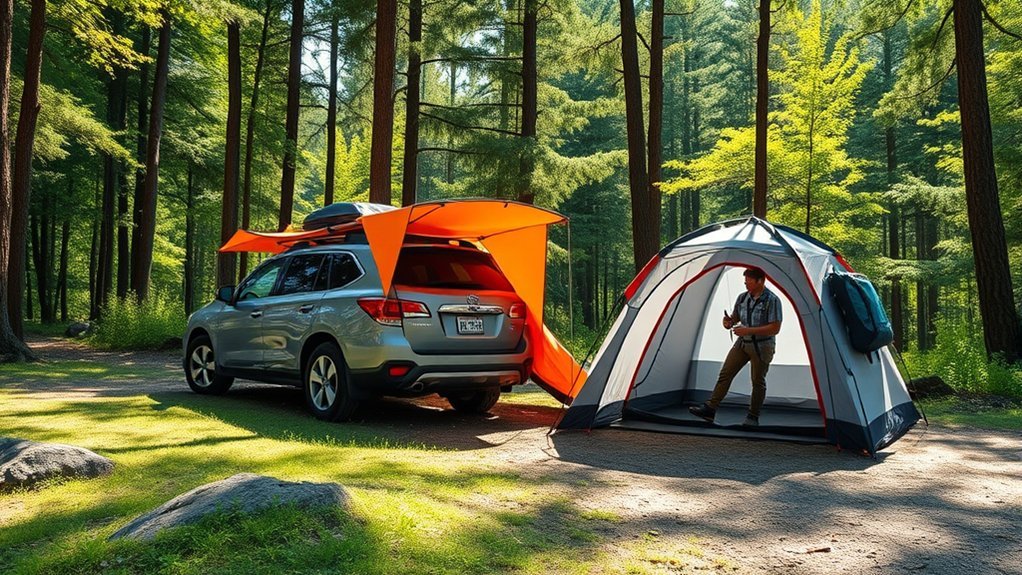
Car camping usually means you drive to a campground or trailhead and set up near your vehicle. Because you don’t have to carry your kit for miles, you can bring a roomier tent, thicker pads, and extras like camp chairs or a two-burner stove. Many campgrounds also provide basics like restrooms and picnic tables.
In practice, car camping often feels like a “base camp” trip: you can hike, fish, or explore during the day, then return to a comfortable setup at night.
Camping in your car
Some people use “car camping” to mean sleeping inside the vehicle instead of using a tent. This can help in rain, wind, or cold because the car acts as a hard shell.
A simple setup can be surprisingly comfortable. Use an inflatable mattress or platform, crack windows for airflow, and choose a warm sleeping bag.
| Aspect | Sleeping in your car | Backpacking |
|---|---|---|
| Setup | Often quick (park + arrange bedding) | Pitch shelter + stake + organize gear |
| Weather protection | High (hard-sided) | Varies by shelter and site |
| Gear flexibility | High (vehicle carries weight) | Low (you carry it all) |
Always follow local rules about overnight parking and campground policies. If you’re at a campground, ask the host or check posted regulations.
What is backpacking?
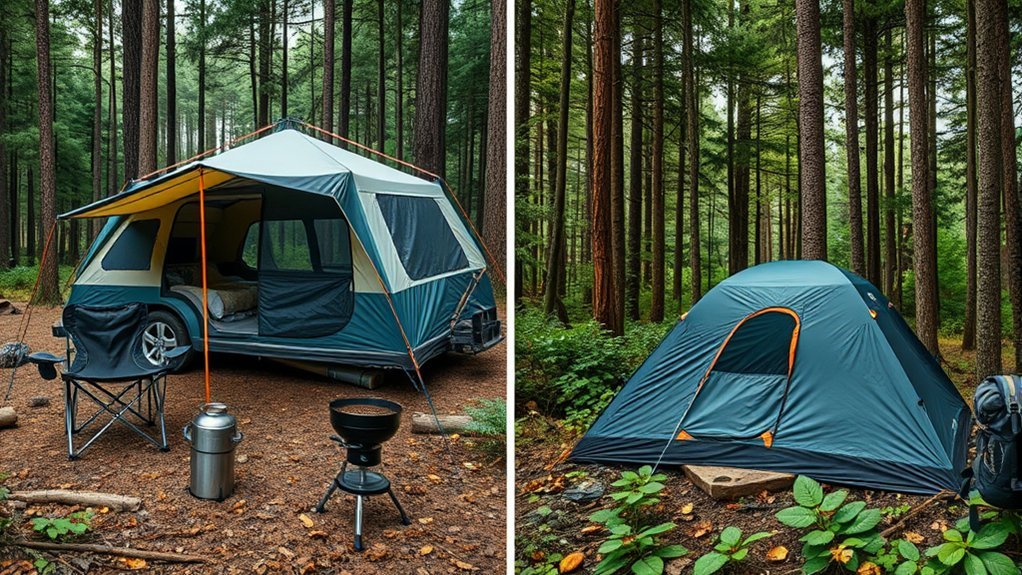
Backpacking is multi-day hiking where you carry your shelter, food, and sleep gear. You travel on foot and camp away from roads and crowds. That means lighter gear, careful planning, and skills like navigation, water treatment, and food storage.
Definition and purpose
| Backpacking benefit | Typical gear focus | Campsite reality |
|---|---|---|
| Deeper nature immersion | Lightweight shelter and sleep system | Remote, fewer amenities |
| More mobility | Compact, multi-use items | More planning and rules |
| Longer distances | Efficient packing and layering | Bigger role for weather |
Essential gear requirements
Backpacking gear should be lightweight, compact, and dependable. Three core pieces make the biggest difference:
- Backpack: Choose a pack that fits well and carries comfortably (often 50–65L for beginners, depending on season and trip length).
- Tent: Aim for a shelter that balances weight and weather protection. A common rule of thumb is to keep tent weight under about 2.5–3 lb per person.
- Sleep system: Pair a sleeping bag or quilt with an insulated sleeping pad matched to expected temperatures.
Skillset and preparation needed
Backpacking rewards planning. Try to reach camp with enough daylight to pick a safe, legal site and set up. Check for slope and drainage, wind exposure, and overhead hazards like dead branches. Because lighter gear can be less forgiving, practice tent setup and stove use before your trip.
Key differences in gear requirements
Tent size and livability
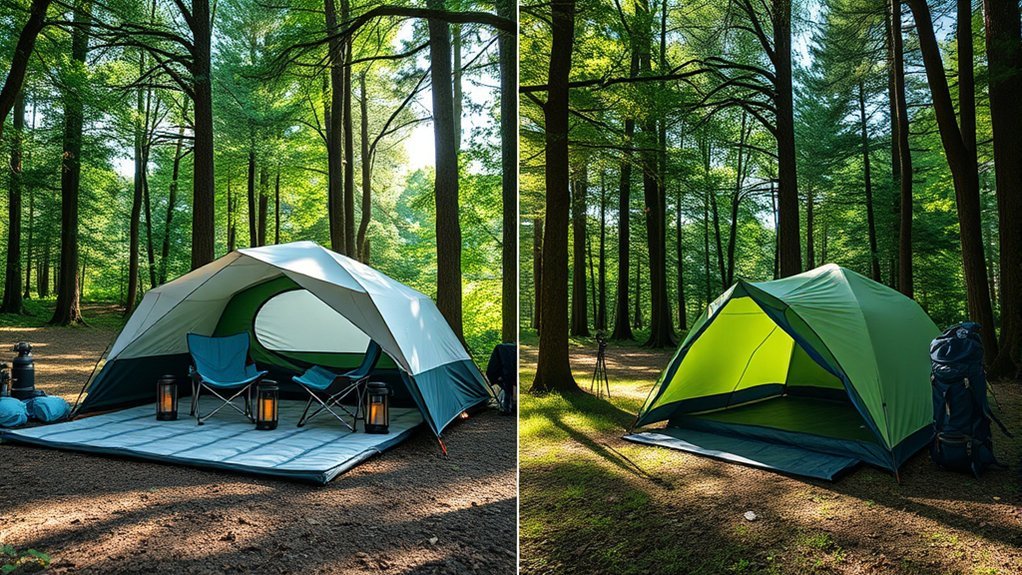
- Backpacking tents are compact and efficient, with enough space to sleep and store a small amount of gear.
- Car camping tents are often taller and roomier, with more floor area, bigger vestibules, and features like awnings.
Weight and portability factors
| Factor | Backpacking tent | Car camping tent |
|---|---|---|
| Packed weight | Low; designed to carry | High; designed for comfort |
| Packed size | Small; fits in a pack | Bulky; fits in a trunk |
| Pole design | Light, segmented, packable | Thicker for stability |
| Setup style | Fast, minimal parts | More parts, more room |
Choosing the right camping style for you
- Pick car camping if you want comfort, minimal planning, and a relaxed base camp.
- Pick backpacking if you want distance, quiet, and access to remote places.
- Consider a hybrid: drive to a trailhead, hike a short distance, and camp away from busy campgrounds.
The impact of tent design on setup
Backpacking tents often use fewer pole segments, clips instead of long sleeves, and color-coding so you can pitch quickly. Many also need staking to get a tight, storm-worthy pitch.
Car camping tents may use more poles and larger rainfly panels, which can take longer to assemble. In return, you get more headroom, more storage, and often better “hangout space” if you’re waiting out weather.
In either style, windy conditions are easier to manage if you stake corners first, add the rainfly early, and then fine-tune tension.
Conclusion
Car camping and backpacking can both be rewarding. Car camping makes comfort easy and is often the simplest way to start. Backpacking demands more fitness and planning, but it opens up remote places and longer routes. As of 2026-01-02, The Dyrt’s 2025 Camping Report found that 53.4% of campers said they prefer a type of camping that involves a vehicle—so it’s normal to start with car-based trips and branch out later.
FAQs
Can I use a backpacking tent for car camping?
Yes. It will work fine, especially for a quick overnight. You may just miss the extra headroom and storage that a larger car camping tent provides.
How long does tent setup usually take?
Once you know your tent, many models pitch in about 10–20 minutes. Larger family tents can take longer, while minimalist backpacking shelters can be faster in fair weather.
What tent weight is reasonable for beginner backpacking?
A common guideline is to keep tent weight under about 2.5–3 pounds per person for your first backpacking shelter, balancing comfort, durability, and cost.
How do weather conditions change your setup plan?
In wind, stake corners first and keep panels low. In rain, get the shelter up quickly, then organize gear inside. In heat, prioritize airflow and shade to reduce condensation and improve comfort.
What are the best practices for tent maintenance after a trip?
Shake out debris, spot-clean dirty areas, and dry the tent fully before storage. Store it loosely in a cool, dry place to reduce mildew and protect coatings.