
Last Updated on November 4, 2026 by Logan Reeves
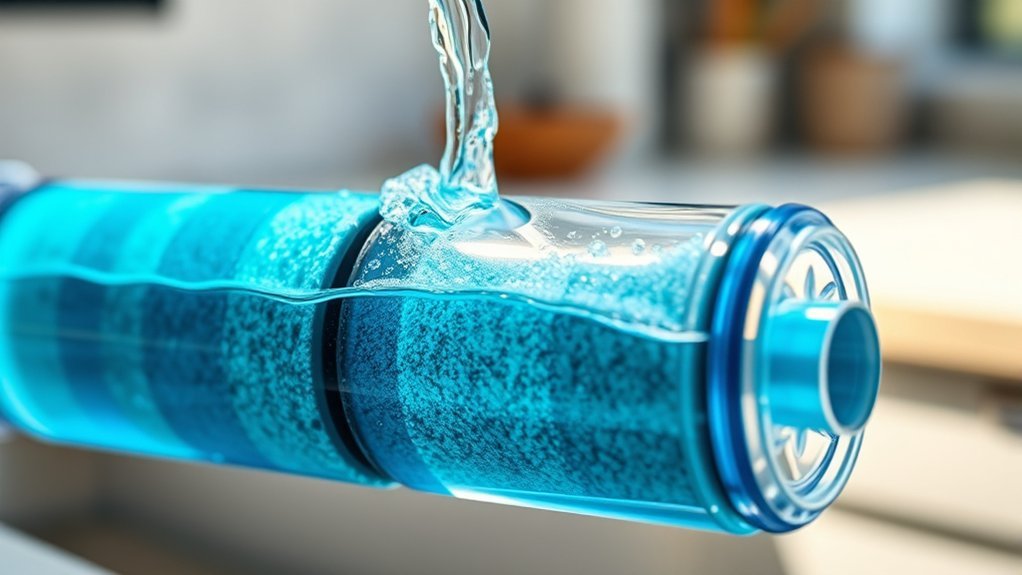
How long does a whole house water filter cartridge last? Most standard sediment and carbon cartridges need replacement every 3 to 6 months, but the actual lifespan depends on your water quality, household usage, cartridge design, and manufacturer recommendations. Some filters also have a gallon-based limit that you should not exceed.
For example, the 3M Aqua-Pure AP817 has a recommended six-month service life, while the Culligan SCWH-5 is rated for up to three months or 15,000 gallons. Other replacement cartridges may last longer or need changing sooner, especially when your water contains heavy sediment.
This guide compares seven whole-house replacement cartridges, explains their expected lifespans, and helps you select the right micron rating and housing size without buying a filter that does not fit.
Disclosure: As an Amazon Associate I earn from qualifying purchases. Some links on this page are affiliate links, at no extra cost to you.
Quick Answer: How Long Should a Whole House Water Filter Cartridge Last?
A typical replacement interval is 3 to 6 months, but always follow the specific cartridge’s time and gallon limits. Replace it sooner if water flow drops because of clogging, or if the manufacturer identifies other replacement indicators. A cartridge that looks clean may still have reached the end of its recommended service life.
Key Takeaways
- Typical lifespan: Many whole-house filter cartridges last approximately 3 to 6 months under suitable water conditions.
- Manufacturer guidance matters: Replace cartridges at the recommended time or gallon limit, whichever comes first.
- Water quality affects lifespan: Sand, rust, and sediment can clog a cartridge before its normal replacement date.
- Cartridge size matters: Standard 10-inch, 10 x 4.5-inch, and 20 x 4.5-inch cartridges are not interchangeable.
- Micron rating matters: Finer filters capture smaller particles but may clog faster in sediment-heavy water.
- Filtration type matters: Sediment cartridges remove suspended particles, while suitable carbon cartridges may also improve chlorine taste and odor.
- Water safety matters: A regular sediment filter is not a substitute for water testing or treatment designed to address harmful microorganisms and dissolved contaminants.
Quick Verdict: Which Cartridge Should You Choose?
For an AP801-compatible housing: The 3M Aqua-Pure AP817 is a strong option when you want a documented six-month replacement interval and both sediment and chlorine-taste reduction.
For sediment and carbon filtration: Consider the PUREPLUS 5 Micron Sediment and Carbon Cartridge if its dimensions and model compatibility match your housing.
For a larger sediment-filter housing: The Aquaboon 20 x 4.5-inch cartridge is worth considering for compatible 20-inch systems.
For standard-duty Culligan housings: The Culligan SCWH-5 offers a documented three-month or 15,000-gallon replacement guideline.
Our Top Whole House Water Filter Cartridge Picks
Use the comparison below to narrow your choices by cartridge size, filtration type, and expected replacement interval. The intervals are manufacturer guidelines or commonly advertised estimates, not guaranteed service lives.
| Water Filter Cartridge | Product Image | Best For | Micron Rating | Cartridge Size | Expected Replacement | Amazon | Detailed Review |
|---|---|---|---|---|---|---|---|
| 3M Aqua-Pure Whole House Water Filter Cartridge AP817 |  |
Sediment and Chlorine Taste | 25 Micron | AP801-Series Housing | About 6 months | Check Price on Amazon | Read Our Analysis |
| PUREPLUS 5 Micron Whole House Water Filter Cartridge (2-Pack) | Sediment and Carbon Filtration | 5 Micron | 10″ x 4.5″ | Typically 3–6 months | Check Price on Amazon | Read Our Analysis | |
| Aquaboon 5 Micron Whole House Sediment Filter (2-Pack) | 20-Inch Sediment Housings | 5 Micron | 20″ x 4.5″ | Typically 4–6 months | Check Price on Amazon | Read Our Analysis | |
| PUREPLUS 5 Micron Whole House Sediment Filter (2-Pack) | String-Wound Well-Water Prefiltration | 5 Micron | 10″ x 4.5″ | Typically 3–6 months | Check Price on Amazon | Read Our Analysis | |
| AQUA CREST Whole House Water Filter (Pack of 2) |  |
Large-Diameter Sediment Replacement | 5 Micron | 10″ x 4.5″ | Typically 3–6 months | Check Price on Amazon | Read Our Analysis |
| Culligan SCWH-5 Whole House Water Filter Cartridges 2-Pack | Standard-Duty Culligan Systems | 5 Micron | Standard Diameter, Approx. 10″ | 3 months or 15,000 gallons | Check Price on Amazon | Read Our Analysis | |
| Aquaboon 5 Micron Whole House Water Filter Cartridge | 10-Inch Large-Diameter Sediment Filtration | 5 Micron | 10″ x 4.5″ | Typically 4–6 months | Check Price on Amazon | Read Our Analysis |
Compatibility Note: Always match the replacement cartridge to your existing housing’s model number, height, diameter, and sealing design. Similar-looking filters are not necessarily interchangeable. A 10 x 4.5-inch cartridge will not fit a standard 10 x 2.5-inch housing.
More Details on Our Top Picks
-
3M Aqua-Pure Whole House Water Filter Cartridge AP817
If you use a compatible Aqua-Pure AP801-series housing, the 3M Aqua-Pure AP817 offers a straightforward replacement schedule with an approximately six-month service life.
This cartridge has a 25-micron rating and is designed to reduce sediment particles along with chlorine taste and odor. Its carbon-based filtration media makes it useful when you want more than basic particle filtration.
The cartridge also features sealing gaskets that help reduce the chance of water bypassing the filter media when installed correctly.
Unlike many generic replacements, the AP817 has readily identifiable manufacturer specifications. That makes it easier to understand its intended use and maintenance requirements.
Why You’ll Like It: You get sediment filtration and chlorine-taste reduction in a cartridge with a documented replacement interval.
Who Should Buy This: Homeowners with an AP801-compatible housing who want to address larger sediment particles and chlorine taste or odor.
Who Should Avoid This: Anyone needing very fine sediment filtration or a cartridge for a different housing design. Its 25-micron rating is coarser than the 5-micron alternatives in this comparison.
Replacement Guidance: Plan around the manufacturer’s six-month interval. Replace it sooner when water conditions or a noticeable drop in flow indicate the cartridge has become loaded.
- Micron Rating:25 Micron
- Filter Size:Designed for compatible AP801-series housing
- Replacement Frequency:Approximately every 6 months
- Packaging:Single cartridge
- Filtration Type:Sediment and chlorine taste/odor
- Filter Media:Carbon-based filtration media
- Additional Feature:Sealing gaskets
- Additional Feature:Large-diameter drop-in cartridge
- Main Limitation:Not intended for fine contaminant or microbial removal
-
PUREPLUS 5 Micron Whole House Water Filter Cartridge (2-Pack)
The PUREPLUS 5 Micron Whole House Water Filter Cartridge is worth considering when you need both sediment filtration and carbon media in a large-diameter replacement filter.
This cartridge uses polypropylene and coconut-shell carbon. The sediment-filtering portion helps capture suspended particles, while the carbon media is intended to address aesthetic water-quality concerns such as chlorine taste and odor.
Its advertised 10 x 4.5-inch size suits compatible large-diameter filter housings. The two-pack format also lets you keep a replacement cartridge available for the next scheduled change.
The seller commonly describes a service interval of around 3 to 6 months. Your actual replacement frequency may be shorter when water usage is high or the incoming water contains substantial sediment.
Why You’ll Like It: The combination of carbon and sediment media can address more than visible particles without requiring two separate cartridges, provided the stated performance meets your needs.
Who Should Buy This: Homeowners with compatible 10 x 4.5-inch housings who want a combination cartridge for sediment and chlorine-taste concerns.
Who Should Avoid This: Anyone needing certified removal of a specific harmful chemical without documentation supporting that reduction claim.
Replacement Guidance: Use the current product instructions and monitor water flow. Carbon media can reach its effective capacity without an obvious visual change.
- Micron Rating:5 Micron
- Filter Size:Approximately 10″ x 4.5″
- Replacement Frequency:Typically 3–6 months, subject to manufacturer guidance
- Packaging:2-pack
- Filtration Type:Sediment and carbon
- Material:Polypropylene and coconut-shell carbon
- Additional Feature:Combination filtration media
- Additional Feature:Large-diameter cartridge format
- Main Limitation:Specific contaminant reduction percentages require product documentation
-
Aquaboon 5 Micron Whole House Sediment Filter (2-Pack)
If your whole-house filtration system uses a larger cartridge, the Aquaboon 5 Micron Whole House Sediment Filter is a relevant option for compatible 20 x 4.5-inch housings.
Made from polypropylene, the cartridge is intended to trap suspended particles such as dirt, sand, and rust. Its 5-micron rating makes it suitable for finer sediment filtration than a coarse 25-micron cartridge, although actual particle capture depends on the filter’s rating method and construction.
The larger cartridge format offers more physical filter-media space than shorter designs of similar construction. However, that alone does not guarantee a longer service life or higher flow rate.
The advertised replacement interval is approximately 4 to 6 months. If your incoming water carries heavy sediment, you may need to change it sooner.
Why You’ll Like It: Its longer design is useful when your existing whole-house system is built around a 20-inch sediment cartridge.
Who Should Buy This: Homeowners with compatible 20 x 4.5-inch housings who want a polypropylene sediment replacement.
Who Should Avoid This: Anyone using a shorter 10-inch housing or expecting chlorine, bacteria, or dissolved chemical removal from a basic sediment cartridge.
Replacement Guidance: Check the manufacturer’s maximum interval and watch for declining flow or pressure across the filter.
- Micron Rating:5 Micron
- Filter Size:20″ x 4.5″
- Replacement Frequency:Typically 4–6 months
- Packaging:2-pack
- Filtration Type:Sediment
- Material:Polypropylene
- Additional Feature:Large 20-inch format
- Additional Feature:Designed to capture suspended debris
- Main Limitation:Requires a compatible 20-inch housing
-
PUREPLUS 5 Micron Whole House Sediment Filter (2-Pack)
Well water can carry sand, silt, and other suspended particles that place extra strain on household filtration equipment. The PUREPLUS 5 Micron Whole House Sediment Filter is designed to help address those particles as a sediment prefilter.
This version uses a string-wound sediment-filter design. The wound filtration media provides a physical barrier for capturing suspended debris as water passes through it.
Its advertised size is 10 x 4.5 inches, making it relevant for compatible large-diameter housings.
A typical advertised replacement range is 3 to 6 months, but wells with substantial sediment loads can cause earlier clogging.
Why You’ll Like It: The string-wound construction gives you another sediment-filtering option when a standard polypropylene cartridge is not your preferred design.
Who Should Buy This: Homeowners using compatible housings who want to reduce suspended sand, rust, and sediment before water reaches downstream equipment.
Who Should Avoid This: Anyone relying on a sediment cartridge alone to make untreated or microbiologically contaminated well water safe to drink.
Replacement Guidance: Monitor the pressure difference across the filter when possible. If a cartridge clogs quickly, investigate the source of the sediment and consider an appropriate staged pretreatment setup.
- Micron Rating:5 Micron
- Filter Size:10″ x 4.5″
- Replacement Frequency:Typically 3–6 months
- Packaging:2-pack
- Filtration Type:Sediment prefiltration
- Material:String-wound sediment filtration media
- Additional Feature:Designed for suspended particle reduction
- Additional Feature:Suitable for compatible large-diameter housings
- Main Limitation:Does not disinfect well water
-
AQUA CREST Whole House Water Filter (Pack of 2)
The AQUA CREST Whole House Water Filter is a replacement option for homeowners using compatible large-diameter sediment-filter housings.
This FXHSC-style replacement is advertised with a 5-micron rating and a 10 x 4.5-inch format. It is intended to capture suspended sediment particles that can collect in plumbing fixtures and water-using appliances.
Because the cartridge is designed primarily for sediment filtration, you should not assume it removes dissolved chemicals or chlorine taste and odor.
The advertised replacement range is commonly around 3 to 6 months, depending on water conditions and the product’s current instructions.
Why You’ll Like It: It offers a two-pack option for compatible housings when your main goal is reducing sediment rather than combining multiple filtration functions.
Who Should Buy This: Homeowners needing a compatible 10 x 4.5-inch replacement cartridge for sediment filtration.
Who Should Avoid This: Anyone with a standard narrow housing or a need for verified chlorine, lead, or microbiological reduction.
Replacement Guidance: Confirm the cartridge dimensions and supported housing models, and replace it according to the current manufacturer instructions or sooner when clogging affects water flow.
- Micron Rating:5 Micron
- Filter Size:10″ x 4.5″
- Replacement Frequency:Typically 3–6 months
- Packaging:2-pack
- Filtration Type:Sediment
- Material:Polypropylene-based sediment filtration media
- Additional Feature:Large-diameter format
- Additional Feature:Intended for compatible FXHSC-style applications
- Main Limitation:Do not assume universal housing compatibility
-
Culligan SCWH-5 Whole House Water Filter Cartridges 2-Pack
The Culligan SCWH-5 is a practical replacement cartridge when you already own a compatible standard-duty Culligan whole-house filtration system.
It has a 5-micron nominal rating and carbon-wrapped filtration media. The cartridge is intended to reduce sediment, rust, and other suspended particles while helping address aesthetic chlorine taste and odor.
One useful advantage is its clearly stated service interval. Culligan specifies a cartridge life of up to three months or 15,000 gallons, whichever comes first.
The manufacturer’s published specifications also list a 4 GPM rated flow. Actual household flow depends on the installation, water pressure, and cartridge condition.
Why You’ll Like It: You get straightforward manufacturer guidance on replacement timing, filtration rating, and intended use.
Who Should Buy This: Homeowners with a compatible standard-size Culligan housing who want a replacement cartridge that addresses sediment and chlorine-taste concerns.
Who Should Avoid This: People using large-diameter housings or untreated well-water supplies. Culligan does not recommend this cartridge for untreated well water.
Replacement Guidance: Change the cartridge by three months or 15,000 gallons, whichever happens first. Replace it earlier when manufacturer-defined performance indicators call for a change.
- Micron Rating:5 Micron, nominal
- Filter Size:Standard-duty cartridge, approximately 10″ long
- Replacement Frequency:3 months or 15,000 gallons
- Packaging:2-pack
- Filtration Type:Sediment and aesthetic chlorine taste/odor
- Material:Carbon-wrapped cellulose filtration media
- Additional Feature:4 GPM rated flow
- Additional Feature:Designed for compatible Culligan standard-duty housings
- Main Limitation:Not recommended for untreated well-water supplies
-
Aquaboon 5 Micron Whole House Water Filter Cartridge
The Aquaboon 5 Micron Whole House Water Filter Cartridge is another option for compatible 10 x 4.5-inch filtration housings.
Made from polypropylene, this sediment cartridge is intended to capture particles such as rust, dirt, and suspended debris before they travel through your household plumbing.
Its 5-micron rating makes it relevant when you want finer sediment filtration than a coarse prefilter can provide.
The advertised service-life estimate is around 4 to 6 months, although actual replacement frequency depends on your water conditions and usage.
One important buying detail is the package quantity. Listings for this product may be sold in multipacks, so check the current product page rather than assuming you are purchasing one cartridge.
Why You’ll Like It: This cartridge offers a straightforward sediment-filtering option in a commonly used large-diameter format.
Who Should Buy This: Homeowners with compatible 10 x 4.5-inch housings who want to reduce suspended sediment and rust particles.
Who Should Avoid This: Anyone using a narrow standard housing, a 20-inch housing, or expecting dissolved chemical and microbial removal from a sediment-only filter.
Replacement Guidance: Follow the current seller or manufacturer replacement instructions. Do not assume a stated maximum gallon capacity will apply to water containing heavy sediment.
- Micron Rating:5 Micron
- Filter Size:10″ x 4.5″
- Replacement Frequency:Typically 4–6 months
- Packaging:Verify current listing quantity
- Filtration Type:Sediment
- Material:Polypropylene
- Additional Feature:Large-diameter cartridge format
- Additional Feature:Designed to capture suspended particles
- Main Limitation:Compatibility and pack quantity must be confirmed
How Long Do Whole House Water Filter Cartridges Last?
There is no single replacement schedule for every whole-house cartridge. The correct interval depends on the filtration media, water quality, household consumption, and the manufacturer’s service-life limits.
Use the following ranges as general planning guidance rather than a substitute for product instructions.
| Cartridge Type | Common Planning Interval | Main Consideration |
|---|---|---|
| Polypropylene sediment cartridge | Often 3–6 months | Sediment buildup and pressure loss |
| String-wound sediment cartridge | Often 3–6 months | Incoming sand, silt, and other particles |
| Sediment and carbon combination cartridge | Often 3–6 months | Both sediment loading and carbon capacity |
| Manufacturer-specific cartridge | Follow its stated time and gallon limits | Exact model specifications and water conditions |
Important: These are broad planning ranges, not universal manufacturer-approved replacement intervals. Always use the more specific instructions supplied with your cartridge.
Factors to Consider When Choosing Whole House Water Filter Cartridge Lifespan
When comparing whole-house water filter cartridges, consider more than the number of months printed on the package. The right choice should match your housing, provide the needed filtration, and fit your expected maintenance schedule.
1. Filtration Quality and Filter Media
Different filter materials address different water-quality concerns.
Polypropylene sediment filters are primarily designed to trap particles such as dirt, sand, and rust. They can help reduce sediment entering fixtures and water-using equipment.
String-wound sediment filters also capture suspended particles. Their wound construction creates a filtration path through layers of material.
Carbon-containing filters may reduce chlorine taste and odor when designed and tested for that purpose. However, not every carbon cartridge removes the same substances.
Always review the product’s documented contaminant reduction claims. A filter’s material alone does not prove a specific reduction percentage or certification.
2. Water Quality Variability
Your water source strongly influences cartridge life.
Water containing substantial sand, rust, or silt may fill sediment-filter media quickly. As particles accumulate, resistance to water flow can increase.
Municipal water may have lower sediment levels in some areas, but aging distribution lines, maintenance work, and changes in source conditions can still affect water clarity.
Private wells can also experience changes after heavy rainfall, flooding, or pump and plumbing work.
Pro Tip: If you repeatedly need to replace a sediment cartridge much earlier than expected, investigate the source of the debris. A properly selected coarse prefilter or other pretreatment stage may reduce the load on your finer cartridge.
3. Filter Replacement Recommendations
A replacement schedule should consider both elapsed time and water volume.
For example, if a manufacturer specifies three months or 15,000 gallons, replace the cartridge when the first limit is reached.
A household with higher water usage may reach the gallon limit before the calendar limit. A household with low water usage should still follow the manufacturer’s maximum time interval.
Do not extend a cartridge’s service life simply because the water looks clear. Some filtration media can become exhausted without an obvious change in appearance.
4. Installation and Compatibility
Before purchasing a replacement, identify your existing filter housing.
Common cartridge formats include:
- Standard 10-inch cartridges: Commonly approximately 2.5 inches in diameter.
- 10 x 4.5-inch cartridges: Larger-diameter cartridges used in compatible housings.
- 20 x 4.5-inch cartridges: Longer cartridges requiring compatible 20-inch housings.
- Manufacturer-specific cartridges: Designs that may require a particular housing or sealing arrangement.
A cartridge that is too large will not fit properly. One that is too small or seals incorrectly can allow water to bypass the filtration media.
Also check the cartridge’s actual height, end-cap design, and sealing requirements. Nominal dimensions may differ slightly from measured dimensions.
Compatibility Warning: Never purchase a replacement based on the micron rating alone. Confirm the exact housing model and cartridge dimensions before ordering.
5. Maintenance Practices
Regular maintenance helps your whole-house filtration system operate as intended.
Mark the installation date of each new cartridge and keep a record of replacement dates. If possible, also track your household’s water consumption.
Follow the manufacturer’s instructions for shutting off the water, relieving pressure, removing the housing, checking seals, and installing the replacement.
Use the correct replacement O-ring when required. Clean the housing according to its instructions and check carefully for leaks after restoring water pressure.
Important: Most disposable sediment and carbon cartridges are not designed to be washed and reused. Cleaning them may damage the filter media or fail to restore filtration performance.
6. Micron Rating Effects
The micron rating describes the particle size associated with a filter’s performance.
A 25-micron sediment cartridge is generally intended for coarser particles than a 5-micron cartridge. A finer cartridge may capture smaller suspended particles, but it can also become clogged more quickly.
There is another important distinction: nominal and absolute micron ratings are not equivalent. The particle removal efficiency associated with each rating depends on how the manufacturer defines and tests it.
Do not assume that a 1-micron or 5-micron cartridge automatically makes water microbiologically safe. Microorganism reduction requires suitable filtration specifications, appropriate treatment, and supporting testing or certification.
Pro Tip: For water with both coarse and fine sediment, a staged setup may be useful. A properly sized coarse prefilter can help protect a finer downstream cartridge, provided the system is designed for the required water flow.
7. Material Durability Considerations
The material used in a cartridge affects how it handles particles, water pressure, and the operating environment.
Polypropylene is widely used for sediment filtration. Its performance depends on cartridge construction and compatibility with the water conditions.
String-wound media provides another approach to particle capture. Its suitability depends on the specific filtration rating and the type of sediment present.
Carbon media is useful for certain aesthetic water-quality concerns, but its adsorption capacity is finite.
More durable construction does not automatically mean a longer safe service life. Follow the filter’s rated operating conditions and replacement requirements.
8. Household Water Usage
Your household’s water consumption can have a major effect on cartridge replacement frequency.
Homes with several bathrooms, frequent laundry loads, outdoor water use, or high daily consumption may reach a cartridge’s rated capacity sooner.
Consider this example:
A cartridge with an advertised capacity of 15,000 gallons would reach that volume after approximately 100 days if the household sends 150 gallons per day through the filter.
However, if the manufacturer’s time limit is three months, you should still change the cartridge by that deadline even if you have filtered fewer than 15,000 gallons.
This is why the manufacturer’s time and gallon limits should be considered together.
Signs Your Whole House Water Filter Cartridge Needs Replacing
Your cartridge may need attention before its expected replacement date.
- Reduced water flow: A sediment-loaded cartridge may restrict flow through your household plumbing.
- Increased pressure difference: If your system has pressure gauges before and after the filter, a growing pressure drop may indicate clogging.
- Visible sediment returning: Changes in water clarity can indicate a filtration problem or a change in source-water conditions.
- Chlorine taste or odor returning: For cartridges specifically designed to reduce these aesthetic concerns, a change may indicate exhausted carbon media or another water-quality issue.
- Manufacturer replacement limit reached: Replace the cartridge at its recommended time or gallon limit even when there are no obvious symptoms.
Safety Note: Unusual taste, odor, color, or cloudiness does not prove that the cartridge is the only problem. Water can also contain harmful contaminants without noticeable changes. If you suspect contamination, arrange appropriate water testing rather than relying on a new sediment cartridge alone.
Before You Buy: Whole House Filter Cartridge Checklist
Check These Details Before Ordering
- Housing model: Confirm your filter’s manufacturer and exact housing model.
- Cartridge dimensions: Match the correct height, diameter, and sealing design.
- Filtration goal: Decide whether you need sediment filtration, chlorine-taste reduction, or a different treatment technology.
- Micron rating: Choose a rating appropriate for your water conditions and required particle reduction.
- Water source: Consider whether the filter is recommended for treated municipal water, well water, or both.
- Rated flow: Check whether the cartridge and housing can support your household’s peak water demand.
- Replacement interval: Review both time-based and gallon-based service limits.
- Certification claims: Verify the exact model and contaminant reduction claim when certification matters.
- Pack quantity: Confirm how many replacement cartridges are included.
- Total maintenance cost: Compare cartridge costs over a year, not just the initial package price.
Can a Whole House Sediment Filter Make Water Safe to Drink?
Not by itself. A basic whole-house sediment cartridge is intended to reduce suspended particles. It is not automatically designed to remove harmful bacteria, viruses, lead, arsenic, nitrates, or other dissolved contaminants.
If your household uses private well water, testing is especially important. The U.S. Environmental Protection Agency recommends testing private wells annually for total coliform bacteria, nitrates, total dissolved solids, and pH, with additional testing when circumstances warrant it.
See the EPA’s guidance on protecting private well water.
For drinking-water treatment, choose products with independently documented reduction claims that address the specific contaminants identified in your water.
The CDC’s guide to choosing home water filters explains why different filtration methods address different problems.
Important Water Safety Warning: Do not assume filtered water is safe merely because it looks clear or tastes better. Use suitable testing and treatment for confirmed or suspected health-related contaminants.
Frequently Asked Questions
How Can I Extend the Lifespan of My Water Filter Cartridge?
Choose a cartridge suitable for your water conditions, maintain your system properly, and address unusually high sediment loads with appropriate pretreatment when needed. Follow the manufacturer’s operating limits. Do not exceed its recommended replacement interval to save money.
What Are Signs That My Filter Cartridge Needs Replacing?
A drop in water flow, an increased pressure difference across the filter, or a return of the specific water-quality problem the cartridge is designed to address may indicate that replacement is needed. Always replace the cartridge when its manufacturer-specified service limit is reached.
Can I Clean and Reuse My Water Filter Cartridge?
Most disposable polypropylene, string-wound, and carbon cartridges should be replaced rather than cleaned and reused. Only clean or reuse a cartridge if the manufacturer specifically identifies it as washable or reusable and provides suitable instructions.
Do Water Filter Cartridges Expire?
Installed cartridges have a recommended service life that can be limited by time, water volume, or operating conditions. Unused cartridges may also have storage recommendations. Check the packaging for any shelf-life instructions, and store unused filters in a clean, dry location as directed by the manufacturer.
How Often Should I Check My Filter Cartridge’s Performance?
Monitor water flow and other relevant performance indicators during normal use. Recording cartridge installation dates and checking your filtration system periodically can help you identify problems before the scheduled replacement date. Follow any more specific inspection schedule provided by the manufacturer.
Is a 5-Micron Filter Better Than a 25-Micron Filter?
A 5-micron filter is generally intended to capture smaller particles than a 25-micron filter. However, finer filtration is not always the best choice. If your water contains large amounts of coarse sediment, a finer filter may clog more quickly. Choose based on your water conditions, filtration goal, and system requirements.
How Long Does a Whole House Water Filter Last for Well Water?
It depends on the amount and type of sediment in the water, household usage, and cartridge specifications. A cartridge advertised for three to six months may clog sooner in sediment-heavy well water. Test the water and choose filtration and treatment appropriate for the results.
Can I Use Any 10-Inch Filter Cartridge in My Housing?
No. Different 10-inch cartridges can have different diameters, end-cap designs, and sealing requirements. A standard-diameter cartridge is not automatically interchangeable with a 10 x 4.5-inch cartridge. Always confirm the housing model and replacement specifications.
What Happens If I Do Not Change My Water Filter on Time?
An overdue cartridge may become clogged, reduce water flow, or stop performing as intended. Carbon media can also lose its ability to reduce targeted substances as its capacity is used. Delaying replacement may increase maintenance problems and compromise the filtration performance you expect.
Does a More Expensive Water Filter Cartridge Last Longer?
Not necessarily. Price alone does not determine lifespan. Cartridge size, media, contaminant loading, water consumption, and the manufacturer’s rated limits matter more. Compare compatible products by their documented specifications and expected annual replacement cost.
Conclusion
Choosing the right whole house water filter cartridge starts with understanding your existing housing, water quality, and replacement requirements.
For a compatible AP801-series system, the 3M Aqua-Pure AP817 is worth considering for its documented six-month interval and combined sediment and chlorine-taste reduction. If you need a large-diameter sediment-and-carbon option, the PUREPLUS 5 Micron combination cartridge may suit your setup. For compatible 20-inch sediment housings, the Aquaboon 20 x 4.5-inch cartridge provides another relevant choice.
The Culligan SCWH-5 is also a practical option for compatible standard-duty systems, with a clearly stated three-month or 15,000-gallon replacement schedule.
Whatever cartridge you choose, follow the manufacturer’s service limits, replace it sooner when necessary, and address water-safety concerns through appropriate testing and treatment.
Final Recommendation: Buy for fitment and documented filtration performance first. Then compare replacement intervals and annual maintenance costs. The right cartridge should meet your water-quality needs without creating unnecessary installation problems or maintenance surprises.
