
Last Updated on July 28, 2026 by Daniel Globe
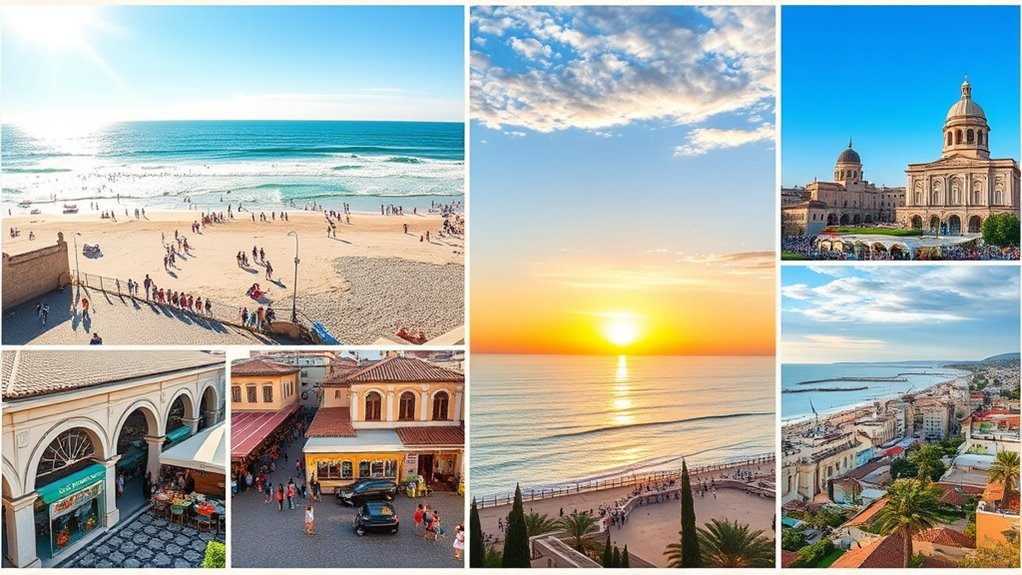
Rimini offers much more than a summer beach break. You can walk between ancient Roman monuments, explore streets linked to Federico Fellini, shop for regional food, cycle beside the Adriatic, and use the city as a base for San Marino or Ravenna. With the historic center, coastline, and railway station close together, many of Rimini’s best experiences fit into a two- or three-day visit.
Quick Answer
The best things to do in Rimini include seeing the Arch of Augustus and Tiberius Bridge, exploring the Domus del Chirurgo, walking through Borgo San Giuliano, visiting the Fellini Museum, trying Romagna food, relaxing on the beach, and taking a day trip to San Marino or Ravenna.
Key Takeaways
- Allow at least two days to combine Rimini’s historic center, Fellini attractions, food, and beach.
- The Arch of Augustus, Tiberius Bridge, Roman Amphitheatre, and Domus del Chirurgo reveal more than 2,000 years of history.
- Borgo San Giuliano is best known for its colorful murals inspired by Federico Fellini and his films.
- San Marino is an easy bus excursion, while Ravenna is a strong choice for travelers interested in UNESCO-listed mosaics.
- July and August bring the liveliest beach atmosphere but also the greatest heat and crowds, especially around Ferragosto on August 15.
Disclosure: As an Amazon Associate I earn from qualifying purchases. Some links on this page are affiliate links, at no extra cost to you.
Discover the Ancient Roman Landmarks
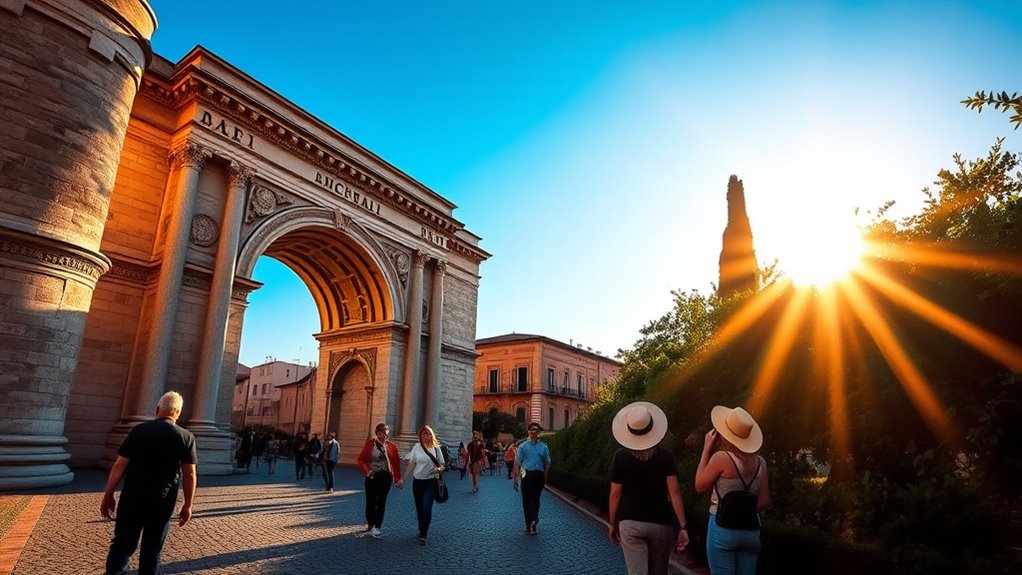
Rimini began as the Roman colony of Ariminum in 268 B.C., and several major monuments remain woven into the modern city. Start at the Arch of Augustus, built in 27 B.C. as an honorary gateway for Emperor Augustus. Rimini’s official city guide describes it as the oldest Roman arch still preserved in northern Italy.
From the arch, walk toward the remains of the Roman Amphitheatre. Built during the imperial period, it once held thousands of spectators for public entertainment. Only part of the structure survives, so check current access before planning a visit around the interior site.
The most revealing archaeological stop is the Domus del Chirurgo, or Surgeon’s House, in Piazza Ferrari. The second-century complex preserved mosaics, rooms, and a remarkable collection of about 150 surgical instruments. The neighboring City Museum adds context and displays finds from Roman, medieval, Renaissance, and modern Rimini.
Note: The Tempio Malatestiano is often grouped into Rimini sightseeing routes, but it is a Renaissance monument rather than an ancient Roman site. Its façade was designed by Leon Battista Alberti, and the interior includes work by Piero della Francesca.
Travelers visiting several museums should check the current Rimini ART CARD, which covers attractions including the City Museum, Domus del Chirurgo, and Fellini Museum. Prices and included sites can change, so review the official terms before buying.
Visit the Iconic Tiberius Bridge
The Tiberius Bridge, also called the Bridge of Augustus and Tiberius, is one of Rimini’s defining landmarks. Construction began under Augustus in 14 A.D. and was completed under Tiberius in 21 A.D. The bridge now provides a pedestrian connection between the historic center and Borgo San Giuliano.
Warning: Restoration work is taking place during 2026. The city has maintained pedestrian access through a protected passage during the project, but scaffolding and temporary closures can affect views. Check the Municipality of Rimini’s latest bridge update before visiting.
Historical Significance
The bridge formed an important link in the Roman road network. Rimini’s official city guide identifies it as the starting point of the Via Emilia and Via Popilia, routes that connected Ariminum with other settlements across northern Italy.
- Construction began in 14 A.D. and finished in 21 A.D.
- The structure is faced with pale Istrian stone.
- Five arches carry the bridge across the old Marecchia river channel.
- It has survived wars, floods, structural changes, and centuries of daily use.
- It is now reserved for pedestrians rather than normal motor traffic.
Instead of treating the bridge as a quick photo stop, walk across it slowly and continue into Borgo San Giuliano. This creates one of Rimini’s simplest self-guided routes from Roman history to the city’s later fishing-community heritage.
Architectural Marvel
The Tiberius Bridge extends for more than 70 meters overall and rests on five semicircular arches. Its piers were shaped to manage the river current, showing how Roman builders combined strength, water control, and visual balance.
Look closely at the stonework, decorative details, and inscriptions on the parapets. The monument was not merely a practical crossing; it also projected imperial authority at an important entrance to the Roman city.
Scenic Views
For a wider view, walk down toward Piazza sull’Acqua and the paths beside the former river channel. From this lower area, you can see the arches reflected in the water and frame the bridge with greenery rather than surrounding streets.
- Visit early in the morning for quieter photographs.
- Return near sunset for softer light on the Istrian stone.
- Walk across to Borgo San Giuliano rather than turning back immediately.
- Expect restoration equipment to affect some 2026 viewpoints.
- Use the riverside paths for a longer walk toward Parco XXV Aprile.
The Tiberius Bridge has connected Rimini’s historic center with the San Giuliano area for roughly two millennia.
Plan Your Rimini Visit
Most first-time visitors need two full days to see the main historic sites, visit the Fellini Museum, explore Borgo San Giuliano, and spend time on the beach. A third day gives you room for San Marino, Ravenna, or an inland cycling trip.
The historic center is compact and easy to explore on foot. Buses, bicycles, taxis, and the Metromare rapid coastal service help with longer journeys toward the beach districts and Riccione. Rimini also has more than 90 km of cycling routes linking the coast, center, and surrounding countryside.
Warning: Do not drive into the historic center or Borgo San Giuliano without checking the signs. Parts of both areas are controlled by ZTL restricted-traffic cameras, and unauthorized entry can result in a fine. Use an official car park outside the restricted zone and continue on foot.
May, June, and September usually offer a good balance between beach weather and manageable crowds. July and August have the fullest entertainment calendar and the busiest beach scene, but accommodation demand, temperatures, and visitor numbers are higher. Ferragosto on August 15 is one of the busiest points of the Italian summer.
Explore Local Delicacies at Rimini’s Covered Market
Rimini’s Mercato Coperto San Francesco is in the historic center near the Tempio Malatestiano. The indoor market brings together stalls selling produce, fish, meat, cheese, bread, and other everyday ingredients used in local cooking.
Published hours are Monday through Saturday from 7:00 a.m. to 7:45 p.m., although individual businesses may keep different schedules. Morning is normally the best time to see the widest choice of fresh food and the market at its most active.
Look for ingredients and prepared foods associated with Rimini and Romagna, including:
- Piadina romagnola, a thin flatbread filled with cheese, cured meat, or vegetables
- Squacquerone di Romagna DOP, a soft and creamy regional cheese
- Fresh Adriatic fish and shellfish
- Local fruit and seasonal vegetables
- Regional cured meats, fresh pasta, and bakery products
Pro Tip: Visit before lunch, then eat nearby rather than expecting every stall to function like a restaurant. The market is primarily a working food market, and the exact mix of vendors can change.
Stroll Through Rimini’s Historic Old Town
Rimini’s historic center layers Roman streets, medieval civic buildings, Renaissance architecture, theaters, museums, and modern cultural spaces into a walkable area. A direct route from the Arch of Augustus to the Tiberius Bridge follows Corso d’Augusto and passes many of the main sights.
Architectural Marvels Await
- Arch of Augustus: A Roman gateway built in 27 B.C.
- Tempio Malatestiano: A Renaissance church redesigned by Leon Battista Alberti.
- Domus del Chirurgo: A Roman archaeological site known for its surgical instruments and mosaics.
- Castel Sismondo: A 15th-century fortress associated with Sigismondo Pandolfo Malatesta and now part of the Fellini Museum.
- Teatro Amintore Galli: Rimini’s restored historic theater overlooking Piazza Cavour.
The monuments cover very different eras, so avoid rushing through them as a single checklist. The Domus and City Museum reward at least an hour or two, while the arch, squares, and bridge can be linked on a shorter outdoor walk.
Historic Squares Exploration
Piazza Tre Martiri occupies part of the ancient Roman forum. A statue of Julius Caesar recalls Rimini’s traditional association with Caesar and the crossing of the Rubicon, although accounts of his exact actions and speech are partly rooted in later tradition.
Nearby Piazza Cavour is framed by civic buildings, the Galli Theatre, and the Fontana della Pigna. Walk through the old fish market, or Vecchia Pescheria, whose stone counters recall the square’s trading history. Today, the surrounding lanes are known for cafés, wine bars, and evening social life.
Vibrant Local Culture
Rimini’s cultural identity extends beyond Roman ruins. The city is closely associated with Federico Fellini, while renovated spaces such as Castel Sismondo, the Fellini Museum, and PART in the historic palaces of Piazza Cavour connect older architecture with cinema and contemporary art.
Before choosing an evening activity, check the official Rimini events calendar. Theater performances, exhibitions, food festivals, sports events, and open-air programs vary throughout the year.
Discover the Charm of Borgo San Giuliano
Cross the Tiberius Bridge to reach Borgo San Giuliano, a former fishing neighborhood filled with narrow lanes, low houses, plants, restaurants, and wall paintings. Its murals were created by local artists and depict scenes and characters associated with Federico Fellini’s films and life.
Fellini was born in Rimini in 1920. The Borgo was important to the city’s popular culture and later became strongly linked to his cinematic world, but it should not be described as his confirmed birthplace.
Visit the Church of San Giuliano Martire, then explore the smaller streets away from the busiest route. Many visitors come only for a quick photograph of the murals, but the neighborhood is particularly enjoyable around lunch or early evening, when its restaurants and gathering places come alive.
Pro Tip: Walk through the Borgo before sunset, eat there, and return across the illuminated Tiberius Bridge. During the 2026 restoration, confirm that your preferred bridge viewpoint remains accessible.
Visit the Fellini Museum and Castel Sismondo
The Fellini Museum is one of the most important additions missing from the original sightseeing list. Rather than occupying one conventional building, the museum spreads across several connected locations in Rimini’s historic center.
- Castel Sismondo presents immersive displays inspired by Fellini’s imagination and films.
- Palazzo del Fulgor includes the restored Fulgor Cinema, which is linked to the director’s early love of film.
- Piazza Malatesta connects the museum spaces through an outdoor urban setting.
The museum works best for visitors who already know some of Fellini’s films, but its sets, costumes, projections, drawings, and visual installations can also introduce newcomers to his style. Allow at least 90 minutes and check which museum areas are included in the ticket on the day of your visit.
Enjoy a Day Trip to San Marino
San Marino’s UNESCO-listed historic center and Mount Titano make it one of the most popular day trips from Rimini. The hilltop capital combines fortified towers, steep medieval lanes, museums, viewpoints, government buildings, and walking paths.
Easy Access From Rimini
The official Rimini–San Marino shuttle operates every day throughout the year, with seasonal timetables. During the summer 2026 schedule, a trip from Rimini railway station to San Marino’s main shuttle terminus takes about 55 minutes.
The published 2026 fare is €7 each way. Buses also stop near the Arch of Augustus, making the service convenient for travelers staying in or near the historic center. Review the current Bonelli Bus timetable and fare table before travel.
Warning: Check the final return bus before beginning your visit. Services are more frequent in summer, but evening schedules and departure points can change after the high season.
Explore Historical Landmarks
The main sights are the Guaita, Cesta, and Montale towers. Guaita is the oldest and most recognizable fortress, while Cesta stands at the highest point of Mount Titano. Montale can usually be viewed from the outside rather than entered.
Continue to Piazza della Libertà and the Palazzo Pubblico, then visit the Basilica of San Marino or one of the state museums. The compact center is easy to navigate by direction, but its lanes and stairways are steep.
San Marino’s historic center and Mount Titano form a UNESCO World Heritage Site because of the republic’s long institutional history and the preservation of its fortified hilltop setting.
Scenic Hiking Opportunities
The ridge path connecting the towers provides the most accessible taste of hiking around Mount Titano. The section known as the Passo delle Streghe, or Witches’ Pass, offers wide views over the surrounding hills and toward the Adriatic on clear days.
- Wear shoes with reliable grip for polished stone and steep slopes.
- Carry water during hot summer afternoons.
- Allow extra time for stairs, viewpoints, and museum queues.
- Check cloud and wind conditions before expecting long-distance views.
- Do not schedule the final tower walk so late that you risk missing the return bus.
Admire Ravenna’s Stunning Mosaics
Ravenna is another rewarding day trip from Rimini, especially for travelers interested in early Christian and Byzantine art. Depending on the train selected, the journey can take less than an hour. Check the current schedule directly with Trenitalia before departure.
Begin with the Basilica of San Vitale, where mosaics portray Emperor Justinian, Empress Theodora, court officials, religious figures, and richly detailed symbols. The nearby Mausoleum of Galla Placidia creates a very different atmosphere with deep blue surfaces, stars, animals, plants, and golden details.
Other major sites include the Basilica of Sant’Apollinare Nuovo in central Ravenna and the Basilica of Sant’Apollinare in Classe, about 8 km south of the city center. The latter’s apse mosaic depicts Saint Apollinaris surrounded by sheep and a symbolic landscape.
Note: Sant’Apollinare in Classe is not the same church as Sant’Apollinare Nuovo. It requires additional transport from central Ravenna, so include it only if your schedule allows.
Ravenna’s eight early Christian monuments were inscribed as a UNESCO World Heritage Site for their architecture, mosaics, and evidence of cultural exchange between Roman and Byzantine traditions.
Explore the Countryside on a Scenic E-Bike Tour
Rimini has more than 90 km of cycling paths, with routes connecting the seafront, historic center, Marecchia River, and nearby hills. An e-bike makes it easier to extend a city ride into the Romagna countryside without needing the fitness level required for a traditional road-bike tour.
Possible routes include:
- A flat coastal ride north toward Bellaria or Cesenatico
- The seafront and Parco del Mare cycle paths
- The Marecchia Valley toward Verucchio
- Hill routes through vineyards, olive groves, and small villages
- A more demanding inland excursion toward San Leo
Guided rides may combine cycling with historical stops, farms, tastings, or village visits. Official tourism information lists both cycling itineraries and electric mountain-bike rentals and tours.
Pro Tip: Confirm the route distance, elevation, battery range, helmet availability, and roadside-support policy before booking. Inland summer rides are more comfortable when started early in the morning.
Join Hands-On Cooking Classes for Traditional Emilia-Romagna Dishes
A cooking class adds context to the food you see in Rimini’s market and restaurants. Local experiences range from professional kitchens to small lessons led by an azdora, the traditional Romagna home cook associated with handmade pasta and family recipes.
Depending on the class, you may prepare:
- Piadina romagnola
- Tagliatelle or strozzapreti
- Cappelletti or other filled pasta
- Passatelli served in broth or with a sauce
- Seasonal sauces, regional desserts, or a complete shared meal
Some general Italian classes also include tiramisu, but it is better treated as a popular national dessert than as a defining Emilia-Romagna specialty. The strongest regional experiences focus on flatbread, egg pasta, broth-based dishes, local cheese, and seasonal ingredients.
Rimini Turismo’s food and wine routes include cooking classes, cellar visits, olive-oil tastings, and other experiences in the surrounding hills. Confirm the language, menu, duration, dietary accommodations, and whether transportation is included before booking.
Relax at Rimini’s Beautiful Beaches and Coastal Activities
Rimini’s coast extends for about 15 km from Torre Pedrera in the north to Miramare in the south. The broad, fine-sand beach is divided among numerous managed bathing establishments, known as stabilimenti balneari, as well as public-access sections.
Rimini combines roughly 15 km of Adriatic beach with a long promenade, sports facilities, restaurants, family services, and direct links to the historic center.
Managed beach areas commonly rent loungers and umbrellas and may provide changing facilities, showers, play areas, sports courts, or food service. Amenities, prices, and opening dates differ by operator, and many services are seasonal.
Popular coastal activities include:
- Swimming when sea and flag conditions permit
- Paddleboarding and pedal-boat rental
- Beach volleyball, beach tennis, and other sand sports
- Walking, running, or cycling along the lungomare and Parco del Mare
- Watching sunrise over the Adriatic
Surfing and wind sports are possible when weather conditions cooperate, but Rimini should not be presented as a destination with reliable surf every day. Visitors mainly come for swimming, social beach life, gentle water activities, and the long seafront.
Warning: Follow lifeguard instructions and posted beach flags. Do not enter the water during storms or when swimming is prohibited, even if the sea appears shallow near shore.
Choose Rainy-Day and Family-Friendly Activities
Rimini still offers plenty to do when beach weather fails. The Domus del Chirurgo, City Museum, Fellini Museum, PART contemporary-art collection, Mercato Coperto, and a cooking class can fill most of a wet day.
Families can mix shorter museum visits with the old town squares, Borgo San Giuliano, playgrounds along the seafront, and cycling on flat coastal routes. Check age guidance before booking long guided tours or cooking experiences.
The historic center is mostly level, but Roman paving, cobbled lanes, bridge approaches, and older buildings may contain uneven surfaces or steps. Visitors with limited mobility should review accessibility information for each museum and day-trip destination in advance.
Follow a One-Day or Three-Day Rimini Itinerary
One Day in Rimini
- Morning: Begin at the Arch of Augustus, walk through Piazza Tre Martiri and Piazza Cavour, then visit the Domus del Chirurgo.
- Lunch: Try piadina or another Romagna dish near the historic center.
- Afternoon: Visit the Fellini Museum or spend several hours on the beach.
- Evening: Walk across the Tiberius Bridge, explore Borgo San Giuliano, and stay for dinner.
Three Days in Rimini
- Day 1: Roman monuments, historic squares, Domus del Chirurgo, and Borgo San Giuliano.
- Day 2: Fellini Museum, Mercato Coperto, beach time, and a seafront bike ride.
- Day 3: Choose San Marino for towers and hilltop views or Ravenna for UNESCO-listed mosaics.
Trying to visit both San Marino and Ravenna on the same day leaves too little time for either destination. Choose one based on your interests and save the other for a longer stay.
Sources
- Rimini Turismo City Guide — Roman landmarks, museums, Borgo San Giuliano, cycling, and city attractions
- Municipality of Rimini: Tiberius Bridge restoration — 2026 works and pedestrian-access arrangements
- Bonelli Bus Rimini–San Marino Shuttle — current fares, stops, and seasonal schedules
- Visit San Marino — official information about the towers, historic center, museums, and trip planning
- UNESCO: Early Christian Monuments of Ravenna — the eight World Heritage monuments and their significance
- Ravenna Tourism: UNESCO Monuments — official visitor information for Ravenna’s basilicas, mausoleums, and mosaics
Frequently Asked Questions
When is Rimini busiest?
Rimini is busiest during July and August, especially on weekends and around Ferragosto on August 15. Visit in May, June, or September for a better balance between beach conditions, open attractions, and smaller crowds.
How should you spend one day in Rimini?
Start at the Arch of Augustus, cross the historic center to Piazza Cavour, visit the Domus del Chirurgo, and have lunch near the old town. Spend the afternoon at the Fellini Museum or beach, then cross the Tiberius Bridge to Borgo San Giuliano for an evening walk and dinner.
Is Rimini, Italy, worth visiting?
Yes. Rimini is worth visiting for its unusual mix of Roman monuments, Renaissance architecture, Fellini heritage, Romagna food, a long Adriatic beach, and easy day trips. It suits travelers who want both cultural sightseeing and time by the sea.
What is Rimini best known for?
Rimini is best known for its 15 km Adriatic coastline, the Arch of Augustus, the Tiberius Bridge, Federico Fellini, Borgo San Giuliano, and its role as one of Italy’s major seaside-resort cities.
How many days do you need in Rimini?
Two days are enough for the historic center, Fellini Museum, Borgo San Giuliano, local food, and some beach time. Plan three or four days when adding San Marino, Ravenna, cycling, or a cooking class.
Can you visit San Marino from Rimini without a car?
Yes. A direct shuttle operates between Rimini and San Marino throughout the year. In the summer 2026 timetable, the journey takes about 55 minutes and costs €7 each way. Always check the current timetable and final return departure before traveling.
Conclusion
Rimini rewards travelers who look beyond the seafront. Its Roman arch, ancient bridge, archaeological sites, Renaissance buildings, Fellini attractions, colorful Borgo, regional cooking, and long Adriatic beach can fill several varied days. Add San Marino for fortified hilltop views or Ravenna for world-famous mosaics, and Rimini becomes a practical base for exploring both the coast and the cultural heart of Romagna.
