

Last Updated on September 11, 2026 by Daniel Globe
You rely on portable power when you are off grid, and choosing the right solar charger keeps your devices running when it matters. This guide explains the practical differences between compact panels, high‑output foldables, and ultra‑durable designs so you can pick a charger that matches how you travel, camp, or work.
Expect straightforward, expert-backed advice that helps you spend less time guessing and more time using dependable, renewable power.
Disclosure: As an Amazon Associate I earn from qualifying purchases. Some links on this page are affiliate links, at no extra cost to you.
Top Picks
|
Category |
Product |
Score |
|---|---|---|
|
🏆 Best For Wet Conditions |
85/100 |
|
|
⚡ Best Fast Charging |
82/100 |
|
|
🎒 Best For Backpacking |
92/100 |
|
|
🚀 Best High Power |
86/100 |
|
|
⭐ Best For Multi-Device |
88/100 |
How We Selected
You need a charger that performs in real conditions, so we prioritized a mix of power, durability, and convenience. We evaluated peak and typical wattage, charge outputs and ports, construction and ingress protection, weight and packed size, and useful extras like kickstands, integrated displays, or included cables. We also considered value for money and how consistently panels convert sun to usable charge under cloudy or angled light so you can trust them away from outlets.
SunJack 15W

You want a compact, weatherproof panel that you can clip to a pack or lash to a kayak and trust to top up phones and power banks. The SunJack 15W is built around ETFE-coated monocrystalline cells, folds into a neat package, and includes USB-C and USB-A outputs plus a carabiner for easy mounting.
It’s not the lightest option for ultralight hikes, but you get a robust, water-resistant unit that handles rough use and keeps gear charged on multi-day trips. If you value durability and simple, reliable charging over shaving ounces, this is a practical choice.
What People Say
You’ll see most owners highlight reliability and the panel’s ability to keep phones and power banks topped during trips. Reviewers often mention that the waterproof build and included mounting hardware make it easy to use on boats and backpacks.
A few users note it won’t always deliver its peak wattage in cloudy or angled light, but it still provides steady, usable charge.
Overall Sentiment: Positive

Situational Benefits
|
Situation |
How It Helps |
|---|---|
|
Camping |
You can set it on a tent or clip it to a pack to slowly refill phones and lights during the day so you have usable power after sundown. |
|
Kayaking |
The waterproof rating and secure mounting options mean you can run it on a deck to keep a battery bank charged without worrying about spray. |
|
Bike Touring |
You can strap it to a rack or pannier and harvest sun on the go, giving you steady trickle charging for navigation and comms. |
|
Emergency Kit |
It stores compactly and provides a dependable, weatherproof way to recharge essential devices during outages or roadside stops. |
Energy Efficiency
Monocrystalline cells with ETFE coating deliver high conversion in direct sun; expect lower real-world output in shade or cloudy conditions but consistent trickle charging and protection against reverse discharge.
Key Benefits
- IP67 waterproofing and tough ETFE face for real-world durability
- Foldable, portable form with carabiner for easy mounting
- USB-C and USB-A outputs for versatile device charging
- Reliable top-up charging for phones and power banks in direct sun
Rating: 4.3 (total: 134+)
Anker Solix 30W

You get a solid mix of portability and power with the Anker Solix 30W. It folds compactly for a daypack, includes carabiners so you can hang it in an ideal spot, and offers USB outputs that handle phones and power banks reliably in good sun.
It’s heavier than ultralight options but built to tolerate rougher use and occasional wet conditions thanks to IP65 protection. If you want faster top-up charging for short trips or a dependable panel to pair with a battery, this one strikes a clear balance between durability and convenience.
What People Say
Most users appreciate that it delivers usable charging on sunny days and that the included mounting hardware makes positioning simple. Owners often call out the panel’s solid construction and how well it folds for transport.
A common caveat is that real-world output can fall short of the advertised peak in cloudy or poorly angled light, so placement matters.
Overall Sentiment: Neutral

Situational Benefits
|
Situation |
How It Helps |
|---|---|
|
Day Hikes |
You can stash it in your pack and clip it to a pack frame to top up your phone and GPS during stops without adding awkward bulk. |
|
Car Camping |
Set it on a dash or hang it on a tree to refill power banks quickly between activities so you have reliable backup overnight. |
|
Weekend Trips |
The higher wattage lets you replenish multiple devices over a day, so you spend less time tethered to an outlet. |
|
Work In The Field |
Its robust construction and consistent output in good sun give you a dependable charging source for cameras and comms on longer shoots. |
Energy Efficiency
Monocrystalline cells offer strong conversion in direct sunlight, but expect reduced wattage under cloud cover or poor angles. Proper placement and panel angle optimize real-world yield.
Key Benefits
- Reliable 30W peak output for quicker top-ups in good sun
- IP65 rating protects against dust and light rain
- Foldable design with carabiners makes mounting easy
- Sturdy build that stands up to travel and outdoor use
Rating: 4.2 (total: 438+)
Goal Zero Nomad

You want a lightweight panel that actually earns its place in your pack and the Goal Zero Nomad 10 fits that role. It folds flat, pops open with an adjustable kickstand, and pairs cleanly with a power bank or phone via its USB port.
It’s built to feel solid without being bulky, so you can carry it on long outings and still have a reliable way to top up essential gear. For day trips, emergency kits, or keeping a phone charged on a cloudy afternoon, it’s a sensible, easy-to-use option that favors reliability over raw wattage.
What People Say
You’ll find many users pointing to its dependable build and portability as big wins, with several noting it charges devices even on imperfect days. People appreciate the kickstand and compact folded size for stashing in a pack.
A recurring caveat is that the USB output is limited compared to nominal panel wattage and the USB port itself isn’t fully weatherproof.
Overall Sentiment: Positive

Situational Benefits
|
Situation |
How It Helps |
|---|---|
|
Backpacking |
You can carry it without adding much weight and deploy it during breaks to keep navigation and comms topped up. |
|
Day Camping |
Set it on a stump or use the kickstand to angle it toward the sun and slowly refill phones and lanterns between activities. |
|
Emergency Kit |
It stores flat and reliably provides a USB power source during outages or roadside needs. |
|
Travel |
Its compact form makes it easy to pack in luggage or a daypack so you have a backup charging option while on the move. |
Energy Efficiency
Monocrystalline cells provide solid conversion in direct sun; expect reduced output in shade or clouds and a USB port limit that can cap real-world charging near 7.5W.
Key Benefits
- Very packable and lightweight for backpacking
- Adjustable kickstand for easier sun alignment
- Solid build quality that withstands outdoor use
- Consistent trickle and short-term charging for phones and small power banks
Rating: 4.6 (total: 407+)
Outdoor Tech Dawn
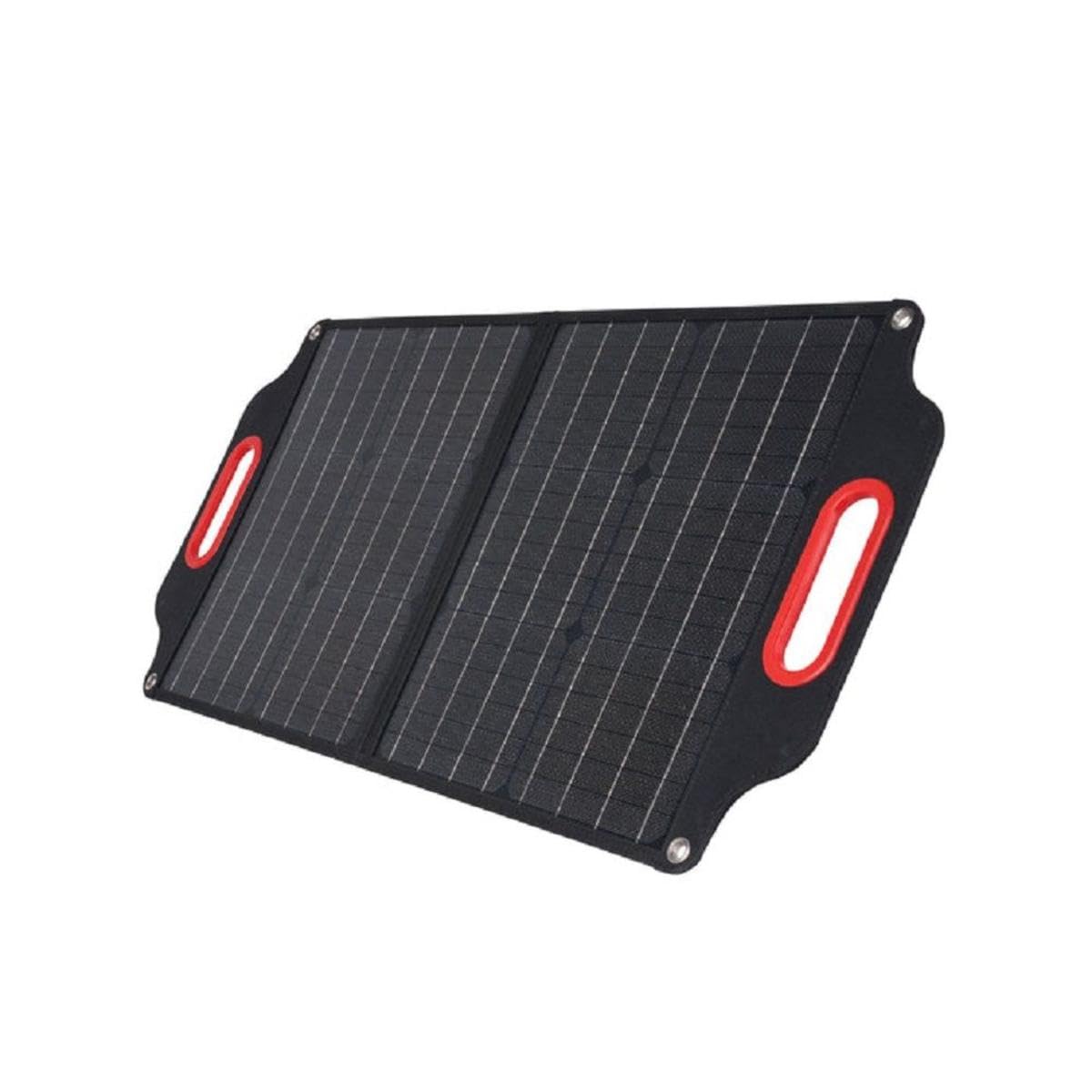
You’re looking for a higher-output portable panel that can support basecamp gear, a power station, or DC devices and the Dawn 40W fits that niche. It unfolds into a clamshell with built-in kickstands, an LCD that shows voltage and amperage, and a handy pouch with multiple cables so you can plug into USB or common DC ports.
The build feels solid, with handles and magnetic closure for quick setup, and it’s compact enough to move between a car, campsite, or RV. It’s not ultralight, but if you need reliable, higher wattage and easy DC compatibility for camping or backup power, this model is a practical option to consider.
What People Say
Owners tend to praise how quickly the panel sets up and the convenience of the LCD and included cables, calling out the solid construction and thoughtful carry features. People also note the useful mix of USB and DC outputs for RVs and power stations. Criticisms often focus on connector compatibility and a perception that the price sits above competing options with similar wattage.
Overall Sentiment: Neutral

Situational Benefits
|
Situation |
How It Helps |
|---|---|
|
Basecamp |
You can run higher-draw devices or top up a generator-style battery without fuss thanks to the 40W output and DC connectors. |
|
RV and Overlanding |
The LCD and multiple output options let you monitor and feed voltage directly to vehicle or camp systems during daytime stops. |
|
Car Camping |
Rapid setup with kickstands and magnets gets you a stable charging surface so phones, lights, and power banks get replenished between activities. |
|
Emergency Preparedness |
It stores compactly and offers a higher power ceiling than small panels, giving you a stronger secondary source during outages. |
Energy Efficiency
Monocrystalline cells deliver efficient conversion in direct sunlight and the 40W rating gives solid daytime yield; expect lower output with poor angle or cloud cover and be mindful of connector matching to preserve efficient transfer.
Key Benefits
- 40W peak output suitable for charging larger banks and DC devices
- Integrated kickstand and LCD make setup and monitoring straightforward
- Multiple outputs and included cables increase compatibility with common gear
- Clamshell design with handles and magnets for fast deployment and transport
Rating: 4.2 (total: 11+)
SunJack 25W

You get noticeably more charging headroom than smaller portable panels while keeping a compact, foldable package. The SunJack 25W uses ETFE-coated monocrystalline cells, folds flat for a pack or car, and includes USB-C and USB-A outputs plus two carabiners for easy mounting.
It’s built to resist weather and everyday wear, so it’s useful on multi-day trips, on a kayak deck, or hung near a skylight at home. If you want a dependable step up in power that still travels well, this model is a sensible middle ground between lightweight panels and heavier basecamp arrays.
What People Say
Owners most often praise the solid construction and reliability when charging phones and power banks in good sun. Many users report that it performs well even when placed indoors near a skylight or used on boats because of the waterproofing and mounting hardware.
A minority mention that output drops in cloudy conditions or when the panel isn’t angled optimally, but overall people appreciate the consistent, usable charging the panel provides.
Overall Sentiment: Positive

Situational Benefits
|
Situation |
How It Helps |
|---|---|
|
Camping |
You can set it near camp or clip it to a tree to refill phones, lights, and power banks across the day so you have usable power after dark. |
|
Indoor Skylight |
Placing it under a bright skylight or window gives slow but steady charging for small devices during the day without needing to go outside. |
|
Kayaking |
The IP67 rating and included carabiners let you mount it on a deck or paddle crate to keep a battery bank topped despite occasional spray. |
|
Travel |
It folds compactly for luggage or a daypack and provides a reliable way to top up devices between transit stops or on long outings. |
Energy Efficiency
Monocrystalline cells with an ETFE coating deliver strong conversion in direct sunlight; expect reduced output in shade or overcast conditions and better yields when you optimize angle and placement.
Key Benefits
- Higher 25W output for faster top-ups compared with smaller panels
- IP67 waterproofing and ETFE face for durable outdoor use
- USB-C and USB-A ports plus included carabiners for versatile mounting
- Foldable, packable form that works on trips and as a home backup
Rating: 4.4 (total: 206+)
FAQ
What Power Can You Actually Expect?
Solar panels list a peak wattage that assumes ideal sun, angle, and temperature, so in real conditions you’ll often see significantly less than the rated number. Aim for best sun exposure and correct panel angle to improve yield, and expect lower output in morning, evening, or cloudy skies. Treat the rated figure as a maximum and plan around usable daily energy rather than peak watts.
Is The Panel Weatherproof?
Water- and dust-resistance ratings like IP65 or IP67 tell you how well the panel housing stands up to the elements, but the USB port or added electronics may not be fully sealed. You can use IP65 panels in light rain and IP67 models around splashes or brief immersion, yet you should still protect exposed ports and avoid charging devices directly in heavy downpours.
Stow the panel and dry connections after wet use to keep it working reliably.
How Do You Charge Phones And Power Banks Reliably?
For steady, safe charging use the solar panel to top up a power bank first, then charge phones from the bank so devices see a regulated output and you’re not dependent on peak sun. Match connector types (USB-A, USB-C, or DC) and use the included cables or good-quality replacements, and position the panel for direct sun to maximize throughput. If you must charge devices directly, monitor temperatures and avoid leaving batteries in hot sun while charging.
Customer Preferences
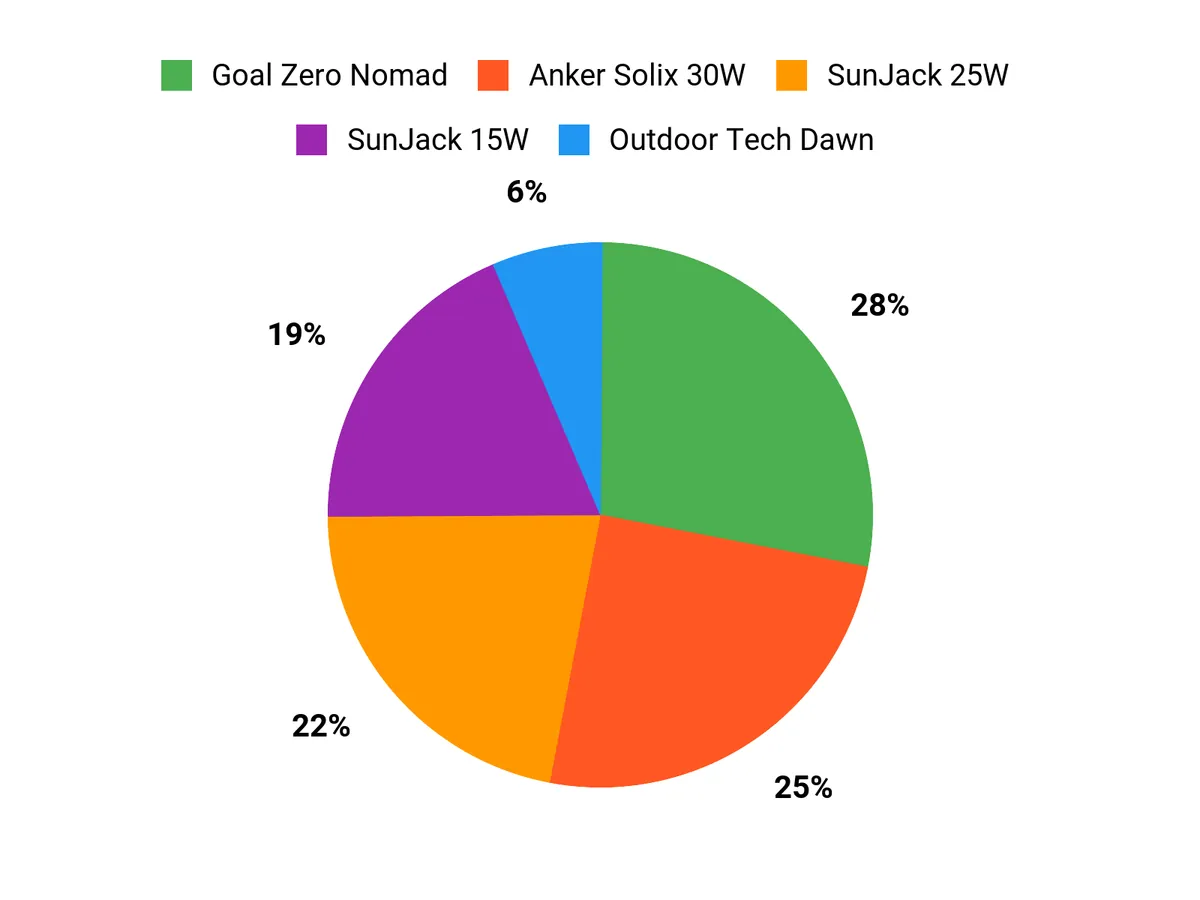
When you choose between the SunJack 15W, Anker Solix 30W, and Goal Zero Nomad you’re typically weighing durability and weather resistance against raw output and packability. If you prioritize waterproofing and sturdy mounting you’ll gravitate toward SunJack, if faster top-ups for multiple devices matter you’ll favor Anker, and if low weight and easy packability are critical you’ll pick the Goal Zero Nomad.
Wrapping Up
If you prioritize rugged, weatherproof portability you are well served by the smaller SunJack 15W, while the SunJack 25W balances higher output with the same durable design if you need more charging speed. Choose the Anker Solix 30W when you want faster charging for multiple devices, and the Outdoor Tech Dawn 40W when basecamp or RV power and DC outputs matter most. For lightweight reliability on long hikes you will appreciate the Goal Zero Nomad 10. Each pick focuses on a real-world strength so you can match the panel to your gear, travel style, and how much power you need.
| Product Name | Image | Rating | Maximum Power | Item Weight | Special Highlights |
|---|---|---|---|---|---|
| SunJack 15 Watt Foldable and Waterproof Solar Panel |
|
4.3/5 (134 reviews) | 15 Watts | 1.4 Pounds |
|
| Anker Solix PS30 Solar Panel |
|
4.2/5 (438 reviews) | 30 Watts | 2.2 Pounds |
|
| Goal Zero Nomad 10 |
|
4.6/5 (407 reviews) | 10 Watts | 510 Grams |
|
| Outdoor Tech Dawn 40W Solar Panel |
|
4.2/5 (11 reviews) | 40 Watts | 5.13 Pounds |
|
| SunJack 25 Watt Foldable and Waterproof Solar Panel |
|
4.4/5 (206 reviews) | 25 Watts | 1.7 Pounds |
|
This Roundup is reader-supported. When you click through links we may earn a referral commission on qualifying purchases.
