

Last Updated on July 28, 2026 by Daniel Globe
Northern Italy offers everything from wide beginner pistes and gourmet mountain huts to World Cup descents, glacier views, and cross-border ski circuits. The best resort depends on how you ski, who you travel with, and whether you value linked terrain, reliable high-altitude snow, nightlife, food, scenery, or easy transport. This guide compares nine of the strongest choices and explains the tradeoffs before you book.
Quick Answer
Val Gardena is the strongest all-around choice for linked Dolomite skiing, while Cervinia suits beginners and snow-conscious travelers. Choose Alta Badia for food and relaxed cruising, Arabba/Marmolada for steeper terrain, Cortina for scenery and style, Madonna di Campiglio for a polished resort experience, and Pila for convenient access from Aosta.
Key Takeaways
- Best all-around Dolomite base: Val Gardena, with direct Sellaronda access and terrain for several ability levels.
- Best for beginners and long seasons: Cervinia, thanks to broad pistes and high-altitude skiing beneath the Matterhorn.
- Best for food and relaxed intermediates: Alta Badia, which combines 130 km of groomed slopes with excellent Ladin cuisine.
- Best for advanced piste skiers: Arabba/Marmolada, known for steeper descents and access to the Sellaronda.
- Best for style and scenery: Cortina d’Ampezzo or Courmayeur.
- Important: Italy requires helmets for slope users of all ages and valid third-party liability insurance.
Disclosure: As an Amazon Associate I earn from qualifying purchases. Some links on this page are affiliate links, at no extra cost to you.
Why Northern Italy Is a Skiing Paradise
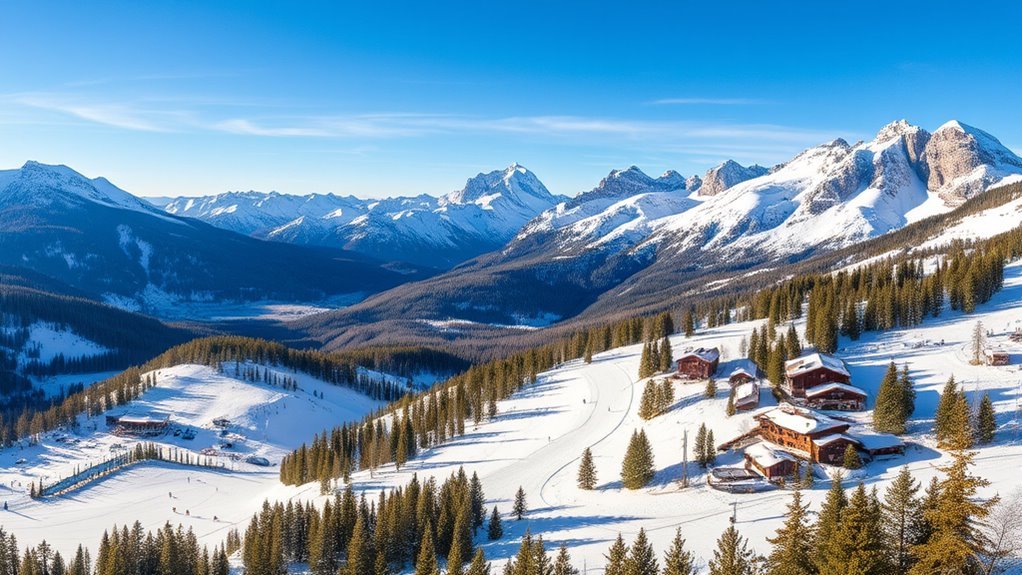
Northern Italy combines several distinct ski regions. The Dolomites are known for dramatic limestone scenery, long ski circuits, groomed pistes, and Ladin mountain culture. Farther west, the Aosta Valley places skiers beneath Mont Blanc, the Matterhorn, Monte Rosa, and other high Alpine peaks.
The Dolomiti Superski network advertises 1,200 km of slopes and 450 lifts across 12 ski areas. One pass can cover the full network, although all 1,200 km are not continuously linked by pistes. Some areas require a bus, car, or separate day trip.
Published piste totals are not always directly comparable. Some resorts count only groomed runs, while others include ski routes, linked valleys, or off-piste terrain.
Northern Italy Ski Resorts at a Glance
At a Glance
| Madonna di Campiglio | Best for a polished all-around holiday with 156 km of linked skiing, upscale lodging, family facilities, and lively dining. |
| Val Gardena | Best all-around Dolomite base for the Sellaronda, varied pistes, mountain huts, and traditional Ladin villages. |
| Cortina d’Ampezzo | Best for iconic scenery, historic sporting prestige, stylish town life, and a mixture of cruising and expert pistes. |
| Courmayeur | Best for a stylish short break, Mont Blanc scenery, strong intermediate terrain, and guided freeride opportunities. |
| Cervinia | Best for beginners, broad pistes, high-altitude skiing, Matterhorn views, and a possible ski connection to Zermatt. |
| Alta Badia | Best for relaxed intermediate skiing, families, Ladin food, gourmet huts, and direct Sellaronda access. |
| Espace San Bernardo | Best for skiing in both Italy and France, mixed-ability groups, sunny slopes, and a quieter cross-border experience. |
| Arabba/Marmolada | Best for confident intermediates and advanced skiers who want steeper terrain, long descents, and Sellaronda access. |
| Pila | Best for intermediates, short stays, and families that want quick gondola access from the city of Aosta. |
Products Worth Considering
How to Choose a Northern Italy Ski Resort
Products Worth Considering

🎲 5 WAYS TO PLAY FOR EVERY CROWD: Classic Mode for poker-style strategy, Race to the Summit for fast-paced competition, Apres Ski Mode for party nights, Backcountry Mode...
For Beginners and Families
Cervinia is one of the easiest places to build confidence because many pistes are broad, open, and relatively forgiving. Alta Badia also has a large share of blue terrain, modern lifts, ski schools, and family activity areas. Madonna di Campiglio works well for mixed-ability families that also want shopping, restaurants, and non-ski activities.
Pila has dedicated beginner areas, but most of its full runs are red. It is a better fit for families that include confident intermediates than for groups made up entirely of first-time skiers.
For Intermediates and Long Ski Days
Val Gardena and Alta Badia are excellent choices for skiers who enjoy covering distance. Both provide direct access to the Sellaronda, a roughly 40 km circuit of pistes and lifts around the Sella massif. Start early, check the final return-lift times, and allow extra time for queues, lunch, and weather interruptions.
Madonna di Campiglio is another strong intermediate choice because its interconnected ski area links Campiglio with Pinzolo and Folgarida-Marilleva.
For Advanced Skiers
Arabba/Marmolada has some of the sportier groomed terrain in the Sellaronda region, including steep pistes around Porta Vescovo and the long Marmolada descent when fully open. Val Gardena offers the Saslong World Cup piste, while Cortina has a collection of demanding black runs.
Courmayeur attracts experienced skiers with steep terrain and famous freeride routes, but skiing beyond open marked pistes requires separate judgment, equipment, and often a qualified guide.
For Food, Style, and Nightlife
Alta Badia is the standout choice for skiers who plan their day around mountain lunches and Ladin cuisine. Cortina and Courmayeur offer stylish town centers, boutiques, bars, and upscale hotels. Madonna di Campiglio combines polished resort facilities with a more self-contained ski-holiday atmosphere.
Pro Tip: Do not choose a resort by piste kilometres alone. Check the trail map, difficulty mix, village layout, lift links, altitude, and whether the terrain suits the least experienced skier in your group.
Madonna di Campiglio: A Polished All-Around Resort
Madonna di Campiglio sits in the Brenta Dolomites and combines an attractive resort center with a large interconnected ski area. The official Campiglio Dolomiti ski area advertises 156 km of connected runs across Madonna di Campiglio, Pinzolo, and Folgarida-Marilleva.
Terrain and Ski Experience
The area offers blue, red, and black pistes, modern lifts, forested descents, and access to the Ursus Snowpark. Intermediates have the broadest choice, while beginners can use learning areas and easier runs near the resort. Advanced skiers can seek out steeper pistes such as sections of the Spinale and Pinzolo sectors.
The terrain is extensive enough for a full week, although skiers who want a vast touring network may prefer the Sellaronda resorts.
Resort Amenities and Family Activities
Madonna di Campiglio has high-end hotels, apartments, boutiques, spas, restaurants, and après-ski venues. Families can combine ski lessons with snowshoe walks, ice skating, sledding, and easier winter paths when operating conditions allow.
Best for: Couples, mixed-ability families, intermediates, and travelers seeking a polished resort experience.
Consider another resort if: Your main goal is cross-border skiing, glacier terrain, or completing the Sellaronda from your accommodation.
Val Gardena: The Best All-Around Dolomite Base
Val Gardena combines serious skiing with Ladin culture in Ortisei, Santa Cristina, and Selva di Val Gardena. The local area has more than 54 km of pistes, while the combined Val Gardena and Alpe di Siusi domain offers about 175 km.
Skiing and Sellaronda Access
Selva provides direct access to the Sellaronda and the wider Dolomiti Superski network. Intermediates can spend long days moving between valleys, while advanced skiers can tackle the Saslong World Cup course and other steeper pistes.
Beginners may prefer the gentler slopes around Alpe di Siusi or local nursery areas before attempting a full ski circuit. The Sellaronda is not a first-day beginner route and should not be started late in the day.
Ladin Culture and Villages
Val Gardena is also known for woodcarving, Ladin food, historic churches, and mountain huts. Ortisei has a lively pedestrian center and convenient access to several mountain sectors. Selva is the most practical base for direct Sellaronda skiing, while Santa Cristina offers a quieter position near the Saslong area.
Best for: Intermediates, strong mixed-ability groups, ski tourers, and visitors who want both mountain culture and linked terrain.
Consider another resort if: You want the simplest possible beginner layout or a compact ski-in, ski-out village with no route planning.
Cortina d’Ampezzo: Iconic Scenery and Italian Style
Cortina d’Ampezzo is known as the Queen of the Dolomites. Its official ski area lists 120 km of slopes, 66 runs, and 26 lifts. The skiing is spread across dramatic sectors including Tofana, Faloria-Cristallo, and nearby areas.
Beginners and intermediates can find scenic cruising, while advanced skiers can seek out World Cup terrain and Cortina’s black pistes. Because the mountain sectors are not all linked in one continuous piste network, buses or other transfers may be needed to explore the full area.
The town is one of Italy’s most fashionable winter destinations, with upscale hotels, historic cafés, boutiques, restaurants, and a long winter-sports tradition.
Best for: Scenery, stylish lodging, couples, confident skiers, and travelers who value the town as much as the piste network.
Consider another resort if: You want every sector connected on skis or the lowest-cost accommodation and dining.
Courmayeur: Mont Blanc Views and a Stylish Short Break
Courmayeur sits beneath the Italian side of Mont Blanc. Its principal ski sectors are Plan Chécrouit and Val Veny, with lifts reaching approximately 2,755 meters.
Piste totals require care here. The official Courmayeur tourism site advertises 100 km of groomed slopes and off-piste terrain combined, 33 runs, and 18 lifts. Piste-only mapping services publish a much smaller groomed-run total. This difference reflects counting methods rather than a sudden change in the mountain.
The groomed terrain is especially appealing to intermediates, with sunny pistes around Chécrouit and tree-lined skiing toward Val Veny. The compact area works well for a long weekend, while experienced visitors can book guided freeride or ski-touring days when conditions permit.
Courmayeur’s pedestrian center has cafés, restaurants, shops, and a refined après-ski scene. It is also close to the Skyway Monte Bianco, although that attraction is separate from the main piste system.
Best for: Intermediates, couples, food, style, Mont Blanc scenery, and short ski trips.
Consider another resort if: Your priority is a huge groomed-piste network for an entire week.
Cervinia: Broad Pistes and High-Altitude Skiing
Breuil-Cervinia lies beneath the Matterhorn in the Aosta Valley. Its broad, high-altitude pistes are well suited to beginners and intermediates who prefer open terrain and long descents.
The Italian slopes link with Valtournenche and, when weather and lifts permit, with Zermatt in Switzerland. A suitable international-area pass is required for cross-border skiing. Wind can close high lifts and interrupt the connection, so never rely on skiing into Switzerland for a fixed appointment or same-day transport connection.
The official Cervino Ski Paradise calendar lists the 2026/27 winter season from October 24, 2026, through May 2, 2027. Individual lifts and connections may open later or close earlier depending on snow, wind, maintenance, and safety conditions.
Cervinia is accessible by road and bus. The closest rail connection is at Châtillon/Saint-Vincent, followed by a bus into the resort. The village is not entirely car-free, although many services are close enough to reach on foot once visitors arrive.
Best for: Beginners, intermediates, long seasons, Matterhorn scenery, and skiers interested in a possible Zermatt connection.
Consider another resort if: You prefer extensive tree skiing, a traditional old village, or terrain protected from strong high-mountain winds.
Alta Badia: Relaxed Skiing and Outstanding Food
Alta Badia occupies a high plateau around Corvara, Colfosco, La Villa, San Cassiano, Badia, and surrounding villages. The official ski area advertises 130 km of groomed pistes and 53 lifts, with direct access to the Sellaronda.
Terrain and Slope Variety
The piste mix favors beginners and intermediates. Wide blue and red runs make it easy to cruise between villages and mountain huts. Advanced skiers can test themselves on the Gran Risa World Cup piste and use the Sellaronda links to reach sportier terrain around Arabba.
The area is less appealing to experts who want steep pistes all day, but it works extremely well for mixed groups because easier skiers can remain on local terrain while stronger skiers tour farther.
Ladin Food and Gourmet Dining
Alta Badia is one of the strongest food destinations in the Alps. Mountain huts range from simple Ladin kitchens to polished restaurants, and the valley has several acclaimed dining venues. Michelin recognition changes over time, so check the current Michelin Guide listings before booking a particular restaurant.
Family Facilities
Ski schools, beginner zones, kids’ areas, rentals, winter walks, and efficient lift links make Alta Badia practical for families. Corvara and Colfosco are convenient for direct skiing, while San Cassiano is a good choice for travelers who prioritize quieter lodging and food.
Best for: Families, relaxed intermediates, food lovers, and Sellaronda access.
Consider another resort if: You want a large concentration of steep black pistes or a loud après-ski scene.
Espace San Bernardo: Ski Between Italy and France
Espace San Bernardo connects La Thuile in Italy with La Rosière in France over the Little St Bernard Pass. The official ski area advertises 156 km of certified pistes and 39 lifts.
Its published terrain mix is approximately 45% green or blue, 40% red, and 15% black. This makes the domain useful for mixed-ability groups, although the easiest sectors are not distributed evenly across both sides of the border.
La Rosière is known for sunny, open slopes and family facilities. La Thuile adds more tree-lined pistes and steeper descents. The international link is a major attraction, but it can close because of wind, visibility, snow, or operational limits.
Do not assume the domain divides into exactly equal Italian and French halves. Official statistics present one combined certified total rather than a simple 75 km per country.
Best for: Mixed groups, cross-border skiing, intermediates, families, and travelers seeking a less famous alternative to the largest Alpine domains.
Consider another resort if: A guaranteed daily international connection is essential to your plans.
Arabba/Marmolada: Sporty Terrain for Stronger Skiers
Arabba/Marmolada is one of the sportiest areas in the Dolomiti Superski network. Official Arabba information lists approximately 62 to 63 km of local pistes, plus direct links toward the Sellaronda.
The area is known for steeper groomed pistes around Porta Vescovo and access toward the Marmolada. When the complete route is open, the Bellunese descent from the Marmolada area is one of the longest and most memorable groomed runs in the Dolomites.
Confident intermediates and advanced skiers will get more from Arabba than cautious beginners. Easier pistes exist, but the local layout and return routes can feel demanding for inexperienced visitors.
Warning: Marked open pistes are controlled differently from off-piste terrain. Before leaving a marked run, check the regional AINEVA avalanche bulletin, understand your insurance exclusions, carry avalanche rescue equipment, and use a qualified local guide when appropriate. Equipment alone does not make an unsafe route safe.
Best for: Confident intermediates, advanced piste skiers, long descents, and Sellaronda access.
Consider another resort if: Most of your group consists of nervous beginners or non-skiers seeking a large resort town.
Pila: Convenient Skiing Above Aosta
Pila is connected to the city of Aosta by a gondola ride of about 18 minutes. This makes it one of Northern Italy’s most convenient resorts for travelers who want to combine skiing with restaurants, shops, and historic sights in a real city.
The official Pila ski area lists 70 km of pistes reaching approximately 2,700 meters. Its run breakdown is four blue, 21 red, and four black pistes, so the mountain is best viewed as an intermediate resort with beginner facilities rather than 70 km of easy skiing.
First-time skiers can use learning areas such as Baby Gorraz and Grimod. More experienced visitors can explore the red pistes and higher sectors around Chamolé and Couis. A snow park adds an option for freestyle skiers and snowboarders.
Best for: Intermediates, mixed-ability families, short breaks, and travelers who want to stay in Aosta.
Consider another resort if: You want a large slopeside village or an extensive network of gentle blue pistes.
Best Time to Ski in Northern Italy
January through March is the main ski period across most Northern Italian resorts, but there is no single best month for every trip.
- December: Festive atmosphere and lower early-season prices before Christmas, but natural snow coverage can be variable and some links may not yet be open.
- January: Often colder and quieter after the New Year holiday period. Shorter daylight and very cold mornings are possible.
- February: A strong midwinter choice for snow coverage, but school holidays can increase prices, traffic, restaurant demand, and lift queues.
- March: Longer days, milder temperatures, and enjoyable terrace lunches. Lower slopes can become soft in warm afternoons.
- April: Best suited to higher areas such as Cervinia or selected high Dolomite sectors. Operations become more limited as the season progresses.
Note: Published season dates are targets, not snow guarantees. Check the official lift report, piste map, avalanche bulletin, weather forecast, and cross-border connection status shortly before each ski day.
Ski Passes and Getting Around
Local Pass or Area-Wide Pass?
A local pass can cost less and may be sufficient for beginners, ski-school days, or a short stay. An area-wide pass makes more sense when you plan to use linked valleys or complete circuits.
- Dolomiti Superski: Covers all 12 member ski areas, but not every area is connected by piste.
- Local Dolomite passes: Can cover one area such as Alta Badia, Val Gardena/Alpe di Siusi, Arabba/Marmolada, or Cortina.
- Cervinia–Zermatt: Requires a pass valid for the international Matterhorn domain if you intend to ski into Switzerland.
- Espace San Bernardo: Uses a cross-border domain pass for La Thuile and La Rosière.
Compare current online prices, age categories, refund rules, insurance options, and dynamic-pricing terms on the official resort site. Do not rely on an older blog price because lift-pass rates and conditions can change each season.
Airports, Trains, and Cars
Dolomite resorts are commonly reached through Venice, Verona, Innsbruck, Treviso, or regional rail and bus connections. Aosta Valley resorts are often approached through Turin, Milan, Geneva, or the Aosta rail and bus network.
A car gives flexibility but can add snow-chain, winter-tire, toll, parking, and mountain-pass concerns. Pila is especially convenient without a car when staying in Aosta. Alta Badia and Val Gardena also provide ski buses and regional public transport, although late-night options may be limited.
Mountain transfer times can change sharply during snowfall, weekend traffic, holiday periods, or pass closures. Leave more time than a normal map estimate suggests.
Italian Ski Safety Rules
Italy has several legal requirements that visitors should arrange before reaching the lifts:
- Helmet: From the 2025/26 winter season, a suitable certified helmet is mandatory for slope users of all ages.
- Liability insurance: Third-party liability coverage has been mandatory since January 1, 2022. Carry proof and confirm that your policy covers skiing or snowboarding in Italy.
- Alcohol and drugs: Italian slopes apply alcohol and drug restrictions. Ski conservatively and never ride while impaired.
- Speed and conduct: Stay in control, respect signs and closures, give downhill users space, and adjust speed for visibility, congestion, and snow conditions.
The Dolomiti Superski safety guidance explains the current helmet, insurance, alcohol, and conduct rules. Other Italian resorts apply the same national requirements and may add local conditions.
Frequently Asked Questions
What is the best ski resort in Northern Italy?
There is no universal winner. Val Gardena is the strongest all-around choice for linked Dolomite skiing. Cervinia is better for broad beginner-friendly pistes and a long high-altitude season. Alta Badia suits food lovers and relaxed intermediates, while Arabba/Marmolada is stronger for advanced piste skiers.
What is the prettiest ski resort in Italy?
Cortina d’Ampezzo is a leading choice for dramatic Dolomite scenery and an elegant town. Val Gardena and Alta Badia offer equally impressive views with more direct access to the Sellaronda, while Cervinia provides the classic Matterhorn panorama.
Which Northern Italy ski resort is best for beginners?
Cervinia is one of the best choices because many pistes are broad and open. Alta Badia also has extensive easy terrain and strong family facilities. Beginners should still check where the ski school and nursery slopes are located before choosing accommodation.
What is the best month to ski in the Dolomites?
Late January through March usually offers the best balance of open terrain and daylight. February is reliable for a midwinter trip but can be busy during school holidays. March brings longer, warmer days, although lower slopes may soften in the afternoon.
Which resort has the most reliable snow?
Cervinia is one of the strongest choices because of its elevation and long published season. Arabba/Marmolada and higher Dolomite sectors can also retain snow well, but no resort can guarantee every piste or connection. Wind, temperature, snowfall, and snowmaking conditions all affect operations.
Can you ski from Italy into another country?
Yes. Cervinia can connect with Zermatt in Switzerland, and Espace San Bernardo connects La Thuile with La Rosière in France. You need the correct pass, and the international lifts may close because of wind, weather, visibility, or operational restrictions.
Do I need a helmet and insurance to ski in Italy?
Yes. A suitable certified helmet is mandatory for all ages from the 2025/26 winter season. Skiers and snowboarders must also have valid third-party liability insurance and should carry proof of coverage.
Can I visit a Northern Italy ski resort without a car?
Yes, but some resorts are easier than others. Pila is reached by gondola from Aosta, making it especially practical without a car. Val Gardena and Alta Badia have bus networks, while Cervinia can be reached by bus from Châtillon/Saint-Vincent. Check evening and luggage connections before booking.
Conclusion
Northern Italy does not have one resort that is best for every skier. Val Gardena offers the strongest blend of linked terrain, culture, and variety. Cervinia stands out for broad pistes and high-altitude skiing, while Alta Badia combines relaxed cruising with excellent food. Arabba/Marmolada rewards stronger skiers, and Cortina, Courmayeur, and Madonna di Campiglio provide more polished resort experiences.
Choose according to your group’s actual ability, preferred atmosphere, travel route, and tolerance for crowds or complex lift links. Before departure, confirm current operating dates, piste openings, pass coverage, transport, helmet compliance, liability insurance, and avalanche conditions.
Sources
- Dolomiti Superski — network size, member areas, pistes, and lifts.
- Dolomiti Superski Safety Information — helmet, liability-insurance, alcohol, and slope-conduct requirements.
- Campiglio Dolomiti — official Madonna di Campiglio linked-area statistics.
- Val Gardena Tourism — local skiing, Alpe di Siusi connection, and Dolomiti Superski access.
- Cortina d’Ampezzo Tourism — official slope, run, and lift information.
- Cervino Ski Paradise — official season dates, access information, and operating updates.
