

Last Updated on November 4, 2026 by Caleb Warren
If you are looking for the best RV motorhome door locks in 2026, start by checking your motorhome’s existing door opening. The RVLock Atlas Keyless Door Lock is a strong choice for compatible Class A and select Class C motorhomes. If your camper or motorhome uses a smaller, traditional entry latch, the TrampgiK RV Door Lock Replacement offers a simpler keyed option. Both serve different door configurations, so accurate measurements matter more than extra features. This guide compares their benefits, limitations, installation requirements, and compatibility to help you choose the right replacement.
Quick Answer: Which Motorhome Door Lock Should You Choose?
Best for Class A and select Class C motorhomes: The RVLock Atlas is designed for compatible 6.5 x 4.75-inch openings. It offers keypad access, remote fobs, mechanical backup keys, and rechargeable power.
Best for a smaller traditional entry latch: The TrampgiK Engineering Plastic RV Door Lock is a basic keyed replacement marketed for compatible camper and motorhome doors with approximately 3.65 x 2.95-inch openings.
Important: These locks are not interchangeable. Measure your existing door cutout and check the latch arrangement before ordering.
Key Takeaways
- Choose a lock based on your actual motorhome door dimensions, not just its RV classification.
- The RVLock Atlas offers keyless convenience for compatible larger motorhome entry doors.
- The TrampgiK replacement provides basic mechanical access for compatible smaller openings.
- Check door thickness, hinge position, latch alignment, and screen-door clearance.
- Electronic locks should have a practical backup entry method.
- No RV door lock guarantees protection against forced entry.
Disclosure: As an Amazon Associate I earn from qualifying purchases. Some links on this page are affiliate links, at no extra cost to you.
Top RV Motorhome Door Lock Picks
The following comparison highlights two different motorhome entry-door lock configurations. The best option depends on the lock opening already installed in your vehicle.
| Motorhome Door Lock | Product | Best For | Access Type | Material | Door Opening | Check Price | Review |
|---|---|---|---|---|---|---|---|
| RVLock Atlas Keyless Door Lock for Motorhomes |  |
Best for Compatible Class A & C Motorhomes | Access: Keypad, remote fob, mechanical keys | Material: Metal construction | Fitment: 6.5 x 4.75-inch cutout; approximately 1.5-inch-thick door | Check Price on Amazon | Read Our Analysis |
| TrampgiK RV Door Lock Replacement with Keys |  |
Best Basic Keyed Replacement for Smaller Openings | Access: Mechanical key | Material: Reinforced engineering plastic | Fitment: Advertised for approximately 3.65 x 2.95-inch openings | Check Price on Amazon | Read Our Analysis |
Comparison note: Door opening measurements refer to the lock cutout, not the full exterior handle dimensions. Confirm your existing hardware before purchasing. Prices, availability, and included accessories may change.
More Details on Our Top Picks
-
RVLock Atlas Keyless Door Lock for Motorhomes
If you own a compatible Class A or Class C motorhome and want to replace your traditional door handle with a keyless motorhome entry system, the RVLock Atlas deserves consideration. It combines a keypad, remote key fobs, and mechanical backup keys, giving you different ways to access your vehicle.
The Atlas is designed for many Class A motorhomes and select Class C models with an existing 6.5 x 4.75-inch lock cutout and a door approximately 1.5 inches thick. This makes it more suitable for certain larger motorhome door assemblies than standard trailer-style replacement latches.
Its metal construction, backlit keypad, and dual-lock mechanism are useful features for frequent travel. The dual-lock design operates the latch and deadbolt together, while the illuminated keypad makes entering your code easier after dark.
You also get USB-C rechargeable power. According to RVLock, the current Atlas design is intended to operate for approximately six to twelve months between charges, depending on usage and conditions. Battery life is not guaranteed, so you should monitor charging needs before longer trips.
The manufacturer lists two remote fobs and two mechanical keys with the Atlas. These backup keys are especially important if electronic access becomes unavailable. Installation is advertised as a roughly 30-minute upgrade for a compatible existing opening, although your actual installation time may vary.
Why You’ll Like It
- Multiple entry methods: Use a keypad, remote fob, or mechanical key.
- Motorhome-focused design: Built for compatible larger Class A and Class C entry-door configurations.
- Backlit keypad: Makes nighttime access easier.
- Rechargeable power: USB-C charging reduces the need for frequent disposable battery replacement.
- Backup access: Mechanical keys provide an alternative when electronics are unavailable.
Who Should Buy This?
Choose the RVLock Atlas if your motorhome has the required door opening and you want convenient keyless access without depending exclusively on a keypad.
Who Should Avoid This?
This is not the right choice for a motorhome with a smaller or different lock cutout, incompatible latch arrangement, or insufficient interior clearance. It is also unnecessary if you prefer a basic mechanical lock without batteries or electronic controls.
Fitment Note: The Atlas requires a compatible motorhome door assembly. Check your existing 6.5 x 4.75-inch opening, door thickness, deadbolt position, and handle clearance. Review the official RVLock Atlas fit guide before ordering.
Main Limitations
- Does not fit every Class A or Class C motorhome.
- Costs more than a basic mechanical replacement lock.
- Requires periodic charging.
- Electronic functions can become unavailable during battery or component problems.
- The manufacturer’s current stated warranty is limited rather than lifetime coverage.
- Security Type: Keypad entry with remote fob and mechanical key backup
- Material: Metal construction
- Installation Time: Manufacturer estimates approximately 30 minutes for compatible doors
- Keys Included: 2 mechanical keys; manufacturer also lists 2 remote fobs
- Weather Resistance: Weather-resistant exterior design
- Warranty: Manufacturer currently lists a 1-year limited warranty; confirm terms for your purchase
- Additional Feature: Backlit keypad
- Additional Feature: USB-C rechargeable power
- Additional Feature: Dual-lock mechanism for latch and deadbolt
- Door Opening: 6.5 x 4.75 inches
- Door Thickness: Approximately 1.5 inches
Bottom Line: The RVLock Atlas is the more convenient choice for a compatible motorhome owner who wants keyless access, remote operation, and a mechanical backup. Confirm fitment first, because its larger motorhome-specific design will not replace every RV latch.
-
TrampgiK RV Door Lock Replacement with Keys
If you prefer a traditional RV entry door lock without electronic components, the TrampgiK RV Door Lock Replacement is worth considering. This model is marketed for compatible motorhome, camper, and trailer entry doors that use a smaller lock opening.
The lock uses reinforced engineering plastic for its main construction. This material avoids the corrosion concerns associated with some unprotected metal components and keeps the assembly relatively lightweight. However, reinforced plastic should not automatically be considered as strong as a well-designed metal security lock.
Its advertised fitment is approximately 3.65 x 2.95 inches for the door opening. You must check the precise orientation, door thickness, latch arrangement, and dimensions of your existing lock. This smaller opening is substantially different from the larger cutout required by the RVLock Atlas.
The replacement uses mechanical keys rather than keypad or remote access. That makes everyday operation simple and eliminates the need to monitor electronic lock batteries. Seller information describes individually coded keys and multiple matching spares, but the exact number supplied can differ by package or listing variation.
Installation is advertised as straightforward for compatible doors. In many cases, a screwdriver and the supplied mounting hardware may be sufficient. However, an incorrectly sized opening or poorly aligned strike plate can make replacement more difficult.
Why You’ll Like It
- Simple operation: Traditional keyed entry without programming or electronic controls.
- Lightweight construction: Reinforced engineering plastic is relatively easy to handle during replacement.
- No electronic batteries: Locking and unlocking do not depend on a keypad battery or remote fob.
- Backup keys: Matching spare keys can be useful for family members or emergencies.
- Basic replacement option: Suitable when you want to replace a compatible existing latch rather than upgrade to an electronic system.
Who Should Buy This?
This model is most suitable for owners of a compatible camper or motorhome with a smaller traditional entry latch who want a straightforward mechanical replacement. It may also appeal to buyers who prefer fewer components and simpler maintenance.
Who Should Avoid This?
Avoid this lock if your motorhome uses a larger Class A-style handle, a different latch system, or a door opening that does not match its advertised dimensions. It is also not the best option if you require remote unlocking, keypad access, or a metal-bodied lock.
Compatibility Note: The advertised 3.65 x 2.95-inch opening does not make this lock universal. Compare the listing’s installation measurements with your original latch, door thickness, screw positions, and strike plate before purchasing.
Main Limitations
- Reinforced plastic construction may not suit buyers who prefer a metal-bodied security latch.
- No remote fob or keypad functionality.
- Not a direct replacement for larger motorhome lock assemblies.
- Exact key quantities and package contents should be confirmed on the selected Amazon listing.
- Manufacturer warranty coverage could not be independently confirmed for this exact purchase configuration.
- Security Type: Mechanical keyed RV entry lock
- Material: Reinforced engineering plastic
- Installation Time: Advertised as a quick replacement for compatible existing openings; actual time varies
- Keys Included: Multiple matching keys advertised; confirm quantity for the selected package
- Weather Resistance: Corrosion-resistant plastic construction; full weather-sealing specifications not verified
- Warranty: Confirm the current manufacturer’s warranty and seller terms
- Additional Feature: No electronic batteries required
- Additional Feature: Traditional keyed access
- Additional Feature: Lightweight replacement design
- Advertised Door Opening: Approximately 3.65 x 2.95 inches
Bottom Line: The TrampgiK lock is a practical basic replacement to investigate if your motorhome or camper uses the advertised smaller latch opening. Its main advantages are simple mechanical operation and lightweight construction, not advanced electronic features.
How to Choose the Right Motorhome Door Lock
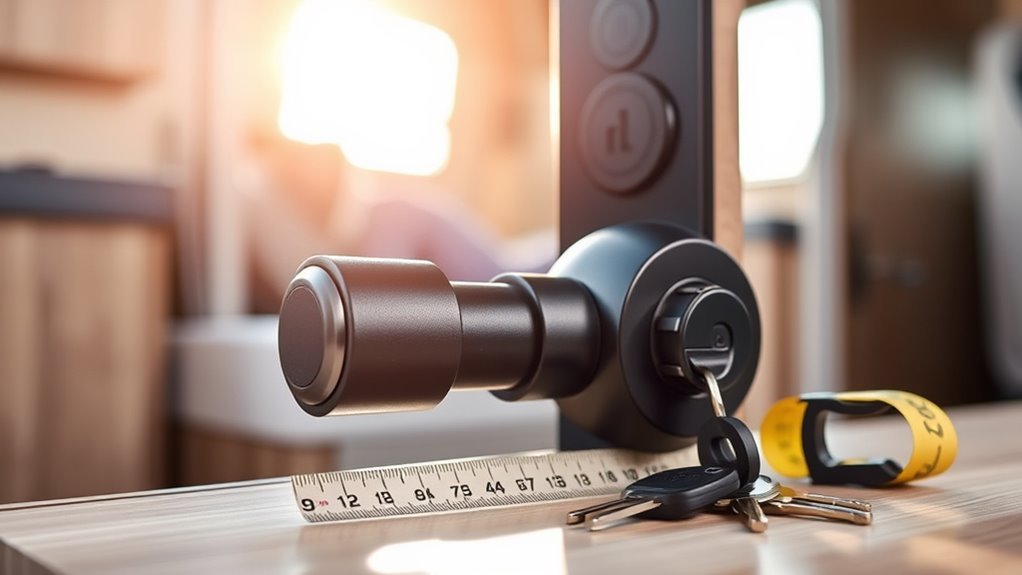
Choosing an RV motorhome door lock is about more than picking a secure-looking handle. Your replacement must fit the existing opening, operate the correct latch, and allow safe entry and exit.
Before buying, compare your current lock’s measurements with the manufacturer’s specifications. Then consider security, installation, weather resistance, key management, and long-term maintenance.
Motorhome Door Lock Compatibility
Door compatibility is the first factor to check. Motorhomes, travel trailers, and fifth wheels can use different entry-door systems, even when their handles look similar.
For example, the RVLock Atlas is designed for compatible 6.5 x 4.75-inch openings on approximately 1.5-inch-thick motorhome doors. The TrampgiK mechanical replacement is marketed for a much smaller opening of approximately 3.65 x 2.95 inches.
These differences mean you cannot assume that a lock advertised for an RV will fit your motorhome.
Check the following measurements before ordering:
- Door cutout: Measure the actual opening beneath the existing lock assembly.
- Door thickness: Confirm the new lock can clamp securely to your door.
- Latch position: Compare the latch and deadbolt with your existing door-frame strike plate.
- Hinge orientation: Check whether the replacement supports your door’s hinge side.
- Exterior clearance: Make sure the handle will not interfere with windows, trim, or nearby hardware.
- Interior clearance: Check for conflicts with screen doors, blinds, and interior handles.
- Mounting hardware: Verify screw placement and any model-specific installation requirements.
Motorhome manufacturers may change hardware between model years, so the vehicle’s make and year alone are not enough to establish compatibility.
Security Features Evaluation
A good motorhome door lock should provide reliable everyday access while making unauthorized entry more difficult.
Look for features such as a functioning deadbolt, a sturdy latch, secure mounting hardware, and a design suited to outdoor use.
If you want keyless motorhome entry, consider whether the lock includes a mechanical backup key, low-battery warning, and a straightforward way to program or reset access codes.
The RVLock Atlas combines electronic entry methods with mechanical key access. The TrampgiK replacement instead relies on traditional keys.
Neither approach is automatically the most secure in every situation. Correct installation, door-frame condition, and consistent locking habits remain important.
Security Note: No RV entry lock is completely theft-proof. A strong lock cannot compensate for a damaged door frame, poorly aligned strike plate, or weak mounting hardware. Keep valuable belongings out of sight and check that every door closes and locks correctly.
Installation Process and Ease
Many replacement RV locks are designed for DIY installation, but the difficulty depends on how closely the new lock matches the existing door assembly.
A straightforward replacement usually involves removing the interior mounting screws, separating the old handle components, positioning the new lock, and securing the hardware.
Electronic models may also require electrical connections, battery preparation, keypad programming, or remote fob pairing.
The RVLock Atlas is advertised as an approximately 30-minute installation for compatible motorhome doors. Smaller mechanical replacement locks may take less time when the opening and strike plate already align correctly.
Do not force a lock into an undersized opening or drill into the door without checking the manufacturer’s instructions. RV doors can contain wiring, insulation, or structural components that may be damaged by modification.
Material and Durability
The material used in an RV entry door lock can influence its durability, maintenance requirements, and resistance to physical damage.
Metal-bodied locks are commonly chosen for their strength and rigid construction. Look for corrosion-resistant finishes, suitable mounting hardware, and properly protected internal components.
Reinforced engineering plastic is another option. It can resist corrosion and reduce weight, but its strength depends on the specific design, material grade, and internal reinforcement.
Do not assume a plastic lock is stronger or weaker based only on the material name. The construction of the full assembly matters.
For outdoor use, inspect seals, screws, hinges, and the latch mechanism regularly. Dust, moisture, road vibration, and repeated operation can affect any lock over time.
Weather Resistance and Maintenance
Your motorhome door lock may face rain, dust, humidity, heat, and temperature changes throughout the year.
Choose a model that is intended for outdoor RV installation. A weather-resistant keypad or housing can help protect electronic components, but that does not mean the assembly is suitable for pressure washing or prolonged water exposure.
Keep the exterior clean with a soft cloth and follow the manufacturer’s guidance for lubricating moving parts. Avoid applying unsuitable oils or cleaning chemicals to electronic components.
After heavy rain or washing your RV, check for moisture around the lock and confirm that the latch operates smoothly.
Key Management and Backup Access
Think about how many people need access to your motorhome and what happens if a key is lost.
Traditional mechanical locks are straightforward to operate, but you must keep spare keys in a safe, accessible location.
Keyless systems can reduce the need to carry physical keys every time you enter your RV. However, electronic components introduce other maintenance needs, including battery charging or replacement.
Before choosing a keyless lock, check:
- Whether the lock includes mechanical backup keys.
- How access codes are added, changed, or removed.
- Whether remote fobs are included and how replacements are obtained.
- What happens if the battery becomes depleted.
- Whether the device provides low-battery notifications.
- Whether additional keys or replacement parts are available.
A backup key should be stored somewhere accessible outside the locked motorhome, without leaving it in an obvious hiding place.
Cost and Long-Term Value
Basic keyed RV replacement locks are generally positioned as simpler alternatives to advanced electronic entry systems.
Keyless motorhome locks often cost more because they include additional electronic components, remote-access functions, and specialized hardware.
Instead of focusing only on the initial purchase price, consider the total cost of ownership. This includes installation, batteries or charging accessories, replacement keys, possible repair parts, and warranty support.
A lower-priced lock is not a good value if it does not fit your door or fails to provide the functions you need.
Check the current Amazon listing and the manufacturer’s warranty terms before making your final decision. Exact prices and purchase conditions can change.
Before You Buy: Motorhome Door Lock Checklist
Use this checklist before ordering your replacement lock:
- Measure the height and width of your existing door opening.
- Confirm the door thickness.
- Check your current latch and deadbolt arrangement.
- Verify the replacement supports your door’s hinge orientation.
- Measure the clearance around the inside and outside handles.
- Decide whether you need keypad, remote, or mechanical key access.
- Confirm the product’s battery requirements if it is electronic.
- Check the included mounting hardware and accessories.
- Review the manufacturer’s installation instructions.
- Verify warranty and return conditions before buying.
Pro Tip: Photograph your existing lock from both sides and measure the exposed cutout after removing the old handle. These details can help the manufacturer or seller confirm compatibility.
How to Replace a Motorhome Door Lock
If your new lock matches the existing door assembly, installation may be a manageable DIY project. Always follow the instructions supplied with your particular lock.
- Keep the door open. Work with the entry door open so you do not accidentally lock yourself out.
- Document the original assembly. Take photographs of the interior handle, exterior lock, latch, and mounting screws.
- Remove the old lock. Carefully loosen the mounting hardware and separate the existing handle components.
- Check the opening. Confirm the new lock matches the cutout, door thickness, and latch position.
- Install the replacement. Position the lock components according to the manufacturer’s instructions and secure the supplied hardware.
- Check the strike plate. Make sure the latch and deadbolt align with the receiving openings in the door frame.
- Set up electronic access if applicable. Charge or install the required batteries, program the keypad, and pair any supplied fobs.
- Test every entry method. With the door still open, test the latch, deadbolt, mechanical key, keypad, and fobs as applicable.
- Test with the door closed. Confirm the lock operates smoothly from both sides and that the interior release functions correctly.
Safety Note: Never modify a door lock in a way that prevents normal emergency exit from inside your RV. If the latch binds, the door does not close correctly, or the emergency release is affected, stop using the new lock until the problem is corrected.
Frequently Asked Questions
How Do I Install a New RV Motorhome Door Lock?
Remove the existing handle, check the door opening, and install a compatible replacement using the manufacturer’s instructions. Tighten the mounting hardware correctly and test the latch, deadbolt, and interior release before relying on the new lock.
Are RV Door Locks Universal or Model-Specific?
RV door locks are not universal. Many travel trailer and camper locks use smaller openings, while Class A and some Class C motorhomes require larger or specialized assemblies. Check the cutout dimensions, door thickness, hinge orientation, and latch arrangement before buying.
Will a Travel Trailer Door Lock Fit My Motorhome?
Only if your motorhome has a compatible door opening, latch system, and mounting configuration. Many motorhomes use hardware that differs from standard towable RV locks. Do not assume compatibility based on the RV label alone.
What Is the Best Keyless Door Lock for a Class A Motorhome?
The RVLock Atlas is worth considering for Class A motorhomes with the specified 6.5 x 4.75-inch opening and compatible door assembly. It provides keypad access, remote fobs, mechanical backup keys, and rechargeable power. Check the manufacturer’s fit guide before ordering.
What Happens if My Keyless RV Door Lock Battery Dies?
Many keyless RV locks include mechanical backup keys, which can provide access when electronic functions are unavailable. The RVLock Atlas includes mechanical key access. Always keep your backup key accessible and follow the manufacturer’s battery maintenance instructions.
What Materials Are Best for RV Door Locks?
Metal alloys and reinforced engineering plastics are both used in RV entry locks. Metal-bodied designs may offer greater rigidity, while reinforced plastics can reduce weight and resist corrosion. Overall security depends on the lock design, mounting system, door condition, and installation quality.
How Often Should I Replace My RV Door Lock?
There is no universal replacement schedule. Replace your RV door lock if it becomes damaged, unreliable, difficult to operate, or insecure. Inspect it regularly for wear, corrosion, loose fasteners, and latch misalignment. You may also choose to replace a working lock when upgrading your entry system.
Can I Rekey My RV Door Lock?
Some RV door locks support rekeying or manufacturer-provided keyed-alike services, while others require a replacement cylinder or entire lock assembly. Check the specific model and manufacturer’s instructions. Do not assume every RV lock can be rekeyed.
How Do I Measure My Motorhome Door Lock?
Measure the actual door cutout after removing the existing handle, including its height and width. Also measure door thickness and check the position of the latch and deadbolt. Compare these measurements with the replacement lock’s installation diagram rather than relying on the outside handle dimensions.
Is a Keyless Motorhome Door Lock Worth It?
A keyless motorhome door lock may be worth the additional cost if you frequently enter and leave your RV, travel with multiple people, or prefer keypad and remote access. A traditional mechanical lock can be sufficient if you value simple operation, fewer electronic components, and lower maintenance requirements.
Conclusion
Choosing the right RV motorhome door lock starts with compatibility. A lock that fits correctly and operates reliably is more useful than one with extra features that do not match your door.
For compatible Class A and select Class C motorhomes, the RVLock Atlas Keyless Door Lock offers a convenient combination of keypad entry, remote fobs, rechargeable power, and mechanical backup keys.
If your motorhome or camper uses a compatible smaller traditional latch opening, the TrampgiK RV Door Lock Replacement provides a simpler mechanical alternative without electronic controls.
Our final recommendation: Choose the RVLock Atlas for compatible motorhomes when keyless convenience is your priority. Consider the TrampgiK lock when you need a straightforward replacement for its specified smaller opening. Before buying either product, measure your existing door, confirm the latch configuration, and review the latest manufacturer’s fitment instructions.
Final Buying Recommendation
Want keyless access for a compatible larger motorhome door? Start with the RVLock Atlas and confirm its fitment requirements.
Need a basic keyed replacement for a compatible smaller entry door? Compare your current latch dimensions with the TrampgiK model.
Reminder: Verify product compatibility, current seller details, package contents, and warranty terms before completing your purchase.

