

Last Updated on November 4, 2026 by Caleb Warren
Looking for the best smart door locks in 2026? The right lock can make everyday entry easier with a fingerprint, keypad PIN, smartphone app, or traditional backup key. But not every smart lock offers the same features. Some need a separate Wi-Fi gateway for remote control, while others connect directly to your home network.
Among these seven options, the Philips WiFi Keypad Door Lock is a strong choice for built-in Wi-Fi and a complete handle set. The Philips Smart Lock with Keyless Entry and Handles suits homeowners who prefer Bluetooth access, while the Yamiry Fingerprint Smart Door Lock offers flexible guest-entry options. You can also compare smart deadbolts from Ulecoce, LOCTIAN, TEEHO, and Philips to find the right fit for your door, budget, and daily routine.
Quick Answer: Choose a smart lock based on how you want to unlock your door and whether you need remote internet access.
- For built-in Wi-Fi and handles: Philips WiFi Keypad Door Lock.
- For Bluetooth keyless entry: Philips Smart Lock with Keyless Entry and Handles.
- For guest access: Yamiry Fingerprint Smart Door Lock.
- For a Wi-Fi smart deadbolt: Philips Wi-Fi Smart Lock.
- For a compact Wi-Fi keypad deadbolt: TEEHO WiFi Smart Lock.
Key Takeaways
- Smart door locks offer different entry methods, including fingerprints, PIN codes, smartphone apps, and physical keys.
- Bluetooth app control does not automatically mean you can unlock your door from anywhere. Some models require a separate gateway.
- Built-in Wi-Fi models are useful when you need remote access, notifications, and guest-code management.
- Check door thickness, backset, existing bore holes, and lock type before buying.
- Prioritize reliable mechanical construction, backup access, battery alerts, and clear manufacturer support over advertised unlocking speeds.
- No smart lock guarantees protection against every break-in. Proper installation and a secure door frame remain essential.
| Philips Smart Lock with Keyless Entry and Handles | 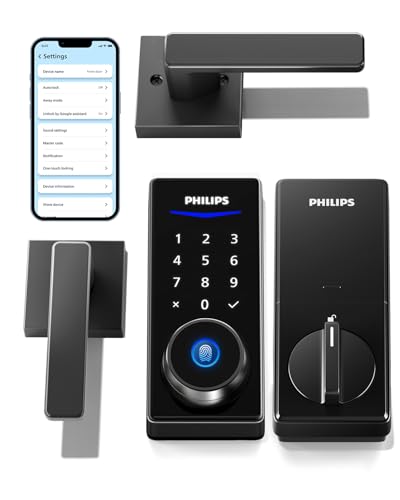 |
Best Bluetooth Lock Set | Unlocking Methods: Fingerprint, PIN, Bluetooth App, Key | Remote Control: Optional Wi-Fi gateway required for internet access | Auto-Lock: Available; configure and test after installation | Check Price on Amazon | Read Our Analysis |
| Yamiry Fingerprint Smart Door Lock with Keypad |  |
Best for Guest Access | Unlocking Methods: Fingerprint, Bluetooth App, PIN, Key Fob, Key | Remote Control: Gateway required for internet-based control | Auto-Lock: Configurable | Check Price on Amazon | Read Our Analysis |
| Philips WiFi Keypad Door Lock with APP Control | 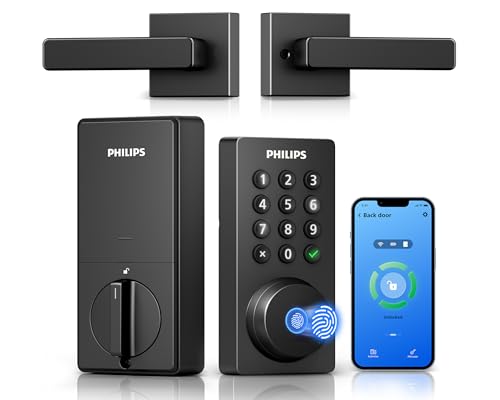 |
Best Wi-Fi Handle Set | Unlocking Methods: Fingerprint, PIN, App, Compatible Voice Assistant | Remote Control: Built-in 2.4 GHz Wi-Fi | Auto-Lock: Configurable through app | Check Price on Amazon | Read Our Analysis |
| Ulecoce U68 Fingerprint Keypad Deadbolt with Handle Set |  |
Best Bluetooth Deadbolt and Knob Set | Unlocking Methods: Fingerprint, Keypad, Bluetooth App, Key | Remote Control: Local Bluetooth app control; internet access not confirmed | Auto-Lock: Configurable | Check Price on Amazon | Read Our Analysis |
| Philips Wi-Fi Smart Lock with Alexa & Google Assistant |  |
Best Wi-Fi Deadbolt | Unlocking Methods: Fingerprint, PIN, App, Key, Supported Voice Functions | Remote Control: Built-in Wi-Fi | Auto-Lock: Adjustable delay | Check Price on Amazon | Read Our Analysis |
| LOCTIAN WiFi Fingerprint Smart Door Lock Set with APP |  |
Wi-Fi Lock and Handle Kit | Unlocking Methods: Fingerprint, Keypad, App, Temporary Codes | Remote Control: Advertised built-in Wi-Fi connectivity | Auto-Lock: Advertised automatic locking | Check Price on Amazon | Read Our Analysis |
| TEEHO WiFi Smart Lock with Fingerprint and Keypad | 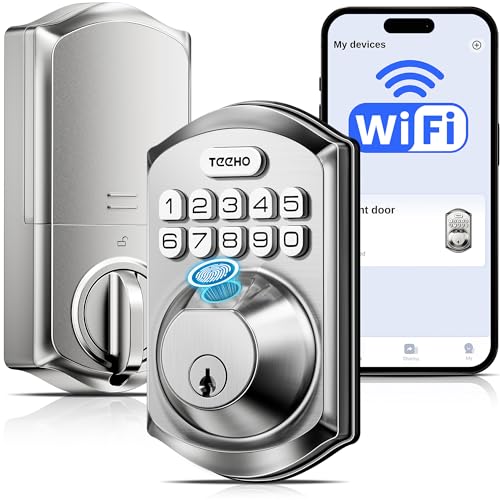 |
Best for Simple Wi-Fi Setup | Unlocking Methods: Fingerprint, PIN, App, Key, Supported Voice Functions | Remote Control: Built-in 2.4 GHz Wi-Fi via KK Home App | Auto-Lock: Adjustable | Check Price on Amazon | Read Our Analysis |
Important Comparison Note: The products above offer different connectivity and hardware configurations. Built-in Wi-Fi is especially useful for remote monitoring, but it does not automatically make a lock more secure than a Bluetooth model. Confirm the exact product version, included hardware, app requirements, and compatibility before ordering.
More Details on Our Top Picks
-
Philips Smart Lock with Keyless Entry and Handles
The Philips Smart Lock with Keyless Entry and Handles is a practical option if you want to replace your existing entry hardware with a modern fingerprint and keypad system. It combines a smart deadbolt with two lever handles, making it especially useful when updating the appearance and convenience of your front door.
You can unlock the door using a fingerprint, PIN code, mechanical key, or the Philips Home Access app through Bluetooth. The model supports multiple user credentials and temporary access options, making it convenient for families and occasional guests.
Why You’ll Like It: You get several keyless entry options without needing Wi-Fi for basic operation. The included handles also provide a more coordinated appearance than replacing the deadbolt alone.
Who Should Buy This: Homeowners who prefer everyday fingerprint or keypad entry and want a complete lock-and-handle package.
Who Should Avoid This: Anyone who requires remote internet control straight out of the box. This Bluetooth-based model needs a compatible, separately purchased Wi-Fi gateway for internet access and supported voice-assistant integration.
Before You Buy: Confirm that your door accommodates the deadbolt and handle arrangement. Also check whether the optional gateway is available if you plan to add remote features later.
- Unlocking Methods: Fingerprint, PIN, Bluetooth App, Mechanical Key
- Connectivity: Bluetooth; optional Wi-Fi gateway for internet control
- Auto-Lock: Supported; configuration and proper door alignment required
- Installation: Designed for common residential door preparations
- Compatibility: Check door thickness, existing holes, and handle spacing
- Included Hardware: Smart lock and matching lever handles
- Additional Feature: Multiple fingerprint and PIN credentials
- Additional Feature: Temporary access code options
- Main Limitation: Native internet-based remote control is not included
-
Yamiry Fingerprint Smart Door Lock with Keypad
The Yamiry Fingerprint Smart Door Lock with Keypad offers flexible access options for homeowners, landlords, and rental-property managers. Its combination of fingerprint recognition, PIN codes, key fobs, mechanical keys, and Bluetooth app control makes it easier to manage different users without handing everyone a permanent physical key.
The app supports user management and temporary access features. This can help when you need to provide entry to a family member, housekeeper, or short-term guest.
Why You’ll Like It: Multiple access methods make the lock adaptable to different household members. Key fobs are also useful for people who prefer not to enter a PIN or use fingerprint recognition.
Who Should Buy This: Homeowners and property managers who want flexible guest access and local smartphone management.
Who Should Avoid This: Buyers who expect unrestricted remote internet access or Alexa functionality without additional equipment. A compatible Wi-Fi gateway is required for certain remote and voice features.
Before You Buy: Check whether the handle-style hardware fits your existing door. Rental-property owners should also confirm building rules, gateway requirements, and how access credentials are managed when guests change.
- Unlocking Methods: Fingerprint, Bluetooth App, PIN, Key Fob, Mechanical Key
- Connectivity: Bluetooth; optional Wi-Fi gateway for remote features
- Auto-Lock: Configurable
- Installation: Designed for compatible standard residential doors
- Compatibility: Check door preparation, thickness, and handle clearance
- Included Accessories: Key fobs and mechanical backup keys listed for this model
- Additional Feature: Temporary guest-code management
- Additional Feature: App-based access records and user management
- Main Limitation: Some remote capabilities need a separate gateway
-
Philips WiFi Keypad Door Lock with APP Control
The Philips WiFi Keypad Door Lock with APP Control is a strong option for homeowners who want built-in Wi-Fi and matching door handles. Unlike Bluetooth-only smart locks, this Philips 4200 Series model is designed to connect directly to a compatible 2.4 GHz Wi-Fi network without a separate gateway.
Through the Philips Home Access app, you can manage access codes, check supported lock activity, and control the deadbolt remotely when the lock and network are functioning correctly. Fingerprint recognition and a backlit keypad provide convenient everyday entry options.
Why You’ll Like It: You can combine a coordinated lock-and-handle design with internet-based app management. This is useful when you want to check the lock while away from home or provide temporary access to someone you trust.
Who Should Buy This: Homeowners who want a Wi-Fi-enabled front-door lock with included lever handles and multiple ways to enter.
Who Should Avoid This: Buyers with incompatible door preparations or homes without suitable 2.4 GHz Wi-Fi coverage near the entrance.
Before You Buy: Confirm the door dimensions and check Wi-Fi signal strength at the installation location. The auto-lock function may need to be enabled during setup. Test it with the door both open and closed to understand how it operates.
- Unlocking Methods: Fingerprint, PIN, App, Supported Voice Functions
- Connectivity: Built-in 2.4 GHz Wi-Fi
- Remote Control: Philips Home Access App
- Auto-Lock: Configurable; enable during setup if desired
- Installation: Designed to replace compatible deadbolt hardware
- Compatibility: Check door thickness, backset, and handle positioning
- Included Hardware: Smart deadbolt with matching lever handles
- Additional Feature: Backlit keypad and access management
- Main Limitation: Remote features depend on reliable Wi-Fi and app connectivity
-
Ulecoce U68 Fingerprint Keypad Deadbolt with Handle Set
The Ulecoce U68 Fingerprint Keypad Deadbolt with Handle Set offers a practical combination of biometric access, keypad entry, and Bluetooth app control. It is worth considering if you want to upgrade a compatible residential door with a coordinated deadbolt and knob-style hardware set.
Fingerprint entry can save you from searching for keys when arriving home. The keypad provides an alternative for household members who prefer a PIN, while physical backup keys remain useful if electronic access is unavailable.
Why You’ll Like It: You get several convenient entry methods, an auto-lock option, and app-based user management in one lock package.
Who Should Buy This: Homeowners who want a keypad-and-fingerprint deadbolt with matching knob hardware and do not require built-in Wi-Fi.
Who Should Avoid This: Buyers looking for confirmed internet-based remote unlocking without additional equipment. This model’s documented connectivity is Bluetooth.
Before You Buy: Check the specific hardware shown in the current listing. Confirm whether the package includes the knob arrangement you need and whether your existing door holes match its installation requirements.
- Unlocking Methods: Fingerprint, Keypad, Bluetooth App, Mechanical Key
- Connectivity: Bluetooth
- Remote Control: Local app access; internet-based access not established
- Auto-Lock: Supported
- Installation: Designed for compatible residential door preparations
- Compatibility: Check existing deadbolt and knob holes
- Included Hardware: Deadbolt and knob-style hardware set
- Additional Feature: One-touch locking
- Main Limitation: Not a confirmed built-in Wi-Fi smart lock
-
Philips Wi-Fi Smart Lock with Alexa & Google Assistant
The Philips Wi-Fi Smart Lock combines keyless entry with built-in Wi-Fi connectivity. It is a suitable option if you want a smart deadbolt with remote management but do not necessarily need the matching handle package offered by some other Philips models.
The lock supports fingerprint access, keypad codes, smartphone app control, and mechanical backup entry. Its Wi-Fi connection enables supported remote functions, while compatibility with Alexa and Google Assistant can add convenience to a compatible smart-home setup.
Why You’ll Like It: Remote lock management and customizable access codes can simplify everyday entry and temporary guest access. You can also use fingerprint or keypad entry without taking out your phone.
Who Should Buy This: Homeowners who want a Wi-Fi-connected smart deadbolt with multiple entry methods and compatible voice-assistant features.
Who Should Avoid This: Buyers who need a complete matching handle set or expect voice unlocking to work without any authentication or setup requirements.
Before You Buy: Compare this deadbolt with the Philips Wi-Fi handle-set model. Confirm the exact hardware included, door-size compatibility, app functions, and voice commands supported by the product version.
- Unlocking Methods: Fingerprint, PIN, App, Physical Key, Supported Voice Functions
- Connectivity: Built-in Wi-Fi
- Remote Control: Supported through compatible app and network connection
- Auto-Lock: Adjustable delay
- Installation: Designed for compatible front-door deadbolt preparations
- Compatibility: Check door thickness, backset, and bore dimensions
- Additional Feature: Custom access-code management
- Additional Feature: Supported smart-home voice integration
- Main Limitation: Requires suitable Wi-Fi coverage for internet features
-
LOCTIAN WiFi Fingerprint Smart Door Lock Set with APP
The LOCTIAN WiFi Fingerprint Smart Door Lock Set is an alternative for homeowners looking for fingerprint entry, a digital keypad, app management, and matching lever handles.
Product information describes built-in Wi-Fi connectivity, temporary password features, access records, and automatic locking. These functions can be useful for households that want several entry options and a way to manage access through a smartphone.
Why You’ll Like It: The advertised combination of Wi-Fi management, fingerprint access, and a complete handle set could make it convenient for a front-door upgrade.
Who Should Buy This: Buyers considering an all-in-one Wi-Fi smart lock and handle package who are willing to confirm the exact model specifications before purchasing.
Who Should Avoid This: Anyone who requires independently verified security certifications, guaranteed biometric performance, or a documented long-term software-support commitment that has not been established for this model.
Before You Buy: Review the current product listing for the app name, warranty terms, Wi-Fi requirements, battery specifications, and exact dimensions. Claims about unusually fast fingerprint unlocking or superior security should not replace documented certification and compatibility information.
- Unlocking Methods: Fingerprint, Keypad, App, Temporary Codes
- Connectivity: Advertised built-in Wi-Fi
- Remote Control: Advertised app-based remote access
- Auto-Lock: Advertised automatic locking
- Installation: Designed for compatible residential doors
- Compatibility: Verify exact door dimensions and hardware layout
- Included Hardware: Smart lock and matching lever handles
- Additional Feature: Guest access and activity records described in product information
- Main Limitation: Independent security-grade and long-term support verification is limited
-
TEEHO WiFi Smart Lock with Fingerprint and Keypad
The TEEHO WiFi Smart Lock with Fingerprint and Keypad, identified as the TE012W model, provides a straightforward way to add fingerprint entry, keypad access, and smartphone control to a compatible front door.
Its built-in Wi-Fi connects to supported 2.4 GHz networks, allowing compatible remote functions through the KK Home App without a separate hub. The lock also offers physical backup keys and customizable access settings.
Why You’ll Like It: You can use fingerprint entry for daily access, share supported PIN codes with trusted visitors, and manage the lock through a smartphone app. Its separate deadbolt design is also useful if you prefer to keep your existing door handle.
Who Should Buy This: Homeowners who want a Wi-Fi smart deadbolt with fingerprint and keypad entry without purchasing an external gateway.
Who Should Avoid This: Buyers whose doors are incompatible with the required deadbolt dimensions or whose home Wi-Fi network cannot provide a stable 2.4 GHz connection near the entrance.
Before You Buy: Verify the exact model’s weather-resistance rating, applicable ANSI/BHMA certification, battery requirements, and warranty terms against current manufacturer documentation. Do not assume that a certification or encryption feature guarantees protection against every form of unauthorized entry.
- Unlocking Methods: Fingerprint, PIN, App, Physical Key, Supported Voice Functions
- Connectivity: Built-in 2.4 GHz Wi-Fi
- Remote Control: KK Home App
- Auto-Lock: Adjustable
- Installation: Designed for compatible standard deadbolt holes
- Compatibility: Check door preparation and thickness
- Additional Feature: Keypad and app-based access management
- Additional Feature: Weather-resistant construction advertised for this model
- Main Limitation: Internet features rely on network and app availability
Factors to Consider When Choosing Smart Door Locks in 2026

Choosing the best smart door lock involves more than comparing fingerprint scanners and smartphone apps. You also need to consider your door’s dimensions, the reliability of the locking mechanism, battery maintenance, and how you want to manage access.
Use the following factors to narrow your choices before buying.
1. Unlocking Options Variety
Start with the ways you want to unlock your front door. Many smart door locks support a combination of fingerprint recognition, keypad PIN codes, smartphone apps, and physical backup keys.
Fingerprint entry is convenient when your hands are full or you do not want to carry a key. However, recognition performance can vary with moisture, dirt, skin conditions, and sensor quality.
Keypad entry is useful for households where several people need access. Temporary PIN codes can also help when visitors or service providers need entry for a limited period.
A mechanical backup key provides an alternative when electronic unlocking is unavailable. If this is important to you, confirm that the exact model includes physical keys.
Pro Tip: Choose a lock with at least two practical entry methods for your household. Multiple available methods improve convenience, although they do not necessarily constitute multi-factor authentication.
2. Installation Ease and Door Compatibility
Not every smart lock fits every door. Before ordering, measure your existing hardware and compare it with the manufacturer’s installation diagram.
Important measurements include:
- Door thickness: Many residential locks are designed for common door thicknesses around 1-3/8 to 1-3/4 inches, but each model has its own limits.
- Backset: Measure the distance from the door edge to the center of the lock bore. Common residential backsets include 2-3/8 and 2-3/4 inches.
- Bore-hole diameter: Confirm that the lock fits your existing opening.
- Door handing: Check whether the hardware supports your door’s opening direction.
- Handle clearance: Complete lock sets may require suitable spacing between the handle and deadbolt.
- Door material: Metal, fiberglass, and nonstandard doors may require different installation considerations.
Many residential smart locks can be installed with basic tools when the door already has compatible holes. However, installation time varies with the hardware, door condition, and required adjustments.
Compatibility Note: Do not assume that a smart deadbolt, smart handle, and complete lock set are interchangeable. Compare the exact hardware configuration with your existing door before buying.
3. Security Features and Lock Construction
A smart door lock should provide dependable physical locking as well as convenient electronic access.
Look for the following security features:
- Mechanical durability: Check the deadbolt construction, strike plate, and any independently verified ANSI/BHMA grading.
- Auto-lock: Helps reduce the chance of leaving a door unlocked when correctly configured.
- PIN protection: Features such as temporary codes, anti-peep PIN entry, and failed-attempt lockouts can improve access management.
- Access records: Supported apps may record successful unlock events and selected administrative actions.
- Secure connectivity: Look for clear manufacturer information about encryption, authentication, firmware updates, and account security.
- Backup entry: Mechanical keys or documented emergency-power options can reduce the risk of an electronic lockout.
Remember that fingerprint recognition, app access, and voice integration do not automatically mean a smart lock has stronger physical security than a conventional deadbolt.
For exterior doors, also inspect the door frame, strike plate, hinges, and alignment. A well-fitted lock is only one part of a secure entrance.
4. Smart Connectivity: Bluetooth vs. Wi-Fi
One of the biggest differences between smart door locks is how they connect to your phone.
| Feature | Bluetooth Smart Lock | Built-in Wi-Fi Smart Lock |
|---|---|---|
| Local phone control | Generally supported within Bluetooth range | Supported through the compatible app and connection |
| Internet-based remote control | Often requires a separate gateway | Usually supported when online |
| Additional hub | May be required for remote features | Usually not required for direct Wi-Fi models |
| Internet dependency | Typically not needed for local Bluetooth functions | Needed for internet-based features |
| Best suited for | Local keyless access | Remote access and connected-home use |
If you want to check your lock while traveling, a built-in Wi-Fi model may be a better fit. If you mainly need fingerprint entry when returning home, Bluetooth control could be sufficient.
Pro Tip: Check whether the smart lock supports your router’s wireless band. Many models require a 2.4 GHz network and may not connect directly to a 5 GHz-only network.
5. Durability and Weather Resistance
Outdoor smart door locks must handle changing temperatures, moisture, dust, and regular use.
Look for corrosion-resistant materials and a clearly stated weather-resistance specification. An IP55 rating, for example, indicates dust protection and resistance to water jets under defined test conditions. It does not make a lock waterproof or suitable for immersion.
Check the manufacturer-approved operating temperature range, especially if your front door faces direct sunlight or severe winter weather.
Battery compartments and electronic components also need proper protection. Follow the manufacturer’s maintenance recommendations and avoid exposing interior-only components to outdoor conditions.
6. Battery Life and Emergency Access
Most battery-powered smart locks require regular battery replacement. Actual battery life depends on how frequently you use the lock, the connection type, operating temperature, and battery quality.
Before buying, check:
- The number and type of batteries required.
- Whether batteries are included in the package.
- How the lock reports a low battery.
- Whether the device has physical backup keys.
- Whether an emergency external-power connection is available.
- Whether app and keypad functions continue during an internet outage.
Safety Note: Do not wait until the batteries die before learning how to regain access. Test the manufacturer’s backup-entry procedure while the door is open and a trusted person can still reach the interior lock assembly.
7. App Control, Privacy, and Software Support
A smart door lock’s mobile app is an important part of the buying decision.
Check whether the app lets you manage user codes, review entry history, receive notifications, and remove credentials when they are no longer needed.
Also consider account security. Where available, enable two-factor authentication, install firmware updates, and use a unique password for your smart-lock account.
Review the manufacturer’s privacy policy and software-support information. Some connected features may depend on cloud services that could change over the lock’s lifespan.
8. Price and Long-Term Value
The cheapest smart door lock is not always the best long-term purchase. Compare the complete ownership cost rather than the advertised lock price alone.
A Bluetooth model may require an additional gateway for remote access. A complete handle set may cost more than a standalone smart deadbolt. You should also account for batteries, replacement hardware, installation adjustments, and potential app-related services.
Compare current prices on Amazon after checking compatibility. Exact prices and availability can change, so avoid choosing solely based on a temporary listing price.
Before You Buy: Smart Door Lock Checklist
Use this checklist before placing your order:
- Measure your door thickness, backset, and existing bore holes.
- Decide whether you need a deadbolt only or a complete lock-and-handle set.
- Choose your preferred unlocking methods.
- Confirm whether remote internet access is built in or requires a gateway.
- Check the supported Wi-Fi band and signal strength.
- Confirm backup keys or emergency-power options.
- Review battery requirements and replacement instructions.
- Check the current warranty and manufacturer support terms.
- Verify any advertised security certifications for the exact model.
- Confirm that installing the lock is permitted under your lease or building rules.
Which Smart Door Lock Should You Choose?
The best option depends on what you expect your smart lock to do every day.
- Choose the Philips Smart Lock with Keyless Entry and Handles if you want a Bluetooth-based lock set with fingerprint entry and matching handles.
- Choose the Yamiry Fingerprint Smart Door Lock if you want flexible entry methods and guest-access management, and you understand the gateway requirements.
- Choose the Philips WiFi Keypad Door Lock if you want built-in Wi-Fi, app control, and matching lever handles.
- Choose the Ulecoce U68 if you prefer a Bluetooth-enabled fingerprint deadbolt with knob-style hardware.
- Choose the Philips Wi-Fi Smart Lock if you want a connected smart deadbolt without prioritizing a full handle set.
- Consider the LOCTIAN WiFi Fingerprint Smart Door Lock Set if you want a complete Wi-Fi-enabled handle kit and can confirm its current specifications and support terms.
- Choose the TEEHO WiFi Smart Lock if you want fingerprint, keypad, and Wi-Fi app access in a standalone deadbolt configuration.
For many homeowners, the deciding factor is whether they need remote Wi-Fi control or simply want more convenient keyless entry at the door.
Frequently Asked Questions
How Do Smart Door Locks Enhance Home Security?
Smart door locks can improve access management through temporary PIN codes, automatic locking, and supported activity notifications. They also reduce the need to distribute physical keys. However, their security depends on the lock’s mechanical construction, software, installation quality, and how you manage access credentials.
Can I Install a Smart Door Lock Myself?
Yes, many smart door locks are designed for DIY installation using common tools. Installation is usually easier when the new lock matches the existing bore holes and backset. Follow the manufacturer’s instructions and test the deadbolt with the door open before closing it.
What Happens if the Battery Dies on a Smart Lock?
Electronic unlocking may stop working when the batteries are depleted. Some models provide a mechanical backup key, while others offer an emergency-power connection. The available recovery method depends on the exact lock. Check it before installation and respond promptly to low-battery alerts.
Are Smart Locks Compatible With All Door Types?
No. Smart locks have specific requirements for door thickness, backset, bore holes, hardware clearance, and door handing. Some complete handle sets also require an additional opening or compatible spacing. Always compare your measurements with the manufacturer’s installation guide.
How Do I Reset a Smart Door Lock?
Reset procedures vary by manufacturer and model. Some locks use a reset button inside the battery compartment, while others require a specific button sequence. Follow the exact instructions in your product manual. A factory reset may erase stored fingerprints, PIN codes, and app connections.
Do Smart Door Locks Work Without Wi-Fi?
Many smart locks continue to support fingerprint, keypad, and mechanical-key access without Wi-Fi. Bluetooth models can also offer nearby smartphone control without an internet connection. However, cloud-based notifications and remote unlocking usually require the necessary network connection.
Are Bluetooth Smart Locks Better Than Wi-Fi Smart Locks?
Neither connection type is automatically better. Bluetooth can be sufficient for local access and may avoid some internet dependencies. Wi-Fi is more convenient when you need remote app access and notifications. Choose based on your household routine and the specific product’s security and reliability.
Can Smart Door Locks Be Hacked?
Like other connected devices, smart locks may have software or account-security vulnerabilities. The risks vary by model and implementation. Choose products with clear security documentation, install available updates, protect your account, and remove access credentials that are no longer needed.
Do Smart Locks Work With Alexa and Google Assistant?
Some smart locks support Alexa, Google Assistant, or both. Compatibility may require Wi-Fi, an additional gateway, account linking, or a specific app. Available voice commands can also differ. Check whether the exact model supports locking, status checks, or unlocking before buying.
Should I Choose a Smart Deadbolt or a Smart Handle?
Choose a smart deadbolt if you want to keep your current door handle and only replace the deadbolt. Choose a complete smart lock and handle set if you want coordinated hardware or need to replace both components. Make sure the new hardware matches your door preparation.
Are Smart Door Locks Good for Rental Properties?
They can be useful for rental properties because temporary access codes may reduce the need to exchange keys. However, owners should verify local building rules, guest-code management, emergency-access procedures, internet requirements, and their responsibility for maintaining the lock.
How Often Should Smart Lock Batteries Be Replaced?
Battery replacement intervals vary by model, battery type, usage, temperature, and connectivity. Follow the manufacturer’s recommended battery specifications and replace batteries when the device reports a low charge. Avoid mixing old and new batteries.
Conclusion
Choosing the best smart door lock in 2026 comes down to finding the right balance of security features, convenience, connectivity, and door compatibility.
If you want a complete lock-and-handle package with built-in Wi-Fi, the Philips WiFi Keypad Door Lock deserves a close look. For everyday Bluetooth-based keyless entry, the Philips Smart Lock with Keyless Entry and Handles is another practical option. The Yamiry Fingerprint Smart Door Lock is worth considering when flexible guest access matters, while the TEEHO WiFi Smart Lock provides an alternative for buyers who prefer a standalone Wi-Fi deadbolt.
Before making your final decision, check your door measurements, connectivity needs, emergency-access options, and current product specifications. A smart lock that fits properly and supports your daily routine is a better choice than one selected only for its advertised features.
Final Recommendation: Start with door compatibility, then choose the access methods and connectivity features you will actually use. Confirm the latest manufacturer specifications and Amazon listing details before purchasing.
Remember: A smart lock adds convenience and access-control features, but proper installation, a sturdy door, and sensible security habits remain essential.

