
Last Updated on September 11, 2026 by Logan Reeves
Choosing the right mountaineering boots affects your safety, comfort and performance on steep, icy terrain. You need boots that balance protection, fit and weight so you can move efficiently while staying secure on technical ground.
This guide helps you cut through marketing and focus on the features that matter most so you can pick boots that match your routes and goals.
Disclosure: As an Amazon Associate I earn from qualifying purchases. Some links on this page are affiliate links, at no extra cost to you.
Top Picks
|
Category |
Product |
Score |
|---|---|---|
|
🏆 Best Technical Alpine |
94/100 |
|
|
🎯 Best Lightweight Precision |
91/100 |
|
|
❄️ Best For Extreme Cold |
86/100 |
Selection Criteria
You want boots that perform where you climb, so we prioritized fit, protection, crampon compatibility and sole performance under load. Durability and materials came next, with attention to waterproof membranes and insulation for wet or cold environments.
Weight matters when you carry packs all day, but not at the cost of support on steep terrain, so we balanced lightness against rigid soles and ankle support. Finally, we considered real-world value so you know whether a premium price buys genuine benefits for serious mountaineering.
La Sportiva Nepal

You get a purpose-built alpine boot that prioritizes protection and support over approachability. The Nepal Cube GTX pairs a rigid platform and a Carbon‑Tech honeycomb insole with Gore‑Tex waterproofing and durable leather and rubber panels, so it holds up under crampons and steep ice.
It works well for glacier travel, winter ascents and multi‑pitch routes where stability matters, though it feels heavy compared with approach or hiking shoes. If you want a boot that keeps your feet secure on technical terrain, this is a solid choice; just double‑check sizing before you buy and factor in thicker socks for cold days.
What People Say
Customers frequently praise the boot’s waterproofing and solid, secure fit for alpine routes, noting it feels comfortable once you find the right size. Many users highlight the build quality and how it handles crampons and icy approaches, while a common caution is to check sizing carefully and consider going up a half size if you plan to wear thick socks.
Overall Sentiment: Positive

|
Pros |
Cons |
|---|---|
|
✅ Exceptional ankle support and crampon compatibility |
❌ Heavier than approach or fast‑hiking shoes |
|
✅ Durable construction with reliable Gore‑Tex waterproofing |
❌ Sizing can be tricky; double‑check the selector and consider thick socks |
|
✅ Balanced cushioning from the Carbon‑Tech insole |
❌ May require a short break‑in period for optimal comfort |
Versatility
This boot shines on technical alpine climbs, glacier travel and winter mountaineering where rigidity and protection are nonnegotiable. You can use it for weighty backpacking or mixed routes, but you will notice the extra mass on long, fast approaches and casual day hikes, so it is less practical as an everyday trail boot.
Water Resistance
Gore‑Tex membrane provides dependable waterproofing for snow, slush and wet approaches, keeping feet dry in typical alpine conditions. The listed water resistance level is ‘water resistant’, so while it performs well in wet weather and melting snow, it is not designed for prolonged submersion.
Key Benefits
- Stiff, supportive sole that pairs well with crampons and technical climbing
- Gore‑Tex lining and robust leather/rubber build for wet and abrasive conditions
- Carbon‑Tech honeycomb insole for balanced cushioning without losing rigidity
Rating: 4.6/5 (total: 22+)
La Sportiva Trango

You get a refined, lighter mountain boot that leans toward precision and approachability without sacrificing protection. The Trango Tech Leather GTX uses full-grain leather and a Gore‑Tex Performance Comfort liner to keep your feet dry while offering a more agile feel on mixed routes and fast approaches.
It’s a smart choice when you want a boot that can handle technical hiking, scrambling and single‑pitch climbs but won’t slow you down on longer approaches. If your days combine trail, rocky ridgelines and occasional snow, this boot balances reliability and nimbleness in a way that makes sense for many modern mountaineers.
What People Say
Buyers tend to praise the Trango for feeling nimble yet supportive, calling out the leather quality and waterproof liner as standout features. Reviewers note it fits true to size for many, and that the boot handles technical approaches and scrambling with confidence.
A few users mention it feels more agile than heavier alpine boots, which is a consistent theme.
Overall Sentiment: Positive

|
Pros |
Cons |
|---|---|
|
✅ Agile, precision-oriented fit for mixed routes |
❌ Not as insulated as heavy winter boots for extreme cold |
|
✅ Reliable Gore‑Tex waterproofing |
❌ Leather sole may feel less forgiving on prolonged road approaches |
|
✅ Durable leather construction that wears in nicely |
❌ May run narrow for wide-footed users |
Versatility
This is a versatile choice if your objectives include technical hikes, fast-and-light mountaineering and approach-heavy climbs where weight and precision matter. It handles day trips, multi‑pitch approaches and mixed alpine terrain well, but it is less ideal as a dedicated glacier or prolonged winter boot.
Water Resistance
Equipped with Gore‑Tex Performance Comfort, the boot offers solid waterproofing for wet approaches and snow. It breathes better than heavy insulated models, but it is not intended for repeated deep immersion.
Key Benefits
- Lightweight, precise platform well suited to mixed terrain
- Gore‑Tex Performance Comfort lining for dependable waterproof breathability
- Durable leather build that holds up to abrasion while staying comfortable
Rating: 5/5 (total: 2+)
Scarpa Phantom
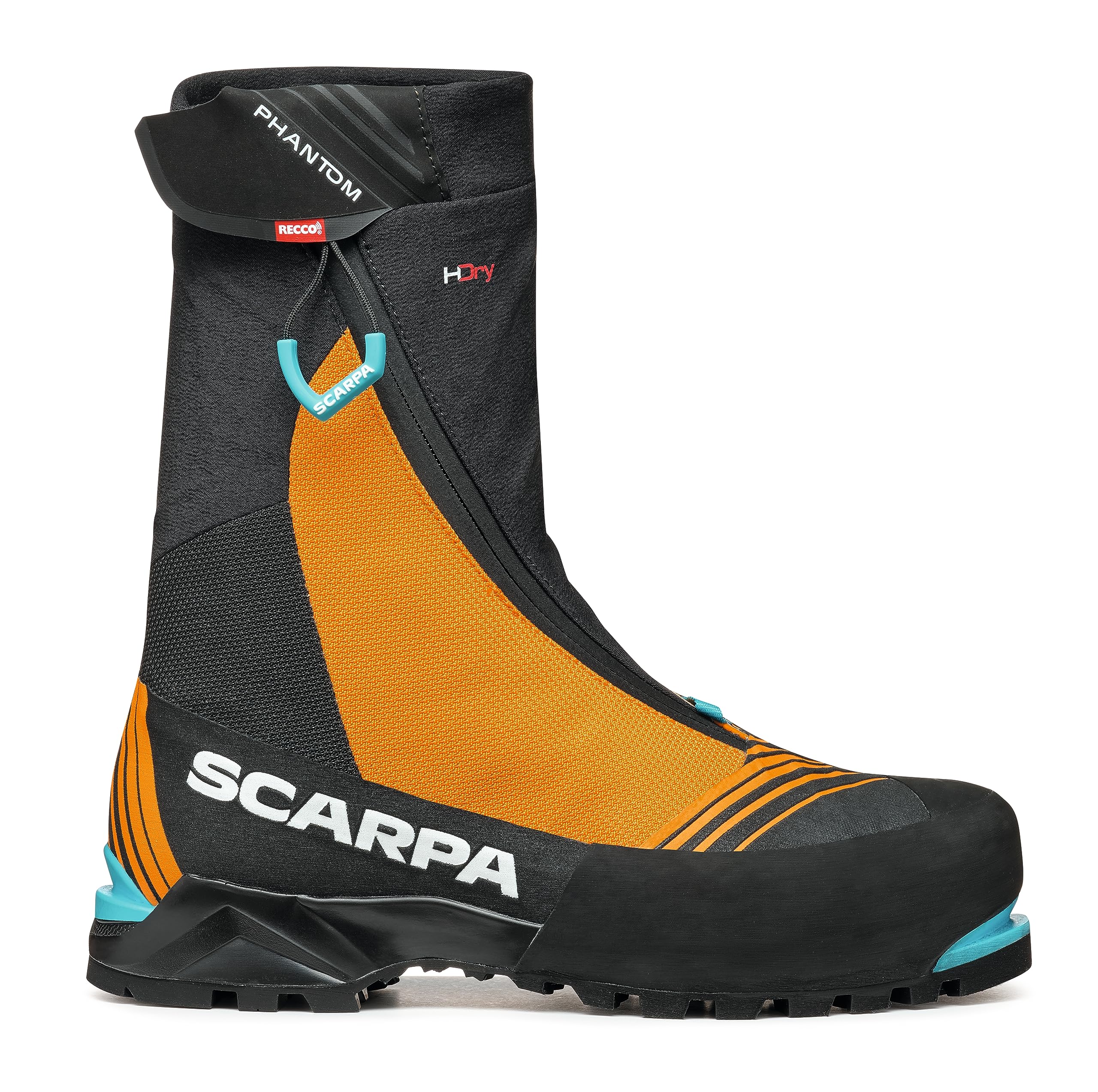
You get a boot built for cold, wet alpine days where warmth and weather protection matter more than speed. The Phantom Tech uses a rubberized shell and insulated lining to keep out wind and slush while giving surprisingly nimble movement for a heavily‑protected boot. It’s a strong pick for winter approaches, snow camping and short glacier work where you want insulated protection without hauling a full expedition boot. If your outings mix deep snow and icy trails, this is a practical, confidence‑inspiring option; for long, fast approaches or technical crampon work you may prefer a stiffer alpine model.
What People Say
Customers commonly highlight the boot’s impressive weather protection and warm interior, and many like the bold look. Fit comes up frequently, with several buyers noting a snug or narrow feel and advising careful size checks.
Overall impressions point to a reliable winter performer, especially for short alpine trips and snowy conditions.
Overall Sentiment: Positive

|
Pros |
Cons |
|---|---|
|
✅ Excellent insulation and waterproofing for winter use |
❌ Fit can run tight; may be difficult for wide feet |
|
✅ Mid‑calf design reduces snow ingress |
❌ Not as suitable for technical crampon work due to flexible sole |
|
✅ Durable rubber outer that resists abrasion |
❌ Less breathable on long approaches in milder weather |
Versatility
This boot excels in winter mountaineering, snow travel and cold basecamp tasks. It handles short glacier crossings and icy trail approaches well, but it is less appropriate for hot‑weather hikes, long fast approaches or highly technical alpine routes that demand a very stiff sole and full crampon integration.
Water Resistance
Rated waterproof with a rubberized outer and insulated lining, the Phantom sheds slush and melting snow reliably. It is designed to keep feet dry in typical winter alpine conditions, though prolonged submersion or heavy summer downpours will still push any boot to its limits.
Key Benefits
- Robust waterproof shell and insulated lining for cold, wet conditions
- Mid‑calf height keeps snow out and improves warmth retention
- Rugged rubber sole that handles slippery winter approaches
Rating: 4.2/5 (total: 4+)
FAQ
How Should I Choose The Right Boot?
Match the boot to the terrain and how you move. If you spend most days on steep, technical alpine routes you want a boot with stiffness and proven crampon compatibility; for mixed approaches and faster travel pick a lighter, more precise leather model; for cold, snowy trips prioritize insulation and a sealed shell. Pay close attention to fit: check the manufacturer size chart, consider going a half size up if you wear thick socks, and always confirm the size in your cart before completing the order.
Will These Boots Keep My Feet Dry And Warm?
Waterproof membranes like Gore‑Tex in La Sportiva provide reliable wet‑weather protection and decent breathability, while insulated options with Primaloft and micropile give better warmth in deep snow. A waterproof boot will shed slush and melting snow but is not meant for prolonged submersion, and heavy insulation can reduce breathability on long approaches.
Use gaiters, manage sock choice, and balance waterproofing against breathability based on the season and activity.
How Do I Care For And Break In My Boots?
Plan a short break‑in period with progressively harder outings so the leather and liners conform to your foot without causing hotspots. Clean off abrasive grit after trips, dry boots away from direct heat, and treat leather with appropriate conditioners or reproofers to maintain water repellency. Check lacing techniques to lock your heel, inspect soles and seams regularly, and consider resoling or professional repairs to extend the life of a quality mountaineering boot.
Customer Preferences
When choosing between these boots you focus on the mission: you pick the Nepal for rigid support and crampon compatibility on technical alpine routes, the Trango for a lighter, more precise feel on mixed approaches and fast travel, and the Phantom when insulation and sealed weather protection for snowy conditions matter most. You also weigh fit, sock thickness and the waterproofing versus breathability trade‑offs, since the right balance of weight and protection will determine comfort and performance on your objectives.
Wrapping Up
If you climb technical alpine routes and need uncompromising protection and crampon compatibility, the La Sportiva Nepal stands out for its stiff sole, Gore-Tex lining and carbon-tech insole. If you prioritize a lighter, more precise mountaineering boot for mixed routes and faster approaches, the La Sportiva Trango offers modern leather construction with waterproofing and a nimble feel. For very cold, glacial or prolonged winter use where insulation and waterproofing are critical, the Scarpa Phantom brings heavy-duty protection and insulation.
Whatever you choose, pay close attention to sizing and consider going a half size up if you plan to wear thick socks or if manufacturer sizing differs from your usual chart; a proper fit is the single biggest factor that determines comfort and safety on the mountain.
| La Sportiva Mens Nepal Cube GTX Mountaineering Boots 8.5-9 Yellow | La Sportiva Trango Tech Leather GTX Mountain Boot – Men’s Carbon/Hawaiian Sun | SCARPA Phantom Tech Waterproof Boots for Climbing & Mountaineering | |
|---|---|---|---|
|
|
|
|
|
| Rating | 4.6/5 (22 reviews) | 5.0/5 (2 reviews) | 4.2/5 (4 reviews) |
| Weight | 4.85 Pounds (2.20 kg) | 3.55 Pounds (1.61 kg) | 16 ounces (0.45 kg) |
| Water Resistance Level | Water Resistant | Waterproof | Waterproof |
| Sole Material | Rubber | Leather | Rubber |
| Shop Now | Shop Now | Shop Now |
This Roundup is reader-supported. When you click through links we may earn a referral commission on qualifying purchases.
