

Last Updated on November 4, 2026 by Caleb Warren
If you want the best keyless sliding door locks in 2026, start with a model designed for your patio door’s existing locking mechanism. The Anweller D208F is worth considering for compatible 2885 mortise locks, while the Perfiware LG2375 offers fingerprint, keypad, IC card, and remote access options. For extra convenience, the Giztud Sliding Door Smart Lock with Image Doorbell combines keyless entry with a visitor-image feature. The right choice depends on your door’s thickness, frame width, mortise dimensions, and handle orientation.
Disclosure: As an Amazon Associate I earn from qualifying purchases. Some links on this page are affiliate links, at no extra cost to you.
Quick Answer
The Anweller D208F is a practical starting point if your sliding glass door uses a compatible 2885 double-hook mortise. Choose the Perfiware LG2375 if you need several access methods for a compatible glass or wooden sliding door. Consider the Giztud Image Doorbell model if visitor management is a priority. Always confirm the lock body and mounting dimensions before ordering.
Key Takeaways
- Best starting point for a 2885 mortise: Anweller D208F.
- Best for multiple entry methods: Perfiware LG2375.
- Best for visitor-image features: Giztud Sliding Door Smart Lock with Image Doorbell.
- Best right-handle option: Giztud Slim-Frame Right-Handle Lock.
- Best slim-profile alternative: Jacchozhi Slim Smart Lock.
- Most important buying factor: Your door’s mortise, frame dimensions, and hook-latch alignment matter more than the number of smart features.
Important Compatibility Note: Most standard smart deadbolts are not direct replacements for sliding glass door locks. Before buying, measure your door and compare the original mortise lock, mounting-hole positions, handle clearance, and strike plate with the replacement hardware. Do not drill into glass or modify a structural door component without appropriate professional guidance.
| Anweller D208F Smart Fingerprint Glass Door Lock | 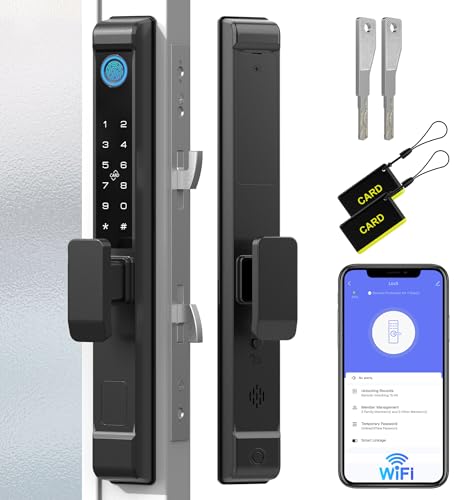 |
Best for 2885 Mortise | Access: Fingerprint, PIN, App, RFID Card, Physical Key | Fit: Advertised 22–120 mm door thickness; compatible mortise required | Power: Seller estimates up to 8 months | Check Price on Amazon | Read Our Analysis |
| Perfiware LG2375 Sliding Glass Door Smart Lock |  |
Best for Multiple Access Methods | Access: Fingerprint, Password, IC Card, Remote Control | Fit: Selected glass and wooden sliding doors; measure frame first | Power: Requires 4 AA batteries; estimated runtime not confirmed | Check Price on Amazon | Read Our Analysis |
| Giztud Sliding Door Smart Lock with Image Doorbell | 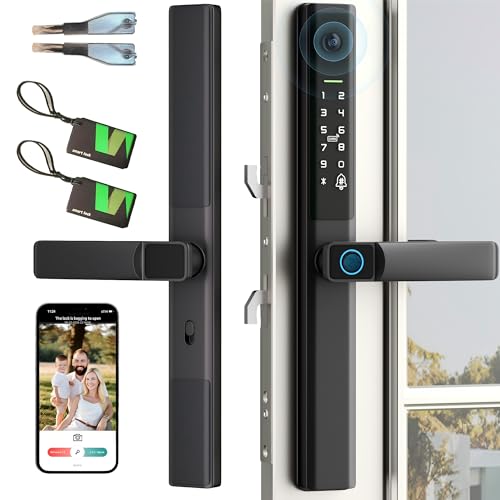 |
Best for Visitor Management | Access: Fingerprint, PIN, App, RFID Card, Physical Key | Fit: Advertised 22–120 mm door thickness; frame and mortise checks required | Power: Seller estimates over 8 months | Check Price on Amazon | Read Our Analysis |
| Giztud Slim-Frame Sliding Door Smart Lock (Right Handle) |  |
Best Right-Handle Option | Access: Fingerprint, PIN, App, IC Card, Physical Key | Fit: Slim-frame patio doors; right-handle listing | Power: Battery-powered; confirm runtime and backup method | Check Price on Amazon | Read Our Analysis |
| Jacchozhi Slim Smart Lock for Sliding Glass Door |  |
Best Slim-Profile Alternative | Access: Fingerprint, IC Card, Password, App, Physical Key | Fit: Sliding glass doors; verify mortise and Black-L handing | Power: Battery-powered; runtime not confirmed | Check Price on Amazon | Read Our Analysis |
Comparison note: Product features are based on published listing information. Installation compatibility, battery performance, app functionality, warranty terms, and current availability should be confirmed with the seller before purchase. These recommendations are based on stated specifications and buyer suitability, not independent hands-on testing.
More Details on Our Top Picks
-
Anweller D208F Smart Fingerprint Glass Door Lock
The Anweller D208F Smart Fingerprint Glass Door Lock is a practical option if your sliding patio door uses a compatible 2885 double-hook mortise mechanism. Instead of carrying a key every time you step onto your patio, you can use a fingerprint, keypad code, RFID card, or supported mobile app.
Its biggest benefit is the variety of entry methods. You can give family members convenient access while retaining a physical key for backup. The manufacturer also advertises a tamper alarm and a temporary lockout following repeated incorrect entry attempts.
According to its listing, the lock accommodates door thicknesses from approximately 22 mm to 120 mm and requires a suitable door-frame width and mortise configuration. These measurements do not guarantee compatibility with every sliding door.
The seller estimates approximately eight months of battery life under its stated conditions. A low-battery reminder and emergency external power option may help reduce the risk of being locked out.
Why You’ll Like It
- Flexible entry: Choose between fingerprint, PIN, card, app, and mechanical key access.
- Sliding-door-specific hardware: Designed around a double-hook mortise rather than an ordinary hinged-door deadbolt.
- Backup options: Physical key and advertised emergency power support provide alternatives to normal electronic access.
- Access management: Useful for households where several people need regular entry.
Who Should Buy This: Homeowners with a compatible 2885-style sliding patio door who want several ways to unlock it.
Who Should Avoid This: Buyers whose doors use a different mortise body, have inadequate mounting clearance, or cannot accommodate the required hardware.
Before You Buy: Compare your existing lock body, hook positions, screw spacing, and strike plate with the product’s installation diagram.
- Unlocking Methods: Fingerprint, Passcode, Mobile App, RFID Card, Physical Key
- Lock Type: Smart sliding-door double-hook mortise
- Advertised Door Thickness: Approximately 22–120 mm
- Frame Requirement: Approximately 45 mm minimum, subject to model fitment
- Battery Life: Seller estimate of up to 8 months
- Weather Resistance: Specific IP rating not confirmed
- Material: Zinc-based construction listed
- Customer Support: Seller advertises a 12-month warranty and technical assistance; confirm current terms
- Additional Feature: Multiple unlocking methods
- Additional Feature: Advertised tamper alarm
- Additional Feature: Emergency power option
-
Perfiware LG2375 Sliding Glass Door Smart Lock
The Perfiware LG2375 Sliding Glass Door Smart Lock is worth considering if different household members prefer different unlocking methods. It combines fingerprint recognition, a keypad, IC card access, and remote-control operation in a lock advertised for selected sliding glass and wooden doors.
The main benefit is convenience. Adults may prefer fingerprint entry, while another user may find a card or keypad easier. The listing also describes an automatic locking function and support for storing multiple user credentials.
Its stainless steel construction is another useful feature for buyers concerned about daily wear. However, the material alone does not establish a particular forced-entry rating or outdoor corrosion certification.
This model reportedly requires four AA batteries, which should be purchased separately if they are not included in your chosen package. Confirm the exact battery requirements and emergency access method before installation.
Why You’ll Like It
- Choice of access: Fingerprint, password, IC card, and remote-control options suit different users.
- Automatic locking: Can reduce reliance on manually locking the door, when correctly configured.
- Multiple user credentials: Useful where several authorized people need entry.
- Stainless steel construction: Provides a metal housing intended for regular use.
Who Should Buy This: Households or small workplaces with a compatible sliding door and several people who need access.
Who Should Avoid This: Buyers needing confirmed app-based remote monitoring, an unverified mortise fit, or a particular outdoor IP rating that the seller cannot document.
Before You Buy: Request or examine the installation drawing. Check the frame width, latch mechanism, mounting holes, and included accessories rather than relying only on the general description of glass-door compatibility.
- Unlocking Methods: Fingerprint, Password, IC Card, Remote Control
- Compatibility: Selected sliding glass and wooden doors
- Battery Requirement: Four AA batteries, according to available listing information
- Battery Life: Not reliably specified
- Weather Resistance: Specific IP rating not confirmed
- Material: Stainless Steel
- Customer Support: Seller advertises a one-year warranty; confirm terms
- Additional Feature: Multiple user credential support
- Additional Feature: Automatic locking function
- Additional Feature: IC card and remote-control entry
-
Giztud Sliding Door Smart Lock with Image Doorbell
If you want more than a basic keypad lock, the Giztud Sliding Door Smart Lock with Image Doorbell adds an advertised visitor-image function to a multi-method entry system. It is aimed at buyers who want to manage access to a compatible patio door through a combination of fingerprints, PIN codes, RFID cards, a mobile app, and a backup key.
The built-in image-doorbell feature is its main distinction. According to the seller, it can connect through the Tuya app to provide visitor images and remote access functions. Actual image delivery, cloud storage, network requirements, and any subscription costs should be confirmed before purchase.
The listing advertises support for a large number of user credentials, an IP66 enclosure rating, and a battery-life estimate exceeding eight months. These are seller-provided specifications rather than independently verified performance results.
For installation, the manufacturer gives an approximate door-thickness range of 22–120 mm and a minimum frame-width requirement. Your mortise and strike configuration must also match.
Why You’ll Like It
- Visitor management: Advertised image-doorbell functionality adds another way to monitor door activity.
- Flexible access: Supports several ways to unlock the door.
- Multiple users: Designed for households or properties where several people need entry permissions.
- Outdoor-oriented design: Advertised IP66 protection may be useful for exposed entrances when installed as specified.
Who Should Buy This: Buyers with compatible sliding patio hardware who value app-based access management and a visitor-image feature.
Who Should Avoid This: Anyone seeking a simple offline lock, a guaranteed subscription-free camera system, or confirmed compatibility with every smart-home platform.
Before You Buy: Check the required Wi-Fi network, app permissions, image-storage conditions, remote unlocking setup, and exact mortise dimensions.
- Unlocking Methods: Fingerprint, PIN Code, Mobile App, RFID Card, Physical Key
- Advertised Door Thickness: Approximately 22–120 mm
- Frame Requirement: Approximately 45 mm minimum, with compatible mortise
- Battery Life: Seller estimates over 8 months
- Weather Resistance: IP66 claimed by seller
- Material: Aluminum-based construction listed
- Customer Support: Seller advertises warranty and technical support; confirm current terms
- Additional Feature: Image-doorbell functionality
- Additional Feature: Advertised multiple-user credential management
- Additional Feature: Emergency power support
-
Giztud Slim-Frame Sliding Door Smart Lock (Right Handle)
The Giztud Slim-Frame Sliding Door Smart Lock is designed for buyers who want fingerprint and keypad entry in a narrow-profile sliding patio door handle. The linked listing specifies a black right-handle configuration, making handle orientation an important part of your purchase decision.
This lock offers several advertised unlocking methods, including fingerprint recognition, PIN code, IC card, app access, and a physical key. That gives you different options for family members, guests, or other authorized users.
Its slim handle design may suit compatible patio door frames where a bulky smart lock would interfere with nearby trim or the moving panel. However, the term slim does not guarantee that it fits every narrow door stile.
Like other electronic mortise locks, it still depends on correct alignment between the lock body and the door-frame strike. You should also verify battery requirements, app connectivity, and the emergency access procedure before relying on it as your primary entry lock.
Why You’ll Like It
- Slim-profile design: Intended for selected narrow-frame patio doors.
- Several entry methods: Fingerprint, PIN, card, app, and mechanical key access provide flexibility.
- Integrated handle: Combines daily door operation with electronic entry controls.
- Right-handle configuration: Gives buyers looking for that specific layout a more targeted option.
Who Should Buy This: Homeowners whose sliding door matches the lock’s right-handle layout and published mounting specifications.
Who Should Avoid This: Buyers who need a different handle orientation or whose existing mortise cannot be matched to the product’s installation diagram.
Before You Buy: Confirm whether the manufacturer defines handing from the interior or exterior side of the door. Check the handle direction and latch compatibility against your actual door.
- Unlocking Methods: Fingerprint, PIN, Mobile App, IC Card, Physical Key
- Compatibility: Selected slim-frame sliding patio doors
- Handle Orientation: Black Right-Handle listing
- Battery Life: Confirm current seller estimate
- Weather Resistance: Weather-resistant design advertised; exact rating should be checked
- Material: Aluminum-based construction listed
- Customer Support: Confirm warranty and return terms with seller
- Additional Feature: Slim-frame handle design
- Additional Feature: Multiple keyless access methods
- Additional Feature: App access functionality
-
Jacchozhi Slim Smart Lock for Sliding Glass Door
The Jacchozhi Slim Smart Lock for Sliding Glass Door combines a narrow handle profile with fingerprint, keypad, card, app, and physical key access. Its advertised hook-mortise construction makes it more relevant to sliding patio doors than an ordinary smart deadbolt.
One useful feature is the ability to issue temporary passwords through its supported smart-lock functions. This may help when you need to arrange entry for visitors without sharing a permanent household code.
The manufacturer advertises fast fingerprint recognition, but actual performance can vary with finger condition, sensor cleanliness, and installation. It is better to treat the stated recognition speed as a marketing specification rather than a guaranteed result.
The product is listed with aluminum construction and weather-resistant features. However, you should verify the exact environmental rating before installing it on an exposed exterior door.
The linked model is identified as a Black-L variant. Check its handing and hook-mortise dimensions carefully, even if the general product description mentions reversible installation options.
Why You’ll Like It
- Slim design: Created for selected sliding glass door frames.
- Multiple entry options: Fingerprint, password, card, app, and physical key support.
- Guest convenience: Advertised temporary-password functions may make occasional entry easier to manage.
- Hook-mortise hardware: Designed around sliding-door locking requirements.
Who Should Buy This: Buyers seeking a slim smart-lock alternative with guest access features for a compatible sliding glass door.
Who Should Avoid This: Anyone unable to confirm the matching mortise, handle orientation, installation clearance, or required outdoor protection.
Before You Buy: Compare the advertised mortise size and Black-L handle configuration with your existing hardware. Check whether installation requires new holes or alterations to the door frame.
- Unlocking Methods: Fingerprint, IC Card, Password, App Control, Mechanical Key
- Compatibility: Selected sliding glass doors with matching mortise
- Handle Configuration: Black-L variant
- Battery Requirement: Battery-powered; confirm exact requirements
- Battery Life: Not reliably specified
- Weather Resistance: Marketed as weather-resistant; independently verified IP rating unavailable
- Material: Aluminum
- Customer Support: Confirm current seller return and warranty terms
- Additional Feature: Temporary-password options
- Additional Feature: Hook-mortise locking mechanism
- Additional Feature: Slim smart-lock handle design
Factors to Consider When Choosing a Keyless Sliding Door Lock

Choosing a keyless sliding door lock takes more than comparing fingerprints and mobile apps. You need a lock that physically fits your door, works reliably in its environment, and provides a safe way to enter and exit. Use the following factors to narrow your options.
Compatibility With Door Types
Door compatibility should be your first consideration. Sliding glass patio doors, wooden sliding doors, and narrow aluminum-frame doors can use different locking mechanisms. A smart lock that fits one type may not work on another.
Check these measurements and details:
- Door thickness: Measure the actual mounting area and compare it with the manufacturer’s stated range.
- Frame or stile width: Make sure there is enough flat mounting space for the handle and electronic components.
- Mortise dimensions: Compare the original lock body’s length, width, depth, and mounting-hole locations.
- Hook configuration: Check whether your door uses a single hook, double hook, or another sliding-door latch.
- Strike plate: Confirm that the replacement hook or latch can engage the existing frame hardware correctly.
- Handle orientation: Check left-hand and right-hand options according to the manufacturer’s installation diagram.
Some models advertise compatibility with doors approximately 22–120 mm thick, but this range is not universal. A lock can meet the thickness requirement and still fail to fit because of the mortise body or mounting-hole positions.
Pro Tip: Before removing your existing lock, photograph the handle, door edge, mortise body, strike plate, and mounting screws. Keep the measurements beside the product’s installation diagram when comparing models.
Unlocking Methods Variety
One advantage of a smart sliding door lock is that you can choose how to enter. Common access methods include fingerprint recognition, keypad PINs, RFID or IC cards, mobile apps, and mechanical backup keys.
Fingerprint access is convenient for everyday use because you do not need to remember a code. A keypad is helpful for people who prefer not to register their fingerprints. Cards may suit users who want a simple alternative, while app control can help manage approved access.
For families, choose a model that supports separate user credentials. If guests regularly visit, look for temporary or scheduled codes. Check whether these functions work locally or require internet connectivity.
Remember that more unlocking methods do not automatically mean stronger security. A reliable latch and correct installation are equally important.
Security Features and Ratings
Security features deserve careful attention, especially when a sliding patio door provides access to your home.
Look for useful features such as:
- Automatic locking: Helps reduce accidental unlocked-door situations when configured properly.
- Anti-peep PIN entry: Allows additional digits around an access code on supported models.
- Tamper alerts: May notify users of certain unauthorized access attempts.
- Temporary access permissions: Limit the use of guest credentials.
- Physical backup access: Offers another entry method if the electronics fail.
- Secure mechanical engagement: Ensures the lock actually secures the sliding panel to its frame.
Do not treat an advertised anti-tamper feature as proof that a lock is resistant to forced entry. Where important, look for documented third-party security testing and clearly identified certifications rather than broad marketing claims.
Also remember that sliding-door security depends on more than the lock. Door tracks, panel retention, glass condition, and frame installation can affect overall protection.
Installation Ease and Process
Some keyless sliding glass door locks can replace compatible existing hardware with basic tools. Others require additional drilling, mortise adjustments, or professional installation.
Before ordering, check whether the package includes mounting screws, the correct mortise body, strike hardware, keys, cards, installation templates, and instructions.
Wireless operation does not necessarily make a smart lock easy to install. A lock may connect to your phone without wiring while still requiring substantial mechanical changes to your door.
If the installation involves cutting a metal door stile, altering tempered glass, or changing structural frame components, consult a qualified installer. Drilling into tempered glass can cause it to shatter.
After installation, test the door’s movement and locking action repeatedly. The panel should slide freely, and the latch should engage without forcing the handle.
Battery Life and Alerts
Battery life affects the convenience of any electronic sliding door lock. Some manufacturers advertise several months of use, but actual operating time depends on the number of daily entries, battery type, weather, and connected features.
Wi-Fi communication, repeated fingerprint scans, app notifications, and image-doorbell functions may increase power consumption.
Consider models with low-battery alerts and a documented emergency access method. A mechanical backup key or emergency external power connection may help when the normal batteries are depleted.
Keep spare batteries available and follow the manufacturer’s replacement instructions. Test any emergency entry method before relying on the lock as your only access point.
Material Durability and Weather Resistance
A sliding patio door lock may be exposed to humidity, rain, dust, and temperature changes. Materials such as stainless steel, zinc alloy, and aluminum are commonly used in lock construction, but the quality of the finish and internal mechanism also matters.
Look for clear environmental specifications rather than general descriptions such as waterproof or all-weather.
- IP65: Indicates dust-tight protection and resistance to water jets under specified test conditions.
- IP66: Indicates dust-tight protection and resistance to more powerful water jets under specified test conditions.
- Corrosion resistance: Requires separate consideration, particularly in coastal areas with salt exposure.
- Operating temperature: Check the stated limits if the door is exposed to extreme heat or cold.
An IP rating does not mean a lock is suitable for submersion or every outdoor installation. Follow the manufacturer’s mounting and sealing instructions to protect the electronic components.
Smart Home and Mobile App Compatibility
If you want remote control, review the lock’s connectivity requirements before purchasing. Some models use Bluetooth for nearby access, while others offer Wi-Fi functionality or depend on an additional gateway.
Ask whether the lock supports the mobile operating system you use. Confirm whether remote unlocking, entry logs, notifications, and temporary access codes need an internet connection.
Do not assume that Tuya app compatibility means native integration with every smart-home platform. Alexa, Google Home, and Apple Home support should be checked for the exact product version.
For a connected lock, protect your account with a strong, unique password and available multifactor authentication. Keep the app and lock firmware updated when supported.
Warranty, Support, and Long-Term Value
Consider more than the initial purchase price. The true cost of a sliding door smart lock may include installation labor, replacement batteries, extra cards, optional networking accessories, and possible cloud-service fees.
Look for clear instructions, a reliable return policy, and a way to contact the seller if the hardware does not match your door.
Because compatibility can be difficult to judge from photos, review the current return conditions before making permanent modifications to your existing lock or door frame.
Before You Buy: Sliding Door Smart Lock Checklist
Check these details before placing your Amazon order:
- Measure your sliding door’s thickness.
- Measure the available frame or stile width.
- Identify the existing mortise type and hook configuration.
- Compare screw-hole spacing and strike-plate alignment.
- Confirm the correct handle orientation.
- Check whether new drilling or cutting is required.
- Verify the lock’s outdoor rating if exposed to weather.
- Check the battery requirements and emergency access method.
- Confirm app compatibility and any additional equipment or fees.
- Review current warranty, return, and seller support terms.
Common Mistakes to Avoid
Buying a Standard Smart Deadbolt
A traditional smart deadbolt is generally designed for a swinging door. Sliding patio doors often use different latch and mortise systems, so a standard deadbolt is usually not a direct replacement.
Ignoring the Existing Mortise
Two sliding door locks can look similar from the outside while using different internal mechanisms. Always compare the actual lock body and hook configuration.
Assuming All Smart Locks Offer Remote Access
Some electronic locks offer only local Bluetooth or keypad operation. Check whether the exact model can be controlled over the internet and whether additional hardware is needed.
Overlooking Emergency Entry
Before depending on a battery-powered lock, confirm what happens when the battery dies, an app becomes unavailable, or the fingerprint reader stops working.
Treating Electronic Features as Complete Security
Fingerprint entry and smartphone control are convenient, but they cannot correct a weak door frame, misaligned latch, or damaged sliding track. Inspect the complete door assembly when upgrading security.
Safety Note: A sliding door used for emergency exit must remain readily openable from the inside in accordance with applicable building and fire-safety requirements. Do not install a lock that traps occupants or requires an unavailable key, phone, or electronic function to leave the property.
Frequently Asked Questions
Are Keyless Sliding Door Locks Weatherproof?
Some keyless sliding door locks are designed for outdoor exposure, but weather resistance varies by model. Check the manufacturer’s IP rating, installation instructions, and operating-temperature limits. An outdoor marketing label alone is not enough to establish long-term weather protection.
How Do I Install a Keyless Sliding Door Lock?
First, identify and measure your existing lock mechanism. Compare those measurements with the replacement’s installation diagram. If compatible, follow the manufacturer’s instructions to remove the old hardware, install the new mortise and handles, align the strike, and test the locking action. Some installations require professional work or modifications.
Can I Use a Keyless Lock for Outdoor Sliding Doors?
Yes, if the model is designed for your door and its exposure conditions. Verify frame compatibility, hook-latch engagement, weather resistance, and the ability to unlock safely from inside.
What Happens if the Battery Dies?
Electronic unlocking may stop working when the batteries are exhausted. Depending on the model, you may be able to use a mechanical backup key or emergency external power connection. These options are not universal, so confirm and test the specific backup procedure before installation.
Are Keyless Sliding Door Locks Compatible With Existing Doors?
Some are compatible with existing sliding doors, but there is no universal fit. Measure the door thickness, stile width, mortise body, screw positions, and latch alignment before purchasing. A door may need different hardware or professional modification if the replacement does not match.
Can I Unlock My Sliding Glass Door With My Phone?
Yes, with a compatible app-enabled lock. Some products support nearby Bluetooth control, while others offer remote unlocking through Wi-Fi or an additional gateway. Check the exact model’s app and connectivity requirements.
Do Keyless Sliding Door Locks Work Without Wi-Fi?
Many models allow local fingerprint, PIN, card, or mechanical-key entry without an active internet connection. Remote app functions, notifications, and visitor-image features may stop working when the network is unavailable. Check the product’s offline capabilities.
Can I Give Guests Temporary Access?
Some smart sliding door locks allow you to create temporary, one-time, or scheduled PIN codes. This can help with guests or service visits. Confirm the feature, its expiry settings, and whether it requires an internet connection.
Is a Fingerprint Lock More Secure Than a Keypad Lock?
Not necessarily. Fingerprint readers and keypads offer different ways to verify a user, but overall security also depends on the electronic design, credential management, locking mechanism, installation, and door construction. A reliable keypad lock can be a better choice than an incompatible fingerprint lock.
Can a Smart Lock Make a Sliding Glass Door Burglar-Proof?
No. A smart lock may improve access control, but it cannot make a glass door burglar-proof. Consider the condition of the door, frame, glass, latch, and track. Suitable secondary security hardware may provide additional protection when installed without compromising emergency exit.
Conclusion
The best keyless sliding door lock is one that fits your existing hardware and provides the entry methods you actually need. For compatible 2885 mortise locks, the Anweller D208F is a useful starting point. The Perfiware LG2375 offers several access methods, while the Giztud Image Doorbell model may appeal to buyers who want visitor-image functionality.
If handle dimensions and appearance are your main concerns, compare the Giztud Right-Handle model and the Jacchozhi Slim Smart Lock against your door’s measurements.
Before deciding, confirm the mortise dimensions, frame width, handle orientation, battery backup, and seller support. A properly matched and installed lock is a more valuable upgrade than a feature-packed model that does not fit your door.

