

Last Updated on November 4, 2026 by Caleb Warren
If you’re looking for the best digital front door locks in 2026, start with models that match your security needs, door measurements, and preferred entry method. The Philips Wi-Fi Smart Lock is a versatile choice for fingerprint access and remote control, while the eufy Security Smart Lock C30 offers built-in Wi-Fi and a physical keypad without requiring a separate hub. The Veise VE017 is worth considering for fingerprint entry, and the TEEHO TE001 keeps things simple with offline keypad access. Below, you’ll find eight digital deadbolts and front door lock sets, plus practical tips to help you choose the right one.
Disclosure: As an Amazon Associate I earn from qualifying purchases. Some links on this page are affiliate links, at no extra cost to you.
Quick Answer: Which Digital Front Door Lock Should You Buy?
Best all-around Wi-Fi choice: The Philips Wi-Fi Smart Lock (B0F5QKCD3S) combines fingerprint, keypad, app, and physical-key entry with built-in Wi-Fi.
Best for simple Wi-Fi access: The eufy Security Smart Lock C30 offers physical keypad buttons, remote app control, and no required Wi-Fi bridge.
Best for fingerprint entry: The Veise VE017 offers convenient biometric access and local Bluetooth app control. A separate gateway is needed for remote internet access.
Best without an app: The TEEHO TE001 is a practical electronic keypad deadbolt for households that do not need remote control.
Before buying: Measure your door, check the lock’s connectivity requirements, and confirm that the selected model includes the accessories you need.
Key Takeaways
- Built-in Wi-Fi: Lets you manage compatible locks remotely without purchasing a separate bridge.
- Fingerprint access: Makes everyday entry convenient, but recognition can vary with finger condition and sensor performance.
- Keypad-only locks: Can provide reliable keyless access without depending on an internet connection.
- Gateway requirements: Some Bluetooth smart locks need an additional device for remote unlocking and voice integrations.
- Security matters: Check the deadbolt construction, manufacturer security specifications, access management, and door-frame condition.
- Door compatibility: Verify thickness, backset, bore-hole size, handing, and handle clearance before ordering.
Our Top Digital Front Door Lock Picks
Compare these eight options by their everyday benefits, unlocking methods, and connectivity requirements. Product features and included accessories can vary by listing configuration.
| Digital Front Door Lock | Product Image | Best For | Unlocking Methods | Connectivity | Important Consideration | Amazon | Review |
|---|---|---|---|---|---|---|---|
| Philips Wi-Fi Smart Lock with Keyless Entry |  |
Best Overall Versatility | Fingerprint, PIN, App, Key, Voice | Built-in Wi-Fi | Feature-rich option for households wanting connected entry | Check Price on Amazon | Read Our Analysis |
| eufy Security Smart Lock C30 with WiFi Keypad |  |
Best Simple Wi-Fi Choice | Keypad, App, Key, Voice | Built-in Wi-Fi | No fingerprint reader; no separate bridge required | Check Price on Amazon | Read Our Analysis |
| Veise VE017 Fingerprint Smart Door Lock |  |
Best Fingerprint Entry | Fingerprint, PIN, App, Fob, Key | Bluetooth; G1 gateway for remote access | Additional gateway needed for internet control | Check Price on Amazon | Read Our Analysis |
| Yamiry Smart Deadbolt Door Lock with Keypad |  |
Best Flexible Access | App, Fingerprint, PIN, Key, Compatible Fob | Local app access; gateway for remote features | Check whether key fobs and gateway are included | Check Price on Amazon | Read Our Analysis |
| Philips Wi-Fi Smart Lock with Handle Set |  |
Best Wi-Fi Handle Bundle | Fingerprint, PIN, App, Key, Voice | Wi-Fi gateway configuration | Confirm included bridge and handle components | Check Price on Amazon | Read Our Analysis |
| Philips Smart Lock with Keyless Entry and Handles | 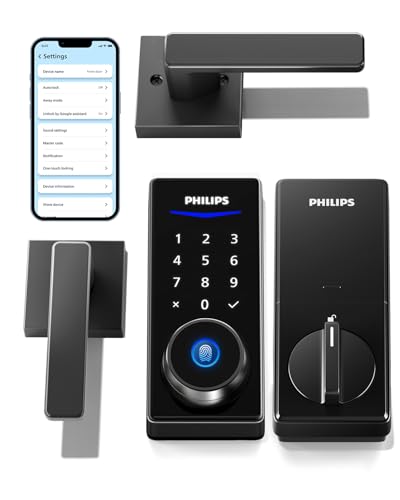 |
Best Bluetooth Handle Set | Fingerprint, PIN, Key, App | Bluetooth; bridge for remote access | Wi-Fi bridge may be a separate purchase | Check Price on Amazon | Read Our Analysis |
| TEEHO TE001 Keyless Entry Door Lock | 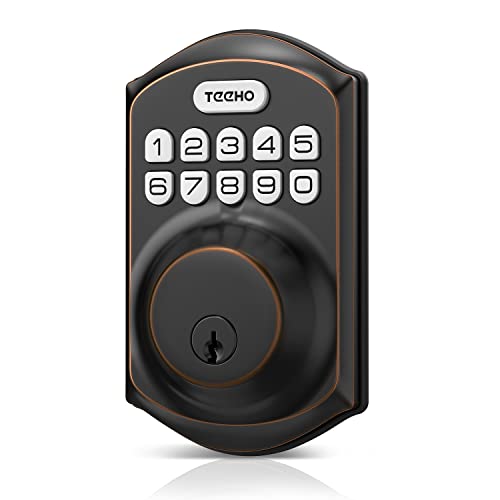 |
Best No-App Option | Keypad, Physical Key | Offline; no app or Wi-Fi | Simple operation without remote unlocking | Check Price on Amazon | Read Our Analysis |
| OKIBB Smart Front Door Lock Set with WiFi | Best Complete Door Set | App, Fingerprint, PIN, Fob, Key | Built-in Wi-Fi | Confirm hardware fit, support, and warranty details | Check Price on Amazon | Read Our Analysis |
Comparison note: A smart lock’s app features may work differently over Bluetooth and Wi-Fi. Check whether remote unlocking, voice assistants, and activity notifications require a compatible gateway or additional setup.
More Details on Our Top Picks
-
Philips Wi-Fi Smart Lock with Keyless Entry: Best Overall Versatility
If you want a digital front door lock with multiple convenient entry methods, the Philips Wi-Fi Smart Lock is a strong option to consider. This configuration combines fingerprint recognition, keypad access, smartphone control, and a traditional backup key.
Its standout benefit is built-in Wi-Fi connectivity. You can use the compatible Philips Home Access app to manage supported remote features without adding a separate Wi-Fi bridge. That can make everyday access easier when family members or approved visitors need entry while you’re away.
The lock also offers auto-lock settings and access-management features, helping you reduce the need to share physical keys. Fingerprint access is convenient when you’re carrying groceries or returning home with your hands full.
Remember that remote features depend on power, internet access, account configuration, and the manufacturer’s service. Always confirm your door measurements before installation.
Why You’ll Like It
- Built-in Wi-Fi avoids a separate bridge purchase for supported remote functions.
- Multiple unlocking methods provide flexibility for family members.
- Fingerprint entry reduces the need to type a PIN every time.
- Guest access features can help manage visitors without copying keys.
Who Should Buy This: Homeowners who want fingerprint convenience, remote app access, and several backup entry methods in one deadbolt.
Who Should Avoid This: Buyers who prefer a basic offline lock or want to avoid connected-device setup and app maintenance.
- Unlocking Methods:Fingerprint, PIN, App, Physical Key, Compatible Voice Control
- Connectivity:Built-in Wi-Fi
- Security Features:Auto-lock, Access Management, Supported Activity Notifications
- Installation:DIY installation on compatible doors
- Remote Control:Yes, through the compatible app and Wi-Fi connection
- Compatibility:Verify door thickness, bore holes, and backset before purchase
- Additional Feature:Guest passcode management
- Important Limitation:Remote access depends on connectivity and app support
-
eufy Security Smart Lock C30 with WiFi Keypad: Best Simple Wi-Fi Choice
The eufy Security Smart Lock C30 is worth considering if you want remote control without paying for a separate Wi-Fi bridge. It uses built-in Wi-Fi and supports unlocking through the eufy Security app, a physical keypad, compatible voice assistants, and a backup key.
Unlike fingerprint-based models, the C30 uses physical keypad buttons. This can appeal to households that prefer tactile button feedback over a touchscreen or biometric scanner.
You can create access codes, manage supported entry settings, and view activity information through the app. Its auto-lock feature adds convenience, although you should still make sure the door is fully closed and latched.
eufy estimates approximately five months of battery life under its stated usage conditions. Actual performance depends on Wi-Fi quality, usage frequency, temperature, and other factors.
The main trade-off is the absence of fingerprint entry. The model also does not currently support every smart home platform, including Apple HomeKit and Matter.
Why You’ll Like It
- Built-in Wi-Fi supports remote app control without a separate bridge.
- Physical keypad buttons provide a familiar way to enter codes.
- Guest PIN management is useful for family and approved visitors.
- Physical-key backup offers another entry option if the batteries fail.
Who Should Buy This: People who want straightforward Wi-Fi keypad access without relying on fingerprint recognition.
Who Should Avoid This: Buyers who require biometric entry, Apple HomeKit, or Matter integration.
- Unlocking Methods:Physical Keypad, App, Physical Key, Compatible Voice Control
- Connectivity:Built-in Wi-Fi; no separate bridge required
- Security Features:Auto-lock, Wrong-Attempt Protection, Access Management
- Installation:Designed for compatible standard deadbolt installations
- Remote Control:Yes, through the eufy Security app
- Compatibility:Check door thickness, backset, bore holes, and handle clearance
- Battery:Uses replaceable batteries; actual life varies
- Additional Feature:Physical keypad buttons
- Important Limitation:No fingerprint reader or Matter support
-
Veise VE017 Fingerprint Smart Door Lock: Best for Fingerprint Entry
The Veise VE017 Fingerprint Smart Door Lock is a practical choice for people who want to unlock their front door without reaching for keys or entering a PIN every time.
It offers several entry methods, including fingerprint recognition, keypad codes, Bluetooth app control, compatible key fobs, and a physical key. This flexibility can be useful for households with different access preferences.
Veise advertises fast fingerprint recognition with self-learning technology. However, actual recognition speed may vary depending on finger placement, moisture, and sensor conditions.
You can use compatible local functions without an internet connection. However, the VE017 does not have built-in Wi-Fi. Remote internet control and compatible voice-assistant features require the separate Veise G1 Gateway.
Its weather-resistant exterior is useful for appropriate outdoor installations, but you should confirm the manufacturer’s exposure recommendations, especially for an uncovered entrance.
Why You’ll Like It
- Fingerprint entry makes routine access convenient.
- Multiple access methods help accommodate different users.
- Local keypad and fingerprint entry do not depend on Wi-Fi.
- The optional gateway offers a path to additional connected features.
Who Should Buy This: Families who want fingerprint access and are comfortable using Bluetooth locally or purchasing a gateway for remote functionality.
Who Should Avoid This: Buyers who need built-in Wi-Fi without additional accessories.
- Unlocking Methods:Fingerprint, App, Keypad Code, Compatible Key Fob, Physical Key
- Security Features:Auto-lock, Fingerprint Access, Access Management
- Installation:DIY installation on compatible doors
- Connectivity:Built-in Bluetooth; optional G1 Gateway
- Remote Control:Requires compatible G1 Gateway for internet-based operation
- Compatibility:Check door dimensions and handing
- Additional Feature:Emergency temporary-power port
- Important Limitation:Gateway may add to the total purchase cost
-
Yamiry Smart Deadbolt Door Lock with Keypad: Best Flexible Access
The Yamiry Smart Deadbolt Door Lock with Keypad is a useful option if several people need different ways to enter your home. It supports fingerprint access, keypad passcodes, compatible app control, a physical key, and compatible key fobs.
Its user-management features can make everyday access more convenient. For example, family members can use their preferred method while approved visitors receive temporary credentials where supported.
The lock includes auto-lock and anti-peep password features. Anti-peep PIN entry can make it harder for someone nearby to identify your actual code by watching the complete sequence.
Local access methods can remain useful when internet connectivity is unavailable. Remote internet control and compatible voice features require the appropriate Wi-Fi gateway configuration.
Check the included accessories before buying. Some product information identifies compatible key fobs as separately available, so you should not assume they come in every package.
Why You’ll Like It
- Several entry methods provide flexibility for different household members.
- Guest credentials reduce the need to distribute physical keys.
- Auto-lock settings can help with everyday locking routines.
- Physical-key backup provides another way to enter during electronic failures.
Who Should Buy This: Families and households that want multiple unlocking options and configurable visitor access.
Who Should Avoid This: Buyers who require all remote features and accessories to work straight out of the box without extra purchases.
- Unlocking Methods:App, Fingerprint, Passcode, Compatible Key Fob, Physical Key
- Security Features:Auto-lock, Anti-peep PIN Entry, User Access Management
- Installation:Designed for compatible standard door preparation
- Connectivity:Local app features; compatible gateway for internet control
- Remote Control:Requires an appropriate Wi-Fi gateway
- Compatibility:Verify door dimensions and installation requirements
- Additional Feature:Multiple user access options
- Important Limitation:Verify included key fobs and gateway accessories
-
Philips Wi-Fi Smart Lock with Handle Set: Best Wi-Fi Handle Bundle
If you’re replacing both a front door deadbolt and its handle hardware, the Philips Wi-Fi Smart Lock with Handle Set deserves attention.
This product configuration is identified as a Philips fingerprint deadbolt and handle bundle with a Wi-Fi gateway. It is different from the Philips model above that has Wi-Fi built directly into the lock.
You can choose from fingerprint access, PIN codes, a physical key, and compatible app functions. With the Wi-Fi gateway installed and configured, supported remote control and voice-assistant features become available.
A coordinated handle-and-deadbolt bundle can make choosing matching hardware easier. However, you should verify the exact package contents, finish, door preparation, and installation measurements before ordering.
The lock may also require additional mounting preparation for certain installation options. Check the manufacturer instructions rather than assuming every installation is drill-free.
Why You’ll Like It
- A coordinated lock-and-handle package simplifies hardware selection.
- Fingerprint and PIN access offer convenient entry choices.
- The Wi-Fi gateway configuration supports connected features.
- Auto-lock and guest access features add everyday convenience.
Who Should Buy This: Homeowners replacing existing deadbolt and handle hardware who want matching Philips components with Wi-Fi functionality.
Who Should Avoid This: Buyers who only need a standalone deadbolt or want built-in Wi-Fi without using an external bridge.
- Unlocking Methods:Fingerprint, PIN, App, Physical Key, Compatible Voice Control
- Security Features:Auto-lock, Configurable Access Codes
- Installation:Check lock and handle mounting requirements
- Connectivity:Bluetooth-based lock with Wi-Fi gateway configuration
- Remote Control:Available with compatible configured Wi-Fi bridge
- Compatibility:Verify door thickness, handle clearance, and hole spacing
- Additional Feature:Coordinated handle hardware
- Important Limitation:Confirm the exact bridge and handle components included in the selected listing
-
Philips Smart Lock with Keyless Entry and Handles: Best Bluetooth Handle Set
The Philips Smart Lock with Keyless Entry and Handles combines an electronic deadbolt with matching handle hardware. This makes it an option for homeowners who want to refresh the appearance and functionality of their front door together.
The DDL240X-1HB-L configuration supports fingerprint unlocking, PIN entry, a physical key, and compatible Bluetooth app control. Bluetooth access is useful when you’re near the lock and don’t need remote internet access for every interaction.
To use internet-based remote operation or supported voice-assistant functions, you need a compatible Wi-Fi bridge. Do not confuse this Bluetooth-based configuration with Philips products that already include built-in Wi-Fi or a gateway bundle.
The handles are an additional reason to consider this set, but they also make door measurements especially important. Check the spacing between existing hardware openings and the clearance around the door frame.
Why You’ll Like It
- Matching hardware provides a coordinated front door appearance.
- Fingerprint and keypad access reduce everyday dependence on keys.
- Local Bluetooth app control adds convenience near the door.
- Optional bridge connectivity lets you add compatible remote features.
Who Should Buy This: People replacing a deadbolt and handles who primarily want convenient local keyless entry.
Who Should Avoid This: Buyers expecting built-in Wi-Fi and immediate remote control without an additional bridge.
- Unlocking Methods:Fingerprint, PIN, Physical Key, App
- Security Features:Auto-lock and Configurable User Access
- Installation:Deadbolt and handle hardware installation
- Connectivity:Bluetooth; compatible Wi-Fi bridge for remote features
- Remote Control:Requires compatible Wi-Fi bridge
- Compatibility:Verify door thickness, backset, and handle clearance
- Additional Feature:Coordinated lever handles
- Important Limitation:Do not assume Wi-Fi bridge is included
-
TEEHO TE001 Keyless Entry Door Lock: Best No-App Option
Not everyone needs fingerprint sensors, voice control, or an app to manage a front door. The TEEHO TE001 Keyless Entry Door Lock offers a simpler alternative with keypad entry and a traditional mechanical-key backup.
You can program up to 20 user codes and use a temporary one-time code for approved visitors. That can be useful when you want to grant entry without handing someone a permanent key.
The TE001 includes configurable automatic locking and a one-touch locking function. Its offline design means that ordinary keypad access does not require Wi-Fi or a smartphone.
Important: This model does not offer app control, Bluetooth, or internet-based remote unlocking. If you want to let someone into your house from another location, choose a compatible connected lock instead.
The lock uses replaceable AA batteries and provides low-battery warnings. Follow the manufacturer’s installation and programming instructions, including replacing the factory master code during setup.
Why You’ll Like It
- Simple keypad operation without internet connectivity.
- Multiple user codes help organize household access.
- One-time codes provide flexibility for occasional visitors.
- Mechanical-key backup reduces dependence on the electronics.
Who Should Buy This: Buyers looking for a straightforward electronic deadbolt without app setup or Wi-Fi requirements.
Who Should Avoid This: Anyone who needs fingerprint entry, remote unlocking, app notifications, or connected activity logs.
- Unlocking Methods:Keypad and Physical Key
- Security Features:Auto-lock, Anti-peep Code Entry, Vacation Mode
- Installation:Designed for compatible standard deadbolt preparation
- Connectivity:None; offline operation
- Remote Control:No app or internet-based remote control
- User Management:Up to 20 programmable user codes
- Power:Replaceable AA batteries with low-battery indicator
- Additional Feature:One-time guest code
- Important Limitation:No fingerprint reader or smartphone integration
-
OKIBB Smart Front Door Lock Set with WiFi: Best Complete Door Set
Best Complete Door Set
Check Price on AmazonIf you prefer replacing more of your front door hardware at once, the OKIBB Smart Front Door Lock Set with WiFi offers an electronic deadbolt with coordinated handle hardware.
This model is described as supporting built-in Wi-Fi, fingerprint unlocking, keypad passcodes, compatible access fobs, and a physical key. Its app features can help with compatible guest credentials and access management.
The lock also includes configurable auto-lock functionality and a weather-resistant exterior rating. However, its IP54 rating indicates limited dust ingress protection and resistance to water splashes, not complete waterproofing.
The large range of advertised functions makes the product interesting, but verify the exact seller configuration, warranty conditions, app support, and door compatibility before purchase. Independent validation of every advertised security claim is limited.
Its main attraction is the combination of connected entry methods and matching hardware, rather than a proven advantage in resistance to forced entry.
Why You’ll Like It
- Combines an electronic deadbolt with handle hardware.
- Multiple entry methods can accommodate household preferences.
- Built-in Wi-Fi supports compatible remote app functions.
- Configurable guest credentials can simplify visitor access.
Who Should Buy This: Homeowners seeking a complete connected front door hardware set who are willing to verify the technical specifications and seller support.
Who Should Avoid This: Buyers who require independently established security performance or fully verified long-term app support before purchasing.
- Unlocking Methods:App, Fingerprint, Passcode, Compatible Fob, Physical Key
- Security Features:Auto-lock, Access Management, Advertised Tamper-Resistant Keypad
- Installation:Verify deadbolt and handle installation dimensions
- Connectivity:Built-in Wi-Fi
- Remote Control:Supported through the compatible app and Wi-Fi setup
- Compatibility:Check door thickness, backset, and handle positioning
- Additional Feature:Coordinated front door hardware
- Important Limitation:Confirm exact specifications, included components, and warranty coverage
How to Choose the Best Digital Front Door Lock

The best digital front door lock for your home depends on more than the number of advertised features. Consider how you enter your home, who else needs access, whether you want remote operation, and how well the lock matches your existing door.
1. Choose the Right Unlocking Methods
Digital locks offer several ways to open a door. You may find models with fingerprint recognition, PIN codes, physical keys, smartphone apps, and compatible voice control.
Fingerprint entry is convenient for daily use. A keypad can work well for family members who prefer remembering a code rather than carrying keys. Physical-key backup is useful when batteries fail or electronic functions are unavailable.
If you regularly welcome guests, temporary codes and user management may be more valuable than having the fastest advertised fingerprint reader.
Pro Tip: Choose a lock with at least one entry method that works without Wi-Fi. If you want protection against a completely drained battery, also examine the available physical-key or emergency-power options.
2. Understand Wi-Fi, Bluetooth, and Offline Locks
Not every electronic front door lock works the same way. Understanding connectivity prevents unexpected purchases and setup problems.
| Lock Type | Main Benefit | Main Limitation |
|---|---|---|
| Built-in Wi-Fi | Remote control without a separate bridge | Depends on network quality and may use more battery power |
| Bluetooth Smart Lock | Local app access without constant internet connectivity | Remote internet features usually need a bridge |
| Offline Keypad Deadbolt | Simple electronic access without an app or Wi-Fi | No internet-based remote control or app alerts |
For example, the Philips built-in Wi-Fi model and eufy C30 provide compatible remote functions without a separate bridge. The Veise VE017 requires the Veise G1 Gateway for remote internet access. The TEEHO TE001 does not have app connectivity.
3. Check Real Security Features, Not Just Marketing Claims
A digital front door lock should provide suitable physical security alongside electronic convenience. Fingerprint sensors and smartphone apps do not automatically make a lock more resistant to forced entry.
Look for reliable deadbolt operation, appropriate hardware construction, secure credential management, and useful protections such as incorrect-code lockout or anti-peep PIN entry.
Automatic locking can help reduce forgotten locking, but many locks can extend their bolts even when a door is open. Unless the model specifically includes compatible door-position detection, auto-lock does not necessarily confirm that your door is fully closed.
You should also check whether a product lists an appropriate ANSI/BHMA standard and independently verifiable certification. These standards assess performance factors such as operation, durability, and strength.
Security Note: An ANSI/BHMA Grade 3 designation is not the highest available grade. Also, encryption claims alone do not establish a lock’s overall physical security. For better protection, pay attention to the complete door, frame, strike plate, hardware installation, and locking system.
4. Measure Your Door Before Installation
Many smart deadbolts are designed for DIY installation, but not every lock fits every door. Before purchasing, measure the hardware openings and compare them with the manufacturer’s installation diagram.
Before You Buy: Door Compatibility Checklist
- Door thickness: Check the supported range. Many North American locks fit doors approximately 1-3/8 to 1-3/4 inches thick, but some support thicker doors.
- Backset: Measure from the door edge to the center of the lock opening. Common backsets include 2-3/8 and 2-3/4 inches.
- Cross-bore diameter: Confirm that the main hole matches the lock’s requirements.
- Door handing: Check support for left-handed and right-handed doors.
- Hardware clearance: Make sure a large keypad or handle set will not interfere with nearby trim, handles, or the door frame.
- Door material: Verify compatibility with wood, metal, fiberglass, or other door construction.
- Included hardware: Check whether handles, adapters, extra screws, Wi-Fi bridges, and keys are supplied.
Some installations require only a screwdriver. Others may need drilling or adjustments. If your door is damaged, poorly aligned, or has unusual hardware dimensions, professional installation may be the safer choice.
5. Compare Battery Life and Backup Access
Battery life is an important consideration when selecting a digital lock. It depends on the lock design, battery type, usage, environmental conditions, and wireless connectivity.
Many electronic deadbolts use replaceable AA alkaline batteries. Some Wi-Fi-connected models may require more frequent battery changes than simpler keypad-only models.
Look for low-battery alerts and a practical backup entry method. Certain models include physical keys, while others may provide an emergency power port.
Do not assume that a USB-C emergency port recharges the installed batteries. On many locks, it supplies temporary power so you can unlock the door and replace the batteries.
Pro Tip: Replace batteries according to the manufacturer’s recommendations, keep your backup key somewhere secure and accessible, and avoid mixing old and new batteries unless the manual specifically permits it.
6. Verify Smart Home Compatibility
If your home already uses Alexa, Google Assistant, Apple Home, or another automation platform, check the exact integration supported by the lock.
A model that advertises voice commands may still require a separate Wi-Fi gateway. Likewise, compatibility with Alexa or Google does not automatically mean the lock supports Apple HomeKit, Matter, or every automation system.
Review the manufacturer’s app requirements and supported platforms before ordering. Also consider whether the lock can still be opened locally if your router or internet connection stops working.
7. Look for Useful User Management
User management matters when several people need entry. Depending on the lock, you may be able to create individual PIN codes, register fingerprints, issue temporary codes, or revoke access.
Some connected models offer access histories and notifications, which can help you understand when particular credentials are used.
However, activity logs do not always prove exactly who entered the home. A code or physical key may be shared, and some logs record commands rather than verified door-opening events.
For family use, prioritize simple code management. For occasional visitors, temporary or one-time credentials can be more convenient than distributing permanent keys.
8. Understand Durability and Weather Resistance
Your front door lock may be exposed to rain, sunlight, dust, temperature changes, and regular handling. Choose a model designed for your entrance conditions.
Pay attention to the manufacturer’s IP rating. For example, IP54 means protection against limited dust ingress and splashing water. It does not mean the lock is fully dustproof or suitable for submersion.
IP55 indicates a higher level of water-jet protection than IP54, but it still does not guarantee suitability for every outdoor environment.
Also check the supported operating temperature range and whether the exterior assembly is suitable for direct weather exposure. A covered entrance may protect a lock from prolonged rain and sun.
9. Review Warranty and Long-Term Support
Digital locks combine mechanical hardware with electronics, which makes manufacturer support important.
Before buying, check the warranty period for mechanical components and electronics. They may have different coverage terms.
For connected locks, consider app availability, firmware support, replacement parts, and whether customer support can assist with setup or credential recovery.
Do not rely only on a seller’s general promise of lifetime support. Read the actual warranty conditions and confirm which company is responsible for service.
Which Digital Front Door Lock Is Right for You?
Choose Based on Your Main Priority
You want Wi-Fi and fingerprint access: Consider the Philips Wi-Fi Smart Lock with built-in Wi-Fi.
You want a physical keypad with remote control: The eufy Security Smart Lock C30 is a convenient starting point.
You prefer fingerprint entry and local Bluetooth: Consider the Veise VE017, while allowing for a separate gateway if remote access matters.
You need flexible household access: The Yamiry Smart Deadbolt offers several available credential types.
You want matching handles and a deadbolt: Compare the Philips handle-set configurations and OKIBB set carefully, including their gateway and installation differences.
You don’t want an app: The TEEHO TE001 provides keypad access without requiring Wi-Fi.
Frequently Asked Questions
What Is the Average Lifespan of a Digital Front Door Lock?
There is no universal lifespan for every digital front door lock. Service life depends on mechanical wear, electronic components, weather exposure, battery maintenance, and usage frequency. Some well-maintained locks may operate for many years, but manufacturer warranty coverage and replacement-part availability are more useful buying checks than assuming a fixed lifespan.
Are Digital Front Door Locks Weather-Resistant?
Many digital front door locks offer some weather resistance, but the level varies by model. Check the IP rating, supported operating temperatures, and installation recommendations. Even weather-resistant models may benefit from a covered entrance and routine maintenance.
How Do I Reset My Digital Door Lock Password?
The password-reset procedure depends on the brand and model. Check the official user manual or manufacturer’s app for instructions. Some models require the existing administrator code, while others provide a physical reset procedure.
Important: A factory reset may erase saved PIN codes, fingerprints, and other credentials. Keep the door open while testing changes and confirm that you can unlock it before closing the door.
Can I Install a Digital Lock Myself?
Yes, many digital locks are designed for DIY installation using basic hand tools. First, verify your door’s measurements and hardware configuration. Follow the supplied installation guide, check that the deadbolt moves freely, and test all entry methods with the door open.
Do Digital Front Door Locks Work Without Wi-Fi?
Many do. Keypad, fingerprint, and physical-key functions often work locally without internet connectivity. A lock that uses Bluetooth may also offer local app access. Remote internet control, cloud notifications, and certain smart home functions generally require a working connection.
What Happens if the Smart Lock Battery Dies?
It depends on the model. Locks with mechanical-key backup can usually be opened using the correct physical key. Some models offer an emergency power port that temporarily powers the electronics. Check the manufacturer’s recovery instructions before relying on any backup method.
Are Fingerprint Door Locks More Secure Than Keypad Locks?
Not automatically. Fingerprint access can be more convenient and avoids sharing a memorized code, but security depends on sensor quality, credential storage, lock construction, and installation. A well-designed keypad deadbolt can be a suitable security option without biometric technology.
Can I Use a Digital Lock on a Metal Door?
Some digital locks can be installed on compatible metal doors. However, door thickness, bore dimensions, reinforcement, and hardware clearance must match the manufacturer’s requirements. Metal door construction may also affect wireless performance. Check the installation specifications before purchasing.
What Is the Warranty Period for These Digital Locks?
Warranty coverage varies by manufacturer, model, component, and seller. Electronic and mechanical parts may receive different coverage. Check the current warranty documentation on the product listing or manufacturer’s website before ordering.
Do I Need a Smart Home Hub for a Wi-Fi Door Lock?
Not always. Locks with built-in Wi-Fi can support compatible remote features without a separate bridge. Bluetooth-based models may require a manufacturer-specific gateway for remote access and voice integrations. Check the exact product configuration rather than relying on the word “smart” in the product title.
Final Recommendation
For a flexible connected option, the Philips Wi-Fi Smart Lock is a strong starting point thanks to its combination of fingerprint entry, keypad access, physical-key backup, and built-in Wi-Fi.
If you prefer physical buttons and don’t require biometric entry, the eufy Security Smart Lock C30 offers a simpler connected alternative.
For fingerprint-focused access, consider the Veise VE017. If you want a digital deadbolt without managing an app or internet connection, consider the TEEHO TE001.
Best buying approach: Choose the correct lock type and installation fit first. Then compare entry methods, remote access, warranty support, and total cost, including any gateways or accessories.
Conclusion
The best digital front door lock in 2026 is one that matches your daily routine, provides appropriate physical security, and fits your door correctly. Built-in Wi-Fi, fingerprint recognition, guest codes, and automatic locking can all make home access more convenient, but not every household needs every feature.
Before making your choice, compare the lock’s connectivity, backup access methods, installation requirements, and manufacturer support. A carefully selected and properly installed digital deadbolt can make everyday access simpler while helping you maintain control over who can enter your home.

