

Last Updated on November 4, 2026 by Caleb Warren
Choosing the best commercial door locks in 2026 starts with your door type, access needs, and security requirements. The Nuk3y Bella Grade 2 Lockset is worth considering for a traditional mechanical setup, while the BRINKS Keypad Door Lock makes managing staff access easier. The AIsecure Commercial Mortise Lock is designed for compatible aluminum storefront doors, and the OAKMOORE Commercial Entry Lever offers another heavy-duty mechanical option.
Before buying, check your door thickness, backset, hardware configuration, and applicable building codes. A good commercial lock should provide practical security without compromising safe emergency exit. This guide compares four options and explains how to choose one for your business.
Quick Answer: Which Commercial Door Lock Should You Choose?
If you want a traditional mechanical lockset, start with the Nuk3y Bella Grade 2. For keypad access with multiple user codes, consider the BRINKS Keypad Entry Lever. If your business has a compatible narrow-stile aluminum storefront door, the AIsecure Mortise Lock may be a better match. For a keyed commercial lever, compare the OAKMOORE Commercial Entry Door Handle Lock.
Important: These are different types of commercial door hardware. The right choice depends on the door, required lock function, accessibility rules, and emergency-egress requirements.
Key Takeaways
- Best for traditional mechanical access: Nuk3y Bella Grade 2 Commercial Duty Lockset.
- Best for managing access codes: BRINKS Keypad Door Lock with Handle.
- Best for compatible aluminum storefronts: AIsecure Commercial Mortise Lock.
- Best for a keyed commercial lever: OAKMOORE Commercial Entry Door Handle Lock.
- Most important buying check: Confirm door dimensions, lock function, safe egress, and any required fire or accessibility ratings.
Disclosure: As an Amazon Associate I earn from qualifying purchases. Some links on this page are affiliate links, at no extra cost to you.
Our Top Commercial Door Lock Picks
| Nuk3y Bella Grade 2 Commercial Duty Lockset | Best Mechanical Knobset | Security Rating: Manufacturer-stated ANSI/BHMA Grade 2 | Material: Satin stainless steel, as listed | Door Fit: Standard cylindrical lock preparation; 2-3/8 or 2-3/4 inch backset | Check Price on Amazon | Read Our Analysis | |
| BRINKS Keypad Door Lock with Handle (Satin Nickel) |  |
Best Keypad Access | Security Rating: Manufacturer-stated ANSI Grade 2 | Material: Metal construction with zinc die-cast levers | Door Fit: 1-3/8 to 2 inches thick; adjustable backset | Check Price on Amazon | Read Our Analysis |
| AIsecure Commercial Mortise Lock with Deadbolt Combo |  |
Best for Narrow-Stile Storefronts | Security Rating: Independent grade not confirmed | Material: Brass cylinder and laminated steel bolt, as described | Door Fit: Compatible storefront mortise preparation; 1-1/8 inch backset | Check Price on Amazon | Read Our Analysis |
| OAKMOORE Commercial Entry Door Handle Lock – Heavy Duty | Best Keyed Entry Lever | Security Rating: Seller-stated Grade 2 | Material: Metal construction; alloy-steel handle listed | Door Fit: Listed for 1-3/8 to 2 inch doors; 2-3/4 inch backset | Check Price on Amazon | Read Our Analysis |
Comparison note: Product specifications reflect manufacturer or seller information where available. An advertised security grade does not by itself establish independent certification or approval for a particular fire-rated or emergency-exit door. Confirm the exact model and configuration before ordering.
More Details on Our Top Picks
-
Nuk3y Bella Grade 2 Commercial Duty Lockset
Best Mechanical Knobset
The Nuk3y Bella Grade 2 Commercial Duty Lockset is a practical option if you need a traditional mechanical knobset for a compatible business door. Its cylindrical design suits standard prepared doors, and the manufacturer advertises compliance with ANSI/BHMA A156.2 Grade 2 performance requirements.
One useful feature is its flexible backset configuration. The manufacturer lists both 2-3/8-inch and 2-3/4-inch backset latches, which can make replacement easier when the existing door preparation matches. The knobset is also described as suitable for left- and right-handed applications.
The Bella series offers different lock functions, including entry, privacy, passage, storeroom, and classroom configurations. However, these functions are not interchangeable. You need to select the correct version for the room or entry you want to secure.
The manufacturer also advertises a UL-rated latch for use in certain fire-rated applications. That does not mean every installation automatically provides a three-hour fire rating. The exact hardware listing and complete door assembly must meet the applicable requirements.
Why You’ll Like It
- Traditional mechanical operation: No battery changes, user-code management, or electronic programming.
- Two common backset sizes: Useful for compatible standard cylindrical door preparations.
- Multiple lock functions: Allows you to select hardware based on the room’s intended use.
- Commercial design: Manufacturer-stated Grade 2 performance makes it worth comparing with other commercial knobsets.
Best For: Businesses that need a conventional keyed or function-specific cylindrical knobset where knob operation is permitted.
Who Should Avoid It: Buyers needing keypad access, narrow-stile storefront hardware, or a lever-operated accessible entry. A knob may not meet accessibility requirements on routes where lever-style operable hardware is required.
Before You Buy: Check door thickness, the existing hole preparation, backset, lock function, finish, and any required fire-door or accessibility approval.
- Security Rating:Manufacturer-stated ANSI/BHMA A156.2 Grade 2
- Material:Listed satin stainless-steel construction; verify selected finish
- Installation Type:Standard cylindrical door preparation
- Backset Size:2-3/8 inches and 2-3/4 inches
- Door Thickness:Manufacturer lists 1-3/8 to 2 inches
- Key Options:Function-dependent; keyed versions available
- Warranty:Confirm current coverage with manufacturer
- Additional Feature:Left- and right-handed applications
- Additional Feature:Manufacturer advertises a fire-rated latch
-
BRINKS Keypad Door Lock with Handle (Satin Nickel)
The BRINKS Keypad Door Lock with Handle is a strong candidate for businesses that want to reduce everyday key handling. Instead of giving every authorized employee a physical key, you can program individual access codes for supported users.
According to BRINKS, the keypad entry lever supports one 6-digit master code and up to 99 additional user codes. This can be useful for supply rooms, maintenance areas, employee-only spaces, and other compatible commercial doorways.
Its illuminated keypad helps people enter codes in low-light conditions. An adjustable automatic relocking function can lock the door after use, while an optional unlocked mode gives you more flexibility when appropriate for the space.
The lock operates on four AA batteries and includes a mechanical backup keyway. A low-battery indicator provides a reminder before the batteries become depleted. The manufacturer also lists a 10-year limited warranty, subject to its warranty terms.
Installation does not require electrical wiring. BRINKS specifies doors from 1-3/8 to 2 inches thick and an adjustable latch for 2-3/8-inch or 2-3/4-inch backsets. Confirm that your door preparation matches the model.
Why You’ll Like It
- Multiple access codes: Useful when several authorized people need access.
- Adjustable automatic relocking: Helps support consistent locking routines when configured correctly.
- Illuminated keypad: Easier code entry in dimly lit areas.
- Mechanical backup: Provides another access method if the electronic system cannot be used.
- No hardwiring: Simplifies installation on compatible doors.
Best For: Small offices, employee-only rooms, maintenance areas, and businesses that want local keypad access without installing a networked access-control system.
Who Should Avoid It: Businesses requiring remote credential management, detailed electronic audit logs, or integration with a centralized access-control platform. This keypad lever should not be assumed to provide those features.
Before You Buy: Confirm the exact finish and model, door measurements, battery package contents, backup-key arrangement, lock function, and applicable egress requirements.
- Security Rating:Manufacturer-stated ANSI Grade 2
- Material:Metal construction with zinc die-cast levers
- Installation Type:Adjustable latch; no electrical wiring
- Backset Size:2-3/8 inches or 2-3/4 inches
- Door Thickness:1-3/8 to 2 inches
- Key Options:Up to 99 user codes, master code, and backup keyway
- Warranty:10-year limited manufacturer warranty
- Additional Feature:Backlit keypad
- Additional Feature:Adjustable automatic relocking
- Additional Feature:Four AA battery operation
-
AIsecure Commercial Mortise Lock with Deadbolt Combo
The AIsecure Commercial Mortise Lock with Deadbolt Combo is designed for compatible aluminum storefront doors. Unlike a standard cylindrical knobset, this type of hardware fits into a prepared mortise opening in the door’s narrow stile.
Its listed 1-1/8-inch backset is an important detail. This measurement must match the existing lock preparation. You should also compare the lock body’s dimensions, faceplate, bolt style, cylinder arrangement, and mounting points before ordering.
The seller describes a solid brass lock cylinder and an eight-ply laminated steel bolt with a concealed hardened steel pin. These construction details may help resist certain forms of physical attack, but they should not be treated as proof of an independently verified security grade.
This product can be useful when replacing compatible storefront mortise hardware. However, included cylinders and interior operating components may depend on the exact version offered. Confirm the package contents and whether the selected configuration supports a legally compliant exit.
Why You’ll Like It
- Storefront-specific design: Intended for compatible narrow-stile aluminum door preparations.
- Mortise construction: May replace an existing storefront lock without changing to a cylindrical lock format.
- Brass cylinder: Seller-described construction offers a conventional mechanical key-operated component.
- Laminated steel bolt: Designed to provide mechanical locking strength in the intended application.
Best For: Owners or maintenance professionals replacing compatible 1-1/8-inch-backset storefront mortise hardware.
Who Should Avoid It: Buyers with standard wooden or metal doors prepared for cylindrical locks, or anyone who cannot verify the existing mortise preparation and required inside-release function.
Before You Buy: Measure the current mortise lock and confirm the backset, case dimensions, faceplate, bolt type, cylinder configuration, and emergency-egress requirements. Consider professional assistance for occupied commercial storefronts.
- Security Rating:Independent ANSI/BHMA grade not confirmed
- Material:Seller-described brass cylinder and laminated steel bolt
- Installation Type:Compatible narrow-stile mortise preparation
- Backset Size:1-1/8 inches
- Door Compatibility:Selected aluminum storefront door preparations
- Key Options:Mechanical cylinder; verify selected package
- Warranty:Confirm current manufacturer or seller terms
- Additional Feature:Concealed hardened steel pin described by seller
- Additional Feature:Designed for storefront mortise-lock replacement
-
OAKMOORE Commercial Entry Door Handle Lock – Heavy Duty
Best Keyed Entry Lever
If your business prefers a traditional key-operated lever instead of a keypad or knob, the OAKMOORE Commercial Entry Door Handle Lock deserves consideration. This mechanical entry lever is marketed for commercial applications, including offices and other frequently used doors.
The manufacturer or seller describes the lock as a Grade 2 commercial entry lever with reversible handing. The listing also references durability testing and pick-resistant features. However, independent certification and test documentation should be checked before relying on those claims for a regulated commercial installation.
Its lever design is useful for people who prefer a push-down handle rather than a round knob. The product is listed for doors approximately 1-3/8 to 2 inches thick with a 2-3/4-inch backset. Verify the exact SKU and door preparation before purchase.
The lock uses a conventional keyed-entry arrangement, so you do not have to manage electronic codes or batteries. It may be a practical option where a commercial entry lever is the correct hardware function and local requirements allow its use.
Why You’ll Like It
- Lever operation: Offers a different grip and operating action from a round knob.
- Mechanical keyed entry: Works without batteries or electronic programming.
- Reversible design: Listed for left- and right-handed door arrangements.
- Commercial construction: Marketed for regular use in business settings.
Best For: Businesses seeking a traditional keyed entry lever for a compatible office, utility, or commercial door.
Who Should Avoid It: Buyers needing keypad access, centralized credential management, or a narrow-stile storefront mortise lock.
Before You Buy: Confirm door thickness, backset, bore preparation, strike fit, keying requirements, and any required accessibility, fire, or egress certification. Do not assume an advertised fire rating applies to every door assembly.
- Security Rating:Seller-stated Grade 2; verify independent certification
- Material:Metal construction; alloy-steel handle listed
- Installation Type:Compatible commercial cylindrical lever preparation
- Backset Size:2-3/4 inches, as listed
- Door Thickness:Listed for 1-3/8 to 2 inches
- Key Options:Mechanical keyed entry
- Warranty:Confirm current warranty and seller terms
- Additional Feature:Reversible handing
- Additional Feature:Seller-described durability testing
- Additional Feature:Concealed fixing screws described by seller
Factors to Consider When Choosing Commercial Door Locks
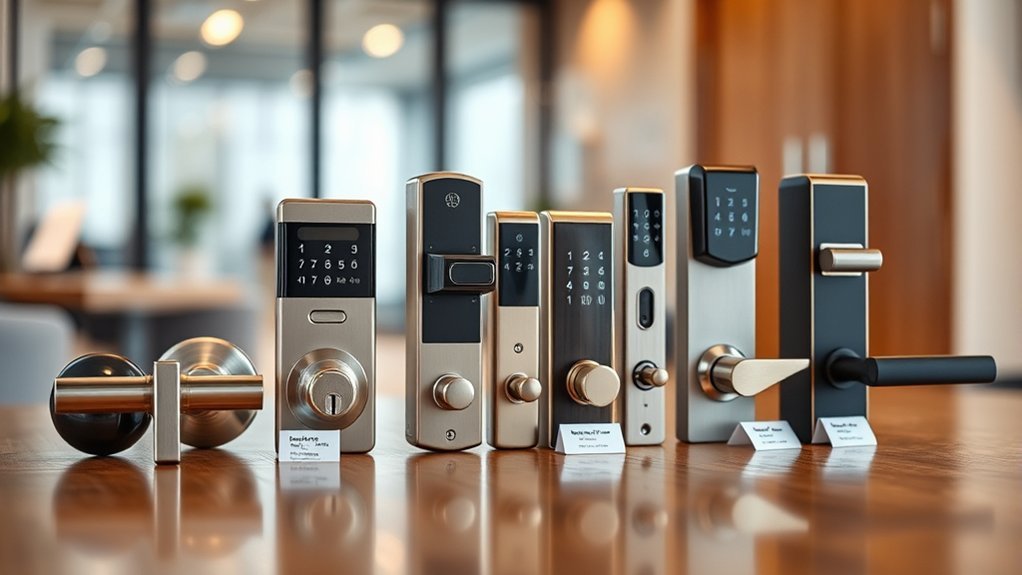
The best commercial-grade door lock is not necessarily the most expensive or complicated one. Your first priority should be finding hardware that matches the door’s construction, intended use, traffic level, and safety requirements.
1. Choose the Right Commercial Lock Type
Commercial doors use several different locking mechanisms. Understanding the differences helps you avoid buying hardware that cannot be installed correctly.
- Cylindrical knob locks: Common on compatible prepared doors where knob operation is permitted.
- Commercial lever locks: A practical mechanical option for many office and interior doors. Properly selected lever hardware can also help satisfy accessibility requirements.
- Keypad entry levers: Allow authorized users to enter codes without relying only on physical keys.
- Storefront mortise locks: Designed for specific narrow-stile aluminum door preparations and locking arrangements.
- Exit devices and panic hardware: Required in certain commercial occupancies and door configurations. These cannot automatically be replaced with an ordinary knobset or deadbolt.
Pro Tip: If you are replacing an existing commercial lock, identify the original mechanism and lock function before shopping. Two locks may look similar but require completely different door preparations.
2. Understand Security Ratings and Certifications
A lock’s security rating can help you compare products, but you should understand what the rating means. ANSI/BHMA standards cover different types of builders’ hardware and evaluate performance characteristics such as operation, durability, and strength.
Grade 1 is generally associated with the highest performance grade within applicable ANSI/BHMA grading systems, while Grade 2 provides another level of performance suitable for many commercial applications.
However, a seller’s claim that a product is Grade 2 is not the same as proof of independent certification. When certification is important, check the exact model in the Builders Hardware Manufacturers Association’s certification resources.
Also look at the actual locking mechanism, cylinder, strike plate, door frame, and installation. A strong lock cannot compensate for an unsuitable or damaged door assembly.
3. Check Emergency Exit and Fire Safety Requirements
Safety Note: Commercial Door Locks Must Not Create an Exit Hazard
Most required commercial egress doors must open from the inside without a key, special knowledge, or excessive effort. Specific exceptions exist, but they must be evaluated against the applicable adopted building code.
A deadbolt requiring an interior key can create a serious evacuation hazard if installed where occupants need immediate exit. Certain doors also require panic hardware or a specific fire-rated locking assembly.
Before modifying a commercial exit, consult a qualified door-hardware professional or local code authority. See the 2024 International Building Code, Chapter 10 for a reference framework. Local code adoption and amendments determine which requirements apply to your property.
Fire-door requirements also need separate attention. A fire-rated latch or an advertised UL listing does not automatically establish that the complete door, frame, and hardware assembly is approved for the desired installation.
For a rated door, confirm the listing of the exact hardware and its compatibility with the existing door assembly. UL Solutions’ fire-rated doors guidance explains why component and assembly ratings matter.
4. Measure Door Thickness and Backset
Even a suitable commercial lock will not work correctly if the dimensions do not match your door.
Check these measurements before placing an order:
- Door thickness: Measure the door itself, not the surrounding trim.
- Backset: Measure from the door edge to the center of the lock’s operating spindle or cylinder, as applicable to the lock design.
- Bore preparation: Check the existing holes for a cylindrical lock or the mortise pocket for storefront hardware.
- Door handing: Determine whether your door requires left-handed, right-handed, or reversible hardware.
- Strike and frame alignment: Confirm that the latch or bolt will engage the correct strike location.
- Hardware function: Identify whether you need entry, storeroom, passage, privacy, or another approved function.
Many cylindrical locksets use 2-3/8-inch or 2-3/4-inch backsets. Some narrow-stile storefront mortise locks use a 1-1/8-inch backset. These measurements are not interchangeable.
Compatibility Note: Do not assume that a lock advertised as commercial or universal fits every metal, wooden, aluminum, or glass storefront door. Matching the exact lock body and door preparation is essential.
5. Compare Material Durability and Wear Resistance
Commercial locks face repeated use, so construction quality matters. Stainless steel, brass, steel, aluminum, and zinc alloys all appear in commercial door hardware, but their suitability depends on the component and application.
For example, a brass cylinder may offer good corrosion resistance, while a hardened steel bolt may provide strength at the locking point. A plated or coated finish can also help protect exposed surfaces.
Pay attention to the complete construction rather than relying on a single material claim. A lock described as having a solid brass cylinder does not necessarily have a solid brass body or handle.
For exterior doors, ask about corrosion resistance and weather exposure. For frequently used entrances, examine the manufacturer’s duty rating, recommended application, warranty, and available replacement parts.
6. Consider Who Needs Access
Your access requirements should help determine whether a mechanical or electronic lock makes sense.
A traditional keyed entry lock is straightforward to operate and maintain. However, replacing lost keys or controlling access after staff changes may require rekeying or changing cylinders.
A keypad lock can offer more flexibility by allowing multiple authorized codes. This may be helpful for businesses with changing staff access requirements.
For larger properties, though, a standalone keypad lock is not the same as a centrally managed electronic access-control system. If you need scheduled credentials, remote access management, or entry records, confirm that the system actually supports those functions.
Pro Tip: Consider who will administer the access codes, maintain batteries, hold backup keys, and respond if the lock fails. A simple access plan is often more useful than features your business will never use.
7. Check Warranty, Service, and Replacement Parts
Commercial locks are long-term building hardware. Before ordering, check the manufacturer’s written warranty, replacement-part availability, and customer support arrangements.
Some manufacturers offer multi-year limited warranties, while others provide shorter coverage or seller-specific return policies. A 30-day return window should not be treated as a 30-day product warranty.
Verify what is covered, whether commercial use is included, and whether installation labor is excluded. Keep the model number and purchase documentation so you can identify compatible parts in the future.
Before You Buy: Commercial Door Lock Checklist
Use This Checklist Before Ordering
- Confirm whether the door uses cylindrical or mortise hardware.
- Measure door thickness, backset, and the existing preparation.
- Identify the required lock function and door handing.
- Check whether accessible lever hardware is required.
- Verify emergency-egress and fire-door requirements.
- Confirm the exact model’s claimed security grade and any required certification.
- Check included keys, cylinders, strikes, and mounting hardware.
- Review warranty coverage, replacement parts, and installation support.
- Confirm current product details and availability before purchasing.
Which Commercial Door Lock Is Best for Your Business?
The easiest way to narrow your options is to match the lock to the specific door and how people use it.
For a Traditional Mechanical Lock
Start with the Nuk3y Bella Grade 2 if your door accepts a cylindrical knobset and knob operation meets the requirements for that location. Its available lock functions and common backset options make it worth comparing for compatible mechanical applications.
For Keyless Employee Access
Consider the BRINKS Keypad Entry Lever. Its multiple user codes, backlit buttons, and adjustable relocking function can be useful for employee-only rooms and smaller commercial spaces.
For a Narrow-Stile Storefront Door
Look at the AIsecure Commercial Mortise Lock only after verifying the existing storefront preparation and the correct locking configuration. It is not a direct replacement for an ordinary cylindrical knob or lever.
For a Keyed Commercial Lever
Compare the OAKMOORE Commercial Entry Lever when you want a mechanical lever-style entry lock. Verify the precise hardware specifications and any required certifications before installation.
Frequently Asked Questions
What Materials Are Commercial Door Locks Typically Made From?
Commercial locks commonly use steel, stainless steel, brass, aluminum, zinc alloys, or combinations of these materials. Different parts may use different metals. The cylinder, bolt, handle, and lock body should be evaluated separately for strength, corrosion resistance, and durability.
How Do I Maintain My Commercial Door Locks?
Inspect locks regularly for loose hardware, misalignment, sticking latches, worn keys, and visible damage. Clean exposed surfaces with products approved for the finish. Use only the lubricant recommended by the lock manufacturer, since graphite or oil may be unsuitable for some mechanisms. For electronic locks, replace batteries as instructed and check backup access periodically.
Are There Any Warranties on Commercial Door Locks?
Many commercial locks include a limited manufacturer’s warranty, but terms vary by brand and model. For example, BRINKS lists a 10-year limited warranty for its commercial keypad entry lever. Other products may have different coverage. Check the exact warranty document before buying.
Can I Install These Locks Myself or Is Professional Help Recommended?
Some cylindrical replacement locksets are suitable for DIY installation when the door already has the correct preparation and no special safety requirements apply. Professional installation is recommended for complex mortise replacements, commercial exit doors, fire-rated assemblies, and installations requiring specific accessibility or egress compliance. An incorrect installation can affect both security and safe door operation.
What Are the Most Common Security Features in Commercial Door Locks?
Common features include reinforced latches or bolts, keyed cylinders, commercial-duty mechanisms, automatic relocking, keypad access, and different lock functions. Some systems support electronic access management. The features you need depend on your door type, occupancy, access policy, and required security level.
What Is the Difference Between Grade 1 and Grade 2 Commercial Locks?
Grade 1 generally represents a higher performance classification than Grade 2 under applicable ANSI/BHMA standards. Both may be used in commercial settings, depending on the hardware type and project requirements. Check the precise standard, test documentation, and certification status rather than relying only on a general Grade 1 or Grade 2 marketing claim.
Can I Use a Residential Smart Lock on a Commercial Door?
Not automatically. A residential smart lock may fit some door preparations, but physical compatibility does not establish commercial suitability. The lock must meet any applicable durability, accessibility, emergency-egress, fire-door, and access-control requirements. Select hardware approved for the intended commercial application.
What Should I Check Before Buying a Storefront Mortise Lock?
Measure the backset, lock case, faceplate, cylinder location, and bolt configuration. Confirm the existing door manufacturer and hardware preparation where possible. Also check the interior unlocking method and whether the door is part of a required exit route. Narrow-stile storefront mortise locks are not universally interchangeable.
How Often Should Commercial Door Locks Be Replaced?
There is no single replacement schedule for every commercial lock. Replacement depends on operating condition, maintenance, usage, security requirements, and manufacturer guidance. Consider replacement when a lock becomes unreliable, damaged, difficult to operate, or incompatible with updated access requirements. Inspect critical exits and fire-rated hardware according to applicable maintenance and inspection requirements.
Conclusion
The best commercial door lock in 2026 is the one that matches your specific door and provides the access control your business needs without compromising safe operation.
For a conventional mechanical knobset, the Nuk3y Bella Grade 2 is worth considering. If you want keypad access for authorized users, the BRINKS Keypad Entry Lever offers useful code-management features. The AIsecure Commercial Mortise Lock is a more specialized choice for compatible narrow-stile storefronts, while the OAKMOORE Commercial Entry Lever provides a traditional keyed lever alternative.
Before making your final decision, verify the lock’s dimensions, function, installation requirements, and any required independent certifications. For commercial exits or fire-rated doors, consult a qualified professional if you are uncertain about compliance.
Final Recommendation: Choose based on compatibility and intended use first. Then compare construction, access features, warranty, and current Amazon product details. A carefully matched commercial lock is a better investment than a feature-rich product that does not suit your door.

