
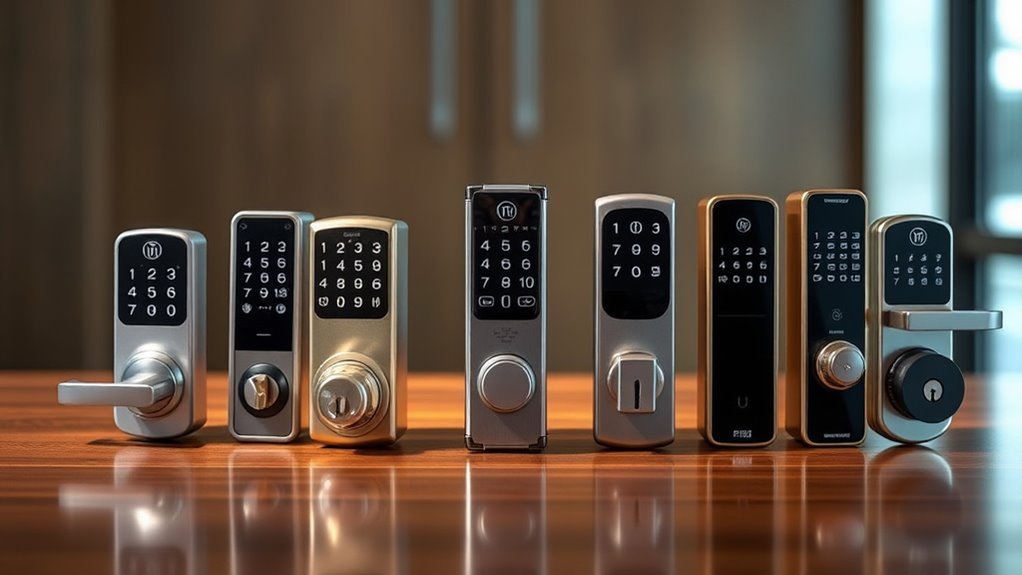
Last Updated on November 4, 2026 by Caleb Warren
Looking for the best commercial door lock for your office or business? Start with the door’s purpose. A keyed entry lever is useful for staff entrances, a keypad lock helps manage access without sharing physical keys, and a privacy lever works for interior rooms. Our three picks cover these different needs, but the right choice also depends on door measurements, emergency exit requirements, and verified hardware ratings.
Quick Verdict
For a conventional office entry, start with the HISAFE Keyed Entry Grade 2 Commercial Door Lock. Choose the Keypad Door Lock with Handle if you need multiple user codes. For an interior bathroom or privacy room, the LO-LOCK Commercial Privacy Lever is the more appropriate type. None should be installed on a required exit or fire-rated opening without confirming that the exact hardware and installation comply with local requirements.
Disclosure: As an Amazon Associate I earn from qualifying purchases. Some links on this page are affiliate links, at no extra cost to you.
| Keyed Entry Grade 2 Commercial Door Lock |  |
Best for Office Entry | Type: Keyed entry lever | Material: Stainless steel and zinc components | Best Use: Staff and office entry doors | Check Price on Amazon | Read Our Analysis |
| Keypad Door Lock with Handle – Keyless Smart Lock |  |
Best for Shared Access | Type: Electronic keypad lever | Material: Zinc alloy, seller listed | Best Use: Small offices needing user codes | Check Price on Amazon | Read Our Analysis |
| Commercial Heavy-Duty Lever Door Lock (26D Satin Chrome) | Best for Interior Privacy | Type: Privacy-function lever | Material: Aluminum and stainless steel, seller listed | Best Use: Interior rooms and restrooms | Check Price on Amazon | Read Our Analysis |
Key Takeaways: Match the lock function to the room, confirm exact door dimensions, and request documentation for any required ANSI/BHMA grade or fire-door listing. A privacy-function lever is not a substitute for a keyed entrance lock. Online product descriptions alone do not establish building-code compliance.
More Details on Our Top Picks
-
Keyed Entry Grade 2 Commercial Door Lock
For an office entrance that needs traditional key control, the HISAFE Keyed Entry Commercial Door Lock is a sensible starting point. Its inside push-button or push-and-turn locking options let you control the outside lever, while the manufacturer states that the inside lever remains operable for exit. The satin chrome finish also suits many commercial interiors.
Why you’ll like it: The seller lists a 2-3/4-inch backset, a non-handed lever design, and a keyed cylinder that can be rekeyed by a locksmith. These features can simplify a replacement when your existing door preparation matches.
Who should buy this: Office managers replacing a keyed entry lever on a compatible commercial door.
Who should avoid it: Buyers needing a keypad or a different backset, and anyone unable to verify the exact model for a regulated fire or exit door. The seller advertises ANSI/BHMA Grade 2 and a three-hour UL fire listing; request the supporting listing or certification before relying on those claims.
- Type:Keyed entry commercial lever
- Material:Stainless steel and zinc components
- Locking Function:Inside push-button and push-and-turn options
- Finish:Satin chrome (26D)
- Backset:2-3/4 inches, per seller listing
- Door Thickness:1-3/4 inches, per seller listing
- Handing:Reversible left/right
- Grade / Fire Listing:Seller claims Grade 2 and UL three-hour listing; verify documentation
- Warranty:Confirm the current manufacturer warranty with the seller
-
Keypad Door Lock with Handle – Keyless Smart Lock
If several people need access to a small office or staff room, the Keypad Door Lock with Handle offers an alternative to distributing keys. Seller information describes three unlocking options: a numeric password, a magnetic card, and a mechanical key. It also advertises one administrator password and up to 30 user passwords.
Why you’ll like it: You can give staff individual codes, while the mechanical key offers another listed access method. The product description also mentions a low-battery reminder and a brushed metal finish.
Who should buy this: Small businesses wanting straightforward code-based access on a compatible interior or office door.
Who should avoid it: Facilities needing a documented commercial security grade, verified fire-door approval, or a managed network access-control system. The available information does not establish those capabilities. Confirm door dimensions, battery requirements, inside-release behavior, and current support terms before purchase.
- Type:Electronic keypad lever lock
- Material:Zinc alloy, seller listed
- Unlock Methods:Password, magnetic card, and mechanical key
- Finish:Brushed metal
- User Codes:Up to 30 user passwords, seller listed
- Battery Feature:Low-battery reminder, seller listed
- Installation:Check door prep, handing, and manufacturer instructions
- Commercial Certification:Not independently verified
- Warranty:Confirm current manufacturer warranty and return conditions
-
Commercial Heavy-Duty Lever Door Lock (26D Satin Chrome)
Best for Interior Privacy
Check Price on AmazonThe LO-LOCK Commercial Privacy Function Lever is designed for spaces where occupants need privacy instead of keyed entrance security. A push-button on the inside locks the exterior lever. According to the seller, operating the interior lever releases the lock, while an outside coin or screwdriver can be used for emergency access.
Why you’ll like it: The satin chrome lever is non-handed and is listed for doors 1-1/2 to 2 inches thick with a 2-1/8-inch bore. Its privacy function can work for an office restroom or similar interior room when appropriate for the building.
Who should buy this: Businesses replacing an interior privacy lever with matching door preparation.
Who should avoid it: Anyone looking for a keyed front entrance lock or restricted staff-only access. It is a privacy lock, not a high-security entry lock. The seller advertises Grade 2, UL fire listing, and other compliance features, but the exact application and supporting documentation should be verified separately.
- Type:Cylindrical privacy lever
- Material:Aluminum and stainless steel, seller listed
- Locking Function:Interior push-button; free interior lever operation, seller listed
- Exterior Emergency Access:Coin or screwdriver, seller listed
- Finish:Satin chrome (26D)
- Door Thickness:1-1/2 to 2 inches, seller listed
- Bore:2-1/8 inches, seller listed
- Handing:Non-handed
- Grade / Fire Listing:Seller claims Grade 2 and UL listing; verify documentation
How to Choose a Commercial Door Lock
A good commercial grade door lock must suit both the door and the business. Start with the lock’s purpose and the opening’s requirements, not a security label alone. The same hardware is not necessarily suitable for an exterior entry, a staff room, a restroom, or a required emergency exit.
Choose the Right Security Function
Keyed entry levers help control who can enter an office. Commercial keypad locks can simplify staff access but introduce code and battery management. Privacy levers let people secure interior rooms temporarily and usually provide an emergency release from outside. Match the function to the space before comparing finishes or extra features. Check whether the lock remains easy to operate from the exit side when the room is occupied.
Safety Note: Most required commercial exits must open from the egress side without a key, tool, or special knowledge, subject to specific code exceptions. Some openings also require panic hardware or approved fire-door components. Do not assume a product is suitable for a storefront exit just because it is marketed as commercial. Confirm local requirements with the building authority or a qualified commercial locksmith. For background, read NFPA’s explanation of egress-door locking.
Measure Door Thickness, Backset, and Bore
Before ordering, measure the door thickness, the backset (door edge to the center of the handle opening), the bore diameter, and the dimensions of the latch and strike. Do not assume all commercial doors share the same preparation. For example, the HISAFE listing specifies a 2-3/4-inch backset and 1-3/4-inch door thickness, while the LO-LOCK privacy lever advertises a 1-1/2-to-2-inch door-thickness range. Also check the door’s handing, existing frame, closers, and any specialized aluminum storefront hardware.
Compare Mechanical and Electronic Locks
A traditional keyed commercial door lock does not depend on batteries, but staff keys need to be managed or rekeyed when access changes. A keypad lever may let you update individual codes more easily, but you must manage batteries and confirm how access works during a power or battery failure. A privacy lock serves a different purpose: it gives an occupant temporary privacy rather than controlling who has a business key. Choose the mechanism based on how people actually use the door.
Check Hardware Grade and Durability
For an entry used frequently, look for documented ANSI/BHMA performance ratings suited to the application. Grade 1 generally represents a higher performance level than Grade 2 or Grade 3 within the applicable lock standard. However, a grade does not guarantee that the complete door, frame, strike, and installation resist every break-in method. Materials, finish quality, maintenance, and the opening itself also matter. Ask for the exact model’s certification rather than treating seller wording as independent proof.
Check Fire Ratings and Accessibility
A claimed three-hour fire rating should be checked against the exact hardware listing and the fire-door assembly requirements. Never replace hardware on a rated door solely because the new lock appears similar. Accessible routes may also have requirements for operating force, lever use, and mounting height. A qualified installer or authority having jurisdiction can confirm whether your proposed setup meets the applicable rules.
Compare Total Cost and Warranty Terms
Compare more than the initial Amazon price. Include installation, possible door modifications, rekeying, replacement batteries, service calls, and future staff-access changes. Check whether a listing provides a manufacturer warranty or only a retailer return window. Exact prices, delivery options, and seller terms can change, so check the current listing before ordering.
Before You Buy: Commercial Door Lock Checklist
- Identify whether the door needs keyed entry, shared access, or privacy.
- Measure door thickness, backset, bore, latch, and strike.
- Confirm that the listed model fits the door material and handing.
- Check egress, accessibility, and fire-door requirements where applicable.
- Request documentation for claimed grades, fire listings, and warranties.
- Confirm included parts, keyway, and installer requirements.
Frequently Asked Questions
How Long Does a Commercial Door Lock Last?
Service life varies with lock grade, door alignment, frequency of use, environment, and maintenance. There is no reliable single lifespan for all commercial locks. Inspect high-use doors regularly and replace hardware that becomes loose, difficult to operate, or unreliable.
Are Keypad Locks Compatible With All Commercial Doors?
No. Check the door thickness, backset, bore, handing, and existing hardware. Also confirm inside-release operation and whether the lock is approved for the opening. A keypad product marketed for offices may still be unsuitable for a regulated fire or exit door.
How Do I Maintain My Commercial Door Lock?
Keep the handle, latch, and strike clean. Check for loose screws, door misalignment, and difficulty locking or unlocking. Follow the lock manufacturer’s cleaning and lubrication instructions; avoid applying a lubricant that is not approved for the mechanism. Test battery alerts and replace batteries as instructed on electronic models.
Can I Install a Commercial Door Lock Myself?
Some standard replacement levers can be installed by a careful DIY buyer when the existing door preparation matches. However, alterations to fire-rated doors, required exits, access-control systems, or specialized storefront doors may need professional installation and approval. If the fit or code requirement is unclear, use a qualified commercial locksmith.
What Security Standards Matter for Commercial Locks?
ANSI/BHMA standards, including A156.2 for bored and preassembled locksets, specify performance tests and grading criteria. Other requirements may apply to mortise hardware, access-control systems, fire-door assemblies, and egress devices. Verify the specific product’s documented ratings and the rules for your building rather than choosing by grade alone.
Can I Use a Privacy Lever on a Main Office Entrance?
A privacy lever is usually the wrong choice if you need to restrict entry to authorized employees. It is intended for temporary room privacy and typically offers outside emergency release. Choose an appropriate keyed or electronic entry function instead, subject to door and egress compatibility.
Conclusion
The best commercial business door lock depends on where and how it will be used. The HISAFE keyed entry lever is the first option to compare for a conventional office entry. The Keypad Door Lock with Handle is worth considering for multiple user codes, while the LO-LOCK privacy lever makes more sense for a compatible interior privacy room. Before buying, verify measurements, manufacturer documentation, and any exit or fire-door rules. Those checks matter more than a product’s marketing claims.

