
Last Updated on July 28, 2026 by Caleb Warren
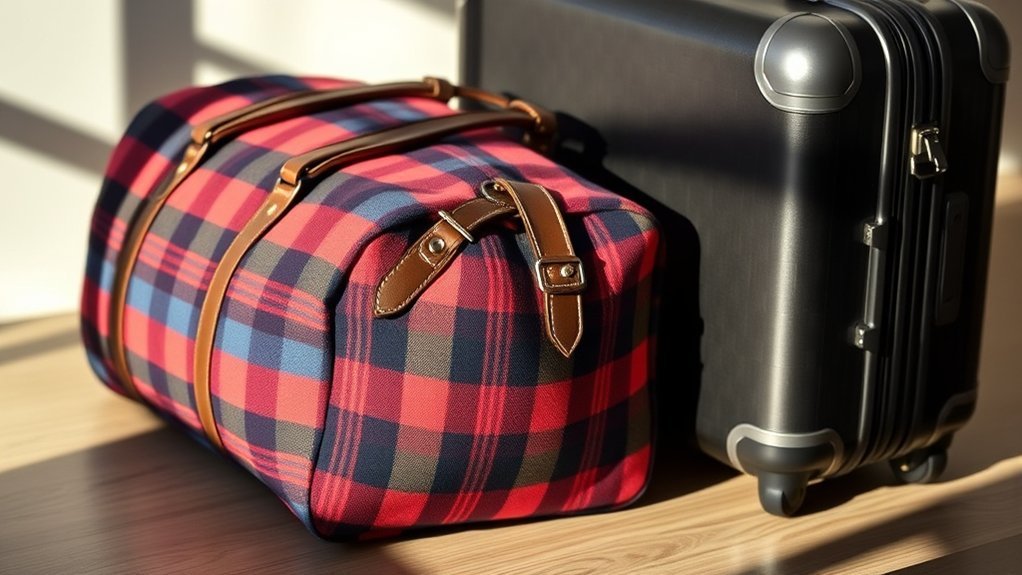
A checked duffel can swallow bulky gear and fold down between trips, while a checked suitcase gives clothing and fragile items more structure. The better choice depends on what you pack, how far you must move the bag, and whether its fully packed size and weight stay within your airline’s rules. This guide compares both styles and reviews four popular options.
Quick Answer
A checked duffel is usually better for bulky gear, flexible packing, and compact storage. A checked suitcase is better for fragile items, upright stability, and organized clothing. For most flyers, choose the bag that stays under your airline’s size and weight limits when fully packed—not the one with the largest advertised capacity.
Disclosure: As an Amazon Associate, we earn from qualifying purchases. If you click a link on this page and make a purchase, we may receive a small commission at no extra cost to you.
Key Takeaways
- Duffels handle odd-shaped gear well, but their soft sides give fragile items less protection.
- Suitcases are easier to organize and usually stand upright more reliably.
- Measure the outside of the packed bag, including wheels and handles, and weigh it before leaving home.
- A bag’s advertised load capacity is not an airline allowance; overweight and oversize rules still apply.
- Keep power banks and spare lithium batteries in your carry-on, not in checked baggage.
Checked Duffel vs. Checked Suitcase: Side-by-Side
| Factor | Checked Duffel | Checked Suitcase |
| Best for | Bulky clothing, sports gear, boots, camping gear, and irregular shapes | Folded clothing, business travel, fragile items, and organized packing |
| Protection | Flexible sides absorb some impact but can compress the contents | Structured shell or frame gives better crush protection |
| Organization | Usually one large compartment with a few pockets | Dividers, compression panels, and separate halves are common |
| Storage at home | Many models flatten or fold | Requires its full footprint unless nested inside another case |
| Airport handling | Good with wheels; tiring when wheel-less or poorly balanced | Usually easier to roll, park upright, and steer |
| Main risk | Overstuffing, sagging, torn handles, and crushed contents | Cracked shells, damaged wheels, and zipper stress |
Note: Many U.S. airlines use 62 linear inches and 50 pounds as the standard checked-bag limit, but allowances vary by airline, route, cabin, and status. Add the bag’s outside length, width, and height—including wheels and handles—and check your airline before every trip.
Our Top Duffel and Suitcase Picks
| Gonex 70L Rolling Duffle Bag with Wheels | Best Versatile Option | Dimensions: About 25.2 x 15.0 x 10.2 inches | Weight: About 6.9 pounds | Material: Water-resistant PVC fabric with YKK zippers | Check Price on Amazon | Read Our Analysis | |
| Samsonite Andante 2 Wheeled Duffel Bag – 28-Inch | Durable & Spacious | Dimensions: Body 28 x 14 x 13.5 inches; overall listing up to 30 x 16.5 x 16.5 inches | Weight: About 7.1–7.25 pounds | Material: Polyester with reinforced corner protection | Check Price on Amazon | Read Our Analysis | |
| Hanke Expandable Checked Luggage Suitcase with Wheels | Maximum Adjustable Capacity | Dimensions: 22.8 x 15.2 x 15.6 inches; expands to 19.9 inches deep | Weight: 7.9 pounds | Material: Polyester with reinforced 5-strand SBS zipper | Check Price on Amazon | Read Our Analysis | |
| Extra Large Foldable Duffel Bag for Travel | Best for Moving & Storage | Dimensions: 32 x 26 x 16 inches | Weight: About 2.1–2.2 pounds | Material: Water-resistant 600D polyester | Check Price on Amazon | Read Our Analysis |
More Details on Our Top Picks
-
Gonex 70L Rolling Duffle Bag with Wheels
The Gonex 70L Rolling Duffle is a practical middle ground between a soft duffel and a traditional suitcase. The current listing gives dimensions of about 25.2 x 15.0 x 10.2 inches and a weight of about 6.9 pounds. Its 70-liter main compartment suits a week of clothing for many travelers, while a separated section, hidden compartment, mesh pocket, and quick-access pocket reduce the usual one-compartment duffel clutter.
The PVC fabric is described as water-resistant or waterproof in different parts of the listing, so treat it as protection against splashes and light rain rather than a sealed dry bag. YKK zippers, compression straps, a telescopic handle, rubber trolley wheels, and a removable support bar add useful structure. The bottom can collapse when the bag is empty, making it easier to store than a rigid case.
Its listed outside measurements total roughly 50 linear inches, leaving more size margin than the larger bags in this guide. You still need to weigh it after packing and protect breakable items because the soft sides can compress during handling.
Pick this if: you want a rolling duffel with useful pockets that folds flatter between trips.
- Dimensions: About 25.2 x 15.0 x 10.2 inches
- Weight: About 6.9 pounds
- Material: Water-resistant PVC fabric with YKK zippers
- Capacity: 70 liters
- Wheels: Yes, rubber trolley wheels
- Customer Rating: Check the current Amazon listing; ratings change over time
- Additional Feature: Collapsible bottom with two compression belts
- Additional Feature: Side card holder
- Additional Feature: Hidden compartment, interior mesh pocket, and quick-access pocket
-
Samsonite Andante 2 Wheeled Duffel Bag – 28-Inch
The Samsonite Andante 2 is a wheeled duffel, not a rigid suitcase. Its product modules list body dimensions around 28 x 14 x 13.5 inches and a weight around 7.1 pounds, while another current listing section gives overall dimensions of 30 x 16.5 x 16.5 inches and 7.25 pounds. The difference matters because airlines normally measure the outside of the bag, including wheels and handles.
A large U-shaped opening makes the main compartment easy to reach. The drop-bottom layout creates two packing zones, and the end pockets can separate shoes or damp clothing from clean items. Reinforced corner protection, inline-skate wheels, external grab handles, and a push-button telescopic handle make it easier to move and lift than a wheel-less duffel.
The larger overall measurement totals 63 linear inches, one inch above the common 62-inch standard used by several U.S. airlines. Actual measurement and enforcement can vary, so measure the bag you receive—fully packed—before flying. Samsonite’s long brand history is a credibility point, but its warranty states that airline transport damage is not a manufacturing defect covered by the warranty.
Pick this if: you want a structured rolling duffel with strong compartment separation and are willing to verify its outside size for your airline.
- Dimensions: Body about 28 x 14 x 13.5 inches; overall listing up to 30 x 16.5 x 16.5 inches
- Weight: About 7.1–7.25 pounds
- Material: Polyester with reinforced corner protection
- Capacity: Approximately 81 liters with drop-bottom storage
- Wheels: Yes, two inline-skate wheels
- Customer Rating: Check the current Amazon listing; ratings change over time
- Additional Feature: Push-button locking telescopic handle
- Additional Feature: U-shaped main opening
- Additional Feature: End pockets for shoes, damp clothing, or toiletries
-
Hanke Expandable Checked Luggage Suitcase with Wheels
The Hanke expandable model changes depth instead of forcing you to choose one fixed capacity. The current listing gives a folded size of 22.8 x 15.2 x 8.3 inches, a normal packed size of 22.8 x 15.2 x 15.6 inches at 73.2 liters, a first expansion to 17.5 inches deep at 87.8 liters, and a second expansion to 19.9 inches deep at 101.4 liters. Empty weight is listed at 7.9 pounds.
Two inline-skate wheels, a multi-step telescopic handle, reinforced top, side, and bottom handles, and a 5-strand reinforced SBS zipper support the expandable design. The normal and fully expanded dimensions remain below 62 linear inches on paper, but the bag can bulge when overfilled. The listing also marks the material as not water-resistant, so use internal waterproof pouches for anything that cannot get wet.
The expansion system is useful for souvenirs, family gear, or trips of different lengths. Its main drawback is temptation: 101.4 liters can become overweight long before the zipper runs out of room. A luggage scale is essential with this model.
Pick this if: you want one rolling bag that can change capacity without owning several sizes.
- Dimensions: 22.8 x 15.2 x 15.6 inches normally; expands to 17.5 or 19.9 inches deep
- Weight: 7.9 pounds
- Material: Polyester with a reinforced 5-strand SBS zipper
- Capacity: 73.2, 87.8, or 101.4 liters
- Wheels: Yes, two inline-skate wheels
- Customer Rating: Check the current Amazon listing; ratings change over time
- Additional Feature: Multi-step adjustable telescopic handle
- Additional Feature: Two-stage expandable configuration
- Additional Feature: Reinforced top, side, and bottom carry handles
-
Extra Large Foldable Duffel Bag for Travel
This extra-large foldable duffel measures 32 x 26 x 16 inches, holds about 100 liters, and weighs roughly 2.1 to 2.2 pounds according to different sections of the current listing. Its 600D polyester fabric, reinforced handles, cross-stitched seams, and SBS zipper are aimed at bulky clothing, bedding, moving, camping, and storage. It folds flat when empty.
The advertised 100-pound load limit describes what the bag is designed to hold; it is not permission to check 100 pounds on a flight. The dimensions total 74 linear inches, which is oversized under the common 62-inch standard. It also has no wheels, so a heavy load must be carried or placed on a luggage cart.
The listing uses phrases such as “TSA approved” or “TSA compliant,” but TSA screens baggage contents and recognizes certain lock systems; airline rules determine whether a bag’s size and weight are accepted. This model makes more sense for road trips, moving, storage, or air travel where you have confirmed oversize acceptance and fees in advance.
Pick this if: you need very large, fold-flat storage and do not need standard checked-bag dimensions or built-in wheels.
- Dimensions: 32 x 26 x 16 inches
- Weight: About 2.1–2.2 pounds
- Material: Water-resistant 600D polyester
- Capacity: About 100 liters; advertised load limit up to 100 pounds
- Wheels: No, reinforced carry handles instead
- Customer Rating: Check the current Amazon listing; ratings change over time
- Additional Feature: Cross-stitched seams for heavy loads
- Additional Feature: Folds flat for compact storage
- Additional Feature: Best suited to moving, storage, road trips, or confirmed oversize travel
Warning: Do not pack the 100-pound duffel to its advertised limit for a normal flight. A 32 x 26 x 16-inch bag is 74 linear inches, and a 100-pound bag may be charged heavily or refused. Check the operating airline’s current limits before paying for or packing any oversized bag.
Airline Size and Weight Rules Matter More Than Bag Type
Airlines do not give duffels a separate free pass. They normally judge a checked item by its outside dimensions, weight, route, and fare conditions. For example, United lists 62 total inches and 50 pounds for a standard checked bag, including handles and wheels. Delta also uses a 62-linear-inch and 50-pound standard for many common itineraries.
How to Measure a Checked Bag
- Pack the bag as you expect to travel. Soft bags can bulge after loading.
- Measure the longest outside length, width, and height.
- Include fixed wheels, feet, handles, and protruding pockets.
- Add the three measurements to get linear inches.
- Weigh the packed bag on a luggage or bathroom scale.
- Check the operating airline’s rules for every segment, especially on codeshares.
Pro Tip: Aim a few pounds and a few inches below the limit. Home scales and tape measurements are not perfect, and a soft duffel may expand after you add a jacket or souvenirs.
Standard, Overweight, and Oversized Are Different
A bag can be standard size but overweight, standard weight but oversized, or both. Extra fees may stack, and some airlines reject bags above a maximum size or weight. A large-capacity bag is useful only if you can stop packing before it crosses the airline’s limit.
The biggest bag is not automatically the best checked bag. The best one carries your real packing list while staying comfortably inside your airline’s measured limits.
Protecting Your Belongings in a Duffel or Suitcase
For a Soft Duffel
- Place shoes and firm items around the outside to create a protective frame.
- Put breakables in a hard case near the center, surrounded by clothing.
- Use packing cubes so the load does not slump toward the wheels.
- Tighten compression straps and secure loose shoulder straps or handles.
- Do not force the zipper closed; zipper stress rises sharply when the bag bulges.
For a Suitcase or Structured Wheeled Duffel
- Use the compression panel or internal straps to stop contents from shifting.
- Put heavy items near the wheel end so the bag tracks better.
- Keep fragile items away from corners and wheel housings.
- Do not place all weight in an expansion panel; it can strain the zipper and change the outside size.
Keep These Items Out of Checked Baggage
Keep medication, travel documents, keys, cash, jewelry, essential electronics, and one change of clothes in your carry-on. The FAA prohibits spare lithium batteries and power banks in checked baggage. Devices with installed batteries have separate rules and should be completely powered off and protected from damage if an airline allows them in a checked bag.
Locks, Identification, and Damage Claims
A lock can discourage casual opening, but it cannot make a soft bag crush-proof or theft-proof. TSA advises travelers to use a TSA-recognized lock if they lock checked baggage; a lock that officers cannot open may need to be cut during inspection.
- Attach an outside tag with your name, phone number, and email address.
- Place a second contact card inside the bag in case the outer tag tears off.
- Remove old barcode stickers before checking the bag.
- Photograph the packed contents and the outside condition before check-in.
- At baggage claim, inspect the wheels, handles, shell, seams, and zipper before leaving.
If a bag is lost, delayed, or damaged, report it to the airline promptly and keep receipts. The U.S. Department of Transportation explains passenger rights and baggage-claim documentation. Manufacturer warranties may not cover airline damage; for example, Samsonite excludes transport damage from its manufacturing-defect warranty.
Factors to Consider When Choosing Checked Duffel Vs Checked Suitcase
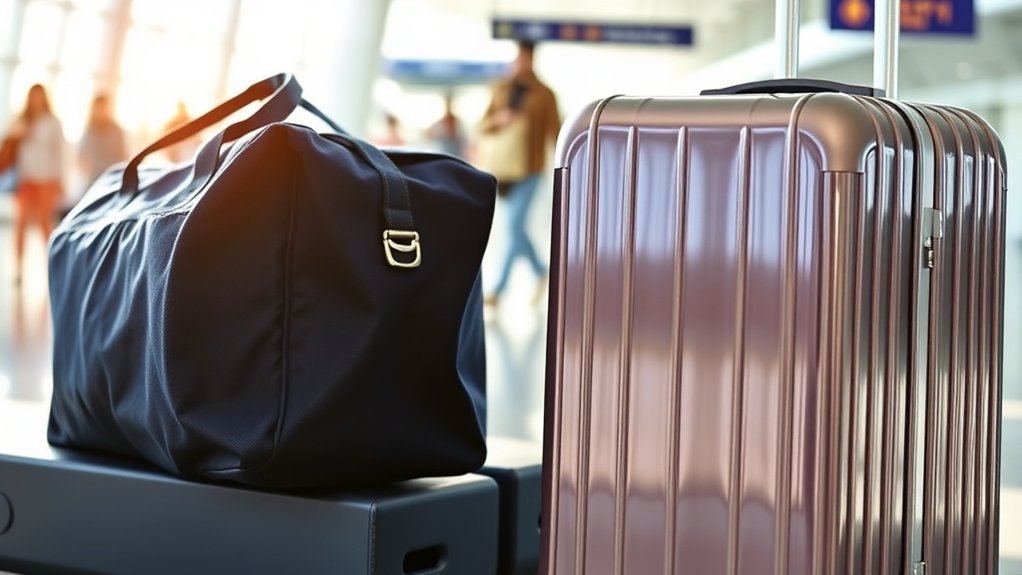
When choosing between a checked duffel and a checked suitcase, compare capacity, empty weight, protection, mobility, organization, and outside dimensions. Also think about where the bag will be used after the flight. A flexible duffel may work better in a car trunk or small hotel room, while a suitcase usually rolls and stands more predictably.
Storage Capacity Comparison
Checked duffels often devote more of their volume to one open compartment, which is useful for boots, jackets, helmets, and other bulky items. The models here range from about 70 to 101.4 liters. A suitcase or structured rolling bag usually divides the space into sections, making it easier to keep clothing flat and separate shoes or damp items. Do not compare liters alone: the Hanke may hold 101.4 liters, but its high capacity can make it easy to exceed a 50-pound allowance.
Weight and Mobility
Empty weight reduces the amount you can pack before reaching an airline limit. The Gonex weighs about 6.9 pounds, the Samsonite about 7.1 to 7.25 pounds, and the Hanke 7.9 pounds. The wheel-less extra-large duffel is much lighter, but that advantage disappears if you must carry a heavy load through a terminal. Two-wheel bags are stable when pulled in a straight line; spinner suitcases are easier to turn in tight spaces but expose more wheels to impact.
Durability and Materials
Polyester and PVC soft bags flex under impact and usually resist surface scuffs better than glossy hard shells, but they offer less crush protection. Reinforced stitching, protected corners, strong grab handles, and replaceable or well-supported wheels matter more than a broad “heavy-duty” label. Water-resistant fabric can handle brief exposure, but seams and zippers can still leak. Pack moisture-sensitive items inside sealed pouches.
Organization and Compartments
A large open duffel is fast to load but can become a deep pile. Packing cubes, shoe bags, and a laundry pouch solve much of that problem. Suitcases and structured wheeled duffels usually provide dividers, cross-straps, drop-bottom sections, or end pockets. Choose the layout that matches how you unpack: travelers who live from the bag often benefit from more compartments, while travelers who empty everything into drawers may prefer one open space.
Design and Aesthetics
Duffels tend to look casual or sporty and can squeeze into irregular storage spaces. Suitcases look more formal and keep a cleaner rectangular shape. A bright color or distinctive strap can make either style easier to identify, but do not rely only on appearance—many bags look alike on a carousel. Use a durable name tag as well.
Versatility of Use
A foldable duffel can serve as a road-trip bag, sports bag, moving bag, or backup bag for purchases made during a trip. A suitcase is more specialized but usually protects clothing and fragile items better. A rolling duffel such as the Gonex or Samsonite sits between the two: it offers flexible packing with wheels, though it may not stand as steadily as a rigid suitcase.
Price and Value
Value depends on more than the purchase price. Consider empty weight, wheel quality, zipper construction, warranty coverage, storage space at home, and the risk of oversize fees. A cheap oversized bag can cost more over time if every flight triggers a fee. A more expensive bag is not automatically more durable, and airline damage is often excluded from manufacturer warranties.
Which Bag Is Better for Your Trip?
- Choose a checked duffel for camping gear, sports equipment, boots, bulky coats, road trips, or limited storage space at home.
- Choose a checked suitcase for business clothing, fragile items, frequent hotel travel, easy upright parking, or a highly organized packing system.
- Choose a rolling duffel when you want flexible packing but do not want to carry the load through the airport.
- Choose an expandable model only when you will weigh and measure it at each expansion stage.
- Skip an extra-large cargo duffel for routine flights unless your airline confirms the size, weight, and fees in advance.
Frequently Asked Questions
Do checked duffels hold up as well as suitcases over repeated flights?
A well-made duffel can handle repeated trips, especially when it has reinforced seams, strong grab handles, and protected wheels. Its soft body flexes instead of cracking, but it gives the contents less crush protection. Do not check fragile items loose inside a duffel.
Will an oversized duffel still count as one checked bag?
It may count as one piece, but that does not make it a standard bag. The airline can charge oversize, overweight, or combined fees, and may refuse a bag above its maximum. The 32 x 26 x 16-inch model in this guide totals 74 linear inches.
Is a duffel without wheels harder to manage in an airport?
Yes. A wheel-less duffel may be light when empty, but carrying a heavy load through check-in lines, parking areas, and long terminals is tiring. Use a luggage cart or choose a rolling model when the packed bag will be heavy.
How much can the Hanke expandable bag grow?
The current listing gives three capacities: 73.2 liters normally, 87.8 liters after one expansion, and 101.4 liters after the second expansion. Its depth grows from 15.6 to 17.5 and then 19.9 inches.
Do rolling duffels stay upright as well as suitcases?
Usually not. A support bar and firm base help, but a soft bag can sag or tip when the load is uneven. A rigid or structured suitcase generally parks upright more reliably.
Does “TSA approved” mean a bag meets airline size limits?
No. TSA screens baggage and recognizes certain locks that officers can open. Airlines set checked-bag size, weight, and fee rules. Always check the operating airline’s policy.
Can I pack a power bank in a checked duffel or suitcase?
No. Spare lithium batteries and power banks must stay in carry-on baggage. Protect their terminals from short circuits and remove them from any carry-on that is checked at the gate.
Is water-resistant luggage waterproof?
No. Water-resistant fabric can slow light rain or splashes, but zipper tracks, seams, and openings may leak. Use waterproof inner pouches for documents, electronics, and other moisture-sensitive items.
Conclusion
For most air travelers, the best choice is not simply “duffel” or “suitcase.” It is the bag that protects your specific contents, moves comfortably through the airport, and stays within the airline’s measured limits. Choose the Gonex for a foldable rolling duffel with useful organization, the Samsonite for a more structured two-section duffel after confirming its outside dimensions, or the Hanke for adjustable capacity that you will weigh carefully. The extra-large foldable duffel is strongest as a moving, storage, or road-trip bag because its 74-linear-inch size is oversized for routine checked travel.
Sources
- United Airlines checked bags — standard outside dimensions, weight, and measurement guidance.
- Delta Air Lines baggage overview — common 62-linear-inch and 50-pound checked-bag standard.
- Transportation Security Administration travel tips — checked-bag screening and TSA-recognized locks.
- Federal Aviation Administration: Lithium Batteries in Baggage — power-bank and spare-battery rules.
- U.S. Department of Transportation: Lost, Delayed, or Damaged Baggage — claims, documentation, and passenger rights.
- Samsonite warranty information — manufacturing-defect coverage and exclusion of airline transport damage.
