
Last Updated on September 27, 2026 by Logan Reeves
The best ceramic gravity-fed water filters give you filtered drinking water without plumbing or electricity. They work well on kitchen counters, in RVs, and in places where a powered filtration system is impractical. But filtration performance, capacity, and replacement costs vary by model.
The British Berkefeld Doulton Countertop Water Filtration System is our overall pick for its ceramic filter technology and larger capacity. The Purewell 8-Stage Gravity Fed Water Filter System is worth considering when fluoride reduction is a priority.
We compared complete filtration systems using their filter media, capacity, manufacturer information, maintenance needs, and available product documentation.
Ceramic Gravity-Fed Water Filters Compared
| Product | Best for | Capacity | Filtration | Included filters |
|---|---|---|---|---|
| Fluoride reduction | 2.25 gallons | Eight-stage filtration with ceramic and fluoride-reduction media | Four | |
| Camping and RV use | 2.25 gallons | Washable ceramic elements | Two | |
| Best overall | 3.17 gallons | Ultra Sterasyl ceramic filtration | Two | |
| Everyday filtration | 2.25 gallons | Ceramic, activated carbon, and silver-ion media | Two |
Key Takeaways
- British Berkefeld Doulton: Its 3.17-gallon system uses Ultra Sterasyl ceramic elements and requires no electricity or plumbing.
- Purewell 8-Stage: Combines ceramic filtration with dedicated fluoride-reduction media. Its different filter stages have different replacement intervals.
- FACHIOO: A 2.25-gallon stainless steel system with two washable ceramic elements and a non-slip base.
- Purewell 3-Stage: Uses ceramic, activated carbon, and silver-ion media in a 2.25-gallon countertop system.
- Safety: Check model-specific contaminant-reduction data. Ceramic filtration alone should not be assumed to remove viruses or dissolved chemicals.
| Purewell 8-Stage Gravity Fed Water Filter System | Best Fluoride Reduction | Filtration Technology: 8-stage filtration (ceramic, fluoride reduction) | Capacity: 2.25 gallons | Filter Lifespan: Up to 10,000 gallons (ceramic); 1,000 gallons (fluoride) | VIEW LATEST PRICE | Read Our Analysis | |
| Stainless Steel Gravity-Fed Water Filter System | Ideal for Camping | Filtration Technology: Gravity-fed filtration (ceramic) | Capacity: 2.25 gallons | Filter Lifespan: Not specified | VIEW LATEST PRICE | Read Our Analysis | |
| British Berkefeld Doulton Countertop Water Filtration System | Trusted Brand Legacy | Filtration Technology: Gravity-fed (ceramic) | Capacity: Not specified | Filter Lifespan: Long lifespan (not quantified) | VIEW LATEST PRICE | Read Our Analysis | |
| Purewell 3-Stage Gravity Fed Water Filter System | Best Portability | Filtration Technology: 3-stage filtration (ceramic, activated carbon, silver) | Capacity: 2.25 gallons | Filter Lifespan: Up to 10,000 gallons | VIEW LATEST PRICE | Read Our Analysis |
More Details on Our Top Picks
Purewell 8-Stage Gravity Fed Water Filter System
Best for fluoride reductionBottom line: The Purewell 8-Stage Gravity Fed Water Filter System is designed for households that want ceramic filtration with an added fluoride-reduction stage. Its four-filter setup makes it more specialized than a basic ceramic system.
The Purewell 8-Stage Gravity Fed Water Filter System stands out as an excellent choice for families and individuals seeking safe, clean drinking water without the hassle of complicated plumbing or electricity. This system features an 8-stage filtration process that effectively reduces chlorine, rust, heavy metals, and 90% of fluoride, ensuring quality water. Made from durable 304 food-grade stainless steel, it includes a metallic spigot to prevent leaks and a non-slip stand for stability. With a lifespan of up to 10,000 gallons for the ceramic filters, you’ll enjoy long-lasting performance while maintaining safety and ease of use.
- Filtration Technology:8-stage filtration (ceramic, fluoride reduction)
- Capacity:2.25 gallons
- Filter Lifespan:Up to 10,000 gallons (ceramic); 1,000 gallons (fluoride)
- Material:304 food-grade stainless steel
- Certification:NSF/ANSI 42 (fluoride)
- Portability:Suitable for home, camping, RV
- Additional Feature:High-grade fluoride removal
- Additional Feature:Non-slip stand included
- Additional Feature:Metallic water level spigot
Key Specs
- System capacity: 2.25 gallons, suitable for everyday countertop use.
- Filter media: Ceramic, activated carbon, silver-ion, and fluoride-reduction media.
- Included elements: Four filters, including dedicated fluoride-reduction elements.
- Power: Gravity-fed operation; no electricity required.
- Construction: 304 stainless steel with a metal water-level spigot and stand.
The metal water-level spigot lets you check the lower chamber without lifting the upper tank. This is useful when you refill the system several times throughout the day.
The main consideration is maintenance. The ceramic and fluoride-reduction elements have different rated lifespans. Follow the replacement schedule for each stage rather than treating the complete system as one long-life filter.
Pros- Dedicated fluoride-reduction filtration stage
- Stainless steel countertop construction
- Metal water-level spigot
- Includes four filtration elements
- Operates without electricity or plumbing
Cons- Different filter stages require separate replacement schedules
- More filtration components to maintain than a basic two-filter system
- Requires sufficient vertical countertop space
Best for: Households specifically looking for fluoride reduction alongside everyday ceramic filtration.Skip it if: You want the simplest possible filter-replacement routine.Check first: Review the exact model’s fluoride-reduction test report and the replacement schedule for each filter stage.See today’s price, delivery date and return policy on Amazon.Stainless Steel Gravity-Fed Water Filter System
Best for camping and RVsBottom line: The FACHIOO Stainless Steel Gravity-Fed Water Filter System offers a portable countertop setup with two washable ceramic elements. It suits users who want a complete gravity-fed system without electrical connections.
For families or outdoor enthusiasts seeking reliable water purification, the 2.25 Gallon Stainless Steel Gravity-Fed Water Filter System is an excellent choice. This durable system includes two washable white ceramic filters that effectively remove 99.99% of contaminants like chlorine, arsenic, and lead, while retaining essential minerals. With a capacity of 2.25 gallons, it serves up to four people, making it perfect for home use or camping trips. Its non-slip bottom design guarantees stability, and the cleanable filter surface extends its life. Weighing just 8.48 pounds, it’s portable enough for RVs and vacation cabins too.
- Filtration Technology:Gravity-fed filtration (ceramic)
- Capacity:2.25 gallons
- Filter Lifespan:Not specified
- Material:304 stainless steel
- Certification:Not specified
- Portability:Indoor, outdoor, camping
- Additional Feature:2.25-gallon capacity
- Additional Feature:Cleanable ceramic filter
- Additional Feature:Non-slip bottom design
Key Specs
- System capacity: 2.25 gallons, suitable for a compact countertop setup.
- Filter media: Washable ceramic elements.
- Included elements: Two ceramic filters.
- Power: Gravity-fed operation; no electricity required.
- Construction: Stainless steel housing with a non-slip base.
The washable ceramic elements are the main practical feature. Sediment can build up on the outside surface over time, so cleaning them according to the manufacturer’s directions helps maintain water flow.
This model is also useful for cabins and RVs where permanent plumbing is inconvenient. However, a portable countertop filter is not automatically a complete treatment system for untreated outdoor water. Check the tested contaminant claims before using water from lakes, rivers, or other uncertain sources.
Pros- Complete countertop filtration system
- Includes two washable ceramic elements
- Stainless steel housing
- Non-slip base adds stability
- Does not need electricity or plumbing
Cons- Exact filter replacement capacity is not clearly documented
- Contaminant-reduction claims need model-specific verification
- Requires cleaning and drying before storage
Best for: Campers, RV owners, and households wanting a straightforward stainless steel gravity system.Skip it if: You need independently documented removal of a specific dissolved contaminant.Check first: Confirm replacement-filter availability and request the exact model’s performance documentation.See today’s price, delivery date and return policy on Amazon.British Berkefeld Doulton Countertop Water Filtration System
Best overallBottom line: The British Berkefeld Doulton Countertop Water Filtration System combines a larger 3.17-gallon capacity with two Ultra Sterasyl ceramic filters. It is a practical choice for households that want a gravity-fed system backed by published manufacturer documentation.
Looking for a reliable solution to guarantee your drinking water is free from harmful contaminants? The British Berkefeld Doulton W9361137 Countertop Water Filtration System is your answer. With nearly 200 years of brand trust, this premium system features two Ultra Sterasyl ceramic filter candles that eliminate up to 99.99% of bacteria and pathogens. Its compact design makes it perfect for home use, camping, or RV trips. Plus, with easy-to-install replacement filters and durable stainless steel construction, maintenance is a breeze. Enjoy peace of mind knowing you’re drinking clean and safe water with this leading countertop filtration choice.
- Filtration Technology:Gravity-fed (ceramic)
- Capacity:Not specified
- Filter Lifespan:Long lifespan (not quantified)
- Material:Stainless steel
- Certification:Not specified
- Portability:Portable for various settings
- Additional Feature:Trusted brand for years
- Additional Feature:Long filter lifespan
- Additional Feature:Compact and portable design
Key Specs
- System capacity: 3.17 gallons, offering more volume than the smaller systems.
- Filter media: Ultra Sterasyl ceramic filtration.
- Included elements: Two ceramic filter candles.
- Power: Gravity-fed operation; no electricity required.
- Construction: Stainless steel countertop housing.
Doulton identifies W9361137 as its 12-liter British Berkefeld gravity system with Ultra Sterasyl filtration. The manufacturer publishes product instructions and contaminant-reduction information, allowing you to check the claims relevant to your water supply.
Ultra Sterasyl filters combine ceramic filtration with additional media to reduce specified contaminants. They are not interchangeable with every Doulton filter type, so use the correct replacement model.
Doulton recommends replacing the Ultra Sterasyl elements every six months. The system itself can remain in service through multiple filter changes when maintained according to the manufacturer’s instructions.
Pros- 3.17-gallon system capacity
- Includes two Ultra Sterasyl ceramic filters
- Manufacturer provides product instructions and filtration documentation
- Stainless steel construction
- No electricity or plumbing required
Cons- Filter candles require scheduled replacement
- Larger capacity requires more countertop and storage space
- Ultra Sterasyl is not the dedicated fluoride-reduction filter option
Best for: Households wanting a larger stainless steel gravity system with documented ceramic filtration.Skip it if: Your main requirement is fluoride reduction rather than the Ultra Sterasyl filter’s specified contaminant range.Check first: Confirm that the listing includes the intended Ultra Sterasyl filter configuration and review Doulton’s performance data.See today’s price, delivery date and return policy on Amazon.Purewell 3-Stage Gravity Fed Water Filter System
Best for everyday filtrationBottom line: The Purewell 3-Stage Gravity Fed Water Filter System offers a simpler ceramic filtration setup than the eight-stage model. It is suited to households that primarily want everyday drinking-water filtration without a dedicated fluoride-reduction stage.
With its impressive 2.25-gallon capacity and durable stainless steel design, the Purewell 3-Stage Gravity Fed Water Filter System stands out as an ideal choice for health-conscious individuals and families seeking clean drinking water. This model features two washable ceramic filters that effectively block large particles, while the activated carbon layer removes 99% of chlorine and harmful chemicals. Silver ions in the inner layer help prevent the growth of bacteria. You’ll appreciate its BPA-free housing and metallic spigot that prevents leaks. Plus, with a filter lifespan of up to 10,000 gallons, it offers long-lasting performance without needing electricity.
- Filtration Technology:3-stage filtration (ceramic, activated carbon, silver)
- Capacity:2.25 gallons
- Filter Lifespan:Up to 10,000 gallons
- Material:304 food-grade stainless steel
- Certification:NSF/ANSI 372
- Portability:Indoor and outdoor applications
- Additional Feature:Complete accessory set included
- Additional Feature:BPA-free housing
- Additional Feature:Gravity filtration method
Key Specs
- System capacity: 2.25 gallons, suitable for everyday countertop use.
- Filter media: Ceramic, activated carbon, and silver-ion media.
- Included elements: Two washable ceramic filters.
- Power: Gravity-fed operation; no electricity required.
- Construction: 304 stainless steel with a metal water-level spigot.
The ceramic exterior helps capture suspended particles, while activated carbon contributes to chlorine reduction and better taste. The silver-ion treatment helps limit bacterial growth within the filter media. It should not be treated as a separate disinfection process for untreated source water.
The two-filter arrangement is straightforward to install and maintain. The manufacturer lists a rated capacity of up to 10,000 gallons per pair, although actual service life depends on water quality, usage, and cleaning.
Pros- Three-stage ceramic and carbon filtration
- Includes two washable ceramic elements
- 2.25-gallon countertop system
- Stainless steel construction
- Runs without electricity
Cons- No dedicated fluoride-reduction stage
- Ceramic elements need periodic surface cleaning
- Filter performance depends on source-water conditions
Best for: Everyday countertop filtration and households wanting a simpler ceramic system.Skip it if: You specifically need a filter with a dedicated fluoride-reduction stage.Check first: Verify that the included elements are the ceramic version and match the system’s mounting dimensions.See today’s price, delivery date and return policy on Amazon.
British Berkefeld Doulton vs Purewell 8-Stage: Which Should You Get?
Both systems filter water without electricity, but they serve slightly different needs. The British Berkefeld offers a larger capacity and Ultra Sterasyl filtration. The Purewell adds a dedicated fluoride-reduction stage.
- Capacity: British Berkefeld holds 3.17 gallons, while the Purewell system holds 2.25 gallons.
- Filtration: British Berkefeld uses Ultra Sterasyl ceramic candles. Purewell combines ceramic filtration with additional fluoride-reduction elements.
- Maintenance: Doulton recommends replacing Ultra Sterasyl elements every six months. Purewell’s separate filtration stages have different replacement capacities.
- Best fit: Choose according to the contaminants in your water and the performance claims documented for the exact filter configuration.
Which Ceramic Gravity-Fed Water Filter Should You Buy?
- For a larger household system: Get the British Berkefeld Doulton Countertop Water Filtration System.
- For fluoride reduction: Consider the Purewell 8-Stage Gravity Fed Water Filter System after reviewing its performance documentation.
- For camping and RV use: Look at the FACHIOO Stainless Steel Gravity-Fed Water Filter System.
- For a simpler everyday setup: Choose the Purewell 3-Stage Gravity Fed Water Filter System.
How We Chose
We focused on complete ceramic gravity-fed filtration systems rather than replacement-only filter cartridges. Our comparison considered:
- Product fit: Each retained product is a complete gravity-fed system with ceramic filtration.
- Filtration: We considered filter media, intended contaminants, and available model-specific information.
- Capacity: We compared chamber sizes and their suitability for everyday use.
- Maintenance: We considered filter cleaning, replacement schedules, and compatible replacement elements.
- Documentation: We consulted product listings, manufacturer information, and water-treatment guidance from public health agencies.
Useful reference sources include Purewell’s ceramic filter specifications, Doulton’s gravity filtration documentation, and the CDC’s guidance on home water treatment.
Factors to Consider When Choosing Ceramic Gravity Fed Water Filters
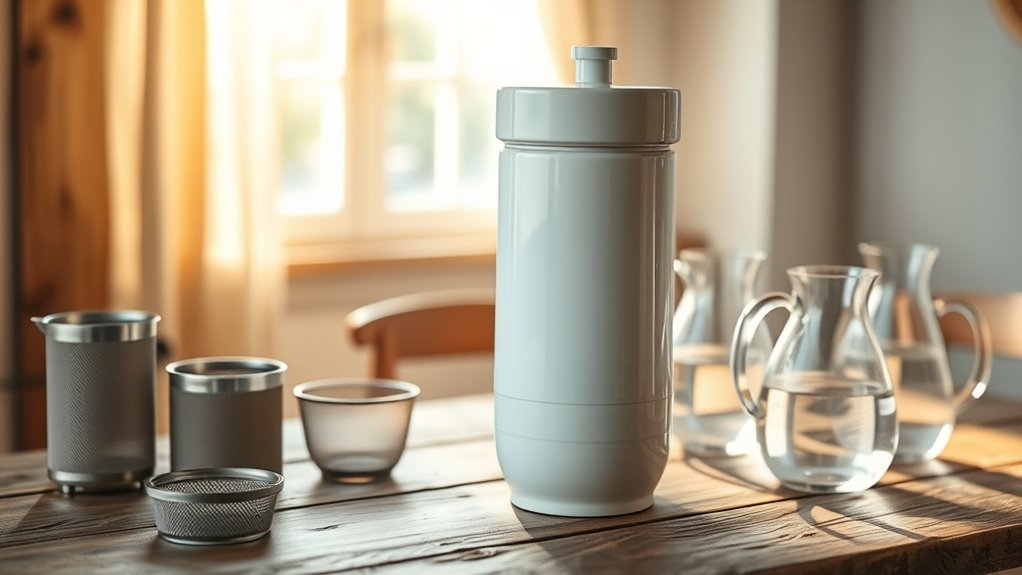
Choosing a ceramic gravity-fed water filter starts with knowing what is in your water. A system that improves taste may not address a specific chemical or microbiological hazard. Compare the exact filter model, its documented performance, and the amount of water your household needs.
Filtration Technology Efficiency
Ceramic filters use a porous barrier to capture particles. Many gravity systems add activated carbon to reduce chlorine, taste, and odor. Other media may target specific contaminants.
Pore size alone does not prove broad contaminant removal. Ceramic microfiltration can reduce certain microorganisms, but it should not be assumed to remove viruses or dissolved chemicals. The CDC explains that treatment performance depends on the filtration method and the contaminant.
For fluoride, look for a dedicated fluoride-reduction stage and model-specific test data. The Purewell 8-Stage Gravity Fed Water Filter System includes such a stage.
Compatibility With Systems
Check compatibility before buying replacement elements. Ceramic candles can differ in length, diameter, threaded mounting stems, seals, and required installation hardware.
A filter that fits inside a chamber may still fail to create a proper seal. Follow the manufacturer’s compatibility instructions rather than relying only on a general claim that a replacement fits several brands.
For example, British Berkefeld Ultra Sterasyl and Ultra Fluoride are different filter configurations. Doulton advises against mixing them in the same system.
Filter Lifespan Considerations
Filter lifespan depends on the specific element, water quality, and amount of water treated. Some ceramic elements have high rated capacities, but this does not mean they can be used indefinitely.
The ceramic surface may be washable, while internal carbon or specialty media have their own service limits. Cleaning the outside of a filter does not restore exhausted internal media.
Follow the manufacturer’s replacement interval and rated capacity, whichever limit applies first. Replace damaged elements immediately, and never use a cracked ceramic filter.
Material Safety Standards
Look for food-contact-compatible materials and relevant independent certification. Stainless steel chambers, suitable seals, and drinking-water-safe spigots are important parts of the complete system.
Understand what each certification covers. NSF/ANSI 42 addresses specified aesthetic effects, such as chlorine taste and odor. NSF/ANSI 53 addresses specified health-related contaminant reductions. NSF/ANSI 372 concerns lead content in product materials, not contaminant-removal performance.
A certification claim should identify the exact model and the specific reduction claims covered by the standard. Do not assume that a filter certified for one contaminant has been certified for every contaminant mentioned in its advertising.
Capacity and Portability
A 2.25-gallon system is suitable for many countertop and travel applications, while a larger unit may reduce how often you refill it.
The British Berkefeld Doulton Countertop Water Filtration System offers a 3.17-gallon capacity. The other systems in this comparison have 2.25-gallon capacities.
Before buying, check the assembled height, chamber diameter, and clearance needed to fill the upper chamber. If you plan to travel with the system, also consider its empty weight and whether the chambers can be packed securely.
Maintenance and Cleaning Ease
Ceramic elements can develop sediment buildup that slows water flow. Many are designed for gentle surface cleaning, but the approved method varies by manufacturer.
Use the recommended cleaning tools and follow the instructions for flushing new elements. Avoid soap, harsh cleaners, and abrasive methods unless the manufacturer specifically permits them.
Clean the chambers and spigot as directed, and allow the system to dry properly before extended storage. Do not continue using a filter with visible cracks, damaged seals, or other signs of failure.
Cost-Effectiveness and Value
Compare the total cost of owning the system, not just the initial purchase. Replacement elements, filter capacity, and replacement frequency determine much of the long-term expense.
Systems with multiple filter types may require separate replacement schedules. The Purewell 8-Stage model, for example, combines ceramic elements with additional fluoride-reduction filters.
Also consider whether replacement elements are easy to identify and whether the manufacturer publishes installation instructions and performance data.
Water Source and Safety
Use a filter only for water sources covered by its tested performance claims. Municipal tap water, private well water, and untreated surface water can present different treatment needs.
If your water comes from a private well, test it for relevant contaminants before choosing treatment. For camping and emergencies, do not assume a ceramic filter alone makes untreated water safe from every microorganism.
The CDC recommends appropriate additional disinfection when filtering water during emergencies, because portable filters generally do not remove all types of germs.
Mistakes to Avoid When Buying Ceramic Gravity-Fed Water Filters
- Confusing replacements with complete systems: Check that the listing includes the chambers, spigot, and required filters.
- Assuming all ceramic filters remove viruses: Check the exact model’s microbiological test data.
- Buying based only on pore size: Verify the reduction claims for the contaminants that matter to you.
- Ignoring replacement costs: Compare rated capacities and replacement schedules for every filtration stage.
- Overlooking dimensions: Confirm countertop clearance, chamber size, and replacement-element compatibility.
Frequently Asked Questions
How Often Should I Replace the Ceramic Filters?
Replace ceramic filters according to the manufacturer’s stated interval and rated capacity. Some systems have a six-month replacement schedule, while others specify a gallon-based service limit. Water quality and usage can affect how quickly filters clog. Cleaning may restore flow, but it does not renew exhausted carbon or other internal filtration media.
Can Ceramic Filters Remove Heavy Metals From Water?
A ceramic barrier alone is not a reliable method for removing dissolved heavy metals. Some multi-stage systems combine ceramic filtration with additional media designed to reduce specified metals. Check the exact model’s performance data and relevant certification claims. For lead, look for documented lead-reduction performance rather than relying on a general filtration claim.
Are Ceramic Filters Effective Against Bacteria and Viruses?
Ceramic filters can reduce bacteria when their pore size and tested performance are appropriate, but ordinary ceramic microfiltration should not be assumed to remove viruses. Some systems use additional treatment methods. For untreated water, follow public health guidance and use appropriate disinfection when needed. Always check the filter’s tested microbiological claims.
Do Ceramic Gravity Filters Require Electricity to Operate?
No. Ceramic gravity-fed water filters use gravity to move water from the upper chamber through the filtration elements into the lower chamber. They do not need an electrical connection or permanent plumbing. This makes them useful for kitchens, RVs, cabins, and situations where powered equipment is unavailable.
What Is the Lifespan of a Ceramic Gravity Water Filter?
The ceramic element’s lifespan depends on its model, rated capacity, water quality, and maintenance. Some elements are washable, but their internal filtration media still have a finite service life. Follow the manufacturer’s replacement instructions and never exceed the stated capacity or continue using a cracked or damaged element.
Can I Use a Ceramic Filter With Well Water?
Yes, provided the system is appropriate for the contaminants identified in your well water. Have the water tested before choosing treatment. Ceramic filtration can address certain particles and microorganisms, but dissolved contaminants such as arsenic or nitrate may require other treatment technologies. Select a system with documented performance for your specific water-quality concerns.
Do Ceramic Gravity Filters Remove Fluoride?
Not all ceramic gravity filters remove fluoride. Fluoride reduction generally requires suitable additional filtration media. The Purewell 8-Stage system includes dedicated fluoride-reduction elements. Check its model-specific test data and replacement schedule, since the fluoride-reduction stage may have a different service life from the ceramic elements.
Can I Clean and Reuse Ceramic Filter Elements?
Many ceramic filter elements are designed for gentle cleaning and reuse within their rated service life. Follow the manufacturer’s instructions for cleaning the outer ceramic surface. Cleaning can remove sediment and improve water flow, but it cannot restore exhausted internal media. Replace the element when it reaches its service limit or becomes damaged.
Final Verdict
The best ceramic gravity-fed water filters combine the right filtration media with practical capacity and manageable maintenance. For a complete countertop system, the British Berkefeld Doulton offers a larger chamber and documented Ultra Sterasyl filtration. Choose a different configuration when your water requires a specific treatment stage.
For fluoride reduction, consider the Purewell 8-Stage Gravity Fed Water Filter System. For a simpler everyday setup, the Purewell 3-Stage Gravity Fed Water Filter System is another option.

