
Last Updated on July 24, 2026 by Daniel Globe
The best app for learning Italian depends on what you want to improve first. Some apps give you a clear course, while others focus on listening, live tutoring, vocabulary, or real Italian content. This guide compares 10 strong options using current official feature and pricing information checked on July 24, 2026.
Quick Answer
Babbel is the strongest all-round choice for structured beginner lessons. Pimsleur is best for listening and pronunciation, italki is best for live speaking practice, and Duolingo is the best free starting point. Choose LingQ for real content, Glossika for sentence repetition, or Rocket Italian for a complete lifetime course.
Key Takeaways
- Choose one main course instead of switching between several apps every week.
- Add live speaking practice through italki or another tutor once you know basic phrases.
- Duolingo offers the strongest free path, while Babbel and Rocket Italian provide more direct structure.
- Pimsleur, Glossika, and Talk In Italian suit learners who prefer listening and repetition.
- Prices, trials, and included features can change by country, platform, and promotion, so check the official checkout page before paying.
Disclosure: As an Amazon Associate I earn from qualifying purchases. Some links on this page are affiliate links, at no extra cost to you.
How These Italian Apps Were Compared
This comparison looks at lesson structure, speaking practice, listening work, vocabulary review, real-world content, cost model, and ease of use. It is based on current information from each company’s official website or official app listing. It does not claim that every app was tested for the same number of hours.
The rankings are based on fit, not on the idea that one app is perfect for everyone. A beginner who wants a clear path may prefer Babbel or Rocket Italian. A learner who already understands basic grammar may gain more from italki, LingQ, or Glossika.
Best Apps to Learn Italian at a Glance
| App | Best For | Learning Style | Cost Model | Main Limitation |
|---|---|---|---|---|
| Babbel | Structured beginners | Short interactive lessons | Subscription or lifetime | Less live conversation |
| Rocket Italian | Complete course structure | Audio, language, and culture lessons | One-time purchase | Higher upfront cost |
| Pimsleur | Listening and pronunciation | Thirty-minute speaking lessons | Subscription or lifetime | Less reading and writing depth |
| Memrise | Vocabulary and native video | Review, video, and AI conversation | Limited free plan plus Pro | Not a full grammar course |
| Mondly | Low-pressure AI practice | Daily lessons and AI conversations | Limited free plan plus Premium | Advanced depth may feel limited |
| italki | Live tutoring | One-to-one lessons | Pay per class | Quality and price vary by teacher |
| Talk In Italian | Independent audio-led study | Structured lessons and dialogues | One-time lifetime access | No built-in human tutor |
| Glossika | Sentence repetition | Native audio and spaced review | Subscription | Limited direct grammar teaching |
| Duolingo | Free daily practice | Gamified skill path | Free plus paid tiers | Less personal speaking feedback |
| LingQ | Real Italian content | Reading, listening, and imports | Limited free plan plus Premium | Can overwhelm complete beginners |
Note: App prices and trial offers often change by region, device, and promotion. Use the official pricing page before subscribing.
How to Choose the Best App to Learn Italian

Start with your main goal. If you need a step-by-step beginner course, choose Babbel or Rocket Italian. If your main weakness is listening, Pimsleur, Glossika, or Talk In Italian may fit better. If you already know basic Italian and need to speak more, book lessons through italki.
Also consider how much time you can study. Babbel and Duolingo work well for short daily sessions. Pimsleur asks for a longer audio block. LingQ becomes more useful when you are ready to read and listen to real content. Finally, decide whether you prefer a subscription, a one-time purchase, a free plan, or pay-per-class tutoring.
Pro Tip: Pick one core app for lessons, one source of real Italian input, and one speaking option. This simple mix is usually more useful than paying for several similar apps.
1. Babbel: Best for Daily Beginner Practice
Babbel is a practical starting point if you want short, ordered lessons. Its lessons usually take about 10 to 15 minutes and combine listening, speaking, writing, grammar, and real-life dialogues. That balance makes it easier to build a daily routine without focusing on only one skill.
Babbel is strongest for beginners who want explanations and a clear path. It also includes speech-recognition practice, vocabulary review, and extra material such as podcasts or cultural content, although availability can differ by language and plan.
- Choose it if: You want a guided course with short daily lessons.
- Consider another app if: You mainly want live conversation with a teacher.
Products Worth Considering

Everyday Italian for your trip to Italy: essential words, each with a short sample sentence, for cafés, trains, shops and restaurants from Rome to Venice.


100% Offline
2. Rocket Italian: Best for Structured Lessons
Rocket Italian gives you a clear course sequence with audio lessons, language lessons, culture lessons, practice conversations, and pronunciation work. You can move through the material in order instead of deciding what to study next.
Its main advantage is lifetime access after a one-time purchase. That can suit you if you dislike recurring subscriptions and plan to study over a long period. The tradeoff is the higher upfront cost, especially if you buy several levels.
- Choose it if: You want a complete course and long-term access.
- Consider another app if: You need the lowest possible starting cost.
Products Worth Considering
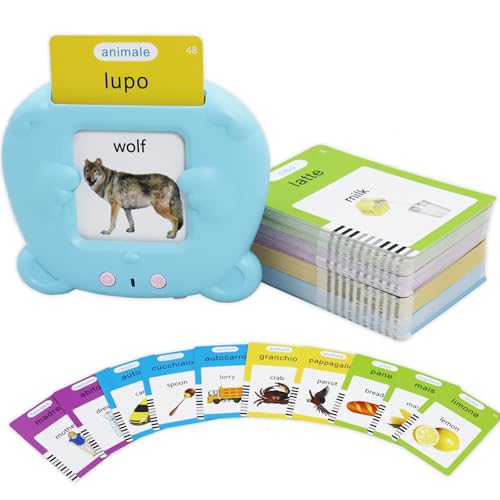
【English and Italian Learning】The talking flash cards contain 224 sight words with 12 themes, including letters, numbers, animals, vegetables, fruits, vehicles, family, etc. Each card is printed with an english word and the corresponding italian word, which is suitable for children to improve their language skills and cognitive abilities.

Designed by Italian Teachers - Using their years of teaching experience, these Italian vocabulary Flash Cards contain 200 Basic Italian words for beginners that are carefully selected to make learning fun and easy.

200 Pcs Flash Cards: this flash cards set includes 200 flashcards focused on present tense verb conjugations, available in Portuguese, German, French, and Italian; Designed for students and self learners, including beginners and adults
3. Pimsleur: Best for Listening and Pronunciation
Pimsleur Italian centers on 30-minute conversational lessons that make you listen and answer aloud. Its graduated recall system brings words and phrases back at planned intervals, while Voice Coach provides pronunciation feedback in supported lessons.
Pimsleur is useful during a commute, walk, or other hands-free time. It now includes more than audio, including flash cards, quizzes, reading lessons, and conversation practice. Even so, its main strength remains speaking and listening rather than detailed writing or grammar study.
- Choose it if: You want stronger listening habits and clearer pronunciation.
- Consider another app if: You prefer visual grammar explanations and written exercises.
Products Worth Considering


14 LANGUAGES INCLUDED: Designed by over 200 experts, Babbel, the original language learning app, has hundreds of lessons in Spanish, French, Italian, German, Portuguese, Russian, Polish, Turkish, Norwegian, Danish, Swedish, Dutch, Indonesian, and English.
4. Memrise: Best for Vocabulary and Native Video
Memrise helps you learn useful Italian words and phrases through review, native-speaker videos, listening practice, and AI conversations. Its Italian course currently promotes thousands of words, hundreds of videos, and private AI speaking activities.
The free plan is limited, while Pro unlocks more content and features. Memrise works well as a supporting app, especially when you want to hear several speakers and review vocabulary in context. It is less suitable as your only source of grammar and structured progression.
- Choose it if: You want vocabulary practice with native video clips.
- Consider another app if: You need a full course from beginner grammar to advanced writing.
5. Mondly: Best for AI Chat Practice
Mondly combines short daily lessons with vocabulary review, pronunciation work, grammar support, and AI conversations. Its chatbot activities let you practice common situations without the pressure of speaking to another person.
Mondly supports many learning-language and native-language combinations. Premium access opens the full lesson library and AI conversation features, while augmented-reality and virtual-reality products add more immersive practice on supported devices. The lessons are approachable, but advanced learners may want deeper reading, writing, or live correction elsewhere.
- Choose it if: You want low-pressure speaking practice with a chatbot.
- Consider another app if: You need detailed advanced feedback from a teacher.
6. italki: Best for Live Tutoring
italki connects you with Italian teachers and tutors for private online lessons. You can filter teachers by price, background, specialty, availability, and lesson type. Lesson lengths commonly include 30, 45, 60, or 90 minutes.
Teachers set their own prices, so there is no single reliable price range for every Italian lesson. You pay per class or buy a package instead of following one fixed subscription course. This makes italki one of the best options for conversation, pronunciation correction, exam preparation, business Italian, or lessons built around your weak points.
- Choose it if: You need real conversation and personal feedback.
- Consider another app if: You want a self-guided course with no scheduled meetings.
7. Talk In Italian: Best for Independent Audio-Led Study
Talk In Italian offers a structured course built around practical phrases, essential grammar, natural dialogues, pronunciation, and comprehension checks. Its official site describes hundreds of lessons and content created with speakers from several parts of Italy.
You pay once for lifetime access instead of renewing a subscription. This can be useful if you want a simple course you can return to over time. It is not a replacement for a live tutor, so add real conversation practice when you are ready.
- Choose it if: You want a structured course with lifetime access.
- Consider another app if: You need frequent teacher feedback or strong gamification.
8. Glossika: Best for Sentence Repetition
Glossika teaches Italian through full sentences, native-speaker audio, recording, and spaced repetition. Its system prepares a personal review list based on the sentences you are most likely to forget.
You can use full-practice mode for reading, writing, speaking, and listening, or listening-only mode when your hands are busy. Glossika is useful for building automatic responses and noticing grammar through repeated examples. Learners who want direct grammar explanations may need a textbook, tutor, or structured course beside it.
- Choose it if: Repeating useful sentences helps you speak more naturally.
- Consider another app if: You want grammar taught in a traditional step-by-step way.
9. Duolingo: Best Free Italian App
Duolingo is the easiest free option for building a daily Italian habit. Its path mixes reading, listening, writing, speaking, vocabulary, grammar, stories, and personalized review in short game-like lessons.
The Italian course is deeper than older reviews often suggest. Duolingo says most learners of Italian can now access content through B2 on the CEFR scale. Still, completing an app course is not the same as having regular unscripted conversations, so combine it with listening and speaking outside the app.
- Choose it if: You want a free, motivating daily course.
- Consider another app if: You dislike gamification or need detailed personal correction.
10. LingQ: Best for Real Italian Content
LingQ helps you learn through real content such as podcasts, books, videos, news, and imported material. You can read and listen together, save unknown words, review vocabulary, and track how much content you understand.
LingQ is especially useful from the high-beginner or intermediate stage, when you are ready to move beyond scripted lessons. Complete beginners may need time to understand the interface and may benefit from starting with its Mini Stories or using a more structured course first.
- Choose it if: You want to learn from content you genuinely enjoy.
- Consider another app if: You need a simple, fully guided beginner path.
Other Option: Taalhammer
Taalhammer is worth considering if you want to add your own sentences and study them with spaced repetition, listening practice, and full-sentence drills. Its Italian course includes core material and topic-based collections, while its Language Radio plays the material you are currently learning.
It is a flexible option for learners who like custom content. However, there is not enough evidence in the original article to call it the single best language-learning app overall, so it is better presented as a specialist alternative.
How to Build an Effective Italian Study Plan
A strong plan does not need many apps. Use one main course, one source of input, and one way to speak. For example, you could use Babbel for daily lessons, LingQ for reading and listening, and italki for one lesson each week.
- Beginner: Study 15 to 30 minutes a day with Babbel, Rocket Italian, or Duolingo.
- Listening: Add Pimsleur, Glossika, Italian podcasts, or easy videos.
- Speaking: Practice aloud every day and schedule regular tutor sessions when possible.
- Vocabulary: Review words in complete sentences instead of memorizing isolated lists.
- Progress: Use the CEFR levels to set clear goals for listening, reading, speaking, and writing.
The most useful app is the one you can use consistently, but regular speaking and real Italian input are what turn app knowledge into communication.
Choose the Best Italian App for Your Style
Choose Babbel if you want a balanced beginner course, Rocket Italian if you prefer lifetime access, and Pimsleur if listening is your priority. Pick Memrise for vocabulary and native video, Mondly for AI conversations, or italki for live tutoring.
Talk In Italian and Glossika suit audio-focused learners, while Duolingo offers the strongest free path. LingQ is the better choice when you want to learn from real Italian material. Taalhammer can help if you want to build lessons from your own sentences and topics.
Frequently Asked Questions
What is the best app to learn Italian?
Babbel is a strong all-round choice for beginners because it combines short structured lessons with grammar, listening, speaking, and review. Pimsleur is better for listening, while italki is better for live conversation. The best choice depends on your main goal.
What is the best free app for learning Italian?
Duolingo is the strongest free starting point because it offers a long course with daily lessons across several skills. Memrise and LingQ also provide limited free access, but many of their most useful features require a paid plan.
Is Duolingo or Babbel better for Italian?
Choose Duolingo if you want a free, game-like course that makes daily practice easy. Choose Babbel if you want clearer explanations, a more traditional lesson path, and practical dialogues. Babbel is usually the better paid course, while Duolingo offers more value at no cost.
Can Duolingo actually teach you Italian?
Duolingo can teach a large amount of Italian vocabulary, grammar, reading, listening, and basic speaking. Its Italian course now includes content through B2 for most learners. You should still add unscripted speaking, longer listening, and real reading if your goal is confident communication.
Can one app make you fluent in Italian?
One app can give you a strong base, but fluency requires several skills. You need regular listening, reading, speaking, writing, feedback, and contact with language you did not memorize in advance. Use an app as your main system, then add real conversations and authentic content.
Should you use more than one Italian learning app?
Yes, but each app should have a clear job. Use one for your main course, one for real listening or reading, and one for speaking practice. Avoid paying for several apps that teach the same beginner material in similar ways.
Sources
- Babbel Courses: lesson length, structure, activities, and cultural content.
- Rocket Italian Pricing and Course Details: lifetime access, course levels, lesson types, and voice-recognition content.
- Pimsleur Italian: 30-minute lessons, levels, Voice Coach, driving mode, and subscription options.
- Memrise Italian Course: native-speaker videos, vocabulary, and AI conversation features.
- Duolingo Advanced Course Update: current CEFR coverage for Italian and other major courses.
- Council of Europe CEFR Levels: A1 to C2 proficiency framework and can-do descriptors.
Conclusion
For most beginners, Babbel gives the best balance of structure, short lessons, and practical language. Rocket Italian is a strong lifetime option, while Pimsleur is better for listening and pronunciation. Use italki when you need real speaking practice, Duolingo when you need a free course, and LingQ when you are ready for authentic Italian content.
No app is perfect on its own. Pick one main course, study consistently, and add real listening and conversation. That combination will help you move from recognizing Italian to using it with confidence.
