


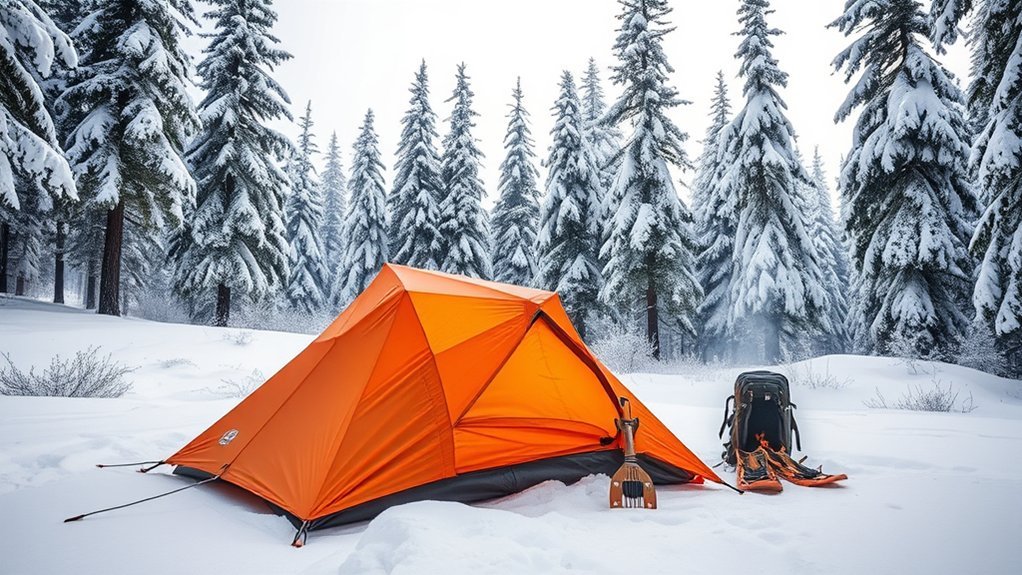
Winter tent camping can be an exhilarating experience, but it requires careful planning. You’ll want to wear layered clothing for warmth and moisture management, and choose an insulated sleeping bag and thick pad for comfort. Prepare hearty meals to keep your energy up and stay hydrated to regulate your core temperature. Selecting a sheltered campsite is essential, as is being aware of weather changes. There’s so much more to learn to guarantee a successful trip.
What to Wear for Winter Camping and Hiking

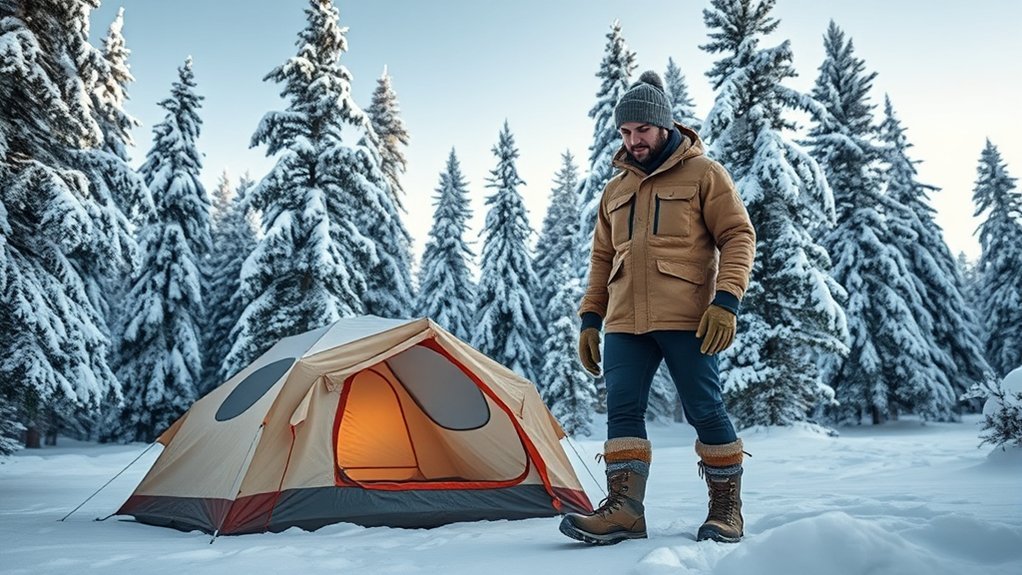
When you’re gearing up for winter camping and hiking, the right clothing can make all the difference in your comfort and safety. Mastering layering techniques is key. Start with a long-sleeve synthetic top to wick moisture away from your skin, then add an insulating fleece vest or pullover for warmth. For your outer layer, a fluffy down jacket keeps you cozy, but if the weather’s damp, switch it out for a rain shell to maintain insulation while staying dry.
Don’t forget thick wool socks; wear them while hiking and pack an extra pair for sleeping. Long-underwear bottoms or fleece pants add warmth at night. Before bed, slip into dry clothes to prevent heat loss, stuffing damp ones at the bottom of your sleeping bag. Finally, a two-part glove system guarantees dexterity and warmth, while a balaclava, neck gaiter, and hat protect your head and neck from the chill.
Where to Sleep on a Winter Camping Trip
Finding the right sleeping setup is essential for a comfortable night in the winter wilderness. First, consider your tent insulation; opt for a smaller, four-season tent to retain heat better in extreme cold or heavy snow. This compact space makes it easier to warm up and feel cozy. When it comes to sleeping arrangements, choose a sleeping bag rated at least 10°F below the expected nighttime lows to guarantee you stay warm throughout the night. Pair it with a thick sleeping pad, at least an inch thick or with a minimum R-value of 4.0, to insulate against the cold ground. Before you crawl into your sleeping bag, change into dry clothing to fend off the chill. And don’t forget to store any damp clothes at the bottom of your sleeping bag; they’ll warm up by morning, giving you a fresh start to your winter adventure.
What to Eat and Drink on a Winter Camping Trip
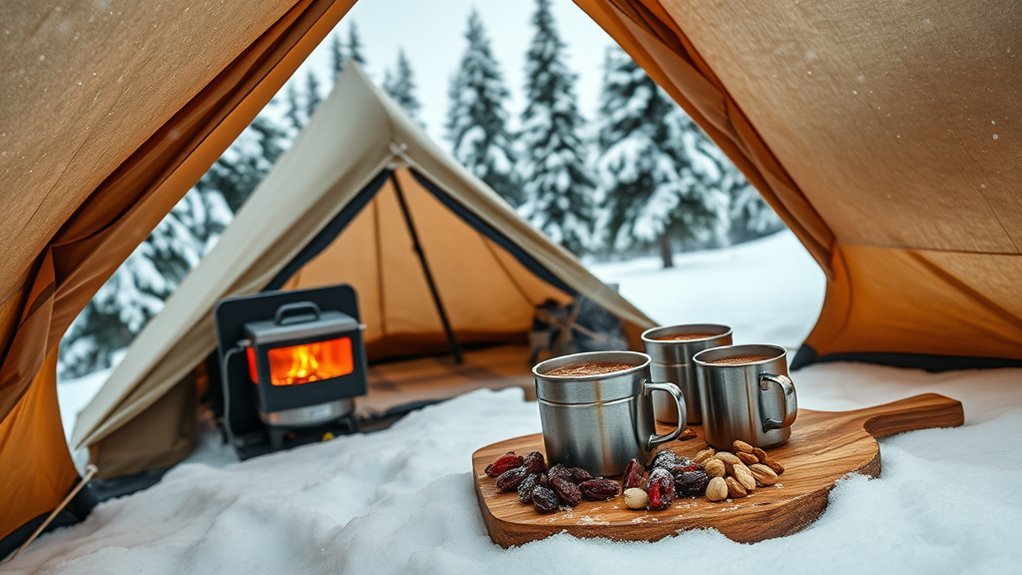
As temperatures plummet during winter camping trips, fueling your body becomes essential for staying warm and energized. Pack high-calorie meals that are nutrient-dense, like hearty pasta dishes or rich stews. These high-fat options offer longer-lasting energy, helping you combat the cold. Soups make for excellent appetizers and main courses, warming you from the inside out.
Stay hydrated by drinking plenty of fluids, as your body needs extra water to regulate its core temperature. Store water bottles upside down in your pack to prevent freezing. Don’t forget to indulge in warm beverages! Hot drinks in insulated mugs or thermoses lift your spirits and provide comfort against the chill.
Opt for snacks that won’t freeze solid; fig bars and nuts are great choices that stay edible in low temperatures. By planning your meals and drinks wisely, you’ll enjoy a liberating winter camping experience.
Selecting a Winter Campsite
After fueling your body with hearty meals and warm drinks, the next step is to select the right winter campsite. Look for sheltered sites that utilize surrounding trees to block harsh winter winds and blowing snow. Make certain your chosen spot is at least 200 feet away from water sources to follow Leave No Trace guidelines, yet still accessible for your needs.
When you arrive, pack down a smooth, level platform—at least twice the size of your tent—by stomping on the snow to create a solid base. Keep an eye out for snow-laden branches that could fall and consider the wind direction when picking a more exposed terrain site. Additionally, check for campsite features like standing dead trees; these provide excellent firewood for warmth and cooking. With the right site, you’ll guarantee a cozy and liberating winter camping experience.
Weather Considerations and Preparation
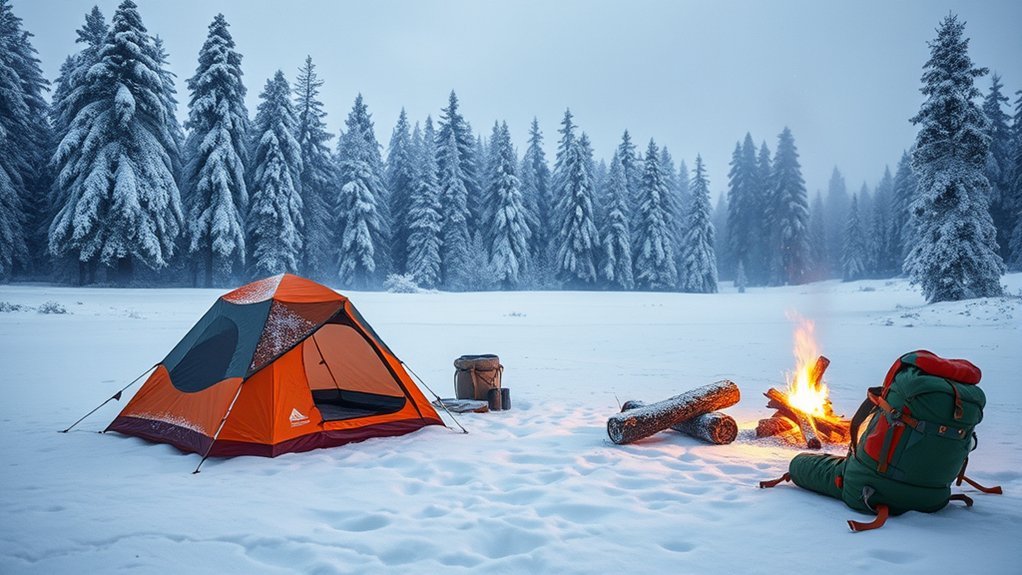
When planning your winter camping adventure, it’s vital to stay ahead of the weather, as conditions can change rapidly in cold environments. Expect temperature fluctuations, especially as you ascend in elevation—about 3.5 degrees Fahrenheit for every 1,000 feet. Always check the local weather forecast for unexpected changes, particularly in moderate climates. Research average temperatures for your campsite to guarantee you’ve got the right gear for comfort and safety.
Emergency preparedness is essential. Equip your vehicle with tire cables or chains, and pack a snow shovel and ice scraper to handle any surprises. Utilize resources like Mountain Forecast for precise estimates of temperature and precipitation specific to your intended location. By staying informed and ready, you can fully embrace the beauty of winter camping while minimizing risks. So gear up, stay aware, and let the wilderness liberate your spirit!
Frequently Asked Questions
How Do I Set up a Winter Tent in the Snow?
To set up your winter tent, choose a flat spot away from wind, then clear the snow. Use snow insulation around the base for warmth, and make sure your entrance faces away from prevailing winds.
What Type of Stove Is Best for Winter Camping?
For winter camping, a wood stove’s warmth feels like a cozy embrace, while propane heaters provide convenience. Choose based on your needs—wood stoves offer long-lasting heat, but propane’s portability can’t be beaten. Stay liberated!
How Can I Prevent Condensation Inside My Tent?
To prevent condensation inside your tent, use ventilation techniques like opening vents and keeping doors slightly ajar. Practice moisture management by drying wet gear outside and using breathable materials to enhance airflow and reduce humidity.
What Are the Best Practices for Collecting Firewood?
Imagine gathering firewood, feeling alive in the crisp air. Prioritize firewood safety by using proper collection techniques: choose dead branches, avoid rotting wood, and always check local regulations to ascertain sustainability and safety.
How Do I Maintain Warmth While Sleeping in a Tent?
To maintain warmth while sleeping in a tent, use a high-quality sleeping bag and layer thermal clothing. Insulate with a foam pad beneath you, and keep your head covered to trap heat effectively.
Conclusion
So, you’re ready to embrace the winter wilderness, huh? Just remember, choosing the right gear is essential—no one wants to look like a popsicle in a down jacket! With a cozy sleeping setup, tasty camp meals, and a prime campsite, you’ll be living the frosty dream. Just pray the weather gods are kind, or you might find yourself sharing your tent with a snowman. So bundle up, stay warm, and enjoy your winter adventure—after all, who needs warmth when you’ve got hot cocoa?