


When tent camping during storms, prioritize lightning safety. Choose a lower area away from tall objects like trees. Stay put inside your tent, using foam pads to insulate yourself from ground currents, and avoid touching the tent walls. Crouch or squat to reduce your contact area with the ground. Keep an emergency kit handy and familiarize yourself with nearby shelters. There are more essential strategies to keep you safe when storms hit.
Planning Ahead for Storm Safety

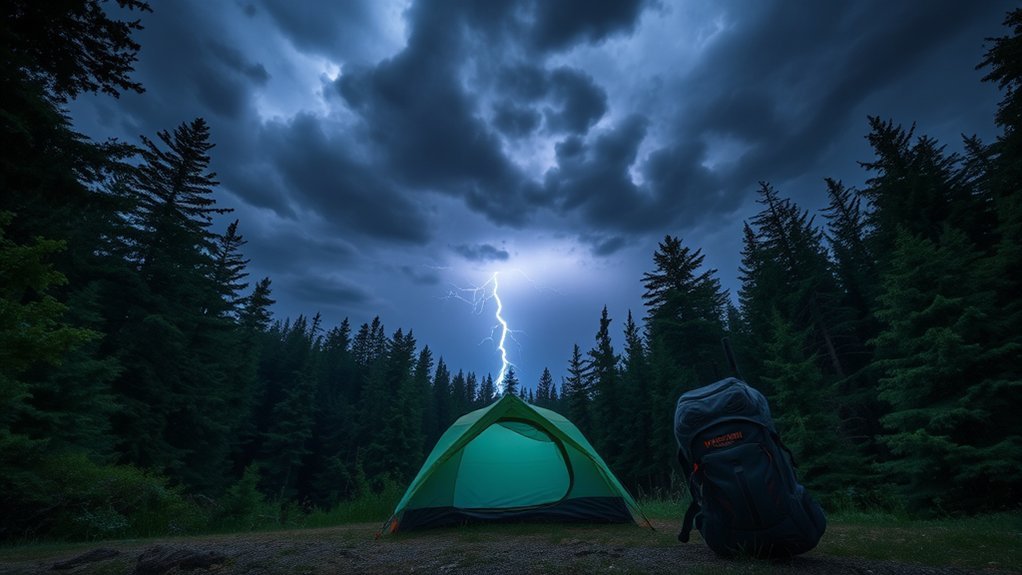
When you’re planning your camping trip, it’s essential to stay informed about potential storms, so you can make safe decisions. Utilize storm tracking tools like NOAA Weather Radio or reliable weather apps to keep tabs on forecasts and conditions in your area. Before you head out, identify nearby shelters and create a lightning safety plan for your group, ensuring everyone knows what to do if a storm hits. Familiarize yourself with the terrain, avoiding flat, exposed areas where lightning strikes are more common. Establish a non-negotiable turnaround time for hikes, especially before thunderstorms typically roll in between 1 and 2 PM. Finally, pack an emergency kit that includes weather safety gear, a portable lightning detector, and first aid supplies. By planning ahead, you empower yourself and your group to stay safe and enjoy the freedom of camping, even when storms threaten.
Choosing the Right Tent Location
After you’ve planned for storm safety, choosing the right location for your tent becomes essential. Opt for lower areas instead of flat, exposed ground to reduce the risk of lightning strikes during thunderstorms. Stay clear of tall objects, like trees or structures, which can attract lightning and present a danger. Assess your campsite for potential hazards, including loose branches that could fall during a storm.
Look for spots with natural barriers such as hills or dense woods; these provide protection from both lightning and strong winds. Additionally, consider tent elevation—pitching your tent on slightly elevated ground can help with drainage, but avoid high points that might increase lightning risk. Finally, always have an evacuation plan ready to swiftly reach a safe shelter if a thunderstorm approaches. Your safety depends on thoughtful tent placement in relation to the surrounding environment.
Safety Measures Inside the Tent
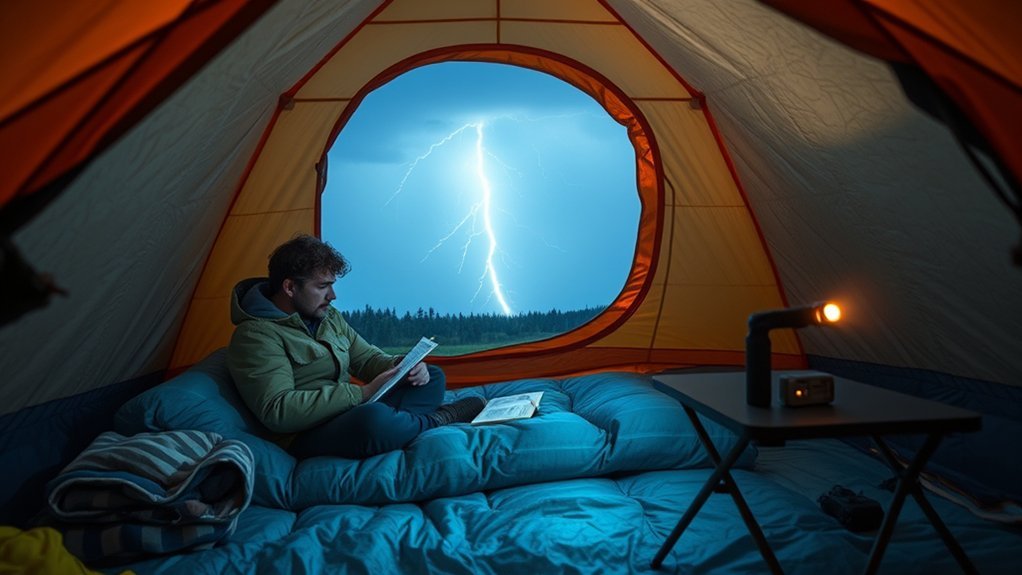
To guarantee your safety during a thunderstorm, it’s crucial to follow specific measures while inside your tent. First, stay put! This minimizes your exposure to lightning and ground currents. Use a foam sleeping pad or insulated camping mat for effective tent insulation; it reduces contact with the ground and adds a layer of safety.
Avoid touching the tent’s frame or poles, as they can conduct electricity during a lightning strike. Keep your body within your sleeping bag to limit contact with the tent floor, further decreasing the risk of electrical shock. Remember, while tents don’t attract lightning, they can conduct ground currents. Your positioning and behavior inside the tent are critical for safety.
Understanding Ground Currents and Risks
Understanding ground currents and their associated risks is essential for your safety during a thunderstorm while tent camping. When lightning strikes, it generates large ground currents that radiate outward, posing significant dangers, especially if you’re lying flat on the ground. The voltage can vary dramatically, increasing risk for those with a larger contact area. To enhance your electrical safety, crouching or squatting minimizes your footprint and reduces the chance of being affected by voltage differences.
Tents can be particularly hazardous if not properly situated, as they may not insulate you from the electrical energy created by lightning strikes. While a tent doesn’t directly attract lightning, it can conduct ground currents, leading to serious injuries or fatalities. Always assess the ground conductivity around your campsite to choose a safer location. Recognizing these risks can empower you to make informed decisions and protect yourself during a storm.
Emergency Preparedness and Response
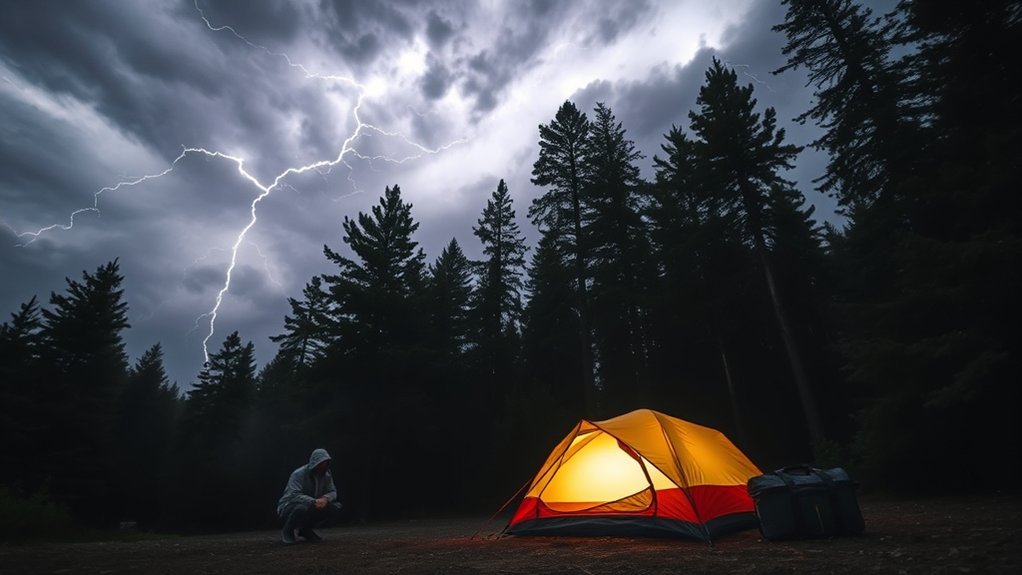
When storms threaten your camping trip, having a solid emergency preparedness plan can make all the difference. An effective emergency kit is vital. It should include first aid supplies, a battery-powered NOAA weather radio, and other essential items. Always have an escape plan ready, identifying nearby safe locations.
Stay informed about weather conditions by checking updates regularly. In case of a lightning strike, knowing CPR and how to treat shock can save lives. Familiarize yourself with emergency procedures specific to lightning incidents, including how to seek shelter and minimize exposure to ground currents.
Here’s a quick reference for your emergency kit:
| Essential Items | Purpose |
|---|---|
| First Aid Supplies | Treat injuries and provide care |
| NOAA Weather Radio | Stay updated on storm conditions |
| Flashlight & Batteries | guarantee visibility during outages |
Being prepared empowers you to handle emergencies effectively.
Frequently Asked Questions
What Should I Do if Lightning Strikes Near My Campsite?
If a lightning strike occurs near your campsite, stay calm and assess the situation. Call emergency services immediately, check for injuries, and help others if safe. Move to a safer location away from trees and tents.
How Can I Tell if a Storm Is Approaching?
You can tell a storm’s approaching by watching for darkening skies, increasing winds, and the sound of distant thunder. Check weather radar for storm warning signs; about 10% of storms develop rapidly, so stay alert!
Are There Specific Tent Materials That Offer Better Lightning Protection?
No tent materials provide true lightning protection, but using tents made from thicker, grounded materials can help. Always prioritize safety by seeking shelter in a sturdy building during storms, as that’s your best option.
What Items Should I Pack for Lightning Safety?
Pack lightning safety gear like a sturdy flashlight, whistle, and a first aid kit. Don’t forget emergency supplies such as extra food, water, and a portable phone charger to stay connected during storms.
Can I Use My Phone During a Lightning Storm?
You shouldn’t use your phone during a lightning storm. While storm communication is essential, phone safety matters more. Stay connected by keeping your device off and seek shelter to guarantee you’re safe from potential strikes.
Conclusion
When tent camping, your safety during a storm is essential. Did you know that about 20 million cloud-to-ground lightning strikes occur in the U.S. each year? To protect yourself, always plan ahead, choose your tent location wisely, and stay informed about weather conditions. Inside your tent, follow safety measures to minimize risks from ground currents. By being prepared and knowing how to respond in an emergency, you can guarantee a safer camping experience, come rain or shine.