


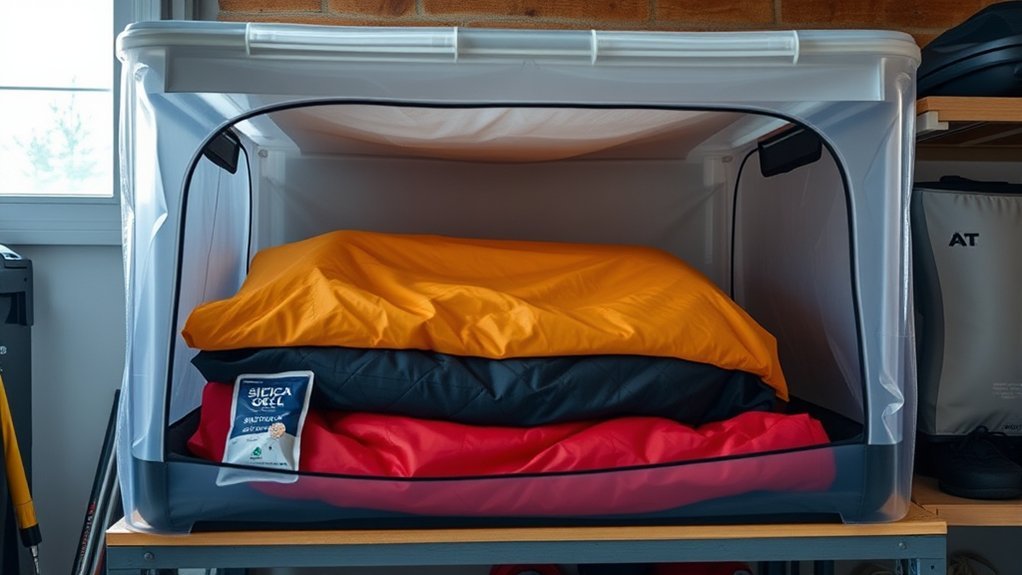
To store your tent long-term and prevent damage, make sure it’s completely dry and clean. Use a breathable bag and store it in a dark environment, avoiding UV exposure. Keep the temperature cool, ideally between 18-21°C (65-70°F), and avoid high heat areas. Pack it loosely, folding it to minimize creasing, and inspect it regularly for wear or mold. Following these steps can greatly extend your tent’s lifespan, and there’s more to explore on proper maintenance.
Keep Your Tent Dry and Clean

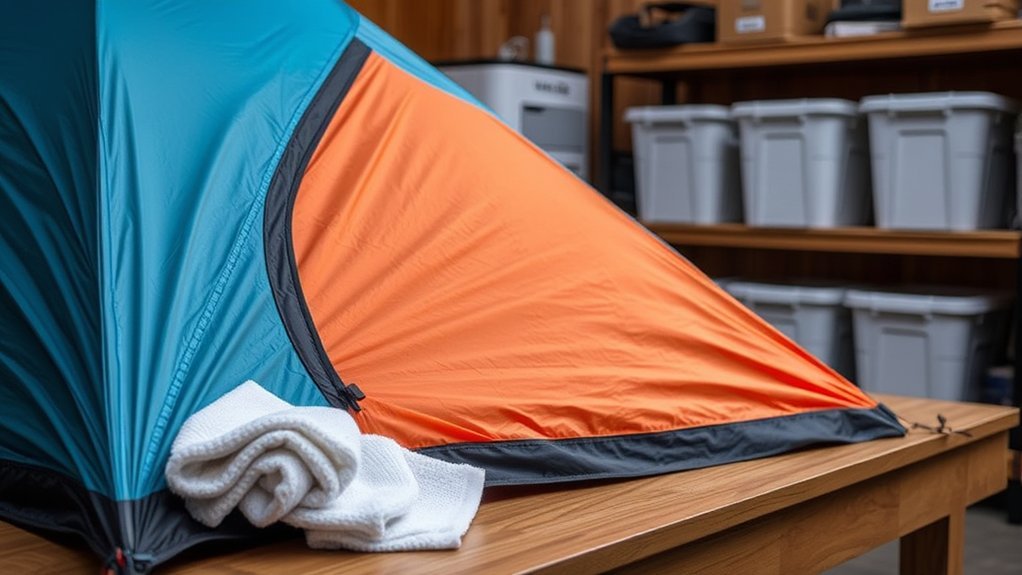
When storing your tent long-term, it’s crucial to keep it dry and clean to prevent damage and guarantee its longevity. Start by confirming the tent is completely dry; mold can develop in less than 48 hours in humid conditions. To maintain effective moisture control, inspect the fabric for any signs of dampness, as even a small amount can promote mold growth.
Establish a thorough cleaning routine: clean the tent with cold water and non-detergent soap, then rinse it completely. This guarantees you remove any dirt or debris that could cause deterioration over time. After cleaning, allow the tent to dry fully before packing it away. Use a breathable bag, like a mesh sack or an old pillowcase, to store it. This setup allows any residual moisture to evaporate, preventing moisture buildup during long-term storage. By following these steps, you’ll confirm your tent remains in excellent condition for your next adventure.
Store in a Dark Environment
To guarantee your tent remains in prime condition over the long term, store it in a dark environment. UV exposure, even from indirect sunlight, can degrade the fabric and lead to material failure, particularly in PU-coated tents. Aim to keep your tent in windowless closets or bins, as these spaces offer the best protection from light.
Using breathable bags during storage is essential; they not only shield the tent from light but also allow any residual moisture to evaporate, reducing the risk of mold growth. By minimizing UV exposure, you keep nylon fibers from becoming dry and brittle, which decreases the likelihood of rips and tears. Ultimately, ensuring your tent is stored in a dark environment with proper breathable bags will greatly extend its lifespan and retain its functionality for your future adventures.
Maintain a Cool Temperature
Maintaining a cool temperature is vital for the long-term preservation of your tent. Store your tent in an indoor environment ideally kept between 18-21°C (65-70°F). Excessive heat accelerates the hydrolysis of polyurethane (PU) coatings, compromising waterproofness and increasing mold and mildew risks. Avoid high-temperature areas like attics or unventilated sheds, as these can quickly degrade your tent’s materials.
Temperature monitoring is important; regularly check your storage area for fluctuations to guarantee it remains ideal for preservation. Consistent temperature control minimizes stress on the fabric, helping maintain the tent’s integrity over time. Additionally, consider implementing humidity control measures, as elevated moisture levels can exacerbate issues related to heat. By following these guidelines, you’ll extend your tent’s lifespan and make sure it’s ready for your next adventure.
Proper Packing Techniques
Proper packing techniques greatly impact your tent’s longevity and performance. Before you pack, verify your tent is completely clean and dry to prevent mold and mildew. For packing materials, consider using a breathable storage bag like a cotton pillowcase or mesh bag; this allows any residual moisture to evaporate. When tent folding, aim for neatness to minimize creasing and stress, especially on PU-coated fabrics that are prone to damage. To maintain ideal preservation, store your tent uncompressed or loosely stuffed, avoiding permanent wrinkles and material fatigue caused by prolonged compression. If you opt for a stuff sack, place the tent poles in first to prevent tearing the fabric, and make sure to pack it without sharp objects that could inflict damage. By following these techniques, you can effectively safeguard your tent for future adventures.
Regular Inspections and Maintenance
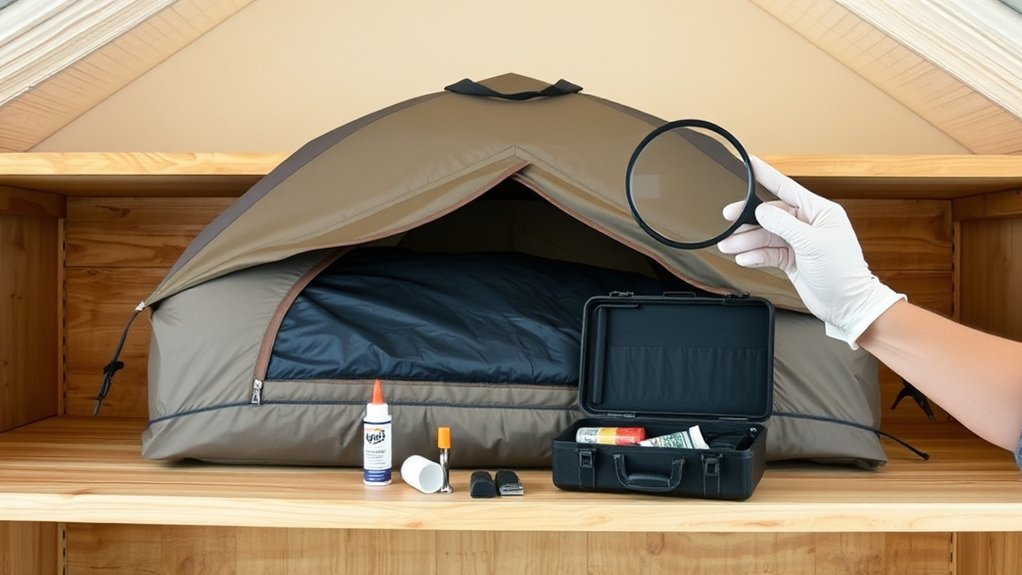
While you might think your tent is safe tucked away, regular inspections and maintenance are essential to guarantee its longevity and performance. Make it a habit to check your tent every few months for any signs of wear, like cuts or holes. Pay special attention to zipper maintenance; clean and test each zipper to prevent blockages and unnecessary damage. Maintaining a clean, dry tent is critical—mold can develop quickly in humid conditions. Don’t forget to inspect the aluminum frame for dirt or corrosion to confirm stability.
| Inspection Area | Key Action | Frequency |
|---|---|---|
| Tent Fabric | Look for cuts and holes | Every few months |
| Zippers | Clean and test functionality | Every few months |
| Aluminum Frame | Check for dirt and corrosion | Every few months |
Frequently Asked Questions
Can I Store My Tent in a Basement?
You can store your tent in a basement, but guarantee humidity control and pest prevention. Use dehumidifiers and seal any openings to keep moisture and insects away, preserving your tent’s integrity for future adventures.
How Often Should I Check My Tent During Storage?
Tent maintenance requires regular checks—about every few months. Keep an eye on humidity control, ensuring your tent’s dry. This proactive approach prevents potential problems, helping you maintain your gear in excellent condition for future adventures.
Is It Safe to Store the Tent in a Garage?
Yes, it’s safe to store your tent in a garage, provided the garage temperature remains stable and humidity levels are low. Extreme fluctuations can cause mold or damage, so monitor conditions occasionally for ideal storage.
Can I Use Plastic Bins for Tent Storage?
Yes, you can use plastic bins for tent storage. Make sure they’re ventilated to prevent moisture buildup, which can harm tent materials. Regularly check for condensation and dry your tent before storing to maintain its quality.
What Should I Do if My Tent Smells Musty?
If your tent has a musty odor, air it out in a well-ventilated space. Use a mixture of water and mild soap for odor removal, then make certain it’s completely dry before storing it again.
Conclusion
By following these storage tips, you can guarantee your tent remains in top condition for your next adventure. Remember, wouldn’t you rather unzip a fresh, clean tent than one that’s moldy or damaged? Keeping it dry, dark, and cool, along with using proper packing techniques and regular inspections, will help prolong its life. A little effort now means more enjoyable camping trips in the future! Take care of your gear, and it’ll take care of you.